On Reel Girl, I’ve been blogging for years about raising my kids as intuitive eaters so now we have archive of something I think is pretty rare: a record of what it was like to bring up daughters with no eating disorders. Now my kids are 22, 19, and 17. Check out this video as the latest exploration about often misguided (but not always) attempts to be “safe” and “successful” and “healthy” as a female living in a patriarchy.
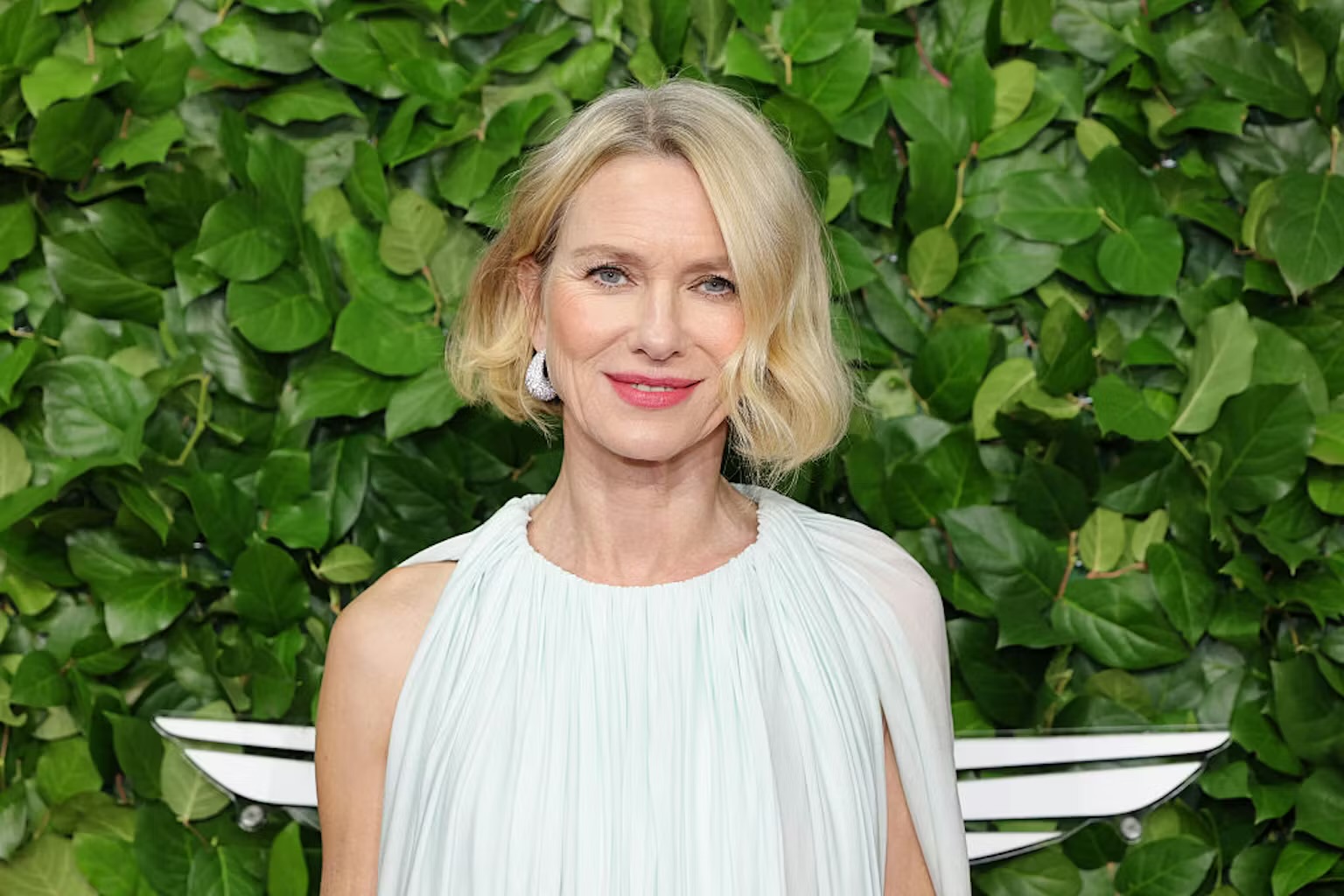
In a recent interview, when actress Naomi Watts said “Tolerate my jowls,” she made clear it’s not her job to surgically alter her face so you don’t feel uncomfortable. If her face stimulates pain for you, learn how to regulate. You feelings are not her problem. Naomi Watts is #unfawning.
I’ve been posting a lot about Ingrid Clayton’s new book and how she prefers the term fawning to codependency or people-pleasing, because when we “connect to protect” it’s often not a conscious choice but a trauma response, a nervous system reaction. Psychologist Pete Walker describes fawning as “a response to threat by becoming more appealing to the threat.”
I was thinking about how when women are young— especially when they are white and a weight preferable to the patriarchy— their bodies, to some degree, can’t help but “fawn.” Their bodies fit so perfectly into the system that rewards female compliance.
I posted a Tik Tok video about how my face, as a 57 year old woman, like Naomi, is no longer fawning. Even if a woman decides to take a path different from my own or Naomi’s, her body, on some level, is going to rebel: 57 isn’t the same as 27.
So far, that shift to #unfawning, has been disorienting and confusing to some degree, all changes are like that, but it’s also been incredibly liberating. And that part of the story seems to be, too often left out. That erasure feels like more fawning.
I can’t recall ever being so clearly in a situation where my body simply, repeatedly says: “No, I won’t do it. I won’t conform to that standard, even though, I know you believe that would make your life easier and safer.”
And surprise, my life is easier and safer #unfawning. I don’t miss men catcalling me. Why was I supposed to miss that?
Even though my body is older and supposedly less strong—debatable, I no longer smoke a pack of Marlboro Reds or drink alcohol—I feel so much safer waking down the street, just being in the world feels calmer. I don’t miss the free drinks or free food that were never really free. My body knew that too.
I think maybe the scariest thing about getting older, is when you’re young and you keep getting warned in so many ways how horrible and terrifying it’s going to be. I think that fear is one of the most powerful factors to keep women control. What if getting older isn’t something to be afraid of? What if it is, in fact, joyful?
What do you feel when you read that quote? What does it even mean?
I’m the mother of three daughters. I’ve also been coached by Bethany, and when I read her words, again and again, my needs to be seen, heard, understood, and to matter are met. Her analysis, in my experience, is so rarely articulated and so true.
The simplest way I can explain the significance of Bethany’s quote is through describing my eating disorder and recovery from it. When I was obsessed with counting calories (I grew up in the 80s) I had a lot of clarity on what was good and what was bad: cookies were bad, cottage cheese was good; Republicans were bad, Democrats were good; William Faulkner was a great writer, Jackie Collins was a bad writer. I was a teenager, the world was easily divided into binaries, I knew who I was and where I was going.
In my twenties, when I started to try to give up the bulimia, I tried so many modalities to stop the behavior. I went to private therapy, group therapy, nutritionists, 12-step programs, and nothing worked until I started to practice what today would be called intuitive eating. I got help from an organization called Beyond Hunger in Marin County that supported me to eat when I was hungry, eat whatever I wanted, and stop when I was full. To be clear, this was not an eat when-hungry-stop-when-full “diet.” Many times, as I was learning, I would finish a bag of chips when they stopped tasting good, just because I had the urge to keep crunching, but the difference was I became aware of when I was continuing on past my pleasure point. I was conscious of my choices and I learned to be self-compassionate.
But here’s the really weird thing that happened as I recovered from bulimia. Initially, I lost my orientation of right and wrong. I no longer connected with other women as easily as I had in the past. When I stopped criticizing my body, I got confused. When I stopped eating because it was lunch time or dinner time, and ate when I actually was hungry, I didn’t know how to schedule my day. When I was served a plate of food and I only wanted half of the portion or I wanted seconds, when I was in the mood for salad and not the steak that was served, when I ate because I actually wanted the food and not to protect someone’s feelings, a waiter I didn’t even know or a man who cooked for me, I felt a rush of guilt, shame, and fear.
For so many women, having an eating disorder, being sick, is easier than being healthy. Eating what I wanted, when I wanted felt so rebellious and strange. I felt like how I imagine those tigers do, like the one Glennon Doyle wrote about in her book Untamed, who was free of her cage and still couldn’t run. She was paralyzed,
I was 28 years old when I got better from bulimia and I was 34 when I had my first child. I thought I was ready. Not only had I recovered from a vicious eating disorder, I was sober. I was deeply in love with my smart, sweet boyfriend. I had a career that excited and fulfilled me, I produced talk radio programs, co-founded a non-profit that taught young women ethical leadership skills, I published commentary on politics and culture, and I advocated for women’s issues on national television. Who could be more ready for motherhood than me?
I raised all three of my daughters to be intuitive eaters which for me meant I never gave them rules about what to eat and when to eat it. I never made them finish a plate of food or rewarded “good” behavior with something like ice cream or told them not to “snack” before dinner. I filled the refrigerator and low cupboards with food that they could reach on their own. If they wanted ice cream for breakfast, they was fine with me.
This post is not about how in spite of my efforts, my daughters still grew up with disordered eating. All of them are “healthy” eaters. They eat what they want when they want, they’re adventurous with trying new kinds of food, they’re all “normal” weight.
But when my kids were little, the other moms had a really hard time with how my kids ate. When friends came over, often parents joined, and they were shocked and disapproving that my kids could eat candy whenever they wanted. I honestly believe that part of the reason these parents accepted my family’s intuitive eating, is because neither my kids or I were “overweight.” Once again, I learned, not having an eating disorder separated me from community and incited disapproval, judgement, and confusion.
In my own family, being a “healthy” eater (how I define healthy which is not controlling food, I’m not talking about eating your veggies) caused more conflict, upset, confusion, and judgement. When my kids were allowed to eat whatever they wanted and my nieces and nephews weren’t following the same “rules,” new flexibility and openness had to be reached and that path is never smooth. That journey to a different way of being and relating isn’t so so different from the readjustment sobriety can create in a family that connects and bonds at cocktail hour.
Moms want so much to keep our kids safe, and the way I was raising my daughters seemed dangerous, scary, and chaotic to so many parents. I get that because when I went through a new way of eating, that process could feel dangerous, scary, and chaotic.
Mothers pass on eating disorders, generation after generation, out of concern, love, and a desire to protect. As a woman, when you stop monitoring what you eat, when you let your own body determine what you want and when you want it, you are making a radical choice to trust yourself.
It turns out, at 34, I was not “ready” to be a mom, because no one is ever ready and there’s no perfect time. My oldest daughter never had food issues, but she struggled with behavioral challenges that I’ve written about before and what I learned from supporting her through recovery is that my insights about food didn’t go nearly far enough. It wasn’t just at the dinner table that I needed to follow the wisdom of my body, my intuition, my own unique path instead of the systems that rewarded compliance. As a woman, as a mom, as a mom of daughters, time and time again you’re confronted with a choice: Do I do what the “expert” tells me, the psychiatrist, the teacher, the lacrosse coach, the college adviser, or do I deeply listen to the needs of my daughter?
For example, it never once occurred to me, and I now I realize this lack of awareness was partly because I was born white and to a privileged family, that my daughter wouldn’t go to college. I may have been a Democrat, but I believed in all the rules and status and hierarchy of academia. While I wasn’t dependent on how much money or how much I weighed to determine my status and worth, I was still looking for external validation in my daughter’s grades and test scores. Those numbers told me if I was a good mom, if my daughter would be “safe” and “successful” in the world.
What I know now is that helping my daughters thrive in the world means prioritizing connection with them, listening to them, meeting their needs to be seen, heard, and to matter, not just in what they eat but in every aspect of their lives.
If you want to learn more about Nonviolent Communication or my parent coaching visit listen2connectcoach.com or follow me on Instagram @listen2connectcoach
Because I’m so sick of the public referring to sexist people, places, and things as progressive or liberal, because sexism is everywhere and women are trapped in double-bind that is hardly acknowledged, getting little or no support from our “allies,” staying stuck in a matrix that doesn’t allow us to achieve real power, I came up with this list.
Reel Girl’s Top 10 List Of “Progressive” People, Places and Things That Are Sexist:
The New York Times When this publication broke the story about Harvery Weinstein’s chronic sexual harassment and assault of women, the report was illustrated with a photo of Hillary Clinton with Weinstein. That’s right, Weinstein’s behavior is Hillary’s fault. The NYT is also the publication that kept stories going about Hillary’s emails and the “corruption” of the Clinton foundation throughout Hillary’s campaign. Aside from Hillary, I’ve blogged extensively about the many instances of sexism in the stories of the NYT, from what they choose to cover to the sources they use to cover it. My complaints have been posted in Letters to the Times. Just do a search on Reel Girl to see my posts on sexism at the Times.
PBS I’ve blogged on Reel Girl about the lack of female protagonists on PBS shows for kids including the dominance of male characters on well-loved programs like “Sesame Street,” and how the “educational station” can be more sexist than the Disney channel.
Dr. Seuss With all of Dr. Seuss’s amazing creativity, the crazy-beautiful characters he drew, the names and the entire language he came up with, his spectacular imagination failed to stretch to include gender equality. Seuss’s characters are mostly male with even his crowd illustrations rarely featuring female characters. I’ve blogged a great deal on Reel Girl about Seuss’s sexism and though my blogs have been picked up and quoted by Jezebel (a “women’s news” site) Seuss’s sexism is rarely acknowledged. Seuss is a huge influence on childhood and it’s tragic that along with learning to read, kids are learning sexism, that it’s normal for girls to go missing. Recently children’s author Mo Willems signed a letter condemning Seuss’s racism but sexism isn’t mentioned in the letter.
My “progressive” male friends on social media: The men of Hollywood aren’t coming out to condemn Harvey Weinstein in the numbers that they should be, but what about my own male friends? While men I know and love regularly post about racism, police violence and other issues dear to their hearts, they rarely post about sexism and misogyny. My own posts about sexism rarely receive likes or shares or retweets from my male friends. Until our male friends join the fight for gender equality, prioritize it, consider it important, take action to support it, and stop being passive bystanders, women won’t get as far as we need to go.
My list is just a beginning, hopefully to publicize the wide reach of sexism and misogyny into almost every aspect of our lives. Feel free to add in my comment section your items of “progressive” people, places and things that are actually sexist.
I wish all the sexism and misogyny Hugh Hefner amplified and celebrated would die with him. Turns out, Hef gets to stalk into infinity: he paid $75,000 to be buried in the plot next to Marilyn Monroe.
It disgusts me that America (the world?) is celebrating this man.
Here’s an alumna’s comment from my fancy, I-was-so-lucky-to-attend-boarding school that many years later, was proven to be the site of numerous sexual assaults. Faulkner Fox writes:
At “Casino Night,” a required school event at St. George’s School, 14 and 15-year-old girls were asked to dress as playboy bunnies. Let’s just say it’s not one of my fondest childhood memories. All of the school’s sexism cannot be blamed on Hugh Hefner–of course not. But because of Hefner’s extraordinary cultural influence, one of the things we were asked to do–for fun–was dress as Playboy bunnies.”
Yes, we were 14 and 15. Sexism was so insidious at St. George’s and in life that all I remember caring about was how I looked in my bunny suit. I took down the yearbook pictures on Reel Girl of Casino Night and every sexist photo I had up of St. George’s that didn’t include me, because though the shame is on the school and not the girls shown, our culture is messed up and too many people don’t get that. I don’t have me in a bunny suit but I have this gem to share, a yearbook photo from St. George’s captioned: “Todd’s Toys.”
Don’t worry: I don’t blame entitled guys like you for all the sexism and misogyny at St. George’s. You were young. I’m willing to give you some leeway. Plus I didn’t overlap with you at St. George’s — I am class of ’81; you are class of ’90 — so I don’t know how you actually behaved back then. Let’s say you never said or did one sexist or abusive thing before you got on that bus with Donald Trump in 2005.
What you did on that bus in talking with Donald Trump in 2005 directly relates to what happened to your St. George’s classmates. I’m talking about the creation and perpetuation of rape culture, the entrenched belief that women and girls don’t matter the way men do, that we are here to be grabbed, harassed, raped. Whatever a guy can get away with is fair game, worthy of laughter and high-fiving from other guys on the same messed-up bus.
Hugh Hefner helped to normalize and mainstream objectification of women. His vision touched us all. Got a personal story of how this “cultural icon” helped to infect your life with sexism? Please share it on Reel Girl.
Clarissa Bird is a high school junior from Austin, Texas who is frustrated by the lack of female protagonists in the media and annoyed by the negative reaction from teens and adults to ’13 Reasons Why.’ She wrote this post defending the show for Reel Girl.
It’s not hard to find a reason to hate the show “13 Reasons Why.” I’ve gotten lengthy emails from my school principal and counselor on how dangerous the show is without proper adult supervision. I’ve had a friend tell me her parents wouldn’t let her watch the show after reading an article on how it glamorizes and simplifies suicide. I’ve seen the headlines on how the show neglects the underlying causes of self-harm and how the entire plot is driven by petty teen drama. And to an extent, all of these reactions are valid. The show has major faults ranging from the over-the-top stunning actors who are just a little too hunky to play teenagers to the unbelievable teen fantasy of getting a new car for homecoming to more serious issues like subtle victim shaming and simplification of a female protagonist.
But for all of its missteps, there is something about watching one of the main characters, Clay, roll around on his crummy bike trying to uncover Hannah’s story that had my eyes glued to the screen. There was some innate pleasure I took from watching this tragic, teenage girl’s life spiral out of control as love interests and friends continually pulled the rug out from under her. In fact I liked it so much I watched all 13 episodes.
But, upon hearing people in my math class condemn the show and all those who enjoyed it, I seriously started to wonder what the heck was wrong with me for watching it. I never even seriously considered how horrible the show was before hearing classmates rail on it. Am I a terrible, selfish, psychopath because I liked this show about teen suicide? Was I really that ignorant about mental health and suicide that I thought this girl’s actions weren’t so irrational? What made this show that turned my once down to earth, sensible, classmates into condescending, drama critics so addicting to me?
13 REASONS WHY
Hannah Baker’s relationship with her parents
Although the show is criticized for the fact that Hannah’s parents seem to be completely out of touch with their own daughter’s mental state, I found their relationship to be refreshingly relatable and not too far off base. One of my friends said that her main problem with their relationship was that the parents weren’t supportive enough, but it’s hard to support someone when they’re not really telling the whole truth. In “13 Reasons Why,” Hannah faces the familiar question of how much she’s really supposed to be sharing with her parents. Most high schoolers, including myself, tend to bend the truth or offer vague explanations in an attempt to satisfy the endless stream of parental inquiries. It’s a natural part of growing up to become more independent and this includes becoming more secretive and maybe not telling my parents exactly where I was last Saturday night or why I spend so much time “out with friends”.
A girl’s reality
“13 Reasons Why” does a great job of exposing all too common high school boy’s behaviors such as sharing non-consensual photos, objectifying girls through “best” and “worst” lists, and harassing and sometimes even assaulting girls. I loved watching it for this exact reason and from the moment I heard about the show I was excited to finally have a complicated, raw view of the teenage girl. As an audience we feel bad for Hannah when Justin shares intimate photos leading students to believe he had sex with her. We feel worse for Hannah when she kisses her friend on a dare and the rumor spreads she’s bisexual. We feel the deepest, gut-wrenching pain for Hannah when she’s raped. However, the show also reveals its moral universe as somewhere that Hannah’s rape can be labelled “worse” than her friend’s rape by the same boy, because in Hannah’s case she wasn’t drinking, smoking or flirting with the guy. And although I enjoyed the realistic portrait of a girl who can’t and won’t be pinned down or labelled as one thing, I was frustrated by Clay’s simplification of Hannah. He ultimately sees her as the victim of the school’s jocks, stalkers and petty girls and continually boxes her into the wholesome, girl-next-door character trope.
Inseparable from own life
One thing this show does painstakingly well is define a clear chain of events that leads to Hannah Baker taking her own life. From the first episode of the show, Hannah is portrayed as a normal, highschool girl who just wants to fit in at a new school. Although I knew the show ended with her suicide, I couldn’t help but root for Hannah hoping that maybe there was a twist ending and she was somehow alive. But, by the final episode I was in the same mental state as Hannah which I think is the major red flag for most people because the show seems to simplify suicide and blame other people for an ultimately self-inflicted act. I understood why Hannah couldn’t see a way to keep going. I could trace back all the horrible things that had contributed to Hannah’s current state from her being called the school slut, to her friends deserting her, to her going to a party and seeing her friend get raped, and later being raped herself. If this could all happen to the sweet, naive, painfully trusting girl then it could really happen to anyone. This contradicts the standard that only mentally ill people commit suicide and instead offers up the idea that maybe our own actions have a long-lasting result on other people’s mental state.
Clay’s revenge
In “13 Reasons Why” we hear Hannah’s thirteen tapes through her charmingly innocent friend and love interest, Clay. Devastated, confused and overwhelmed by Hannah’s suicide, Clay listens to each tape and stews in the wrongdoings of his classmates. His anger gets the best of him in several scenes, like when he confronts Hannah’s stalker and when he gets in fights with the school jocks for tormenting and harassing Hannah. I couldn’t help but cheer as Clay brought justice to each perpetrator and I completely lost it when Clay went to Bryce’s (Hannah’s rapist) house to sneakily work a confession out of him. Episode to episode I couldn’t wait to see what Clay did next to somehow try and avenge Hannah’s death.
Answers
Ultimately, the main reason anyone picks up the show is try to figure why this girl killed herself. This show attempts to answer a question that may be impossible to answer over why anyone commits suicide. “13 Reasons Why” does this to the best of it abilities and although it has caused mass controversy, the show answers the burning question. Similar to murder mysteries like “Twin Peaks,” each episode clues the audience in on what really happened to Laura Palmer or in “13 Reasons Why,” why Hannah kills herself. While there’s a million problems with how the show portrays mental illness, female protagonists and suicide, I’ve got to admit every episode left me on the edge of my seat wanting more. It tells us that all these moments of Hannah finding out she has a stalker to being deserted by her best friends to being labelled as “easy” by every guy in school have led to her final decision to end her life. The show sucks you in by promising a concrete cause for suicide but the answer it gives seems simplistic, threatening and too widely applicable. Probably the biggest reason people have gotten so up in arms against the show is due the fact that they couldn’t help but watch the entire thing. I may be a drama-hungry teenager obsessed with answering every question I can, but it seems to me so is everyone else who watched the show no matter if they loved or hated it.
Like many of you, I feel stunned and sickened watching our country race backwards under the rubric “make America great again.” From #Repealthe19th (a sentiment you can only call fringe if Trump is fringe) to his hopes for mass deportation (“we have some bad hombres here and we need to get them out”) Trump’s effort to whip his angry, white, male voters into such a frenzy, they’ll stampede to the polls, terrifies me.
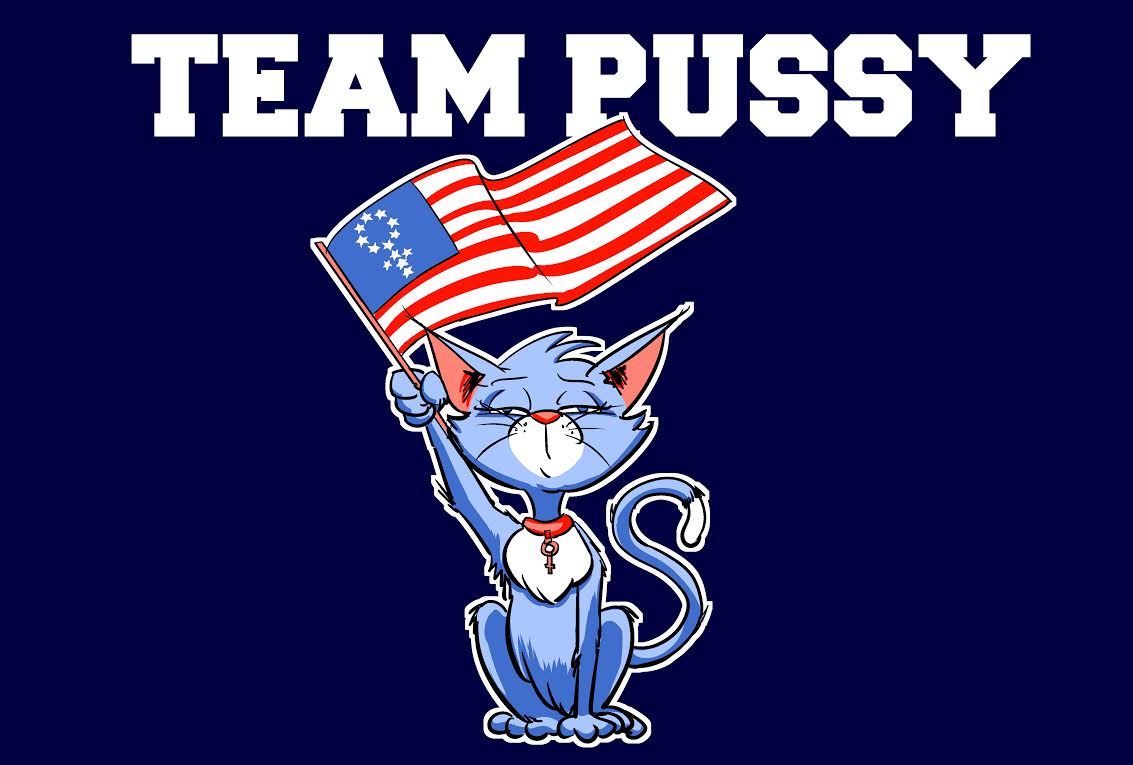
Team Pussy is a movement to get out the vote. It was created to mobilize and inspire women and men, young and old, to show up at the polls on November 8 to support women’s rights, that is human rights. Team Pussy comes at a unique moment in history. We’re on the verge of electing America’s first female president, a candidate who has worked tirelessly for thirty years to support women’s rights. Even Trump concedes she’s a fighter. We’re also in the midst of a national conversation about pussy. And it’s conversation that hasn’t always gone the way I’d like it to.
Pussy isn’t the problem, it’s the solution. By shining a spotlight on sexism in the USA, Trump has done this country a warped kind of service. His personal, overt disdain for women is exposing America’s national, covert disdain. Misogyny is so ubiquitous in our country that, ironically, it’s become invisible to so many citizens; it’s so normal and reflexive that we’re lulled into colluding with a system of sexism we hardly notice anymore. Don’t look away now. Instead, let’s ignore Scottie Nell Hughes and talk about pussy.
I first researched and wrote about “pussy” in 2001 after a male friend used the word to insult a guy who backed out of a business deal. Of course, I’d heard it before, possibly said it myself, but suddenly, it struck me as wrong to use it to imply cowardice or ineffectiveness. Why must we equate weakness with the female sex organ? Why have we for so long?
I began to wonder how one — how we — might take the wussy out of pussy.
Is it possible to change the meaning of the word, to restore to “pussy” its deserved glory? Could we use pussy as a compliment? Could pussy denote someone or something as cool or heroic or impressive? “Rosa Parks — what a pussy!”…
Pussy has so much potential, it’s a shame to limit it to the immature and derisive mocking of weak boys. Let’s give it a shot in the arm! I envision hit songs featuring “pussy” — “Who Let the Pussies Out?” or “The Real Slim Pussy” or “The Real Shady Pussy.” Hallmark-type cards that read “Thanks for being such a pussy!” Colloquial expressions: “You da pussy!” “Stand up and fight like a pussy!”…
And when, and if, Joe consummates his next business deal, I’ll be there to toast him, saying, “You’re so pussy.”
Flattered, he’ll smile.
I wrote the post before social media and “going viral” were phrases we all used, but I created a bunch of “Team Pussy” T shirts (at that time, just black with “Team Pussy” written in pink cursive) which sold out through my email in a few days. Though I was passionate about Team Pussy, I didn’t have the time or resources to dedicate to it, so I went on with life, trying to interject the word when I could. Fast forward to Trump’s video. People on social media started messaging me they were wearing their shirts or looking for their shirts. And then I watched the last debate and heard Trump asked if he would accept the results of the election, and heard him reply “I will look at it at the time.”
Let’s give the guy something to look at.The sides are so clear. You’re either on Team Pussy or Team Trump. Here’s a chance to make your choice loud and proud and inspire everyone who sees you. All merchandise features our cat and is available at our Team Pussy shop. Our favorite shirt looks just like the art posted here. Its reverse sides reads: “Vote Nov 8.” All shirts are high quality, 100% cotton with a navy blue background and come in fitted or straight cut. We also have gorgeous, durable white totes with red handles showing the same art and “I’m with her” on the reverse side. The T shirt with just the cat will be available soon. I saved 4 XL vintage “Team Pussy” shirts from 2001 and I’m making those available now at the store.
Feel free to use our Team Pussy art as your profile pic which we urge you to do at least until November 8! This image below is sized perfectly for your Twitter profile. Suggested intro Tweet: “Joined #TeamPussy to GOTV on Nov. 8. I’m with her.”
If you see a news story about someone doing something brave or cool, for example as Ijust did: Salma Hayek Claims Trump Leaked a False Story After Turning Him Down, then Tweet the story: “Salma Hayek is so pussy! #TeamPussy.” Nominate a #Pussyoftheday or give a shout out to one of your evergreen favorites: “Jessica Jones is so pussy! #GoTeamPussy.”
For Instagram, here’s art sized perfectly if you want to switch up your profile pic.
Post photos of you wearing #TeamPussy gear and our goal is to send you a free button or magnet once we get those in.
Our Team Pussy cat is worn out and pissed off, but she’s a fighter. She’s going to be out there every day with all of you, working hard to make sure Hillary Clinton wins big on November 8 with results that even Donald Trump won’t dare contest. Please join her. Thanks, pussies! Go team!
To all women who loathe Trump but don’t like Hillary:
In the past week or so we have heard and seen an avalanche of (even more) unspeakable things come out of Donald Trump. Most of us are justly outraged by his attitude and actions toward women: Trump has proven he views us purely as sexual objects, reduced to—and rated ruthlessly on—how we look and our sexuality. Every day hundreds of women give myriad reasons they will not vote for him, and this is one of them.
Many of these same women also give reasons for disliking Hillary, however: she’s nauseatingly smug, she’s cold, she dresses like crap, she must be secretly lesbian. I have heard everything from “I hate those dorky headbands she used to wear” to “why can’t she stop making that awful grin-grimace?” And the number one reason I hear, time and again: I can’t vote for Hillary because she stood by her cheating husband.
At best the above statements would be right at home when judging a beauty pageant; they are all based on rating her appearance or sexuality. At worst, they’re the feminine equivalent of the oldest, most patronizing and paralyzing harassment we’ve each been exposed to forever: why don’t you give me a smile? Why don’t you dress like a girl? You think you can make [X] sexual choice? You asked for it! You’re a cold bitch, you’re a lesbian!
My fellow women: we have a chance to elect a female to the biggest power position in the world, and yet we are picking at her clothing, her smile, her sexual choices. We are basing our votes and the future of our country on our reaction to how she maintains her looks, her facial expressions, and her marriage.
Why do we do it? The simplistic answer is that sexual competition and judging – tearing down or eliminating other women – was traditionally our only source of power in most societies. Two-hundred and fifty years ago Laclos’ “Dangerous Liaisons” villainess, the Marquise de Merteuil, perfectly captured this primal female urge in her personal motto: “win or die.” For the few who have not read the book (or seen one of the film adaptations), the story can be summed up simply: women viciously destroy each other and the man wins. “When one woman strikes at the heart of another she seldom misses,” the Marquise flatly informs the Vicomte de Valmont, “and the wound is invariably fatal.” Indeed, all of the women lose big in Laclos’ tale, in particularly sexually-damning ways—Cecile, defiled, returns in shame to a convent; the Marquise is disfigured and humiliated into never showing her face or using her body again; and Madame de Tourvel is so shame-stricken and humiliated she simply dies (the ultimate sexual give-up) — while the man walks away, smirking, with all of the power in the palm of his hand.
Earlier in the 2016 election season, already disgusted with the playground taunts passing for politics, I tweeted a personal vow (which now seems hopelessly dated and innocent, given how things have circled the drain since): I will not talk about how women look for the rest of the season. I will not join in comparing Heidi Cruz to Melania Trump, I will not weigh in on Megyn Kelly, I will not critique the Trump surrogates’ clothing and makeup choices, I will not discuss Hillary’s wardrobe or everyone’s possible plastic surgery or the attire or looks of any of the reporters who are covering them. (Just to be fair, I am also not going to discuss Donald Trump’s hair, skin color, or hand size either, although I did relish that whole ridiculous defend-my-manhood exchange with Marco Rubio.) I confess: I fell off the wagon once and gleefully tweeted about Melania’s choice of the Pussy Bow blouse after her husband’s big sexual assault bomb dropped—but I have otherwise found the self-enforced ban to be very illuminating. I constantly have to censor myself: we are so conditioned to comment on and tear down other women it leaves one often speechless in finding another topic.
Once Trump paraded Bill Clinton’s accusers through the second debate and we were all newly reminded of Hillary’s marital issues I added an even more important personal ban to my list: I will not weigh in on another woman’s sexuality. Period. Does Hillary love Bill, or is it a marriage of convenience? Did she stay with him because she forgave him, because she secretly likes women better, or because she saw him as a stepping stone for her ambition? I personally hope Hillary has a rotating stable of pool boys at the local Country Club, but I will never say another word about it. I will not pass judgement on any woman’s marriage, I will not speculate on who or what gender she sleeps with, I will not entertain reports of her fidelity or lack thereof. Unless she (not her husband, her aide’s husband, her ex-husband, or any other man in her life) has broken a law with her own sexual behavior I will not form or voice an opinion. Women are not the keepers of morality, we cannot hold them responsible for any man’s sexual actions, attitudes, or behaviors. Furthermore, we cannot assume to know what goes on in their relationships. Most of us would never judge another woman for electing to divorce a cheater; why do we all feel we can condemn one for electing not to? How dare we judge any woman on who or how they choose to love, to divorce, to stay, to marry.
Which brings me back to “Dangerous Liaisons.” I do not think all women should automatically vote for Hillary because she’s a woman; that’s reductive and ridiculous. But every one of us needs to carefully examine our reasons if we choose not to vote for her: is our decision intellectually defensible, or are we allowing our Neanderthal brain, our vestigial sexual competitiveness to drag us into knee-jerk bitchiness? Do we disapprove of her policies or doubt her experience…or do we just dislike her marital situation, her sartorial choices, her personal presentation? And can we live with ourselves and our country if we let this particular man walk away, smirking, with all of the power in his tiny, little…ahem, with all of the power in his hands?
Melissa Duge Spiers is a freelance writer based in Watsonville, California, and a frequent contributor to Reel Girl. You can follow her on Instagram @mdugespiers or Twitter @MDugeSpiers.
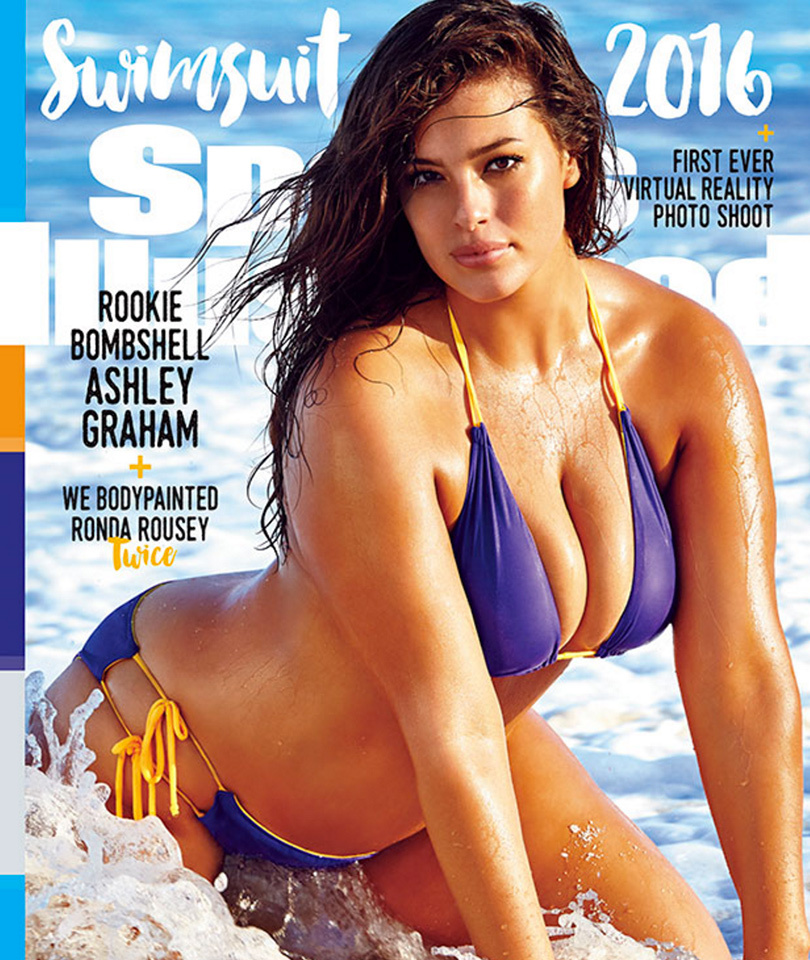
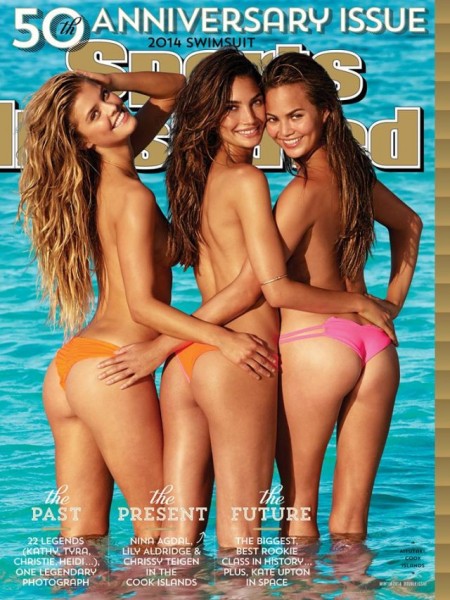
Isn’t this great, girls? Even if you aren’t skinny, you can pout doggy style in the surf! Yes, apparently, it’s true that even if you’re not a size zero, men will still want to fuck you. No worries, sweeties, you still have value in the world.
Maybe we can get a woman over 50 to pose in a bikini. Helen Mirren? Never mind that she’s a great actress, it’s her body we want to show off. What about a plus size woman of color? Now that would be a real leap towards equality.
Despite females’ increased participation in sport since the enactment of Title IX and calls for greater media coverage of female athletes, women appeared on just 4.9 percent of covers. The percentage of covers did not change significantly over the span and were comparable to levels reported for the 1980s by other researchers. Indeed, women were depicted on a higher percentage of covers from 1954–1965 than from 2000–2011.
Do you see we’re going backwards here? Putting a plus size woman on the cover of the SI swimsuit issue isn’t any kind of progress.
When Serena Williams made the cover of SI in 2015 as sportsperson of the year, she was pictured in stilettos and a black body suit, one bare leg slung over a chair.
Some defended Serena’s cover claiming it’s important to show that a woman can be powerful and sexy. But for men, it is their skill that makes them attractive. For women athletes, if they happen to be “attractive” it is in spite of their talent, not because of it. Men’s bodies are valued for what they can do while women’s bodies are valued for how they appear.
If you’re going to tell me this sexism is just innate, tritely quoting: “Women use sex to get power, men use power to get sex,” listen to me carefully: People who are not in power learn to survive and be successful by pleasing those who are in power. That need is the only thing innate about reducing talented, skilled, brilliant women to body parts. Men, as a group, not individually, are able to stay running the world as long as women, as a group, stay weak.
Here is what I blogged in 2014:
Memo to the world: objectifying fat women is objectifying women
Plus-size swimwear company Swimsuits for All set out to prove that “sexy curves go beyond a size four” by shooting its own swimwear calendar, including a picture reenacting this year’s Sports Illustrated swimsuit issue.
Are you kidding me? Do you think I’d be any happier if my 3 daughters saw that picture in the Safeway checkout line instead of this one?
All right, maybe I’d be a smidgen happier that my kids wouldn’t have to see more starving women defined as beautiful, but my goals and expectations are so much higher than what this image from Swimsuits for All represents. I want to see images of women where they are not defined by their sexuality, by whether whomever is looking at them finds them sexy or not, where what they look like in bathing suits is not the be-all end-all, where who thinks they are attractive only matters in a very particular context, like when they are with someone who they love or want to have sex with.
Swimsuits for All is in the business of selling swimsuits. The company has got to sell its product, so posing women in the merchandise that it’s marketing makes sense. I’m not indicting the company, but pretending as if seeing this image all over the internet is liberating is ridiculous. Also, it might be nice to see the women swimming in their suits. What about playing volleyball on the beach? Building awesome sandcastles? Doing something? There could be a shot of a woman or two sunbathing, as long as the “aren’t I sexy” poses were not the dominant, ubiquitous ones.
I’ve written this for a long time, but “fat” women beauty contests don’t represent progress. Women no longer paraded as meat is progress.
Still confused or want to see more images to make this point? Please take a look atReel Girl’s recent post: Why do men in America feel entitled to women? A gallery of reasons. You’ll see this famous painting by Manet (look she’s got fat rolls and she’s naked, isn’t that cool?) along with contemporary images of dressed men paired with naked women.
“Cosmetic surgeons say patients who once requested celeb features now come armed with their own ultra-filtered selfies. About 1 million self-portraits are taken daily, and more than a third of these are retouched…” —Women’s Health Magazine
There is so much that is disturbing in the preceding statement it would take volumes to unpack, so when I initially read it I focused on the part I’d never heard before: ultra-filtered, retouched selfies? Like most, I had abstractly pondered bits and pieces of the selfie phenomenon (why do so many women take them in the driver’s seat of their car?) but I had only occasionally wondered about the photos themselves: the round-faced FB acquaintance whose rotating stock of profile photos shows random cheekbone prominence, the celebrity we all know to be zaftig suddenly appearing waifish. I saw them, but I didn’t really THINK about them, sort of like we all know our parents had sex because, well, here we are, but we really don’t give it any credence: it must have been a lucky shot somehow…surely not intentional.
I had frankly just ignored the whole selfie phenomenon, hoping it was a passing fad like jeans belted below the butt. It has, of course, become abundantly clear that both unsightly crimes of overexposure – both so self-consciously “casual” yet so obviously calculated – are here to stay. And while the low-pants problem seems to hobble only those who sport the style, the retouched selfie has a deep and reverberating effect on all women.
With the help of new apps and filters today’s self-portraitists make no attempt at truth: they have become impressionists, not photo-realists. Standard filters in every social media platform let you create perfect skin, erase wrinkles and blemishes, adjust your coloring and add or subtract makeup effects. Dozens of other free, downloadable apps and filters can make you appear taller, skinnier, curvier, blonder, or tanner, not to mention redesigning your nose and jaw, making your eyes bigger, and perfecting your skin. With Perfect365 you can adjust the structure of your face, create a new jawline, and make your eyes bigger. ModiFace also lets you change your nose, the size of your lips and the angles and curves of your jaw. Spring and Facetune give you tools not only to change your face but your whole body: create or diminish curves and height with a simple pinch of your fingers. Want to be taller and thinner, with a narrower waist, bigger boobs, and curvy hips, but skinny thighs? Just squeeze, slide, and save. Modern selfies are reproducing their subjects about as accurately as Picasso reproduced Dora Maar.
Of course, for years before Instagram, Photoshopping celeb photos was the dirty secret of magazine wizards, slimming down and prettying up their cover subjects and advertisement models. There used to be regular protests and outcry against such gross distortion and misrepresentation; suddenly there are no more critiques. Celebrities regularly tweak nearly all their candids and selfies (whole websites and blog posts are devoted to pointing out the doctoring of famous faces and posteriors), and where the social-media aristocracy has gone the rest of us have followed.
Talk to any teenage girl and she will confess to at least “trying” the face- and body-altering apps. Already struggling to grow up in the overly sexual, image-saturated 21st century with anything remotely resembling a positive body image (or, more important, a positive self-image based on something other than her body), girls now feel compelled to make Bratz dolls out of their photos. And while it’s so easy to blame “society” for this mess – those dolls, those magazines, those tv stars and models – a quick flip through Facebook or OurTime reveals that we can’t just finger media sources and stars. Beyonce and Kim Kardashian are not the only ones presenting unreal images to the world; we need to look closer to home. Instagram and Facebook (with an overwhelmingly middle-aged, female base) overflow with profile photos in the ubiquitous fish-lip kissy pose (instant cheekbones! Wrinkles smoothed! Puffy lips!) and now with over-processing from filters and apps our middle-aged-mom photo collections are becoming a veritable Madame Tussauds guessing game: is it plastic surgery or filters or Facetune?
Yahoo Labs’ reported, after studying nearly 8 million selfies, that “doctored shots were more likely to be viewed and draw likes” than natural ones. Instead of using our wisdom and experience to denounce this sham contest of popularity-based-on-pretend, women of a certain age are lining up like baby birds, mouths agape (with lips artfully puffed by app or derm), and competing for attention. In our younger, pre-selfie world we shored up fragile egos by fishing for compliments in the locker room, moaning “I’m so fat!” and counting on a chorus of “you are NOT. I’M fat!” and “You are SO not fat. I wish I had YOUR legs!” to make us feel better. Now when we feel a little insecure we post a soft-focus, subtly slimmed, kiss-puckered selfie with an aren’t-I-just-playful title like “My goofy date night face!” Or we post a blown-out b&w photo so artistically grainy you can’t tell if our eyes are open or closed and we demur modestly by using Trump-speak third person “Just me – just Suzie…no makeup – no filter…” Then we sit back and wait for the pile of predictable, soothing views, likes, and comments to roll in: “wow! Beautiful!” “You are so gorgeous, girl!” “Beautiful inside and out!” Et voila – instant Selfie-worth! Selfie-esteem! Selfie-confidence!
The truth hurts, they say, and right now it’s staring middle-aged mothers in our over-filtered faces. We’re probably not fooling anyone with our fish kisses and filters, skinnied “Spring” selfies and sexy soft focus, but we are damaging our daughters without a doubt. We’re buying into a falsified reality – creating it ourselves, and using it to bolster our self-esteem…and we’re modeling it for our daughters in a very public forum. The real problem, obviously, is not the filters or fillers, the soft focus or Facetune. The problem is that we’re still getting our self-worth from our looks – and now they aren’t even our looks any more.
Read Melissa Duge Spiers previous posts for Reel Girl: