Are mental health diagnoses at a young age illuminating, making way for clarity, effective medication, community, and treatment or pathologizing in a way that pigeonholes kids and keeps them stigmatized and stuck? My daughter and I talk about her “emergent borderline traits,” other diagnoses, and her healing journey on my new YouTube channel.
To learn more about our family’s story, subscribe to the channel to see future videos, and read an earlier Reel Girl post about the modality that transformed our family dynamic Kids Speak in Metaphor—Can Parents Learn How to Listen? You can also go to my site Listen2ConnectCoach.com, the About page and the Media page. To learn more about Nonviolent Communication specifically and download free Feelings and Needs lists, try the resources page.
“Patriarchy encourages women to become mothers, then abandons them.
Through isolation, overwork, lack of childcare, lack of parental leave, lack of healthcare, and through lack of real community support.”
I would add to this: lack of reproductive rights, the wage gap, and access to quality education. I could go on…
Bethany writes:
“Patriarchy sets mothers up to fail and then blames them for the suffering it created. All of this limits a mother’s capacity to show up in the ways she may have wanted to.”
So when I speak about the Mother Wound, many women get reactive and tell me:
“You’re just blaming mothers.” “You’re putting even more on women.”
And I understand why it can feel that way.
But here is where I see it differently.
When we only position mothers as passive victims of the system, we unintentionally strip them of their power.
Mothers are not ONLY victims of patriarchy. Mothers are ALSO participants within the system—and therefore have the capacity to interrupt it.
Mothers are extraordinarily powerful, precisely because they are formative.
And recognizing their formative role is not equivalent to blaming them.
It’s about responsibility in the truest sense: the ability to respond differently.
This critical nuance is the core of my work and is often misunderstood.
Not every woman is a mother. But every woman is a daughter.
And the work of healing begins there.
When a woman becomes more conscious of:
what she herself received and missed from her own mother
how she adapted to patriarchal norms in her own family
and what she now chooses to carry forward
She begins to break the cycle with her own children.
This is not about being hard on yourself or trying to be the perfect mother.
It’s about awareness, honesty, and a willingness to do what your own caregivers could not.
I’m not saying this is easy work.
The truth is, not everyone is ready for it.
But this is where change happens.”
I’ve had coaching from Bethany, and she’s been instrumental in helping me find my inner mother. I’ve also trained in Nonviolent Communication (NVC) to learn the skills to emotionally regulate and show up with presence, curiosity, and compassion for myself, my partner and my kids. Basically, figuring out how can I be resourced enough to be as healthy a mom and person as possible while living in the patriarchy that degrades my values and doesn’t support my well-being.
Nonviolent Communication, created by clinical psychologist Marshall Rosenberg, teaches that all human behavior is motivated by an attempt to meet universal human needs. Feelings are clues pointing to those needs. NVC teaches how to to express these needs honestly while staying connected to the humanity of others, which basically means not creating “enemy images,” remembering that everyone has needs and everyone’s needs matter.
So, for example, say I go into my daughter’s room and it’s a mess. Maybe I’ve asked her to clean it, and instead I see her lying in her bed, looking at her phone.
How do I feel when I walk into this scene? Probably frustrated and irritated. My underlying needs could be: order, beauty, and maybe respect or consideration.
Before learning NVC, I might have yelled at my kid, something like: “What are you doing? Get up! Clean your room!” Maybe I would’ve added a threat: “If you don’t, you’re not going out.”
I might have gotten compliance from her. She may have rolled her eyes, gotten defensive, she may have yelled back. Most likely any motivation would come from fear about a consequence or from wanting to please me, a fear of disconnection, maybe a feeling of shame and a need for acceptance. It’s doubtful she would have met or recognized any intrinsic motivation, any desire to care for her space, what she wants and how to make that happen as far as the state of her room. And without being motivated in this deep way, the whole cycle is likely to repeat: my daughter dependent on me, yelling and threatening.
Now, if I find myself in this scenario, the first thing I do is offer myself compassion for the pain of my unmet needs. My needs matter, totally separate from hers.
When I see her messy room and my daughter in her bed, I might quietly say something like “Ouch,” and put my hand on my heart.
I do whatever I need to do to regulate—maybe I leave the room and come back minutes or hours later. Timing is everything. I love the phrase: “Strike when the iron is cold.” I rarely talk to my kids now if I’m activated. After I’ve soothed myself, I turn with curiosity in my imagination, to my daughter. Rather than thinking about what she’s saying no to, I wonder: What is she saying yes to? How might she be feeling—tired, overwhelmed? What needs might be alive in her—ease, comfort, rest?
When I’m in that “NVC consciousness,” if I still want to talk to her, I go ask her if she’s in a place to talk to me. I might go back in her room, sit next to her on her bed, and gently rub her head.
“Hey honey, how are you?”
“Tired.”
“Yeah, that makes sense. You’ve been busy.”
“Yes.”
“You just feel like resting.”
“I could sleep forever.”
“I get it. Is this an OK time to talk about your room?”
She sighs. “I guess.”
“When I see the clothes on the floor, I feel kind of annoyed and anxious. I got you those clothes, and I feel sad when I don’t see them not taken care of the way I wish they were. I’m also thinking about the washing machine—when the laundry piles up like this, it makes it hard for everyone else to get a turn to use it. Does that make sense?”
“Yes, I see that.”
“I’m wondering if you have any ideas about how to take care of your clothes in a way that works for everyone in the family?”
“Yeah, I could do a load later today.”
“That would be helpful, thank you. Any other ideas?”
“While I’m doing a load, I can clean my room.”
“That would be great. Thank you for thinking about this.”
“Sure, I like it when my room is clean. I get it.”
“I love you.”
“I love you.”
My priority is connection with my kids—and my long-term goal is helping them feel safe and supported so they can learn how to emotionally regulate. Whether or not my daughter cleans her room is secondary.
Before I learned NVC, I was a “power-over” parent. I thought my job was to teach my three kids to be “good” and “successful” by obeying my wise and smart rules.
When my oldest daughter struggled with behavioral health challenges, everything changed. I realized I didn’t actually know what was best for her all the time. I realized she was a different person that me with her own feelings and needs. I know this may seem obvious, but somehow, I really thought, just like my reflex reaction to my youngest kid’s room, that I know best how and when everything in their life should be done.
When I learned NVC, I realized I’m not the ultimate authority on all things, the teller of truth, God, as patriarchy would have me believe in that there is always a power over another person or thing. With NVC, I learned how to actually listen to my kids, to meet them where they were instead of where I thought they should be.
So many of the rules and expectations I had internalized—compliance, obedience, rewards, external validation—were rooted in patriarchal values, not in fulfillment, joy, or creativity.
And just to avoid turning this into a binary: all three of my kids are actually more “successful” (I think all human are) when they are intrinsically motivated—when they are living authentically, recognizing their deeper needs, and making choices from that place.
That’s the kind of success I care about now.
To learn more about my daughter’s mental health challenges and NVC, read this post and go to Listen2ConnectCoach.com To download free NVC Feelings and Needs lists, go to https://listen2connectcoach.com/resources
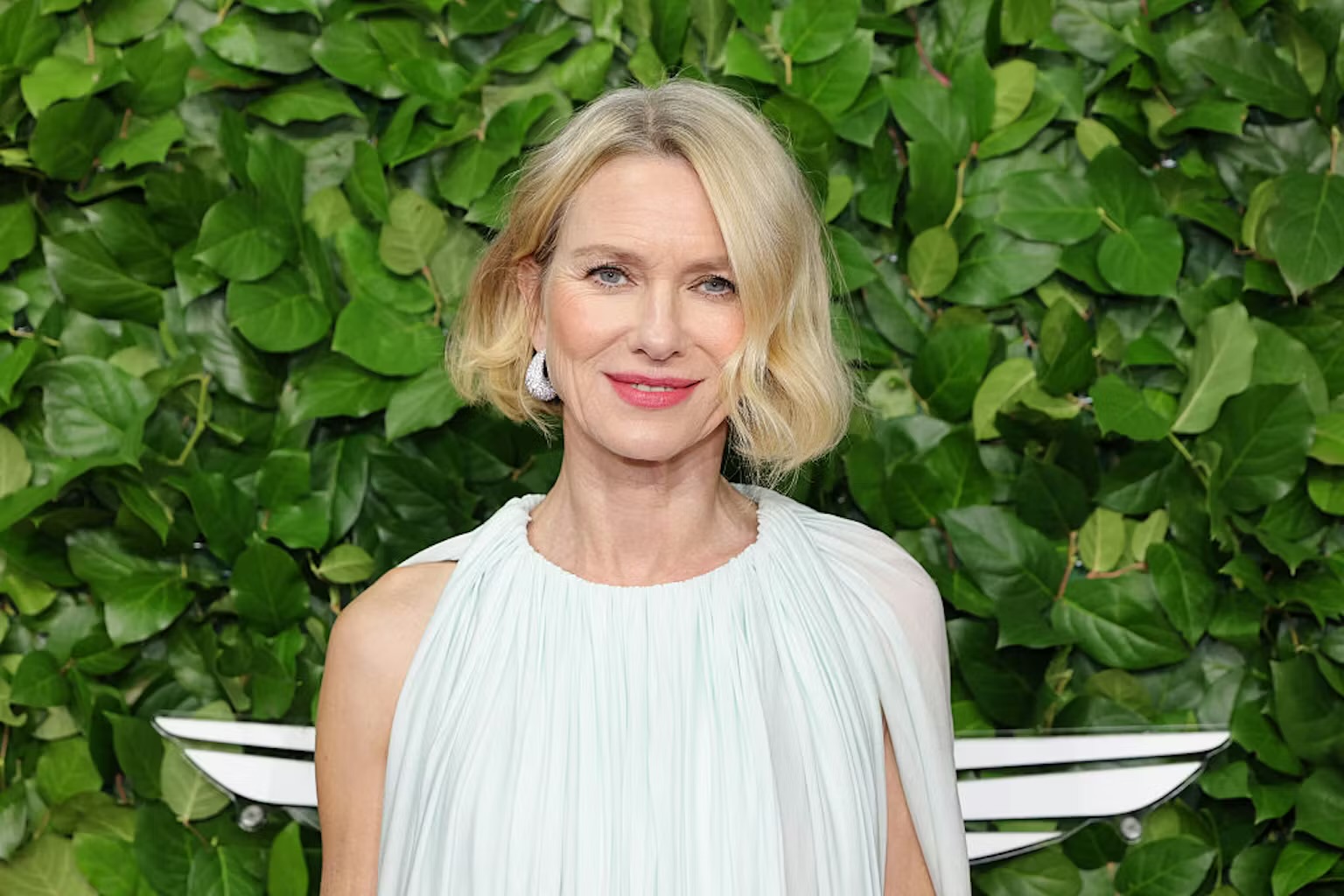
In a recent interview, when actress Naomi Watts said “Tolerate my jowls,” she made clear it’s not her job to surgically alter her face so you don’t feel uncomfortable. If her face stimulates pain for you, learn how to regulate. You feelings are not her problem. Naomi Watts is #unfawning.
I’ve been posting a lot about Ingrid Clayton’s new book and how she prefers the term fawning to codependency or people-pleasing, because when we “connect to protect” it’s often not a conscious choice but a trauma response, a nervous system reaction. Psychologist Pete Walker describes fawning as “a response to threat by becoming more appealing to the threat.”
I was thinking about how when women are young— especially when they are white and a weight preferable to the patriarchy— their bodies, to some degree, can’t help but “fawn.” Their bodies fit so perfectly into the system that rewards female compliance.
I posted a Tik Tok video about how my face, as a 57 year old woman, like Naomi, is no longer fawning. Even if a woman decides to take a path different from my own or Naomi’s, her body, on some level, is going to rebel: 57 isn’t the same as 27.
So far, that shift to #unfawning, has been disorienting and confusing to some degree, all changes are like that, but it’s also been incredibly liberating. And that part of the story seems to be, too often left out. That erasure feels like more fawning.
I can’t recall ever being so clearly in a situation where my body simply, repeatedly says: “No, I won’t do it. I won’t conform to that standard, even though, I know you believe that would make your life easier and safer.”
And surprise, my life is easier and safer #unfawning. I don’t miss men catcalling me. Why was I supposed to miss that?
Even though my body is older and supposedly less strong—debatable, I no longer smoke a pack of Marlboro Reds or drink alcohol—I feel so much safer waking down the street, just being in the world feels calmer. I don’t miss the free drinks or free food that were never really free. My body knew that too.
I think maybe the scariest thing about getting older, is when you’re young and you keep getting warned in so many ways how horrible and terrifying it’s going to be. I think that fear is one of the most powerful factors to keep women control. What if getting older isn’t something to be afraid of? What if it is, in fact, joyful?
When my teenage daughter was in residential treatment for behavioral health challenges, she would tell her therapists about the time my husband kicked her out of his truck on the freeway.
That never happened.
The first time my husband and I heard her story, we were shocked and defensive. “How could she say something like that?” We asked the therapist. “Is she trying to hurt us?”
“Lying is a consistent problem for her,” the therapist told us. “We’ll confront her together in a family session. If she can’t be truthful, she won’t get better.”
Finally, all in one room, my husband and I demanded our daughter tell us why she made up negative stories about us. We restated what really happened: “When you yell at us, get physical in the car and threaten us, when you grab the steering wheel, or shove the car into park and your sisters are in the back seat, we cannot continue to drive. We’ll pull over and ask you to get out to calm down. We do that to keep everyone safe. We would never force you out on a freeway.”
Our daughter’s eyes glazed over, and she wouldn’t say anything or respond to us at all. My husband and I got more agitated, frustrated, and defensive. That session ended, like so many others, in radical disconnection.
Several therapists later, when we heard the same story yet again, I rolled my eyes. “I can’t go through this in another session, it’s a waste of time and money.”
“What about just listening to her?” said the therapist.
“What?” I said. “She’s lying.”
“But what was she feeling?” asked this therapist.
“What was she feeling when the thing that never happened happened?” I said, my body stiffening.
“We’re not going to enable her,” said my husband, reciting the counsel of so many experts. “She’s manipulating us.”
“Can you listen for the emotions underneath her story?” said the therapist. “Could that be the truth for her?”
I’m a writer, skilled in translating emotion into metaphor, and still hearing the therapist emphasize feelings beneath the narrative, my brain short-circuited. “You mean how would she feel if we had left her on the freeway?”
“Yes, can you picture that?”
I closed my eyes. I felt like I had to harness every brain cell in my head to even imagine my daughter abandoned on 101 North. “She would be terrified,” I said. “Totally alone.” When I spoke those words, I felt them. I finally experienced the empathy for my daughter that always eluded me when I pictured her on a tree-lined street.
In our next family session, when the freeway story came up, I blinked and saw her standing on the shoulder, cars whizzing by. “That must’ve been really scary,” I said.
“Yes, it was scary,” she said. She went on to talk about how lonely and sad she was, and how much shame she felt for acting out— this from a kid who would never tell me what she was feeling. And tragically, I spent so many years begging and ordering her to open up. Not long before that session, I’d written in a letter to her:
“Time and time again, we’ve asked you to be honest with us, to be specific about what is happening for you, what problems you face and how you work through them, but what we get is lies or half truths and you taking a victim role. We are not asking you to be perfect. What we need is for you to approach our talks with honesty, openness and authenticity, to feel the words that you’re saying.”
I was asking my daughter to choose to feel, as if that were a conscious decision she could make—and then I expected her to somehow summon the courage to share those painful, vulnerable feelings with me, her angry and frustrated mother.
In her new book, Fawning, Dr. Ingrid Clayton writes: “My brother once told his teachers in elementary school that our parents made him sleep outside at night, in the freezing cold. He said he curled up in an empty hot tub with nothing but the cover for a blanket. This is NOT what was happening in our house, but even as a kid, I remember thinking, that is genius. Because that loneliness, that fear, that neglect…was.”
When my daughter found her own ingenious way to share her internal world with me, I didn’t meet her with curiosity. I yelled at her for lying.
All these years later, I sound like I’m judging myself, and that isn’t my intention. I want to share how desperately I wanted to connect with my daughter, how much she wanted to connect with me, and how we repelled each other like magnets. Too many mental health experts and treatment centers push parents to create and hold firm boundaries in order to achieve behavior change, instead of showing us how to connect with our kids. Professionals handing down wisdom from mountaintops can’t guide us when they don’t know how to listen to us or our children.
Reading about the Reiner family tragedy, I was struck by a similar moment of clarity when the parents spoke about their son Nick’s history in treatment. In 2015, Rob Reiner told a reporter: “The program works for some people but it can’t work for everybody. When Nick would tell us that it wasn’t working for him, we wouldn’t listen. We were desperate, and because the people had diplomas on their wall, we listened to them when we should have been listening to our son.”
Michele Reiner added, “We were so influenced by these people. They would tell us he’s a liar and he’s trying to manipulate us. And we believed them.”
My husband and I didn’t have a magical, instantaneous metamorphosis the first time we heard my daughter’s feelings underneath her words. We were still scared, defensive, and confused as we all muddled our way through recovery. But what shifted dramatically that day was our orientation, our goal, our North Star. We no longer prioritized fact-checking, scanning words for accuracy, evaluating for objective truth, and deciding how much we agreed with everything said. Instead, slowly but committed, we turned towards the principles of Nonviolent Communication (NVC) and began practicing empathic listening with each other. Developed by clinical psychologist Marshall Rosenberg, NVC centers on identifying feelings and the universal human needs beneath them. Rosenberg taught that conflict arises not from those needs, but from the strategies we use to try to meet them—and that when needs are heard, compassion becomes possible.
I have no doubt my family will spend a lifetime continuing to learn how to listen to each other, but all these years later, my daughter is happy, healthy, and though forever poetic, no longer depends on metaphor to risk expressing her truth.