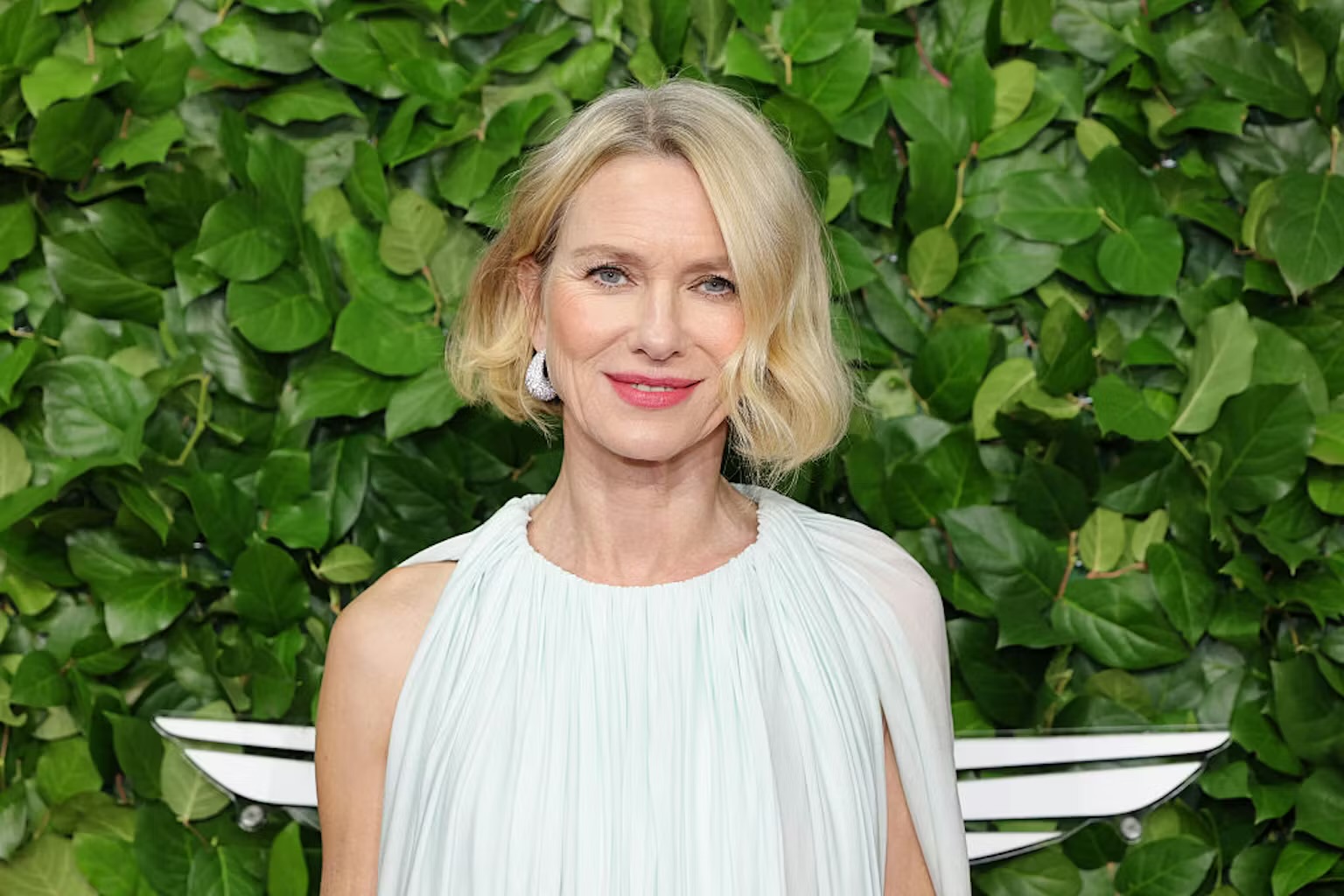
In a recent interview, when actress Naomi Watts said “Tolerate my jowls,” she made clear it’s not her job to surgically alter her face so you don’t feel uncomfortable. If her face stimulates pain for you, learn how to regulate. You feelings are not her problem. Naomi Watts is #unfawning.
I’ve been posting a lot about Ingrid Clayton’s new book and how she prefers the term fawning to codependency or people-pleasing, because when we “connect to protect” it’s often not a conscious choice but a trauma response, a nervous system reaction. Psychologist Pete Walker describes fawning as “a response to threat by becoming more appealing to the threat.”
I was thinking about how when women are young— especially when they are white and a weight preferable to the patriarchy— their bodies, to some degree, can’t help but “fawn.” Their bodies fit so perfectly into the system that rewards female compliance.
I posted a Tik Tok video about how my face, as a 57 year old woman, like Naomi, is no longer fawning. Even if a woman decides to take a path different from my own or Naomi’s, her body, on some level, is going to rebel: 57 isn’t the same as 27.
So far, that shift to #unfawning, has been disorienting and confusing to some degree, all changes are like that, but it’s also been incredibly liberating. And that part of the story seems to be, too often left out. That erasure feels like more fawning.
I can’t recall ever being so clearly in a situation where my body simply, repeatedly says: “No, I won’t do it. I won’t conform to that standard, even though, I know you believe that would make your life easier and safer.”
And surprise, my life is easier and safer #unfawning. I don’t miss men catcalling me. Why was I supposed to miss that?
Even though my body is older and supposedly less strong—debatable, I no longer smoke a pack of Marlboro Reds or drink alcohol—I feel so much safer waking down the street, just being in the world feels calmer. I don’t miss the free drinks or free food that were never really free. My body knew that too.
I think maybe the scariest thing about getting older, is when you’re young and you keep getting warned in so many ways how horrible and terrifying it’s going to be. I think that fear is one of the most powerful factors to keep women control. What if getting older isn’t something to be afraid of? What if it is, in fact, joyful?
What do you feel when you read that quote? What does it even mean?
I’m the mother of three daughters. I’ve also been coached by Bethany, and when I read her words, again and again, my needs to be seen, heard, understood, and to matter are met. Her analysis, in my experience, is so rarely articulated and so true.
The simplest way I can explain the significance of Bethany’s quote is through describing my eating disorder and recovery from it. When I was obsessed with counting calories (I grew up in the 80s) I had a lot of clarity on what was good and what was bad: cookies were bad, cottage cheese was good; Republicans were bad, Democrats were good; William Faulkner was a great writer, Jackie Collins was a bad writer. I was a teenager, the world was easily divided into binaries, I knew who I was and where I was going.
In my twenties, when I started to try to give up the bulimia, I tried so many modalities to stop the behavior. I went to private therapy, group therapy, nutritionists, 12-step programs, and nothing worked until I started to practice what today would be called intuitive eating. I got help from an organization called Beyond Hunger in Marin County that supported me to eat when I was hungry, eat whatever I wanted, and stop when I was full. To be clear, this was not an eat when-hungry-stop-when-full “diet.” Many times, as I was learning, I would finish a bag of chips when they stopped tasting good, just because I had the urge to keep crunching, but the difference was I became aware of when I was continuing on past my pleasure point. I was conscious of my choices and I learned to be self-compassionate.
But here’s the really weird thing that happened as I recovered from bulimia. Initially, I lost my orientation of right and wrong. I no longer connected with other women as easily as I had in the past. When I stopped criticizing my body, I got confused. When I stopped eating because it was lunch time or dinner time, and ate when I actually was hungry, I didn’t know how to schedule my day. When I was served a plate of food and I only wanted half of the portion or I wanted seconds, when I was in the mood for salad and not the steak that was served, when I ate because I actually wanted the food and not to protect someone’s feelings, a waiter I didn’t even know or a man who cooked for me, I felt a rush of guilt, shame, and fear.
For so many women, having an eating disorder, being sick, is easier than being healthy. Eating what I wanted, when I wanted felt so rebellious and strange. I felt like how I imagine those tigers do, like the one Glennon Doyle wrote about in her book Untamed, who was free of her cage and still couldn’t run. She was paralyzed,
I was 28 years old when I got better from bulimia and I was 34 when I had my first child. I thought I was ready. Not only had I recovered from a vicious eating disorder, I was sober. I was deeply in love with my smart, sweet boyfriend. I had a career that excited and fulfilled me, I produced talk radio programs, co-founded a non-profit that taught young women ethical leadership skills, I published commentary on politics and culture, and I advocated for women’s issues on national television. Who could be more ready for motherhood than me?
I raised all three of my daughters to be intuitive eaters which for me meant I never gave them rules about what to eat and when to eat it. I never made them finish a plate of food or rewarded “good” behavior with something like ice cream or told them not to “snack” before dinner. I filled the refrigerator and low cupboards with food that they could reach on their own. If they wanted ice cream for breakfast, they was fine with me.
This post is not about how in spite of my efforts, my daughters still grew up with disordered eating. All of them are “healthy” eaters. They eat what they want when they want, they’re adventurous with trying new kinds of food, they’re all “normal” weight.
But when my kids were little, the other moms had a really hard time with how my kids ate. When friends came over, often parents joined, and they were shocked and disapproving that my kids could eat candy whenever they wanted. I honestly believe that part of the reason these parents accepted my family’s intuitive eating, is because neither my kids or I were “overweight.” Once again, I learned, not having an eating disorder separated me from community and incited disapproval, judgement, and confusion.
In my own family, being a “healthy” eater (how I define healthy which is not controlling food, I’m not talking about eating your veggies) caused more conflict, upset, confusion, and judgement. When my kids were allowed to eat whatever they wanted and my nieces and nephews weren’t following the same “rules,” new flexibility and openness had to be reached and that path is never smooth. That journey to a different way of being and relating isn’t so so different from the readjustment sobriety can create in a family that connects and bonds at cocktail hour.
Moms want so much to keep our kids safe, and the way I was raising my daughters seemed dangerous, scary, and chaotic to so many parents. I get that because when I went through a new way of eating, that process could feel dangerous, scary, and chaotic.
Mothers pass on eating disorders, generation after generation, out of concern, love, and a desire to protect. As a woman, when you stop monitoring what you eat, when you let your own body determine what you want and when you want it, you are making a radical choice to trust yourself.
It turns out, at 34, I was not “ready” to be a mom, because no one is ever ready and there’s no perfect time. My oldest daughter never had food issues, but she struggled with behavioral challenges that I’ve written about before and what I learned from supporting her through recovery is that my insights about food didn’t go nearly far enough. It wasn’t just at the dinner table that I needed to follow the wisdom of my body, my intuition, my own unique path instead of the systems that rewarded compliance. As a woman, as a mom, as a mom of daughters, time and time again you’re confronted with a choice: Do I do what the “expert” tells me, the psychiatrist, the teacher, the lacrosse coach, the college adviser, or do I deeply listen to the needs of my daughter?
For example, it never once occurred to me, and I now I realize this lack of awareness was partly because I was born white and to a privileged family, that my daughter wouldn’t go to college. I may have been a Democrat, but I believed in all the rules and status and hierarchy of academia. While I wasn’t dependent on how much money or how much I weighed to determine my status and worth, I was still looking for external validation in my daughter’s grades and test scores. Those numbers told me if I was a good mom, if my daughter would be “safe” and “successful” in the world.
What I know now is that helping my daughters thrive in the world means prioritizing connection with them, listening to them, meeting their needs to be seen, heard, and to matter, not just in what they eat but in every aspect of their lives.
If you want to learn more about Nonviolent Communication or my parent coaching visit listen2connectcoach.com or follow me on Instagram @listen2connectcoach