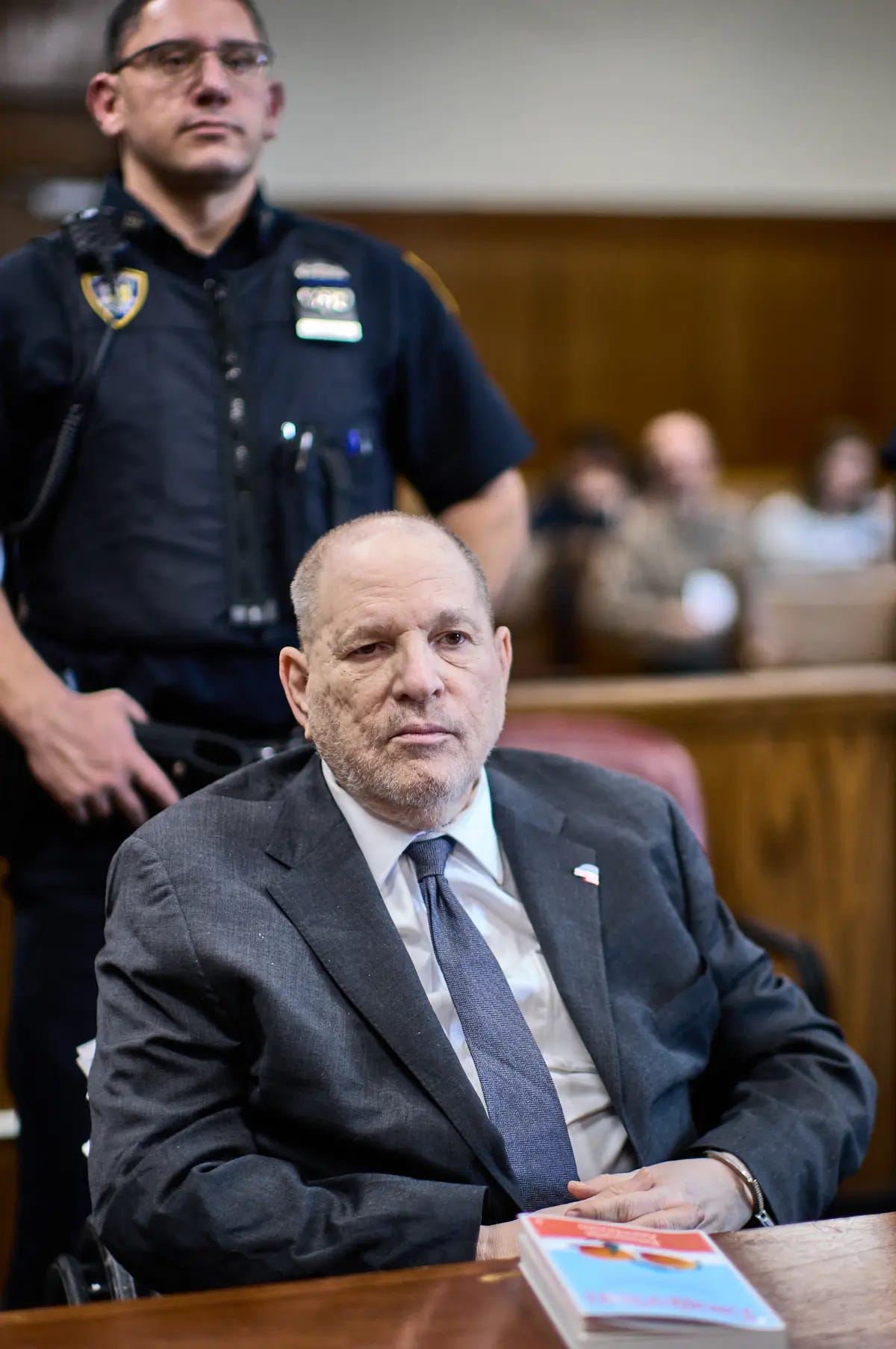
The only way to stop the epidemic of violence against women in America is to empower them financially, physically, socially, culturally. Charging Castro with murder of fetuses does the opposite. If Castro can be charged with murdering fetuses, than a woman getting an abortion, even if that woman was raped Michelle Knight herself, she, too, would be “murdering” fetuses. Castro tortured, raped, and assaulted these women in multiple, horrific ways. Keep the focus on the women, not the fetuses, and bring Ariel Castro to justice for his evil crimes.
I still think, though, that there would be something very strange about executing Castro for the harm he did to fetuses, as opposed to the harm he did to three living and breathing women.
And what if Castro had allowed the fetuses to live? What if Michelle Knight had been forced to give birth 5 times in captivity to babies fathered by a rapist? That would have been its own hell. But would that use, manipulation, and violation of Knight’s body be recognized by our legal system beyond rape charges?
A regime, whether enforced by a government or a madman, that forces women to have abortions is the same regime that can force them to give birth. Reproductive rights are human rights, and violating them ought to carry the severest of penalties. But when will violating the human rights of women be recognized by the U.S. legal system as the heinous crime it truly is?
The only way to stop the epidemic of violence against women in America is to empower them financially, physically, socially, culturally. Charging Castro with murder of fetuses does the opposite. If Castro can be charged with murdering fetuses, than a woman getting an abortion, even if that woman was raped Michelle Knight herself, she, too, would be “murdering” fetuses. Castro tortured, raped, and assaulted these women in multiple, horrific ways. Keep the focus on the women, not the fetuses, and bring Ariel Castro to justice for his evil crimes.
The United States is failing half of its citizens. There are four stories in the news this week highlighting the epidemic of violence against women in America:
“The bottom line is, I have no tolerance for this,” Obama told reporters after he was asked about several recent military scandals, including the weekend arrest of the Air Force’s chief for sexual assault prevention on charges that he groped and attacked a woman in Northern Virginia. “If we find out somebody’s engaging in this stuff, they’ve got to be held accountable, prosecuted, stripped of their positions, court-martialed, fired, dishonorably discharged — period.”
Strong words but what will be the actions behind them? Why did he wait until he was asked to say something? Why doesn’t he take more of a lead on stopping the violence against women in the USA? When will he link up the stories and speak to the epidemic? What is his plan to end the violence against women in America?
Today, I got an email from Rep Jackie Speier asking me to sign a petition. Here it is:
Dear San Francisco MoveOn member,
Sexual violence in the U.S. military is a crisis. The Pentagon estimates that in 2010, there were 19,000 sexual assaults in the armed forces.
Making matters worse, each branch of the armed forces has its own judicial system, and it’s currently legal for base commanders to overturn a conviction at Aviano Air Force Base.
The STOP (Sexual Assault Training Oversight and Prevention) Act takes the prosecution, reporting, oversight, investigation, and victim care of sexual assaults out of the normal military chain of command—which has proven grossly ineffective—and places jurisdiction in an autonomous Sexual Assault Oversight and Response Office.
That’s why I started a petition to the United States Congress, which says:
I stand with Congresswoman Jackie Speier in support of the Sexual Assault Training Oversight and Prevention Act (STOP Act) to end military rape.
I am so happy that Speier is calling a crisis and crisis and taking the the initiative to do something about it.
It make sense that it Speier would be a leader here. I first heard about Speier years ago on an issue that may seem trivial. Speier noticed that when women went to the the dry cleaner, they were charged more than men to get the same garment cleaned. Speier called this out for what it was: gender discrimination. She spoke to how this institutionalized sexism, is one of the many ways women are manipulated into shelling out huge amounts of money for their appearance.
Fascinated, I found out more about Speier and she became one of my heroes. Here’s just part of her bio today:
Jackie Speier (pronounced SPEAR) has lived her entire life inside California’s 14th Congressional District and in April 2008 was elected to represent the district in Congress…
Nationally, Jackie is best known for her passionate and compelling speeches on the House floor, such as her spontaneous response to a congressional colleague who trivialized women who – like her – have had medically necessary second trimester abortions. She routinely speaks on the House floor about men and women in our armed forces who have been raped or sexually assaulted while in the line of duty. She has also taken a lead role in working with the veterans organizations to improve delivery of VA benefits to Bay Area veterans. In 2012 Newsweek named Jackie to its list of 150 “fearless women” in the world.
Locally, Jackie is known as a fighter. In 1978, as a staff member to then-Congressman Leo J. Ryan, she was shot five times while trying to rescue constituents from the People’s Temple compound in Jonestown, Guyana – an attack that left Congressman Ryan and six others dead and was followed by the mass murder-suicide of more than 900 Temple followers. Jackie tenaciously hung onto life for 23 hours on a dusty airstrip before aid arrived. It is this fighting spirit that defines her to her constituents at home…
Jackie was the first California state legislator to give birth while in office and, during her time in Sacramento, she authored more than 300 bills signed into law by both Republican and Democratic governors. These bills included the nation’s strongest financial privacy law and measures that expanded women’s access to reproductive health services and vastly improved collection of delinquent child support payments. She also led high-profile investigations of fraudulent and wasteful government spending and prison corruption, ultimately saving millions of taxpayer dollars…
I know you have a lot to sign and a lot to share, but please sign this petition. If you are disgusted and appalled by the violence against women in America, this is an action you can take to help stop it. This is a beginning. I believe that Jackie Speier will continue to be a leader on this issue and not let it go until the violence against women is over.
In 2005, Grimilda Figueroa, the ex-wife of Ariel Castro, the man who imprisoned, beat, and sexually abused three women for ten years, brought domestic violence charges against him. Court documents state that Figueroa suffered two broken noses, broken ribs, a knocked-out tooth, two dislocated shoulders, and a blood clot on the brain.
Jezebel reports:
However, nothing could be done to protect Figueroa and her children as her lawyer didn’t show up for the court hearing, and the case was dropped. Apparently her counsel cautioned her against speaking for herself, and she didn’t make any objection to the judge’s decision to dismiss the protection order. Both Figueroa and Castro were judged to have “waived their right to any further hearing”, the case’s final document stated. Tragically, Figueroa died last year.
How did the judge decide to dismiss such a case for something so simple as a lawyer not showing up? Why don’t we have better legal resources for victims of domestic violence? How ill-equipped, poorly run, understaffed, and overworked must our legal system be to let a case like that slide? It’s infuriating and heartbreaking to yet again witness the ease with which such cases are dismissed.
America is failing half of its citizens. This violent man, Ariel Castro, was more protected by our legal system than the women he abused. In 2013, there is slavery in America’s backyard and we look the other way and just let it happen. Here are the stats one more time from National Coalition Against Domestic Violence):
One in four women (25%) has experienced domestic violence in her lifetime.
85% of domestic violence victims are women.
Women ages 20-24 are at the greatest risk of nonfatal intimate partner violence.
Nearly three out of four (74%) of Americans personally know someone who is or has been a victim of domestic violence.
On average, more than three women are murdered by their intimate partners in this country every day.
Domestic violence is one of the most chronically under reported crimes.
Only approximately one-quarter of all physical assaults, one-fifth of all rapes, and one-half of all stalkings perpetuated against females by intimate partners are reported to the police.
A new study on violence against women conducted over four decades and in 70 countries reveals the mobilization of feminist movements is more important for change than the wealth of nations, left-wing political parties, or the number of women politicians.
The study in the latest issue of American Political Science Review (APSR), published by Cambridge University Press for the American Political Science Association (APSA), found that in feminist movements that were autonomous from political parties and the state, women were able to articulate and organize around their top priorities as women, without having to answer to broader organizational concerns or mens’ needs. Mobilizing across countries, feminist movements urged governments to approve global and regional norms and agreements on violence.
The scope of data for the study is unprecedented. The study includes every region of the world, varying degrees of democracy, rich and poor countries, and a variety of world religions – it encompasses 85 per cent of the world’s population. Analyzing the data took five years, which is why the most recent year covered is 2005.
2005 also happens to be the year that Ariel Castro’s wife brought the charges against him and her lawyer didn’t care enough to show up in court.
Obama called Harris earlier in the day to offer an apology, according to White House Press Secretary Jay Carney.
“He called her to apologize for the distraction created by his comments,” Carney said during a Friday briefing at the White House. Carney acknowledged later that the president had also “apologized for the remark” during the conversation with Harris.
Obama “did not want in any way to diminish the attorney general’s professional accomplishments and her capabilities,” Carney said. “He fully recognizes the challenges women continue to face in the workplace and that they should not be judged based on appearance.”
“The attorney general and the president have been friends for many years,” Harris Communications Director Gil Duran said in a statement e-mailed to POLITICO. “They had a great conversation yesterday and she strongly supports him.”
Thank you, Obama. You did the right thing. Mostly, I appreciate how your spokesperson made clear: “He fully recognizes the challenges women continue to face in the workplace and that they should not be judged based on appearance.”
I also like Harris’s response. She didn’t mitigate the gravity of Obama’s comment. Good job, politicians, Hopefully, Americans are learning something here.
After Obama’s comment yesterday calling California’s Kamala Harris the “best-looking attorney general,” the internet abounds with critiques about who is the prettiest.
Here just are a few Tweets:
#KamalaHarris is the best looking State AG,have you seen them other breastless doubletalking crumbs. #Sexless
Get over it you P.C wusses! Obama was right! #KamalaHarris is indeed a babe! I have been jacking off to her for years!
#kamalaharris Would it have been better if he called her homely?
Obama, do you have any idea how hard professional and public women have to work to direct the public discussion, critiques, and evaluations about them about them away from how they look and toward what they do? With just a few words yesterday, your reference to Harris’s appearance gave America permission to focus on the “attractiveness” of female leaders.
I’ve been reading and quoting from Caitlin Moran’s excellent book How to be a Woman. This passage (and the whole book, frankly) would be great reading for Obama.
Women know clothes are important. It’s not just because our brains are full of ribbons and bustles and cocktail frocks– although I believe brain scans will finally prove that at some future point. It’s because when a woman walks into a room, her outfit is the first thing she says, before she even opens her mouth. Women are judged for what they wear in a way men would find incomprehensible–they have never felt that uncomfortable moment when someone assesses what you’re wearing and then starts talking down to you, or starts perving you, or presumes you won’t “understand” the conversation– be it about work, parenting, or culture– simply because of what you put on that day.
Men exist in a different world with extremely different rules about appearance than women exist in. For President Obama to intro Harris as “best-looking” shows not only his own sexism but also his ignorance about how sexism influences and affects women’s daily lives, our identities, and our aspirations.
Another thing I’m wondering about, who are the other 49 Attorney Generals that Harris is in the beauty contest with?
Today, when you endorsed California attorney general, Kamala Harris, at her fundraiser, you said:
“You have to be careful to, first of all, say she is brilliant and she is dedicated and she is tough, and she is exactly what you’d want in anybody who is administering the law, and making sure that everybody is getting a fair shake. She also happens to be by far the best-looking attorney general in the country — Kamala Harris is here.”
Women in America are constantly valued for how we look and not for what we do. This prejudice is something every female in America of every age has to deal with on some level every single day. For the President of the United States to refer to the attorney general’s looks is not a trivial thing. I wish it were.
Kamala Harris is California’s first female attorney general. The first one. Why do you have to call the first female AG the “best-looking?” It’s not funny. Not only are you the president, you’re the father of two daughters. You’re telling America and your own kids that you value Harris because of the way she looks. Would you ever consider introducing a male candidate as the “best-looking?” How men look is basically irrelevant when evaluating their performance. Unfortunately, the same is not true for women. Harris, the women of America, and your daughters deserve more respect and an equal playing field. When you called Harris “best-looking” today, you took that away from her. When Americans hear your words, they, too, will look at Harris and evaluate her appearance. If our daughters– and I have 3– hear you, they’ll get training to do the same thing. That training already exists everywhere around them. The last thing our children need is to hear their President focusing on the looks of a high ranking, female politician.
You need to understand this. It’s important. Women put you in office for a second term. Yet, it’s startling to me how few women you’ve appointed to power positions in your Administration. Your cabinet has more men playing starring roles than a Hollywood blockbuster movie.
Women make up 50% of the population yet we’re drastically under-represented in our U.S. government. In 2013, women are just 18% of the United States Congress. Throughout our history, only four women have held the office of Supreme Court Justice. There has never been a female President of the United States. Do you think a female president would introduce a female politician as “best-looking?” Or would she ever introduce a male politician that way, for that matter?
Right now, the U.S. has only five female governors, a low for this century. Harris has the chance be the first female governor of California. To get her there, it doesn’t help to have the U.S. President reduce the race for California attorney general to another beauty contest. That’s bad for women and bad for America.
Thanks for listening,
Margot Magowan
P.S. I’m crafting a summer reading list for you. I know you love books and some of these may help you understand this issue better.
Has anyone read Caitlin Moran’s How to Be a Woman? This book is so damn good. I’ve been wanting to read it since it came out in 2011, but only got to it last month. Moran is British, she started out as a teen writer for a rock magazine and became an award winning journalist.
There is so much that is great about this book, but here’s a section I found particularly interesting and original.
First, Moran quotes a column from The Guardian called “What I’m Really Thinking” written by a cleaner:
Sometimes…I ponder the ironies of the job: for example, that all the ironing consists of men’s clothing. In a bid to escape domesticity, women are refusing to iron their husband’s shirts. Congratulations: your act of feminism means the job is shunted onto a different woman, assigning her a different rank.
Moran responds:
“I’ve seen this idea put forward a hundred times– that a proper feminist would do her own hoovering. Germaine Greer cleans her own lavvy, and Emily Wilding Davis threw herself under a horse, hands still piney fresh from Mr. Muscle oven cleaner. On this basis alone, how many women have had to conclude, sighing as they hire a cleaner, that they can’t, then, be feminists?
But of course, the hiring of domestic help isn’t a case of women oppressing other women, because WOMEN DID NOT INVENT DUST. THE STICKY RESIDUE THAT COLLECTS ON THE KETTLE DOES NOT COME OUT OF WOMEN’S VAGINAS…
Mess is a problem of humanity. Domestica is the concern of all. A man hiring a male cleaner would be seen as simple employment. Quite how a heterosexual couple hiring a female cleaner ends up a betrayal of feminism isn’t terribly clear– unless you believe that running a household is in some way:
(a) an inarguable duty of womenkind– that, in addition can
(b) only ever be done out of love, and never for cash, because that somehow “spoils” the magic of the household. As if the dishes know they’ve been washed by hired help, instead of the woman of the house, and will all feel sad.
This is, clearly– to use the technical term– total bullshit. There are places that will bleach your anus for you…If you have mines in your field, you can pay someone to risk their life removing them. If you want to watch people pound each other’s nasal cartilage to a pulp with their fists, you can go see cage fighting….And yet, somehow, in the midst of all this, it’s still wrong for a woman in North London to employ someone to clean the house. When I was 16, I was a cleaner…Twenty years later, I now have a cleaner myself. And having a cleaner has nothing to do with feminism. If a middle-class woman is engaging in anti-feminist activity by hiring a woman to do the cleaning, then surely, a middle class man is engaging in class oppression by hiring a plumber?”
Update Great comment from Somebody42:
I think what’s more telling is that, even though the cleaner is ironing the man’s shirts, she blames the woman for having someone else iron them — not the man they actually belong to. Of course, no one will call the cleaner “anti-feminist” for doing so. I realize this is a restatement of your point (a), but it just grates on me so badly!
In defense of Sheryl Sandberg’s much maligned Lean In, I compared the book to No Excuses by former President of Planned Parenthood, Gloria Feldt. That book, which I read a couple years ago, has a similar thesis. It focuses on strategies that can help women succeed in the workplace, and it debuted with no feminist uproar.
Feldt responded to Reel Girl’s post:
Thanks for making the comparison between my book and Sheryl’s. You hit the nail on the head in many ways. I’d just like to say for the record that since my goal is to move women forward toward parity in top leadership positions, I’m thrilled that a woman like Sheryl in a powerful corporate position is so willing to say these things.
She and I have discussed that there is a need to be able to work in the system and to change it. I tend to come down more on the side of changing the system, but then movement building has been my career.
And I’m doing it again with Take The Lead (www.taketheleadwomen.com) if anyone wants to check it out and possibly hop on board to help us reach leadership gender parity by 2025.
Here is my comment back to Gloria.
Dear Gloria,
Thank you for your comment to Reel Girl. I’m grateful for your long career in helping women and happy that you wrote No Excuses whichI learned so much from. I appreciate your support of Sheryl Sandberg’s book, though in some ways, your email perpetuates a misconception about “sides” that I want to address. You write:
I tend to come down more on the side of changing the system, but then movement building has been my career.
There are no sides here. Women can’t change the sexist system if they the lack basic skills do so. This may not seem like a huge deal in your comment, but this schism is presented and replicated all over the media when discussing Sandberg’s book, just last Sunday again on “60 Minutes,” and it can be distorting.
In 1998, When I was 28, I cofounded the Woodhull Institute for Ethical Leadership to address this lack of skills and also, the class divide in feminism. So many young women, including me, had big dreams, but little idea as to the practical tools of how to achieve them. It was like we’d missed out on a basic training course that the men had taken.
Woodhull’s mission was to train women ages 22 – 35 in the skills they too often lacked. We saw this age period as crucial for women to lay the ground work for successful careers, a time where they needed support and training that they weren’t getting. There weren’t non-profits that focused on career development of this demographic, so we created Woodhull.
Modules at Woodhull included: media training, negotiation, advocacy, how to get published, financial literacy, how to write a business plan, and public speaking. Every Woodhull module included a component on ethics. There’s no point in becoming a leader if you can’t be an ethical one, give back, help people, and do your part to change the world for the better.
Woodhull ran into challenges raising money. Foundations wanted to give money to non-profits that served 100% inner city/ low income women. Even when 2/3 of Woodhull constituents came from inner city/ low income and were scholarshipped, foundations weren’t interested in that ratio. Woodhull didn’t want to adapt to funders, because part of the reason Woodhull was founded was to bridge the class divide. Women who came to Woodhull valued that diversity. Many said they had no other place to address class differences and similarities openly and to learn from each other. Again and again, we witnessed that young women, across the board, whether from the richest or poorest families, didn’t know basic financial literacy or had difficulty receiving applause without flinching.
Then and now, I’ve got to wonder: When women with access to money and power aren’t achieving, how does that affect all women? Where are women in power? Why are they so invisible? How can we change that? What happens when a rare woman gets to the top, writes a book about her view from up there, and gets attacked for it? As Gloria Steinem wrote, “Only in women is success viewed as a barrier to giving advice.”
You don’t get much more privileged by birth in America than me. My great-grandfather was Charles Merrill, the founder of Merrill Lynch. He was an early investor in Safeway stores, and my grandfather became CEO of that company, building it into the world’s largest supermarket chain. My father was also a CEO of Safeway until he left the company to buy the San Francisco Giants. I think that part of the reason I became a feminist so early is because in the world that I grew up in, the gender disparity was huge. Sometimes it seemed like all of the men were running the world and all of the women were dieting.
Following my college graduation, many of the privileged men I had grown up with went on to start their own companies, open restaurants, publish novels, and produce films. Most of the women I knew, who were smart, creative, and had a sincere desire to have a positive impact on society, took low-paying, low status jobs for big corporations or non-profits.
What I also noticed in these women, and not the men, and an issue that you address in No Excuses, was a profound ambivalence towards success and power, basically what it means to be successful and powerful as a woman in America. For all of these reasons, I founded Woodhull.
The class divide among women, whether it manifests as the stay-at-home vs working mommy wars or feminists against Sheryl Sandberg, is the major challenge keeping women from achieving parity. Even the foundation and non-profit worlds systemically reinforce this fatal gap. If women can’t bridge the class divide, we’ll stay stuck, but if we can overcome it, nothing will stop us.