I loved ‘Furious’ and ‘Lucky’ for so many reasons, but both series depict female characters who make up stories about being attacked in order to get sympathy. Even though I’m a fan of these new series, here on ReelGirl, we’re tracking times when we see women tell fake stories of victimhood. As consumers of fictional media—books, movies, series etc— we’re so used to witnessing women lie in the imaginary world, we’re trained to reflexively distrust women’s stories. This bias is a liability that leaks into the real world when we hear women speak out about rape and assault. The characters in Furious and Lucy ARE victims of violence and they also create imaginary instances where they were attacked, the message being we can’t trust them to tell the truth.
In ‘Furious,’ serial killer, Catherine, lies about an abusive boyfriend in order to be admitted to a women’s shelter. In the series, Catherine has a long history of multiple rapes, it’s lazy writing to see her lie for sympathy.
Lucky, played by Anna Taylor Joy, applies make-up so it looks like she has. a black eye, then tells a truck driver that she’s got an abusive boyfriend to convince him to give her a ride.
On the day after the 98th Academy Awards, to celebrate and honor your long and significant contribution to American cinema, I’m going to give you some free advice.
In spite of being accused of sexual harassment by more than 100 women, you’ve appealed your conviction and are up for a retrial in New York next month. I don’t want you to blow it, but I read a recent interview with you in The Hollywood Reporter, and I’m a bit concerned. I’m worried that it’ll be super clear to the jury that, in spite of years of incarceration, you still seem to lack the understanding that women are human beings with their own thoughts, feelings, and experiences.
In the interview, you’re quoted saying: “Paltrow made a big deal out of nothing.” You added: “She wanted to be part of the crowd.” Rose McGowan, Rosanna Arquette, and Angelina Jolie all “wanted to be victims. They wanted to be part of the club — they just exaggerated.”
I totally get your points. Being a victim is so fun, what woman wouldn’t crave that kind of attention? Before you came around, Gwyneth probably felt left out. Now she’s got a whole community of other women who’ve been harassed. Who provided that for her? You did!
Not only did you get Gwyneth access to an exclusive club, your interaction was pleasant. You said in the interview: “I walked out of a nice meeting with her and said, ‘How about a massage?’ And she just went, ‘No, I don’t think so.’ I got the message. I never put my hands on her… She told Brad Pitt. Brad Pitt came to me and said, ‘Don’t do anything like that with my girl.’ I said, ‘Don’t worry, Brad. I got it.’”
Again, Harvey, I hear you. You thought a massage would be a great way to finish the meeting. That makes so much sense. I’m guessing you felt angry, frustrated, and confused that Gwyneth went and complained to Brad? In Nonviolent Communication, we teach people to focus on what they’re feeling, identify the universal needs underneath those feelings, and learn how to express that honestly while staying connected to the humanity of others. I’m guessing your interaction with Gwyneth didn’t meet your needs for respect, comfort, and ease. Is that right?
Here’s the problem, Harvey: Even if you weren’t, in fact, hoping to harass, assault, or rape Gwyneth Paltrow, even if the events described by more than 100 other women had nothing to do with your intention, the impact of your actions still matters.
A concept I explore with clients is the difference between impact and intention. Please read this carefully, Harvey. I charge $225 a session, but today, you get a freebie.
Sometimes we might do something that, as far as we’re concerned, is completely innocuous, perhaps even well-intentioned. But here’s the rub: the receiver of our actions might nonetheless experience a significantly painful impact. That impact matters.
Many times, a person wants to be seen for his intention and has a hard time acknowledging or being with the impact of the receiver’s pain. That person will often say something like: “If you knew my intention, you wouldn’t be in pain.” Or “I meant yada-yada-yada, so you shouldn’t feel any pain.”
The pain of the impact can be marginally related to the intention of the actor. The pain can be connected to a larger, often repeated, experience.
Does that make sense, Harvey? As a woman living in a patriarchy, Gwyneth Paltrow — and Angelina, Rose, Rosanna, and those 100+ other women — like most females on planet Earth, have experienced being hit on by aggressive men and react to that trauma by fighting, fleeing, freezing, or fawning to stay safe.
When you and Gwyneth met, there was a power dynamic: you were an older man who ran a major Hollywood studio, and she was a young actress who wanted to build a career.
The challenge for you now, Harvey, is that you don’t seem mildly interested or remotely curious about what women experienced, in their own minds, hearts, and nervous systems when they heard you say: “How about a massage?”
In NVC coaching, when someone tells you about their pain, you practice listening to them with curiosity, compassion, and respect. You hear how your actions, regardless of your intention, might fit into a larger life pattern — in this case, you’d most likely be asked to consider how a system of sexism and misogyny, often enforced by violence, contributed to Gwyneth’s fear and anger when you suggested a massage. When you listen to another person’s story with this kind of care, you become open to learning, growing, and changing.
My concern for you and the April trial is that your recent statements suggest you don’t understand that another person can have a valid reaction separate and different from your own. My concern for you is that you have the emotional maturity of a sociopath.
In NVC, we teach that all human behavior is motivated by an attempt to meet needs. We’ve already made some guesses about your needs, but do you think you could imagine that other humans, besides you, and again, I know this is weird, but even women, also have their own feelings and needs?
Before your trail, do you think you could give another interview where you imply you really get this or maybe read a statement, here’s a draft:
“After my years of incarceration, I understand so much more about power dynamics and what it must be like for women to live in a patriarchy. And while I thought all of these actresses would enjoy me walking around naked and demanding sex, I now understand that was incredibly painful and scary for them. I realize my total failure to see that women are separate human beings. I’m so sorry for this lack of consciousness. I see how even #NotAllMen makes no sense because we all live in a patriarchy, we’re all influenced by it, and the best thing we can all do is try to listen and value the experience of women with respect, compassion, and curiosity.”
Something like that, Harvey.
Because if the jury hears the version you’re telling now, I’m afraid you may end up needing a lot more NVC training, and unfortunately, my schedule is pretty full helping women recover from men like you.
In NVC, there are 2 styles of communication symbolized by animal metaphors. The giraffe, more empathic, and the jackal, more critical. My jackal wrote this letter to Harvey. What do you think her feelings and needs are? Download free lists of NVC Feelings and Needs here. If you want to learn more about Nonviolent Communication or my parent coaching visit listen2connectcoach.com or follow me on Instagram @listen2connectcoach or on Tik Tok @reelgirl reviews.
Because I’m so sick of the public referring to sexist people, places, and things as progressive or liberal, because sexism is everywhere and women are trapped in double-bind that is hardly acknowledged, getting little or no support from our “allies,” staying stuck in a matrix that doesn’t allow us to achieve real power, I came up with this list.
Reel Girl’s Top 10 List Of “Progressive” People, Places and Things That Are Sexist:
The New York Times When this publication broke the story about Harvery Weinstein’s chronic sexual harassment and assault of women, the report was illustrated with a photo of Hillary Clinton with Weinstein. That’s right, Weinstein’s behavior is Hillary’s fault. The NYT is also the publication that kept stories going about Hillary’s emails and the “corruption” of the Clinton foundation throughout Hillary’s campaign. Aside from Hillary, I’ve blogged extensively about the many instances of sexism in the stories of the NYT, from what they choose to cover to the sources they use to cover it. My complaints have been posted in Letters to the Times. Just do a search on Reel Girl to see my posts on sexism at the Times.
PBS I’ve blogged on Reel Girl about the lack of female protagonists on PBS shows for kids including the dominance of male characters on well-loved programs like “Sesame Street,” and how the “educational station” can be more sexist than the Disney channel.
Dr. Seuss With all of Dr. Seuss’s amazing creativity, the crazy-beautiful characters he drew, the names and the entire language he came up with, his spectacular imagination failed to stretch to include gender equality. Seuss’s characters are mostly male with even his crowd illustrations rarely featuring female characters. I’ve blogged a great deal on Reel Girl about Seuss’s sexism and though my blogs have been picked up and quoted by Jezebel (a “women’s news” site) Seuss’s sexism is rarely acknowledged. Seuss is a huge influence on childhood and it’s tragic that along with learning to read, kids are learning sexism, that it’s normal for girls to go missing. Recently children’s author Mo Willems signed a letter condemning Seuss’s racism but sexism isn’t mentioned in the letter.
My “progressive” male friends on social media: The men of Hollywood aren’t coming out to condemn Harvey Weinstein in the numbers that they should be, but what about my own male friends? While men I know and love regularly post about racism, police violence and other issues dear to their hearts, they rarely post about sexism and misogyny. My own posts about sexism rarely receive likes or shares or retweets from my male friends. Until our male friends join the fight for gender equality, prioritize it, consider it important, take action to support it, and stop being passive bystanders, women won’t get as far as we need to go.
My list is just a beginning, hopefully to publicize the wide reach of sexism and misogyny into almost every aspect of our lives. Feel free to add in my comment section your items of “progressive” people, places and things that are actually sexist.
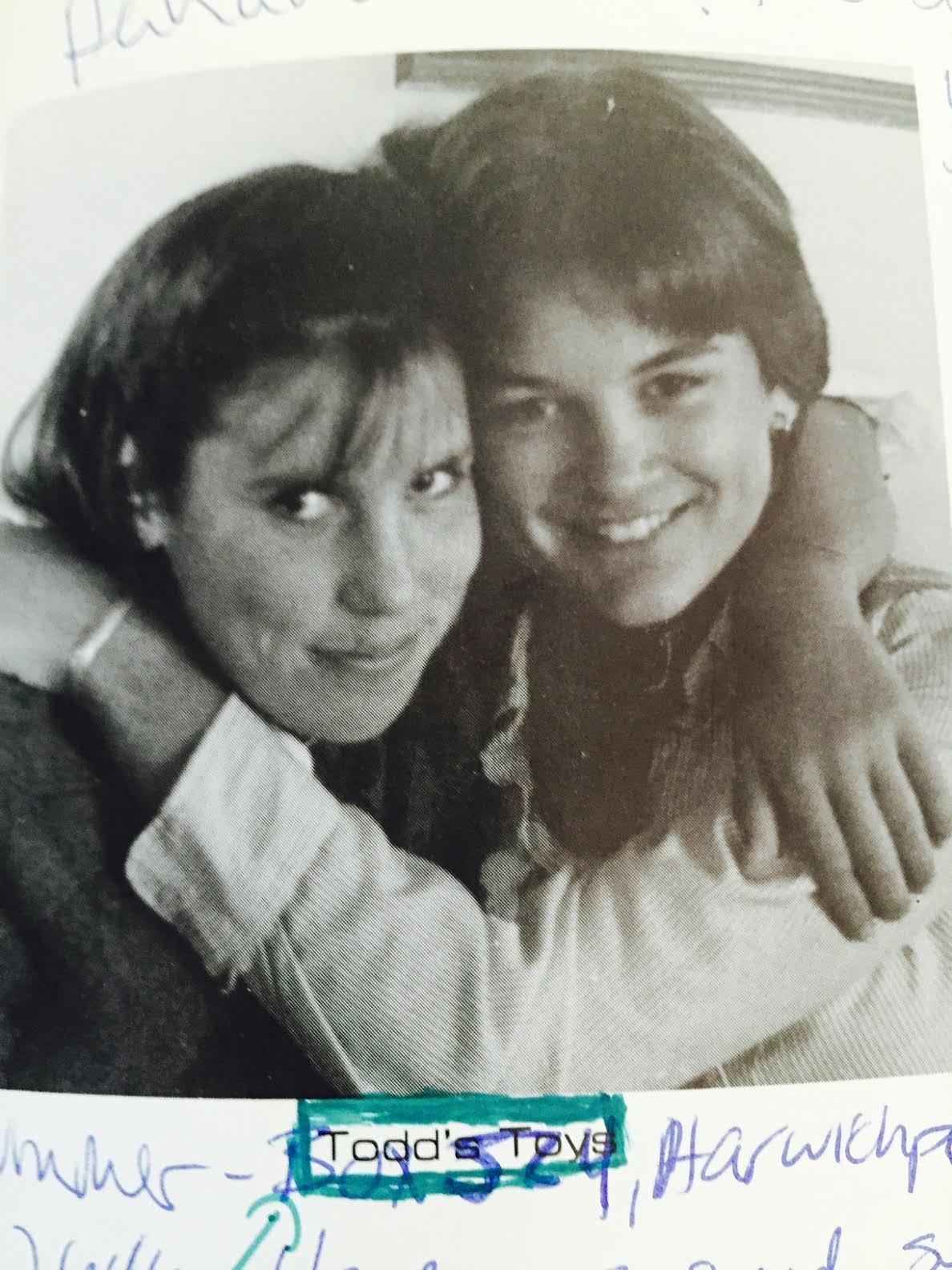
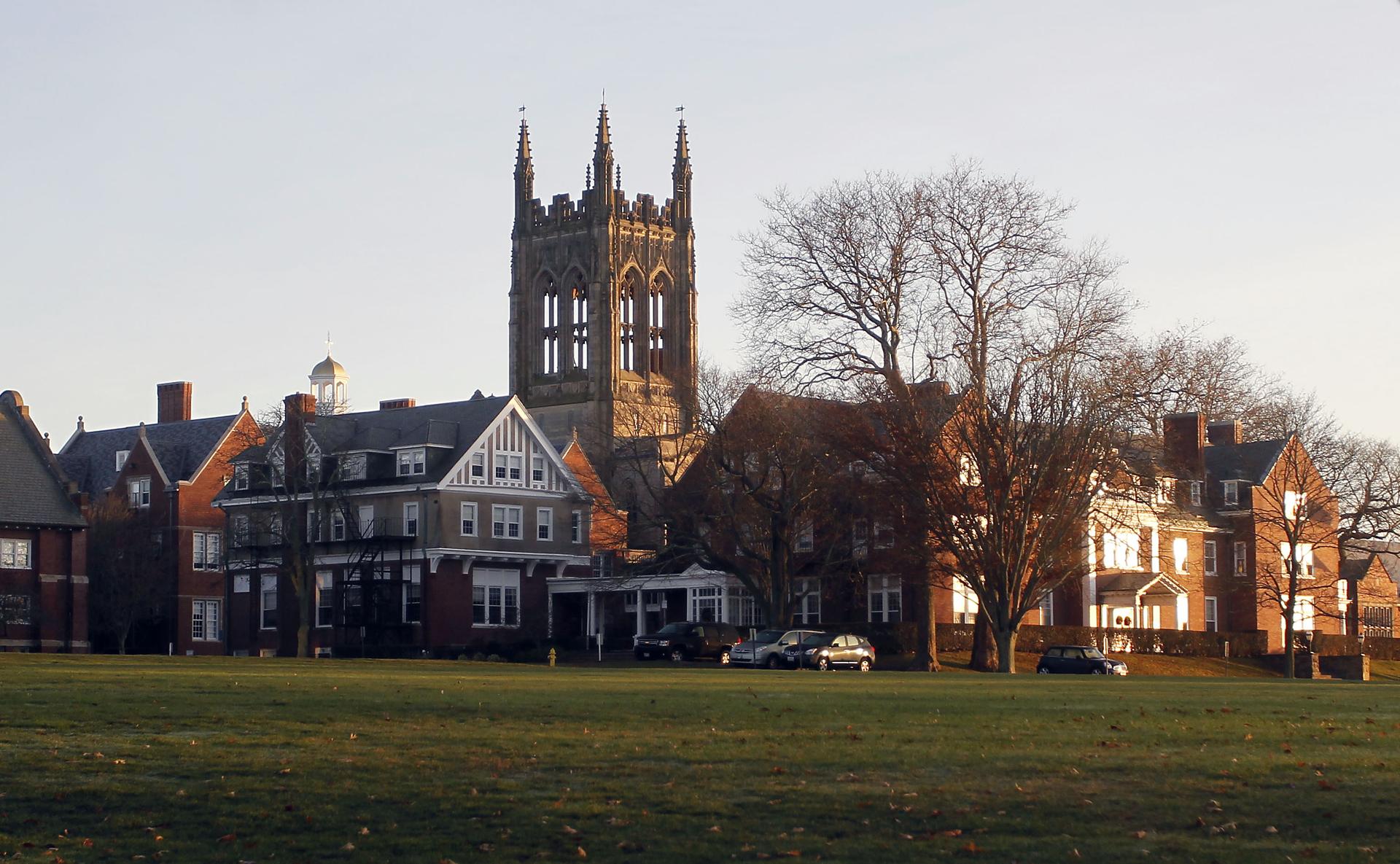
Time Magazine just published a post: Colby Student: Billy Bush Exemplifies the Hypermasculinity on College Campuses with the tagline “A student from Bush’s alma mater says not much has changed.” Here’s my story. Billy Bush and I went to the same boarding school, St. George’s in Newport, Rhode Island. You may have read about the school recently in The New York Timesor The Boston Globeor Vanity Fair because an investigation recently concluded that scores of students were raped and assaulted at the school, mostly during the 70s and 80s. While I was lucky enough not to be a victim of assault, this “elite” institution that supposedly educates “the best and the brightest,” like so many boarding schools was a bastion of sexism and racism, an old boys club where a culture of silence was encouraged and rewarded. The photo below is of me (on the left) and my friend, freshman year, in our high school yearbook from 1984. The caption reads “Todd’s toys.”
Todd was a senior prefect. The saddest thing to me about this photo is that I, at 14 years old, aspired to be liked, desired, by older boys, that I believed my value and worth was determined by whether or not older males– the guys with the power– were attracted to me. St. George’s did nothing that I can recall to recognize this sexism or to empower female students. To the contrary, the school seemed to condone misogyny. There was an annual event at St. George’s called Casino Night where all the new girls, mostly freshman and sophomores, dressed up as bunnies, as in playboy-type bunnies, complete with fishnet stockings and cotton tails on our butts. Our job was to sell the boys– who were fully clothed and pretended to gamble– candy and fake cigarettes. Casino Night was not a secret event, it took place to much fanfare in the school dining hall. Every teacher and administrator knew about it.
When I heard the Billy Bush/ Donald Trump tape I wanted to scream because it was like everything I learned in high school, the objectification of women and girls, the metamorphosis of teenager from San Francisco into a “toy” bunny plaything, was being reinforced by a would-be president of the United States of America.I felt ill and the nausea hasn’t left me since.
What are girls supposed to think and feel and be when we grow up surrounded by this kind of sexism, when it’s so normal that no one even notices it? When teachers condone it by never addressing it?
The links to the posts I wrote about St. George’s are listed below, though I removed the photos from the blogs. I had posted a photo, also from our 1984 yearbook, of a freshman girl dressed as a bunny on Casino Night. To me, the shame was on the school, not the girl, but when she told me she wanted it down, I respected her wishes. I took all the pictures of students down except for the one with me in it that you can see above.
Misogyny is so ubiquitous in America, paradoxically, it’s invisible. It’s in our schools and colleges and the air we breathe, but we don’t even notice it. I’m not 14 years old anymore. I have three daughters of my own now. I want them to have the right to control their own bodies, to find their value in their achievements not in how they appear to men, to be ambitious, creative, and inspired, to dream big and to acquire the skills to realize their vision, to be valued as people, not toys. That’s why I’m voting for Hillary Clinton for president on November 8.
The report states that a St. George’s campus security officer, Christopher Simanski, called 911 when he saw a male climb out the window of an all girls dorm and run towards the road with no shoes on. When Middletown police officer David Hurst arrived on the scene, Simanski told him he’d chased the male but couldn’t catch him. Simanski returned to the dorm, went to the room with the window, and saw a girl sitting on her bed crying, another girl sitting next to her. He wrote that she was upset, visibly shaken, and “indicated there had been a male in her room and on her bed.”
While Simanski was recounting the events to Hurst, the dean of students, Katie Titus, came out of the dorm and approached them. What do you think happened next? She helped them investigate a possible crime, right?
Here’s how Hurst tells it:
I asked Titus where the alleged victim was and Titus ignored my question and only replied by telling me that the girl was upset. I asked Titus again where the alleged victim was and again she did not answer me. I reiterated to Titus that I was there to investigate a possible assault or sexual assault and that I would need to speak to the victim to determine the nature of the incident and obtain crucial information for any possible suspects.
Titus still refused to let Hurst investigate, insisting that she would speak for the victim. She would speak for the victim? Hurst continued to press her, letting her know that he needed vital information. Titus gave him some information of her own. She said she knew the male who ran from the window. He was student who had just graduated. But then, she refused to give the officer his name or any other facts about him.
When 911 is called and there’s a report that a girl may have been sexually assaulted, how the adults around her respond makes a world of difference. They can ensure that she gets immediate professional treatment and care, optimally provided by a team that includes a medical provider, a sexual assault examiner, and a rape crisis counselor. They can facilitate police evidence collection, which depending on the jurisdiction, needs to happen within days following the incident. This kind of rapid response leads to better health outcomes for victims and an increased chance that associated criminal charges are filed.
So what happened next?
According to the report, Titus told Hurst that she’d reached the recent graduate on her cell phone. (She had his number on her cell? Maybe that’s totally normal for a dean’s contact list in these digital days?) The nameless male assured Titus that he hadn’t been on campus. Hurst writes in his report: “Titus apparently accepted the alibi at face value.” Again, she refused to give Hurst any more information about him. I haven’t read many police reports but this seems like an odd order of events. Was Titus trying to pacify the officer at first, saying she knew the male, thinking he’d leave it all alone, let her take this mess over? Then, when Hurst asked for more information, did Titus regret telling him she knew his identity? We’ll never know because just at that moment, Titus was called away for a family emergency.
Assistant dean, Lucy Goldstein, arrived on the scene to take over. More police officers also arrived, including a lieutenant who insisted on speaking to the girl to confirm the chain of events. At that point, Goldstein went and talked to the girl for 20 minutes before allowing the lieutenant to speak with her. The girl told him that she let the male into her room, they started kissing and he wanted it to become more intimate. She “declined” and he “agreed not to press the issue and left through the window.”
The report ends with:
Having no further evidence of a crime or witnesses to come forward to contradict the series of events, all units cleared from the scene. School safety supervisor Lombardi advised that he would follow up in the morning regarding how the school staff handled the initial investigation and its cooperation or lack there of in the investigation conducted by this department.
I don’t see any information that a follow up actually happened.
SGS for Healing writes that the report raises a number of questions including: Why didn’t the SGS Dean Katie Titus immediately allow the officer to see the female student? Why did the Middletown police call Ms. Titus uncooperative? Why did Ms. Titus call the adult male? Why didn’t she help the officer talk with him and why did she refuse to give the adult male student’s name and telephone number? Sometime after the Middletown Police were on the scene, a female sexual assault officer from Newport arrived. Why did the school continue to refuse to allow her access to the alleged victim? How did the school help the student get professional treatment and care? How were the police aided in gathering physical evidence?
Last night, I saw “Spotlight,” the movie about the sexual abuse and the Catholic church that just won the Best Picture Oscar. There’s a great line: “If it takes a village to raise a child, it takes a village to abuse them.” This story is so much bigger than St. George’s. It’s about how when institutions (whether its the church, the government, businesses, or schools) are put before individuals, children suffer. Ultimately, we all do because this pattern of abuse happens far too often and isn’t symptomatic of the kind of world healthy people have the great potential to create.
Reel Girl’s posts about St. George’s are below. If you read them, you will see that as an alumna of the school, I started to write about the institutionalized sexism I witnessed there long before I learned about the rapes and cover-ups.
This is an open letter from St. George’s alumna Jocelyn Davis to Bishop Nicholas Knisely, the Episcopal bishop of the Diocese of Rhode Island and Honorary Chair of the school’s Board of Directors. St. George’s is a prep school in Middletown, Rhode Island where sexual abuse was covered up by those in power for decades.
Davis emailed Knisely on February 16, and he has not responded to her yet.
If you would like to send your own letter to the Bishop, please feel free to cut and paste from this one if that’s helpful to you. The more voices he hears calling for change, the more likely he is to take action. The bishop’s email is nicholas@episcopalri.org.
If you’re not familiar with the St. George’s sexual abuse and rapes, you can find all of Reel Girl’s posts about the school after the letter.
Here is Jocelyn Davis’s letter.
Dear Bishop Knisely,
I am an alumna of St George’s School (class of 1980). I understand the school is chartered by the Episcopal Church, Diocese of Rhode Island, and that you are Honorary Board Chair. You therefore have an extra measure of influence over the governance of the school, and that’s why I’m writing to you.
I have learned of the past abuses with a dismay I’m sure you share. A number of my classmates were affected. My dismay deepens, however, when I read about the actions of school leaders—leaders still in place today.
Dozens of children were raped or molested over decades. School leaders have condemned the abuse and funded an investigation; well and good. But what about those leaders who until a few months ago (and in some respects up until now):
– Failed to report the abuse to Rhode Island authorities, as required by law
– Failed to notify institutions where abusers were later employed, even after being specifically asked to do so by survivors
– Quibbled about the reporting laws as a way to excuse their inaction
– Placed gag orders on survivors, telling them what they can and cannot talk about
– Were dismissive of those survivors who mustered up the courage to demand meetings
– Denigrated survivors as malcontents, gold-diggers, or substandard students
– Reacted to the news not with heartfelt apologies, self-examination, and personal ownership, but with facile reassurances that “all that was in the past and everything is fine now”
– Have been dragged kicking and screaming by attorneys and the press, every step of the way—and then have had the gall to complain about “unfair” lawyers and media
I am aware of the ongoing independent investigation, and I can appreciate that it is impossible for you to take action until it is complete. Nevertheless, I urge you to reflect on the above points. I further urge you to use your influence, as soon as possible, to help bring about a wholesale change of leadership at St George’s, so a fresh start can be made.
For a specific plan to that effect, please see the website www.rebootsgs.com , created by my fellow alums Chris and Philip Williams.
One last thought: In my senior year at SGS, we read Dostoyevsky’s story of “The Grand Inquisitor.” I’m sure you know it well. In the fable, Christ returns to earth and is arrested. The Grand Inquisitor, pillar of the Church, visits him in his cell to tell him the Church no longer needs him; indeed, that the Church rejects his message of “individuals first” in favor of Satan’s message of “institution first.”
I can’t help but wonder whether Christ is knocking at the door of St George’s School right now. Forty-plus individuals, courageous survivors of abuse, are standing at his side, calling for justice. I hope you will open the door and stand with them.
Sincerely yours,
Jocelyn Roberts Davis ‘80
Reel Girl’s posts about St. George’s are below. If you read them, you will see that as an alumna of the school, I started to write about the institutionalized sexism I witnessed at the school long before I learned about the rapes and cover-ups.
If you’re a fan of Reel Girl, you know I blog about gender representation in children’s media and toys. For the past few months, I’ve been focusing all of my creative energy, mind power, and available time on finishing my book (a middle grade fantasy-adventure about two magical girls who save the world.) Apologies to those of you who want to know where my reviews are, including “Star Wars” (I LOVED it, so did all my kids) but I’ve got to finish this damn book. However, I’ve been pulled away from fairyland by a horrific story of sexual abuse and rape at one of my high school alma maters, St. George’s in Newport, R.I.
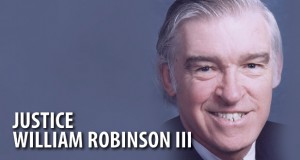
Just yesterday, I blogged about how St. George’s continues to hold back information in its sexual assault investigation. The school will not release the name of the attorney who advised them not to report the rapist to child protective services. (State law requires that all persons must report suspected cases of child abuse to Rhode Island Child Protection within 24 hours “when they have, or had reasonable grounds to believe a child is being abused.”) It is possible that the attorney who recommended the school break the law is William P. Robinson, now a justice on the Rhode Island Supreme Court.
Robinson represented St. George’s in the 1980s when Anne Scott, a former student, filed a suit against the school. Though we don’t know if Robinson is the one who told the school not to report the perpetrator, court documents show he argued that if Scott, a 15 year old, had sex with Al Gibbs, the school’s 67 year old athletic trainer, it was consensual. When I blogged about all this yesterday, I asked if Robinson is a guy that we want on the R.I. Supreme Court, and this is the question I can’t stop thinking about. How did he get into this position of power with a public record of misogyny? I didn’t know about Robinson’s appalling argument blaming Scott for her rape and neither, most likely, did you, but whomever confirmed him to the court must have looked into his background and his case history. Probably multiple people checked him out. I don’t think it’s a fact that could’ve been missed or overlooked as Robinson didn’t just argue against statutory rape laws, he was publicly admonished for doing so. After Robinson suggested the sex was consensual, The Providence Journal reports the response was furious:
U.S. Magistrate Jacob Hagopian chastised Robinson:
” … Now you explain to me under the criminal laws of the United States, or of any state of this Union, or of any civilized country, where the element of it being volitional or non-volitional, or voluntary or non-voluntary, has anything to do with this type of detestable allegation made by a person who is not of age of consent, can you explain that to me?”
When Robinson tried to explain, Hagopian cut him off, stating, “It’s impossible. It violates the criminal laws of the United States.”
So why was Robinson allowed to be a judge on a state Supreme Court when he argued fiercely against the laws of a civilized country? Because he’s changed? He’s grown, come to his senses, and realized he made a mistake? Apparently not. When Robinson was asked if he was the attorney who advised St. George’s not to report the rapist to child protective services, he responded with this statement:
“In the 1980s, while engaged in the private practice of law, I represented St. George’s School in certain litigation in the federal court which has recently become the subject of interest in the media. I represented the client as an attorney must, zealously, ethically and to the best of my ability. I do not believe that further comment is necessary or appropriate.”
So in 2016, Robinson claims that his past argument against statutory rape was ethical. He says: “I do not believe that further comment is necessary or appropriate.” Is that OK with you, America? That a justice on a state’s Supreme Court argued against statutory rape? Do you think justices who share Robinson’s view are on your state’s Supreme Court? Do you want your country to take rape more seriously? Do you care about stopping this national epidemic?
in 2014 the federal government released the names of 55 colleges and universities that are under investigation for their handling of sexual violence or harassment complaints. Under Obama, there has been more of an attempt than ever before to make ending rape a national priority. Still, Washington Post columnist George Will and others ridiculed the action and questioned the 1 in 5 statistic of women raped on campus, calling all this attention “rape hysteria.”
Rape is rampant in the USA because as a culture, we allow the violence to happen again and again. We punish and shame the survivor by elevating those who collaborated in silencing her. I don’t know how Robinson secured his position on the Supreme Court, but he shouldn’t be allowed to stay there.
In its report on the sexual assaults, the school stated it did not give information about any of the crimes to child protective services, a violation of state law, because their counsel advised them not to. After passing the buck and blaming their lawyers for their negligence, St. George’s refuses to disclose the name of the attorney who steered them on the wrong course.
One of the school’s lawyers listed in court documents is William P. Robinson III who now sits on the Rhode Island Supreme Court. Is Robinson the one who advised St. George’s not to report the perpetrators, all who went on to work around children, either in churches or in education? If Robinson did advise St. George’s to violate the law and his actions put other kids in danger, is he a guy we want on the R.I. Supreme Court? Obviously, that’s a rhetorical question.
“In the 1980s, while engaged in the private practice of law, I represented St. George’s School in certain litigation in the federal court which has recently become the subject of interest in the media. I represented the client as an attorney must, zealously, ethically and to the best of my ability. I do not believe that further comment is necessary or appropriate.”
And what does this quote mean? “I represented the client as an attorney must, zealously, ethically, and to the best of my ability.” I’m assuming Robinson thinks its ethical to have no regard for statutory rape laws? Does Robinson still think a 15 year old can consent to sex with a 67 year old? And once again, I ask, if he does, should he be a judge on the R.I. Supreme Court? How is Anne Scott supposed to feel knowing that this guy ascended to the top of his field, that he holds a position of power and respect? Oh, that’s right, no one gives a shit how Scott feels. Which brings me back to St. George’s. This school cannot do much right. In spite of everything that’s happened, when every effort should be made at this time to be upfront and honest, the school chooses to be shady. Blame the lawyer, then don’t name the lawyer. Great strategy, St. George’s. I I guess I shouldn’t be surprised. All along, you’ve been withholding information to protect men in power.
I am so profoundly disturbed and angry and sad that these kids were abused and no one helped them, that no reports were made to police at the time, and that while the teachers were finally fired, they went on to teach at other schools.
Here is what I want to blog about right now, this paragraph in the report from the lawyers for the survivors:
We have not included numerous first hand reports from alumni concerning the “culture” that existed at SGS during the 1970’s, 1980’s and 1990’s. That has been described to us in accounts we feel are credible as misogynist, racist, homophobic and bullying. By not including those reports, we are in no way diminishing their importance or the need of SGS to address those reports, many of which have been made to the School already.
What else do I remember about prejudice and boarding school? Boys sitting on a bench and rating girls who walked by from 1 – 10 on how hot they were. Dressing up as a bunny, along with all of the other new girls, including fishnets, ears, and a tail on “Casino night.” Being called “nappy face” by a boy because I had big lips and not knowing what that meant. Feeling exotic because I had dark hair. Learning the word “spearchucker” for the first time when one of the tiny minority of African-Americans was mocked.
Here are photos I posted a few times since, “Casino Night” where all the new girls were supposed to dress as playboy like bunnies.
Here are the boys, these are all photos from my 1984 yearbook:
Here is my friend and me, freshman referred to as “Todd’s Toys” in the yearbook, he was a senior prefect.
After St. George’s released its bullshit report, which I posted in full, an alumna who had been raped and contacted me after I’d blogged about Casino Night, commented to me: “The Report is very narrowly defined. There’s no sense of why so many assaults happened at St. George’s, what the school did to create cultural backdrop that allowed and encouraged rape.”
The stories coming out are so horrific that these photos I’m posting seem tame in comparison, but I hope that the school, and all schools, the legal team for the survivors, and the media address the sexism and misogyny the existed then and most likely exists today at these enclaves of “privilege.” Parents, teachers, curriculum, student government, clubs etc all contribute to a culture that allows rape to happen and go on happening. As I wrote in my last blog about the abuse, many boys were abused but I strongly believe a culture that values girls as well as boys is a safer, healthier, happier place for everyone.
Speaking of health, tomorrow is my birthday, I’ll be 47. The older I get, the happier I get. There are probably many reasons for this, but one factor is I’ve lived long enough to finally trust and believe in my own experiences. Many times in my life, I’ve been told by people who I looked up to or trusted or were important to me, that my experiences never happened, weren’t important, or didn’t matter. I think being repeatedly told that things I saw weren’t there is one reason I started blogging about sexism in children’s movies-– something that was glaringly obvious to me seemed invisible to others.
Thank you to all the survivors for having the courage to tell your own stories.
I’m so grateful for the bravery I see while reading through the comment section of the petition created by alumni of St George’s asking for a fair investigation into the sexual assaults at the school.
I’m reposting some comments here:
I’ve seen first hand efforts by the current SGS administration to silence, intimidate, threaten lawsuits and even arrest of those who’ve reported abuse or stand up for victims. Dara Brewster Little Compton, RI
I, too, although have called the school to preliminarily report, hesitate to tell my story to the school investigators Linda Zoccoli Boulder Creek, CA
These victims need to heal wounds, be heard and have their full story told. St. George’s must be held accountable. The school’s legal counsel must not have a conflict of interest with the investigative process. Anyone living today who had or has a role in obfuscating the truth must come clean. Those who were abused have carried the weight of silence, depression and fear for too long. Never let this happen again – at any school. Set up bullet-proof systems so that victims can speak without fear of retribution. Anne – you are a brave leader. Carrie Griffen Snyder South Dartmouth, MA
I witnessed this and did nothing Max Cottrell, Fairfield, CT
In support of friends who have bravely struggled for a long, long time Willard Sistare Simsbury, CT
Children as young as 13 were being abused by adults and other students. It was joked about by students, referenced in the yearbook and dismissed by faculty and administration. The lack of action by the school leadership shows they thought it was acceptable to sexually abuse children Molly Groome Arlington, MA
outraged! like priests, educators are supposed to protect our children. shameful when institutions and their administrators protect the abusers, or rather, themselves, instead of our children. jill tarlau san francisco, CA
I believe this is an important cause. St Georges should do as much as they possibly can to help ease the pain caused to students at their school. Why aren’t they? Christine Neville Middletown, RI
I’m signing because I am an alumnus (1986), and I think the school’s handling of this issue since the late 1970’s, at least, is reprehensible. I also believe that a full light should be shown on the entirety of the issue. If SG ever wants to make amends (doubtful), the administration also needs to examine the manner in which student on student sexual assault/abuse – politely referred to as “hazing” back then – also was handled Sean Delaney, Thomaston, CT
If you haven’t signed the petition yet, please consider adding your name. At this posting, there are only around 100 signatures. Survivors need your support. THANK YOU