Lay off Lena Dunham

My husband and I watched Lena Dunham’s “Tiny Furniture” over the holidays. I loved the movie and love that a twentysomething woman wrote and directed her own film. I felt appreciation and gratitude for Lena Dunham, that she has the talent, guts, drive, and luck to get her perspective out into the world.

lena

I have been kind of amazed by the level of vitriol hurled at Dunham from young people, old people, men, women, internet bloggers, print media and on and on for her show “Girls.”

On Reel Girl’s FB page, I posted the latest deluge, the horrific comments from Gawker mocking Dunham’s memoir. How dare she write a self-absorbed memoir! WTF? How long have women writers been mocked for being “confessional.” Is Phillip Roth “confessional?”

Did Jerry Seinfeld get shit for being spoiled? As I recall, he was admired for it because it was funny. His show was a comedy. What about “Friends?” What about most shows on TV?

Lena Dunham, like all writers, is influenced by her own life and experiences. She is a middle class white girl. But for some reason, people expect “Girls” to be some kind of ethically pure representation of, what, I don’t even know.

I get the frustration with the lack of diversity in the media. My whole blog is partly inspired by the nonsense that one narrative and one perspective dominates. But the solution to that myopic view is not to burden the one young woman who finally gets her own show on national TV, who gets to write and direct it, with representing everyone else’s narrative.

And then, on top of that, to get mocked for her body type? I LOVE that Lena Dunham doesn’t look like everyone else on TV, especially when it comes to how young women are almost always portrayed, regardless of ethnicity. Young women on TV are skinny, unless they are the fat girl, or the fat friend, never the protagonist, as Dunham is, never the girl with a boyfriend, or many boyfriends. Too many, obviously, Dunham’s character is a slut with no self respect…

In the New York Post, Linda Stasi writes:

“It’s not every day in the TV world of anorexic actresses with fake boobs that a woman with giant thighs, a sloppy backside and small breasts is compelled to show it all.”


You can read the whole bitter review here.

Today, on Slate, Alyssa Rosenberg responds:

If critics are going to turn against Lena Dunham, I want to know why they aren’t mad at Louis C.K.’s sloppy backside, too.


I recently blogged about Louis’s fantastic representation of fatherhood. It’s not like anything I’ve ever seen before on TV. “Girls” is not like anything I’ve ever seen on TV either. That’s a good thing.

I hope that Lena Dunham gets more power, influence, and money (yes, through product placement to make her show economically viable, she should be doing that) and uses her position to help to get other people’s stories out into the world. But shitting all over the occasional person who manages to defy Hollywood’s cookie cutter stereotype to tell her own story in mainstream media only helps to keep all “alternative” stories repressed. I suppose that’s the point.

44 in 2013, good numbers

Today is my birthday! Right now my husband is dropping our three kids off at my sisters, then we get to see a movie and go out for dinner. I am so excited and feel incredibly lucky for my family. I am trying to decide between “Zero Dark Thirty” and “Silver Linings Playbook.” I’m thinking I’ll go with ZDT because I know I will see SLP eventually, but I think if I don’t see ZDT in a theater, I may not see it at all.

Since I’ve been blogging, I usually write every year about how great my 40s are. This continues to be the best decade of my life so far. I am really enjoying the ages that my kids are right now: 3, 6, and 9. I feel so lucky I’ve already been pregnant and given birth and now I get to enjoy these remarkable creatures. No more babies to keep me up at night, no more poo diapers to change, but I’m still, pretty much, their favorite person to hang out with. Two of them can read which is so fun. Last night, the two older ones and I all got in my bed with our separate books, cuddled up and listened to the rain on the roof. It was heaven.

Career-wise, in your 40s, you realize you don’t have time to waste. It’s now or never. At least, that’s how I feel. A couple years ago, I left a non-profit I was with since I was 28. I stopped doing what I felt I should do and followed my heart. Now I am writing an MG book which is my passion, along with blogging which helps me stay connected while I write. It’s scary, taking the leap and pursuing a dream, but it also feels so great and right to focus my time, energy, and resources on what makes me happy, fulfilled, and what really matters to me. My energy feels endless.

January 6 is the Twelfth Night, the epiphany. I hope you all have a magical, insightful year. I think 2013 is going to be amazing.


Raj’s list of all male cereal box characters from ‘Big Bang Theory’

On Reel Girl’s Facebook page, Danielle Cole reports the full list of all male cereal box characters that Raj listed last night on “Big Bang Theory.” Raj said he’d done the research and there are no female cereal box characters at all.

Here’s Raj’s list:

Snap, Crackle, and Pop

Rice-Krispies-Box-Small

The Cheerios bee

honey-nut-cheerios

Toucan Sam

toucansam

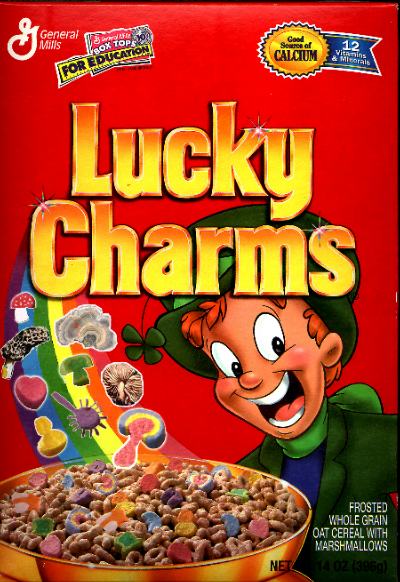
Lucky

lucky-charms-cereal-box

The Honeycomb Bear

honeycomb

Count Chocula

thecount


Tony the Tiger

Tony_the_tiger

Diggum the Frog

diggum

Captain Crunch

captain-crunch

Trix the Rabbit

trix-cereal

Frankenberry

frankenberry-cereal-box-ebay

Boo Berry

Boo Berry

Wow. Isn’t that shocking? And shocking that it’s not shocking, if you know what I mean.

In total, Raj listed 14 characters from kids’ cereal boxes, every one a male.

Before you scoff at this blatant sexism as Raj’s friends did, remember: these characters are designed to appeal to your kids. Huge companies poured millions of dollars into creating these guys, to make them into household names. So why are female characters completely missing from this line up?

Can you imagine shopping at Safeway with your kids and seeing shelves lined with cereal box after cereal box, all featuring images of an all female a cast of heroes and villains? Do you think you’d notice? Do you think your kids would?

Why is it so normal for parents and children to see an imaginary world where girls go missing?


“Big Bang Theory” mentions gender bias in kids’ cereal packaging

Today, I got this comment on Reel Girl from Dr. Vanessa Paugh:

This is a little off topic, but it is about girls and food. I think you practically got a shout out on The Big Bang Theory last night. Raj, one of the male characters, complained about the lack of female cereal box characters. He said that he had done the research, listed about a dozen famous male characters and concluded that there are no female cereal box characters at all. He was dismissed by the other male characters in the scene, but at least it’s out there.

Go Raj! I am so happy this guy called out the lack of females in imaginary world on national TV. I think it’s fascinating he made this observation to an all male group who dissed him. I would love to see this episode.

Reel Girl has had several posts on the lack of female characters on cereal boxes. Food packaging is one more space where female characters get sidelined, stereotyped, or go missing all together. And once again, this is an imaginary world. So why is it sexist? Why do females, half of the kid population, go  missing?

One of many endless examples of sexism from my cupboard: Cocoa Pebbles. On the front of the box, there’s Fred, waving at us. At the top of the box, you can see buddies, Fred and Barney, driving cars and having fun.


More fun for Fred and Barney can be found on the back on the box. There they are playing a racing game with their cars. A game you can access on your smart phone as well. How cool is that?


Where’s Wilma? Is she car racing? Is she in a game at all? No, silly. Women can’t drive! They’re not fast, they don’t compete, they don’t care about winning. Women are above all that boy stuff. Women care about “health.”

There’s Wilma, on the side of the box (could the term “marginalized” be any more clear?) hoping kids are getting enough Vitamin D.

Want to see another place where a female shows up on a cereal box?

She’s an actual person. She’s dieting. Her weight loss gave her “a sense of pride” that she’s never felt before.

(Check out this link where a guy posts nostalgically about his childhood cereal eating days and the greatest kids’s cereals of all time. Except for one box with three characters that includes one female, his list features 100% male characters.)

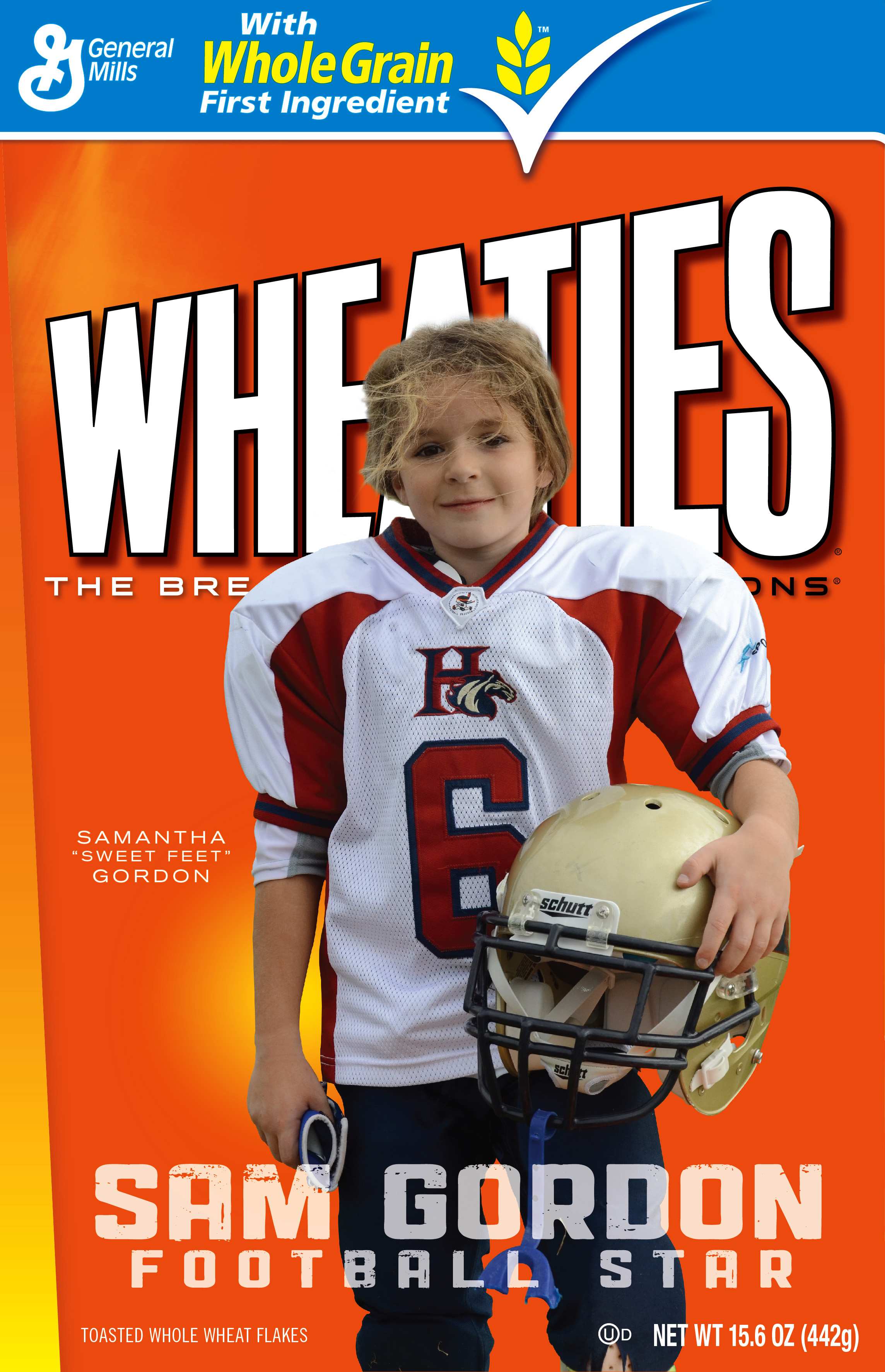
I will be buying Wheaties this year. Sam Gordon became the first female football player ever to be shown on a box.

samgordon

Think about this: the celebration of Sam Gordon is a huge accomplishment, but why is it so hard to show gender equality in the imaginary world, a fantasy world that is supposed to inspire our children to imagine, create, and dream?


More cool female action figures

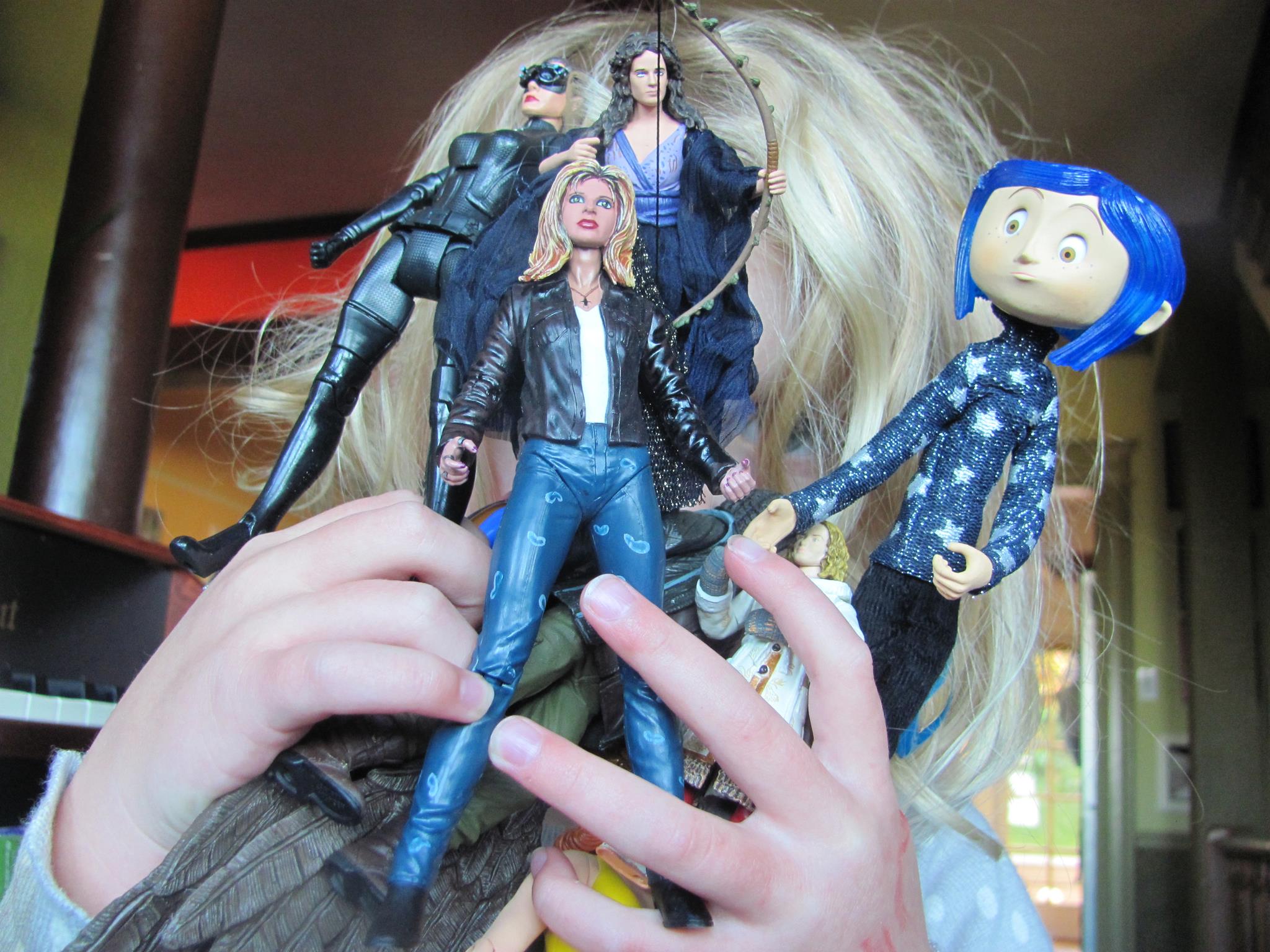
I tore these cool women away from my kids long enough to get them photographed. My husband took the pictures.

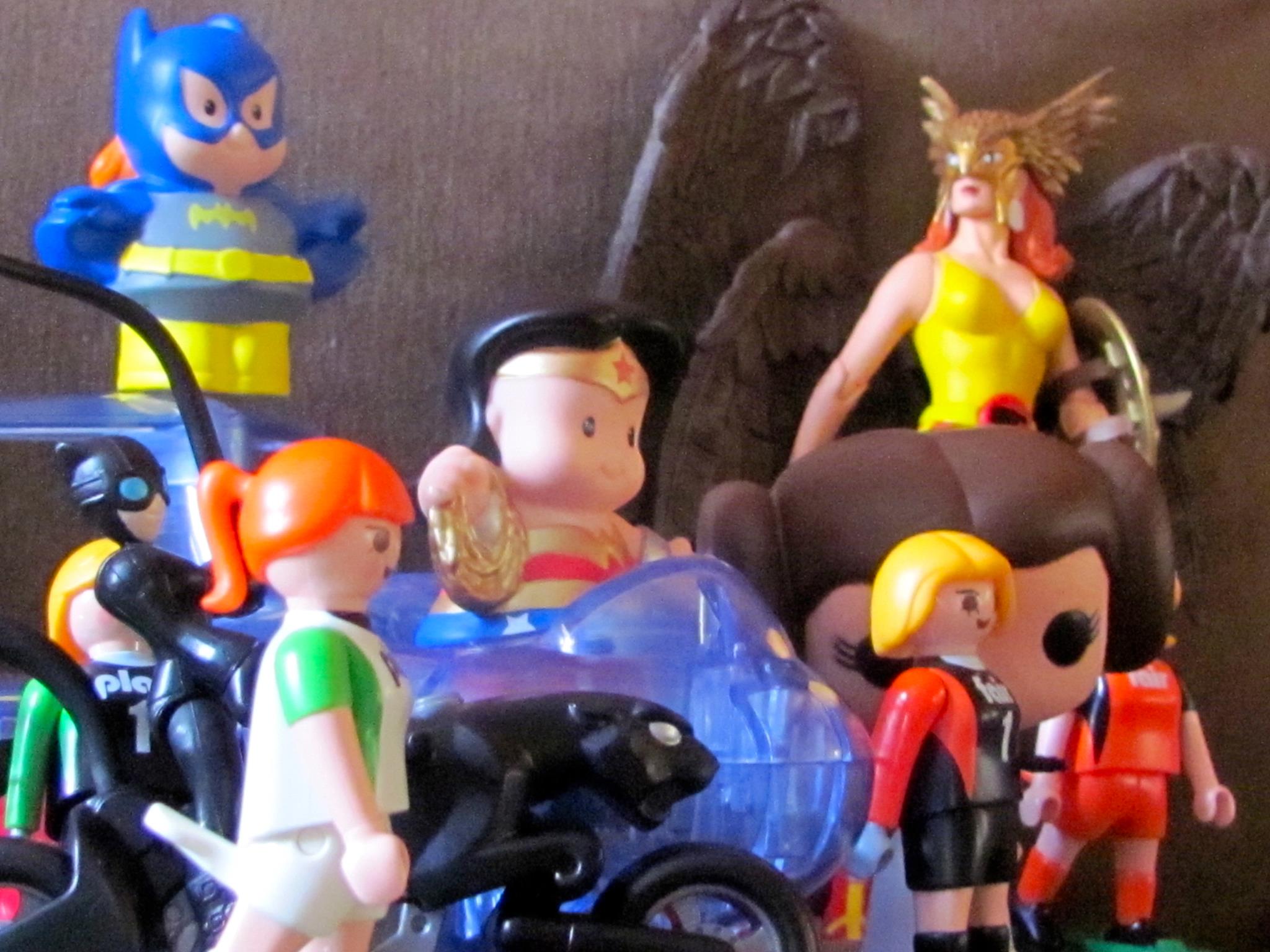
actionfigures1

So here we have soccer players (they come with a ball they can kick), Catwoman with her whip and motorcycle, Batgirl, Wonder Woman with her plane, Hawkgirl, and Princess Leia.

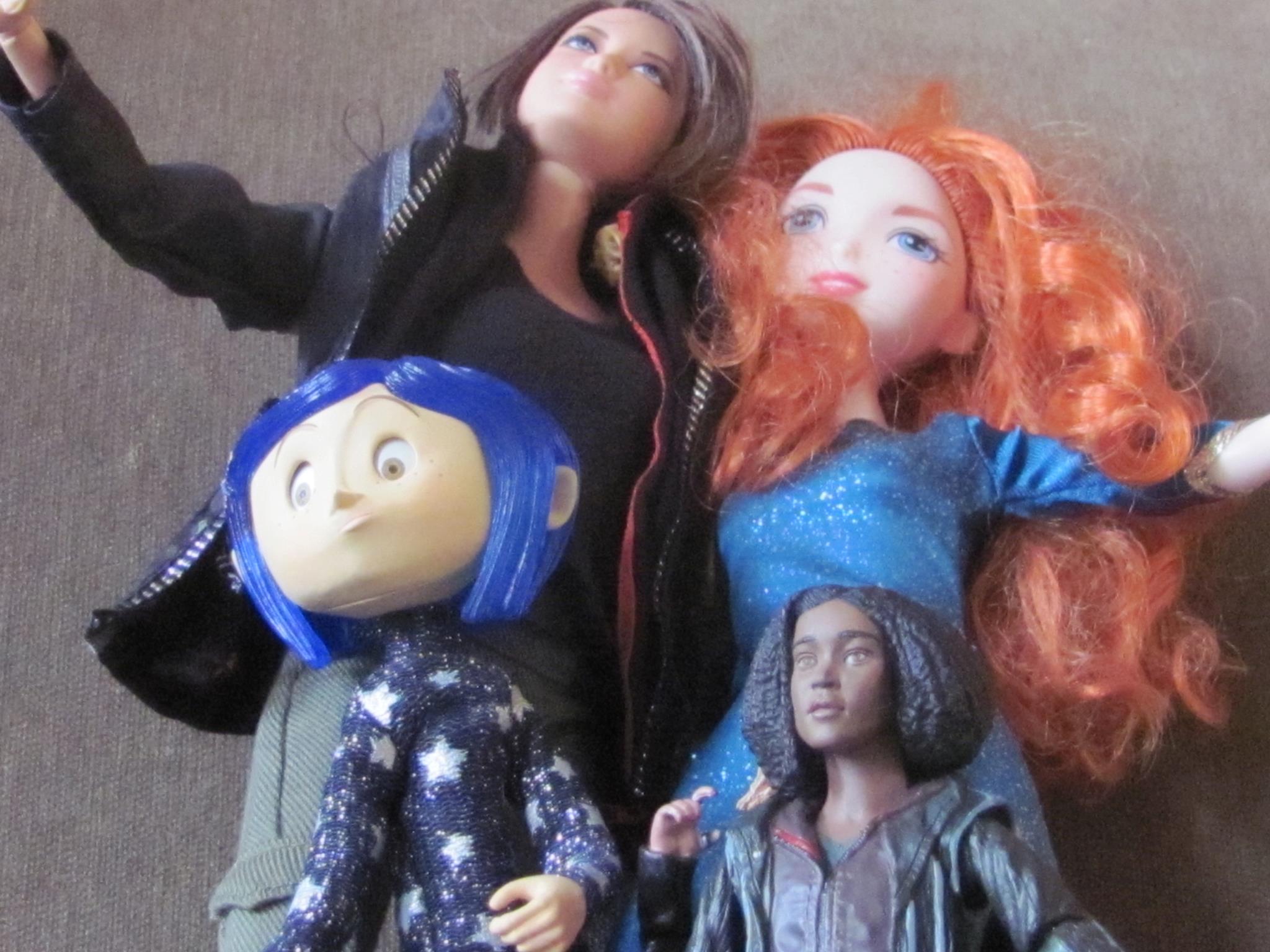
actionfigures2

Next we have Coraline (who you’ve seen in an earlier post) Katniss and Merida (who were not Christmas presents but wanted to join the party) and Rue from the Hunger Games.

actionfigures3

Catwoman, Serafina Pekkala, Lyra Silvertongue, Black Widow, Wonder Woman (already missing her laso) and another Batgirl

All figures except for Merida and Katniss were found on A Mighty Girl or Toward the Stars. That little Wonder Woman on A Mighty Girl’s promo was the one who started me on my shopping spree.

Reel Girl game of the week: Bella’s Mystery Deck

My nine year old daughter found Bella’s Mystery Deck in her Christmas stocking.

bella

Today, we broke it out and played all morning. The deck consists of 52 cards, each with a story that describes a mystery to solve. The game revolves around Bella, a 13 year old Mexican-American girl who lives in Tucson with her family and black lab, Noche. If you follow Reel Girl, you know I love games that center on a female protagonist who is smart and brave. Bella is all that.

Besides Bella, the stories are full of colorful characters in Bella’s community. My six year old and three year old, while too young to solve the mysteries, were entertained just by listening to the nine year old read these entertaining narratives out loud. To check your answer, or find it if you’re stumped, the package comes with a mirror to decipher the backwards writing at the bottom of each card. All of my kids loved that.

We had at least an hour of utopia playtime for everyone in the family with this game, no tears, no board upsets.

Reel Girl rates Bella’s Mystery Deck ***HHH***

Can’t remember the last time I blogged about kids and food

I used to blog regularly about kids and food, but, now, hardly at all and that’s a good thing. Knock on wood, but food is pretty much a conflict free issue at my house.

I realized my food blogs had stopped when I wandered downstairs during movie time and saw this:movietime

My kids got that candy for Christmas. Before you call CPS on me, I want you to know that when my older daughter saw me standing in the doorway, she asked for chicken soup. My three year old shouted, “Me too!” That bowl of candy doesn’t have a dent in it.

(Lucy is watching “Ratatouille” and hopefully smirking about the lack of female chefs. Rose is watching “My Little Pony” which commenters keep telling me I should watch but I can’t bring myself to do it.)

All of my blogs on Reel Girl about kids and food basically centered on this: I let my kids eat whatever they want, whenever they want. I have raised them based on the principles from the excellent book Preventing Childhood Eating Problems. I read this book because the same authors wrote a book that helped me to get over a tenacious eating disorder. I hope to train my kids (as I eventually trained myself) to listen to and trust their own bodies instead of any authority figure, “expert,” or fad about what to eat.

Every Christmas, Santa leaves a candy trail for the kids their bedroom to their presents, and they all say finding the candy is their favorite part of Christmas. Note that it’s not eating the candy that they love, but opening the door, seeing the sparkly silver kisses, and following them to their presents.

As I keep writing in these blogs about kids and food, I have no idea what will happen when my kids grow into teenagers, but I am hopeful. Right now, my kids are not only adventurous eaters who try new foods all the time, but also, they are what any parent would call “healthy” eaters.

Once they were old enough to feed themselves, we have regular meal times and I make healthy food always available but hardly ever controlled their eating as far telling them what, when or how much to eat. I write “hardly ever” because my middle daughter is allergic to eggs. I was terrified of the allergy when she was a baby, after she had a skin rash when she ate a hard boiled egg. For probably a year after that, I made a big deal about telling everyone she was allergic to eggs and making sure she never had anything with eggs in it. Then I saw her getting tentative about trying food, always looking up at me nervously before taking a bite of something. Clearly, she was picking up on my anxiety.

So I shifted tactics. I subtly told adults she was allergic when it was necessary to tell them. I didn’t make her allergy a conversation topic that she could overhear. I rarely had eggs in my house, again without making a big deal about it. She calmed down and also, luckily, her allergy lessened as she grew older. Now if she eats something with egg, sometimes her tongue will itch. But that she is still the pickiest eater of the three, though none are picky, further indicates to me that the more relaxed parents are about food, the more relaxed their children will be.

Now here’s the problem: How many women do you know who are relaxed about their food intake?

Before you ask, so far, no cavities.

Here are some (not all) links to previous blogs on Reel Girl about kids and food that go into more detail about books, practices, experience, philosophies, etc.

Girls and food

More on girls and food

Preventing eating disorders by teaching intuitive eating to kids


Note to the babysitter

Oreos for breakfast? Really?

Post Halloween bliss


Parents, this is about you too

Geena Davis, real life superhero, brings education on gender bias into schools

Anyone who has ever written a book will tell you, heroes act. They make choices. They take risks. Heroes are not passive.

Geena Davis saw a problem and instead of safely sitting around griping about it, she took a risk and took action. She started a non-profit, raised some money, and now she’s changing the world with the Geena Davis Institute.

I just got this email from the Institute about a new program they’ve developed for schools that includes an “eight-lesson curriculum introduces topics like media and bullying in the context of gender equality.”

Courses include:  Do TV Shows and Movies Influence Careers Held by Women and Men? Do TV Shows and Movies Make Sexual Harassment a “Normal” Part of the School Experience? and Who is Your Hero?

Please go to this link to see all the curriculum and consider talking to teachers and administrators about bringing it into your children’s schools.


Why do parents buy into gender segregated toys?

The New York Times reports on the gender Jim Crow that dominated Christmas shopping for children:

IMAGINE walking into the toy department and noticing several distinct aisles. In one, you find toys packaged in dark brown and black, which include the “Inner-City Street Corner” building set and a “Little Rapper” dress-up kit. In the next aisle, the toys are all in shades of brown and include farm-worker-themed play sets and a “Hotel Housekeeper” dress.

If toys were marketed solely according to racial and ethnic stereotypes, customers would be outraged, and rightfully so. Yet every day, people encounter toy departments that are rigidly segregated — not by race, but by gender. There are pink aisles, where toys revolve around beauty and domesticity, and blue aisles filled with toys related to building, action and aggression.

When I write or speak about this stereotyping as gender Jim Crow, it is not uncommon for a white, educated dad to tell me that I’m trivializing segregation.

About this article, Melissa Wardy, founder on Pigtail Pals comments on her Facebook page:

I still am unable to understand why this generation of parents – the most educated, most informed, most well-traveled, most well-rounded generation of parents to ever raise children accept the gender divide in the marketplace and believe it to be biological truth.

I have no doubt that humans in the future are going to look back on the radical gender segregation of children, babies, fetuses, accepted and ubiquitous, and wonder how loving parents became so brainwashed.

When CNN interviewed me yesterday about stereotyping gender in media for children, I was asked: “Isn’t it getting better?”

It’s getting worse. It really freaks me out how accepted it is. From the NYT:

What’s surprising is that over the last generation, the gender segregation and stereotyping of toys have grown to unprecedented levels. We’ve made great strides toward gender equity over the past 50 years, but the world of toys looks a lot more like 1952 than 2012…But by 1995, the gendered advertising of toys had crept back to midcentury levels, and it’s even more extreme today. In fact, finding a toy that is not marketed either explicitly or subtly (through use of color, for example) by gender has become incredibly difficult.

Read the NYT post for details of the research.

Why is this happening? Reporter, Elizabeth Sweet, writes:

On a practical level, toy makers know that by segmenting the market into narrow demographic groups, they can sell more versions of the same toy. And nostalgia often drives parents and grandparents to give toys they remember from their own childhood.

In her book, Cinderella Ate My Daughter, Peggy Orenstein delves into great research about how segmenting any market drives sales. When I read her book, I thought about face cream, how instead of buying one jar, you’re supposed to get 5– night cream, day cream, eye cream, serum, and sunscreen.

I like how Sweet brings up “nostalgia” of parents because this is an important factor. Not only with toys but with stories. We remember and love the stories we read in childhood and want to share them with our kids, often ignoring the stereotyped gender roles the narratives promote. The result is, as Orenstein writes in her book, children are saturated with gender stereotypes as their brains are growing and developing. At the very least, parents are priming the next generation to be “nostalgic” about sexism.

If the brain development issue is hard for you to buy, think about this:

But if parents are susceptible to the marketers’ message, their children are even more so.

So true. If you, a grown-up, are influenced by all of this, how do you think it affects your little kid?

Here is my favorite part of the article:

Moreover, expert opinion — including research by developmental and evolutionary psychologists — has fueled the development and marketing of gender-based toys. Over the past 20 years, there has been a growth of “brain science” research, which uses neuroimaging technology to try to explain how biological sex differences cause social phenomena like gendered toy preference.

That’s ridiculous, of course: it’s impossible to neatly disentangle the biological from the social, given that children are born into a culture laden with gender messages. But that hasn’t deterred marketers from embracing such research and even mimicking it with their own well-funded studies.

I am so happy she wrote this! It is so amazing to me when biased “experts” create biased studies on biased children and then call it objective science.

I better stop pasting or the NYT will come after me, but you should read it. It’s a great piece.

Update Elizabeth Sweet comments on Reel Girl’s FB page:

Thank you, and thank you for the important work you do! I think the term you use, “gender Jim Crow” is so fitting. It’s de facto versus de jure (though that seems to be coming right back too in regards to women’s rights), but what troubles me the most is how untroubled so many are by it. And it’s happening on all fronts–media, products, science…

Check out these awesome female action figures

My daughter, Rose, with her new Christmas friends: Catwoman, Buffy, Serafina Pekkala, Hawkgirl, Lyra Silvertongue, and Coraline.

actionfigures

My favorite is Coraline. She belongs to Rose’s older sister, Alice, who loved the book.

These characters are so much better than the ones photographed above for Reel Girl’s header just after Christmas, three years ago, when I started this blog. I took that photo because, as the mother of three young daughters, I was so freaked out and disgusted by the grinning plastic strewn around our living room.

I’m going to post a photo of the whole new crew soon. There are about 15, and I think, seriously, if this group doesn’t comprise all of the non-sexualized female action figures out there, it’s most of them.

Thank you to A Mighty Girl and Toward the Stars. It is on these new sites that I found all of my daughters’s Christmas presents this year. Let’s just say the figures above are not aggressively marketed or found in my neighborhood Walgreens along side the Barbies, stacks of princess coloring books, or Monster High dolls. Cool, inspiring female figures do exist and can be found in targeted searches. But for the most part, they are not mainstream. Coraline costs $100.

We need more figures to be more accessible to more people. Before we can have more female action figures made or mass marketed– featured in games or embossed on clothing sold at Target– we need more movies, TV programs, and books with strong female protagonists. Since the beginning of time, stories have always been the best marketing tool.

When heroic females go missing from stories, they go missing everywhere.