Are mental health diagnoses at a young age illuminating, making way for clarity, effective medication, community, and treatment or pathologizing in a way that pigeonholes kids and keeps them stigmatized and stuck? My daughter and I talk about her “emergent borderline traits,” other diagnoses, and her healing journey on my new YouTube channel.
To learn more about our family’s story, subscribe to the channel to see future videos, and read an earlier Reel Girl post about the modality that transformed our family dynamic Kids Speak in Metaphor—Can Parents Learn How to Listen? You can also go to my site Listen2ConnectCoach.com, the About page and the Media page. To learn more about Nonviolent Communication specifically and download free Feelings and Needs lists, try the resources page.
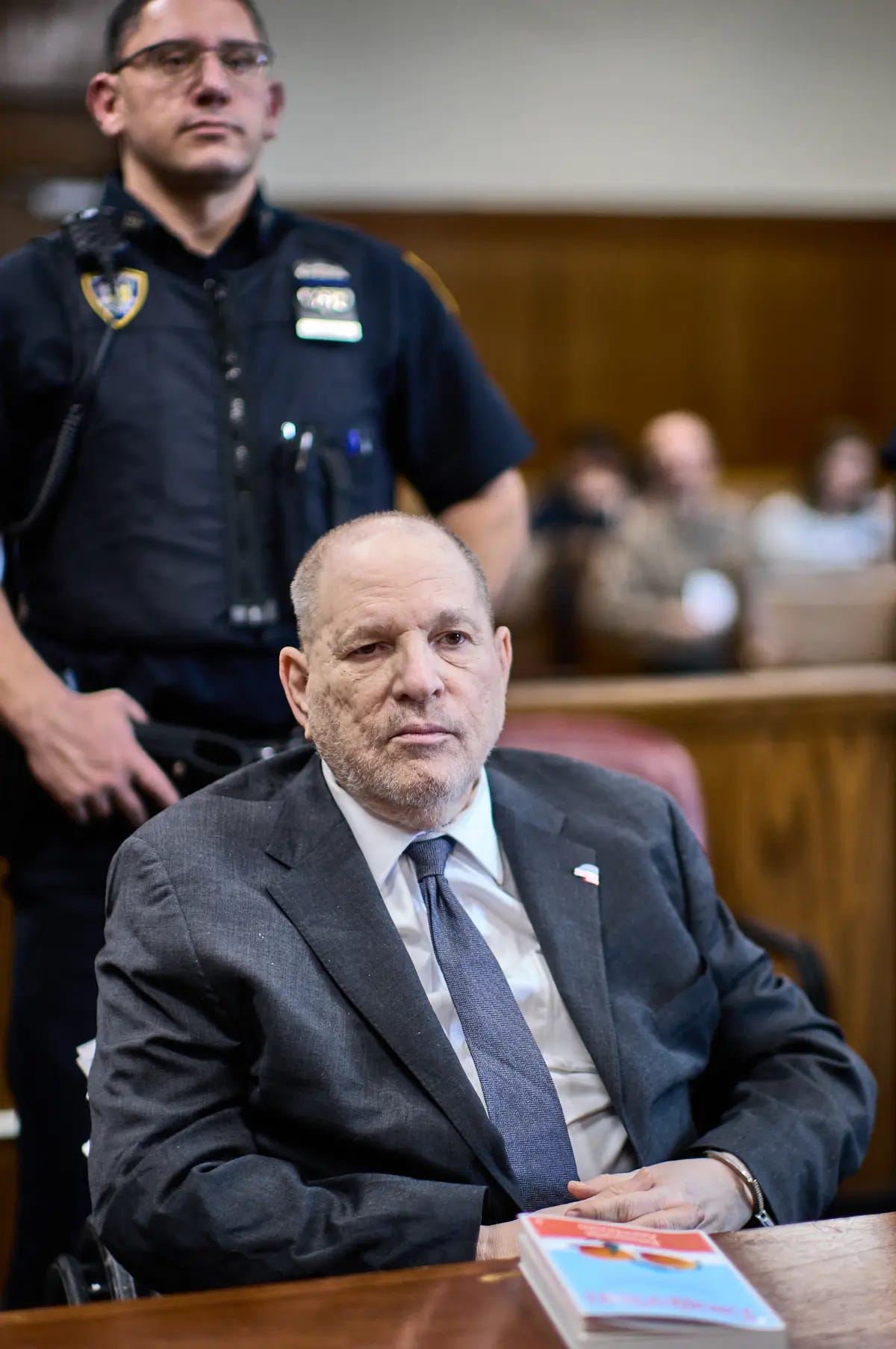
On the day after the 98th Academy Awards, to celebrate and honor your long and significant contribution to American cinema, I’m going to give you some free advice.
In spite of being accused of sexual harassment by more than 100 women, you’ve appealed your conviction and are up for a retrial in New York next month. I don’t want you to blow it, but I read a recent interview with you in The Hollywood Reporter, and I’m a bit concerned. I’m worried that it’ll be super clear to the jury that, in spite of years of incarceration, you still seem to lack the understanding that women are human beings with their own thoughts, feelings, and experiences.
In the interview, you’re quoted saying: “Paltrow made a big deal out of nothing.” You added: “She wanted to be part of the crowd.” Rose McGowan, Rosanna Arquette, and Angelina Jolie all “wanted to be victims. They wanted to be part of the club — they just exaggerated.”
I totally get your points. Being a victim is so fun, what woman wouldn’t crave that kind of attention? Before you came around, Gwyneth probably felt left out. Now she’s got a whole community of other women who’ve been harassed. Who provided that for her? You did!
Not only did you get Gwyneth access to an exclusive club, your interaction was pleasant. You said in the interview: “I walked out of a nice meeting with her and said, ‘How about a massage?’ And she just went, ‘No, I don’t think so.’ I got the message. I never put my hands on her… She told Brad Pitt. Brad Pitt came to me and said, ‘Don’t do anything like that with my girl.’ I said, ‘Don’t worry, Brad. I got it.’”
Again, Harvey, I hear you. You thought a massage would be a great way to finish the meeting. That makes so much sense. I’m guessing you felt angry, frustrated, and confused that Gwyneth went and complained to Brad? In Nonviolent Communication, we teach people to focus on what they’re feeling, identify the universal needs underneath those feelings, and learn how to express that honestly while staying connected to the humanity of others. I’m guessing your interaction with Gwyneth didn’t meet your needs for respect, comfort, and ease. Is that right?
Here’s the problem, Harvey: Even if you weren’t, in fact, hoping to harass, assault, or rape Gwyneth Paltrow, even if the events described by more than 100 other women had nothing to do with your intention, the impact of your actions still matters.
A concept I explore with clients is the difference between impact and intention. Please read this carefully, Harvey. I charge $225 a session, but today, you get a freebie.
Sometimes we might do something that, as far as we’re concerned, is completely innocuous, perhaps even well-intentioned. But here’s the rub: the receiver of our actions might nonetheless experience a significantly painful impact. That impact matters.
Many times, a person wants to be seen for his intention and has a hard time acknowledging or being with the impact of the receiver’s pain. That person will often say something like: “If you knew my intention, you wouldn’t be in pain.” Or “I meant yada-yada-yada, so you shouldn’t feel any pain.”
The pain of the impact can be marginally related to the intention of the actor. The pain can be connected to a larger, often repeated, experience.
Does that make sense, Harvey? As a woman living in a patriarchy, Gwyneth Paltrow — and Angelina, Rose, Rosanna, and those 100+ other women — like most females on planet Earth, have experienced being hit on by aggressive men and react to that trauma by fighting, fleeing, freezing, or fawning to stay safe.
When you and Gwyneth met, there was a power dynamic: you were an older man who ran a major Hollywood studio, and she was a young actress who wanted to build a career.
The challenge for you now, Harvey, is that you don’t seem mildly interested or remotely curious about what women experienced, in their own minds, hearts, and nervous systems when they heard you say: “How about a massage?”
In NVC coaching, when someone tells you about their pain, you practice listening to them with curiosity, compassion, and respect. You hear how your actions, regardless of your intention, might fit into a larger life pattern — in this case, you’d most likely be asked to consider how a system of sexism and misogyny, often enforced by violence, contributed to Gwyneth’s fear and anger when you suggested a massage. When you listen to another person’s story with this kind of care, you become open to learning, growing, and changing.
My concern for you and the April trial is that your recent statements suggest you don’t understand that another person can have a valid reaction separate and different from your own. My concern for you is that you have the emotional maturity of a sociopath.
In NVC, we teach that all human behavior is motivated by an attempt to meet needs. We’ve already made some guesses about your needs, but do you think you could imagine that other humans, besides you, and again, I know this is weird, but even women, also have their own feelings and needs?
Before your trail, do you think you could give another interview where you imply you really get this or maybe read a statement, here’s a draft:
“After my years of incarceration, I understand so much more about power dynamics and what it must be like for women to live in a patriarchy. And while I thought all of these actresses would enjoy me walking around naked and demanding sex, I now understand that was incredibly painful and scary for them. I realize my total failure to see that women are separate human beings. I’m so sorry for this lack of consciousness. I see how even #NotAllMen makes no sense because we all live in a patriarchy, we’re all influenced by it, and the best thing we can all do is try to listen and value the experience of women with respect, compassion, and curiosity.”
Something like that, Harvey.
Because if the jury hears the version you’re telling now, I’m afraid you may end up needing a lot more NVC training, and unfortunately, my schedule is pretty full helping women recover from men like you.
In NVC, there are 2 styles of communication symbolized by animal metaphors. The giraffe, more empathic, and the jackal, more critical. My jackal wrote this letter to Harvey. What do you think her feelings and needs are? Download free lists of NVC Feelings and Needs here. If you want to learn more about Nonviolent Communication or my parent coaching visit listen2connectcoach.com or follow me on Instagram @listen2connectcoach or on Tik Tok @reelgirl reviews.
What do you feel when you read that quote? What does it even mean?
I’m the mother of three daughters. I’ve also been coached by Bethany, and when I read her words, again and again, my needs to be seen, heard, understood, and to matter are met. Her analysis, in my experience, is so rarely articulated and so true.
The simplest way I can explain the significance of Bethany’s quote is through describing my eating disorder and recovery from it. When I was obsessed with counting calories (I grew up in the 80s) I had a lot of clarity on what was good and what was bad: cookies were bad, cottage cheese was good; Republicans were bad, Democrats were good; William Faulkner was a great writer, Jackie Collins was a bad writer. I was a teenager, the world was easily divided into binaries, I knew who I was and where I was going.
In my twenties, when I started to try to give up the bulimia, I tried so many modalities to stop the behavior. I went to private therapy, group therapy, nutritionists, 12-step programs, and nothing worked until I started to practice what today would be called intuitive eating. I got help from an organization called Beyond Hunger in Marin County that supported me to eat when I was hungry, eat whatever I wanted, and stop when I was full. To be clear, this was not an eat when-hungry-stop-when-full “diet.” Many times, as I was learning, I would finish a bag of chips when they stopped tasting good, just because I had the urge to keep crunching, but the difference was I became aware of when I was continuing on past my pleasure point. I was conscious of my choices and I learned to be self-compassionate.
But here’s the really weird thing that happened as I recovered from bulimia. Initially, I lost my orientation of right and wrong. I no longer connected with other women as easily as I had in the past. When I stopped criticizing my body, I got confused. When I stopped eating because it was lunch time or dinner time, and ate when I actually was hungry, I didn’t know how to schedule my day. When I was served a plate of food and I only wanted half of the portion or I wanted seconds, when I was in the mood for salad and not the steak that was served, when I ate because I actually wanted the food and not to protect someone’s feelings, a waiter I didn’t even know or a man who cooked for me, I felt a rush of guilt, shame, and fear.
For so many women, having an eating disorder, being sick, is easier than being healthy. Eating what I wanted, when I wanted felt so rebellious and strange. I felt like how I imagine those tigers do, like the one Glennon Doyle wrote about in her book Untamed, who was free of her cage and still couldn’t run. She was paralyzed,
I was 28 years old when I got better from bulimia and I was 34 when I had my first child. I thought I was ready. Not only had I recovered from a vicious eating disorder, I was sober. I was deeply in love with my smart, sweet boyfriend. I had a career that excited and fulfilled me, I produced talk radio programs, co-founded a non-profit that taught young women ethical leadership skills, I published commentary on politics and culture, and I advocated for women’s issues on national television. Who could be more ready for motherhood than me?
I raised all three of my daughters to be intuitive eaters which for me meant I never gave them rules about what to eat and when to eat it. I never made them finish a plate of food or rewarded “good” behavior with something like ice cream or told them not to “snack” before dinner. I filled the refrigerator and low cupboards with food that they could reach on their own. If they wanted ice cream for breakfast, they was fine with me.
This post is not about how in spite of my efforts, my daughters still grew up with disordered eating. All of them are “healthy” eaters. They eat what they want when they want, they’re adventurous with trying new kinds of food, they’re all “normal” weight.
But when my kids were little, the other moms had a really hard time with how my kids ate. When friends came over, often parents joined, and they were shocked and disapproving that my kids could eat candy whenever they wanted. I honestly believe that part of the reason these parents accepted my family’s intuitive eating, is because neither my kids or I were “overweight.” Once again, I learned, not having an eating disorder separated me from community and incited disapproval, judgement, and confusion.
In my own family, being a “healthy” eater (how I define healthy which is not controlling food, I’m not talking about eating your veggies) caused more conflict, upset, confusion, and judgement. When my kids were allowed to eat whatever they wanted and my nieces and nephews weren’t following the same “rules,” new flexibility and openness had to be reached and that path is never smooth. That journey to a different way of being and relating isn’t so so different from the readjustment sobriety can create in a family that connects and bonds at cocktail hour.
Moms want so much to keep our kids safe, and the way I was raising my daughters seemed dangerous, scary, and chaotic to so many parents. I get that because when I went through a new way of eating, that process could feel dangerous, scary, and chaotic.
Mothers pass on eating disorders, generation after generation, out of concern, love, and a desire to protect. As a woman, when you stop monitoring what you eat, when you let your own body determine what you want and when you want it, you are making a radical choice to trust yourself.
It turns out, at 34, I was not “ready” to be a mom, because no one is ever ready and there’s no perfect time. My oldest daughter never had food issues, but she struggled with behavioral challenges that I’ve written about before and what I learned from supporting her through recovery is that my insights about food didn’t go nearly far enough. It wasn’t just at the dinner table that I needed to follow the wisdom of my body, my intuition, my own unique path instead of the systems that rewarded compliance. As a woman, as a mom, as a mom of daughters, time and time again you’re confronted with a choice: Do I do what the “expert” tells me, the psychiatrist, the teacher, the lacrosse coach, the college adviser, or do I deeply listen to the needs of my daughter?
For example, it never once occurred to me, and I now I realize this lack of awareness was partly because I was born white and to a privileged family, that my daughter wouldn’t go to college. I may have been a Democrat, but I believed in all the rules and status and hierarchy of academia. While I wasn’t dependent on how much money or how much I weighed to determine my status and worth, I was still looking for external validation in my daughter’s grades and test scores. Those numbers told me if I was a good mom, if my daughter would be “safe” and “successful” in the world.
What I know now is that helping my daughters thrive in the world means prioritizing connection with them, listening to them, meeting their needs to be seen, heard, and to matter, not just in what they eat but in every aspect of their lives.
If you want to learn more about Nonviolent Communication or my parent coaching visit listen2connectcoach.com or follow me on Instagram @listen2connectcoach
When my teenage daughter was in residential treatment for behavioral health challenges, she would tell her therapists about the time my husband kicked her out of his truck on the freeway.
That never happened.
The first time my husband and I heard her story, we were shocked and defensive. “How could she say something like that?” We asked the therapist. “Is she trying to hurt us?”
“Lying is a consistent problem for her,” the therapist told us. “We’ll confront her together in a family session. If she can’t be truthful, she won’t get better.”
Finally, all in one room, my husband and I demanded our daughter tell us why she made up negative stories about us. We restated what really happened: “When you yell at us, get physical in the car and threaten us, when you grab the steering wheel, or shove the car into park and your sisters are in the back seat, we cannot continue to drive. We’ll pull over and ask you to get out to calm down. We do that to keep everyone safe. We would never force you out on a freeway.”
Our daughter’s eyes glazed over, and she wouldn’t say anything or respond to us at all. My husband and I got more agitated, frustrated, and defensive. That session ended, like so many others, in radical disconnection.
Several therapists later, when we heard the same story yet again, I rolled my eyes. “I can’t go through this in another session, it’s a waste of time and money.”
“What about just listening to her?” said the therapist.
“What?” I said. “She’s lying.”
“But what was she feeling?” asked this therapist.
“What was she feeling when the thing that never happened happened?” I said, my body stiffening.
“We’re not going to enable her,” said my husband, reciting the counsel of so many experts. “She’s manipulating us.”
“Can you listen for the emotions underneath her story?” said the therapist. “Could that be the truth for her?”
I’m a writer, skilled in translating emotion into metaphor, and still hearing the therapist emphasize feelings beneath the narrative, my brain short-circuited. “You mean how would she feel if we had left her on the freeway?”
“Yes, can you picture that?”
I closed my eyes. I felt like I had to harness every brain cell in my head to even imagine my daughter abandoned on 101 North. “She would be terrified,” I said. “Totally alone.” When I spoke those words, I felt them. I finally experienced the empathy for my daughter that always eluded me when I pictured her on a tree-lined street.
In our next family session, when the freeway story came up, I blinked and saw her standing on the shoulder, cars whizzing by. “That must’ve been really scary,” I said.
“Yes, it was scary,” she said. She went on to talk about how lonely and sad she was, and how much shame she felt for acting out— this from a kid who would never tell me what she was feeling. And tragically, I spent so many years begging and ordering her to open up. Not long before that session, I’d written in a letter to her:
“Time and time again, we’ve asked you to be honest with us, to be specific about what is happening for you, what problems you face and how you work through them, but what we get is lies or half truths and you taking a victim role. We are not asking you to be perfect. What we need is for you to approach our talks with honesty, openness and authenticity, to feel the words that you’re saying.”
I was asking my daughter to choose to feel, as if that were a conscious decision she could make—and then I expected her to somehow summon the courage to share those painful, vulnerable feelings with me, her angry and frustrated mother.
In her new book, Fawning, Dr. Ingrid Clayton writes: “My brother once told his teachers in elementary school that our parents made him sleep outside at night, in the freezing cold. He said he curled up in an empty hot tub with nothing but the cover for a blanket. This is NOT what was happening in our house, but even as a kid, I remember thinking, that is genius. Because that loneliness, that fear, that neglect…was.”
When my daughter found her own ingenious way to share her internal world with me, I didn’t meet her with curiosity. I yelled at her for lying.
All these years later, I sound like I’m judging myself, and that isn’t my intention. I want to share how desperately I wanted to connect with my daughter, how much she wanted to connect with me, and how we repelled each other like magnets. Too many mental health experts and treatment centers push parents to create and hold firm boundaries in order to achieve behavior change, instead of showing us how to connect with our kids. Professionals handing down wisdom from mountaintops can’t guide us when they don’t know how to listen to us or our children.
Reading about the Reiner family tragedy, I was struck by a similar moment of clarity when the parents spoke about their son Nick’s history in treatment. In 2015, Rob Reiner told a reporter: “The program works for some people but it can’t work for everybody. When Nick would tell us that it wasn’t working for him, we wouldn’t listen. We were desperate, and because the people had diplomas on their wall, we listened to them when we should have been listening to our son.”
Michele Reiner added, “We were so influenced by these people. They would tell us he’s a liar and he’s trying to manipulate us. And we believed them.”
My husband and I didn’t have a magical, instantaneous metamorphosis the first time we heard my daughter’s feelings underneath her words. We were still scared, defensive, and confused as we all muddled our way through recovery. But what shifted dramatically that day was our orientation, our goal, our North Star. We no longer prioritized fact-checking, scanning words for accuracy, evaluating for objective truth, and deciding how much we agreed with everything said. Instead, slowly but committed, we turned towards the principles of Nonviolent Communication (NVC) and began practicing empathic listening with each other. Developed by clinical psychologist Marshall Rosenberg, NVC centers on identifying feelings and the universal human needs beneath them. Rosenberg taught that conflict arises not from those needs, but from the strategies we use to try to meet them—and that when needs are heard, compassion becomes possible.
I have no doubt my family will spend a lifetime continuing to learn how to listen to each other, but all these years later, my daughter is happy, healthy, and though forever poetic, no longer depends on metaphor to risk expressing her truth.