Patriarchy encourages women to become mothers, then abandons them; patriarchy sets up mothers to fail, then blames them for the suffering it causes

In my email last week, I received brilliant words from Discovering the Inner Mother author Bethany Webster.

Bethany wrote:

“Patriarchy encourages women to become mothers, then abandons them.

Through isolation, overwork, lack of childcare, lack of parental leave, lack of healthcare, and through lack of real community support.”

I would add to this: lack of reproductive rights, the wage gap, and access to quality education. I could go on…

Bethany writes:


“Patriarchy sets mothers up to fail and then blames them for the suffering it created. All of this limits a mother’s capacity to show up in the ways she may have wanted to.”

So when I speak about the Mother Wound, many women get reactive and tell me:

“You’re just blaming mothers.”
“You’re putting even more on women.”

And I understand why it can feel that way.

But here is where I see it differently.

When we only position mothers as passive victims of the system, we unintentionally strip them of their power.

Mothers are not ONLY victims of patriarchy.
Mothers are ALSO participants within the system—and therefore have the capacity to interrupt it.

Mothers are extraordinarily powerful, precisely because they are formative.

And recognizing their formative role is not equivalent to blaming them.

It’s about responsibility in the truest sense: the ability to respond differently.

This critical nuance is the core of my work and is often misunderstood.

Not every woman is a mother. But every woman is a daughter.

And the work of healing begins there.

When a woman becomes more conscious of:

  • what she herself received and missed from her own mother
  • how she adapted to patriarchal norms in her own family
  • and what she now chooses to carry forward

She begins to break the cycle with her own children.

This is not about being hard on yourself or trying to be the perfect mother.

It’s about awareness, honesty, and a willingness to do what your own caregivers could not.

I’m not saying this is easy work.

The truth is, not everyone is ready for it.

But this is where change happens.”


I’ve had coaching from Bethany, and she’s been instrumental in helping me find my inner mother. I’ve also trained in Nonviolent Communication (NVC) to learn the skills to emotionally regulate and show up with presence, curiosity, and compassion for myself, my partner and my kids. Basically, figuring out how can I be resourced enough to be as healthy a mom and person as possible while living in the patriarchy that degrades my values and doesn’t support my well-being.

Nonviolent Communication, created by clinical psychologist Marshall Rosenberg, teaches that all human behavior is motivated by an attempt to meet universal human needs. Feelings are clues pointing to those needs. NVC teaches how to to express these needs honestly while staying connected to the humanity of others, which basically means not creating “enemy images,” remembering that everyone has needs and everyone’s needs matter.

So, for example, say I go into my daughter’s room and it’s a mess. Maybe I’ve asked her to clean it, and instead I see her lying in her bed, looking at her phone.

How do I feel when I walk into this scene? Probably frustrated and irritated. My underlying needs could be: order, beauty, and maybe respect or consideration.

Before learning NVC, I might have yelled at my kid, something like: “What are you doing? Get up! Clean your room!” Maybe I would’ve added a threat: “If you don’t, you’re not going out.”

I might have gotten compliance from her. She may have rolled her eyes, gotten defensive, she may have yelled back. Most likely any motivation would come from fear about a consequence or from wanting to please me, a fear of disconnection, maybe a feeling of shame and a need for acceptance. It’s doubtful she would have met or recognized any intrinsic motivation, any desire to care for her space, what she wants and how to make that happen as far as the state of her room. And without being motivated in this deep way, the whole cycle is likely to repeat: my daughter dependent on me, yelling and threatening.

Now, if I find myself in this scenario, the first thing I do is offer myself compassion for the pain of my unmet needs. My needs matter, totally separate from hers.

When I see her messy room and my daughter in her bed, I might quietly say something like “Ouch,” and put my hand on my heart.

I do whatever I need to do to regulate—maybe I leave the room and come back minutes or hours later. Timing is everything. I love the phrase: “Strike when the iron is cold.” I rarely talk to my kids now if I’m activated. After I’ve soothed myself, I turn with curiosity in my imagination, to my daughter. Rather than thinking about what she’s saying no to, I wonder: What is she saying yes to? How might she be feeling—tired, overwhelmed? What needs might be alive in her—ease, comfort, rest?

When I’m in that “NVC consciousness,” if I still want to talk to her, I go ask her if she’s in a place to talk to me. I might go back in her room, sit next to her on her bed, and gently rub her head.

“Hey honey, how are you?”

“Tired.”

“Yeah, that makes sense. You’ve been busy.”

“Yes.”

“You just feel like resting.”

“I could sleep forever.”

“I get it. Is this an OK time to talk about your room?”

She sighs. “I guess.”

“When I see the clothes on the floor, I feel kind of annoyed and anxious. I got you those clothes, and I feel sad when I don’t see them not taken care of the way I wish they were. I’m also thinking about the washing machine—when the laundry piles up like this, it makes it hard for everyone else to get a turn to use it. Does that make sense?”

“Yes, I see that.”

“I’m wondering if you have any ideas about how to take care of your clothes in a way that works for everyone in the family?”

“Yeah, I could do a load later today.”

“That would be helpful, thank you. Any other ideas?”

“While I’m doing a load, I can clean my room.”

“That would be great. Thank you for thinking about this.”

“Sure, I like it when my room is clean. I get it.”

“I love you.”

“I love you.”


My priority is connection with my kids—and my long-term goal is helping them feel safe and supported so they can learn how to emotionally regulate. Whether or not my daughter cleans her room is secondary.

Before I learned NVC, I was a “power-over” parent. I thought my job was to teach my three kids to be “good” and “successful” by obeying my wise and smart rules.

When my oldest daughter struggled with behavioral health challenges, everything changed. I realized I didn’t actually know what was best for her all the time. I realized she was a different person that me with her own feelings and needs. I know this may seem obvious, but somehow, I really thought, just like my reflex reaction to my youngest kid’s room, that I know best how and when everything in their life should be done.

When I learned NVC, I realized I’m not the ultimate authority on all things, the teller of truth, God, as patriarchy would have me believe in that there is always a power over another person or thing. With NVC, I learned how to actually listen to my kids, to meet them where they were instead of where I thought they should be.

So many of the rules and expectations I had internalized—compliance, obedience, rewards, external validation—were rooted in patriarchal values, not in fulfillment, joy, or creativity.

And just to avoid turning this into a binary: all three of my kids are actually more “successful” (I think all human are) when they are intrinsically motivated—when they are living authentically, recognizing their deeper needs, and making choices from that place.

That’s the kind of success I care about now.

To learn more about my daughter’s mental health challenges and NVC, read this post and go to Listen2ConnectCoach.com To download free NVC Feelings and Needs lists, go to https://listen2connectcoach.com/resources
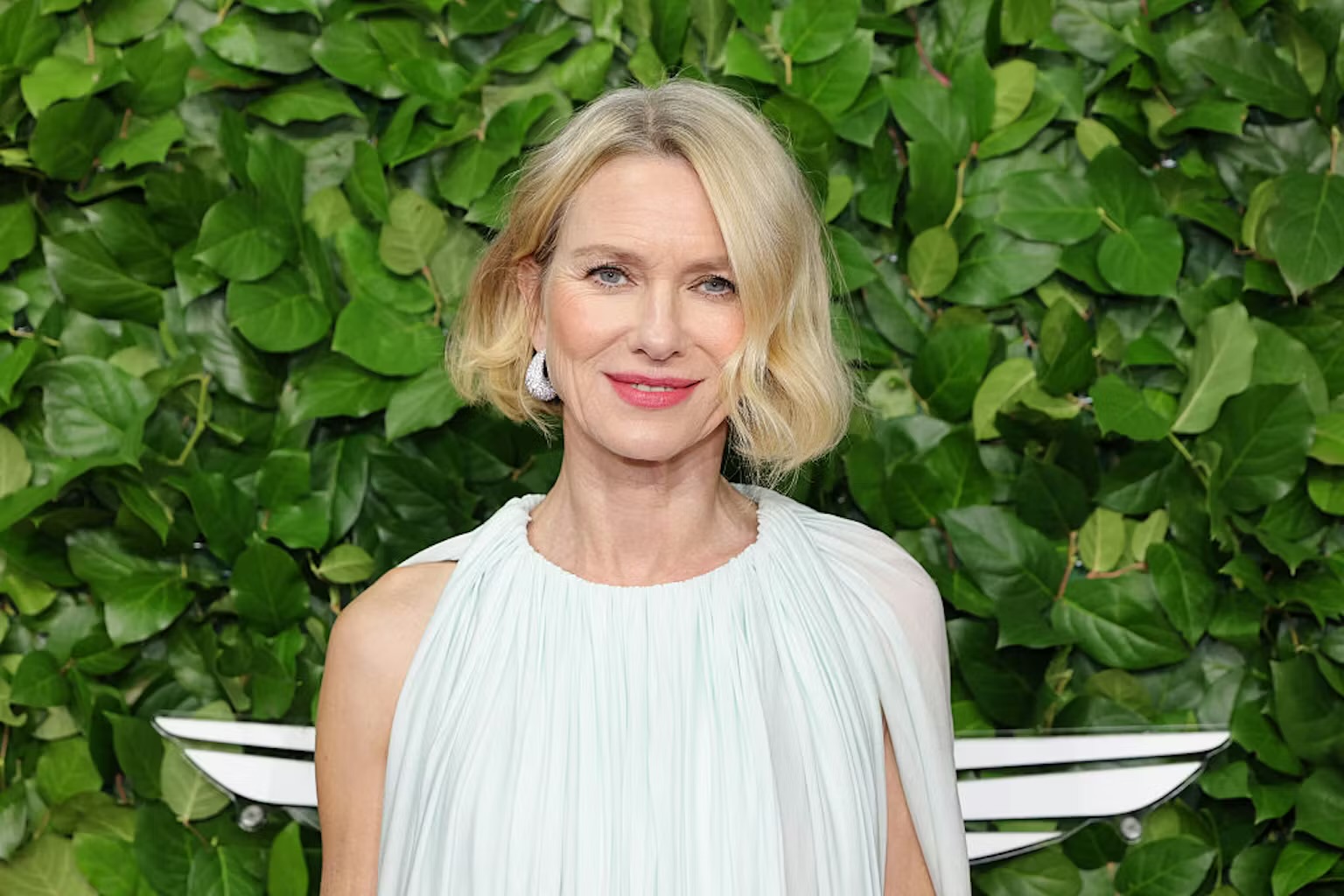
When Naomi Watts’ face stopped fawning: ‘Tolerate my jowls.’

In a recent interview, when actress Naomi Watts said “Tolerate my jowls,” she made clear it’s not her job to surgically alter her face so you don’t feel uncomfortable. If her face stimulates pain for you, learn how to regulate. You feelings are not her problem. Naomi Watts is #unfawning.

What does #unfawning mean?

I’ve been posting a lot about Ingrid Clayton’s new book and how she prefers the term fawning to codependency or people-pleasing, because when we “connect to protect” it’s often not a conscious choice but a trauma response, a nervous system reaction. Psychologist Pete Walker describes fawning as “a response to threat by becoming more appealing to the threat.”

I was thinking about how when women are young— especially when they are white and a weight preferable to the patriarchy— their bodies, to some degree, can’t help but “fawn.” Their bodies fit so perfectly into the system that rewards female compliance.

I posted a Tik Tok video about how my face, as a 57 year old woman, like Naomi, is no longer fawning. Even if a woman decides to take a path different from my own or Naomi’s, her body, on some level, is going to rebel: 57 isn’t the same as 27.

So far, that shift to #unfawning, has been disorienting and confusing to some degree, all changes are like that, but it’s also been incredibly liberating. And that part of the story seems to be, too often left out. That erasure feels like more fawning.

I can’t recall ever being so clearly in a situation where my body simply, repeatedly says: “No, I won’t do it. I won’t conform to that standard, even though, I know you believe that would make your life easier and safer.”

And surprise, my life is easier and safer #unfawning. I don’t miss men catcalling me. Why was I supposed to miss that?

Even though my body is older and supposedly less strong—debatable, I no longer smoke a pack of Marlboro Reds or drink alcohol—I feel so much safer waking down the street, just being in the world feels calmer. I don’t miss the free drinks or free food that were never really free. My body knew that too.

I think maybe the scariest thing about getting older, is when you’re young and you keep getting warned in so many ways how horrible and terrifying it’s going to be. I think that fear is one of the most powerful factors to keep women control. What if getting older isn’t something to be afraid of? What if it is, in fact, joyful?

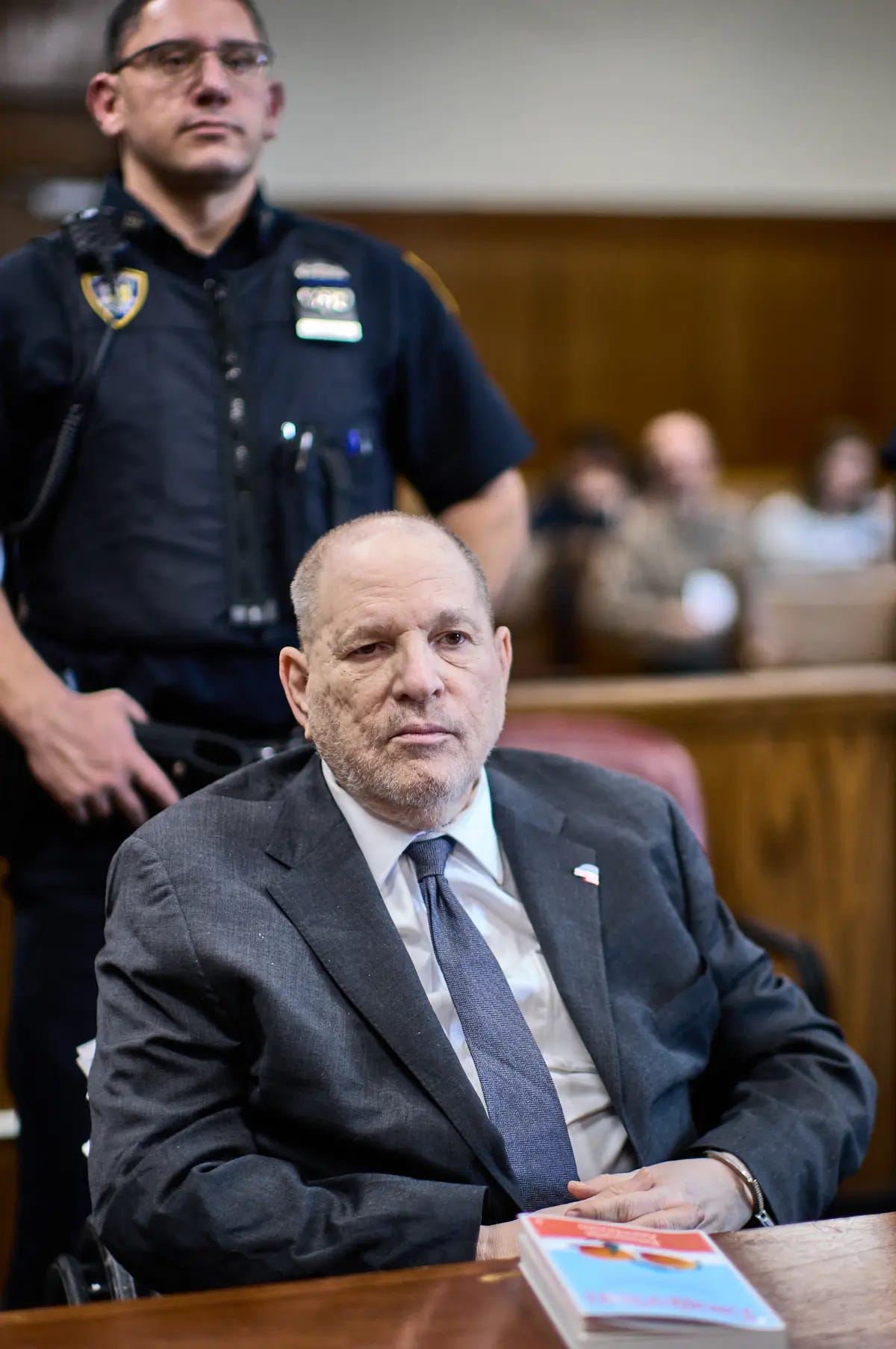
Dear Harvey Weinstein: some free advice for your second trial

Dear Harvey,

On the day after the 98th Academy Awards, to celebrate and honor your long and significant contribution to American cinema, I’m going to give you some free advice.

I’m not an attorney. I coach parents in Nonviolent Communication (NVC) but I actually think you could use a few pointers, and I’m here to help.

In spite of being accused of sexual harassment by more than 100 women, you’ve appealed your conviction and are up for a retrial in New York next month. I don’t want you to blow it, but I read a recent interview with you in The Hollywood Reporter, and I’m a bit concerned. I’m worried that it’ll be super clear to the jury that, in spite of years of incarceration, you still seem to lack the understanding that women are human beings with their own thoughts, feelings, and experiences.

In the interview, you’re quoted saying: “Paltrow made a big deal out of nothing.” You added: “She wanted to be part of the crowd.” Rose McGowan, Rosanna Arquette, and Angelina Jolie all “wanted to be victims. They wanted to be part of the club — they just exaggerated.”

I totally get your points. Being a victim is so fun, what woman wouldn’t crave that kind of attention? Before you came around, Gwyneth probably felt left out. Now she’s got a whole community of other women who’ve been harassed. Who provided that for her? You did!

Not only did you get Gwyneth access to an exclusive club, your interaction was pleasant. You said in the interview: “I walked out of a nice meeting with her and said, ‘How about a massage?’ And she just went, ‘No, I don’t think so.’ I got the message. I never put my hands on her… She told Brad Pitt. Brad Pitt came to me and said, ‘Don’t do anything like that with my girl.’ I said, ‘Don’t worry, Brad. I got it.’”

Again, Harvey, I hear you. You thought a massage would be a great way to finish the meeting. That makes so much sense. I’m guessing you felt angry, frustrated, and confused that Gwyneth went and complained to Brad? In Nonviolent Communication, we teach people to focus on what they’re feeling, identify the universal needs underneath those feelings, and learn how to express that honestly while staying connected to the humanity of others. I’m guessing your interaction with Gwyneth didn’t meet your needs for respect, comfort, and ease. Is that right?

Here’s the problem, Harvey: Even if you weren’t, in fact, hoping to harass, assault, or rape Gwyneth Paltrow, even if the events described by more than 100 other women had nothing to do with your intention, the impact of your actions still matters.

A concept I explore with clients is the difference between impact and intention. Please read this carefully, Harvey. I charge $225 a session, but today, you get a freebie.

Sometimes we might do something that, as far as we’re concerned, is completely innocuous, perhaps even well-intentioned. But here’s the rub: the receiver of our actions might nonetheless experience a significantly painful impact. That impact matters.

Many times, a person wants to be seen for his intention and has a hard time acknowledging or being with the impact of the receiver’s pain. That person will often say something like: “If you knew my intention, you wouldn’t be in pain.” Or “I meant yada-yada-yada, so you shouldn’t feel any pain.”

The pain of the impact can be marginally related to the intention of the actor. The pain can be connected to a larger, often repeated, experience.

Does that make sense, Harvey? As a woman living in a patriarchy, Gwyneth Paltrow — and Angelina, Rose, Rosanna, and those 100+ other women — like most females on planet Earth, have experienced being hit on by aggressive men and react to that trauma by fighting, fleeing, freezing, or fawning to stay safe.

When you and Gwyneth met, there was a power dynamic: you were an older man who ran a major Hollywood studio, and she was a young actress who wanted to build a career.

The challenge for you now, Harvey, is that you don’t seem mildly interested or remotely curious about what women experienced, in their own minds, hearts, and nervous systems when they heard you say: “How about a massage?”

In NVC coaching, when someone tells you about their pain, you practice listening to them with curiosity, compassion, and respect. You hear how your actions, regardless of your intention, might fit into a larger life pattern — in this case, you’d most likely be asked to consider how a system of sexism and misogyny, often enforced by violence, contributed to Gwyneth’s fear and anger when you suggested a massage. When you listen to another person’s story with this kind of care, you become open to learning, growing, and changing.

My concern for you and the April trial is that your recent statements suggest you don’t understand that another person can have a valid reaction separate and different from your own. My concern for you is that you have the emotional maturity of a sociopath.

In NVC, we teach that all human behavior is motivated by an attempt to meet needs. We’ve already made some guesses about your needs, but do you think you could imagine that other humans, besides you, and again, I know this is weird, but even women, also have their own feelings and needs?

Before your trail, do you think you could give another interview where you imply you really get this or maybe read a statement, here’s a draft:

“After my years of incarceration, I understand so much more about power dynamics and what it must be like for women to live in a patriarchy. And while I thought all of these actresses would enjoy me walking around naked and demanding sex, I now understand that was incredibly painful and scary for them. I realize my total failure to see that women are separate human beings. I’m so sorry for this lack of consciousness. I see how even #NotAllMen makes no sense because we all live in a patriarchy, we’re all influenced by it, and the best thing we can all do is try to listen and value the experience of women with respect, compassion, and curiosity.”

Something like that, Harvey.

Because if the jury hears the version you’re telling now, I’m afraid you may end up needing a lot more NVC training, and unfortunately, my schedule is pretty full helping women recover from men like you.

In NVC, there are 2 styles of communication symbolized by animal metaphors. The giraffe, more empathic, and the jackal, more critical. My jackal wrote this letter to Harvey. What do you think her feelings and needs are? Download free lists of NVC Feelings and Needs here. If you want to learn more about Nonviolent Communication or my parent coaching visit listen2connectcoach.com or follow me on Instagram @listen2connectcoach or on Tik Tok @reelgirl reviews.

Female athletes gone missing: Sports Illustrated’s objectification of plus size women isn’t progress

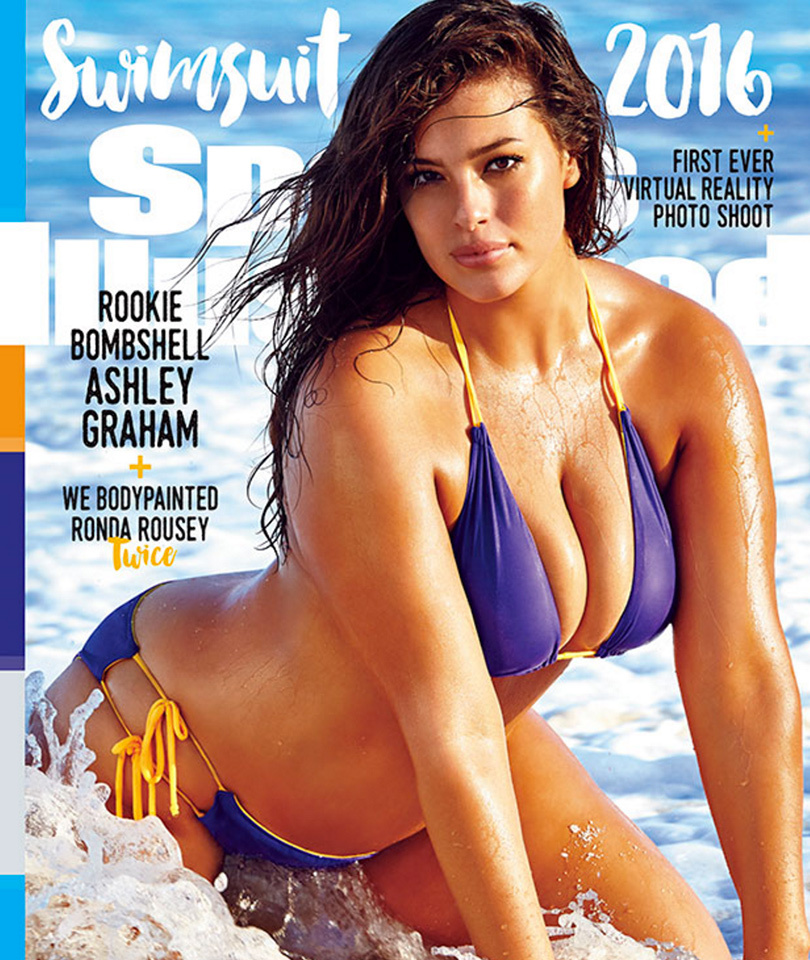
The internet is abuzz with joy and celebration because the new Sports Illustrated swimsuit issue features plus size model, Ashley Graham, on its cover.

0214-ashley-810x960

Isn’t this great, girls? Even if you aren’t skinny, you can pout doggy style in the surf! Yes, apparently, it’s true that even if you’re not a size zero, men will still want to fuck you. No worries, sweeties, you still have value in the world.

Maybe we can get a woman over 50 to pose in a bikini. Helen Mirren? Never mind that she’s a great actress, it’s her body we want to show off. What about a plus size woman of color? Now that would be a real leap towards equality.

In 2013, researchers from the University of Louisville found that out of 716 SI covers, all of them from the years 2000- 2011, only 35 featured a female athlete. Of those, only 11 featured a female athlete of color.

Despite females’ increased participation in sport since the enactment of Title IX and calls for greater media coverage of female athletes, women appeared on just 4.9 percent of covers. The percentage of covers did not change significantly over the span and were comparable to levels reported for the 1980s by other researchers. Indeed, women were depicted on a higher percentage of covers from 1954–1965 than from 2000–2011.

Do you see we’re going backwards here? Putting a plus size woman on the cover of the SI swimsuit issue isn’t any kind of progress.

When Serena Williams made the cover of SI in 2015 as sportsperson of the year, she was pictured in stilettos and a black body suit, one bare leg slung over a chair.

serena-williams-sports-illustrated-person-of-the-year-ld-1

Some defended Serena’s cover claiming it’s important to show that a woman can be powerful and sexy. But for men, it is their skill that makes them attractive. For women athletes, if they happen to be “attractive” it is in spite of their talent, not because of it. Men’s bodies are valued for what they can do while women’s bodies are valued for how they appear.

If you’re going to tell me this sexism is just innate, tritely quoting: “Women use sex to get power, men use power to get sex,” listen to me carefully: People who are not in power learn to survive and be successful by pleasing those who are in power. That need is the only thing innate about reducing talented, skilled, brilliant women to body parts. Men, as a group, not individually, are able to stay running the world as long as women, as a group, stay weak.

Here is what I blogged in 2014:

Memo to the world: objectifying fat women is objectifying women

Just saw this from Buzzfeed on Miss Representation’s Facebook page:

Plus-size swimwear company Swimsuits for All set out to prove that “sexy curves go beyond a size four” by shooting its own swimwear calendar, including a picture reenacting this year’s Sports Illustrated swimsuit issue.

enhanced-20712-1401659090-8

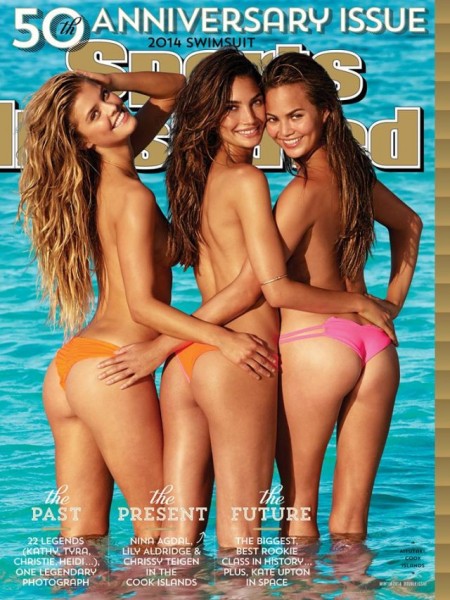
Are you kidding me? Do you think I’d be any happier if my 3 daughters saw that picture in the Safeway checkout line instead of this one?

1782096_715803071785441_1361267479_n-640x852-450x600

All right, maybe I’d be a smidgen happier that my kids wouldn’t have to see more starving women defined as beautiful, but my goals and expectations are so much higher than what this image from Swimsuits for All represents. I want to see images of women where they are not defined by their sexuality, by whether whomever is looking at them finds them sexy or not, where what they look like in bathing suits is not the be-all end-all, where who thinks they are attractive only matters in a very particular context, like when they are with someone who they love or want to have sex with.

Swimsuits for All is in the business of selling swimsuits. The company has got to sell its product, so posing women in the merchandise that it’s marketing makes sense. I’m not indicting the company, but pretending as if seeing this image all over the internet is liberating is ridiculous. Also, it might be nice to see the women swimming in their suits. What about playing volleyball on the beach? Building awesome sandcastles? Doing something? There could be a shot of a woman or two sunbathing, as long as the “aren’t I sexy” poses were not the dominant, ubiquitous ones.

I’ve written this for a long time, but “fat” women beauty contests don’t represent progress. Women no longer paraded as meat is progress.


Still confused or want to see more images to make this point? Please take a look at Reel Girl’s recent post: Why do men in America feel entitled to women? A gallery of reasons. You’ll see this famous painting by Manet (look she’s got fat rolls and she’s naked, isn’t that cool?) along with contemporary images of dressed men paired with naked women.

manet

Take your daughters (and sons) to see ‘Interstellar’

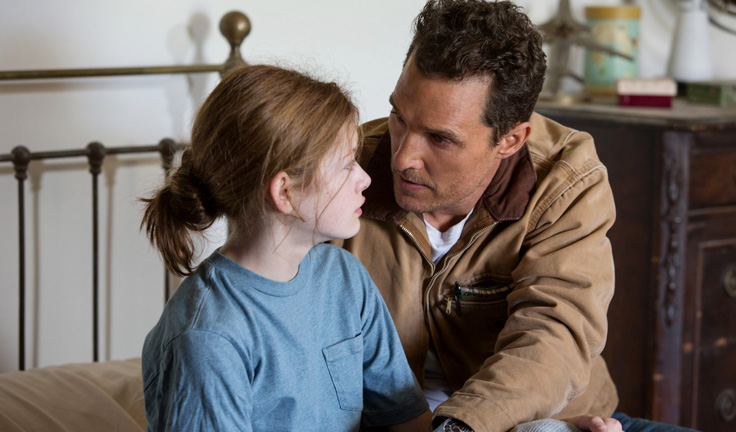
I just saw ‘Interstellar’ with my 11 year old daughter, and we both loved it. There is not one but two brilliant female scientists in this movie. Even better for kids, part of this movie shows the genius mathematician as a curious, smart 10 year old.

mackenzie-foy-5-facts-about-the-child-actress-of-interstellar-01

When Murphy is a child, and when she is an adult (played by Jessica Chastain) she is never once denigrated for being a female. In both incarnations, she wears a shirt and pants, her hair in a messy bun. Her gender is a non issue in Interstellar’s dystopia. Do you know how rare this is? Let’s just say it’s almost unheard of and unseen in Hollywood movies for both children and adults.

INTERSTELLAR

The other female scientist, played by Anne Hathaway, is also not sexualized for the most part in costume, posing, dialogue, or narrative structure.

interstellar-trailer-anne-hathaway

Yes, Anne Hathaway and Jessica Chastain are Minority Feisty (I use ‘feisty’ as a singular or plural, like you’d use ‘fish.’) Most of the characters are male including great roles played by John Lithgow and Matt Damon. The robots have male names and voices. The protagonist of the movie is Murphy’s father played Mathew McConaughey. Murphy’s sister-in-law is so subservient to her husband, I rolled my eyes a few times. So the gender representation in ‘Interstellar’ isn’t a perfect triple H, but the movie exemplifies such spectacular storytelling, that it’s sexism is sidelined instead of the female characters. The narrative structure is so compelling, so well done, I want to see the movie again, just to study how the dialogue and scenes all build on each other, each shot leading to the next, brilliantly balanced like a house of cards.

Need more to recommend this movie? The special effects are outstanding. Visually, ‘Interstellar is not only gorgeous but depictions of a black hole, other planets, and the dimensions are fascinating to see.

Finally, the movie asks all the big questions, and will get your children to ponder them as well, such as: Why are we here? What will become of us? What is our destiny? What is the meaning of love? I’ve seen so many disaster/ end of the world movies, as I’m sure you have too, but never once have I seen the apocalypse portrayed as the human species going on to our next stage as explorers and pioneers.

I want to thank a real life genius, Lea Verou, for recommending I take my daughter to see ‘Interstellar.’ I don’t know Verou, but she follows me on Twitter, and her comments to me were so interesting, I Googled her (and now follow her along with 50,000 plus others.) I don’t even understand her bio, so I’m, pasting it here, because maybe you do.

My name is Lea Verou (Lea being short for Michailia or Μιχαήλια) and I’m a computer scientist / web standards geek / front-end developer / web designer / speaker / author,  originally from Greece. I’m currently a Research Assistant at MIT CSAIL, in David Karger’s Haystack group and an Invited Expert in the W3C CSS Working Group.

In the past, I’ve written a book on advanced CSS for O’Reilly, worked for W3C/MIT, gave over 60 invited talks around the world, released several open source projects, co-founded a Greek startup called Fresset Ltd (which I left in 2011), and many other things. I hold a BSc in Computer Science from Athens University of Economics and Business, in which I have co-organized a 4th year undergrad course about web-development in the past. While my background is technical, I have a strong passion for visual design as well.


verou-cover


It goes on for a few more paragraphs. I’m writing about Verou here because clearly she is the kind of visionary that I hope more of our daughters will grow up to be. I think movies like “Interstellar’ will inspire them. My daughter looks lit up right now.

You always ask me what age is good for the movies I recommend, and I always tell you it depends on the kid. There are no sexual situations (no sexual situations!) in ‘Interstellar.’ There is no gore (no gore!) Yet in no way does the movie feel sanitized or whitewashed or “for kids.” (The theater was packed full of adults except for two teen girls.) Death is a theme, but woven through the narrative in a way that I think is beneficial for children to ponder. Personally, I think my 8 year old would be confused by the plot, so I wouldn’t prod her to go, the way I cajoled my 11 year old this morning. But if she wanted to go, I would take her, curious to see what she gets out of it.

Reel Girl rates ‘Interstellar’ ***HH***

I’m a fan FCKH8’s ‘F-Bomb Princess’ viral video

From the first time I saw FCKH8’s video, I really liked it. Perhaps, I’m a fan because of bias. When I started my blog, Reel Girl, I wrote on my “About” page:

One more reason I started Reel Girl– our movie rating system, and the values associated with that rating system, is totally messed up. So many G movies perpetuate the absolute worst kinds of gender stereotypes, yet they are supposedly “for kids.” In my opinion, this kind of repetitive imagery is way more dangerous for children than hearing the word “shit.”


“Cinderella” and all of its endless, infinite adaptations and reincarnations, in my opinion is bad for kids. “Whale Rider” in spite of swearing and drug use is good for kids. Simple concept, yet so hard to convince people of it, that I write and write and write. When I watched the FCKH8 video, I felt like: YES, this is the point I’ve been trying to make: Pay inequity is way more offensive than the word fuck. The video shows what I’ve been trying to tell. It is art. And unlike many writers out there, I am THRILLED when I see my idea coming from someone else as well because it makes me feel like I’m not crazy, like people ‘get it.’ Furthermore, I realize that in order for the world to change, people other than me have to ‘get it.’ If it’s just me with my ‘original’ idea that I’m going for, all I have is my ego, and that is a lonely, static, boring place to be plus nothing much changes at all.

So perhaps, I thought, when I read comments against the FCKH8 video by my brilliant colleagues including founder of Pigtail Pals Melissa Wardy, author of The Princess Problem Rebecca Hains, and author of Her Next Chapter Lori Day, I’m just being selfish here. I’m not thinking about the kids having no idea what they’re saying (and I do believe these girls are too young to understand what they’re talking about.) Perhaps I’m so happy not be so isolated with my vision, I’m blind to the exploitation, hypocritically exploitation I’m trying to prevent.

But after thinking this through, I still like the video. As I wrote, I agree the kids don’t understand what they are saying, this is a job for them. I never thought the kids in the ad were not acting or not reciting lines, and I don’t think the video’s intention is to make viewers assume that. So the question is: Does the ignorance of the kids make the video exploitative? My answer is still no, unless all child actors from the ones in sitcoms who speak in language far beyond their years to any commercial, all who often don’t understand what they are saying, are exploited.

The next question I asked myself: Is the FCKH8 ad exploiting girls because it’s using them to sell a product?

During the World Series last night and the night before, my family and I saw teen baseball star Mo’ne Davis in a Chevy ad. I thought the ad was beautiful. In the ad, Mo’ne says, “I throw 70 miles an hour. That’s throwing like a girl.” Millions of families saw her throw in a mini-movie and heard that line while watching the World Series. We also saw a Mazda ad with Mia Hamm, and my 11 year old, who is a fan of Hamm, said, “Why is she selling cars?” To which I responded, “It’s either her or a male athlete. I’d rather see Mia.” I want to see the images of powerful girls used to sell things, from toys to movies to clothing. These kids are not being exploited because they are being used to sell a product.

Rebecca Hains makes powerful points in her blog about the history of FCKH8:

The slogans found on the FCKH8 t-shirts were appropriated from other feminist nonprofits. For example, the Feminist Majority Foundation has been selling “This is what a feminist looks like” tees since at least the mid-1990s. So despite their promises to support charities with their t-shirt sales, FCKH8 is actually siphoning money away from feminist charities by stealing their ideas.

Furthermore, quality charities have refused to take FCKH8’s money in the past, because FCKH8 is incredibly problematic. They’ve been accused widely of being transphobic (as a quick google search will show), and their anti-racist work is of dubious merit. For example, their response to Ferguson raised so much ire in the anti-racist community that Race Forward—one of the charities originally listed on FCKH8’s page—announced publicly that they were refusing donations from the company.

So to those who are saying that FCKH8 is a company that’s doing it’s best to promote social justice, and we should cut them some slack? No FCKHing way.

I agree stealing a slogan from non-profits is not ethical. I also didn’t know about using the Ferguson tragedy to sell T shirts. FCKH8 sounds like a company with a bad history. But learning this history doesn’t change how I feel about the video. I still like the video. I still like that the video is going viral and, just like the Mo’ne ad, spreading important slogans out into the world:

* Pay inequality. Women are paid 23% less than men for the exact same fucking work.

*Women who graduate university with straight A’s get paid only as much as men who graduated with C’s.

* 1 out of every 5 women will be sexually assaulted or raped by a man

* Stop telling girls how to dress and start teaching boys not to fucking rape

*We’re glad a women’s right to vote is here, but equality is messed up. It’s walking to the car without fear.

* Pretty is a compliment but here’s how the focus works to girls detriment. Society teaching girls that our body, boobs, and butt are more important than our brains leads us to thinking our worth comes from our waistline. My aspirations in life should not be worrying about the shape of my ass so fuck focusing on how I look and give me a book.

*Instead of cleaning these girls mouths out with soap, maybe society should clean up its act.

*Near the end of the ad, there is a boy in a dress. “When you tell a boy it’s bad to act like a girl it’s because you think its bad to be a girl.”

These are messages I work hard every day to promote, and I believe the ideas are presented in this video in a simple, convincing way, easy for adults– yes, adults– to understand.

Rebecca posts comments on her blog from people who are offended that these young girls spoke of rape and assault. I agree that part is disconcerting, and it is for this reason, I chose not to show the video to my 11 year old daughter who I have yet to tell about rape. That said,  I’ve blogged about books for kids that deal with rape, incest, and assault wondering what age is appropriate for these stories. The answer I always get is that it depends on the kid. I want to be the first one to tell my kid about rape, sexual assault, pornography, incest, drugs etc. I don’t want her learning about these issues for the first time from books or movies or other kids. When I’ve written about these kinds of books on my blog, kids and parents have written back that their young kid does know about porn or rape based on experiences that they’ve had– talking to other kids, what they’ve seen, or instances in their own life. Now that they do know, it is important and beneficial for the kid to be able to read literature about it. Here’s one comment that I got when I wrote about Graceling:

Based on the brief snippets of content she saw, I had to not only have “the talk”, but also explain a LOT of things I never thought I’d have to address at that age. Because of this, conversely, she is now very educated on both sex, misogyny, and rape/assault/child abuse.  Therefore, I think these books that are written about very serious issues — but in the comprehension style of a young person who can find the characters identifiable — is a great source of information…I have not read these books to endorse them, but now I am interested and will be checking them out at the library. Thank you.

My point is that I don’t think it’s fair to make a blanket statement that little kids should not refer to rape or assault in a video when in the real world, kids see and experience these things every day.

One more thing: As far as the video not having a trigger warning, I don’t post trigger warnings on my blog ever. My whole blog is a trigger. Everyone is unique, and I think it’s impossible to make some kind of assumption about what will trigger readers.

If for some reason you haven’t come across the video, you can watch it here.


Show your kids Emma Watson’s speech on feminism

Please show your children this video of Emma Watson’s excellent speech to the U.N. about feminism. Launching the “HeForShe” campaign, Watson is changing the public face of feminism and urging men to join the movement.

While watching the video, ask yourself: Why is Emma Watson one of the few actresses who dares to be a spokesperson for feminism? If Watson had not grown up playing the brave and brilliant Hermione, do you think she would have bloomed into the courageous, public feminist that she is, calling for the social, political, and economic equality of women and men? And most importantly, what would happen if more girls and women played heroes in movies and books? What would happen if more children grew up experiencing  narratives where females are celebrated for their skills instead of for their appearance? Then, how many of the next generation, girls and boys, do you think would proudly call themselves feminists?

In her speech, Emma Watson says: “No country in the world can yet say they have achieved gender equality.” But why have so few fantasy worlds achieved gender equality as well, worlds created for children, places where anything should be possible?

Even Hermione, of course, is not the star of the Harry Potter series. She, like so many other Minority Feisty, plays the essential sidekick. She is there to help the male star of his 8 eponymous movies complete his quest to vanquish the villain and save the world. J. K. Rowling was told by her publisher to conceal her gender with her initials in order to sell her book, and that incredible act of sexism happened our modern, ‘post-feminist’ world.

Here are some statistics from the Geena Davis institute on Gender and Media:

  • Males outnumber females 3 to 1 in family films. In contrast, females comprise just over 50% of the population in the United States. Even more staggering is the fact that this ratio, as seen in family films, is the same as it was in 1946.
  • Only 16% of protagonists in film are female
  • Females are almost four times as likely as males to be shown in sexy attire. Further, females are nearly twice as likely as males to be shown with a diminutive waistline. Generally unrealistic figures are more likely to be seen on females than males.
  • Females are also underrepresented behind the camera. Across 1,565 content creators, only 7% of directors, 13% of writers, and 20% of producers are female. This translates to 4.8 males working behind-the-scenes to every one female.
  • From 2006 to 2009, not one female character was depicted in G-rated family films in the field of medical science, as a business leader, in law, or politics. In these films, 80.5% of all working characters are male and 19.5% are female, which is a contrast to real world statistics, where women comprise 50% of the workforce.

Please also look at Reel Girl’s Gallery of Girls Gone Missing From Children’s Movies documenting the years from 2011 – 2014.

If we can’t even imagine gender equality, how can we create it in the “real” world?  Fantasy meets reality meets fantasy meets reality.

Once again, I ask you to show Hermione’s speech to your children.The video and transcript are below.

Today we are launching a campaign called “HeForShe.”

I am reaching out to you because I need your help. We want to end gender inequality—and to do that we need everyone to be involved.

This is the first campaign of its kind at the UN: we want to try and galvanize as many men and boys as possible to be advocates for gender equality. And we don’t just want to talk about it, but make sure it is tangible.

I was appointed six months ago and the more I have spoken about feminism the more I have realized that fighting for women’s rights has too often become synonymous with man-hating. If there is one thing I know for certain, it is that this has to stop.

For the record, feminism by definition is: “The belief that men and women should have equal rights and opportunities. It is the theory of the political, economic and social equality of the sexes.”

I started questioning gender-based assumptions when at eight I was confused at being called “bossy,” because I wanted to direct the plays we would put on for our parents—but the boys were not.

When at 14 I started being sexualized by certain elements of the press.

When at 15 my girlfriends started dropping out of their sports teams because they didn’t want to appear “muscly.”

When at 18 my male friends were unable to express their feelings.

I decided I was a feminist and this seemed uncomplicated to me. But my recent research has shown me that feminism has become an unpopular word.

Apparently I am among the ranks of women whose expressions are seen as too strong, too aggressive, isolating, anti-men and, unattractive.

Why is the word such an uncomfortable one?

I am from Britain and think it is right that as a woman I am paid the same as my male counterparts. I think it is right that I should be able to make decisions about my own body. I think it is right that women be involved on my behalf in the policies and decision-making of my country. I think it is right that socially I am afforded the same respect as men. But sadly I can say that there is no one country in the world where all women can expect to receive these rights.

No country in the world can yet say they have achieved gender equality.

These rights I consider to be human rights but I am one of the lucky ones. My life is a sheer privilege because my parents didn’t love me less because I was born a daughter. My school did not limit me because I was a girl. My mentors didn’t assume I would go less far because I might give birth to a child one day. These influencers were the gender equality ambassadors that made who I am today. They may not know it, but they are the inadvertent feminists who are. And we need more of those.  And if you still hate the word—it is not the word that is important but the idea and the ambition behind it. Because not all women have been afforded the same rights that I have. In fact, statistically, very few have been.

In 1997, Hilary Clinton made a famous speech in Beijing about women’s rights. Sadly many of the things she wanted to change are still a reality today.

But what stood out for me the most was that only 30 per cent of her audience were male. How can we affect change in the world when only half of it is invited or feel welcome to participate in the conversation?

Men—I would like to take this opportunity to extend your formal invitation. Gender equality is your issue too.

Because to date, I’ve seen my father’s role as a parent being valued less by society despite my needing his presence as a child as much as my mother’s.

I’ve seen young men suffering from mental illness unable to ask for help for fear it would make them look less “macho”—in fact in the UK suicide is the biggest killer of men between 20-49; eclipsing road accidents, cancer and coronary heart disease. I’ve seen men made fragile and insecure by a distorted sense of what constitutes male success. Men don’t have the benefits of equality either.

We don’t often talk about men being imprisoned by gender stereotypes but I can see that that they are and that when they are free, things will change for women as a natural consequence.

If men don’t have to be aggressive in order to be accepted women won’t feel compelled to be submissive. If men don’t have to control, women won’t have to be controlled.

Both men and women should feel free to be sensitive. Both men and women should feel free to be strong… It is time that we all perceive gender on a spectrum not as two opposing sets of ideals.

If we stop defining each other by what we are not and start defining ourselves by what we are—we can all be freer and this is what HeForShe is about. It’s about freedom.

I want men to take up this mantle. So their daughters, sisters and mothers can be free from prejudice but also so that their sons have permission to be vulnerable and human too—reclaim those parts of themselves they abandoned and in doing so be a more true and complete version of themselves.

You might be thinking who is this Harry Potter girl? And what is she doing up on stage at the UN. It’s a good question and trust me I have been asking myself the same thing. I don’t know if I am qualified to be here. All I know is that I care about this problem. And I want to make it better.

And having seen what I’ve seen—and given the chance—I feel it is my duty to say something. English statesman Edmund Burke said: “All that is needed for the forces of evil to triumph is for enough good men and women to do nothing.”

In my nervousness for this speech and in my moments of doubt I’ve told myself firmly—if not me, who, if not now, when. If you have similar doubts when opportunities are presented to you I hope those words might be helpful.

Because the reality is that if we do nothing it will take 75 years, or for me to be nearly a hundred before women can expect to be paid the same as men for the same work. 15.5 million girls will be married in the next 16 years as children. And at current rates it won’t be until 2086 before all rural African girls will be able to receive a secondary education.

If you believe in equality, you might be one of those inadvertent feminists I spoke of earlier.

And for this I applaud you.

We are struggling for a uniting word but the good news is we have a uniting movement. It is called HeForShe. I am inviting you to step forward, to be seen to speak up, To be the he for she. And to ask yourself if not me, who, if not now when.

Thank you.


Feminism: the pink elephant in America’s living room

In 12 step programs, people talk about the pink elephant in the living room.That phrase, you probably know, refers to the experience of seeing something totally fucking obvious, right there in front of you, in your living room, but no one else acknowledges it.

1105-1834-PinkElephant

What you experience isn’t real. What you see isn’t happening. At best, later in life, those people who were in the living room might say: OK, maybe that happened, but really, it’s too trivial to make a fuss over, more like a pink mosquito.

Today, meaning right now– April 8 at 11:01AM– feminism is feeling like that to me: pointing out the billboards all over town, the motion picture sexism taking place on giant screens across America, and people telling me it’s not real, it’s not happening, it doesn’t matter.

If my now 45 year old self could say something, not even to my child self, but to the 30 year old me, it would be this: you’re not crazy. What you see is real. What you see is happening, and it matters.

In honor of that message, I’m re-posting something I wrote for the San Francisco Chronicle  when I was 31, right after I saw my first “reality” (get it?) TV show. I was scared to write the op-ed, not only because I worked at a talk radio station where many people didn’t agree with me (or maybe just hadn’t thought deeply about the issue “too trivial”) but because, as I put down those words, I realized how I felt about marriage was changing radically. Marriage was never in my life plan. Fourteen years later, I have a husband and three kids. Of course, I can’t credit the gay marriage movement with all of that, but I can’t deny it planted a seed. I see the words right there. (Did you hear that, radical right, isn’t that what you want for the ladies? Maybe rethink your strategy?)

Recognizing the sanctity – and a travesty – of marriage

MARGOT MAGOWAN
Published 4:00 am, Tuesday, February 22, 2000

I DIDN’T think TV could shock me anymore. But then, during sweeps week last week, I watched Fox’s new hit, “Who Wants to Marry a Multimillionaire?” and realized modern television had sunk to a new low.

The show began with the introduction of 50 women, all competing for the grand prize of marriage to a multimillionaire, their union to be sealed with a $34,000 engagement ring.

The women stepped into the klieg lights wearing everything from bathing suits to wedding gowns, exposing their bodies to be rated and judged. Meanwhile, Mr. Multimillionaire was safely shrouded in a darkened booth. The whole scene brought to mind the voyeuristic ambiance of a peep show.

During one of the show’s worst sequences, each finalist had 30 seconds to convince Mr. Multimillionaire that she was the one he should choose. While guitar porn rock played in the background, the women said things like, “I know just how to please a man.”

At the end of the show, Mr. Multimillionaire finally appeared in a tux and chose his bride, the blondest and thinnest of them all.

I was stunned by this degradation and mockery of the marriage ceremony. How can there be any presumption of honesty or integrity in marriage vows when the groom takes them – as Mr. Multimillionaire did – just moments after meeting his wife to be, promising to love her until death?

Are those elements that I thought were key to marriage – vows and love and commitment – without real meaning?

A wedding ceremony should be a sacred celebration, inspired by devotion so powerful that those in love want to make a lifelong commitment to each other publicly.

Yet on the Fox Network, marriage became a modern-day flesh auction with women transformed into a commodity to be purchased by a wealthy man.

I’m not completely naive. I know that marriage was initially created as a financial contract. I know that in Biblical times the purpose of marriage was to control the means of reproduction – that is, women.

I know that when women had no social, political or financial power, when they were not allowed to own property and were only valued for how many children they could bear, marriage existed just to ritualize the transfer of ownership of women from fathers to husbands.

I know that remnants of these ancient roles of womanhood are still prevalent in marriage ceremonies, but I had thought they no longer had significance.

Though brides still traditionally wear white, the color has lost its relevance as a symbol of virginal innocence, once so prized in a woman. Few recall now, when the priest asks if anyone has just cause why the marriage should not take place, that the question was originally meant to determine if anyone had evidence that the bride was, in fact, not a virgin.

Fast forward a few thousand years to the debut of Fox’s top-rated show. After watching these women on TV, whose worth was measured by how well they conformed to limited ideals of beauty, while male worth was measured by wallet size, I was feeling pretty cynical about gender roles and matrimony.

Then something happened to restore my faith. The debate on Proposition 22, the ballot initiative on gay marriage, caught my attention.

As supporters of the initiative condemned gay marriage for defiling a holy institution, I thought of the irony. An elegantly packaged prostitution ring on prime time television is perfectly legal, yet two people in love who want to make a public and legal, lifetime commitment to each other, with sincere vows, are forbidden legal recognition of their marriage because they are of the same sex.

While “Who Wants to Marry a Multimillionaire?” illustrates the worst of marriage, defeating Prop. 22 would bring out the best of it. Allowing gay people to marry shatters all of the antiquated sex stereotypes that still threaten to be resurrected in popular culture.

If marriage is to survive and thrive in this millennium, it needs to evolve. The marriage contract is a living document. We need to keep the best of it – the love, the romance, the vows – and leave behind those elements that reduce human beings to property.

If Californians really are concerned with family values, they should be fighting for the right of people who truly love each other to legalize their commitment.

One month after I published this, in March of 2000, Proposition 22 passed in California. In May of 2008, it was struck down by the California Supreme Court as contrary to the state constitution. Today, 17 states have legalized same sex marriage.

Feminism, class, and the problem of privilege: Gloria Feldt responds to Reel Girl

In defense of Sheryl Sandberg’s much maligned Lean In, I compared the book to No Excuses by former President of Planned Parenthood, Gloria Feldt. That book, which I read a couple years ago, has a similar thesis. It focuses on strategies that can help women succeed in the workplace, and it debuted with no feminist uproar.

Feldt responded to Reel Girl’s post:

Thanks for making the comparison between my book and Sheryl’s. You hit the nail on the head in many ways. I’d just like to say for the record that since my goal is to move women forward toward parity in top leadership positions, I’m thrilled that a woman like Sheryl in a powerful corporate position is so willing to say these things.

She and I have discussed that there is a need to be able to work in the system and to change it. I tend to come down more on the side of changing the system, but then movement building has been my career.

And I’m doing it again with Take The Lead (www.taketheleadwomen.com) if anyone wants to check it out and possibly hop on board to help us reach leadership gender parity by 2025.

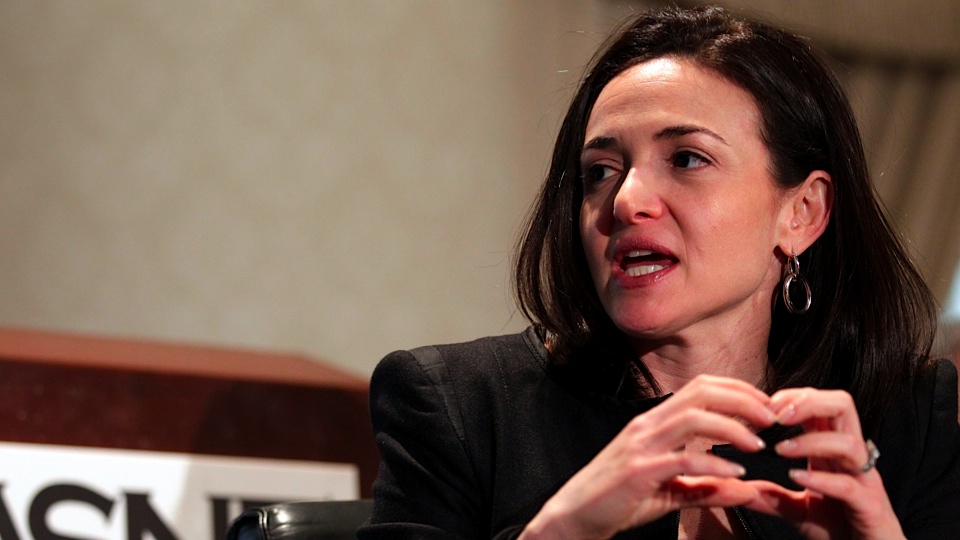
sandbergl

Here is my comment back to Gloria.

Dear Gloria,

Thank you for your comment to Reel Girl. I’m grateful for your long career in helping women and happy that you wrote No Excuses which I learned so much from. I appreciate your support of Sheryl Sandberg’s book, though in some ways, your email perpetuates a misconception about “sides” that I want to address. You write:

 I tend to come down more on the side of changing the system, but then movement building has been my career.


There are no sides here. Women can’t change the sexist system if they the lack basic skills do so. This may not seem like a huge deal in your comment, but this schism is presented and replicated all over the media when discussing Sandberg’s book, just last Sunday again on “60 Minutes,” and it can be distorting.

In 1998, When I was 28, I cofounded the Woodhull Institute for Ethical Leadership to address this lack of skills and also, the class divide in feminism. So many young women, including me, had big dreams, but little idea as to the practical tools of how to achieve them. It was like we’d missed out on a basic training course that the men had taken.

Woodhull’s mission was to train women ages 22 – 35 in the skills they too often lacked. We saw this age period as crucial for women to lay the ground work for successful careers, a time where they needed support and training that they weren’t getting. There weren’t non-profits that focused on career development of this demographic, so we created Woodhull.

Modules at Woodhull included: media training, negotiation, advocacy, how to get published, financial literacy, how to write a business plan, and public speaking. Every Woodhull module included a component on ethics. There’s no point in becoming a leader if you can’t be an ethical one, give back, help people, and do your part to change the world for the better.

Woodhull also provided graduates with an on-going support network and mentorship. Woodhull graduates include Lateefah Simon, who went on to become a MacArthur Genius, Jennifer Siebel Newsom, who went on to co-found Miss Representation, and Courtney Martin, who went on to publish  Perfect Girls, Starving Daughters, among many other Woodhull success stories.

Woodhull ran into challenges raising money. Foundations wanted to give money to non-profits that served 100% inner city/ low income women. Even when 2/3 of Woodhull constituents came from inner city/ low income and were scholarshipped, foundations weren’t interested in that ratio. Woodhull didn’t want to adapt to funders, because part of the reason Woodhull was founded was to bridge the class divide. Women who came to Woodhull valued that diversity. Many said they had no other place to address class differences and similarities openly and to learn from each other. Again and again, we witnessed that young women, across the board, whether from the richest or poorest families, didn’t know basic financial literacy or had difficulty receiving applause without flinching.

Then and now, I’ve got to wonder: When women with access to money and power aren’t achieving, how does that affect all women? Where are women in power? Why are they so invisible? How can we change that? What happens when a rare woman gets to the top, writes a book about her view from up there, and gets attacked for it? As Gloria Steinem wrote, “Only in women is success viewed as a barrier to giving advice.”

You don’t get much more privileged by birth in America than me. My great-grandfather was Charles Merrill, the founder of Merrill Lynch. He was an early investor in Safeway stores, and my grandfather became CEO of that company, building it into the world’s largest supermarket chain. My father was also a CEO of Safeway until he left the company to buy the San Francisco Giants. I think that part of the reason I became a feminist so early is because in the world that I grew up in, the gender disparity was huge. Sometimes it seemed like all of the men were running the world and all of the women were dieting.

Following my college graduation, many of the privileged men I had grown up with went on to start their own companies, open restaurants, publish novels, and produce films. Most of the women I knew, who were smart, creative, and had a sincere desire to have a positive impact on society, took low-paying, low status jobs for big corporations or non-profits.

What I also noticed in these women, and not the men, and an issue that you address in No Excuses, was a profound ambivalence towards success and power, basically what it means to be successful and powerful as a woman in America. For all of these reasons, I founded Woodhull.

The class divide among women, whether it manifests as the stay-at-home vs working mommy wars or feminists against Sheryl Sandberg, is the major challenge keeping women from achieving parity. Even the foundation and non-profit worlds systemically reinforce this fatal gap. If women can’t bridge the class divide, we’ll stay stuck, but if we can overcome it, nothing will stop us.

I can’t wait to check out www.taketheleadwomen.com

Best,

Margot Magowan

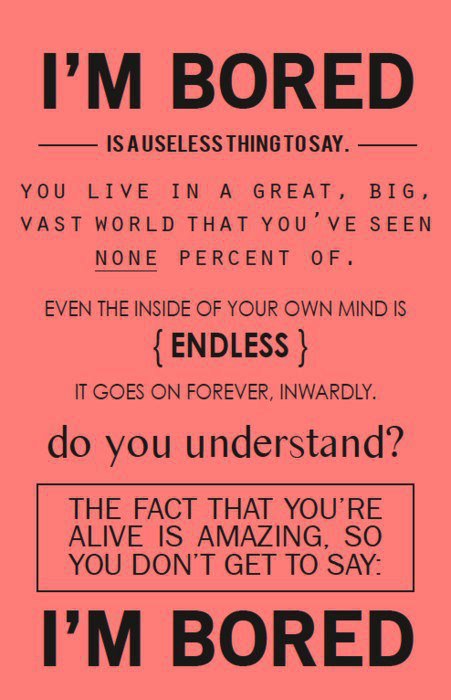
If your kid says she’s bored, quote Louis C.K.

I’ve blogged before about how I think comedian Louis C.K.’s show is one of the best depictions of fatherhood in the media EVER.

louis-ck-daughter

On Facebook, I saw a great quote that I recognized immediately from one of my favorite episodes. This morning, when my daughter complained that she was bored, I tried it on her.

bored

She burst into a huge smile.

Thank you, Louis C. K., for getting insight to my daughter, making her happy, and rescuing our family from a cranky morning.