My sister, Kim Magowan, has an excellent short story in the Gettysburg Review. “Nothing In My Mouth” follows a young woman in Amsterdam who tries to redeem herself after making a heartbreaking mistake. Order the Winter issue here.


My sister, Kim Magowan, has an excellent short story in the Gettysburg Review. “Nothing In My Mouth” follows a young woman in Amsterdam who tries to redeem herself after making a heartbreaking mistake. Order the Winter issue here.
When I saw this post from Let Toys Be Toys For Girls and Boys, my eyes bulged out of my head:
Best Boy and Girl Toy winners at the Toy Industry Awards this week. What’s your thoughts?

There is a “boy” toy and a “girl” toy award? The best “boy” toy is shown in action, shooting a web; he is a superhero who saves the world. The best “girl “toy is a possy of hair, make-up, shoes and bags; the dolls pose as if someone is taking their picture.
Here were my thoughts: This can’t be right. Cynical, jaded blogger that I am, I still don’t believe that the Toy Industry Awards would be so publicly, blatantly, offensively sexist. These are children we are talking about, after all. Why would anyone segregate and stereotype kids in this way?
So I Googled “Toy Industry Awards 2012.” I am sad to report Let Toys be Toys is absolutely correct. From Toy News:
The 2012 Toy Industry Awards winners have been revealed. The awards ceremony took place at London Olympia’s West Hall last night, organised by the British Toy & Hobby Association and the Toy Retailers Association…Girls’ Toy of the Year Monster High Ghouls Rule Doll Assortment, Mattel Boys’ Toy of the Year Web Shooting Spider-Man, Hasbro
Gross.
Yesterday, I posted about the excellent and amazing Disney made for TV movie: “Avalon High.” The story is about the reincarnation of heroes and villains from the King Arthur legend of Medieval times to a contemporary high school in the U.S. The protagonist of the show, Allie– brave, smart, strong, and kind– turns out to be…King Arthur. With that gender flip, this Disney movie shows girls and boys that females can be heroic and at the center of the action.
Then, I got this comment from Lesley:
SPOILER SPOILER
In the book, the Allie character is NOT King Arthur, but the Lady of the Lake, who gives Arthur the powerful Excalibur. Will is Arthur. The twist is that there are hints she is Elaine (her character is called “Ellie” in the book) the weepy victim of unrequited love dumped by Lancelot. So, she turns out to be a crucial element in Will’s development as king but she doesn’t become king herself.My daughter Callie and I both loved this movie for the same reasons you did, and we were crowing with delight at the changed ending!
As I wrote back to Leslie, I am totally shocked. I can’t think of another time– tell me if you can– where a kid’s book has been changed by the kid’s film (not grown up film) to be more feminist.
I am amazed Disney did this. Really. And also, Meg Cabot, the writer: WTF? Lady of the Lake? She is not cool, powerful, or that important in the story. If you are seeking remnants of evidence of female power, she will do, but obviously, King Arthur is the central figure in the legend. The best line of the movie is when Mordred says to Allie something like: “You? I thought maybe you could be Lady of the Lake, but Arthur?”
The translation of that quote goes way beyond the specific characters of Arthur and Lady of the Lake: Mordred is saying that a girl can’t be a hero and Allie shows that villain how wrong he is. I love how that is done here, through the characters and action, and not in the usual, boring way where the bad guy says something to the effect of– ew, you’re a girl. That, to me, kind of reinforces sexism: we’re all supposed to get the insult is wrong but too often, we don’t see it in the story beyond a moral/ ethical issue. Here, we get it: Don’t underestimate me. I won’t underestimate myself either.
It’s interesting because right after we saw the movie, I went to Amazon to buy my daughter the book, and I didn’t buy it. I wasn’t sure exactly why I didn’t want to. The cover didn’t grab me. I know, don’t judge a book by its cover, but Meg Cabot’s other books looked very pink and seemed to be about girls who were mostly interested in boys. Of course, that could easily be the marketing department who designs the cover. Maybe I thought I needed to do more research, and I didn’t have time right then. Whatever the reason, I didn’t click “buy.” Thank goodness Lesley commented because if I got that book, I would have been so pissed and disappointed. Though Lesley is more considerate than me with her spoiler alert, I feel it is my duty to warn you : )
I NEVER thought I would say this but KUDOS TO DISNEY. I am quite curious to know the story behind this adaptation. And also, Hollywood: Are you listening? Here is an example of how to use some imagination and innovation– 2 things you are, after all, supposed to be known for, supposed to encourage– to remake a classic without girls going missing. This gender flip is not about “girls being boys” or “girls acting like boys” or any other ridiculous justification to keep girls on the sidelines because that’s just where they belong as we recycle the same narratives, generation after generation.
After I read Lesley’s comment, I saw something quite incredible posted by Sara on Reel Girl’s FB page. Here is the new Rolling Stone cover, and quoting Vulture: “Why is Tina Fey Lois Lane?”

Why is Tina Fey riding bitch? This same old image of the male driving, the girl along for the ride is ubiquitous in the imaginary world. Why did Rolling Stone put Tina Fey, one of the most successful women in the world, in that position?
Vulture writes:
Tina Fey co-hosted the Golden Globes to universal praise. Her seven-season critical darling 30 Rock — which is still really damn funny — is ending in two weeks. She has seven Emmys, two Golden Globes, three Producers Guild awards, four SAG awards, and a Mark Twain prize. She’s synonymous with contemporary humor. Out of curiosity, Rolling Stone, what would it take for her to be Superman on the cover?
Dear On Demand,
My three daughters and I are flummoxed by On Demand’s menu categories. Under “Kids,” subcategories include: Nickelodeon, Disney Junior, Cartoon Network, on and on. Then, you list: “Girls Rule!”
We were wondering why shows with male protagonists are marketed as mainstream while “Girl’s Rule” is one category out of 20? Girls are 50% of the population, so why the niche programming?

Regardless of the language you use, attributing 5% of shows to the “girl” category doesn’t feel like ruling. Especially not when the list includes shows like “Bratz” which stereotypes and demeans girls, depicting them with a myopic focus on fashion, appearance, and shopping.
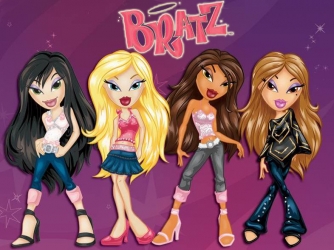
A more accurate label for On Demand’s menu would be “Pink Ghetto.” Here’s Webster’s definition:
ghet·to
[get-oh]
noun, plural ghet·tos, ghet·toes.
a section of a city, especially a thickly populated slum area, inhabited predominantly by members of an ethnic or other minority group, often as a result of social or economic restrictions, pressures, or hardships
A couple weeks ago, when I wrote a post about childfree women, I got this comment:
Thank you! I decided to be and stay childfree for the following reason: I’m asexual. The very thought of getting so close to a person repulses me. Also, I don’t like kids that much. But when people ask you this when you get a new job then that’s just horrible and a bit sad that they focus their attention towards this (you can’t get fired where I live if you get pregnant so that’s not a problem). Btw, I’m not outet do anyone but my closest friends so I guess even my parents might start asking questions…
I was intrigued by this comment, because I hadn’t heard anyone identify themselves as asexual before. I was also interested her phraseology, that she wasn’t “out” to anyone but her closest friends. That sounds like how people talk about being gay. I wondered: is asexuality is an orientation? And if so, how come I’ve never heard of it? If I thought asexuality existed at all, I imagined it was a phase, a result of some kind of trauma, something to be healed.
Because this is 2013, all I needed was Google to tell me how biased and ignorant I am.
Asexuality has 833,000 Google matches, not much compared to homosexuality at almost 27 million, but nothing to sneeze at.
An asexual person is defined as someone who does not experience sexual attraction. Asexuality differs from celibacy in that it is not a choice. Everything I found on the internet reports that asexuality is an orientation, not a defect. Asexual people have the same emotional needs as anyone else. They also can find people aesthetically attractive but still are not sexually attracted to them. They often have a romantic orientation. Emotional and romantic attraction are not the same as sexual attraction.Here is how the Asexuality Visibility Network describes it:
Many asexual people experience attraction, but we feel no need to act out that attraction sexually. Instead we feel a desire to get to know someone, to get close to them in whatever way works best for us. Asexual people who experience attraction will often be attracted to a particular gender, and will identify as lesbian, gay, bi, or straight.
Most asexual people have been asexual for their entire lives. It is not something that develops. It can be isolating and lonely to be asexual, but it doesn’t have to be. The key, as with everything, seems to be self-acceptance. Asexual people are often happy with who they are and many of them are also in long term, intimate but asexual relationships. Some are with sexual partners, but from what I’ve read so far, I don’t really get how that works. It seems to be a pretty individual thing.
After I read about asexuality, I was at a party and asked some people there about what I learned. No one I talked to had heard anything about asexuality. This group, by the way, included academics well versed in jargon like “heteronormative.”
To me, it seems like asexuality is further evidence that identity is far more complex and varied than we make it out to me. The way that many of us have one, rigid lens of looking at asexual people (as dysfunctional) that is so inaccurate, makes me think of the limited way people look at gender roles, so certain of ridiculous assumptions.
My guess is that we will be hearing more about asexuality in the future.
If you are a feminist and love the King Arthur legend, you will be a fan of “Avalon High.” I am so into this Disney made for TV movie. Yes, I just wrote that. I can’t believe it myself. Oh yeah, your kids will love the movie too.

This weekend, my nine year old daughter had a playdate, and it was her friend recommended the movie. This particular friend recommended “A Wrinkle in Time” during the last playdate, so I trusted her opinion. My daughter loved “Avalon High” so much, she begged me to watch it with her again the next day.
The protagonist is female. Allie Pennington is smart, brave, beautiful, kind, and athletic. She has just moved to a new area because her parents, scholars of Medieval literature and experts on King Arthur, got jobs at the local university. Allie is studying the King Arthur legend in her high school class as well, and it is there that she and her friend Miles first learn about a prophecy on the reincarnation of King Arthur: The Order of the Bear. Soon, they identify their friend and star quarterback, Will Wagner, as the new King Arthur. He is “perfect” so it seems obvious that her is the famous king. The danger in the story is that there is also an incarnation of the evil Mordred who Will must be protected from. After mysteries and adventures, it turns out that it is Allie, herself, who is the reincarnation of King Arthur. I knew that only because my daughter gleefully told me in order to convince me to watch. If I had not been warned, I never would have guessed. Your kids won’t. How many times in your life have you seen a Disney movie and not figured out the fabulous end? That, alone, makes “Avalon High” worth showing your kids.
Here are some more aspects I admired about the show:
Allie Though from my description– smart, beautiful, athletic, kind– may seem too perfect, Allie is a hero. Heroes are idealized. Too often, we don’t get to see idealized females except when the perfection revolves around beauty. Allie is super fast. She is a track star, ambitious, dedicated, and she knows she is good. There are several scenes in the movie where you see her running. I like that she was not cast as “plain” or an outcast/ nerd or as someone that gets a makeover in the end. Allie’s character defies the “smart” “pretty” split seen so often with female protagonists and hardly ever with male ones.

No mean girls There are no mean girls in this movie! YAY. Mean girls can be well done when kids relate by sympathizing with the protag who is victorious in the end; the lesson learned is “be kind.” But we’ve seen that so many times. I’m sick of it. “Avalon High” is original. Allie is disappointed when she meets Will’s girlfriend just after meeting him, but Jen is nice to her and she is nice back, throughout the whole movie. I was so surprised seeing this kind female relationship depicted that after Allie and Jen met on screen, I turned to my daughter, and said, “She’s nice?” My daughter said, “Yeah, she’s complicated.” She’s complicated, in a Disney movie. Hallelujah!
Action scenes We see Allie running, as I mentioned. We also see scenes of her galloping on a horse and battling in brutal sword fights. That said, I can’t find any pics on Google images of Allie fighting, running, or riding, while I can of Will. ARGH.
Cross-gender friendships Allie is good friends with Miles (who turns out to be the reincarnated Merlin.) Though she has a crush on Will, they are also shown as good friends.
Scenes of Allie admired by male characters for her skill There are several of these including when Allie beats Will in a race and when Will stops to watch her run, awed. Here, we see the equation we so often get with male protagonists but rarely with female ones: skill + talent = attractive
The only thing that slightly bugged me about this movie is that there are cheerleaders and Jen is one. But, then again, that casting clearly shows that Allie, our hero, is not one.
This movie made me long for an Middle Grade book that is a feminist version of King Arthur, sort of a Mists of Avalon, but for kids. Does this exist? I know its problematic because of the Arthur-Lancelot-Guinevere triangle (which is in Avalon High and well done.) This film is based on a book by Meg Cabot.
I have not liked a movie of this genre as much since “Escape to Witch Mountain.” Reel Girl rates Avalon High ***HHH***
On Salon, Daniel D’Addaro writes:
In the run-up to Sunday night’s “Girls” season premiere, the old repetitive war over the show’s content took on a new dimension: Radio shock jock Howard Stern attacked neither the youth nor the perceived entitlement of showrunner/star Lena Dunham, but her display of her body. Stern called Dunham “a little fat girl who kinda looks like Jonah Hill and she keeps taking her clothes off and it kind of feels like rape … I don’t want to see that.” New York Post TV critic Linda Stasi took a similar tack, calling Dunham “a woman with giant thighs, a sloppy backside and small breasts … compelled to show it all.”
In trying to figure out why so many are offended by Lena Dunham’s nudity, D’Addaro interviewed people from editor Jane Pratt of xoJane (“It may not be that she’s driven to show us her body however that body looks. It may be that it’s just part of the story line”); to SF nude activist Gypsy Taub (“Nudity in our society is associated with sex, and a nude woman is automatically considered a ‘slut’ and someone who is asking to be disrespected or raped.”)

In an interview with Metro on January 8, director Sarah Polley expressed what appears to be a similar view on female nudity to Dunham’s. Here’s the question and response:
There’s a scene featuring a forest of female pubic hair: a bunch of women showering at the gym. We don’t see that much in Hollywood films. I know. Women’s bodies in films are either highly objectified and sexualised or, past a certain age, made fun of. In North American films, there’s no sort of routine nudity so I wanted something that wasn’t particularly eventful for them in that moment.
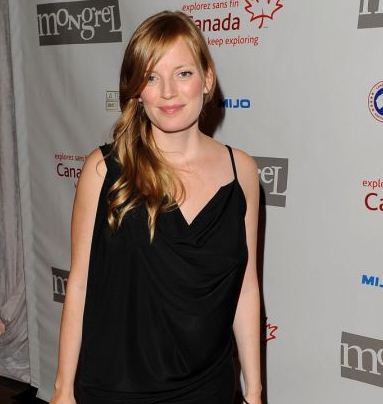
Famous art critic John Berger said: “Men watch. Women watch themselves being watched.” In Hollywood, over 90% of directors are male. We’ve all grown up saturated with those images. Could it be that all of us, women and men, have almost no idea what women look like through women’s eyes or from the perspectives of women’s experiences? What does that vantage point show us? Anyone know? Hopefully, more female directors will get the courage and opportunity to give us their best guess.
Last night, “Brave” won the Golden Globe for Best Animated film.

YAY!!!!!!!!!!!!! I wish director Brenda Chapman could’ve accepted the award since “Brave” was a story she created, inspired by her daughter, but I know that’s not protocol.

Still, with that wish in my heart, it annoyed me that the male on stage talked and the female didn’t say one thing. I’m assuming they were producers of “Brave.”
The biggest bummer for me was Kevin Costner. He is so arrogant and annoying. But the good news is, we didn’t have to watch three hours of arrogant men. The night belonged to women.
It was so great to see Tina Fey and Amy Poehler up there on stage.

They were so funny. I loved how they quipped about Bill Clinton: “That’s Hillary’s husband!” And then called him Bill Rodham Clinton. Introducing some of the nominees in the audience, they joked about dieting. Fey said, “The Hunger Games…also what I call the six weeks it took me to get into this dress.” Poehler added: “Life of Pi”…which is what I’m gonna call the six weeks after I take this dress off!” Their porn jokes were funny too, and also how they said to Kathryn Bigelow: “When it comes to torture I trust the lady that spent 3 years married to James Cameron.”
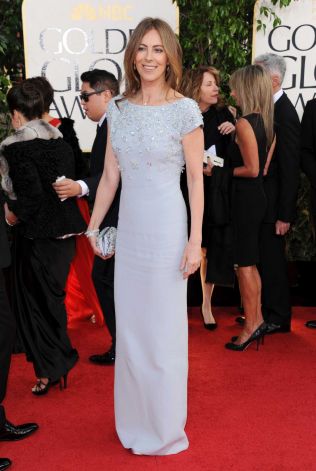
I loved the end of Jessica Chastain’s acceptance speech for Best Actress in a Drama:
I want to thank Kathryn Bigelow my director. I can’t help but compare my character of Maya to you, two powerful fearless women that allows their expert work to stand before them. You’ve said that filmmaking for you is not about breaking gender roles but when you make a film that allows your character to disobey the conventions of Hollywood, you’ve done more for women in cinema than you take credit for.

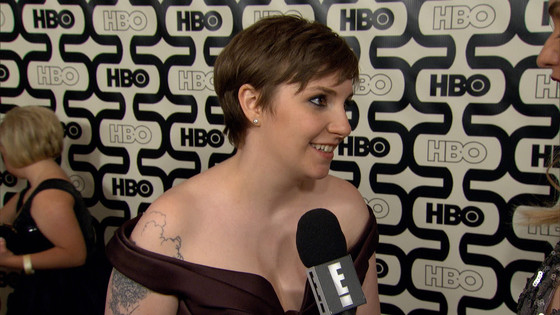
It was excellent to see Lena Dunham win and get up on stage twice. She said: “this award is for every woman who didn’t think there was a space for her. I found my space.”
Jennifer Lawrence won for Best Actress in a comedy. I still haven’t seen “Silver Linings Playbook,” but I’m dying to.

Claire Danes won her excellent portrayal of the smart, complex heroine of “Homeland.”
![70th Annual Golden Globe Awards Press Room [NO Germany, Austria]](http://reelgirl.com/wp-content/uploads/2013/01/clairedanes.jpg)
The incredibly talented Adele took home an award for showcasing her kick-ass voice in “Skyfall.”
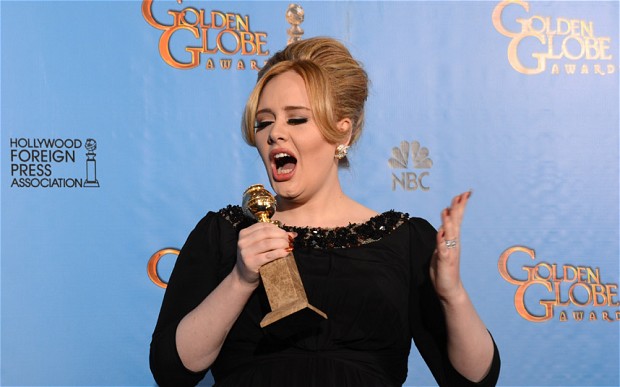
Julianne Moore won for her role in “Game Change” as Sarah Palin.

It was funny to see Fey and Moore joke about playing Palin, a character who, of course, neither woman would’ve had the chance to play if she didn’t exist in the real world.
Jodie Foster’s speech was funny and moving and strange and I was so happy to see a woman who is 50, relatively young for a lifetime achievement honor, win the Cecil B. DeMille award.

What did I miss? Whoever it could be, without a doubt, the 70th Golden Globes was the best ever for women, and therefore, of course, the best ever at all.
So here is post #5 picking on the New York Times for its sexist reporting of the rape of Jyoti Singh Pandey.
Nicolas Kristof’s column made me think of the excellent book that he wrote with his wife, Sheryl Wudunn, Half the Sky. The thesis of that book is that “in the 19th century, the paramount moral challenge was slavery. In the 20th century, it was totalitarianism. In this century, it is the brutality inflicted on so many women and girls around the globe: sex trafficking, acid attacks, bride burnings and mass rape.”
So obviously and sadly, Kristof and Wudunn are two of the few to recognize that stopping violence against women needs to be the highest priority.
But here is what I was thinking of specifically: Wudunn and Kristof are Pulitzer prize winning journalists, and they wrote Half the Sky because they were shocked by how stories about men were consistently on the front page while stories about women were invisible:
A similar pattern emerged in other countries. In India, a “bride burning” takes place approximately once every two hours, to punish a woman for an inadequate dowry or to eliminate her so a man can remarry — but these rarely constitute news. When a prominent dissident was arrested in China, we would write a front-page article; when 100,000 girls were kidnapped and trafficked into brothels, we didn’t even consider it news.
And by the way, they are talking about front page news in the American publications that they worked for.
Refusing to print Jyoti Singh Pandey’s name is another way to keep her invisible.
I’ve got to ask, one more time: Why is it acceptable for the New York Times to follow India law in how it reports the facts about crimes against women?
Please read “The ‘Shame’ of Rape” a piece I wrote for Salon about the U.S. media’s sexist coverage of crimes against women.
The bad news is the NYT still hasn’t posted my comment on its sexist coverage of the rape of Jyoti Singh Pandey in India. The good is that Nicolas Kristof, one of the world’s greatest modern feminists, wrote an amazing column for Sunday’s NYT: “Taking Violence Against Women Seriously:”
Gender violence is one of the world’s most common human rights abuses. Women worldwide ages 15 through 44 are more likely to die or be maimed because of male violence than because of cancer, malaria, war and traffic accidents combined. The World Health Organization has found that domestic and sexual violence affects 30 to 60 percent of women in most countries.
In some places, rape is endemic: in South Africa, a survey found that 37 percent of men reported that they had raped a woman. In others, rape is institutionalized as sex trafficking. Everywhere, rape often puts the victim on trial: in one poll, 68 percent of Indian judges said that “provocative attire” amounts to “an invitation to rape.”
Americans watched the events after the Delhi gang rape with a whiff of condescension at the barbarity there, but domestic violence and sex trafficking remain a vast problem across the United States.
That’s just a couple graphs. You should read the whole thing, its all so important.
No comments taken there, but Kristof invites you to go to his blog “On the Ground” to post comments. There, he writes a few graphs ending with:
Then on top of all that, I’ve been thinking of the events in Steubenville, Ohio, in which football players allegedly carted a comatose 16-year-girl around and raped her, possibly even urinated on her. We’ve got so much work to do right here at home — and Congress can’t even bother to renew the Violence Against Women Act or the Trafficking Victims Protection Act! Grrr. Read the column and post your thoughts.
In case you’re not familiar with the Violence Against Women Act, it was just stalled in congress, by the good old government of the USA, because violence against women isn’t a problem in America, right? Here are some stats from the National Coalition Against Domestic Violence:
One in four women (25%) has experienced domestic violence in her lifetime.
85% of domestic violence victims are women.
Women ages 20-24 are at the greatest risk of nonfatal intimate partner violence.
Nearly three out of four (74%) of Americans personally know someone who is or has been a victim of domestic violence.
On average, more than three women are murdered by their intimate partners in this country every day.
Domestic violence is one of the most chronically under reported crimes.
I think it’s interesting that Kristof invites you to go to his blog if you want to comment. It looks the same as the NYT site in many ways, but I wonder if there’s a different procedure for comment approval? On the blog I posted this comment which got approved, basically the same as the first as best as I can recall:
Hi Mr. Kristof,
I was shocked to read in the NYT a post on this story from Jan 11 (http://www.nytimes.com/2013/01/12/world/asia/for-india-rape-victims-fami… Jyoti Singh Pandey’s name is not printed. The NYT explains this:
“The daughter — whose name is being withheld because it is illegal to name a rape victim in India without permission from the victim or her next of kin — showed as a very young girl a love for school, her father remembered.”
Why would an American publication follow Indian law on how to report on rape? At what other time does a country’s laws dictate how its news is reported in The New York Times? Especially when the US media keeps calling India sexist, unlike us. Why would an American publication follow India law in how it reports a crime? If this law referred to political dissidents from India, would the New York Times refuse to print their names?
Not only that, but days earlier, Jyoti’s father told the Mirror: “We want the world to know her real name,” says Badri Singh Pandey…“My daughter didn’t do anything wrong, she died while protecting herself. I am proud of her. Revealing her name will give courage to other women who have survived these attacks. They will find strength from my daughter.”
I commented on the NYT piece but my comment has not yet been approved. I blogged about it here: http://reelgirl.com/2013/01/dear-new-york-times-her-name-is-jyoti/
Why am I going on and on to you about one damn comment? Because so much of the issue here is that women don’t get a name, a voice, or space to tell their own stories, and that issue is what this blog, Reel Girl, is all about.
The NYT has posted my comments before and posted a similar comment to mine, from Ann, who I just found out, went to the NYT from Reel Girl. So what’s the big deal?
If one person makes the comment, its better than no one making it, but it would have more impact if people were allowed to see that many others responded in a similar way.
What the New York Times did– censoring the identity of a victim of a crime because India law requires that– is not only disgraceful but harmful to women. I am shocked that the NYT would not only capitulate to India law in its reporting of a crime, but to go ahead and state that it did, as if that were perfectly OK. It’s not OK. Can you imagine if American publications always followed the laws of the country they were reporting on when stating the facts of a crime? What kind of news would we have?
If crimes against women are treated this way, as if its acceptable, violence against women will never stop.