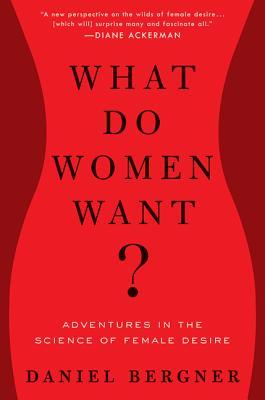
For the sexist dudes of Fox News, there’s a new book by journalist Daniel Bergner, What Do Women Want? You really should add it to your summer reading list. I think you’d learn a lot.
The book, which grew from a much-discussed New York Times Magazine cover story in 2009, reveals how gender stereotypes have shaped scientific research and blinded researchers to evidence of female lust and sexual initiation throughout the animal kingdom, including among humans.
More than one adviser to the industry told me that companies worried about the prospect that their study results would be too strong, that the F.D.A. would reject an application out of concern that a chemical would lead to female excesses, crazed binges of infidelity, societal splintering.
At the very least, can you recognize how art, narratives, religion, politics, and even “science” have, for thousands of years, systemically shaped and controlled female sexuality? And perhaps, consider these factors even influence the very words you speak when you go on the air.
This week, news reports headlined that Angelina Jolie’s aunt died from breast cancer. Watching “Entertainment Tonight” yesterday, my husband and I saw graphs and images of Jolie’s maternal family tree back to her great-great grandmother, tracked by an investigative journalist. We saw images of death certificates and who signed them. I was wondering why, with all of this incredibly deep, highly researched, investigative coverage we never hear anything about the terribly creepy story of who owns the BRCA gene. That’s right, owns it. The “breast cancer gene” mutation that Jolie tested positive for, a discovery that made her decide to undergo a double mastectomy, is the property of a corporation called Myriad Genetics.
Breast Cancer Action opposes human gene patenting. We believe it’s wrong for the government to give one company the power to dictate all scientific and medical uses of genes that each of us has in our bodies. We urgently need more and better options for the treatment and risk reduction of breast cancer, and we cannot afford to have progress stymied by the monopolies that gene patents create.
How did I get the story about the BRCA gene amidst all the Jolie coverage? From CNN, the New York Times, an entertainment show? No, from a Tweet on Peggy Orenstein’s feed:
Myriad genetics OWNS BRCA gene. OWNS it. That’s a block to research & better options for someone like Angelina Jolie
I follow Orenstein because I’m a huge fan of her book, CInderellla Ate My Daughter. Orenstein is also a breast cancer survivor, who, coincidentally, wrote an in depth story for New York TimesMagazine “Our Feel Good War on Breast Cancer” covering the corruption in breast cancer research, funding, and treatment published just a month before Jolie’s huge story broke.
Here’s something else we don’t hear about breast health that I learned from Orenstein’s blog:
I find that when I tell my friends that my reconstructed breast is numb they are shocked: they had no idea that would be so.
I’ve blogged before that breasts are secondary sex characteristics, but we hardly think of them that way any more in this culture. The value of breasts seems to be mostly the aesthetic and sexual pleasure of men. Almost as an afterthought, we realize that breasts exist to nurture babies. But what about recognzing that breasts are there for the sexual pleasure of women? Fake breasts are often numb breasts, and if you think about it, that’s about as asexual as you can get.
Last night, “Entertainment Tonight” showed images of Jolie’s two biological daughters, Shiloh and Vivienne, reporting that medical experts advise they get tested for BRCA at age 18. I hope Jolie works to give her daughters better options, continuing to speak out about the issues around breast health, and the problems that occur when a government allows a corporation to own genes. Americans need to know about it.
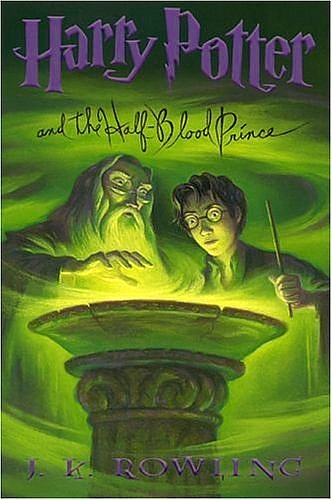
In Half-Blood Prince, the sixth book in the Harry Potter series, Ron’s twin brothers, Fred and George Weasley, open a magic store.
I’ve been waiting to get in this store for five books. Its creation is the life dream of the Weasley twins, and Harry even gave them his galleon winnings from the TriWizard Tournament so Fred and George would have the funds to open it. I was so excited to finally enter Weasley’s Wizard Wheezes at the beginning of Book #6 along with Harry, Ginny, Hermione, and Ron. What a major disappointment. I was so bummed. Let’s just say this is not the store Margot Weasley would’ve come up with. Here’s the passage.
“Haven’t you girls found our special WonderWitch products yet,” asked Fred. “Follow me, ladies….”
Near the window was an array of violently pink products around which a cluster of excited girls was giggling enthusiastically. Hermione and Ginny both hung back, looking wary.
“There you go, said Fred proudly, “Best range of love potions you’ll find anywhere.
Ginny raised an eyebrow skeptically: “Do they work?” she asked.
“Certainly they work, for up to twenty-four hours at a time depending on the weight of the boy in question–”
“–and the attractiveness of the girl,” said George, reappearing suddenly at their side. “But we’re not selling them to our sister,” he added, becoming suddenly stern, “not when she’s already got about five boys on the go from what we’ve–”
“Whatever you heard from Ron is a big, fat lie,” said Ginny calmly, leaning forward to take a small pink pot of the shelf. “What’s this?”
“Guaranteed ten second pimple vanisher,” said Fred….
“What are those?”
She was pointing at a number of round balls of fluff in shades of pink and purple, all rolling around at the bottom of the cage and emitting high pitched squeaks…
“They’re really cute!”
“They’re fairly cuddly, yes.”
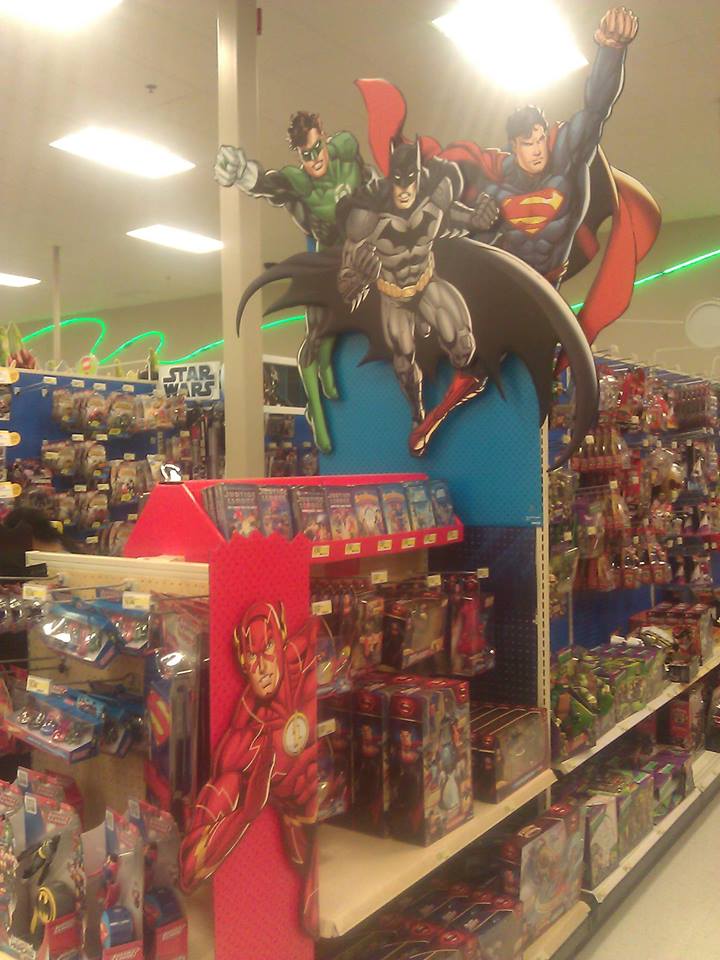
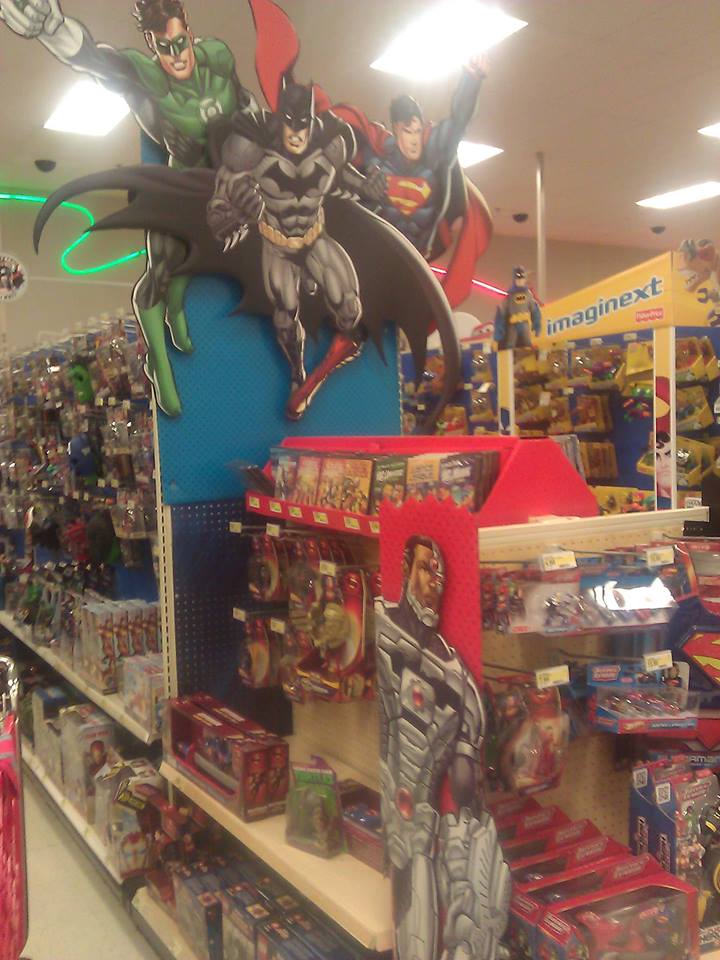
Pink, love potions, pimple cream, cute, and cuddly stuff for girls? Why is the girl section segregated out at all? Pink wasn’t even a “girl” color a hundred years ago, so why does it dominate marketing strategy in Diagon Alley? Why, in the magical world, for goodness sake, is a store selling products to kids as gender segregated as a Target in California? Don’t wizards get pimples? Is the point that guys just won’t care if they have a break out? They don’t need to be “attractive,” the efficacy of their love potion doesn’t depend on that?
At least Hermione and Ginny seem skeptical, right? They hang back, the products are “violently” pink. But why do the cool girls have to be the exception, different from the rest of their pathetic gender? The other females are shown in “excited” cluster, “giggling enthusiastically.” Ginny ends up joining the crowd, anyway, seduced by a cute, fluffy thing.
Why do my kids have to read gender cliches in a series as imaginative as Harry Potter? In the imaginary world, anything is possible: animals talk, kids fly, unicorns prance around. Can’t we show children a magical land where girls and boys are treated equally? Is that so hard? Why do we have to bring stereotypes to fantasy land?
I’m on Book 7 now, and I’ve got to write: If Harry Potter, a series with a male protagonist, titled for that male, where the author was told by her publisher to use initials to hide her gender, is considered feminist because a third of the characters in power positions are female, we have a long way to go before achieving gender equality in the fantasy world.
Once again, the internet shows us that hate is alive and well in 2013.
While I applaud Cheerios for showing a diverse family, what’s with the gender stereotypes? Just imagine this: the mom is lying on the couch while the dad is talking to the kid about health. Think that’s nitpicking? Since creating Reel Girl, I’ve become quite the connoisseur of cereal and gender roles and females rarely appear in marketing unless they’re promoting health. (Also, I own an entire book about that dad stereotype called Bastard on the Couch.)
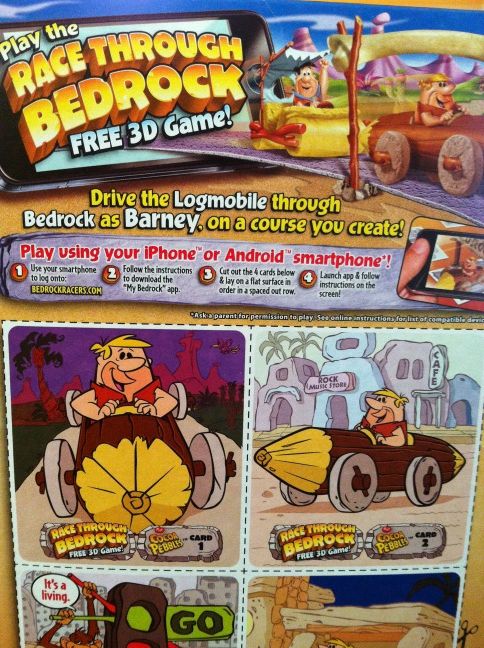
Here’s a typical example from Cocoa Pebbles. There’s Fred, the star, in close-up, right on the front of the box. Above, Fred and Barney drive cars, beckoning kids to play a game.
The game on the back shows Fred and Barney driving, racing, and having fun together. Boys will be boys.
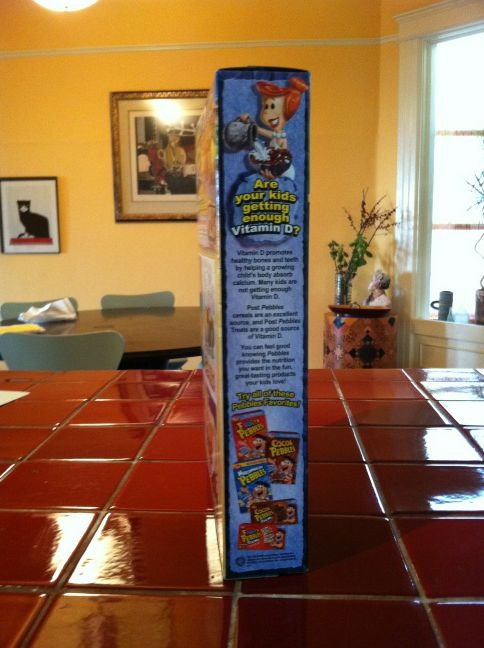
Is there a female anywhere on the box? My kids and I actually came up with a game called Find the Female on the Cereal Box. Children are obsessed with cereal boxes, and this activity seemed like a viable way to help my three daughters defy the incessant training to always focus on the males. So, we found Wilma, literally marginalized, tiny and on the side of the box, concerned that kids aren’t getting enough Vitamin D.
Notice any similarity with the Cheerios ad? Exact same gender roles. Male shown having fun, female shown talking about cholesterol.
If these images were a couple of varied gender roles, it wouldn’t matter, but cereal marketing, for the most part, turns out to be incredibly sexist. All of the mascots on children’s cereal boxes are male. Check out this gallery. Girls are half of the kid population and half of cereal eaters, so why do females go missing on cereal boxes for kids?
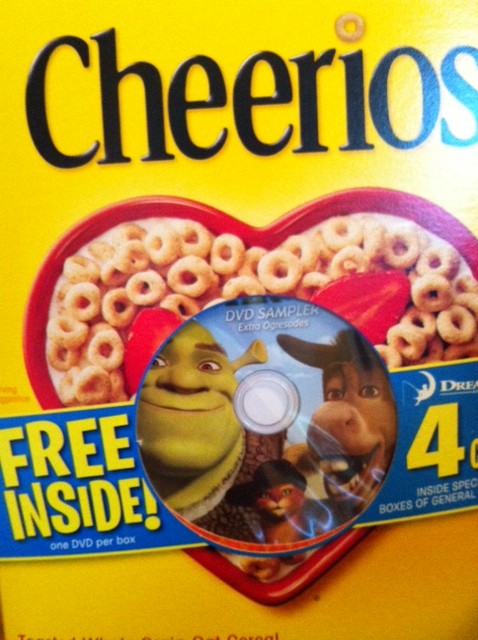
Give Cheerios a break, you say. The TV ad features a girl. The mom appears to be working, not grinning madly or having multiple orgasms over vitamin content. And anyway, regular, old Cheerios doesn’t even have its own mascot, so what’s my problem? Perhaps, I would’ve given Cheerios a break today if I hadn’t just blogged about how sexist the Cheerios box is. Cheerios doesn’t have its own male mascot, it’s true, so what does it do? Borrow all the male characters from the movies and then give kids a sexist game to play with them.
Here’s the Cheerios box that my husband just brought home for our kids.
Here’s my 4 year old daughter after playing “Find the Female,” showing the back of the Cheerios box.
Here’s the answer key to Find the Female: “How to Train Your Dragon,” the first DVD, pictures a boy and his male dragon, the two stars of that movie, but you do see a girl behind the boy, “riding bitch” a repeated, sexist motif in kids’ media. The rest of the DVDs feature no females and 6 male characters, with”Madagascar” leaving out the Minority Feisty played by Jada Pinkett Smith. Smith’s hippo does show up in the “fame game,” 1 female to 7 males. The goal of that game is “match each character to what they are famous for.” (And here again, the problem of Kitty Softpaws vanishing into obscurity.) Characters in Cheerio’s game are known for “Training the Furious Five” or “Being the Dragon Warrior.” Hippo’s claim to fame? “Loving a Giraffe.”
Cheerios is teaching my kids sexism with this box, showing them that males are the important ones, the stars who get to have fun, while girls are in the minority, limited to supporting roles, stuck on the sidelines. So, Cheerios, good job with being a trailblazer on race, but please put some daring female characters on your box, front and center; take sexism out of your games, and while you’re at it, show us a mom on a couch.
Fox News contributor Erick Erickson, not one to be outdone, explained that women are naturally submissive because of “biology”:
“I’m so used to liberals telling conservatives that they’re anti-science…When you look at biology, when you look at the natural world, the roles of a male and a female in society and in other animals, the male typically is the dominant role. The female, it’s not antithesis, or it’s not competing, it’s a complementary role.
I cracked up when I watched the video because I was just about to post on Reel Girl this title: “Scientific” studies on gender turn out to be biased, who knew? More on that soon.
If there’s one thing that drives me crazy, it’s trendy evolutionary psychologists and social Darwinists going off incessantly for the last twenty-five years about how everything is the way it is– sexism, racism, white privilege, standards of beauty and on and on– because our biology makes it so.
Moreover, expert opinion — including research by developmental and evolutionary psychologists — has fueled the development and marketing of gender-based toys. Over the past 20 years, there has been a growth of “brain science” research, which uses neuroimaging technology to try to explain how biological sex differences cause social phenomena like gendered toy preference.
That’s ridiculous, of course: it’s impossible to neatly disentangle the biological from the social, given that children are born into a culture laden with gender messages. But that hasn’t deterred marketers from embracing such research and even mimicking it with their own well-funded studies.
Sweet goes on to describe the aggressive gender-marketing aimed at children, marketing which starts, by the way, before the baby even exits the womb. When people speak to boy babies in strong voices and female babies in lilting voices, when so much of what we we do and how we act– including parents, teachers, and doctors— is based on cultural expectations of how girls and boys are supposed to be, how can we pretend to be beyond bias?
A meta-analysis done by the psychologists Janet Hyde and Jennifer L. Petersen at the University of Wisconsin, Madison, incorporates more than 800 studies conducted between 1993 and 2007. It suggests that the very statistics evolutionary psychologists use to prove innate difference — like number of sexual partners or rates of masturbation — are heavily influenced by culture.
Does new science debunk old science? Looks like evidence is showing evolutionary psychologists weren’t so scientific after all.
Can we at least agree on this: we live in a culture that, for thousands of years, has punished women for expressing sexuality while rewarding men. How can we possibly, objectively measure sex drive?
Hypothetically, say men ruled the world, and say that men were also incapable of giving birth. Would it be so surprising for the group in charge to come up with this theory: Every time women have sex with us, they fall in desperately in love. They want to marry us, be with us forever and ever. In fact, getting married is the happiest day of a woman’s life. Naturally monogamous, women will never stray.
YAY! Facebook FINALLY recognizes: misogyny exists. It’s real, FB says, and that’s a giant social media step in the right direction. In 2013, gender-based hate and violence is epidemic and still, for the most part, accepted as normal.
I’m 44 years old, a member of the notoriously apathetic Generation X. Since I started speaking out about feminist issues, back in my twenties (not lazy or apolitical, by the way, didn’t really know anyone who was) I’ve been told sexism doesn’t exist. We live in a post-feminist world. What could American women, not to mention white, educated, privileged ones, possibly be whining about? We weren’t under Taliban rule for goodness sake. Not that college kids, all of us so well versed in South Africa’s racist history, had any clue about the gender apartheid of the Taliban. And if we had known of it? Gender bias, while kind of a shame, was just a cultural difference, not a political issue. “Relative ethics” was the term my sociology professor taught us for female genital mutilation: Who were we, in all our privilege to judge?
So for years, Facebook has been receiving reports on posts depicting gender based violence. While the company actively bans religious or racist hate speech, here’s just one example of its past response to misogyny.
(via Amazing Women Rock . If you go to the link, and you have a strong stomach, you can see many more.)
So why did Facebook change its tune, pledging to take misogyny seriously? Obviously, in no small part, because of a well-run, well organized campaign by Women, Action, and Media. THANK YOU WAM and thank you to all of you who responded. In days, 5,000 emails and 60,000 Tweets went to Facebook’s advertisers who started to take their ads off the site. Facebook, if anyone could, saw where all this viral action was headed. Women have been using social media to change the world for some time now.
Jaclyn Friedman, executive director of WAM… points to the outrage over the social media-documented rape in Steubenville, gang rapes in India and the suicides of several young rape victims as indications that Americans may have had enough of the consequences of rape culture. While she’s still unsure that the country is ready for widespread change, she believes “there’s a critical mass right now; it could be a tipping point moment”…
But this glaring, in-your-face misogyny may be the spark that pushes culture forward—there’s no arguing with these images, these court cases, these stories. Maybe it needed to get a lot worse—or more visible—for it to get better. For years, the most common anti-feminist talking point has been that American women don’t have it all that bad. That we should stop complaining and focus on women in other countries who are “really” oppressed.
But today, telling women that sexism doesn’t exist anymore is a really hard sell. Thanks to the Internet and the speed at which stories move—not to mention the vile sexism in most online spaces—any American woman who spends more than five minutes onlines hears about or experiences misogyny every day.
I started this blog, Reel Girl, because I have 3 daughters, and I was so horrified by the gender stereotyping marketed to kids like it’s okay, like it’s normal, and then how everyone participates in it. It’s so sad that sexism, packaged and sold to kids, is so ubiquitous that, paradoxically, it’s become invisible. I feel like 90% of my work is just pointing out that sexism exists. I’ve posted this a couple times, but here it is again:
Violence against women is epidemic. A first step to abuse is always dehumanizing the victim. Propaganda, in the form of images and narratives, effectively dehumanizes on a mass scale. Here’s some propaganda marketed to kids:
Images/ narratives of Jews circa 1938
Africans circa 1931
Females circa 2013
It’s easy to look back on history and wonder: How did people ever put up with that? I’d never buy into it. But what are you participating in right now that is completely accepted, not to mention celebrated, by our culture?
Since my post, I’ve gotten comments asking how dare I compare sexism to racism and antisemitism. I’ve been rebuked for taking sexism seriously for a long time. When I was a senior in high school, I was talking to a good friend of mine about sexism, and he said to me, indignantly, “A woman has never been lynched for being a woman!” Maybe, maybe not, but women have been murdered throughout history for being women. Does getting raped or sexually assaulted qualify as pretty bad treatment?
Here’s a classic comment from Chinwe:
What I find embarrassing, shameful, and flat out appalling is you comparing the current state of girls in 2013 to the days that Blacks and Jews were stereotyped, discriminated, and killed in the early 20th century. Girls and women have gained so many rights in the last 40+ years and you compared its ”oppression” to Blacks and Jews in the 1930s.
Really?
That’s absolutely and utterly lazy comparison and analysis.
Years ago, the Wall Street Journal used to have a Bad Writing Contest where readers can submit writing that’s truly awful. Too bad they don’t have this contest because I would personally submit this post–and your blog–to judges of the Bad Writing Contest and you would win hands down.
Honestly, you need a new hobby because you come across really immature, out-of-touch and bitter towards the world. Once again, do yourself a favor and enroll in an English 101 class at your local community college and learn how to write. Everytime I see a new post, 1) you are embarrassing yourself and 2) you put yourself further down the cultural rabbit hole by making piss poor arguments.
My three daughters and I loved “Epic.” The central heroine, M.K. is smart, brave, funny, compassionate, and independent. I loved her look, too. She’s dressed in a hoodie with a messy ponytail. She doesn’t have a Barbie face, I’d recognize this girl in a crowd.
M.K. narrates the movie. YAY. Do you know how rare it is to get a female narrator in an animated movie for children?
There’s more good news. Queen Tara is another brave, powerful female in this movie who is central to the narrative. Please note QUEEN, not princess. Not only that, GOOD queen, not evil. And…she’s not white. This may be a first, but let me know if there is another animated film with a good queen of color.
Queen Tara is played by Beyonce, and the movie concludes with an awesome song about the matriarchy. The matriarchy, people! It’s so fitting and perfect because the whole movie is about protecting the heir. I was super worried that the next ruler would be male, especially because the evil character, Mandrake, keeps referring to said heir as his “dark prince.” Luckily, the evil dude is wrong, and just after you find that out, the matriarchy song comes on. I laughed when I heard it because I felt like Beyonce was saying to me, “Don’t worry, Margot, I got the girls covered.”
I do have some complaints. I wish M.K. was in the movie more. Much more. You cannot deny she is the protagonist– she is the narrator, she has the quest, and she goes through the transition. M.K. acts, takes risks, and makes choices. She is such a great character, but based on lines and screen time, “Epic” is pretty much an ensemble movie. Most of the other characters are male. The Queen dies early. M.K.’s mother is also dead. The central relationship in the movie is with M.K. and her father.
The evil character is male and he has an evil son. M.K. pals around with two male heroes, so in most of the action scenes, the same old Minority Feisty gender ratio is in your face. Speaking of, M.K. is riding bitch most of the time. Her position “makes sense” in the story because she’s the visitor to the tiny world, but still, writers can make anything happen. I am sick of sexism making sense in plots, and I had hope for M.K. taking the lead here. At one point, she gamely hops on a bird and says, “Come on, let’s go!” Nod, the young male hero, hops on behind her, but in the following scenes, Nod is the one in the driver’s seat again. Argh.
There’s an army of Leafmen, and from what I could tell, they are, in fact, men: 100% male. Comic relief is a male slug and his BFF, a male snail. That pair kind of reminded me of the male krills who steal the show in “Happy Feet 2” or the meerkat/ warthog duo in “Lion King” and countless other cartoon buddy boys. It would be so nice to see a couple of females being friends and being funny in an animated movie.
Finally, I wrote I love M.K.’s look and I do, but both she and Queen Tara are super skinny, and why not give her a blue hoodie, or brown, or red, or any goddam color in the entire universe but pinkpurple?
M.K. is prominently featured on many of the posters seen around San Francisco, another total rarity for children’s movies. Though I didn’t see this one, I want to order it for my kids.
This product was seen at the John Lewis store in High Wycombe. Not familiar with this UK institution, I looked it up to find it has almost 650,00 likes.
I imagine the day this product is on display in a museum, an artifact. People will look at it, baffled, not even understanding. Students will study how backwards the world was in 2013, wondering how and why our culture allowed and accepted sexism as if it were okay or funny or normal. Can you imagine a game showing a Caucasian brain battling an African brain along with a bunch of stereotyped categories?
The latest global estimate from the United Nations Say No to Violence Campaign is that the percentage of women and girls who have experienced violence in their lifetimes is now up to an unbearable 70%. In a world in which this many girls and women will be raped or beaten in her lifetime, allowing content about raping and beating women to be shared, boasted and joked about contributes to the normalisation of domestic and sexual violence, creates an atmosphere in which perpetrators are more likely to believe they will go unpunished, and communicates to victims that they will not be taken seriously if they report.
Here’s an ex-girlfriend shooting target seen at an NRA convention this Spring.
Violence against women is epidemic. A first step to abuse is always dehumanizing the victim. Propaganda, in the form of images and narratives, effectively dehumanizes on a mass scale. Here’s some propaganda marketed to kids:
Images/ narratives of Jews circa 1938
Africans circa 1931
Females circa 2013
It’s easy to look back on history and wonder: How did people ever put up with that? I’d never buy into it. But what are you participating in right now that is completely accepted, not to mention celebrated, by our culture?
Propaganda works in steps and stages. The product marketed may not be as extreme as a bloody, scantily clad woman, but it’s likely to be a sexualized female, one that is, remarkably, often advertised to kids.
Today, my kids had Rice Krispies for breakfast. You all know about the famed three: Snap, Crackle, and Pop. If you’re my age, you know their theme song, too.
But check out the new material we found on the back of the box:
It’s an “IMAGINATION ADENTURE!” Isn’t that great? The directions are as follows:
Can you look at the pictures and tell a story? Make up a tale for each picture or string them together for a creative journey.
How cool, my kids are going to get to use images to make up stories. What could be better than that? Let’s see how Rice Krispies is going to help to inspire children to imagine. Here’s the first picture.
Rice Krispies provides children with 8 characters to work with on this imagination adventure: 6 males and 2 females. Girls are half of the kid population, half of the kids eating Rice Krispies, so why are they presented as a minority in this “creative” game? Am I nitpicking? The box is asking your kids to look at the details of these pictures and make up a story. Obviously, whoever created these pictures put thought into how to develop your kids’ imagination. But If your kids play this game as directed, it’s one more way they’re being trained to create, be familiar with, and pay attention to stories where males are the main characters and in the majority, while females fade into the background.
Looking at picture #1, I asked my four year old: “Can you find the girls? Can you count them?” She was so excited about that, it’s how we came up with the game: Find the Girls on the Cereal Box!
Moving on to picture #2. Who is the protagonist here? Hmmm…
Again, I asked: “Can you find any girls? What is the girl doing? Why?” At this point, my other two daughters, ages 6 and 9, joined in. They were into it, and I found myself hoping that maybe my kids are learning creative skills now, how to notice the female and more importantly, to make her the protagonist in the story. “Find the Girls!” continued…
Picture #3 is the closest a female gets to a starring role in this “imagination adventure,” and she is still, clearly, placed behind the boy. My kids noted she is riding a sea horse. Picture #4 makes up for that tiny step forward, with five males to one female. The girl is clearly in the background, but at least, the girl is in the driver’s seat, right? I asked my daughters what the girl was doing here, and my four year old said, “Watching the boy!”
And now, for the final pic.
When I asked my kids what the girl was doing? “Same as the last one! Watching the boy.”
“Can you make up a story about her?” I asked.
I try to censor the sexism I can, but so much of the time, it’s obviously impossible since gender stereotypes are everywhere. I think the most useful strategy, as parents, is to train our kids to respond with a critical and creative eye. If you try playing “Find the Girls on the Cereal Box,” let me know how it goes. For my family, it helped squeeze some real creativity out of the same old, same old.
You know what’s crazy? After stuff like this Rice Krispies box all over the place, Disney execs, marketers, media people, parents will say that girls go missing in kids’ media because girls will watch stories about boys but boys won’t watch stories bout girls. Huh. How do you think kids get to be that way, Hollywood? Girl aren’t born more generous, open-minded, or altruistic. Girls watch movies about boys because they are trained to.
More posts of girls gone missing from cereal boxes:
Here’s a great tip to inoculate your daughter against internalizing the barrage of criticism about her appearance. If that critical voice gets trapped and trained in your kid’s head and wiring, it becomes a bad habit that, like any addiction, is difficult to break. I got this tip from Melissa Wardy of Pigtail Pals, and so far, it works really well. I can see my kids using it.
Tell your daughter that you use a mirror to see if you have food on your face or something like that. You don’t look in the mirror to see if you are beautiful. Beauty is a feeling that comes from within you, and a mirror can’t give you that. Let your daughter see you use a mirror this way as well.
Repeat this lesson as often as necessary. It’s basic but effective.
Extra tip: If your daughter protests or seems confused, which she may not, explain that the correct way to use a mirror is the exact opposite of how the wicked queen relied on it in “Snow White,” asking “Who is the fairest of all?” Explain how the Queen’s misuse of the mirror, her dependence on its voice instead of her own, sapped her power and helped to cause her downfall.