Every time I see a poster around town advertising the upcoming animated movie “Planes,” my heart sinks. A couple months ago, I posted the sexist preview for the movie on Reel Girl where the fastest plane refers to the slower planes as “ladies.” Here’s part of the dialogue:
Plane One: What’s taking this guy so long? Is he really as good as he says he is?
Plane Two: No, better.
Plane One: Whoa! Who was that?
Plane Three: (Descending fast on top of the other two) Well, hello ladies. Ready to lose?
Plane Three goes on to leave the “ladies” in the dust. There are no female characters in this preview at all.
Here it is if you’d like to watch for yourself. You may want to ask your children to leave the room.
The message to kids who watch this mini-movie is that females are losers, not leaders. They can’t compete. Why does my 4 year old have to see a movie made for children where characters are mocked as female to indicate their inferiority?
Is the justification for this sexism that it’s just “true:” the fastest men in the world are faster than the fastest women, and my daughter should know that? The joke “makes sense,” it’s “realistic.” Is it also realistic that planes talk to each other? Why, when it comes to sexism, do people suddenly become so concerned about realism?
Here’s the problem with the repeated pattern of sexism in movies for kids. Narratives involve a hero who goes through challenges to reach a goal. Every kid– and every person– is the hero of her own life. At the most basic level, heroes act, make choices, and take risks. Narratives (and art in general) inspires us. Maybe my daughter’s big risk today will be reaching out for that elusive fourth monkey bar, trying a potsticker for the first time, or telling another kid to stop teasing her. Any of those acts will feel huge to her, just as sitting down at my desk and starting the next chapter of my novel feels huge to me. If I were to show my emotion, I might put myself at the foot of Mount Everest. Narratives are metaphors. They aren’t just a life compacted, but a moment, expanded. Sexism has no part in that story, especially as a repeated pattern, marketed to little kids, where males, again and again, are font and center, while females get stuck in supporting roles, on the sidelines.
I swore off blogging to meet a deadline for my novel, but this video is SO GOOD I have to post it.
This “One Man” trailer shows the relentless repetition of the same old sexist narrative where one “unique and original” man saves the world while females go missing.
As I keep posting on Reel Girl, the problem of female erasure is not about each movie, (“one man”) but the repetition of the same old story where females get shoved to the sidelines again and again. The “One Man” video reveals the sexist pattern of Hollywood movies better than anything I’ve ever seen. Now if they would just make one of these featuring animated movies for kids….
Thank you to morecompassion for sending this to me (though you better stop, it’s like crack for me, and at this rate, I’ll never finish my book!)
It is 9:32AM. What messages have my 3 daughters, ages 4, 6, & 9, gotten about gender today?
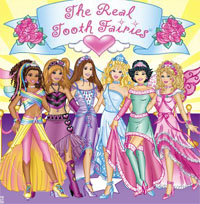
First thing early morning, I played Connectagons with my youngest child. I bought this toy, by the way, when LEGO Friends came out. I was so annoyed by LEGO’s gender segregation, I sought out new building toys. I may have even blogged about Connectagons as a possible alternative to LEGO. Check out the front of the box.
The back of the box? The 3 boys play Geometry, Treetop, and Under-the Sea.
The 2 girls? They play butterflies
and hearts.
Then onto Chutes and Ladders. Again, boy in front. Same old ratio, 5 boys, 3 girls counting the tiny one in the way back.
And then, even though it was just 8:30 and foggy, we opened the new Slip n’ Slide. The box cover features 4 boys, complete with quotes from Michael and Randy about how much fun they’re having.
My youngest daughter got cold, came back into the house, and handed me a book Stories for Girls. Look at that, 3 girls. All on the cover.
Think girls are born obsessed with princesses, ballerinas, and mermaids? Or do you think, just maybe, that girls, like all children, are self-centered and want to see themselves front and center, the stars of the show?
Okay, it’s not even noon. Are you kidding me? I’m ready for a nap. This Fourth of July vacation blogging relapse was fun but sadly, over. Back to Fairyland for me. See you all soon.
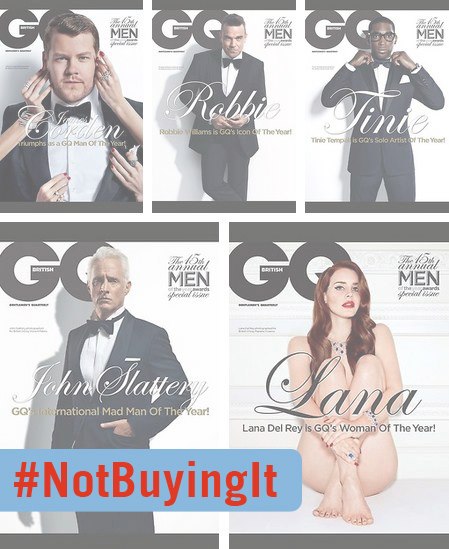
Justin Timberlake, your new video for “Tunnel Vision” isn’t cool or original. It’s tired and cliche. Can’t you think up anything else besides the clothed man/ naked woman trope? Been there, done that.
Are you copying Nick Cave?
GQ?
Perhaps Vanity Fair?
Edouard Manet?
This is, of course, just a tiny collection of images. Thousands more of the dressed man/ naked woman trope can be found in museums.
As Miss Representation posted about GQ:
The implication is that the men here are valuable for something beyond what they look like… but that the woman is valuable only for what she looks like.
The clothed man/ naked woman trope isn’t about “beauty” but about power.
What would art look like and music sound like if women were the ones who’d been celebrated for making it for thousands of years? These images are a history lesson of what the world looks like when men are in power. “Tunnel Vision” is the latest incarnation of the classic male gaze. Aren’t we ready for something different in 2013?
I really wanted to say great things about “Despicable Me 2,” so I’ll start with the positive. This movie made me laugh a lot. As far as personal enjoyment, I had a lot more fun watching “Despicable Me 2” than I did watching “Monster University.”
It was great to see a movie with my three girls about three girls. Except “Despicable Me” isn’t really about three girls. It’s all about Despicable Me AKA Gru, the star of the movie, played beautifully by Steve Carell. Before you protest as I go on to call “Despicable Me” sexist, please read this next sentence carefully: If the male protagonist with females limited to supporting roles was featured in just a few children’s movies, or even half of them, I would have no problem with the gender roles. The problem is that kids hardly ever get to see a female protagonist in movies made for children. The fantasy world, where anything should be possible, is sexist and unfortunately, “Despicable Me 2” is no exception to this rule.
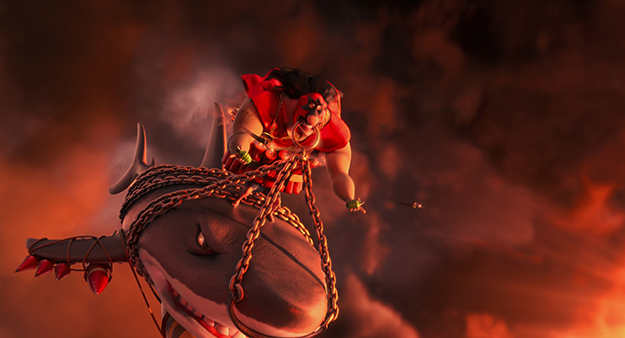
The villain in “Despicable Me,” is also, surprise, surprise, male. I admit, this guy totally cracked me up. First of all, his name is El Macho. When Gru describes him, he says, “El Macho died in the most macho way possible, strapped to a shark, flying into a volcano.” Hilarious and only when I write this, do I remember sharks don’t fly.
Though I was kind of uncomfortable with the Latin lover stereotype– Macho’s open necked shirt reveals a hairy chest and he wears a huge gold chain– I delighted in the gender play.
There is more gender play in “Despicable Me 2” that could’ve been great– and that’s why I wanted to say good things about this movie– but again and again, instead misses the mark. Gru is a single dad of three girls, so there’s a lot to work with there. But just like “Monster University” had sororities with cool characters, but then gives them minimal lines and screen time, “Despicable Me” doesn’t pull off gender equality. It doesn’t try to.
The movie opens with a princess party (ugh) for Agnes, the youngest daughter, and Gru is dressed as a fairy princess. Again, I laughed when I saw him, but frankly, seeing a female dress up in pink frills ought to be be just as ridiculous. But it’s not, of course. A female looking like this is normal and expected in kidworld.
The minions also dress up as females to comic effect, as a maid and also in a grass skirt topped with a pair of coconut shells, to give just two examples.
I laughed during these scenes too, but the whole “boys dressed up as girls, how hilarious” joke solidifies all kinds of gender stereotypes. I wish we could leave it out of kids’ movies. There are so many ways to get kids to laugh without teaching them this one.
Gru’s spy partner, Lucy, is a pretty good Minority Feisty. She’s smart, brave, and enjoys adventure. But Lucy is clearly Gru’s sidekick. After the initial capture, she follows his lead and becomes his love interest.
There is a truly awful scene where Gru goes on a date with the superficial Shanon, and Lucy shoots a dart in Shanon’s ass. All kinds of unfortunate things happen to Shanon after that, and this part of the movie I didn’t find funny at all.
As far as Lucy’s lipstick taser which you’ve seen if you seen a preview, I for one, am sick of lipstick as a symbol of female empowerment. When Pat Benatar sang about a notch in her lipstick case 25 years ago, it was an original and ironic image. Now it’s a cliche, as overused and tired as an empowered woman ripping off her corset. Though I admit, I did laugh again when, in a desperate moment, Gru uses Lucy’s taser and she calls out “You copied me.” The final insult: the movie shows Lucy as the classic Damsel in Distress, strapped to a rocket and shooting into a volcano, and Gru, of course, saves them.
I liked the three girls, loved that there were three of them, and the oldest is named Margo.
I would LOVE to see a movie where these three are the stars with Margo as the protag and Gru in the supporting role. Universal, are you listening?
Before you comment on this post, let me say three things:
(2) I am not advising you not to take your kids to see these movies. I thought that was obvious because I blog about taking my own kids to see these movies. I try to teach my kids to watch with a critical eye. If the movie is sexist, I usually will not see it again, rent it, buy it, mention it much and try to avoid buying my kids games or clothing with the characters. If the movie has a female protag, I will buy a lot of that stuff. Some movies, I do avoid, for example, I didn’t go see “Oz” or take my kids. I couldn’t take what they did to Dorothy and Ozma, but that was a personal decision as yours, of course, should be.
(3) I wrote this already, but the problem is the repetitive pattern of marginalized females. The pattern, okay? Kids learn from what they see, through repetition.
In children’s media, females, who are half of the population, are presented as a minority. That is why I came up with the term Minority Feisty. Often, today, there is not jut one token female (as with the Smurfette Principle) but several and she is “feisty” ( a demeaning way to describe strong, usually reserved for females, and often used by film critics describing females in kids movies.) But the Minority Feisty is not enough. If we keep moving along at this slow rate, the Geena Davis Institute reports, we won’t have gender parity for 700 years. Your kids won’t experience it, nor will their kids, nor will their kids, on and on.
“Despicable Me” is a classic example of this sexist pattern. There are hundreds, if not thousands, of male minions. Why are there are no females? These scenes are so funny, my favorite parts of the movie, but females are excluded from them.
Two great posts came out this week about sexism in film and the Minority Feisty issue:
Please don’t be distracted by the Minority Feisty in children’s movies. She is there to distract you, to make you forget the lack of female protagonists. To the point the New Statesman made, and I have made numerous times on Reel Girl: We are all heroes in our lives. We all have our dragons to slay. But too often, women are trained to find a man in power, someone we can rely on to do the scary deed for us, instead of taking the risk ourselves. No risk, no reward, right? Except that women often don’t get the same cultural rewards men do for being heroes.
In fantasy, a world we can control, why can’t we show children a place where females and males are treated equally instead of perpetuating sexism? If we can’t imagine equality, we can’t achieve it.
Reel Girl rates “Despicable Me 2” ***S*** for gender stereotyping
Update: Just learned there will be a 2014 spin off of “Despicable Me.” YAY, I thought, a movie starring the three cool girls: Agnes, Edith, and Margo, just like I hoped for. But no. It will be a movie about the all male minions. Read about it here.
I wrote about the desperate situation for women in Texas for the SF Chronicle 13 years ago when George W. Bush was running for President. Check out the political history of the state under Bush, the ramifications of his policies, and what we’re up against now. Thank you, Wendy Davis for maybe, finally, starting to turn this situation around.
Ask a pro-choice person to explain casting a vote for a pro-life candidate, and the proud response is likely to be: “I don’t support candidates based on just one issue. I care about education, health care, and the economy too.”
Even political savvy supporters of Green Party candidate Ralph Nader aren’t that concerned with the threat to a woman’s right to choose, claiming its one issue among many.
But choice has never been a single issue. Reproductive rights don’t exist in isolation. They have everything to do with women’s economic and political power, women’s access to education and health care, women’s status in society and women’s abilities to take care of themselves and their children.
Birth control pioneer Margaret Sanger once said, “If a woman doesn’t have the right to control her own body, she has no rights.” Choice is a political barometer, indicative of how politicians feel not only about the basic rights of women, but about the role of women in society, abut sex education, health care, welfare, poverty, the economy and the role the government should play in an individual’s life.
A position on choice indicates whether your representative will fight to get your kids vaccinated and to make contraception affordable.
Years ago, Rep. Barney Frank, D-Mass, said that pro-lifers believe “life begins at conception and ends at birth,” meaning pro-life politicians are adamant about protecting the fetus but don’t care much about protecting the child once its born
His notion was rekindled recently when Prof Jean Schroedel of Claremont College came out with a survey examining the relationship between state abortion laws and spending on children. Her research revealed that the states that most severely limit abortion are the same ones that spend the least on foster care, parents who adopt special needs children, and poor women with dependent children. States with strict abortion laws consistently accorded lower political, economic and social status to women. For example, Louisianna had some of the tougest abortion laws and spent $602 per child. Hawaii had some of the most liberal laws and spent $4,648 per child.
Schroedel also discovered that states with restricted abortion laws consistently accorded lower political, economic and social status to women.
Her findings support the work of Nafis Sadik, executive director of the United Nations World Population Fund. Sadik has been instrumental in turning the debate over how to limit population growth into a campaign for women’s rights.
She is widely credited with bringing attention to the correlation between over population and the status of women. When women are educated, when they achieve economic independence, when they have access to good health care, when they are valued in society for their intellect and their accomplishments, they have fewer babies.
Unfortunately, pro-life politicians still don’t seem concerned with improving the status of women. One classic example is presidential candidate George W. Bush. Look at his record as governor of Texas.
Texas women had a higher than average chance of living in poverty. The state minimum wage, earned by those in the female-dominated service and domestic workers industries was $3.35 per hour, totaling $6,700 annually for full time employment.
The percentage of women and children without health insurance is the second highest in the country.
Texas ranks 42nd in per capita welfare spending.
Bush made it more difficult for women to obtain abortions in times of crisis, but offered no preventative policy initiatives to reduce unintended pregnancy, no expansion of family planning or funding services, no comprehensive sexuality education program and no insurance coverage for contraceptives.
Texas had the second highest rate of teen pregnancy in the nation.
And the Texas system doesn’t promote sexual health. Texas law requires that sex education courses teach abstinence, but it does not require teaching contraception or HIV/ STD prevention.
Compare that to France where mandatory sexuality education begins when students are 13. Parents are prohibited from withdrawing their teenagers from this program. France’s teenage birthrate is approximately 6 times lower than the rate in the US; its teen abortion rate more than 2x lower, and overall AIDS rate, more than 3x lower.
Conservatives like to say, “The government that governs best, governs least.” What happened to this party? Now, they sound so much more like big government believers.
Many Americans wonder how they came to intrude so much into our private lives, legislating personal choices like whom we should sleep with or pray to.
The reason is because if politicians aren’t going to help to provide access to health care, contraception, STD prevention, access to child care and sex education, and economic autonomy there is nowhere to go but blame pregnancies on loose morals and loose women.
If Republicans acknowledge that women have reproductive rights, they’ll have to acknowledge that women have other rights as well. For Texas, that would mean reasonable funding for family planning and welfare, a higher minimum wage, insurance to cover contraceptives, real sex education and access to heath care.
Pro choice isn’t one issue and it isn’t one choice. Pro-choice means women have the choice to graduate from college, the choice to borrow money to start a business, the choice to get a good job with a fair wage, the choice not live in poverty and keep their kids out of poverty. Choice means that women get to be autonomous citizens, just like men do- with the power to determine their own destinies.
Pro-life candidate George Bush understands better than anyone that choice isn’t just one issue. Before heading to the ballot box in November, Americans need to realize pro-life is really only pro-birth.
The Republicans’ concern for mother and child is severed with the cutting of the umbilical cord.
What can you do now, in July, 2013?
Demand public hearings across Texas
On Independence Day in 2013, Texas women are still fighting for their rights!
Politicians in Austin are blocking Texans from speaking out against harmful legislation that would deny Texas women the right to make their own private medical decisions, and essentially end access to safe and legal abortion in the state.
Last night, during a hearing before the State Affairs Committee, the chairman cut off testimony at midnight, denying more than a thousand Texans who had signed up to testify the opportunity to speak out. This isn’t the fair democratic process that we value in Texas.
Texas legislators must stop playing politics with women’s health. Speak up now — urge legislators to schedule public hearings across the state to support the fair democratic process that Texans value.
Please visit Stand With Texas Women to sign your name to this letter going out to decision makers in Texas.
Check out what book I found my 4 year old cuddled up with this morning: R. Crumb’s Genesis! No idea how she go her hands on this, but talk about sex and violence, the Bible is at the top of the list.
My daughter has been waking up super cranky in the morning, so last night when we put her to bed, we unclipped her reading light. An hour later, my husband went down to check on her and found her with a flashlight. Back again, he removed 2 more lights. This is what I saw on the kitchen counter this morning. She’d managed to get her younger sister’s clip on light as well. I have no idea how she acquired light #6. Yet another reason to be pissed off at her partner in crime, Rick Riordan…
The post set off a discussion about the best and worst reading lights. I think we may have finally found the answer. After all of the lights pictured above eventually broke, I went back to Christopher’s Books, (where I think I’m their best customer due to my book buying addiction.) Srore owner, Tee Minot, told me she no longer stocks lights. She didn’t think any were much good. Tee told me the best reading light she ever got is a camping light, the kind your kid can put on her head. She found hers at Sports Basement. Today, my husband bought a 3 pack of LED headlamps with three modes (dim, bright, strobe), batteries INCLUDED for $9.69 at Costco. Look at that night owl’s happy face. I have high hopes for this one, as long as she doesn’t discover the strobe. Now, if I could just get her to be this smiley in the morning…