Besides going to a lot of shitty kids’ movies this summer, I finished the Harry Potter series. That actually happened at the beginning of the summer, but I’ve avoided blogging about it. Part of the reason is I needed to work on my own book instead of blogging. But, also, I pretty much feel like I’ve said everything about Harry Potter that I have to say. Still, I promised to check in once I was finished, so I’m doing that now.
My favorite book in the series is Book 6, probably because Dumbledore is my favorite character, and Half-Blood Prince is all Harry and Dumbledore. Also, I really liked hearing about Voldemort’s childhood and witnessing how he became so evil. And I mean witnessing. J.K. Rowling doesn’t just do a flashback. She has you go into a magical pensieve where memories are stored, and then she leads you through the actual events. She’s a truly masterful story teller.
I initially thought that the most feminist of the books was 5, because Hermione has a big part, and there is, finally, a female teacher of the Dark Arts, Dolores Umbridge, who’s a great villain. But, unfortunately, after posting my views, I received quite a few comments about the alleged rape of Umbridge. You can look those posts up, if you want. The links to most everything I’ve written on Reel Girl about the Harry Potter series is cut and pasted below, most recent first. This sentence from one of my posts pretty much sums up my views:
If Harry Potter, a series with a male protagonist, titled for that male, where the author was told by her publisher to use initials to hide her gender, is considered feminist because a third of the characters in power positions are female, we have a long way to go before achieving gender equality in the fantasy world.
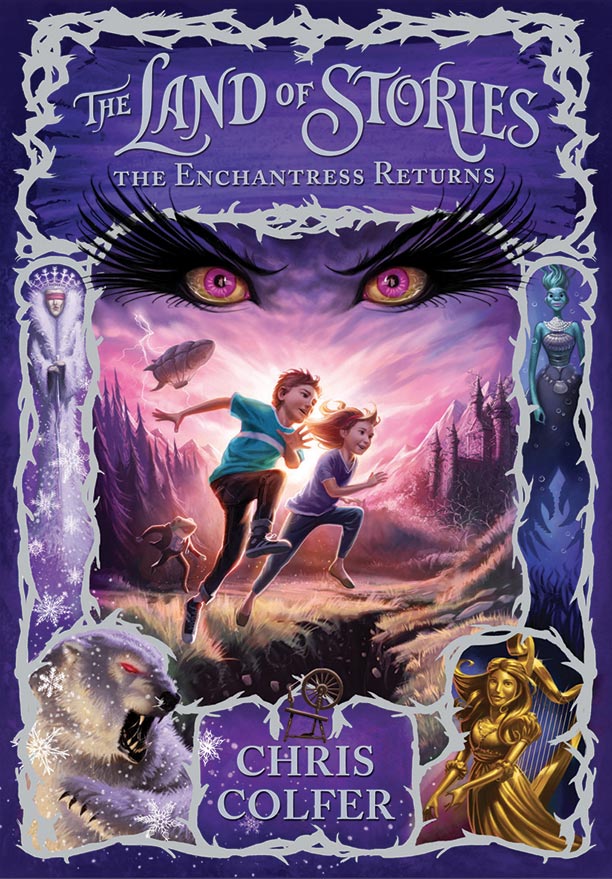
When I was with my six year old daughter at the book store, and she chose Land of Stories by “Glee” actor Chris Colfer, I was skeptical. Colfer is an actor. And twenty-three years old. And male. Not only that, from the back book cover, it was obvious Land of Stories is reimagined fairy tales. Been there, done that. Nonetheless, my daughter insisted, and as a rule, I generally buy my kids a book if they really want it, because from my experience, resistance only makes it more desirable.
My daughter plowed through the book, requested its sequel, and then finished over 500 pages in about a week. My daughter, now just turned 7, read most of the book herself, so I only got snips here and there, when I read it to her. From the scenes I read, I wasn’t sure how I felt about it. The protagonists are twins, Alexandra and Conner. I get annoyed by how books with a female protagonist seem to need to balance her with a co-starring male. Can’t we just see the female protag? Or what about sisters? Or female buddies? Why is that pairing so rare?
But in most parts of Land of Stories that I read, Alex is a strong and brave character. Here are a couple passages that won me over as we neared the finish of the second book, The Enchantress Returns.
“You have to save the fairy-tale world, Alex!” Conner said. “You have to save the Otherworld and Mom, too!”
Alex’s grip around her brother’s feet tightened. “I can’t save anything without you,” she said.
“Yes, you can,” he said. “It was always meant to be you! You’re the one who got us here and you’re the one who is going to get us out! You heard the ghosts– you’re the heir of magic! You’ve got to defeat the Enchantress so this world can go on!”
“I can’t do it alone,” she said, terrified to lose him.
“Yes, you can,” Conner said. “I’m really sorry about this.”
Conner kicked Alex off of him, and the vines consumed him entirely. They dragged him and Trollbella down into the ground and disappeared.
“Conner!” Alex yelled after him, but it was no use. He was gone.
Alex looked across the camp just in time to see the vines pull Red, Froggy, Jack, and Goldilocks into the ground with one, final heave. As soon as Trollbella, Red, and the others clinging on to them had been taken, all the vines in the campsite disappeared into the ground. They had com efor the queens.
Alex got to her feet and looked around in shock. In a matter of minutes, all of her friends and her brother had been taken from her. She had no choice but to finish the quest alone– it was all up to her now.
Love it! Of course, as I reading this to my daughter, I was thinking: “Right on, Conner, get out of there. Alex needs to do this.”
Unlike Harry Potter’s magical world, this Fairy world has an almost equal number of females and males in power in the government, with a the Fairy Godmother at the head, and the evil enchantress as the villain. Here’s a passage that describes the governing group.
Hung across the wall from top to bottom were Queen Snow White and King Chandler, Queen Cinderella and King Chance, Queen Sleeping Beauty and King Chase, Queen Rapunzel. and members of the Fairy Council. And now, withe the inclusion of Red and Trollbella, the entire Happily Ever After Assembly was at the Enchantress’s mercy.
I appreciate all the subtle ways Colfer recognizes female power. The female characters are not princesses but queens and they are listed before their male partners. Red is Little Red Riding Hood and Trollbella is the leader of the Trolls. It’s great to read a story about what happens to these princesses after they marry and their adventures are supposedly over. Its also nice that Rapunzel remains unmarried. It is interesting that Colfer makes an effort to pair of the others and gives the kings big roles. It’s sort of like giving a female protags a male twin, and other passages I read, the deference of the Queens annoyed me.
Here’s the passage that made me a true fan. How does Alex find the strength to save Fairy-tale world all alone? She has a dream where goes into a cave and meets four little girls: Lucy of Narnia, Alice of Wonderland, Dorothy of Oz, and Wendy of Neverland. They five girls talk together about the various ways Alex could try to destroy the Enchantress.
She looked up at the girls and around the cave. “Now I understand the meaning of my dream,” she said. “Deep down, I knew I could never kill the Enchantress, so I was searching for another way. The cave represents my questioning and you represent the answer— because ever since I was a little girl, I’ve always thought of you when I had a problem.”
“Why is that?” said Alice.
“I suppose I’ve learned so much from you,” Alex said. “I always wanted to be as loving as Wendy, or as curious as Alex, or as brave as Lucy, or as adventurous as Dorothy– I always saw a little bit of myself when I read about each of you.”
I’m not a fan of Wendy, but I named my oldest daughter Lucy and my second Alice after those incredible characters. I really enjoyed the pages where they come together and mentor Alex, giving her sage advice from their own experience.
The writing in these books is not the greatest. There is a lot of word repetition in sentences like: “It happened so fast Alex wasn’t sure what happened.” Also, too many adverbs: “Her hair anxiously swayed above her.” But Colfer is twenty-three, for goodness sake. I’ll be following his writing career. I’m looking forward to seeing what he does next.
If you have read these two books, please let me know what you think. With the caveat that I have only read passages of them, Reel Girl rates Land of Stories ***HH***
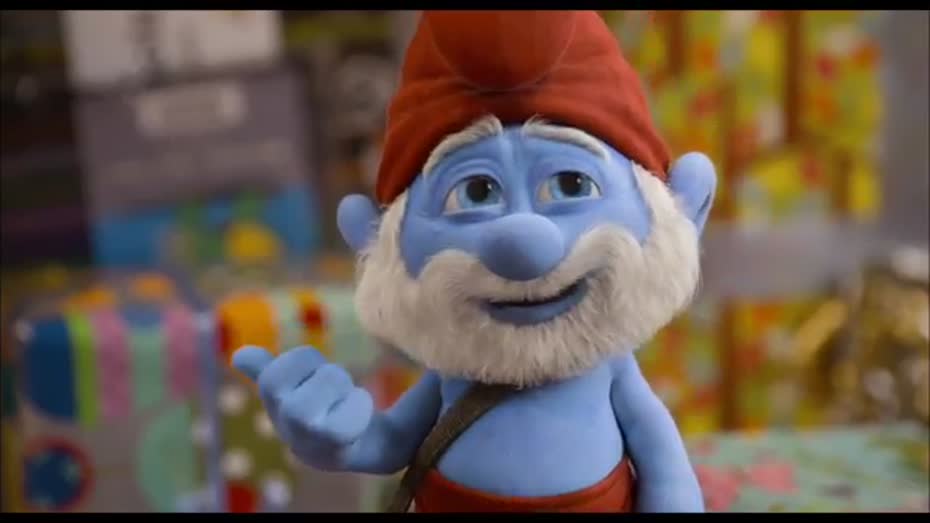
My expectations were low but “Smurfs 2” surpassed them.
Not only does “Smurfs 2” feature the famous posse of too many to count males accompanied by just one female, but this movie is all about fathers. A movie for kids centered on fatherhood could be great, but when the Smurfs are already so creepily male dominated, the erasure of mothers is alarming and disturbing. The good, golden-haired female pitted against the evil, dark-haired female trope, central to “Smurfs 2,” is so tired in kid fantasy world (not to mention the grown-up world) that I was slack jawed to see it again, even though, of course, I shouldn’t have been. That’s why it’s a trope, right?
Did you know that evil Gargamel created Smurfette as a ploy to infiltrate the Smurfs? That’s right, Smurfette, the only female Smurf, isn’t even a real Smurf. It’s only when Papa Smurf comes to care for Smurfette as a daughter that he uses a magic potion to transform her. At that point, not only does he change her skin to blue but her hair to blonde, thus becoming Smurfette’s true father.
“Smurfs 2” opens with that backstory and then brings us to present day with a scene showing the Smurfs gawk at Smurfette as she swishes her blonde locks around in slow-mo. But there’s trouble in paradise: every year on her birthday, Smurfette is haunted by a dream in which she once again turns evil, and her hair, once again, turns brown.
Cut to Gargamel who has created/ fathered a new race: the Naughties. Evil, dark-haired Vexy has a similar mission to Smurfette’s years ago. Gargamel sends to Vexy to infiltrate Smurfville to recover his “daughter,” hoping that Smurfette will reveal to him the secret potion Papa Smurf used to turn her into a Smurf, thus Gargamel can create Smurfs himself.
Cut to the human world where Patrick is having a birthday party for his son, Blue, to which his father, Victor, arrives. (Got that? Three generations of males.) Victor serves the kids corn dogs that happen to be fried in peanut oil. A young party guest has an allergic reaction, and the celebration is ruined. That’s the latest in a long line of events that lead to Patrick’s deep frustration with his loving but bumbling father. Turns out, Victor is not Patrick’s biological father, but his step father. Patrick’s “real” father walked out on him years ago. So you see, the conflict of true paternity experienced by Smurfette– wondering if her “real” father Papa Smurf or Gargamel– is mirrored by the Patrick’s own dilemma: can his step-father be his “real” father?
Both Papa Smurf and Gargamel essentially “give birth” without any need of females, kind of like our own Judeo-Christian creation myth and its independent and endlessly resourceful male God. While Smurfette has no mother at all, Patrick’s mother is hardly mentioned in the movie. I couldn’t even tell if she’s dead or alive.
Now, for the good news. There are threeMinority Feisty in this movie. This was my first Smurf movie so I don’t know if that’s a record, though the pathetic female to male ratio is of course where the term, the Smurfette Principle, originated from. In case you don’t know what Minority Feisty means here’s a cut and paste from Reel Girl’s review of “Planes.”
Today, if you see a movie for children, it will most often have a male protagonist, while females, who are, in fact, half of the kid population, are presented as if they were a minority. Within that minority, there will be a strong female or two who reviewers will invariably call “feisty.” I call these characters the “Minority Feisty.” The trope has evolved from the Smurfette principle in that there is often more than one, and she is presented as strong. But rarely is she the protagonist. Her power, lines, and screen time are carefully and consistently circumscribed to show that she is not as important as the male star. Still, the Minority Feisty is supposed to pacify parents, making them feel that, unlike those sexist films of yesteryear, this movie is contemporary and feminist.
Smurfette spends most of the movie as a captured damsel in distress who the male smurfs, and mostly male humans, must rescue, but like most Minority Feisty, she has her moments of courage and brilliance. Also, upon befriending her enemy, Vexy, while Smurfette never says, “I want to stay with you because I can’t stand being the only female in Smurfville,” she does express joy at having the sister she never did.
Grace is another Minority Feisty. She’s Patrick’s wife, Blue’s mom, and she’s cool and brave. But the central human, with the conflict and the transition, not to mention the lines and the screen time, is clearly Patrick.
Vexy is an okay Minority Feisty. I enjoyed her badness and watching her transition. Did you read that part about transition? We now have–are you ready– 2 female Smurfs! And Vexy stays brunette. Thus with “Smurfs 2,” the Smurfette principle truly evolves into the Minority Feisty: two females and one of them is a bad-ass. Is that progress or what? According to the Geena Davis Institute, at this rate, it will be only 700 years before we get gender equality in the fantasy world.
Reel Girl rates “Smurfs 2” ***SS*** for gender stereotyping
Normal boys will NOT wear pink, girly shoes. It’s just a fact of nature. That is the reason society and marketers accept different preferences for different genders. Get over it! Who wants to live in a world where there are two genders who all look alike, have the same preferences, etc. What a boring world you liberal nuts would desire to live in!
Pink was first a “boy” color, a version of red which symbolized strength. Blue was a “girl” color, associated with the Virgin Mary. That’s why in the early Disney movies, Cinderella, Sleeping Beauty, and Alice in Wonderland all wore blue.
But today, because of marketing, we get comments like the one above from adults and from kids. Here it is again:
Normal boys will NOT wear pink…It’s just a fact of nature.
People keep asking me if I want “gender neutral.” I’m not even sure what that means, and the question misses the point. I want options. I want all kids to see many more images of powerful and complex females, to see girls taking risks, saving the world, being brave, smart, and going on adventures in the fantasy world and in the real one.
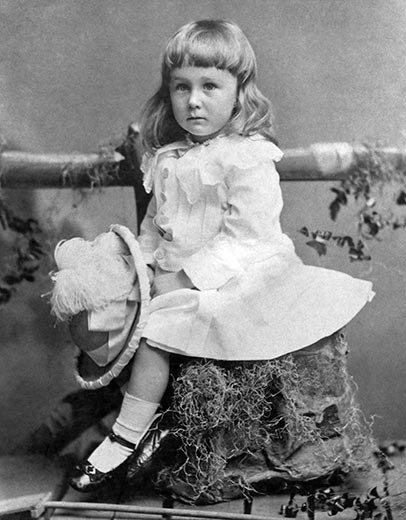
Here’s my four year old daughter. I wouldn’t call her a “tomboy,” whatever that means. She likes pants; she likes dresses; she like yellow, she likes pink, she likes black. She likes to race and play soccer and read and make art. She loves superheroes and her mermaid Barbie.
My daughter chose Star Wars shoes because her male cousin had them. So part of her decision was made from just hanging out with a boy, something we don’t see nearly enough of today with all these gender segregated toys and marketing. At school, wearing her new shoes, my daughter was teased by a five year old girl who told her she was wearing “boy shoes.” How long until my daughter stops going to the “boy” side of stores?
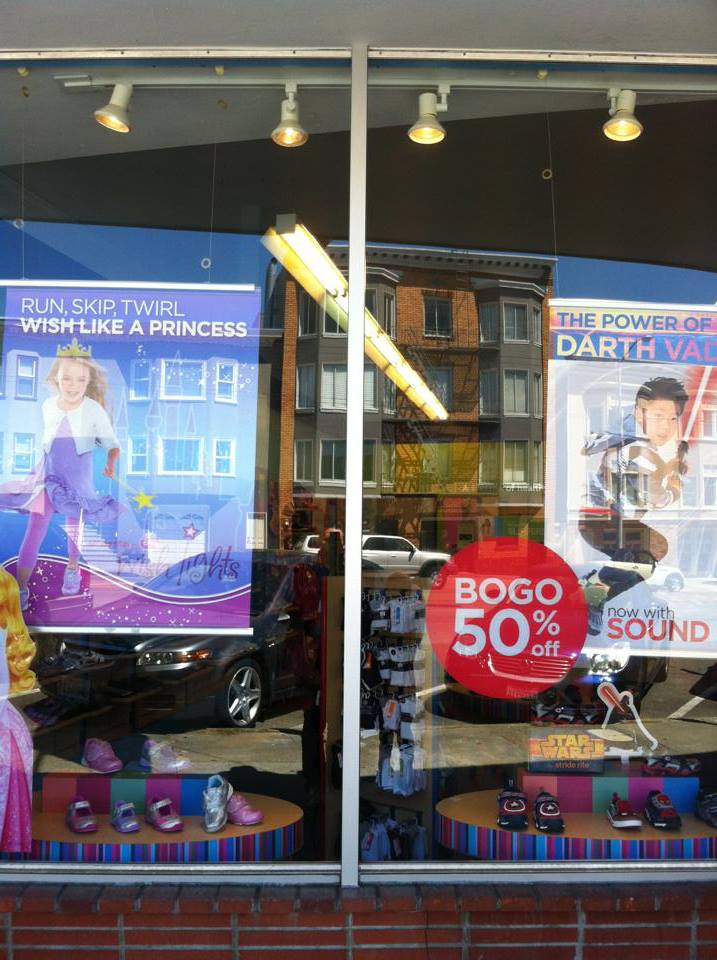
My 7 year old daughter told me that at her school, a first grade boy was playing with a castle, and she heard a first grade girl keep telling him: “That’s a girl toy.” The girl wouldn’t let up until the boy stopped playing and moved away. Gender stereotyping leads to bullying and that limits all kids. And gender stereotyping is everywhere. Even if I don’t shop at Stride Rite, my kids will still see this ad in the window. The Stride Rite store is in a San Francisco neighborhood where lots of kids go school. Hundreds of children will see this ad every day.
I agree with the commenters. I wish Stride Rite would recognize that we don’t want want to live in a world where two genders all look alike and have all the same preferences. All kids need to see more female protagonists and strong female characters. Stride Rite, are you listening?
As always, I welcome your comments, but don’t use this space to trash Tucker Carlson. Attack the argument, not the idea. The last thing I want is to mimic the trolls.
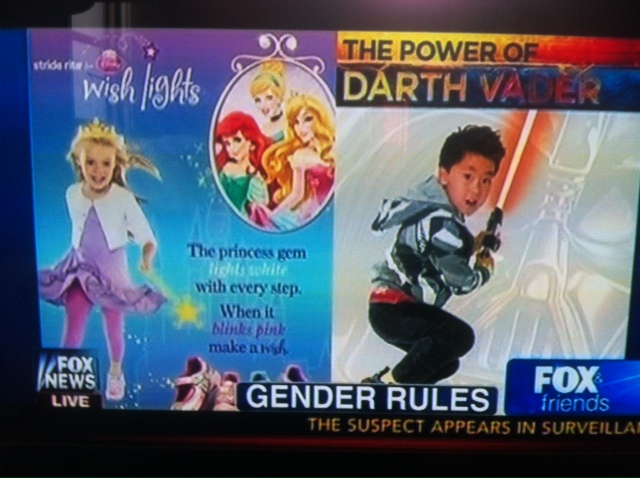
I’ll post the video from my appearance on “Fox and Friends” when I figure out how, but here are a couple pics I snapped from my TV. (Obviously, I’m slightly tech-challenged.) Whatever you want to say about Fox, they covered this story. I’m happy to get the news out into the world about Stride Rite’s sexism and how gender stereotypes hurt kids. If you haven’t seen my letter to Stride Rite, you can read it here.
“Gender stereotyping leads to bullying. It limits all kids and that’s the problem with it.”
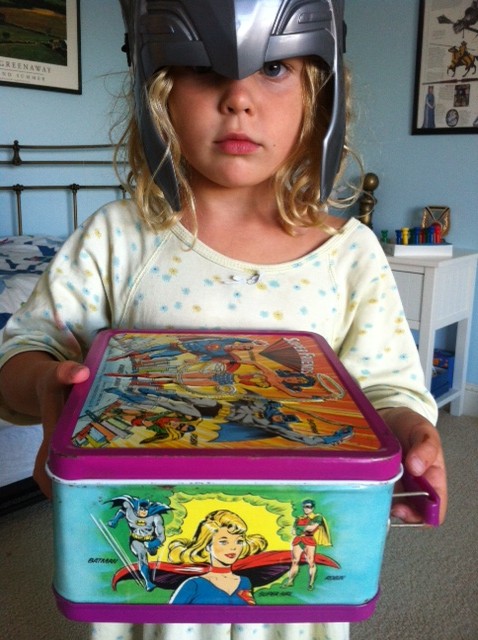
My daughter has been searching and searching for Wonder Woman. She’s always on the lookout. We comb bookstores and toy stores. We couldn’t find her on socks at Stride Rite or at T-shirts at Target or on a birthday cakes at Safeway. It’s possible to find her on the internet, but you’ve got to seek her out. Her image doesn’t appear here and there as my daughter and I go about our day, unlike the ubiquitous Spider-Man, Batman, Superman, male Avengers, and other male superheroes. So my daughter was thrilled when today, we were at my sister’s house and she saw a Superfriends lunchbox sitting on a shelf in my nephew’s room. It’s from 1976. Check out Wonder Woman, front and center!
On the back? Batgirl, front and center.
On the side? Catwoman!
Other side? Supergirl!
That makes 4 female superheroes. So I wondered, in 1976 was this awesome lunchbox made “for girls”? It does have a purple border. Was purple strictly a “girl” color in ’76 the way it is today? But even if this Superfriends lunch box was meant only for girls, today in 2013, it’s not likely you’ll find a lunchbox with 4 female superheroes on it. Maybe, if you internet search, you’ll find someone selling it somewhere, but it’s not something your daughters and sons will see as they go about their day. In 2013, female superheroes have gone missing from kidworld.
It’s not just that I think Ben Affleck is all wrong for Batman (I do), it’s that Batman and Superman have already had so many feature films that it’s ridiculous.
Batman (movies, live action): 1966, 1989, 1992, 1995, 1997, 2005, 2008, 2012
Sixteen in all, if you count the movie Affleck has been tapped for. And we can’t get a single Wonder Woman movie???
I remember there was a Supergirl movie when I was a kid. I LOVED seeing her on the screen. Where has Supergirl gone in 2013? My kids don’t even know who she is. My 4 year old keeps asking about Spider-Girl. Instead of telling her she doesn’t exist, I help her draw her and write down the stories she tells me about her. I wish some major movie company and toy maker would help me out spreading narratives of Spider-Girl to kids, not to mention Spider-Woman.
Melissa Silverstein spotted a book on Wonder Woman when she was out with a kid. She posts about the sighting on her blog Women and Hollywood:
I was with my four year old nephew who is obsessed with The Avengers. He only wears Avengers t-shirts and knows all the characters even though he has never seen any of the movies. But that’s the culture. These male superheroes are everywhere and kids pick up on it. We were in a book store and had lots of time. We made our way to picture books with superheroes on the cover. He immediately pointed at the Batman and Superman books. Right next to those books was a book on Wonder Woman. I said do you know about Wonder Woman? And he said no. He had never heard of her. We sat down and read the story and he was really into it. He thought it was cool that she had a magic lasso and also the book ended with Wonder Woman and Superman rescuing someone together so he got to see that she was a real superhero and could keep up with Superman.I am relaying this story because I am sure there are boys all over the country and the world being exposed to only male superheroes because that is what our mass consumer culture allows us to see. While it would be great for us to have a Wonder Woman film and that would be a great start it will not be enough. That’s the problem with the lack of critical mass we have in our female stories.
Today, I walked by your store on California Street in San Francisco, and I was saddened by how differently you market shoes to girls and boys. What’s with your gender stereotyping? I don’t get it. Aren’t girls and boys feet pretty similar? Don’t all kids need shoes where they can be active? Please tell me why Stride Rite markets shoes to little kids as if girls and boys are completely different species. As author Rebecca Hains writes, according to Stride Rite, girls are pretty and boys are active. This kind of gender stereotyping limits all kids.
Here’s the huge poster selling shoes to girls in the window of the San Francisco store.
According to Stride Rite, girls like pink, purple, sparkles, and princesses.
Here’s your poster selling shoes to boys.
Boys are powerful. They like orange, blue, red, yellow, and black.
The shoes displayed below the girl poster are also– surprise, surprise– pink, purple and sparkly. The shoes displayed below the boy poster feature Spider-Man and Captain America shoes.
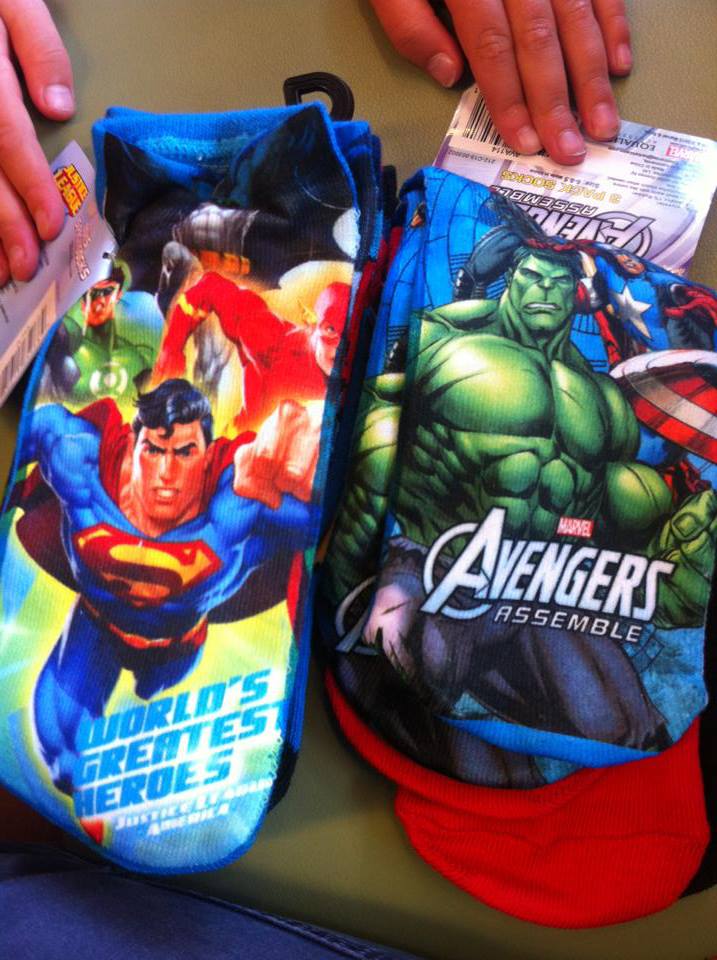
Where are the female superheroes at Stride Rite? Not on the socks you sell. Those are my daughter’s hands in the picture. She was looking for Wonder Woman.
Apparently, Wonder Woman isn’t one of the world’s greatest superheroes. Isn’t she a member of the Justice League? Where’d she go? What about Black Widow? Why has she gone missing from the Avengers Assemble? And while we’re looking for MIA powerful females, where’s Leia with her lightsaber? Why isn’t she part of the Stride Rite Star Wars shoes marketing plan?
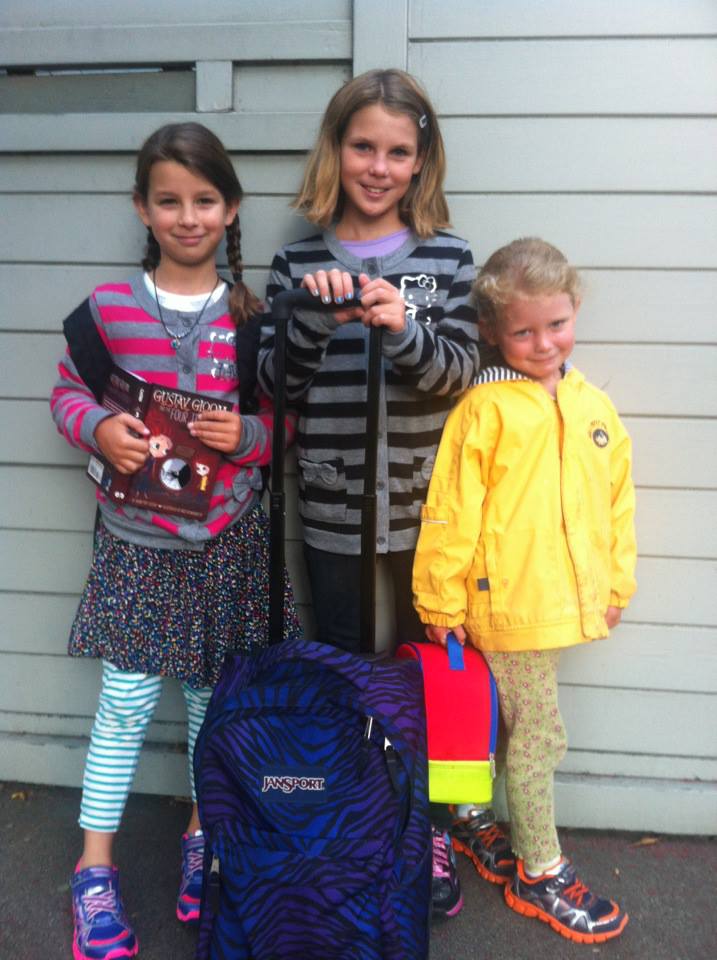
Here are my three daughters ages 4, 7, and 10 wearing Stride Rite shoes.
Unfortunately, we will no longer be shopping at Stride Rite.The way you guide girls to one side of your store and boys to the other is manipulative and destructive. My youngest child chose her orange shoes from the “boy” side, but every year, my kids get more influenced by marketing such as yours. Their choices become more limited as they repeatedly see that girls are supposed to be so radically different than boys, only wear certain colors, and behave in a certain “feminine” way. For as long as I can, I hope to protect my kids from learning that boys are valued for what they do, while girls are valued for how they appear. That means not shopping at Stride Rite.
Update: On Reel Girl’s Facebook page, Lizards and Lullabies posted this email just received from Stride Rite. Guess they’re working hard to snag back to school shoppers. Makes sense, that’s why my family went shoe shopping.
I couldn’t click on the commercial link so I went to You Tube. Ugh, it’s really awful. As one commenter Tweets:
wish like a princess? They’ve found a way to make a princess EVEN MORE passive!
Here’s the ad:
Update:This comment, posted on Pigtail Pals Facebook page, makes me so frustrated. Diana got way more than a confused look from the sales associate when her daughter dared to step beyond gender limits at Stride Rite:
“We just went into a Stride Rite store for my 4yo daughter and she was drawn to the “boys” side with the Spider Man shoes. The sales associate actually stopped her and said “Oh honey, those are for boys. Let’s get you something prettier over here.”
I told the sales associate that she was free to pick a shoe from whatever side she wanted and that pretty wasn’t defined by pink, purple and glitter, nor was it the only quality we wanted in a sneaker.
We walked out with Spider Man sneakers that light up and are awesome. I did mention to the woman that while we appreciated her friendliness, we did not appreciate her gender stereotyping and making my daughter feel like she shouldn’t be excited about black, red and blue shoes with eyes that light up.”
And one more thing, while I’m here. All that “pretty,” shiny stuff on girl’s shoes gets scuffed up and falls off pretty fast. When it does, parents are likely to buy kids new shoes, which is great for business and also, creating lifetime consumers. Check out this post: Are girl’s shoes designed to disintegrate?
I’ve blogged twice about the sexist preview for “Planes,” and after seeing the movie today, I’m afraid I’ve got to blog about this awful scene once more. The sexist scene actually opens the movie. It sets the tone for the whole film, which is the opposite of what I thought the scene was going to do. When I saw the preview, I thought the plane who mocks the slow flyers by calling them “ladies,” was having a moment of arrogance. The movie would redeem him when he went through his transition. But I couldn’t have been more wrong. The sexist joke is his fantasy, the fantasy of a humble crop duster with a fear of heights who wishes he were a racer. The scene is sexism in fantasy world in sexism in fantasy world. Isn’t that meta? It’s the dream sequence of a “likeable” character. Can you imagine a hero making a racist joke and being likeable? In a movie for little kids? Yet, that’s how much sexism we have to wade through before females are allowed to win a race in animation. Here’s the text/ preview, all voices are male:
Plane One: What’s taking this guy so long? Is he really as good as he says he is?
Plane Two: No, better.
Plane One: Whoa! Who was that?
Plane Three: (Descending fast on top of the other two) Well, hello ladies! Ready to lose?
Plane Three goes on to leave the “ladies” in the dust.
“We start boys off at a very early age,” Kilmartin told me during a recent phone conversation. “When the worst thing we say to a boy in sports is that he throws ‘like a girl,’ we teach boys to disrespect the feminine and disrespect women. That’s the cultural undercurrent of rape.”
“Planes” teaches kids just that, and that’s only the beginning of the movie.
Following the sexist fantasy in “Planes,” the narrative progresses exactly as “Turbo” does, the movie for kids that came out just a few weeks ago. Dusty, the male protagonist of “Planes,” is told by his friend he’ll never be a racer: “That’s not what you’re built for.” This is the same conversation Turbo has with his brother who tells him that because he’s a snail, he can’t race. But guess who proves the naysayers wrong, that the hero can do anything, soar to the highest heights, be brave, courageous, and make his dreams come true? Unless, of course, he happens to be a “lady.”
Today, if you see a movie for children, it will most often have a male protagonist, while females, who are, in fact, half of the kid population, are presented as if they were a minority. Within that minority, there will be a strong female or two who reviewers will invariably call “feisty.” I call these characters the “Minority Feisty.” The trope has evolved from the Smurfette principle in that there is often more than one, and she is presented as strong. But rarely is she the protagonist. Her power, lines, and screen time are carefully and consistently circumscribed to show that she is not as important as the male star. Still, the Minority Feisty is supposed to pacify parents, making them feel that, unlike those sexist films of yesteryear, this movie is contemporary and feminist.
There are strikingly similar Minority Feisty in “Planes” and “Turbo:” Dottie and Paz are both mechanics and both shown in blue. Isn’t that progressive? At first, I thought these mechanics were a coincidence. Then I realized that “female mechanic” is classic Minority Feisty. All the parents watching can think: look a female mechanic! Isn’t that wonderful? And then overlook that Dottie and Paz exist only to help the male hero accomplish his quest in movies that marginalize and demean females.
The actual race in “Planes” is totally dominated by male competitors. There are just two female racers: Ishani and Rochelle. “Turbo” has only one, and I missed her name. Both female racers in “Planes” are objects of lust for the males who have bigger parts. One scene is an extensive serenade/ mariachi sequence that sends Rochelle, the pink girl plane, into fits of desire. I thought I was going to throw up. Everyone else in the theater was laughing.
In both “Planes” and “Turbo,” there is an evil champion male rival who is the protagonist’s major competition. In “Planes,” he’s called Ripslinger, “the king of racing.” In “Turbo,” the role is filled by the macho Guy Gagne. Why not do something wild and crazy and put a female in the evil champion role? Dusty’s mentor, his major relationship in the movie, is also with, surprise, surprise, another male: Skipper. Turbo is guided to winning by Tito, a taco maker, who is also cursed with a brother who doesn’t believe in him but comes to see his gifts by the end of the movie. Nice parallel, huh?
There is actually a third movie about a competition this summer. “Monster University” is about rival fraternities.Rival fraternities. Not one of these movies shows kids that females can win. Even worse, as I began this post with, “Planes” mocks female competitors as losers.
Why do parents put up with this repeated sexism in movie after movie?
There’s an excellent postabout “Smurfs 2,” yet another male dominated movie for kids that came out this summer, in The Atlantic:The Banal, Insidious, Sexism of Smurfette.
In The Smurfs 2, there are a lot of Smurfs. And they all have names based on their unique qualities. According to the cast list, the male ones are Papa, Grouchy, Clumsy, Vanity, Narrator, Brainy, Handy, Gutsy, Hefty, Panicky, Farmer, Greedy, Party Planner, Jokey, Smooth, Baker, Passive-Aggressive, Clueless, Social, and Crazy. And the female one is Smurfette–because being female is enough for her. There is no boy Smurf whose identifying quality is his gender, of course, because that would seem hopelessly limited and boring as a character.
These characters, originating as they did in mid-century Europe, exhibit the quaint sexism in which boys or men are generic people–with their unique qualities and abilities–while girls and women are primarily identified by their femininity. The Smurfs 2, which premiered last weekend and came in third at the box office, doesn’t upend the premise of Smurfette…Today, a blockbuster children’s movie can invoke 50-year-old gender stereotypes with little fear of a powerful feminist backlash.
The author doesn’t expand beyond “Smurfs 2″ as far as the sexism marketed to children in movies this summer, but the erasure of female characters is shockingly consistent. And shocking in that it’s not shocking. Not only is there no fear of powerful feminist backlash, when I write about this annihilation in kids’ movies, I often get comments like: You call yourself a feminist? Why don’t you write about something more important than cartoons? Who cares?
It’s not DNA we’re up against; it’s movies, manners and a set of mores, magnified in the worlds of the military and sports, that assign different roles and different worth to men and women. Fix that culture and we can keep women a whole lot safer.
Kids learn from what they see again and again and again. You can tell girls that they can be anything they want to be until you’re Smurfblue in the face, but if you don’t show them, your words are meaningless. Why not show kids more movies where powerful females win? A crop duster can win a flying race around the world and a snail can win the Indy 500, but a female can’t win anything? What does that teach children? That “you aren’t what you’re built to be” unless you’re built a girl. Suddenly, your options get pretty limited.
Why, I want to know, is the imaginary world, a place where anything should be possible, so sexist? Why aren’t more parents demanding gender equality for their kids during this crucial period in their lives?
Reel Girl rates “Planes” ***SS*** for gender stereotyping
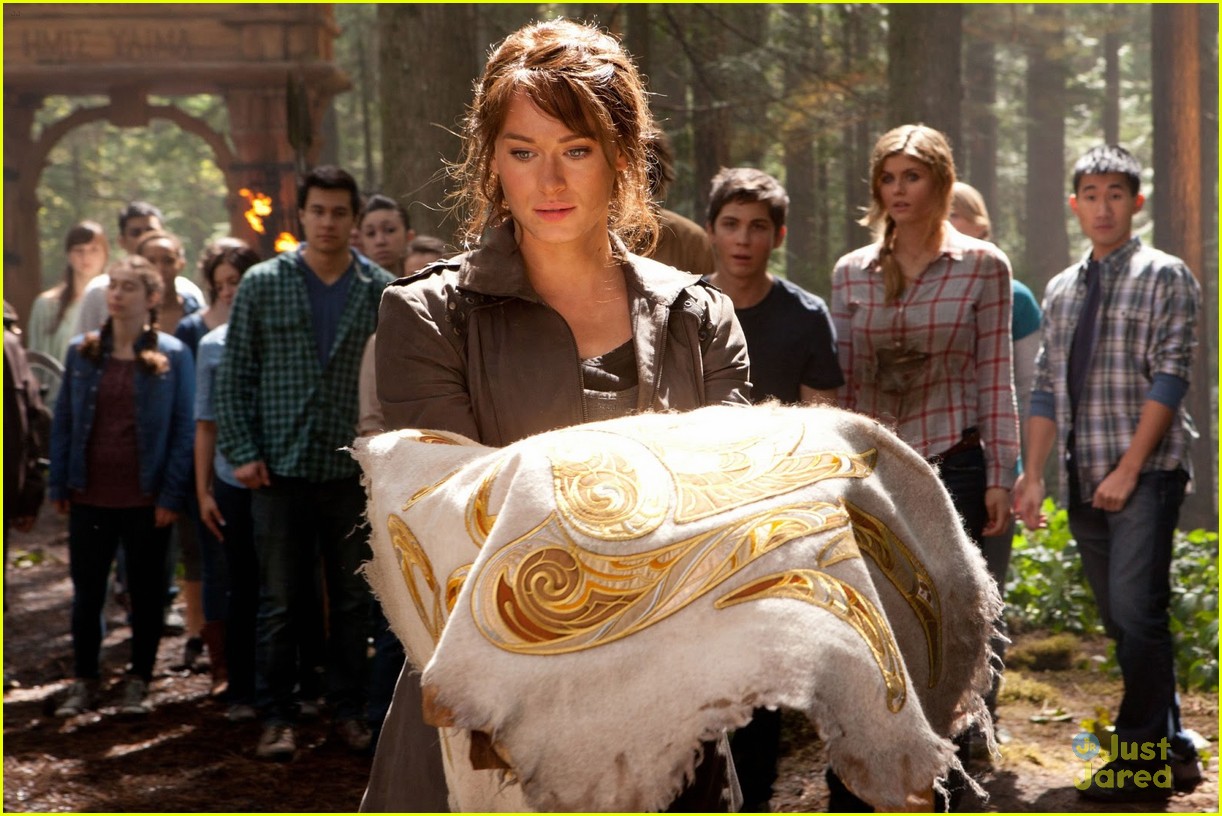
Finally, I saw a decent movie today (with my two older kids along with a cousin): “Sea of Monsters.” Afterwards, my seven year old said, “I just want to watch the beginning again and again.” I loved the beginning too! It’s all about how Thalia, the daughter of Zeus, gave up her life to save her three friends: Annabeth, Luke, and Grover. Here’s the actress who plays young Thalia. I can’t find a good shot from the movie.
As a result of Thalia’s bravery, instead of dying, she’s transformed into a tree. The tree provides a magic barrier to protect Camp Half Blood. The plot of “Sea of Monsters” is that this tree is poisoned, so not only is Camp Half Blood vulnerable to monsters, but Thalia is dying. In order to save Thalia, the Golden Fleece must be recovered.
Annabeth, daughter of Athena, is the one who realizes the golden fleece is what is needed to save Thalia. The daughter of the goddess of wisdom, Annabeth is the smart one. Her role as the courageous, brilliant best friend of the hero, Percy, is similar to Hermione’s role in the Harry Potter series.
A third strong female is Clarisse, daughter of Ares, the god of war. Clarisse is ambitious and competitive.
For these three characters, I encourage you to take your kids to this movie, though I wouldn’t take a kid under 6. But, I don’t want to mislead you. “Sea of Monsters” is Percy’s movie. He is the hero. The quest of recovering the golden fleece is actually assigned to Clarisse, but when she can’t pull it off, guess who steps in to save the world? The way Percy takes over Clarisse’s quest really annoyed me in the book. It annoyed me slightly less in the movie, because the way this is presented, instead of it being all about Percy, it’s more like Clarisse realizes she needs to work with others. It’s great to see Clarisse be the one to place the fleece on the tree; her important action restores Thalia to life.
Kids watching “Sea of Monsters” not only get to see one girl helping another, but the whole movie is driven by Annabeth’s friendship for Thalia. “Sea of Monsters” is one of the very few this year to pass the Magowan Test for Gender Bias in Children’s movies. The Magowan Test is inspired by the Bechdel test. The criteria is (1) At least two females who are friends (2) go on an adventure (3) and don’t wear revealing clothing.
This movie is kind of cheesy. I don’t know why the special effects look so fake as opposed to the Harry Potter movies or the Lord of the Rings movies. Also, while the books are really funny, and the pacing is perfect, the humor doesn’t work in the movie. Scenes that are supposed to make you laugh are just goofy. That said, if I had to pick one movie to take kids to this summer, “Sea of Monsters” would be it.