Jon Stewart asks Malala Yousafzai, the 16 yr old activist for girls education who was shot in the head by the Taliban, how she found the courage to speak out. She replies:
Why should I wait for someone else? Why should I be looking to the government, to the army, that they would help us. Why don’t I raise my voice? Why don’t we speak up for our rights? The girls of Swat, they spoke up for their rights. I started writing daily. I spoke out on every media channel that I could, and I raised my voice on every platform that I could. I said I need to tell the world what is happening in Swat.
Malala didn’t wait around for someone to else to tell her story for her. She rescued herself through the act of writing and speaking. She risked telling the truth about her life and telling it publicly, and in doing so, she is changing the world. Please show this video to your children and teach them to do the same. I can’t wait to get Malala’s book and show it to my daughters as well.
Here’s my 4 year old daughter talking about how kids at preschool teased her for wearing “boy” shoes. A group of them wouldn’t let her enter the “train hole,” a play structure shaped like a train, because she was wearing her Star Wars shoes.
After my daughter told me about the teasing, which happened more than once, I spoke to her teacher who then talked with the kids about how anyone can wear any kind of shoe they like.
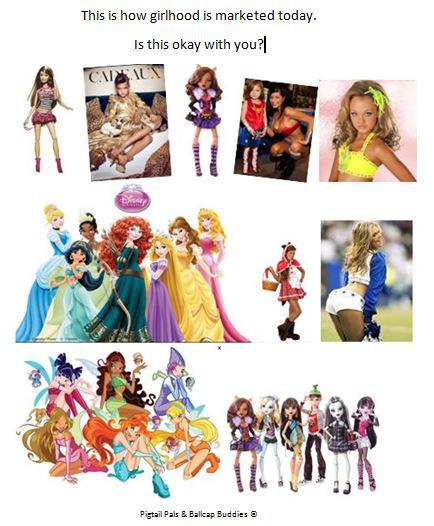
The bullying that happened to my daughter occurs in schools every day, and we all need to be doing more to stop it. Instead, we’re exacerbating it by buying into gender marketing sold to us by multi-national media companies and chain stores.
Whenever I blog or speak about gender segregating kids, I get the argument that it’s just “natural,” and if your kid happens to be the rare exception, she can “choose” another toy or T shirt if she wants. (Here I am recently responding to those arguments on Fox News but they are all over this blog as well.) How many kids have the courage to be the “exception?” And why has straying from pink or princess become an exception? How long until my daughter starts “choosing” the shoes that she’s supposed to wear and like, shoes that she doesn’t get teased for wearing? I’m stating what should be obvious here: When one type of product is aggressively marketed to boys, and another type to girls kids don’t have a choice.
The retailer today confirmed that they would draw up a set of principles for in-store signage meaning that, in the long-term, explicit references to gender will be removed and images will show boys and girls enjoying the same toys. They promised to start by looking at the way toys are represented in their upcoming Christmas catalogue.
I was talking to a teacher friend recently who said that 10 or 15 years ago, if she asked her Kindergarten class what their favorite colors were, she heard many different answers. Now, she still hears the boys name many different colors, but the girls almost all say pink…
Creativity is not icing on the cake. It is the cake.
Artists have a false reputation of being neurotic, pessimistic, and depressed. But artists, if they are depressed, create in spite, not because of depression. I wrote a blog about this controversial view presented in the book Against Depression by Peter Kramer. His whole theory is basically this: Creating consistently requires a sense of optimism. You’ve got to believe there is a way to tell your story or paint your picture. It makes sense. You’ve got to be resilient. Your plot is going to fall apart hundreds of times, and you’ve got to figure out a way to put it all together and make it work.
The grievance story is something that you, the “victim,” repeat over and over in your head. The way to forgive, to move on, is to tell a new story where you are the hero.
In anger management, you learn the same thing. The feeling of anger lasts 90 seconds. 90 seconds. Please check out this amazing video about the teen brain where Neuroscientist Jill Bolte Taylor says the same thing. So what keeps the anger going for hours, days, years, a lifetime? The story you tell yourself about the event. That is where you can intercede and step in. Change the story. Become the hero, not the victim.
Creativity — our ability to invent, conjure, envision, think divergently, and change the status quo — is essential to a thriving democracy and is rooted in children’s creative play.
I was talking to a teacher friend recently who said that 10 or 15 years ago, if she asked her Kindergarten class what their favorite colors were, she heard many different answers. Now, she still hears the boys name many different colors, but the girls almost all say pink…
Doesn’t that suck? A classroom of girls and all the colors in the world, and this is what they say? What are the longterm affects of groupthink in little kids?
I keep asking on Reel Girl: Why do parents put up with the gender stereotypes marketed to little kids? At least with “progressive,” urban parents, those in my world, I think a major reason is that they believe it’s just a phase, so harmless. Kids will grow out of loving pink or loving princesses. But kids who learn groupthink instead of creativity will have a harder time thinking independently. And I mean really independently, not reactively, which is just another form of groupthink. Again, you’ve got to watch Taylor’s teen brain video.
On developing brains, psychologist/ author Stephen Mitchell writes in one of my favorite books ever, Can Love Last?:
However, the traditional dichotomy of nature versus nurture that has dominated Western philosophy and psychology has been profoundly challenged by recent advances in neurophysiology. The stratification model of human experience, nature versus nurture– was predicated on the assumption that human biology was a complete package at birth…
The brain of the newborn, we now know, is only partially developed. Nerve cells and neural pathways are incomplete at birth; they are shaped to a considerable extent by the baby’s experience with others.
Mitchell is echoed by neuroscientist Lise Eliot, author of Pink Brain, Blue Brain. She writes:
“Babies are born ready to absorb the sounds, grammar, and intonation of any language, but then the brain wires it up only to perceive and produce a specific language. After puberty, its possible to learn another language but far more difficult. I think of gender differences similarly. The ones that exist become amplified by the two different cultures that boys and girls are immersed in from birth. This contributes to the way their emotional and cognitive circuits get wired.”
Both Mitchell and Eliot support the idea that humans are born into the world with “potentials.” Qualities humans are designed for can “turn on” or “emerge.”
These ideas on brain development take on the basic assumptions of Enlightenment, the driving theory behind the last century, which Mitchell summarizes as “a correct, rational, scientific, fantasy-free way to understand the world.” Mitchell summarizes the Enlightenment world view into three basic assumptions:
(1) All genuine questions have answers
(2) All true answers are discoverable and teachable to others
(3) All answers are in principle compatible
Mitchell describes reality, or realities, instead where fantasy and reality continually create each other. He writes:
It is the hallmark of the shift in basic psychoanalytic sensibility that the prototype of mental health for many contemporary psychoanalyitc authors is not the scientist but the artist. A continual objective take on reality is regarded as neither possible nor valuable in contrast to the ability to develop and move in and out of different perspectives of reality.
I’m not a scientist. I’m a writer and a mom, and I’m appalled by what people are calling “natural.” In the future, people are going to look back on this time and be mystified by what we did to little kids.
Here’s a great tip to inoculate your daughter against internalizing the barrage of criticism about her appearance. If that critical voice gets trapped and trained in your kid’s head and wiring, it becomes a bad habit that, like any addiction, is difficult to break. I got this tip from Melissa Wardy of Pigtail Pals, and so far, it works really well. I can see my kids using it.
Tell your daughter that you use a mirror to see if you have food on your face or something like that. You don’t look in the mirror to see if you are beautiful. Beauty is a feeling that comes from within you, and a mirror can’t give you that. Let your daughter see you use a mirror this way as well.
Repeat this lesson as often as necessary. It’s basic but effective.
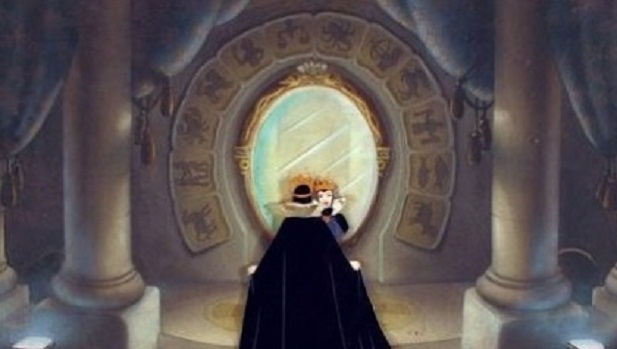
Extra tip: If your daughter protests or seems confused, which she may not, explain that the correct way to use a mirror is the exact opposite of how the wicked queen relied on it in “Snow White,” asking “Who is the fairest of all?” Explain how the Queen’s misuse of the mirror, her dependence on its voice instead of her own, sapped her power and helped to cause her downfall.
“As of today, Disney has quietly pulled the 2D image of Merida from its website, replacing it with the original Pixar version. Perhaps we’ll be spared an onslaught of sexy Merida merchandise yet.”
I guess Disney was right to be so terrified of creating a strong, BRAVE, female protagonist (along with Pixar studios which hadn’t had ANY female protags before “Brave.”) It looks like Merida could be turning Disney’s franchise on it’s head. That’s pretty damn heroic.
Another mistake Disney made with “Brave?” They hired a female director. They fired her, but it was too late. Brenda Chapman wrote “Brave” based on her daughter. She was furious with the character’s transformation and wrote publicly about Disney’s terrible mistake.
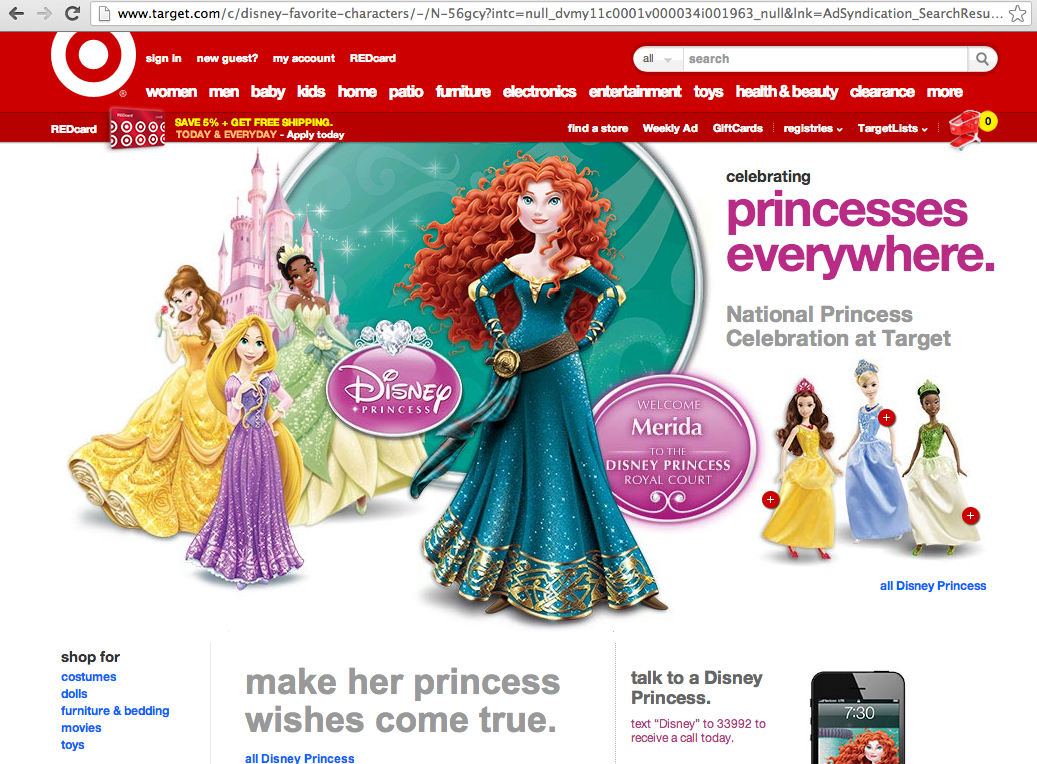
That’s right: Although Merida was created by a woman as a role model for girls, the male-dominated consumer product division at Disney has ignored the character’s intended benefits for young girls, sexualizing her for profit. Compared with her film counterpart, this new Merida is slimmer and bustier. She wears makeup, and her hair’s characteristic wildness is gone: It has been volumized and restyled with a texture more traditionally “pretty.” Furthermore, she is missing her signature bow, arrow, and quiver; instead, she wears a fashionable sash around her sparkly, off-the-shoulder gown. (As Peggy Orenstein noted when she broke the news of the redesign, “Moms tell me all the time that their preschool daughters are pitching fits and destroying their t-shirts because ‘princesses don’t cover their shoulders.’” I’ve heard the same from parents, as well.)
Is the sexualized image of Merida gone for good? Has Disney learned a lesson? Or will that lesson be: No more strong female characters leading a film! No more female directors writing about their daughters! Keep the females weak and quiet!
Objectifying and sexualizing girls is dangerous. A first step to abuse is always dehumanizing the victim. Propaganda, in the form of images and narratives, effectively dehumanizes on a mass scale.
Images/ narratives of Jews circa 1938
Africans circa 1931
Females circa 2013
It’s easy to look back on history and wonder: How did people ever put up with that? I’d never buy into it, not to mention expose my child to it. But what are you participating in right now that is completely accepted, not to mention celebrated, by our culture?
Be part of the solution. Demand narratives with strong female characters for your kids.
Update: New Merida may be off Disney’s site but she’s showing up all over the place including Target. Below is Target’s web page.
A few days ago I posted about the lack of female leadership at Andover, and how exposure to this kind of sexism in high school can affect kids for a lifetime.
This week, two stories are in the news about high school girls taking a stand to make a difference in their schools and their communities. Both girls are in power positions, one as a journalist and the other a student body vice president.
Lisie Sabbag writes for the Palo Alto High School magazine Verde.
Wanting to investigate the teen rape issues that gained national attention from the Steubenville story, Sabbag wrote about sexual violence in her hometown, the wealthy community of Palo Alto.
“I interviewed almost 10 different rape survivors, all from Paly. Most of them when they found out I was writing about it came up to me and said they wanted to help out. The two stories I used were very representative….
Teen boys are expected to take advantage of the opportunities at all costs, or else face the ire of their friends, according to Amy, a senior who has experienced this first-hand.
“They [Paly guys] would say, ‘Oh you didn’t want to have sex with her because she’s drunk? You’re such a fag,’” Amy says. “Not that that’s excusable, but there is just as much pressure on guys to have sex and f— everything that moves as there is on girls to be that girl that sleeps with them.”
In West Virginia, Katelyn Campbell, the student body vice president at George Washington High School, refused to attend a school assembly hosted by conservative speaker Pam Stenzel.
Stenzel has a long history of using inflammatory rhetoric to convince young people that they will face dire consequences for becoming sexually active. At GW’s assembly, Stenzel allegedly told students that “if you take birth control, your mother probably hates you” and “I could look at any one of you in the eyes right now and tell if you’re going to be promiscuous.” She also asserted that condoms aren’t safe, and every instance of sexual contact will lead to a sexually transmitted infection.
Campbell refused to attend the assembly, which was funded by a conservative religious organization called “Believe in West Virginia” and advertised with fliers that proclaimed “God’s plan for sexual purity.”
Campbell says that her principal, furious with her, threatened to call the college where she had been accepted, Wellesley, to say that she was a “back stabber” with a “bad character.” Refusing to be silent or back down, Campbell filed a complaint with the ACLU and is speaking publicly about her story.
What happens when girls don’t become elected officials or journalists in their schools? Which stories remain hidden and what issues never come to light?
What happens when girls have the courage to tell the truth about what they see, experience, what they think is important and what’s really going on in their lives?
Females are half of the population. They ought to hold 50% of power positions in their schools. When girls are invisible, all kids lose out.
In short order, the number of girls in the student ranks did roughly equal the number of boys. The faculty today is more than half female. And until her retirement last summer, the head of school was a woman, for nearly two decades.
And yet some of the young women — and men — at the 235-year-old prep school feel that Andover, as it is commonly called, has yet to achieve true gender equality. They expressed this concern several weeks ago in a letter to the student newspaper, The Phillipian, and like a match to dry tinder, it set off a raging debate that engulfed the campus.
The proximate cause of concern was the election, held Wednesday, for the top student position, called school president. Since 1973, only four girls have been elected, most recently in 2003. (The other top student position, that of editor in chief of the newspaper, has had nine girls and 33 boys.)
The letter writers said this was an embarrassment, especially at a school considered so progressive. The paucity of girls in high-profile positions, they said, leaves younger students with few role models and discourages them from even trying for the top.
When I went to boarding school, in 1983 at St George’s in Newport, Rhode Island, there were 5 school prefects: 4 males to 1 female. The same ratio I would write about thirty years later on this blog posting on sexism in children’s films, calling it the Minority Feisty. I don’t think that’s a coincidence. As a thirteen year old girl, I remember thinking about how hard it was for females to become leaders. Out of that group of 5 prefects, there was one “Senior Prefect.” There had never been a female Senior Prefect when I went to St. George’s. I don’t know if there’s been once since.
My sister, a year and a half older than me, went to another boarding school, Groton. That school also had never had a female Senior Prefect. After my sister graduated, Groton started a policy that students had to elect one male and one female Senior Prefect. The first female Senior Prefect of Groton appears in a fictionalized version in Curtis Sittenfeld’s book Prep. If you read Prep, you can see how Sittenfeld struggled with and was influenced by the gender politics of boarding school. I’m happy she had the courage to write a book about it.
What else do I remember about prejudice and boarding school? Boys sitting on a bench and rating girls who walked by from 1 – 10 on how hot they were. Dressing up as a bunny, along with all of the other new girls, including fishnets, ears, and a tail on “Casino night.” Being called “nappy face” by a boy because I had big lips and not knowing what that meant. Feeling exotic because I had dark hair. Learning the word “spearchucker” for the first time when one of the tiny minority of African-Americans was mocked.
I came from a rich family but, still, from the left coast of San Francisco. I was amazed by the gender roles I saw kids my age on the East coast fall so easily into, even the minor rituals. As I rushed to class, all the boys opened doors for me. Every single male had the elastic waistbands of his boxers peeking out above his khaki pants. It seemed like all of the leadership positions were held by boys. If you got their approval, you had it made.
My best friend and I desperately wanted attention and validation from of any one of those male prefects. Here’s our misguided quest referenced in the yearbook with the caption “Todd’s toys,” referring to one of the elected school leaders.
For his senior bequeath in the same yearbook, Todd got “a twenty year sentence,” the penalty for sex with a minor. Just a joke, of course.
The New York Times reports:
John G. Palfrey Jr., the headmaster, said in an interview that Andover was only a reflection of other schools and society at large as it grappled with these issues. “We do not live in a post-gender, post-race, post-class society,” he said. “Girls have not had equal access to top leadership positions.”
What’s telling about boarding school is that it doesn’t reflect the power structure at all levels of society. Boarding school reflects the sexism that exists at the very top. When parents are considering sending their kids to get the “best” education available, they may want to think about whether or not they want to pay that kind of money so their kids can be exposed to that level of sexism that young.
For myself, I’m grateful I couldn’t follow the rules and was expelled my sophomore year.
Here’s the letter the students wrote to the Phillipian:
Letter To The Editor
Friday, March 1st, 2013
To the Editor:
A powerful silence hangs over our student body. This silence pervades our halls, our dorms and our classrooms, and it affects the very nature of leadership among our students.
This letter is meant to break that silence, once and for all.
Student Council recently made a significant structural change by implementing the new copresidential system. There are many explanations for this change, but one of the primary factors was the staggering gender imbalance in the student leadership of the past 40 years.
This gender inequity is a critical issue we face as a student body. Andover students like to subscribe to the myth that we are the best, the brightest and the most forward thinking students in the world. The past four decades, however, evidence the shortcomings in our beliefs. Having four female school presidents since the 1973 merger of Phillips Academy and Abbot Academy is embarrassing.
What is worse, however, is the casual attitude surrounding this issue. The arguments behind these trends, which include, “Perhaps the students just wanted a male president,” “Andover is a meritocracy—if a girl deserved it, she would win” and, of course, the omnipresent “But there isn’t a gender problem at this school,” are simply ignorant.
Students have not elected female leaders because female candidates have been in short supply. Last year, only two out of the 14 candidates were female. Strong role models create a positive cycle through which young students, male or female, are inspired to become role models themselves. Boys have myriad opportunities to look up to the established, visible—and male—student leaders at this school. Sadly, our current female students lack these public figures. They have not seen a female student body president. In fact, there has not been a female in that office since 2004. Our future leaders of both genders have yet to see a woman lead the Student Council—that fact works to the detriment of boys and girls alike.
Since conversations about the Student Council change focused significantly on gender inequity, we were dismayed that some students running for the most public student role on campus chose not to seize the opportunity to address this issue. For students to take the issue of gender lightly, or worse, to ignore it, will only further exacerbate the problem and ignore the proverbial elephant in our collective room. Candidates should embrace a paradigm shift toward more equal representation in the school’s Student Council.
To the student body: this election season presents us all with an opportunity for immediate change. As younger students begin to assume the responsibilities of every senior class, the future of our Academy must remain a primary concern. We charge you to think critically about the students you will select as representatives. Keep in mind long term consequences—the pair you select could set a precedent and break down any remaining barriers for both boys and girls to run in the future.
Let us truly live up to our forwardthinking ideals. Be empowered in the knowledge that you can be part of something monumental, something bigger than all of us. Make your vote count.
Written by:
MJ Engel ’13, Gabbi Fisher ’13, Samuel L. Green ’13, Maia Hirschler ’13, and Henry Kennelly ’13
Update: Since the learning about the sexual assaults at St. George’s when I was there, I’ve written more posts. Here’s a list of all of Reel Girl’s posts on St. George’s:
In defense of Sheryl Sandberg’s much maligned Lean In, I compared the book to No Excuses by former President of Planned Parenthood, Gloria Feldt. That book, which I read a couple years ago, has a similar thesis. It focuses on strategies that can help women succeed in the workplace, and it debuted with no feminist uproar.
Feldt responded to Reel Girl’s post:
Thanks for making the comparison between my book and Sheryl’s. You hit the nail on the head in many ways. I’d just like to say for the record that since my goal is to move women forward toward parity in top leadership positions, I’m thrilled that a woman like Sheryl in a powerful corporate position is so willing to say these things.
She and I have discussed that there is a need to be able to work in the system and to change it. I tend to come down more on the side of changing the system, but then movement building has been my career.
And I’m doing it again with Take The Lead (www.taketheleadwomen.com) if anyone wants to check it out and possibly hop on board to help us reach leadership gender parity by 2025.
Here is my comment back to Gloria.
Dear Gloria,
Thank you for your comment to Reel Girl. I’m grateful for your long career in helping women and happy that you wrote No Excuses whichI learned so much from. I appreciate your support of Sheryl Sandberg’s book, though in some ways, your email perpetuates a misconception about “sides” that I want to address. You write:
I tend to come down more on the side of changing the system, but then movement building has been my career.
There are no sides here. Women can’t change the sexist system if they the lack basic skills do so. This may not seem like a huge deal in your comment, but this schism is presented and replicated all over the media when discussing Sandberg’s book, just last Sunday again on “60 Minutes,” and it can be distorting.
In 1998, When I was 28, I cofounded the Woodhull Institute for Ethical Leadership to address this lack of skills and also, the class divide in feminism. So many young women, including me, had big dreams, but little idea as to the practical tools of how to achieve them. It was like we’d missed out on a basic training course that the men had taken.
Woodhull’s mission was to train women ages 22 – 35 in the skills they too often lacked. We saw this age period as crucial for women to lay the ground work for successful careers, a time where they needed support and training that they weren’t getting. There weren’t non-profits that focused on career development of this demographic, so we created Woodhull.
Modules at Woodhull included: media training, negotiation, advocacy, how to get published, financial literacy, how to write a business plan, and public speaking. Every Woodhull module included a component on ethics. There’s no point in becoming a leader if you can’t be an ethical one, give back, help people, and do your part to change the world for the better.
Woodhull ran into challenges raising money. Foundations wanted to give money to non-profits that served 100% inner city/ low income women. Even when 2/3 of Woodhull constituents came from inner city/ low income and were scholarshipped, foundations weren’t interested in that ratio. Woodhull didn’t want to adapt to funders, because part of the reason Woodhull was founded was to bridge the class divide. Women who came to Woodhull valued that diversity. Many said they had no other place to address class differences and similarities openly and to learn from each other. Again and again, we witnessed that young women, across the board, whether from the richest or poorest families, didn’t know basic financial literacy or had difficulty receiving applause without flinching.
Then and now, I’ve got to wonder: When women with access to money and power aren’t achieving, how does that affect all women? Where are women in power? Why are they so invisible? How can we change that? What happens when a rare woman gets to the top, writes a book about her view from up there, and gets attacked for it? As Gloria Steinem wrote, “Only in women is success viewed as a barrier to giving advice.”
You don’t get much more privileged by birth in America than me. My great-grandfather was Charles Merrill, the founder of Merrill Lynch. He was an early investor in Safeway stores, and my grandfather became CEO of that company, building it into the world’s largest supermarket chain. My father was also a CEO of Safeway until he left the company to buy the San Francisco Giants. I think that part of the reason I became a feminist so early is because in the world that I grew up in, the gender disparity was huge. Sometimes it seemed like all of the men were running the world and all of the women were dieting.
Following my college graduation, many of the privileged men I had grown up with went on to start their own companies, open restaurants, publish novels, and produce films. Most of the women I knew, who were smart, creative, and had a sincere desire to have a positive impact on society, took low-paying, low status jobs for big corporations or non-profits.
What I also noticed in these women, and not the men, and an issue that you address in No Excuses, was a profound ambivalence towards success and power, basically what it means to be successful and powerful as a woman in America. For all of these reasons, I founded Woodhull.
The class divide among women, whether it manifests as the stay-at-home vs working mommy wars or feminists against Sheryl Sandberg, is the major challenge keeping women from achieving parity. Even the foundation and non-profit worlds systemically reinforce this fatal gap. If women can’t bridge the class divide, we’ll stay stuck, but if we can overcome it, nothing will stop us.
I first saw the post “The Importance of Roughhousing with your kids” on the Pigtail Pals Facebook page, where I get much of my information. I wish Melissa Wardy were the editor of the New York Times, because the post she linked to is about a year old, and I’d never seen it, heard of it, or heard any of the information about roughhousing before I saw it on her page.
Helping your child develop a resilient spirit is one of the best things you can do as a parent. The ability to bounce back from failures and adapt to unpredictable situations will help your kids reach their full potential and live happier lives as adults. And an easy way to help boost your kids’ resilience is to put them in a gentle headlock and give them a noogie.
Roughhousing requires your child to adapt quickly to unpredictable situations. One minute they might be riding you like a horse and the next they could be swinging upside-down. According to evolutionary biologist Marc Bekoff in his book Wild Justice, the unpredictable nature of roughhousing actually rewires a child’s brain by increasing the connections between neurons in the cerebral cortex, which in turn contributes to behavioral flexibility. Learning how to cope with sudden changes while roughhousing trains your kiddos to cope with unexpected bumps in the road when they’re out in the real world.
This theory resonated with me because if I could define health in one word it would be “resilience” and sickness would be “stuck.”
Roughhousing as a positive influence for kids seems consistent with what Po Bronson wrote about years ago in Nurture Shock: New Thinking About Children. According to Bronson’s research, you don’t compliment the kid on the finished task, but on the effort. The most important skill for success and happiness is learning to tolerate frustration and learning to work through it. Rewarding the process, not the end goal. (Artists, are you listening?)
A similar thesis is presented in a new, popular book: How Children Succeed: Grit, Curiosity, and the Hidden Power of Character. The author, Paul Tough argues that the qualities that matter aren’t test scores, but emotional intelligence, skills like perseverance, curiosity, conscientiousness, optimism, and self-control.
Art of Manliness describes roughhousing as just that:
Additionally, roughhousing helps develop your children’s grit and stick-to-itiveness. You shouldn’t just let your kids “win” every time when you roughhouse with them. Whether they’re trying to escape from your hold or run past you in the hallway, make them work for it. Playtime is a fun and safe place to teach your kids that failure is often just a temporary state and that victory goes to the person who keeps at it and learns from his mistakes.
Remarkably, back to testing:
Psychologist Anthony Pellegrini has found that the amount of roughhousing children engage in predicts their achievement in first grade better than their kindergarten test scores do. What is it about rough and tumble play that makes kids smarter? Well, a couple things.
First, as we discussed above, roughhousing makes your kid more resilient and resilience is a key in developing children’s intelligence. Resilient kids tend to see failure more as a challenge to overcome rather than an event that defines them. This sort of intellectual resilience helps ensure your children bounce back from bad grades and gives them the grit to keep trying until they’ve mastered a topic.
In addition to making students more resilient, roughhousing actually rewires the brain for learning. Neuroscientists studying animal and human brains have found that bouts of rough-and-tumble play increase the brain’s level of a chemical called brain-derived neurotrophic factor (BDNF). BDNF helps increase neuron growth in the parts of the brain responsible for memory, logic, and higher learning–skills necessary for academic success.
I love this theory from a feminist perspective as well. I am so sick of hearing about “boy energy.” As I’ve written about extensively on this blog, girls are not intrisically quieter than boys. Boys’s roughhousing is tolerated, but girls are told to settle down and be quiet. They are rewarded when they do. I see this all the time, and I’m sure you do too. Not to mention ridiculous generalizations like girls are “artsy” and literary, quiet activities. Girls are “artsy” when its about construction paper and Elmers’ glue. If we’re talking great artists, paintings that sell for the most money, or shows at the MOMA, all of a sudden, it’s boys who are artsy. The same is true with “great” writers; wow, men are verbal! Who knew? Not to mention “cooking” becomes masculine when we’re talking about great chefs and who gets the most cooking shows and awards. “Masculine” and “feminine” qualities have everything to do with stereotypes and status.