What’s the difference between Gloria Feldt’s ‘No Excuses,’ and Sandberg’s ‘Lean In?’

A couple years ago, I read No Excuses: Nine Ways Women Can Change How We Think About Power by Gloria Feldt, the former CEO of Planned Parenthood. While reading the recent criticism all over the internet of Sheryl Sandberg’s new book, Lean In, I thought of Feldt’s similar book. I couldn’t remember a feminist backlash against that author. Was I remembering Feldt’s thesis incorrectly?

9781580053884

Here is how No Excuses is described on Amazon:

In No Excuses, feminist icon Gloria Feldt argues that the most confounding problem facing women today isn’t that doors aren’t open, but that not enough women are walking through them.


Whoaa– Feldt wrote about that? Did feminists freak out?


From the boardroom to the bedroom, public office to personal relationships, she asserts that nobody is keeping women from parity — except themselves.


OK, that’s not a true statement about the world, obviously, and having read the book, from what I remember, that is not what Feldt writes either. In the book, Feldt teaches women how to think about power in a different way in order to embrace it. For example, she talks about how women, having been on the bad end of the power spectrum for so long, often identify power negatively, as “power over,” as dominance. Feldt encourages women to, instead, look at power as “power to,” as competence.

The synopsis goes on:


Through interviews, historical perspective, and anecdotes, examines why barriers to gender equality still exist in American society and discusses how to break them down through organized efforts using movement-building principles.


Ah…this sentence seems seems more ambiguous than the last one. Barriers still exist. The book discusses how to break them down with organized efforts and movement building.

Feldt employs a no-nonsense, tough-love point of view to expose the internal and external roadblocks holding women back, but she doesn’t place blame; rather, she provides inspiration, hope, and courage — as well as concrete “power tools” to aid women in securing equality and justice for themselves — articulated with personal warmth and humor. No Excuses is a timely and invaluable book that helps women equalize gender power in politics, work, and love.


So does this thesis sound familar to you? Can you imagine if Sandberg called her book No Excuses? She’d be tarred and feathered, which she basically has been, in our contemporary way. Sandberg was quoted out of context in the New York Times and Washington Post, not to mention all over the internet, to make her seem like a selfish bitch.

The Washington Post piece is headlined:

Sheryl Sandberg’s ‘Lean In’ campaign holds little for most women

Here’s the lede:

”She had it all — a husband, children, a beautiful home, a seat on the board of a billion-dollar company, a nine-figure net worth of her own. But there was one thing Sheryl Sandberg didn’t have. “I always thought I would run a social movement,” Sandberg said in the PBS/AOL documentary series “Makers.”

But Sandberg wasn’t actually saying she wrote a book because she wants a new toy. Her quote is from a documentary, “Makers,” when she was being interviewed about her career. Sandberg explained that she always thought that she would work at a non-profit and not in the private sector. Here’s the full quote:

I always thought I would run a social movement, which meant basically work at a nonprofit. I never thought I’d work in the corporate sector.

The New York Times printed a correction. The Washington Post has not.

As Gloria Steinem wrote on her Facebook page in her defense of Sandberg: “Only in women is success viewed as a barrier to giving advice.”

In the Guardian today, Jill Filipovic addresses the backlash:

Sandberg did what feminists are always asking powerful women in business and politics to do – stand up for gender equality – which is why it’s so disappointing to see many in the feminist camp essentially telling her to shut up and sit down.

Feldt started out as a teen mom from rural Texas. Most of us know Sandberg as a rich exec at Facebook. So is class bias a good reason to determine that Sandberg has nothing to say to help America’s women?  On the contrary. Didn’t anyone just watch “Makers” for goodness sake? History has shown that when feminism can’t overcome its own prejudices, the move forward is much slower than it needs to be.
 

My daughters get inspired by Harry Potter

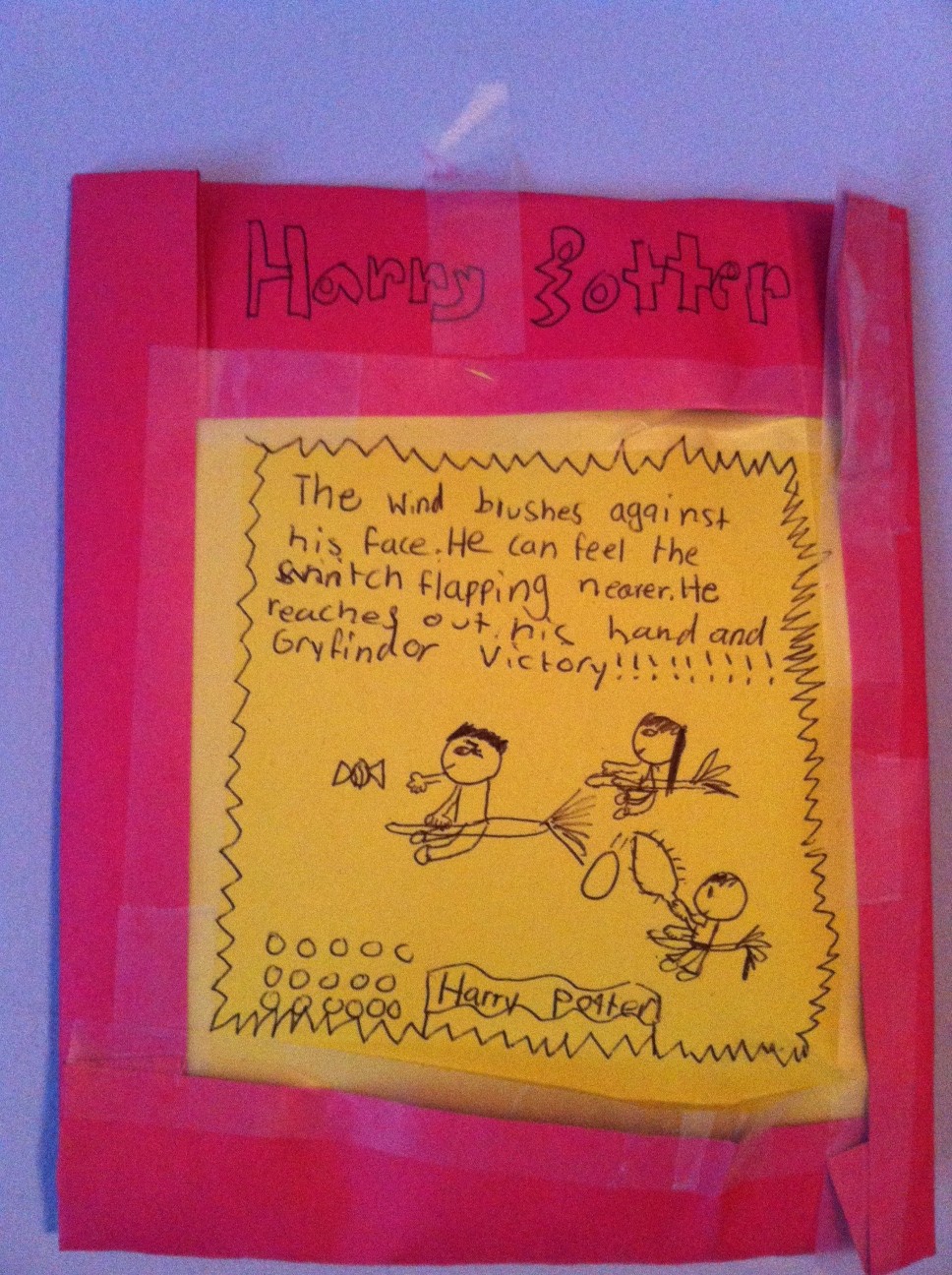
When my nine year old daughter was reading the Harry Potter series for the third time this year, she drew this picture: harrylucy

This scene didn’t happen in the book but she was inspired by the book.

Lucy’s drawing shows a typical gender matrix you see all over children’s media: 2 boys, 1 girl; boy in front, girl behind; text supports male competition and victory.

Last year, when she was asked to write a story during school, Lucy used a male protagonist. When I asked her why she chose a male, she said, “Because everybody did.”

Can you imagine if in a class of third graders, every kid wrote about about female protagonists? Do you think the teacher would notice?

I just blogged about how my six year old daughter has started reading Harry Potter. Last night, we took turns reading to each other. We are at the part in the book where Harry is with Hagrid, shopping for his first broom in Daigon Alley. Alice, like Lucy, was inspired to create her own scene.

witchphoto

She made up this character, a witch and her cat soaring through the sky on a broom surrounded by many crescent moons. I was pretty psyched about this witch, but then again, we’re only on Book 1. Do you think it’s possible to get through this wonderful series, not to mention her childhood, with her still drawing magical, powerful females, and putting them front and center in her stories?


Gloria Steinem gives thumbs up to Sheryl Sandberg’s ‘Lean In’

Today, in response to the massive criticism from feminists and others that Facebook exec Sheryl Sandberg is too privileged to give career advice to women, Gloria Steinem posts on her Facebook page:

Having read “Lean In” by Sheryl Sandberg, I can testify that it addresses internalized oppression, opposes the external barriers that create it, and urges women to support each other to fight both. It argues not only for women’s equality in the workplace, but men’s equality in home-care and child-rearing. Even its critics are making a deep if inadvertent point: Only in women is success viewed as a barrier to giving advice.


gs

YAY Gloria. I fucking love Gloria Steinem.

I haven’t read “Lean In” yet, and I don’t know much about Sandberg, but the vitriol directed at her has rubbed me the wrong way. Maybe Sandberg’s advice won’t apply to you, won’t help you, and won’t affect you, but maybe, it will. Here’s a woman who is writing a book telling you how she got to the top, what it looks like up there, and what her advice to you would be. Not many women get that vantage point, not to mention write about it. Maybe the negative reaction to Sandberg’s book is part of the reason why. This book is based on her experience. Maybe she sounds a little controlling in her directions about how you should apply it to your life. But you’re a big girl. Use your discretion.

sandbergl

If your fear is that, as I’ve read, that companies, elected officials, whomever, will quote Sandberg to prove the problem here is all women’s fault, and not institutionalized sexism, they might. People often misuse information and take quotes out of context to further their own purpose. Do you think any writer would be able to write anything if she had to analyze all of the ways that someone might manipulate and misuse her information? If Sheryl Sandberg had to do that, she’d never write a book. No one would.

I will be buying “Lean In” and after I read it, I’ll let you know what I think. I hope you do the same.

Update:

The New York Times and The Washington Post quoted Sheryl Sandberg out of context, making her look like a spoiled brat. The New York Times printed a correction. The Washington Post has not.

The quote, printed in both publications and then all around the web, has Sandberg saying: “I always thought I would run a social movement.”

Obnoxious, right? The woman who has everything now wants a social movement as her new toy. How pretentious and demeaning of the little people can you get? What a bitch.

The Washington Post piece is headlined:

Sheryl Sandberg’s ‘Lean In’ campaign holds little for most women

Here’s the lede:

”She had it all — a husband, children, a beautiful home, a seat on the board of a billion-dollar company, a nine-figure net worth of her own. But there was one thing Sheryl Sandberg didn’t have. “I always thought I would run a social movement,” Sandberg said in the PBS/AOL documentary series “Makers.”


While checking the links for the blog above, I noticed a correction had been added to the two (Jodi Kanor’s and Maureen Dowd’s) NYT pieces. Here it is.

This article has been revised to reflect the following correction:

Correction: February 26, 2013

An article on Friday about efforts by Sheryl Sandberg, the chief operating officer of Facebook, to start a national discussion and movement to help women excel in the workplace quoted incompletely from an interview she gave for “Makers,” a new documentary on feminist history. In a video excerpt, which accompanied the article online, she said: “I always thought I would run a social movement, which meant basically work at a nonprofit. I never thought I’d work in the corporate sector.” She did not merely say, “I always thought I would run a social movement.” Maureen Dowd’s column on Sunday, about Ms. Sandberg’s plans, repeated the incomplete quotation from the news article. The article also referred imprecisely to the location of a book party planned for Ms. Sandberg. While Mayor Michael R. Bloomberg will host the party, he will do so at the offices of the Bloomberg Foundation, on East 78th Street — not at his private residence a block away.

Ah, Sandberg wasn’t saying she wants a new toy. When she was being interviewed about her career, she explained that she always thought that she would work at a non-profit and not in the private sector.

Still, apparently, the Washington Post feels no need to make a correction to the article.

It’s ironic that feminists and social activists are so concerned that quotes from Sandberg‘s book will be misused and pulled out of context, yet that’s just what they’re doing all over the internet to Sandberg.


Reel Girl Recs: First Chapter Books

First grade is amazing. My six year old daughter, Alice, began this school year slowly sounding out words in picture books. Now, she saves those to read aloud to her enraptured little sister and then reads Harry Potter to herself.

alice

That said, after spending her entire life in picture books, Alice was tentative to make the transition to chapter books. It wasn’t about skill but familiarity. Here’s the good and the bad history in books of how she did it:

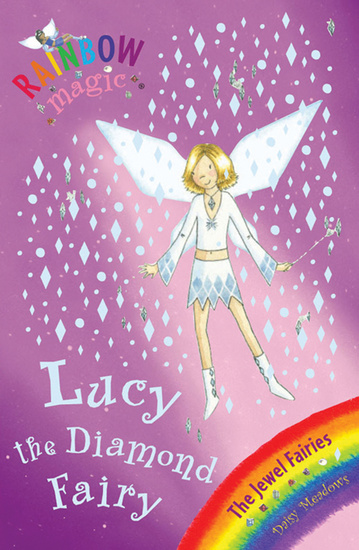
Rainbow Magic Series  ***S***

This was the first chapter book my daughter picked up. I thought I purged the house after my older one grew out of this series, but apparently I did not.

diamond

There are so many damn books in this series that I missed about 10. How did my older daughter acquire so many? All I can say is it happened before I knew better. Generally, I don’t forbid books. I may roll my eyes at a selection. I did refuse to let my eight year old read Twilight but mostly, I “highly encourage” books that I think would be great for them, and they would love and try to ignore the rest. So what did my six year old daughter do when I told her for one too many times she was ready to start chapter books? She picked up Lucy, the Diamond Fairy and brought it to be, beaming, knowing I would cringe. I caved. She read.

To learn more about how and why I hate this series and a few things that are OK about it, read here.

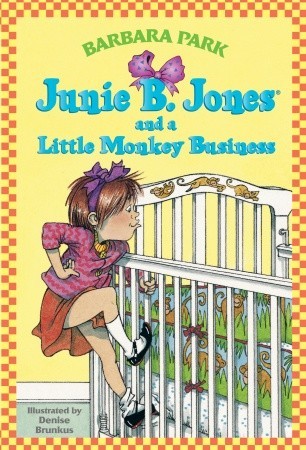
Junie B. Jones  ***HH***

I’m not a fan of Junie B. either. She is super annoying and talks baby talk. I hate baby talk.

junieb

But the print is big, the stories are simple, and my daughter felt accomplished finishing the book. Parts of it are funny. Alice liked it okay. And, I’d rather her read about a brat than a navel baring Fairy who goes on about her outfit for pages. My daughter got through three of this series and then she went on to…

Judy Moody ***HH***

Judy Moody has a similar lay out of print size, book length, and illustration as Junie B.

judy

I like Judy more than Junie. Thankfully, so does my daughter. I was kind of bored by these books, I like more drama. Alice also read a couple and then moved on to…

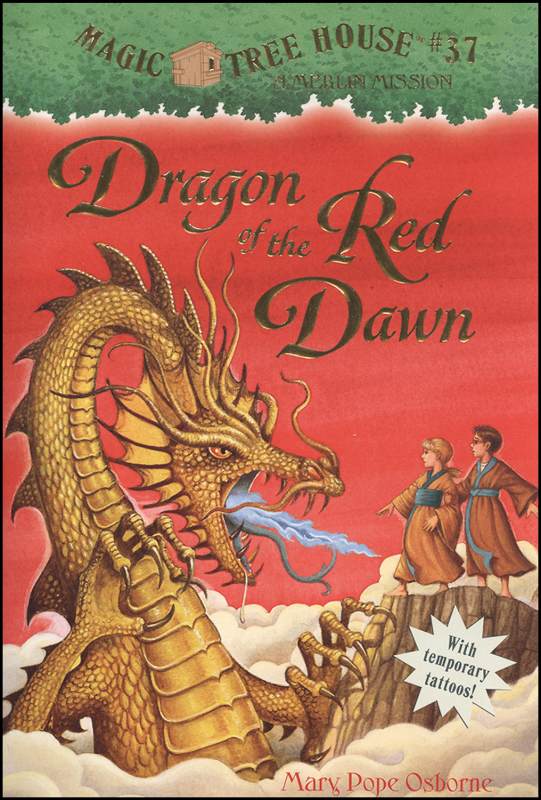
Magic Tree House ***HH***

If your new reader likes Magic Tree House, you’re in luck. There are so many of these books, and the kids always travel to a different place and time.

treehouse

There is a lot of history woven into the stories, and of course, magic. I like these books a lot, though being me, it does bum me out that it is always “Jack and Annie” and never “Annie and Jack.” I mean, we’re talking hundreds of stories, can’t the girl come first at least half the time? When my older daughter got into this series, I was overjoyed and blogged about it here.

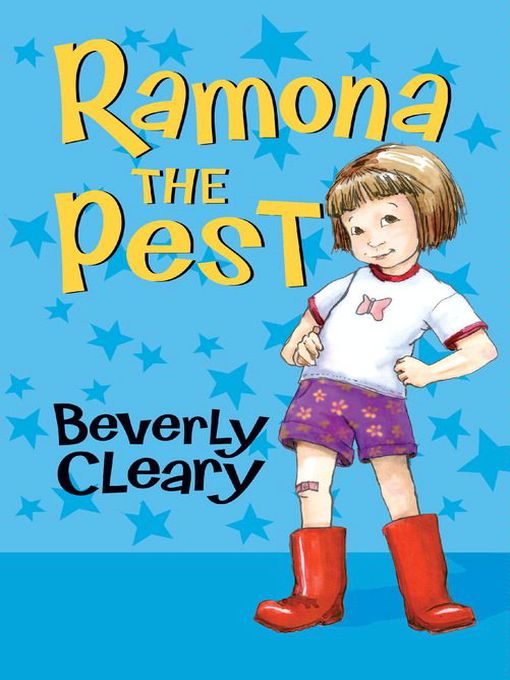
Ramona the Pest ***HHH***

I love Ramona.

ramona

The writing is great and the characters are awesome. This series is a jump from the previous 4: smaller print, longer, and more complex, IMO.

I think the only think I don’t like about this series is that Ramona thinks her brown hair and brown eyes are boring. If this was one book of many that had that theme, I wouldn’t have an issue, but dark haired girls don’t fare well in children’s media, from Rapunzel who literally loses her magic and power when her hair turns brown, to Ramona. Alice has two blue-eyed, blonde sisters, so its even more of a bummer to read about how Ramona is obsessed with other peoples hair. And no, it’s not something my daughter relates to, because she’s never felt like there is anything less good about brown hair. So that’s my tirade about hair. Otherwise, great series, read what I wrote about it here.

The Magic Half **HHH***

After Ramona, my daughter made the jump to The Magic Half.

magic-half-annie-barrows

This is a full on next level book and she plowed through it. I did not read it, but here is the synopsis from Amazon:

Miri is the non-twin child in a family with two sets of them–older brothers and younger sisters. The family has just moved to an old farmhouse in a new town, where the only good thing seems to be Miri’s ten-sided attic bedroom. But when Miri gets sent to her room after accidentally bashing her big brother on the head with a shovel, she finds herself in the same room . . . only not quite.
Without meaning to, she has found a way to travel back in time to 1935 where she discovers Molly, a girl her own age very much in need of a loving family. A highly satisfying classic-in-the-making full of spine-tingling moments, this is a delightful time-travel novel for the whole family.
Based on the rec of Alice and Lucy, I rated it 3 Hs
And that brings us to…
Harry Potter, the Sorcerer’s Stone ***H***
YAY. If you want to know how I feel about the series, begin here. My daughter loves the book so far, especially the way Hagrid talks.
harry


J.R.R. Tolkien heavily influenced by obscure female writer?

Ever heard of Marie Corelli? She was a best-selling British novelist whose books sold more copies than the sales of contemporaries Sir Arthur Canon Doyle, H. G. Wells, and Rudyard Kipling combined.

corelli

In a remarkable essay in the Los Angeles Review of Books, U.C. Berkeley Ph. D. candidate Lili Loofbourow gives extensive evidence that J.R.R. Tolkien was heavily influenced by Corelli. Reading her essay, passages of The Hobbit look like plagiarism.

Here Loofbourow compares Corelli’s Thelma to Tolkien’s Gollum:

“Thelma begins with the adventurous Lord Errington, who takes it upon himself to stalk a chaste Scandinavian maiden named Thelma after seeing her emerge mysteriously from a cave. He makes his way to the cave after she leaves. There he finds the dwarf Sigurd, whose entrance is Gollum-like in the extreme:

[W]ith all [Errington’s] bravery, he recoiled a little when he first caught sight of the extraordinary being that emerged from the darkness — a wild, distorted figure that ran towards him with its head downwards, bearing aloft in one skinny hand a smoking pine-torch, from which the sparks flew like so many fireflies. This uncanny personage, wearing the semblance of man, came within two paces of Errington before perceiving him; then, stopping short in his headlong career, the creature flourished his torch and uttered a defiant yell.

Sigurd is described as a scarred, misshapen being, “not quite four feet high, with large, ungainly limbs out of all proportion to his head, which was small and compact […] from under his shaggy brows gleamed a restless pair of large, full, wild blue eyes.” In The Hobbit, Tolkien describes Gollum as

a small black shape […] moving with its thin limbs splayed out […] now and again it lifted its head slowly, turning it right back on its long skinny neck, and the hobbits caught a glimpse of two small pale gleaming lights, its eyes that blinked at the moon for a moment and then were quickly lidded again.


The similarities are not only in the structure of the story, but in Sigurd and Gollum’s language. Here is Sigurd:

“Now follow me! Sigurd knows the way! Sigurd is the friend of all the wild waterfalls! Up the hills, — across the leaping stream, — through the sparkling foam!” And he began chanting to himself a sort of wild mountain song.


Sound like anyone you know? Loofbourow writes that the personalities of Sigurd and Gollum are strikingly similar. Both are excellent hunters and woodsmen. She goes into more detail in her essay of the extensive correlations. So why have we never heard of the startling connection between Tolkien and Corelli? Loofbourow asks the same question:

Given how extensive the parallels are between Sigurd and Gollum, it’s hard to understand how they could have gone unnoticed until now. Much as I’d like to claim credit for being an exquisitely sensitive reader, it’s almost impossible to encounter Sigurd without seeing Gollum. And yet no one, to my knowledge, has made the connection before.


Wow, and all this time, I thought “women can’t write fantasy.”

Here’s another question for you: Have you heard of Loofbourow’s Los Angeles Review of Books essay? This scholar deserves massive media attention.

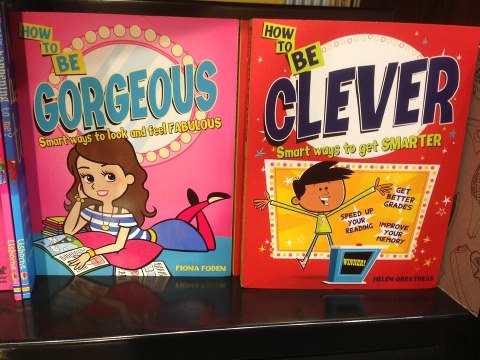
Harrods removes sexist books marketed to children

YAY for us, social media, and kids everywhere:

This from Harrods via Let Toys Be Toys For Girls And Boys

“Good Morning! Please be advised that the children’s books that many of you have tweeted us about have been removed from our shelves…

We would like to apologise for any offence caused and assure you all that these books will no longer be sold at #Harrods.

In case you didn’t see it, here’s the display:

gorgeous

Confiscated contraband: 6 reading lights

My daughter has been waking up super cranky in the morning, so last night when we put her to bed, we unclipped her reading light. An hour later, my husband went down to check on her and found her with a flashlight. Back again, he removed 2 more lights. This is what I saw on the kitchen counter this morning. She’d managed to get her younger sister’s clip on light as well. I have no idea how she acquired light #6. Yet another reason to be pissed off at her partner in crime, Rick Riordan…

lights

Anne of Green Gables gets a blonde makeover

WTF? I just posted about the offensive chicklit makeover for Plath’s Bell Jar that I saw on Jezebel and didn’t realize, it was only the beginning! They are fucking with the great heroines of YA who we already don’t have enough of. How can they go back and mess up those we love just in time for our children to read about them? Publishers gave Anne of Green Gables a blonde makeover.

anne

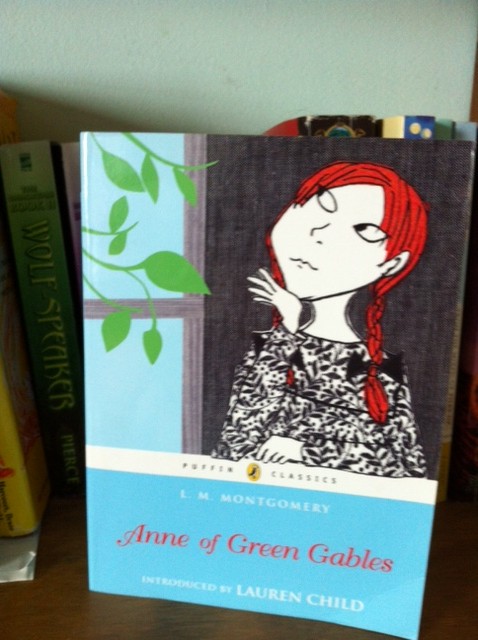
Thankfully, here’s my nine year old daughter’s edition, bought last year and waiting for her on the bookshelf:

AGphoto

This is Anne! Looking out of the window, thinking, wondering about the world! Not smiling coyly for some invisible admirer (my daughter?) The edition above is illustrated by the amazing Lauren Child of Charlie and Lola fame. Child also illustrated our edition of Pippi Longstocking.

How could they do this to Anne?

As Jezebel writes, the publisher chooses “to ignore that Anne had red hair—which was such an important part of the book. She had red fucking hair!”

Sadly, we’re not done yet with this retroactive sexism. Now, for Virginia Woolf:

woolf

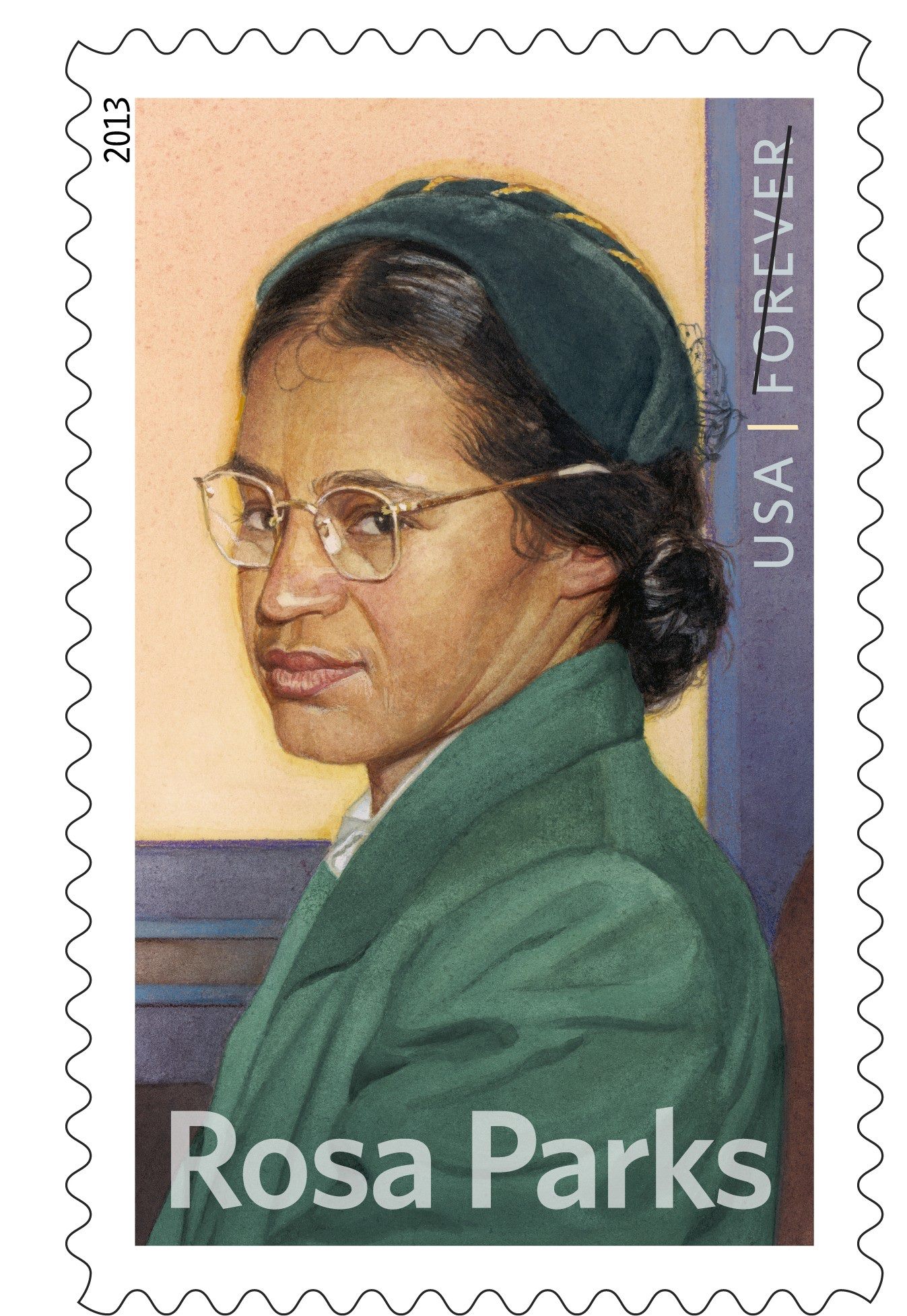
Sorry, even that Rosa Parks stamp can’t make me feel better about this travesty.


Want to see a messed up book cover?

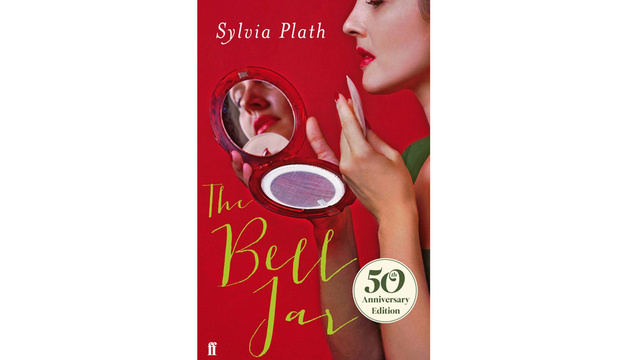
I just blogged about the book covers from Rick Riordan’s fantasy series where girls go missing. Today, on Jezebel, believe it or not, I saw an even more distressing book cover: the new 50th anniversary edition of Sylvia Plath’s The Bell Jar.

belljar

Do you think the ghost of Ted Hughes could be haunting Britian’s Faber publishing house? It seems like only he could’ve come up with something so distorted to cover Plath’s work.

Jezebel comments:

For a book all about a woman’s clinical depression that’s exacerbated by the suffocating gender stereotypes… it’s pretty fucking stupid to feature a low-rent retro wannabe pinup applying makeup.

Couldn’t agree more.

Total bummer, but I’m going to leave you feeling slightly better about depictions of women in good old America in 2013. Here’s a very cool new stamp celebrating Rosa Park’s 100th birthday:

rosaparks


Rick Riordan and the persistence of the Minority Feisty

My nine year old daughter is tearing through the Rick Riordan books for the third time. Third time. She’s obsessed. She reads them at breakfast and then in the car on the way to school. She’ll forget the book at school and beg me to go to the bookstore down the street and buy her another because she can’t imagine getting through the night without huddling under her covers, reading, with her flashlight. Of course, I refuse, so she calls up her seven year old cousin who is also addicted and asks to borrow it. She won’t give it up because she’s reading it.

Middle Grade experts recommended that I read Rick Riordan since I am writing an MG book and he has “perfect pacing.”

I read the first three and liked them very much. The characters and stories are compelling, and I’ve always loved Greek Mythology, though there is a challenge for female characters in a series based on legends of a patriarchy. That patriarchy is not something in the background but an integral part of the narrative. In the three books I read, there is a lot of talk about “the big three:” Zeus, Poseidon, and Hades. When I blogged about Lightning Thief, I rated it ***H***.

There is a strong female character, Annabeth. It is striking how similar the gender ratio and relationships are to the Harry Potter series: two boys and a girl who are BFFs. This is the essence of the Minority Feisty set up: there is a girl and she is strong, so we can all sigh with relief, but she is not the protagonist. She helps the male on his quest.

I know, don’t judge a book by its cover, but but there are so many Riordan books, and so many covers. Let’s check them out and see what they have in common.

The Lightning Thief:

thelightningthief

Here’s the movie poster from 2010:

movie_the_lightning_thief_ver3_000

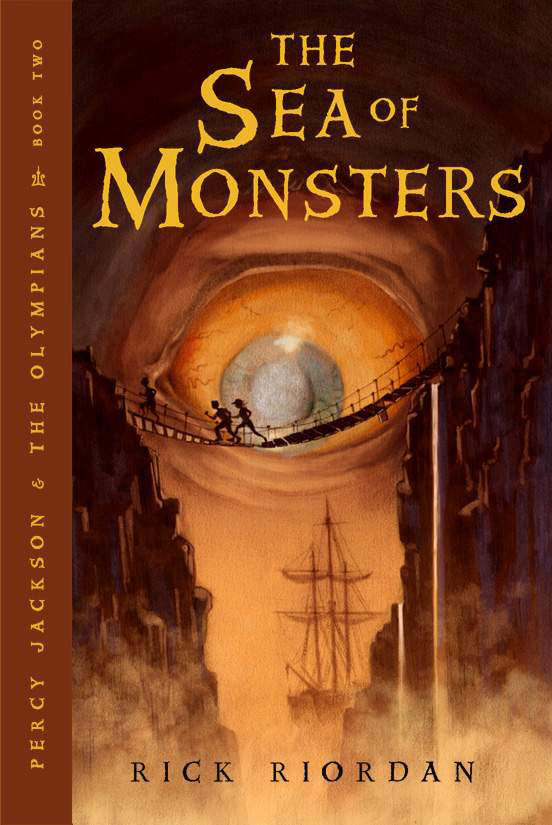
Sea of Monsters, the second book in the series:

The_Sea_of_Monsters-1

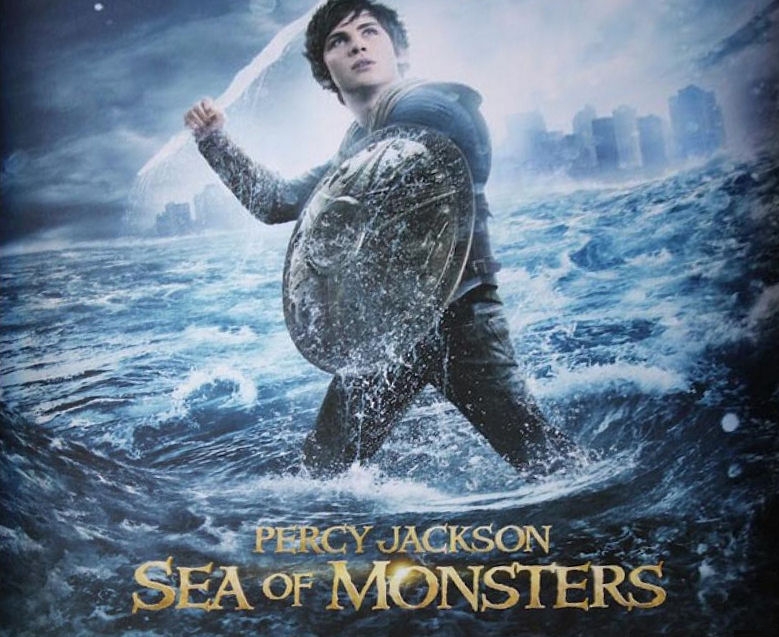
Here’s the movie poster, coming out this year and shown in Reel Girl’s Gallery of Girls Gone Missing From Children’s Movies in 2013. On Google, you can find posters with Annabeth, but I doubt that is the version our kids will see around town. This movie, like the Harry Potter movies, prominently displays the male protag’s name.

Percy Jackson 2 Sea of Monsters

Next in the series is The Titan’s Curse and the cover shows a solo male astride a magical creature. It’s a beautiful, exciting image and a thrill females in the imaginary world rarely get to experience:

the-titans-curse

Battle of the Labyrinth:

PercyBattleLabyrinth

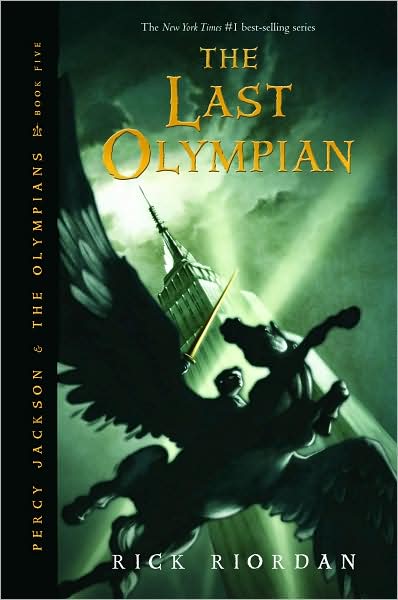
The Last Olympian:

lastolympian

So that’s the first Riordan series: 5 books, 2 movies, male protag/ male star, male solo on 4 out of 5 books. Male’s name in the title every time. Once again, I am a fan of Riordan. These books are great. But just imagine your kids– girls and boys– getting the opportunity to read a fantasy series of 5 books with a female protag, her female BFF and male BFF helping her on her quest. And just to be clear, this series is the definition quest narrative.

Girls fare better in the Egypt series: The Red Pyramid is narrated by siblings Sadie and Carter. Though there are more males than females, there is another very cool female, Zia. I wish the book was all about her. The cover is good, too. Sadie makes it on, though behind Carter.

Riordan_Red pyramid

And now, my favorite Riordan cover: Throne of Fire.

THRONE_OF_FIRE_jktFINAL[1]


The Serpent’s Shadow also has a pretty great cover:

The-Serpents-Shadow

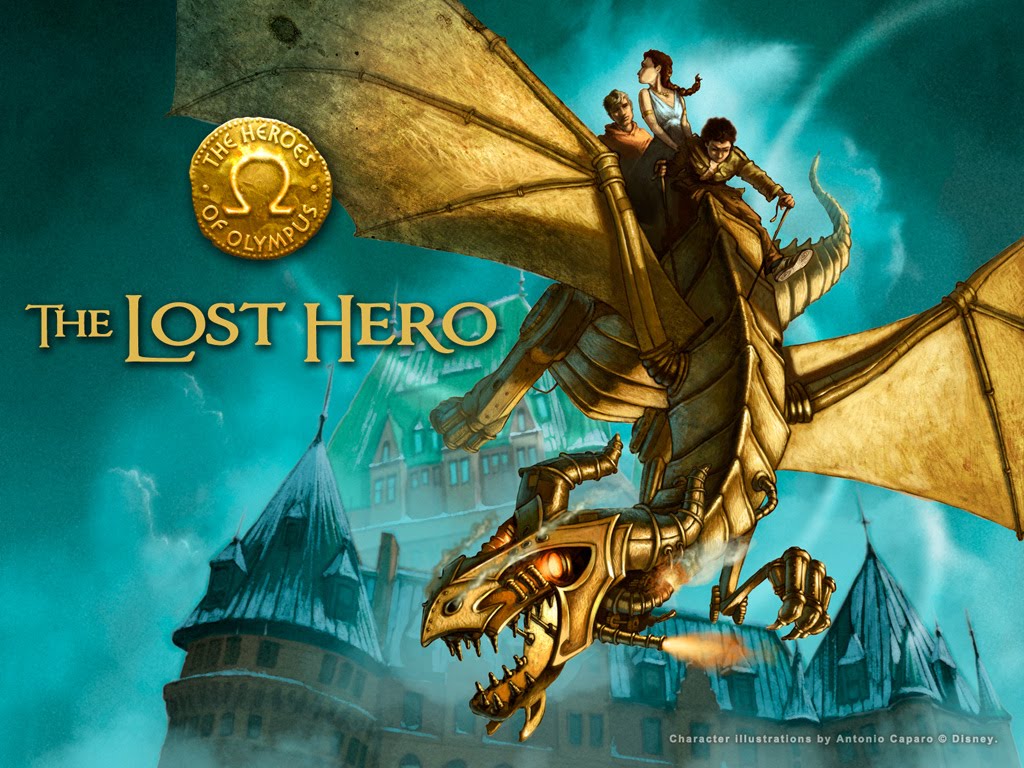
The next Riordan series, Heroes of Olympus, goes back to the standard Minority Feisty imagery. Here’s the first cover. See those three on the cover? They are not Percy, Annabeth, and Gus. They are Jason, Piper, and Leo. Guess who the protag is?

The Lost Hero

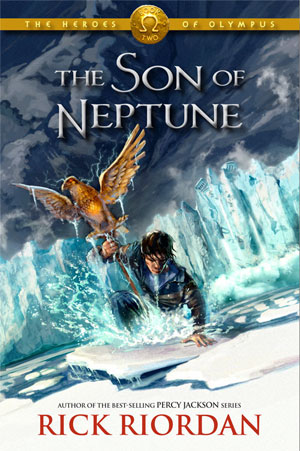
In Son of Neptune, Percy is the protag again, and this time, his friends are Hazel and Frank. It’s remarkable how consistent, persistent, and repetitive the Minority Feisty model is in the imaginary world.

SoNcover

Are you ready for the next one, and this is the BEST one, really according to my daughter and her aunt: Mark of Athena. YAY. A female makes it into the title! There are 7 main characters in this one and 3 are female. Less than half, so still the Minority Feisty, but not a bad showing for the consistent sexism in fantasy kidworld, right? But check out the cover:

The_Mark_of_Athena

WTF? No girl riding a pegasus and the owl of Athena fading into the background. ARGH!