“As of today, Disney has quietly pulled the 2D image of Merida from its website, replacing it with the original Pixar version. Perhaps we’ll be spared an onslaught of sexy Merida merchandise yet.”
I guess Disney was right to be so terrified of creating a strong, BRAVE, female protagonist (along with Pixar studios which hadn’t had ANY female protags before “Brave.”) It looks like Merida could be turning Disney’s franchise on it’s head. That’s pretty damn heroic.
Another mistake Disney made with “Brave?” They hired a female director. They fired her, but it was too late. Brenda Chapman wrote “Brave” based on her daughter. She was furious with the character’s transformation and wrote publicly about Disney’s terrible mistake.
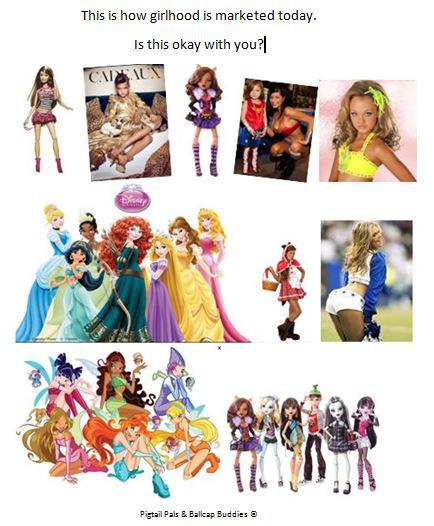
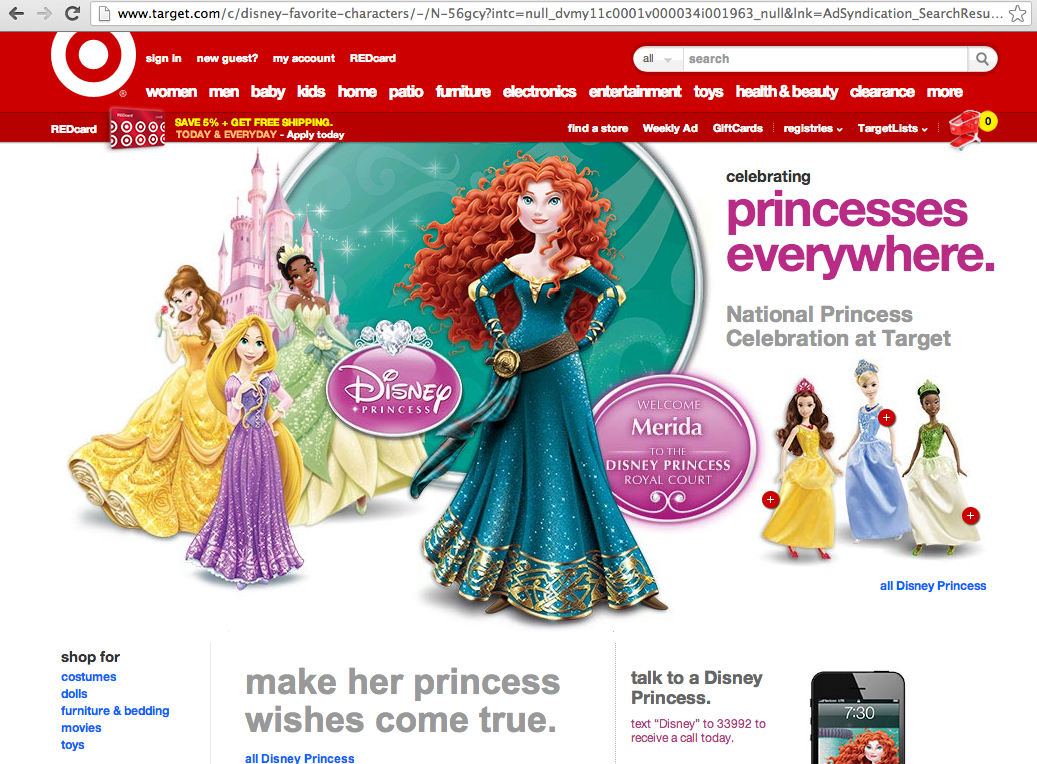
That’s right: Although Merida was created by a woman as a role model for girls, the male-dominated consumer product division at Disney has ignored the character’s intended benefits for young girls, sexualizing her for profit. Compared with her film counterpart, this new Merida is slimmer and bustier. She wears makeup, and her hair’s characteristic wildness is gone: It has been volumized and restyled with a texture more traditionally “pretty.” Furthermore, she is missing her signature bow, arrow, and quiver; instead, she wears a fashionable sash around her sparkly, off-the-shoulder gown. (As Peggy Orenstein noted when she broke the news of the redesign, “Moms tell me all the time that their preschool daughters are pitching fits and destroying their t-shirts because ‘princesses don’t cover their shoulders.’” I’ve heard the same from parents, as well.)
Is the sexualized image of Merida gone for good? Has Disney learned a lesson? Or will that lesson be: No more strong female characters leading a film! No more female directors writing about their daughters! Keep the females weak and quiet!
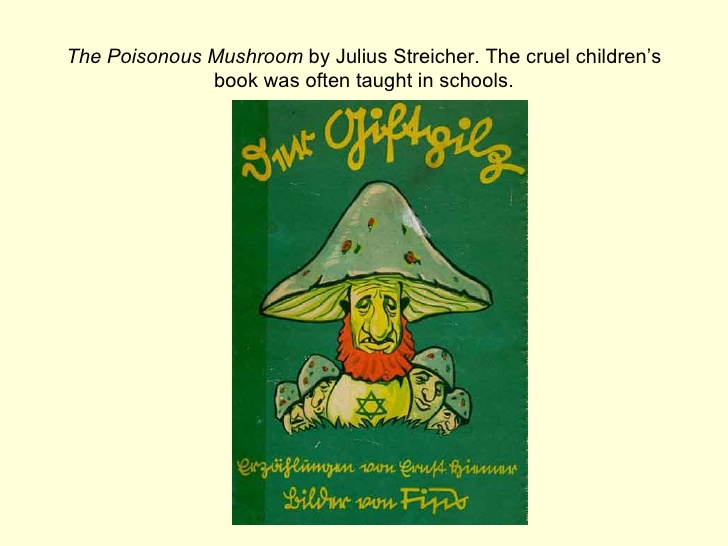
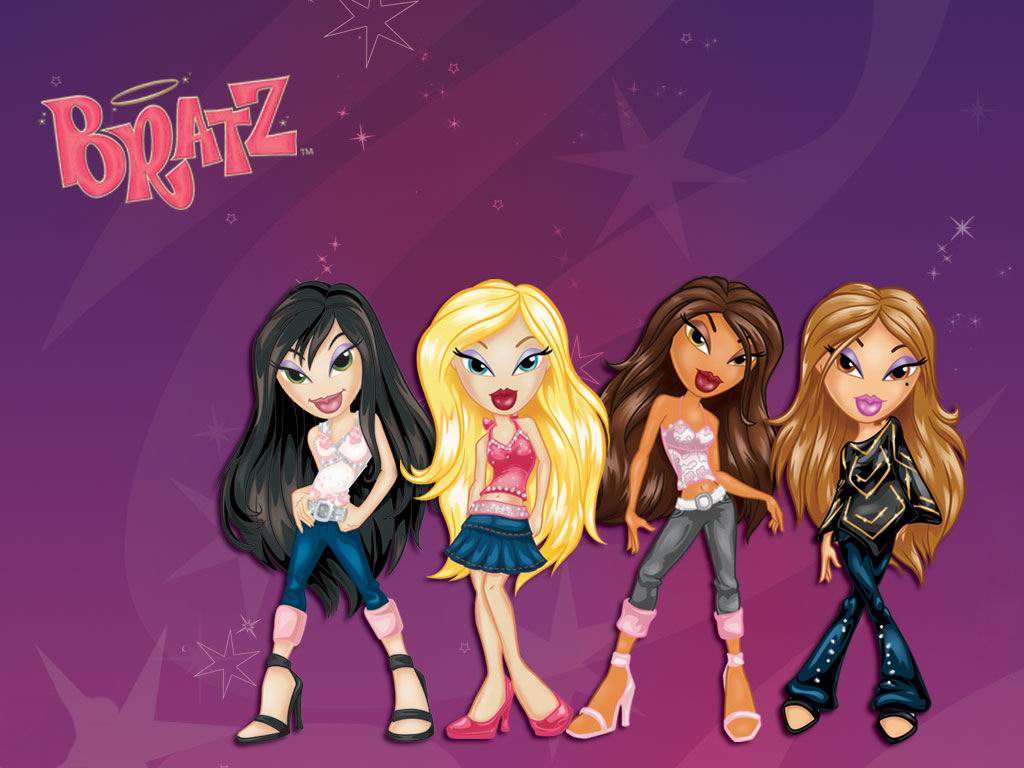
Objectifying and sexualizing girls is dangerous. A first step to abuse is always dehumanizing the victim. Propaganda, in the form of images and narratives, effectively dehumanizes on a mass scale.
Images/ narratives of Jews circa 1938
Africans circa 1931
Females circa 2013
It’s easy to look back on history and wonder: How did people ever put up with that? I’d never buy into it, not to mention expose my child to it. But what are you participating in right now that is completely accepted, not to mention celebrated, by our culture?
Be part of the solution. Demand narratives with strong female characters for your kids.
Update: New Merida may be off Disney’s site but she’s showing up all over the place including Target. Below is Target’s web page.
Before I write about Reel Girl’s pick of the week, I’ll come clean on two issues: I never do this feature once a week, and I have not read The Doll People in full. I have read enough to know the book is charming and stars no less than three adventurous female characters. My six year old daughter is obsessed with the book, and finished it without me. I just bought her the two sequels. I’m inspired to tell you about now, because I just looked at her book report and it looks like a report made for Reel Girl. Here it Alice’s homework verbatim, worksheet questions in bold.
Title: The Doll People
Author: Ann M. Martin and Laura Godwin
How many pages? 256
Main characters? Anabelle, Tiffany, Auntie Sarah
The Best Part: is when they found Auntie Sarah. She was in the attic but her dress was stuck under a suite case. So Tiffany and Annabelle had to try to get her dress unstuck.
Did you enjoy the story? Yes
Why? Annabelle and Tiffany. They were brave a lot. They were very smart and read a lot of books.
Because I am one to judge a book by its cover, I probably wouldn’t have chosen this one. It’s about dolls and the one shown here has a pink skirt and a pink bow. This book came into our house because my older daughter’s friend, Calvin, gave it to her for her birthday when she was in first grade. I’m glad it found a way in past my prejudice.
What I love most about this book is that Auntie Sarah disappeared because she was so adventurous, she couldn’t stay safe, confined in her dollshouse home. Sarah’s niece, Annabelle, has the same spirit and this story is about how she gets the courage to follow her heart and how her family also comes to accept and admire her rebellious nature.
Based on Alice’s review along with sections I read, Reel Girl rates The Doll People ***HHH***
Someone commented on Reel Girl’s Facebook page: please note what age books are appropriate for. My daughter is almost seven. She loved it. It’s a chapter book. I think 6 – 10 would be ideal. Let me know if your kids have read it.
Women writers, have you ever been told that your female protagonist isn’t “likeable”? Ever been told that after you wrote an autobiographical novel? When my agent sent mine out, that was the response we got. The editors said, “Great writing, but that character, she’s not nice enough.” That response reminds me of strangers on the street, shouting out at me to me to smile. (I’m 44, when will that stop?) Author Ayelet Waldman said at a reading that she gets that same comment about likeability almost every time she writes. It was on Waldman’s Facebook page today that I saw this link to an excerpt from an interview with novelist Claire Messud in Publishers Weekly. Here’s to characters that are ALIVE.
I wouldn’t want to be friends with Nora, would you? Her outlook is almost unbearably grim.
For heaven’s sake, what kind of question is that? Would you want to be friends with Humbert Humbert? Would you want to be friends with Mickey Sabbath? Saleem Sinai? Hamlet? Krapp? Oedipus? Oscar Wao? Antigone? Raskolnikov? Any of the characters in The Corrections? Any of the characters in Infinite Jest? Any of the characters in anything Pynchon has ever written? Or Martin Amis? Or Orhan Pamuk? Or Alice Munro, for that matter? If you’re reading to find friends, you’re in deep trouble. We read to find life, in all its possibilities. The relevant question isn’t “is this a potential friend for me?” but “is this character alive?”
One quick note that I didn’t realize when I read the 5th book, but was pointed out to me later. As for what the centaurs do to Dolores Umbridge–take a look at what centaurs were known for in Greek mythology and what Umbridge’s reaction is after her experience.
I know that this was J.K. Rowling’s very subtle wink to readers with a similar education/background in classics (which would be very very very very few, and would include NONE of the children reading her books, I am certain), but it is still a little off-putting to realize what exactly Hermione (because I suspect she would have known) and Rowling herself (who certainly did know) were willing to put even such an evil character through.
Not to ruin your enjoyment of the books! I love J.K. Rowling, and I am incredibly awed at her ability to include such subtle layers into her story. I love the stories and I love the realness of her world. I just wish Umbridge could have gotten her comeuppance in the (relatively gentle) way I’d originally read it, rather than in the brutal way it must have gone.
After reading Emily’s comment, I did a Google search and found several posts about the rape of Dolores Umbridge. Here’s one from Dollymix:
It is surprising that Rowling, known for the intense research of things she puts into her books, would use centaurs to “punish” Umbridge. Some evidence provided by Rowling helps to point us in the direction of discovering Umbridge’s true punishment. Umbridge’s usually neat appearance is changed in her hospital bed: her “mousy hair was very untidy and there were bits of twig and leaf in it, but otherwise she seemed to be quite unscathed” (2, p849). Despite lack of physical evidence, the students know something terrible has happened to her because of her physical and apparent mental states. When Ron jokingly makes the sound of hoof beats, Umbridge frantically sits up in her bed and looks for the source of the noise. Her reaction to this sound and her shock like state are symptoms commonly experienced by rape victims (RAINN). Why Rowling chose to punish Umbridge this way when she could have used many other means is unknown. The rape of Professor Umbridge is perhaps one of the most horrifying instances of violence against women in the entire series.
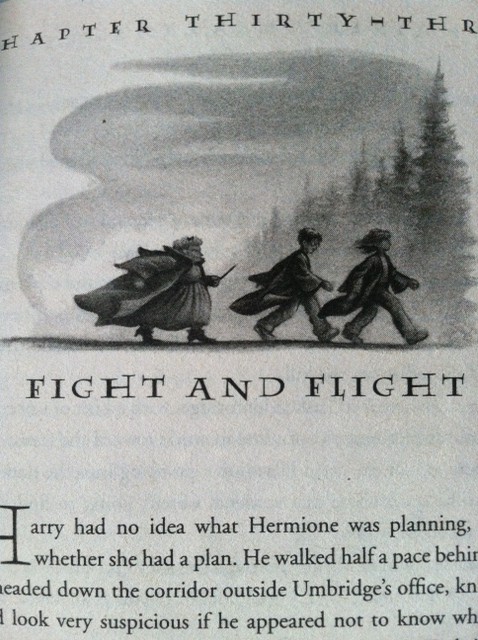
It is fascinating to me that the very illustration I picked for my post to show how strong the female characters are becoming in Harry Potter #5, could be a scene of Hermione leading Umbridge to her rape.
The fact that Harry is not in the lead, looking down while Hermione strides ahead, is surrounded by females, and has no idea where he is going– all of which I noted as unusual in this image and also the text– now seems to be constructed just in this way to absolve him. How disappointing that I noticed the narrative shifted here but could have missed the real significance as to why: one female goes against another in a vicious way, the other female is raped, and Harry is in the clear.
Imagine if Harry were the one to lead Umbridge into the forest to give her up to the sinister centaurs. Imagine if a male writer came up with rape as a punishment for an evil female character. I’m reeling from this analysis. What are your thoughts?
Update: On Reel Girl’s Facebook page, I’m getting lots of comments defending Hermione and J.K. Rowling, writing that this is not a rape scene. I want to believe that, but I cannot get over the fact that I picked this exact scene in my previous post because I noted something was different about it. That seems too strange to be a coincidence. If Rowling did not intend this scene to imply rape, I am feeling annoyed with her for sending an evil female off, at the hands of another female, to mythological creatures known for rape.
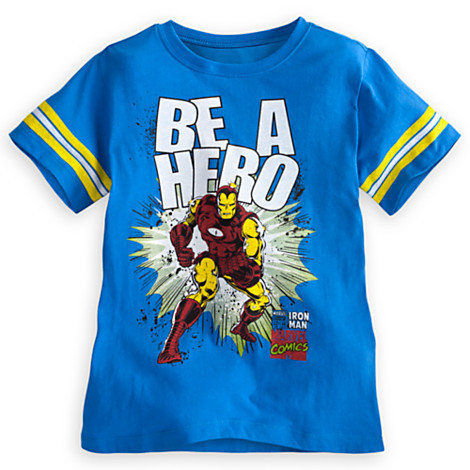
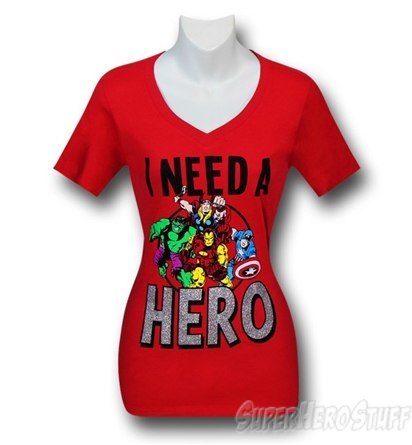
This sexism, by the way, goes beyond the specific imagery of a superhero. “Be a hero” translates to “act, take risks, make choices. “I need a hero” means “I’m a minor character. I’m passive, and I wait.”
See the difference?
The insidious problem with this stereotyped gender casting is that women are constantly sidelined and marginalized, remarkably, in the roles they play in their own lives. Females are cast in the supporting role, defined by their relationships as girlfriend, wife, mother, or helper. This sexist narrative has been going on for a long, long time, and we keep recycling it. I just saw this Virginia Woolf quote Tweeted by Bitchflicks:
And I tried to remember any case in the course of my reading where two women are represented as friends…They are now and then mothers and daughters. But almost without exception they are shown in their relation to men. It was strange to think that all the great women of fiction were, until Jane Austen’s day, not only seen by the other sex, but seen only in relation to the other sex. And how small a part of a woman’s life is that.
How small a part! But who would ever guess from looking at how women are depicted in the media– movies, TV, books, advertising– in 2013? Ironically, and this is what is so fucked up and twisted, females get to exist, get to play a part at all when they are sexualized and marginalized.
“Avengers” has the classic Minority Feisty ratio of 5 male superheroes to one female. As artist Kevin Bolk illustrates, the lone female is highlighted by her ass.
What is the solution to this sexism? Be a hero. Women, write your own stories. Make your own art. No one else can do it for us.
Update Here’s a comment from Nick:
The solution is not only for women to write their own stories, but for men to understand why this is sexist. There is a dearth of great female superheroes, and when they exist, they usually suffer from the Women In Refrigerators trope, where they die or lose their powers not doing something heroic, but assassinated while cooking in their kitchen, sometimes horrifically placed in the refrigerator, where the trope’s namesake comes from.
The solution has to be EVERYWHERE. Men and women alike should write compelling female superheroes. Some men don’t understand why Women in Refrigerators or Damsel in Distress tropes are inherently sexist, so education on this is also key.
For my part, I read up on feminist blogs like ReelGirl and watch Anita Sarkeesian videos (and the reaction videos, because she is very one-sided). I try to avoid making the same mistakes as other writers when dealing with women. I don’t ever assume I can write a compelling female character, I always question myself and I always push myself to do better.
I think that’s another good answer to this problem – each of us individually pushing the status quo.
And my response:
Hi Nick,
Totally agree the solution has to be everywhere. Thanks for this comment and for the thought and research you put into writing female characters.
Margot
Obviously, it’s a sexist world out there, and when women make art, it’s often ignored or marginalized. It would help if women were running the major Hollywood studios or had the funds to bankroll those studios, not to mention lead the prestigious organizations and comprise the boards that give awards to “great” artists.
That said, women need to keep writing and creating. Making art is risky and dangerous, engaging in the process is being a hero. Persevering is especially challenging when your work gets dismissed and rejected because stories about women aren’t valued. But, even with all of this against us, women must put our stories and visions out there. I really believe this is the only way we’ll ever achieve full gender equality.
Girls are not born more open-minded or altruistic. Girls read stories about boys and watch movies about boys because they are trained to. (Thank you, PBS. Please see my last post.)
Doesn’t every psychologist and teacher tell us that kids need to be “mirrored?” To create healthy self-esteem, parents aren’t supposed to project their own opinions on to little kids, but reflect what the kid expresses: “You are lifting the box! You’re smiling!” etc.
So why do the “experts” forget mirroring when it comes to gender? Why do we show our kids a warped, stereotyped mirror and then exclaim, “Look at that, girls just love princesses!” Girls want to see girls. They are just as self-centered as all children are. Unfortunately, in kid world, representations of females are severely limited. They will take what they can get.
There’s a positive side to this. We can train all kids to stay open to diverse stories by exposing them to all kinds of protagonists. Please read your kids books, show your kids movies, tell your kids stories and help them write their own, do imaginary play featuring strong female characters. It will help their brains grow not to mention their self-esteem.
Speaking of Us Magazine, I’m reading a book that’s so good, it’s like literary porn. It’s Us for bookworms. The book is called Why We Write, and it has a few pages each on one of 20 literary superstars. Each section describes how and why the writer writes. The section begins with vitals including when and where the writer was born, married or not, schooling, day job, and awards. Each section ends with tidbits of advice for writers. If you love to write, you’ve got to get this book. It’s so fun to read and super inspiring.
A section by Water for Elephants writer, Sara Gruen, called “Why did the chick lit cross the road,” bummed me out. In case you don’t read Us, Water for Elephants became a movie starring Reese Witherspoon and vampire heartthrob, Robert Pattinson.
Gruen writes:
There are very good, very successful authors of ‘chick lit’ and ‘women’s fiction,’ but that’s not how I self-identify. I think if you’re a woman and you write novels with female characters, the industry tends to pigeonhole you, and if you’re not careful, you get slapped with a pink cover no man would be caught dead with reading on a subway. Why woudl I want to discount male readers? I want men and women to feel they can pick up my books.
I feel (correctly) that I was labeled a woman’s fiction author with Riding Lessons and I hate very little as much as I hate being labeled. So I very deliberately wrote Water for Elephants as a book that would be difficult to classify. I figured having it narrated by a ninety three year old man would help. And you know what? I think it did.
I get what Gruen is saying the same way I get why J.K. Rowling is “J.K.” and why her protagonist is male. But still, how I wish women writers could get universal readership writing as women and about women. Is that so much to ask?
Girls don’t see movies about boys and read books about boys because they are born altruistic and open minded. Girls read books about boys because they are trained to. Therefore, isn’t the best time to shift this training when kids are kids? And this is exactly why it depresses me to no end that children’s media is so infected with caricatures of sexism. That early sexism doesn’t go away but lasts a lifetime. Parents, please help your child’s brain grow by reading books about strong girls to your kids.
Intrigued and excited, I interviewed co-founder Carey Albertine.
Why did you create In This Together Media?
We started In This Together Media to publish better quality books for and
about girls– stories where the main character’s whole reason for being
isn’t to be kissed, or the other extreme, to be some kind of superchick. We
wanted to broaden the narrative possibilities, and that comes from more
layered, nuanced characters.
What is the mission of ITTM?
First and foremost, we publish GREAT stories. And we strive to show the
girls’ and women in our books– and their relationships with each other– in
an authentic way. Organizations like Miss Representation and The Geena Davis Institute are doing fantastic work to raise awareness on the issue of gender
representation in the media. We see our part as putting out better content.
How many books are available now?
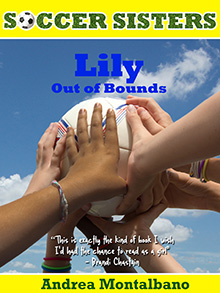
We have three books out right now– Soccer Sisters: Lily Out of Bounds, Mrs.
Claus and the School of Christmas Spirit, and Playing Nice. We have another
10-15 in development for 2013-2014. Most are for Middle-Grade and Young
Adult audiences but we also have an Early Chapter book series in
development.
Where can you buy them?
Both the print and digital versions are available on Amazon. Very soon, you
will be able to get them on all the major platforms. Plus, supporting local
libraries and independent bookstores is very important to us and we are
broadening our presence in both.
How are they selling?
We are thrilled (and humbled) by how well things are going so far. Soccer
Sisters is a middle-grade series that is catching on with soccer playing and
non-soccer playing readers alike. The author and the series’ spokesperson,
Brandi Chastain, were on The Today Show not long ago promoting the book and
we get emails regularly begging for the next installment. Mrs. Claus was
the #1 Christmas Kids’ Books on Amazon for most of December. And Playing
Nice has over 70 reviews on Amazon and Goodreads. Teenagers love it but so
do 30 somethings who can relate to the travails of high school!
Do your books have a consistent theme or characteristics?
We like all kinds of stories from Adventure to Contemporary Fiction to
Fantasy. But I think the one thing that ties all of our books together,
besides the female characters, is humor. We like books and writers who make
us laugh.
How did you and your partner come up with the idea for he company? You both had several other jobs in media. Did your previous professional experience help you to see the need for ITTM and is ITTM your full time job now?
It all started when Saira asked me to meet up for drinks to discuss
conceiving of the next Dora the Explorer. Yes, we realize how hubristic
that must sound! One year and a thousand iterations later, In This Together
Media was born. It is hard to imagine anything more fun than sitting around
and coming up with stories with one of your oldest and dearest friends.
We’ve both had a few different careers on the way to figuring out what we
wanted to be when we grow up from stand-up comedienne to lawyer to
television news producer to published author. Strangely enough, these
different experiences have given us the tools we needed to be successful.
And being mothers hasn’t hurt either. We share a deep love for reading and
writing and stories.
Where do you see ITTM in 5 years? Do you plan to expand beyond books into TV, movies, toys, apps, clothing?
World domination. Just kidding. But seriously, we create stories that we
think can live and grow on a lot of different platforms. So, yes, we expect
to expand into movies and TV, toys and maybe things we can’t even dream
about today. We think BIG. We could definitely be accused of having
delusions of grandeur!
Do you see a lack of strong female protagonists in MG and YA books?
I think YA and MG books have more female protagonists than television or
movies. And there are great examples of interesting, strong girls in some of
these books. But I am troubled by the YA trend of innocent naif meets
worldy-beyond-his-years young man made famous by a certain Vampire series. I
don’t think Romance has to be THE driving plot of every YA book. I also find
that the way female relationships are portrayed is not authentic to my own
experience. I have met few mean girls– mostly, my friends have been the
most important support system in my life. We don’t want to whitewash or show
perfect girls and relationships. We just want them to feel real.
I love this question and response from your site: “Do I have to be a girl to read your books or a woman to write with/for you? Absolutely not! Our stories are compelling thrill rides that appeal to girls and boys alike. And we welcome writers with a Y Chromosome to join our team.” One challenge with the “girl empowerment” community, on line and elsewhere, is that many parents assume it’s not about boys at all. But until parents read their sons books with girls and take them to movies aboutgirls, gender segregation will continue and so will stereotyping, along with myths that girls will watch movies about boys but boys won’t watch movies about girls etc. How do you market ITTM and what is your plan, if any, to deal with the gender segregation challenge so intensely aimed at kids today?
Thank you thank you for bringing this up! It is very important to us to
challenge this notion that boys are not interested in stories about girls.
How absurd! It would be a sad world if half the population is not interested
in the other half. We refuse to accept it. My son loves “boy” stuff but also
adores My Little Pony and Strawberry Shortcake. We hope we can help
dismantle the whole notion of “girl” stuff and “boy” stuff.
What are your favorite YA and MG books?
The classics– Roald Dahl and Madeleine L’Engle for Middle-Grade. “Proud
Taste of Scarlet and Miniver” by E.L. Konigsberg was one of my favorite
books as a girl. And Rick Riordan and the Percy Jackson series deserves
every bit of accolades it has received– so good! We have a book club of 4th
and 5th graders and they tell me what to read. They are on top of it. I just
started S.S. Taylor’s “The Expenditioners” and it is great. For Young Adult,
I am about to start “The Fault in Our Stars”. John Green is the man.
I admit, because I’m one to judge a book by its cover, or a movie by its poster, I was slightly bummed when yesterday, at the book store, my six year old daughter chose Thea Stilton and the Dancing Shadows. Ballet dancers and girls. Can we get any more cliched with gender roles?
Also, while I didn’t know Thea, I am sort of familiar with her brother, Geronimo. My nine year old has one of his books on her shelf. Why put his name at the top of Thea’s book? If you think that is an irrelevant detail, just conisder how actors fight for top billing and the kind of status, power, and salary that placement conveys.
The good news is that Thea Stilton totally rocks. My daughter and I have not been able to put the book down. This morning, she was still reading it on the way to school to the point of car sickness, finally, letting me tear it away from her so that I could come home and blog about it.
The first page of the book is a letter from Thea:
Hello, I’m Thea!
I’m Geronimo Stilton’s sister. As I’m sure you know from my brother’s best-selling novels, I’m a special correspondent for The Rodent’s Gazette…Unlike my ‘fraidy mouse brother, I absolutely adore traveling, having adventures, and meeting rodents from around the world.
Thea is way cooler than Geronimo. She hangs out with an eclectic pack of female mice friends who call themselves the Thea Sisters. The next 5 pages of the book describe each character. They come from different countries: China, Peru, Tanzania, Australia, and France. They have different passions, aspiring to be an ecologist, scientist, sports journalist, car mechanic, or fashion writer. As far as the fashion writer, whose favorite color is pink, Colette is one out of 6 female characters, and I have no issue with her look or career choice. The problem with pink, princesses, or for that matter, anorexic fashion models, is not they exist at all, but their dominance over representations of females in the media. One out of six into fashion is okay with me.
In this particular adventure, the Thea Sisters are off to Milan, Italy for a ballet competition where they investigate corruption; the judges have been bribed. The story is filled with interesting facts coupled with illustrations about Italy, ballet, and the history of dance. In this way, the book reminds me a little of the Magic Tree House series. Characters have funny names like Madame Rattlova and Professor Ratshnikov. There is a lot of word play and puns about mice and cheese. Two characters are described as different as “provolone and parmesan.” All of this makes the book really fun to read with daughter. There is a lot of opportunity to explain new words and jokes in a context that she was curious about and really wanted to understand. Reading this book with her, I felt like I was watching her brain grow.
While Geronimo has 53 books of his own, Thea has just 14, but we are excited to read them all, especially, for me, the ones that have nothing to do with ballet. Thea Stilton and the Dragon’s Code and Thea Stilton and the Blue Scarab Hunt look great.
Reel Girl rates Thea Stilton and The Dancing the Shadows ***HHH***
I was a little flummoxed at the initial reaction to the She-Hulk announcement since I thought people would look me up and see that I’m primarily a satirist and I’ve always addressed issues of gender, race/ethnicity, and class. In fact, I use humor because I can go beyond preaching to the choir and perhaps make people think differently about those issues
Of course, when you’re a Mexican-American, people expect you to write magical realism. When you’re a woman and write a social satire, they assume it’s a romance novel and that you’re anti-feminist. Romance is its own genre with very strict conventions…and I’ve learned that romance writers and fans are generally pretty hardcore feminists. (You should check out the hilarious Smart Bitches website.)
Christine, the author of Rogue Touch, is the penname for a literary fiction writer whose books address gender issues.
Anyway, I like writing comedy and I loved writing She-Hulk, which really focuses on Jennifer Walters trying to have a more normal life, despite the insane time demands of her job as an attorney. The real challenge was finding humor in a character who is described as “painfully shy,” and I hope I succeeded.
ciao!
Intrigued, I asked Acosta some questions. Here’s her take on She-Hulk Diaries.
Why did you write She-Hulk Diaries? Are you a fan of comic books?
My fantastic agent, Peter Steinberg, came up with the idea, and I said, yes, please, I’d love to write it. I liked comic books as a child, but I certainly couldn’t afford them. My older cousin would lend them to us. I’ve always been a fan of speculative stories and tend to prefer darker stories with an element of humor, like Buffy, The X-Files, Battlestar Galactica, Dark City, eXistenz, Firefly, BBC’s Being Human, Misfits…
What is She-Hulk Diaries about?
I can’t really reveal too much now, but the story follows Jennifer Walters, She-Hulk’s human identity, as she finds a new job at a high-powered law firm and is assigned an important case with a mysterious scientist client. Jennifer is as shy as She-Hulk is brazen, and she’s determined to have a personal life besides her work and superhero responsibilities, and that means more social and cultural activities, making more friends and, yes, having a healthy romantic relationship. Between her case load, new superhuman activity, and a terrifying trend in NYC, there aren’t enough hours in the day.
Would you describe it as chick-lit, and what do you think of that term? Who do you hope the book will reach?
I hope my book will reach people who will appreciate my comedy. I use humor to entertain, and I also use it to offer different perspectives on issues of gender, race/ethnicity, and social class. When I was writing political satire, I used humor to get across arguments that might otherwise be rejected by those not already in the choir.
I don’t care one way or the other about the term chick lit. It was used as a way to market humor written by women. It was twisted into an insult, which isn’t uncommon for anything that is female-dominated. I like funny women so I’m absolutely going to pick up funny books written by women.
I don’t think women have to join in on the bashing to prove we’re serious thinkers. Men watch and read all kinds of vacuous crap and no one ever criticizes them and magazines don’t lament that men’s reading is making them brain dead.
Were you surprised by the initial negative reaction to Hyperion’s press release about She-Hulk Diaries?
I was! I’ve been writing positive female characters in a succession of novels, and I’ve frequently written about gender issues so I thought people would at least find out who I am before assuming that my story is about a weak woman obsessed with finding a man. My last novel, Dark Companion, nominated as Best Fiction for Young Adults by the American Library Association, has a feminist theme about exploitation. My Casa Dracula series features a wacky, but bright, brave, and goodhearted Latina who writes unsellable political horror stories.
One young blogger who bashed the She-Hulk novel referred to me as “an authoress.” I love that! Lately I’ve been calling myself a poetess, because I have poetry in my books, but I’m going to switch to authoress.
The Hollywood Reporter said the book was based on 50 Shades of Gray. I admire the madcap ease with which they made that crap up. People assume it’s based on The Carrie Diaries. I’d guess it’s closer to Samuel Pepsys Diaries…except without the Black Death, although I’d include that if I could have found a place for it. (Favorite book on the Black Death, probably Connie Willis’s Doomsday Book.
The issue for me with the cover of She-Hulk Diaries cover is that we are so desperate for female superheroes– kids and grown-ups. We want them! We’ve had 5 Spiderman movies, 7 Batman movies, and we’re still waiting for Wonder Woman to hit the big screen. My three year old daughter dressed up as Batgirl for Halloween and everyone called her Batman. She didn’t understand, because she doesn’t know how invisible Batgirl is yet. I dread the day she finds out not only is Batgirl “not cool” but she hardly exists. She-Hulk Diaries is not for kids, but there is a “trickle down sexism” effect when characters adults love become movies The LEGO sets, video games, clothing, and apps marketed to kids all are based on these narratives and when girls go missing that sexist representation effects how all kids learn about gender, who is important and who gets to do the fun stuff. I know we are talking about a cover here, but when our images of strong females are so lacking, for me, it’s a bummer to see lipstick. Do you see She-Hulk Diaries as challenging or perpetuating this kind of sexism all over the media? Do you see a lack of powerful and heroic female protagonists in media for kids?
Here’s the deal with covers: they have to grab attention as quickly as possible as both an actual book and as a tiny image for online sales. I love the cover because it instantly says “funny book about a different kind of woman.” Green and purple are Shulky’s iconic colors, and they could have done a green briefcase because much of the book is about her legal work. Or they could have done an image of a purple gun because she goes to the shooting range. Or…you see where I’m going. Conveying humor in cover art is really difficult, and you just can’t overthink cover art.
I didn’t write She-Hulk as a polemic on sexism (though that would have been fun too), but Jennifer/Shulky is always the smartest person in the room, the bravest, and she has the kindest heart. Although she’s personally shy, she doesn’t hesitate to defend those who need an advocate, and she speaks up for herself, too.
As for the lack of powerful and heroic female protagonists, Hollywood, particularly film, is a boys’ club, and those guys assume that both boys and girls are interested in boy stuff, but only girls will be interested in girl stuff. Case in point: J.K. Rowlings’ publisher asked her to use her initials so that boys wouldn’t be scared off the Harry Potter books.
I’m stunned by movies and shows that don’t even bother to include female characters who do more than act as decoration. I’m continually disappointed by the crap that’s marketed to women. Of course, most of it is written, directed, and produced by men who seem to be basing their knowledge of women on characters in other movies written, directed, and produced by men. I don’t know about children’s programming, but I watch lots of British shows because I like the strong, complex women characters and diversity.
Most men are never going to get it, so women should just make our own movies. There are certainly enough women with the money and talent to produce female-positive shows in this country.
I think men would “get it” if they were not trained early, from birth, to see girls as “other,” if female characters in shows marketed to kids were not condemned to the Pink Ghetto where they do “girl stuff.” Look at Reel Girl’s Gallery of Girls Gone Missing From Children’s Movies in 2013. When female characters are marginalized in almost every movie, what are little kids learning about gender? Are your sons growing up to be a new generation of men who are never going to “get it?” All kids would benefit from seeing strong, cool female protagonists, and as we have seen, there is a huge market for it.
The whole Hollywood myth “girls will watch boys characters but boys won’t watch girls” is because (1) that is all that is offered (2) female characters are relegated to the Pink Ghetto; Girls are obsessed with princesses not because they have a pink gene but because that is practically the only time females get to be front and center (3) Parents are just beginning to notice and challenge their own sexism and read boys stories about girls, take boys to movies about girls, play with toys about girls, but this is hard to do when females are relegated to the Pink Ghetto. It’s why we desperately need more female characters and why “Hunger Games” was so successful. Boys loved the story and girls were psyched to read about a strong, female protagonist.
That said, She-Hulk is not a book for kids. After hearing from Acosta what the book is about and why she wrote it, I’m excited to read it. I’ll let you know what I think.