After massive protest, Disney pulls new Merida from site

Exciting news! Today, Rebecca Hains, blogger and media studies professor, reports:

“As of today, Disney has quietly pulled the 2D image of Merida from its website, replacing it with the original Pixar version. Perhaps we’ll be spared an onslaught of sexy Merida merchandise yet.”

YAY! Check out the link, it’s true! BRAVE Merida is back.

I guess Disney was right to be so terrified of creating a strong, BRAVE, female protagonist (along with Pixar studios which hadn’t had ANY female protags before “Brave.”) It looks like Merida could be turning Disney’s franchise on it’s head. That’s pretty damn heroic.

Another mistake Disney made with “Brave?” They hired a female director. They fired her, but it was too late. Brenda Chapman wrote “Brave” based on her daughter. She was furious with the character’s transformation and wrote publicly about Disney’s terrible mistake.

Of the debacle Hains writes:

That’s right: Although Merida was created by a woman as a role model for girls, the male-dominated consumer product division at Disney has ignored the character’s intended benefits for young girls, sexualizing her for profit. Compared with her film counterpart, this new Merida is slimmer and bustier. She wears makeup, and her hair’s characteristic wildness is gone: It has been volumized and restyled with a texture more traditionally “pretty.” Furthermore, she is missing her signature bow, arrow, and quiver; instead, she wears a fashionable sash around her sparkly, off-the-shoulder gown. (As Peggy Orenstein noted when she broke the news of the redesign, “Moms tell me all the time that their preschool daughters are pitching fits and destroying their t-shirts because ‘princesses don’t cover their shoulders.’” I’ve heard the same from parents, as well.)

Is the sexualized  image of Merida gone for good? Has Disney learned a lesson? Or will that lesson be: No more strong female characters leading a film! No more female directors writing about their daughters! Keep the females weak and quiet!

It’s up to you. This could be a turning point. Parents, please use your voice and your wallet to keep strong, heroic females showing up in narratives and images marketed to your kids. Right now, girls are missing from children’s media and when they do appear, they’re sexualized. This is normal. Not healthy, but tragically, perfectly normal.

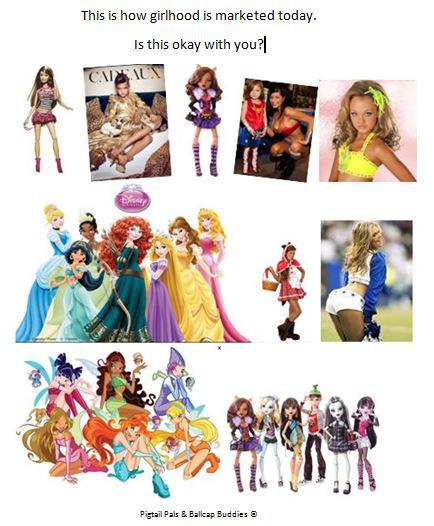
Yesterday, Melissa Wardy posted this image on her Pigtail Pals Facebook page, reminding us Merida’s new image was not created in a vacuum.
pigtails

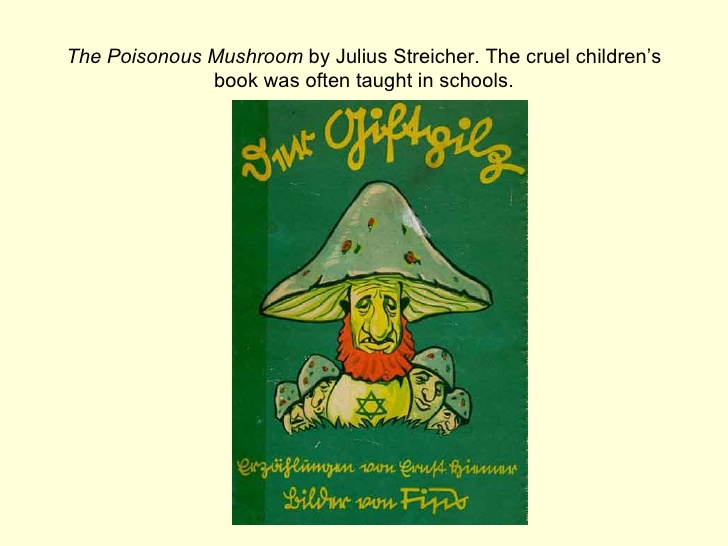
Objectifying and sexualizing girls is dangerous. A first step to abuse is always dehumanizing the victim. Propaganda, in the form of images and narratives, effectively dehumanizes on a mass scale.

Images/ narratives of Jews circa 1938
nazibook

Africans circa 1931

tin_tin_in_congo11

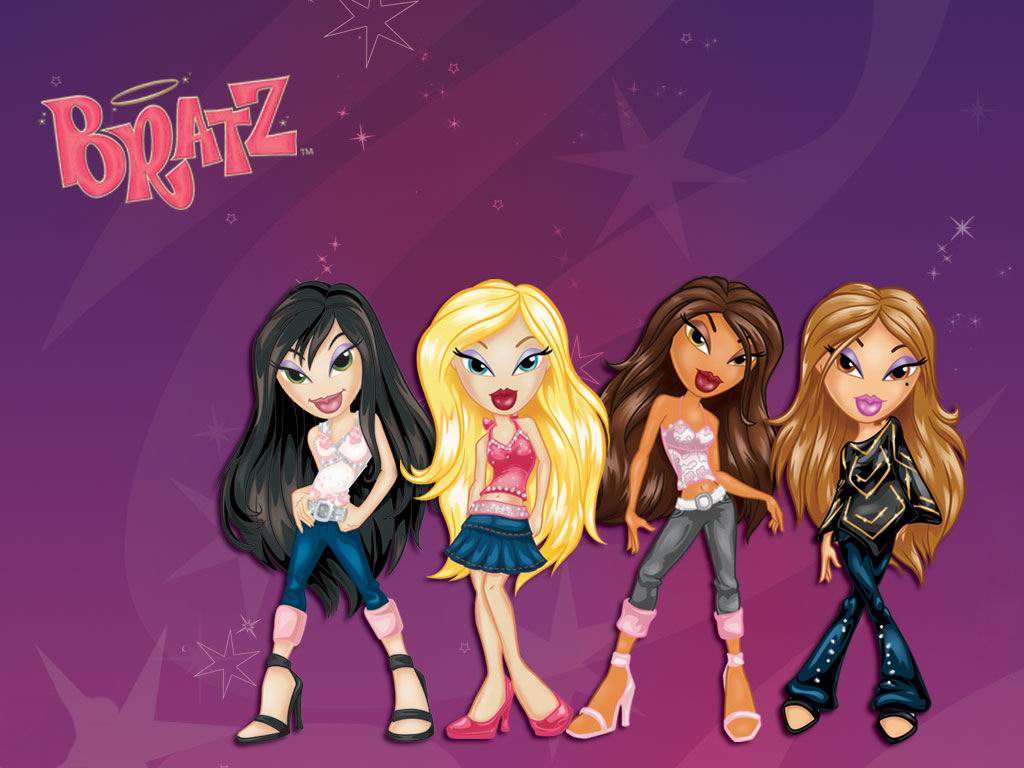
Females circa 2013

bratzwallpaper-source_4cj


It’s easy to look back on history and wonder: How did people ever put up with that? I’d never buy into it, not to mention expose my child to it. But what are you participating in right now that is completely accepted, not to mention celebrated, by our culture?

Be part of the solution. Demand narratives with strong female characters for your kids.

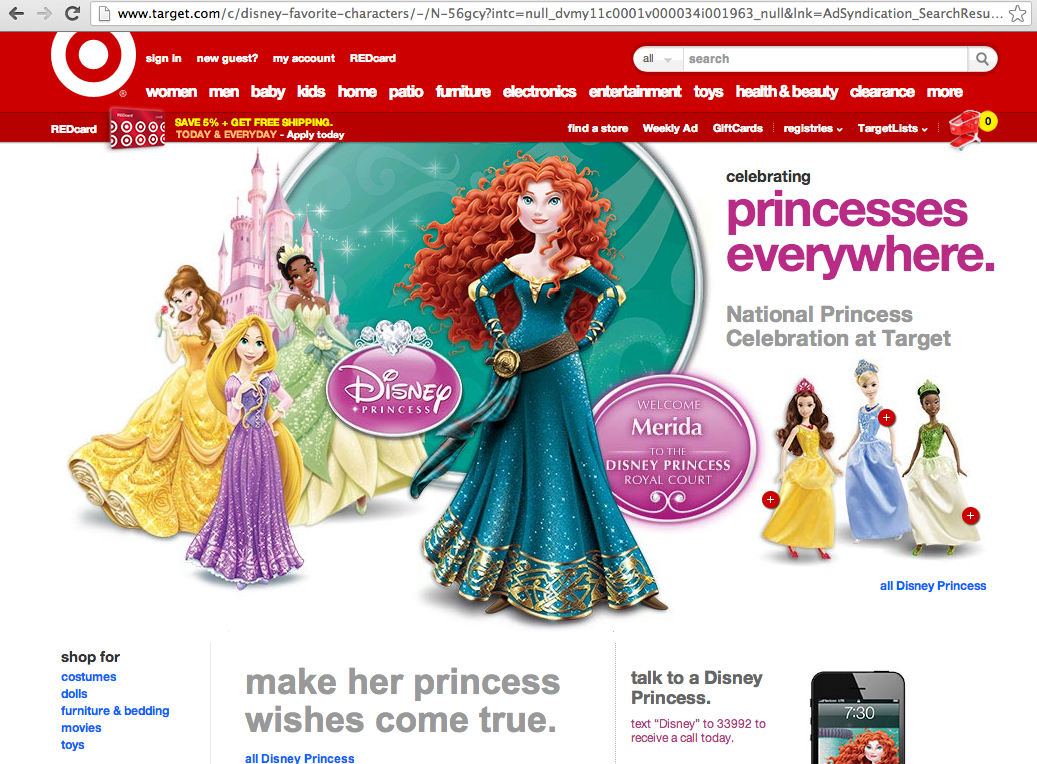
Update: New Merida may be off Disney’s site but she’s showing up all over the place including Target. Below is Target’s web page.
meridatarget


King Fergus of ‘Brave’ demands to know: ‘Where’s my makeover?’

Since his daughter, Princess Merida, made national headlines with her makeover– she’s skinnier with tamed curls, a new off the shoulder gown, and the belt that once held her quiver has morphed into a fashion sash– King Fergus wants to know: “Where’s my makeover?”

"BRAVE"

Fergus says, “It’s not fair. I’m the King! Why are princesses always the ones who get to look pretty? Some would call me fat, hairy, and I’m missing a leg for goodness sake. Where’s my stylist?” Throughout DunBroch, Fergus has posted these before and after pics of Merida:

meridamakeover

Now, King Fergus wants to know:  “Artists, what can you do for me?”

Fergus won’t be getting a makeover because male characters are allowed to occupy a whole range of looks (including rats or planes) and personalities. Male characters aren’t clones. Please sign the petition to Disney: “Say No to the Merida Makeover, Keep Our Hero Brave.” (100,000 signatures and counting!)

Disney destroys Brave’s Merida with sexy makeover #NotBuyingIt

From the Mary Sue:

“On May 11th Brave‘s Merida will be officially crowned as the 11th Disney Princess, the impact of which is that Disney will be selling more stuff with her on it, I guess? Anyway. Along with the “coronation ceremony,” to be held at Walt Disney World, Merida’s gotten a new redesign…”

A great summary from Toward the Stars:

towardthestars

Here’s one of my favorite pre-botox, pre-makeover Merida expressions.

merida_

Pithy analysis from Peggy Orenstein on the eventual fate of way too many of Disney’s female characters:

Because, in the end, it wasn’t about being brave after all. It was about being pretty…I’m especially creeped out by Belle who appears to have had major surgery… In addition to everything else, they’re pushing the brown girls slowly but surely to the edges…

I’ve always said that it’s not about the movies. It’s about the bait-and-switch that happens in the merchandise, and the way the characters have evolved and proliferated off-screen. Maybe the problem is partly that these characters are designed in Hollywood, where real women are altering their appearance so regularly that animators, and certainly studio execs, think it’s normal.

The disease of homogeneous, anorexic, botoxed, generic females has spread worldwide, through these kinds of images. Did you see the Reddit story about the Korean beauty queens: “Has plastic surgery made these beauty queens all look the same? Koreans complain about pageant clones.” Talk about creepy.

beautyqueens

One commenter wrote:

‘The surgery takes away their individuality and uniqueness and its sad. Most are beautiful without it but telling them that their Korean ethnic features are in fact lovely is as effective as screaming at a brick wall.

‘They wont believe you because they’ve been brainwashed to think westernization of their features is superior, I don’t think they want to look white, but a mix of white and Asian and definitely less Korean.’

This is how one “beauty” queen describes herself:

The student revealed her plastic surgery secret after photos emerged of her looking very different at school, but she said she hadn’t misled anyone.

But she defended her crown telling the Korean media: ‘I never said I was born beautiful.’


So sad because this generic look has absolutely nothing to do with “beauty” and everything to do with power, Westernization, capitalism, and status. TV host Stephen Colbert explained it well when he jokingly asked teen writer/ phenom Tavi Gevinson: “But if girls feel good about themselves, how will we sell them things they don’t need?”

How indeed? I was a huge Merida fan, as were my kids, and I bought my three young daughters several figures, books, and posters featuring her because she was cool. Here’s a framed poster over my four year old daughter’s bed so she can see her when she goes to sleep at night, along with her favorite Merida book.

Mposter

Like Merida, my daughter, Rose, has wild, curly hair that she hates to have brushed.

rose

I hope my daughter never feels that she has to look generic and homogeneous in order to be “beautiful.” I hope she always knows that her beauty comes from her spirit. That’s not some meaningless cliche. There’s nothing “attractive” about frozen-faced clones. Disney’s new, madeover Merida has absolutely nothing to offer my kids. I won’t be buying ANY merchandise with this awful, new image.

Reel Girl rates the new Merida ***SSS*** for major stereotyping.

Please Tweet @Disney We want Merida brave, not botoxed. New, madeover Merida is bad for kids #NotBuyingIt


Viral Dove ad created mostly by men

Turns out, the Dove ad was created mostly by men including the director, creatives, DP, editor, and some producers. Interesting when today, women make up only 3% of advertising’s creative directors.

Here are the credits:

CREDITS
Client: Dove
Agency: Ogilvy & Mather Brazil
Chief Creative Officer: Anselmo Ramos
Executive Creative Director: Roberto Fernandez /Paco Conde
AD: Diego Machado
CW: Hugo Veiga
Sketch Artist: Gil Zamora
Producer: Veronica Beach
Junior Producer: Renata Neumann
Business Manager: Libby Fine
CEO: Luis Fernando Musa
Group Account Director: Valeria Barone
Account Director: Ricardo Honegger

Production Company: Paranoid US
Director: John X Carey
Executive Producer: Jamie Miller / Claude Letessier
Line Producer: Stan Sawicki
Director of Photography: Ed David

—Long Version
Executive Producer: Jamie Miller / Claude Letessier
Producer: Stan Sawicki
Editor: Phillip Owens
Music: Subtractive
Sound mix: Lime Studio
Composer: Keith Kenniff
Mixer: Sam Casas
Executive Producer: Jessica Locke
Production Sound: Tim O’Malley
Color Grading: Company 3
Colorist: Sean Coleman

—Short Version and Cinema
Editorial Company: Rock Paper Scissor
Executive Producer: Carol Lynn Weaver
Editor: Paul Kumpata
Assistant Editor: Niles Howard
Online: A52
Executive Producer: Megan Meloth
Producer: Jamie McBriety
Music: Subtractive
Composer: Keith Kenniff
Sound mix: Lime Studio
Mixer: Sam Casas
Executive Producer: Jessica Locke
Production Sound: Tim O’Malley
Color Grading: Company 3
Colorist: Sean Coleman

I love Melissa Duge Spiers’s post: “Thoughts that come with Dove’s footsteps” on Reel Girl and count myself among those unimpressed by the ad. I blogged about Dove’s pseudo-feminism a year ago, when the company released a study and promoted stats that “only 11% of girls feel beautiful.” Then, I wrote a parody: “New study reports only 10% of boys feel beautiful.” A headline you won’t see, because when it comes to males “beauty” just isn’t that important.

Thoughts that come with Dove’s footsteps by Melissa Duge Spiers, guest post

Perhaps I am the wrong person to open this discussion, because I was raised in a house where being beautiful (if you were a girl) was everything – I was dragged from under my bed as a 6-year-old, kicking and screaming, so that my “ugly” straight hair could be permed.  I was the only pre-teen I knew who was forced to wear makeup.  And I existed on air-popped popcorn throughout high school because I dreaded being withdrawn from school and put on a liquid diet until I lost weight like a friend of mine.  I grew up to make my living for a while from my looks, modeling and acting.  So it would be silly to claim I don’t carry some baggage about beauty, and I won’t even try. 

makeup_set

But I’m going to throw my hat into the ring anyway on the latest movement to redefine beauty, to make it more inclusive, to tell every woman she’s beautiful (yes, Dove, that’s you…and so many more).  I hate it.  I absolutely detest it.  Why?  Because even the most well-intentioned, politically correct, supportive, inclusive statements and movements can still be boiled down to this:  beauty is all important. 

The traditional wisdom – from my grandmother’s era – was a terse “if you’re not beautiful, cultivate a great personality, be the smartest, wittiest person in the world, be charming, develop great talents.”   This seems outrageously offensive in today’s era, yes?  It puts beauty in a removed and superior category which excuses the lucky ‘owners’ from doing anything else on that list (plus it reinforces the tired dichotomy of smart/witty/talented vs. beautiful).  As much as we sincerely applaud the use of larger-sized models and real women in these new campaigns, the honest truth is: nothing has changed.  We are still saying beauty is the defining item in women’s lives.  We’re just screaming for an expanded definition.    

If you take out the words “beautiful” and “ugly” in the widely celebrated, empowering “Everyone’s Beautiful!” campaigns and you substitute  the words “white” and “black” or “straight” and “gay” you begin to see how thoroughly stupid it is to waste time trying to define (or redefine) “beauty.”  Go ahead, try it:  “Everyone’s white! You’re white just as you are!” Or  “We just need to redefine straight to include all humans! Everyone’s straight!” 

It suddenly seems ridiculous (not to mention condescending), doesn’t it? These well-intentioned feel-good anthems really just posit beautiful (or white or straight) as the goal, as the “best” option, as the ultimate compliment/inclusion/approval.  Think I’m exaggerating? I can guarantee that someone in response to this article will think the most insulting, awful comment they can summon is “you’re just a jealous, fat, ugly dyke!”  But it’s not just those haters – it’s the advertisers, it’s the lawmakers, it’s the population, it’s each and every one of us.  We all keep thinking that telling women and girls they’re beautiful is the answer, as long as we adjust the definition to include everyone.  But we’re all still holding it up as the holy grail, the pinnacle of achievement, the most important thing they can be. 

curlingiron

You know, my mother thought straight hair was disgustingly ugly (a fact she will still tell anyone to this day).  As a child, did I wish she would open her beauty boundaries, recalibrate her metric, until it included my stick-straight strands?  That would have saved me a lot of tears and chemical burns on my scalp, sure, but really I just remember fervently wishing she would stop focusing on my damned hair so I could go outside and swing on the monkey bars.  Did my young friend wish her parents would say “honey, a few extra pounds are beautiful!” Not at all.  She felt nearly the same shame and humiliation whether they praised her weight loss or put her on a diet.  She simply didn’t want them or anyone else to discuss her body, in any way, good or bad – it was mortifying.  She just wanted to be riding her horse.

Each one of us – me, you, Dove, everyone – needs to stop trying to expand our precious definitions  (“beauty is valued, so we need to make sure everyone feels beautiful!”) and figure out why (and if) they’re important to define at all.  Everyone should be accepted and given equal consideration and rights, even if we’re not all straight, we’re not all white, and we’re not all beautiful.   Who cares? Let’s  cultivate our talents, our charm, our smarts, our personalities.  And then let’s run out and swing on the monkey bars.

 “Thoughts that come with dove’s footsteps guide the world.” – Friedrich Nietzsche

Melissa Duge Spiers is a writer whose work has appeared in Adventure Sports Journal, Vermont Sports, and The Monterey Herald, among other publications. She is working on her first novel. A graduate of Barnard College, she lives in Santa Cruz, CA with her husband and four children.

Read Melissa Duge Spiers previous posts on Reel Girl: “ChapStick sticks it to women” and “No comment! A commentary on the ChapStick story.”


Marvel markets sexism with Avengers T-shirts

Just saw Marvel’s sexist T-shirts on the Huffington Post (there’s some link to Reel Girl but I can’t find it?)

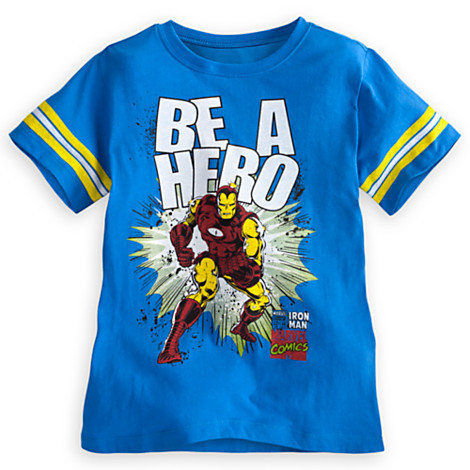
Marvel’s T-shirt for boys.

original

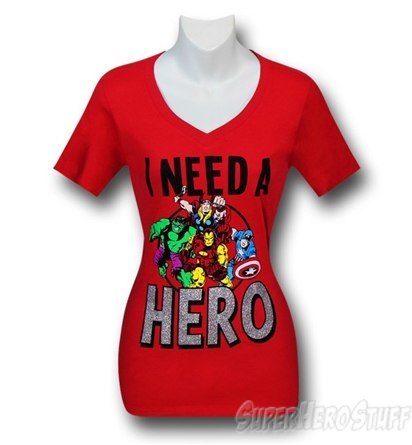
Marvel’s T for girls.

girls

Argh!

This sexism, by the way, goes beyond the specific imagery of a superhero. “Be a hero” translates to “act, take risks, make choices. “I need a hero” means “I’m a minor character. I’m passive, and I wait.”

See the difference?

The insidious problem with this stereotyped gender casting is that women are constantly sidelined and marginalized, remarkably, in the roles they play in their own lives. Females are cast in the supporting role, defined by their relationships as girlfriend, wife, mother, or helper. This sexist narrative has been going on for a long, long time, and we keep recycling it. I just saw this Virginia Woolf quote Tweeted by Bitchflicks:

And I tried to remember any case in the course of my reading where two women are represented as friends…They are now and then mothers and daughters. But almost without exception they are shown in their relation to men. It was strange to think that all the great women of fiction were, until Jane Austen’s day, not only seen by the other sex, but seen only in relation to the other sex. And how small a part of a woman’s life is that.


How small a part! But who would ever guess from looking at how women are depicted in the media– movies, TV, books, advertising– in 2013? Ironically, and this is what is so fucked up and twisted, females get to exist, get to play a part at all when they are sexualized and marginalized.

“Avengers” has the classic Minority Feisty ratio of 5 male superheroes to one female. As artist Kevin Bolk illustrates, the lone female is highlighted by her ass.

avengers

What is the solution to this sexism? Be a hero. Women, write your own stories. Make your own art. No one else can do it for us.

Update Here’s a comment from Nick:

The solution is not only for women to write their own stories, but for men to understand why this is sexist. There is a dearth of great female superheroes, and when they exist, they usually suffer from the Women In Refrigerators trope, where they die or lose their powers not doing something heroic, but assassinated while cooking in their kitchen, sometimes horrifically placed in the refrigerator, where the trope’s namesake comes from.

The solution has to be EVERYWHERE. Men and women alike should write compelling female superheroes. Some men don’t understand why Women in Refrigerators or Damsel in Distress tropes are inherently sexist, so education on this is also key.

For my part, I read up on feminist blogs like ReelGirl and watch Anita Sarkeesian videos (and the reaction videos, because she is very one-sided). I try to avoid making the same mistakes as other writers when dealing with women. I don’t ever assume I can write a compelling female character, I always question myself and I always push myself to do better.

I think that’s another good answer to this problem – each of us individually pushing the status quo.

And my response:

Hi Nick,

Totally agree the solution has to be everywhere. Thanks for this comment and for the thought and research you put into writing female characters.

Margot


Obviously, it’s a sexist world out there, and when women make art, it’s often ignored or marginalized. It would help if women were running the major Hollywood studios or had the funds to bankroll those studios, not to mention lead the prestigious organizations and comprise the boards that give awards to “great” artists.

That said, women need to keep writing and creating. Making art is risky and dangerous, engaging in the process is being a hero. Persevering is especially challenging when your work gets dismissed and rejected because stories about women aren’t valued. But, even with all of this against us, women must put our stories and visions out there. I really believe this is the only way we’ll ever achieve full gender equality.

Here are a couple posts I wrote on the issue of women making art: What if Van Gogh took Prozac? and Why aren’t there more women artists?

Update Miss Representation started a petition against these shirts. I signed and hope you do too.

Reality TV hits new low: ‘Biggest Loser’ kids infiltrate Scholastic News

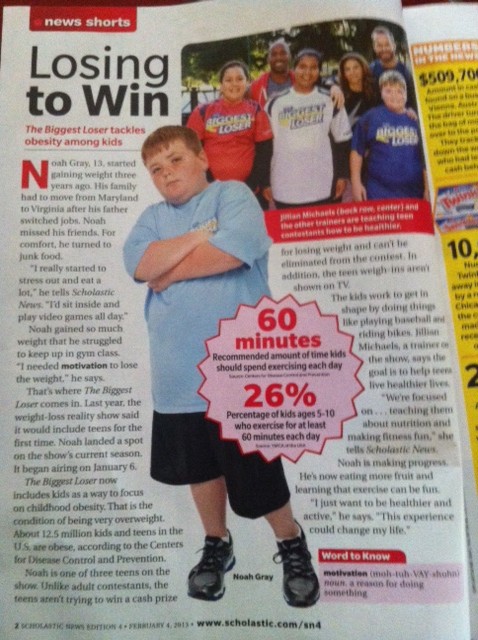
Today, when my fourth grade daughter brought home her weekly Scholastic News, which she has to read weekly for homework, I was horrified to see a full page article endorsing the new “The Biggest Loser” episodes with kids.

biggestloser

Kids don’t belong on reality TV at all, not to mention on a fat-shaming show that stereotypes and stigmatizes children based on their current body type.

Bitch’s take on the Biggest Loser kids episodes:

At one point in last week’s season premiere, Jillian Michaels talks to the three kids about bullying, and tells them she’s here to help. While Michaels may have the best of intentions, her brand of helping means changing the kids to conform to the bullies’ standards, not challenging the norms that make the bullying okay in the first place. It’s fine if teens want to eat healthy and get in shape—go for it you healthy teens!—but exploiting fat kids on national television in an environment that is known to be unrealistic and risky just so NBC can get more ratings is all kinds of wrong. And the more research we see, the more we learn that fat and health aren’t as closely related as we thought—which makes The Biggest Loser: Chubby Kid Edition even worse.

The non-profit About-Face blogs:

this odious piece of programming’s definition of mentoring means exposure to fat shaming, intensely restrictive diets, and excessive exercise. The Biggest Loser is synonymous with fueling a national environment that promotes fat phobia, body shaming, and unhealthy means of weight loss…But attempting to integrate youth into the most fat-shaming, weight loss glorifying TV show in America just to expand the target audience is horrifying. Our society is already massively confused about the relationship between size and health and riddled with misconceptions that one is an indicator of the other.

Even the LA Times writes about the show:

There’s certainly an argument to be made that reality TV has no business putting kids in the limelight. There is just no telling how it might impact young lives 20 years from now.

At the very least, the idea of putting kids on this program to improve their health is highly debatable. In fact, when my daughter told me that there was an article that made her uncomfortable, I assumed she was talking about the debate section of the mag, where one kid supports something and another kid is against it. But, no. “The Biggest Loser” piece is on page 2, presented with zero controversy. My daughter told me that she felt sorry for the boy, because people were making him feel bad for being fat. She said, “This is horrible. Why would they do that?” Am I supposed to tell her NBC just cares about his health?

Can’t remember the last time I blogged about kids and food

I used to blog regularly about kids and food, but, now, hardly at all and that’s a good thing. Knock on wood, but food is pretty much a conflict free issue at my house.

I realized my food blogs had stopped when I wandered downstairs during movie time and saw this:movietime

My kids got that candy for Christmas. Before you call CPS on me, I want you to know that when my older daughter saw me standing in the doorway, she asked for chicken soup. My three year old shouted, “Me too!” That bowl of candy doesn’t have a dent in it.

(Lucy is watching “Ratatouille” and hopefully smirking about the lack of female chefs. Rose is watching “My Little Pony” which commenters keep telling me I should watch but I can’t bring myself to do it.)

All of my blogs on Reel Girl about kids and food basically centered on this: I let my kids eat whatever they want, whenever they want. I have raised them based on the principles from the excellent book Preventing Childhood Eating Problems. I read this book because the same authors wrote a book that helped me to get over a tenacious eating disorder. I hope to train my kids (as I eventually trained myself) to listen to and trust their own bodies instead of any authority figure, “expert,” or fad about what to eat.

Every Christmas, Santa leaves a candy trail for the kids their bedroom to their presents, and they all say finding the candy is their favorite part of Christmas. Note that it’s not eating the candy that they love, but opening the door, seeing the sparkly silver kisses, and following them to their presents.

As I keep writing in these blogs about kids and food, I have no idea what will happen when my kids grow into teenagers, but I am hopeful. Right now, my kids are not only adventurous eaters who try new foods all the time, but also, they are what any parent would call “healthy” eaters.

Once they were old enough to feed themselves, we have regular meal times and I make healthy food always available but hardly ever controlled their eating as far telling them what, when or how much to eat. I write “hardly ever” because my middle daughter is allergic to eggs. I was terrified of the allergy when she was a baby, after she had a skin rash when she ate a hard boiled egg. For probably a year after that, I made a big deal about telling everyone she was allergic to eggs and making sure she never had anything with eggs in it. Then I saw her getting tentative about trying food, always looking up at me nervously before taking a bite of something. Clearly, she was picking up on my anxiety.

So I shifted tactics. I subtly told adults she was allergic when it was necessary to tell them. I didn’t make her allergy a conversation topic that she could overhear. I rarely had eggs in my house, again without making a big deal about it. She calmed down and also, luckily, her allergy lessened as she grew older. Now if she eats something with egg, sometimes her tongue will itch. But that she is still the pickiest eater of the three, though none are picky, further indicates to me that the more relaxed parents are about food, the more relaxed their children will be.

Now here’s the problem: How many women do you know who are relaxed about their food intake?

Before you ask, so far, no cavities.

Here are some (not all) links to previous blogs on Reel Girl about kids and food that go into more detail about books, practices, experience, philosophies, etc.

Girls and food

More on girls and food

Preventing eating disorders by teaching intuitive eating to kids


Note to the babysitter

Oreos for breakfast? Really?

Post Halloween bliss


Parents, this is about you too

White woman on TV attacked for appearance, defends herself, gets celebrated; black woman on TV attacked for appearance, defends herself, gets fired

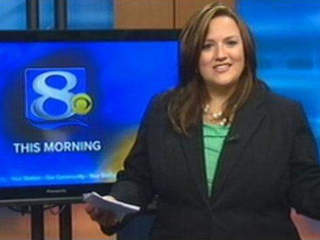
Rhonda Lee, a meteorologist for KTBS TV, the ABC affiliate in Sherevport, Louisiana was fired from her job after she publicly defended herself against a sexist and racist comment made by a viewer on the station’s Facebook page.

rhondalee


The viewer wrote:

the black lady that does the news is a very nice lady. the only thing is she needs to wear a wig or grow some more hair. im not sure if she is a cancer patient. but its still not something myself that i think looks good on tv.

Lee responded:

Hello Emmitt–I am the ‘black lady’ to which you are referring. I’m sorry you don’t like my ethnic hair. And no I don’t have cancer. I’m a non-smoking, 5’3, 121 lbs, 25 mile a week running, 37.5 year old woman, and I’m in perfectly healthy physical condition.

I am very proud of my African-American ancestry which includes my hair. For your edification: traditionally our hair doesn’t grow downward. It grows upward. Many Black women use strong straightening agents in order to achieve a more European grade of hair and that is their choice. However in my case I don’t find it necessary. I’m very proud of who I am and the standard of beauty I display. Women come in all shapes, sizes, nationalities, and levels of beauty. Showing little girls that being comfortable in the skin and HAIR God gave me is my contribution to society. Little girls (and boys for that matter) need to see that what you look like isn’t a reason to not achieve their goals.

Conforming to one standard isn’t what being American is about and I hope you can embrace that.

Thank you for your comment and have a great weekend and thank for watching.


KTBS defends its decision to fire Lee, claiming that she violated a company policy, one that she has allegedly violated before, concerning social media.

If harsh viewer comments are posted on the station’s official website, there is a specific procedure to follow. Ms. Rhonda Lee was let go for repeatedly violating that procedure after being warned multiple times of the consequences if her behavior continued. Rhonda Lee was not dismissed for her appearance or defending her appearance. She was fired for continuing to violate company procedure.


Lee said that she has yet to see this policy.

Lee’s response to the comment couldn’t have been more calm, focused, or right on target. It gave me chills to read it. How could someone in management (if they planned on responding at all rather than ignore it, that is, allow it) have responded any better than that? Do you think they would have or could have written:

Little girls (and boys for that matter) need to see that what you look like isn’t a reason to not achieve their goals.

No one could say that but Lee, the victim of the sexism and racism. She has to speak for herself, without shame. That is the lesson to teach kids about bullying, racism, and sexism.

But instead, the lesson learned is that when Lee refused to be a silent victim, she was punished. Fired. How can a nation that acts like it is concerned about bullying, whose President speaks on the issue and says its important one for the whole country, allow this to happen?

In October, Jennifer Livingston, a morning anchor with WKBT TV in Lacrosse, was attacked by a male viewer for her weight.

Jennifer_Livingston_20121003073030_320_240

Livingston defended herself in an on air editorial that lasted longer than four minutes. She finished her statement by thanking her colleagues, family, friends and all the others who came to her defense. Her story made headlines and she was on “Good Morning America” talking about her experience.
Just like Lee, Livingston mentioned young people:

“This was a personal attack,” Livingston said.  “Calling me obese is one thing.  Calling me a bad role model for our community that I’ve worked at for 15 years and especially for young girls when I have three girls was a low blow and I thought it was uncalled for and I wanted to call him out on it.”


Livingston also urged children who were victims of bullying to defend themselves, a lesson she says she teaches her own daughter. By making her speech on TV, Livingston walked her talk.

It is particularly important that women speak out publicly because, historically, women have been shamed into silence. This shaming/silence tactic is evident with everything from rape to sex tapes; again and again, it is the victim and not the perpetrator who is supposed to be humiliated.

Just yesterday, Anne Hathaway was “shamed” when someone took a photo of her. When Matt Lauer smirked during a scheduled interview on the “Today Show” that he’d seen a lot of her lately, Hathaway didn’t hide away, but responded: “I’m sorry that we live in a culture that commodifies the sexuality of unwilling participants.” By speaking out, Hathaway directed the shame back where it belongs, on Lauer for his idiotic comment when she was trying to promote her movie, on the photographer who took the photo, and on the one who paid for the picture.

The attack on Lee is sexist. No one would be upset about that hairstyle if she were male. The taunting and comments that women receive on the internet about our appearance is epidemic and shows that sexism is alive and well in America. Attacking women for how they look, just putting out the threat that women could be attacked for how they look, has been an effective way to keep women in their place for much too long. Courageous and public acts like Lee’s and Livingston’s show all women how to deal effectively with this kind of bullying.

Of course, the attack on Lee is also racist.

It’s great that media outlets, viewers, activists, and colleagues supported Livingston when she defended herself against a bully. Lee deserves that same support now. That racism and sexism are protected in America in 2012 so that a woman defending herself against it loses her job makes me sick.

Please sign this petition demanding that Rhonda Lee get her job back.

Read Reel Girl’s latest post on the Rhonda Lee story: Black hair and feminism: Beyonce, Willow Smith, Chris Rock, and Rhonda Lee


.


Candy Crowley changes the pose of the moderator

Post-debate, Candy Crowley told CNN that she altered her position on the floor as moderator. She was supposed to sit, but she decided to stand. “I have a bad back,” she said. But there was another reason. Crowley watched Jim Lehrer and saw how he was seated lower down than the candidates. “He looked like he was in an orchestra pit,” she said. In that position, “You’re not on the same level.” She thought that made it harder for Lehrer to keep control of the debate.

There was so much internet chatter before the debate about how all the teeth were taken out of the moderator. Crowley didn’t let happen, in no small part because she took control of her pose.

Anyone who reads Reel Girl knows I spend a lot of time analyzing the poses of males and females, real and imagined, actors and politicians, kids and grown-ups.

Poses matter and women know this from a lifetime of being led into idiotic, submissive poses and watching the stupid, idiotic poses other women get led into. Crowley was alert, prepared, and took action when she had the power to alter her position. She kept control of the debate.

Nice job, Crowley, and thank you to three teen girls from New Jersey for advocating to get the first female moderator in 20 years to moderate a presidential debate.