After public outcry, Disney removes sexist ‘I need a hero’ shirts

YAY! Victory dance! Here’s Disney’s statement:

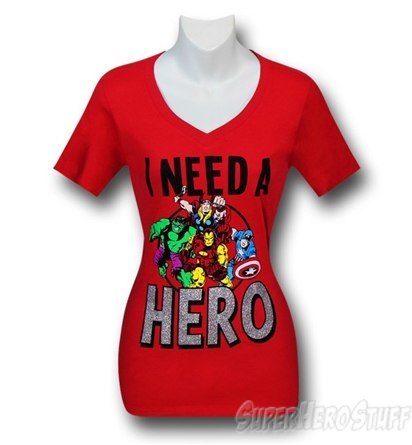
Disney Store recently  received some guest feedback regarding the tagline of a Marvel Avengers adult women’s t-shirt that stated “I Need a Hero”.  While the t-shirt was designed  to be a witty, playful interpretation of the Super Hero theme, there were some that did not see the humor and felt it could send the wrong message. We decided to remove the t-shirt from DisneyStore.com and Marvel.com, however, we do offer other Marvel t-shirts including ones with the tagline “Girl Power!” which are currently sold out but will again be available this summer.

Thank you, Disney for doing the right thing.

Reel girl readers, thank you for all of your help in getting this story out. Without your action, things like this don’t happen. I’m happy to report that Reel Girl’s post on Disney’s sexist T was linked around the internet including to sites like Miss Representation, the Huffington Post, and Feministing.com. Reel Girl’s post on the T was shared almost 1,000 times.

Now, Disney, about those movies…


Wellesley Tweets Katelyn Campbell: excited to welcome you this fall

Wellesley Tweets:

Wellesley College @WellesleyKatelyn Campbell, is excited to welcome you this fall.

Let’s hope GW’s principal is learning a lesson or two about being a bully. Principals should know better, don’t you think?

Read heroic teen Katelyn Campbell’s full story and why we need to get more girls into leadership positions. I guess it’s pretty obvious why people are so afraid of that. Obviously, it would change the world.

When teen girls take leadership positions, the truth is exposed and the culture shifts

A few days ago I posted about the lack of female leadership at Andover, and how exposure to this kind of sexism in high school can affect kids for a lifetime.

This week, two stories are in the news about high school girls taking a stand to make a difference in their schools and their communities. Both girls are in power positions, one as a journalist and the other a student body vice president.

Lisie Sabbag writes for the Palo Alto High School magazine Verde.

Lisie_Sabbag-240x300

Wanting to investigate the teen rape issues that gained national attention from the Steubenville story, Sabbag wrote about sexual violence in her hometown, the wealthy community of Palo Alto.

SFGate spoke to Sabbag about her story:

“I interviewed almost 10 different rape survivors, all from Paly. Most of them when they found out I was writing about it came up to me and said they wanted to help out. The two stories I used were very representative….

Teen boys are expected to take advantage of the opportunities at all costs, or else face the ire of their friends, according to Amy, a senior who has experienced this first-hand.

“They [Paly guys] would say, ‘Oh you didn’t want to have sex with her because she’s drunk? You’re such a fag,’” Amy says. “Not that that’s excusable, but there is just as much pressure on guys to have sex and f— everything that moves as there is on girls to be that girl that sleeps with them.”

In West Virginia, Katelyn Campbell, the student body vice president at George Washington High School, refused to attend a school assembly hosted by conservative speaker Pam Stenzel.

Katelyn-Campbell-300x276

Think Progress reports:

Stenzel has a long history of using inflammatory rhetoric to convince young people that they will face dire consequences for becoming sexually active. At GW’s assembly, Stenzel allegedly told students that “if you take birth control, your mother probably hates you” and “I could look at any one of you in the eyes right now and tell if you’re going to be promiscuous.” She also asserted that condoms aren’t safe, and every instance of sexual contact will lead to a sexually transmitted infection.

Campbell refused to attend the assembly, which was funded by a conservative religious organization called “Believe in West Virginia” and advertised with fliers that proclaimed “God’s plan for sexual purity.”


Campbell says that her principal, furious with her, threatened to call the college where she had been accepted, Wellesley, to say that she was a “back stabber” with a “bad character.” Refusing to be silent or back down, Campbell filed a complaint with the ACLU and is speaking publicly about her story.

What happens when girls don’t become elected officials or journalists in their schools? Which stories remain hidden and what issues never come to light?

What happens when girls have the courage to tell the truth about what they see, experience, what they think is important and what’s really going on in their lives?

Females are half of the population. They ought to hold 50% of power positions in their schools. When girls are invisible, all kids lose out.

What are your kids learning about gender in art class?

My six year old daughter goes to an excellent public school, but like most public schools, its resources are limited. I supplement my daughter’s education with art classes, music, and sports outside of school. She goes to art class at a place called 4Cats every week, and she loves it. I love it too. Every season’s session 4Cats picks one or two artists. The children study all about the artist, her life, and her work. Simultaneously, they create a painting in that artist’s style. Since starting 4Cats, my daughter has studied Leonardo Da Vinci, Monet, Vermeer, Lichtenstein, and Frida Kahlo. I asked her who her favorite is, so far. Her answer: Frida Kahlo, and then she asked me, “Why is there only one girl?”

Here’s Alice’s Frida Kahlo.

frida

I was thinking that it’s great my daughter is getting exposure to art, but also how, and this reminds me of the post I just wrote on boarding school, the more “educated” we get, the more we can “learn” to internalize sexism. Before 4Cats, my daughter had no idea there were many more male artists than female artists. Now she knows. Will that limit how she evaluates her own potential? Her dreams? Her aspirations? Of course, I tell her she can be anything she wants to be. But words are just words. Showing a kid something, modeling it for her, is much more effective. That’s how kids really learn, and grown-ups for that matter. My words contradict what my daughter sees.

My temporary solution? Art class is today, and I’m going to ask 4Cats if they’ll consider featuring more female artists in the curriculum.

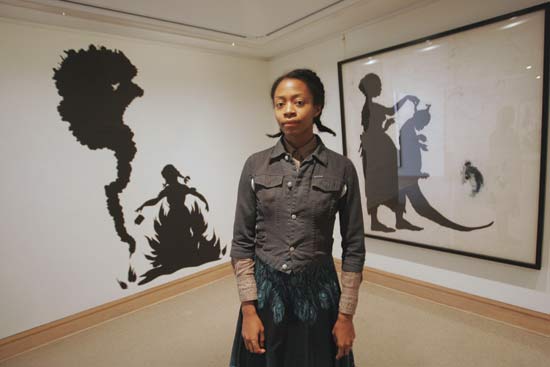
Update I spoke with my daughter’s teacher who is wonderful with these kids. She told me that in the 4Cats curriculum, there are only two female artists. 4Cats studios are all over the U.S., Canada, and Mexico. Each franchise (the one we go to is in San Francisco) can select who they want use out of that established curriculum. The curriculum includes books for kids on the artist, apps, and games, along with other related activities. Alice’s teacher said that the 4Cats curriculum reflects who the important artists are and that’s why there are mostly males taught. I suggested a few females– Mary Cassatt, Artemisia Gentileshi, and Georgia O’Keefe. I love Kara Walker’s silhouettes, and I bet the kids would have so much fun making those.

kARA-WALKER-721276

The teacher told me she’d forward this blog to whoever is in charge of curriculum. So if this blog, gets to you, we love learning about art. Half of the kid population– and most likely, at least half of your students– are female. It would be great if 4Cats made an effort to educate and inspire kids by teaching them about female artists.

Women, class, and the problem of privilege: Everything I learned about sexism, I learned at boarding school

The New York Times reports on sexism and leadership at Phillips Andover Academy.

In short order, the number of girls in the student ranks did roughly equal the number of boys. The faculty today is more than half female. And until her retirement last summer, the head of school was a woman, for nearly two decades.

And yet some of the young women — and men —   at the 235-year-old prep school feel that Andover, as it is commonly called, has yet to achieve true gender equality. They expressed this concern several weeks ago in a letter to the student newspaper, The Phillipian, and like a match to dry tinder, it set off a raging debate that engulfed the campus.

The proximate cause of concern was the election, held Wednesday, for the top student position, called school president. Since 1973, only four girls have been elected, most recently in 2003. (The other top student position, that of editor in chief of the newspaper, has had nine girls and 33 boys.)

The letter writers said this was an embarrassment, especially at a school considered so progressive. The paucity of girls in high-profile positions, they said, leaves younger students with few role models and discourages them from even trying for the top.

When I went to boarding school, in 1983 at St George’s in Newport, Rhode Island, there were 5 school prefects: 4 males to 1 female. The same ratio I would write about thirty years later on this blog posting on sexism in children’s films, calling it the Minority Feisty. I don’t think that’s a coincidence. As a thirteen year old girl, I remember thinking about how hard it was for females to become leaders. Out of that group of 5 prefects, there was one “Senior Prefect.” There had never been a female Senior Prefect when I went to St. George’s. I don’t know if there’s been once since.

My sister, a year and a half older than me, went to another boarding school, Groton. That school also had never had a female Senior Prefect. After my sister graduated, Groton started a policy that students had to elect one male and one female Senior Prefect. The first female Senior Prefect of Groton appears in a fictionalized version in Curtis Sittenfeld’s book Prep. If you read Prep, you can see how Sittenfeld struggled with and was influenced by the gender politics of boarding school. I’m happy she had the courage to write a book about it.

What else do I remember about prejudice and boarding school? Boys sitting on a bench and rating girls who walked by from 1 – 10 on how hot they were. Dressing up as a bunny, along with all of the other new girls, including fishnets, ears, and a tail on “Casino night.” Being called “nappy face” by a boy because I had big lips and not knowing what that meant. Feeling exotic because I had dark hair. Learning the word “spearchucker” for the first time when one of the tiny minority of African-Americans was mocked.

I came from a rich family but, still, from the left coast of San Francisco. I was amazed by the gender roles I saw kids my age on the East coast fall so easily into, even the minor rituals. As I rushed to class, all the boys opened doors for me. Every single male had the elastic waistbands of his boxers peeking out above his khaki pants. It seemed like all of the leadership positions were held by boys. If you got their approval, you had it made.

My best friend and I desperately wanted attention and validation from of any one of those male prefects. Here’s our misguided quest referenced in the yearbook with the caption “Todd’s toys,” referring to one of the elected school leaders.


For his senior bequeath in the same yearbook, Todd got “a twenty year sentence,” the penalty for sex with a minor. Just a joke, of course.

The New York Times reports:

John G. Palfrey Jr., the headmaster, said in an interview that Andover was only a reflection of other schools and society at large as it grappled with these issues. “We do not live in a post-gender, post-race, post-class society,” he said. “Girls have not had equal access to top leadership positions.”

What’s telling about boarding school is that it doesn’t reflect the power structure at all levels of society. Boarding school reflects the sexism that exists at the very top. When parents are considering sending their kids to get the “best” education available, they may want to think about whether or not they want to pay that kind of money so their kids can be exposed to that level of sexism that young.

For myself, I’m grateful I couldn’t follow the rules and was expelled my sophomore year.

Here’s the letter the students wrote to the Phillipian:

Letter To The Editor

Friday, March 1st, 2013


To the Editor:


A powerful silence hangs over our student body. This silence pervades our halls, our dorms and our classrooms, and it affects the very nature of leadership among our students.


This letter is meant to break that silence, once and for all.


Student Council recently made a significant structural change by implementing the new co­presidential system. There are many explanations for this change, but one of the primary factors was the staggering gender imbalance in the student leadership of the past 40 years.


This gender inequity is a critical issue we face as a student body. Andover students like to subscribe to the myth that we are the best, the brightest and the most forward thinking students in the world. The past four decades, however, evidence the shortcomings in our beliefs. Having four female school presidents since the 1973 merger of Phillips Academy and Abbot Academy is embarrassing.


What is worse, however, is the casual attitude surrounding this issue. The arguments behind these trends, which include, “Perhaps the students just wanted a male president,” “Andover is a meritocracy—if a girl deserved it, she would win” and, of course, the omnipresent “But there isn’t a gender problem at this school,” are simply ignorant.


Students have not elected female leaders because female candidates have been in short supply. Last year, only two out of the 14 candidates were female. Strong role models create a positive cycle through which young students, male or female, are inspired to become role models themselves. Boys have myriad opportunities to look up to the established, visible—and male—student leaders at this school. Sadly, our current female students lack these public figures. They have not seen a female student body president. In fact, there has not been a female in that office since 2004. Our future leaders of both genders have yet to see a woman lead the Student Council—that fact works to the detriment of boys and girls alike.


Since conversations about the Student Council change focused significantly on gender inequity, we were dismayed that some students running for the most public student role on campus chose not to seize the opportunity to address this issue. For students to take the issue of gender lightly, or worse, to ignore it, will only further exacerbate the problem and ignore the proverbial elephant in our collective room. Candidates should embrace a paradigm shift toward more equal representation in the school’s Student Council.


To the student body: this election season presents us all with an opportunity for immediate change. As younger students begin to assume the responsibilities of every senior class, the future of our Academy must remain a primary concern. We charge you to think critically about the students you will select as representatives. Keep in mind long term consequences—the pair you select could set a precedent and break down any remaining barriers for both boys and girls to run in the future.


Let us truly live up to our forward­thinking ideals. Be empowered in the knowledge that you can be part of something monumental, something bigger than all of us. Make your vote count.


Written by:


MJ Engel ’13, Gabbi Fisher ’13, Samuel L. Green ’13, Maia Hirschler ’13, and Henry Kennelly ’13


Signatories:


Unwana Abasi ’13, Angela Batuure ’13, Meaghan Haugh ’13, Haonan Li ’13, Lucia McGloin ’13, Laz Nyamakazi ’13, and Jing Qu ’13


Update: Since the learning about the sexual assaults at St. George’s when I was there, I’ve written more posts. Here’s a list of all of Reel Girl’s posts on St. George’s:

St. George’s, how should law enforcement respond to 911 call about possible rape at your school?

Open letter to Bishop Knisely about sexual assaults and cover ups at St. George’s school

Why is a justice who argued against statutory rape laws on the R. I. Supreme Court?

St. George’s school continues to hold back information in sexual assault investigation

St. George’s releases report on sexual assaults at the school

St. George’s alumna creates fund for survivors sexually assaulted at school

Comments on petition asking St. George’s for fair investigation into assaults make me cry

St. George’s School continues to flub investigation into sexual assaults

Lawyer investigating St. George’s sexual assaults is partner of school’s legal counsel

‘There’s no sense of why so many assaults happened at St. George’s, what the school did to create cultural backdrop that allowed and encouraged rape.’

Prep school alumni respond to St. Paul’s rape trial verdict

Women, class, and the problem of privilege: Everything I learned about sexism, I learned at boarding school

Tucker Carlson, Jerry Garcia, and me


Marvel markets sexism with Avengers T-shirts

Just saw Marvel’s sexist T-shirts on the Huffington Post (there’s some link to Reel Girl but I can’t find it?)

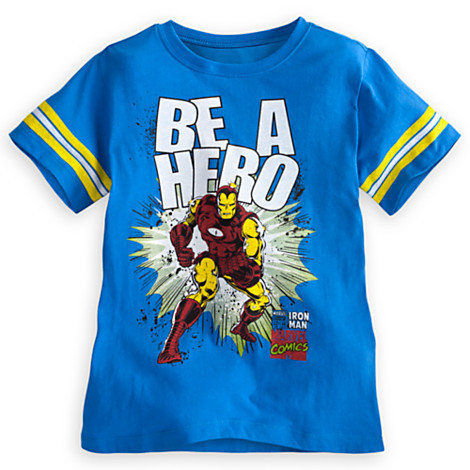
Marvel’s T-shirt for boys.

original

Marvel’s T for girls.

girls

Argh!

This sexism, by the way, goes beyond the specific imagery of a superhero. “Be a hero” translates to “act, take risks, make choices. “I need a hero” means “I’m a minor character. I’m passive, and I wait.”

See the difference?

The insidious problem with this stereotyped gender casting is that women are constantly sidelined and marginalized, remarkably, in the roles they play in their own lives. Females are cast in the supporting role, defined by their relationships as girlfriend, wife, mother, or helper. This sexist narrative has been going on for a long, long time, and we keep recycling it. I just saw this Virginia Woolf quote Tweeted by Bitchflicks:

And I tried to remember any case in the course of my reading where two women are represented as friends…They are now and then mothers and daughters. But almost without exception they are shown in their relation to men. It was strange to think that all the great women of fiction were, until Jane Austen’s day, not only seen by the other sex, but seen only in relation to the other sex. And how small a part of a woman’s life is that.


How small a part! But who would ever guess from looking at how women are depicted in the media– movies, TV, books, advertising– in 2013? Ironically, and this is what is so fucked up and twisted, females get to exist, get to play a part at all when they are sexualized and marginalized.

“Avengers” has the classic Minority Feisty ratio of 5 male superheroes to one female. As artist Kevin Bolk illustrates, the lone female is highlighted by her ass.

avengers

What is the solution to this sexism? Be a hero. Women, write your own stories. Make your own art. No one else can do it for us.

Update Here’s a comment from Nick:

The solution is not only for women to write their own stories, but for men to understand why this is sexist. There is a dearth of great female superheroes, and when they exist, they usually suffer from the Women In Refrigerators trope, where they die or lose their powers not doing something heroic, but assassinated while cooking in their kitchen, sometimes horrifically placed in the refrigerator, where the trope’s namesake comes from.

The solution has to be EVERYWHERE. Men and women alike should write compelling female superheroes. Some men don’t understand why Women in Refrigerators or Damsel in Distress tropes are inherently sexist, so education on this is also key.

For my part, I read up on feminist blogs like ReelGirl and watch Anita Sarkeesian videos (and the reaction videos, because she is very one-sided). I try to avoid making the same mistakes as other writers when dealing with women. I don’t ever assume I can write a compelling female character, I always question myself and I always push myself to do better.

I think that’s another good answer to this problem – each of us individually pushing the status quo.

And my response:

Hi Nick,

Totally agree the solution has to be everywhere. Thanks for this comment and for the thought and research you put into writing female characters.

Margot


Obviously, it’s a sexist world out there, and when women make art, it’s often ignored or marginalized. It would help if women were running the major Hollywood studios or had the funds to bankroll those studios, not to mention lead the prestigious organizations and comprise the boards that give awards to “great” artists.

That said, women need to keep writing and creating. Making art is risky and dangerous, engaging in the process is being a hero. Persevering is especially challenging when your work gets dismissed and rejected because stories about women aren’t valued. But, even with all of this against us, women must put our stories and visions out there. I really believe this is the only way we’ll ever achieve full gender equality.

Here are a couple posts I wrote on the issue of women making art: What if Van Gogh took Prozac? and Why aren’t there more women artists?

Update Miss Representation started a petition against these shirts. I signed and hope you do too.

“Planes” movie degrades females with sexist preview

Today, my three young daughters and I saw yet another sexist preview advertising a children’s movie, this one for “Planes.” The scene begins a la “Top Gun” with two male planes flying fast and doing stunts.

Plane One: What’s taking this guy so long? Is he really as good as he says he is?

Plane Two: No, better.

Plane One: Whoa, who was that?

Our Hero (descending fast on top of them): Well, hello ladies. Ready to lose?

Our hero goes on to leave the “ladies” in the dust.

The message is that females are losers, not leaders. They can’t compete.

Here’s the preview:

No female in the preview at all.

If this were one misogynistic joke in one movie, maybe it wouldn’t be that horrible. But sexist jokes dominate movies for kids. Sexism in movies for children is a repetitive pattern. Kids learn from patterns. That’s how brains develop. See the problem?

Take a look at these sexist jokes from “The Lorax,” “Madagascar 3,” and “Pirates.” All this, when kids’ movies already feature so few female characters at all. Is mocking girls a lesson you’d like your children to learn when they go to movies?


‘Croods’ best ensemble movie since ‘Incredibles.’ Take your kids!

My three daughters, my niece, my sister, and I LOVED “The Croods.”

croods

From beginning to end, this movie is fantastic. The characters are great and the animation is gorgeous. “The Croods” is the best ensemble animated movie since “The Incredibles,” and like that classic, “Croods” is about a family that is populated with strong female characters.
“The Croods” is narrated by a female. That is a true rarity in movies made for children. Who tells the story is hugely important and leaving females out of this role has all kind of bad effects. Everyone needs to be able to writer her own story.

Not only is Eep the narrator, but…and this is truly amazing…she is not a Minority Feisty! Her family is comprised of a mom, a granny, a baby sister and then her father and brother. That’s right, 4 females to 2 males! This gender ratio is almost unheard of in mainstream movies for children.

There’s another male main character who comes on the scene: Guy. But even with this addition, the gender ratio still tips in female favor. There are various animals and magical creatures, but their parts are small, and the genders mixed, so I feel confident we don’t have to deal with the Minority Feisty issue at all in this movie.

Speaking of creatures, in the last scene of the movie, Eep is shown NOT “riding bitch.” She is on a flying creature, in front, with Guy behind her.

I do have a couple complaints. Eep’s outfit sucked. While the clothing of all the other characters covered them to their knees or more, Eep’s dress barely skimmed her ass. There were actual panty shots. For that, I am deducting one H.

Aside from Eep’s outfit, her look is great. She is a cavewoman and she looks it, with big arms, muscular legs, and bushy hair. Her armpits, shown in the movies first shot, are conspicuously hairless, an issue that could’ve been easily solved by giving her more clothing coverage, but whatever.

Eeps refers to herself as a “caveman” and that term is used to describe her family a few times in the movie. At least that gendered word seemed really out of place, I hope not only to me. With all the ways this movie defied gender stereotypes, couldn’t they change that word to cavepeople?

Much of the movie is battle for leadership between the dad and Guy. I admit, I was pretty nervous when Guy came on the scene. As with “Hotel Transylvania,” I was concerned the story would morph from a father-daughter to father-son theme. Though in some places, it teetered, the movie stayed faithful to keeping Eep and her dad the central focus. I liked the addition of Guy. Clearly, he admires Eep for her strength and vision. He is enamored of her without coming off as a wimp, a loser, or relinquishing his own attractiveness. I liked that Eep is shown as powerful and also in love. Defying another limiting gender stereotype for females in the fantasy world, being strong doesn’t mean Eep has to end up alone.

I think the Granny made a sexist comment, calling the dad and the brother “girls” at one point as an insult, but that seems so out of character and incongruent with the movie that I’m hoping I’m wrong.

“The Croods” is a movie about the strength and importance of family. Of course, “family values” is a common theme in children’s media, but too often, to communicate this bond, female ambition is stereotyped and sacrificed. Most recently, we saw this in the infinitely sexist “Escape From Planet Earth” which made the point with a “good” stay-at-home mom versus a wicked, bitter, delusional, and lonely working woman.

“The Croods” did something different, showing the value of family by illustrating that each member’s role and identity is dynamic and changing. People need to grow. Pigeonholing identities gives only the illusion of strength.

One final factor that I adored about the movie is how it showed the power of the narrative and the importance of a female protagonist. The father and Guy both told stories to the the family about a female character who was obviously based on Eep. Theses stories mirrored the thematic basis and structure of the movie. Through stories, real life heroes are born. Don’t miss this movie! Reel Girl rates “The Croods” ***HH***

Update There’s just one more scene that kind of bugged me in “The Croods.” I forgot to mention it here, but I’ve been thinking about it since. So the dad and Guy are trying to lure a creature into a trap and as bait, they create a female version of the creature, desperate for help. The damsel in distress is grotesque, with a lipstick mouth. The attacking creature rescues her. It was a bummer for me to see 3 male characters act out this gender stereotyped scene.