My daughter is home sick today, and we got under a blanket, lit a fire, and watched “Secret of Kells.” Wow. Besides Miyazaki, I don’t think I I have ever seen an animated film so beautiful. The colors and the patterns are mesmerizing. Not only is this film drop-dead gorgeous, but it features one of the coolest female characters to grace animation. If that’s not enough to gush over, that female character, not the protagonist, is the one on the posters and DVD cover. (On Google, there is an alternative cover featuring the protagonist, Brendan, but I’ve never seen that version off the internet.)
“Secret of Kells” came out before my blog, back in 2009 when I still rented DVDs. The guy at the store recommended it to me. Remembering that today and because my daughter was too sick to argue with any movie choice of mine (i.e. one she’d never heard of) we watched “Kells.” As the film went on, I fell in love with it but also remembered why it slipped off my radar.
The story is about how the famed Book of Kells came to be. The narrative revolves around monks and monasteries. You can’t get a much more exclusively male as far as settings go than that. Today, as a couple years ago, I was impressed with the diversity of the monks. They are all body types, (rectangles and circles); they are old and young; they are varied ethnicities, and they are all male.
Brendan, our hero, is an apprentice monk (I’m sure there is a better term for that.) He is the protagonist of the movie and the narrative follows the traditional quest myth pattern. Brendan goes into the forbidden forest to search for some special berries that will make green ink that an old monk needs for the book. In the forest, Brendan runs into a pack of wolves. He is rescued by the brave fairy, Ainsling when she shouts: “What are you doing in my forest?”
Ainsling has me with that opening line. I love how territorial and confident she is. Her magic and familiarity with the forest is evident throughout her scenes. When Brendan sees the berry tree swarmed with bees, Ainsling assures him: “Don’t worry, I told them not to sting you.”
Not only can Ainlsing talk to and control animals, she can climb the tallest trees. She is totally at home in the forest and a protector of it. She is great looking, with long, white hair, bushy-black eyebrows, and huge green eyes.
Ainsling is wonderful, but she is not in the movie nearly enough. I remembered today that the last time I watched “Kells,” her absence annoyed me. This time, immersed for three years in animation, I know how rare a character like Ainsling is, and how rare it is to see a cross-gender friensship like hers and Brendan’s. I still wish she was in the movie more, but I really love this film.
Scrabble, in some ways, is best board game ever invented, hands down.
Scrabble is fun and educational. Anyone who can read can play, yet the game naturally evolves to meet and match ages and skill level.
Scrabble is in no way sexist, unless you believe in the bullshit that girls are verbal. That’s a generalization fostered by training and reinforcing girls to be well-behaved, quiet bookworms, then calling it a “natural feminine” behavior. A “female” advantage, by the way, that magically vanishes when “being verbal” gains status; males dominate Nobel prize winners and great author lists.
Whether you have girls or boys or both, Scrabble will develop spelling and vocabulary. There’s just one problem my family has playing Scrabble.The game is vicious. It’s rare to play without someone in the family crying or quitting.
Why oh why is this game so competitive? I have tried to figure out what it is about Scrabble that brings out the worst in my kids. The bad behavior happens not only in how my children treat each other but how they treat themselves. They make fun of and cut down each others words, but also they do the same thing to their own creations. Almost never do I see a one of them put out a word and feel really proud of it; more often, she feels like, somehow, she could have done better. Thus, when we play Scrabble we all feel slightly on edge and vaguely dissatisfied, until the inevitable blow up comes and the whole game is ruined.
Scrabble is a great game, but I don’t know if its worth the emotional upheaval. Nonetheless, Reel Girl rates Scrabble ***HHH***
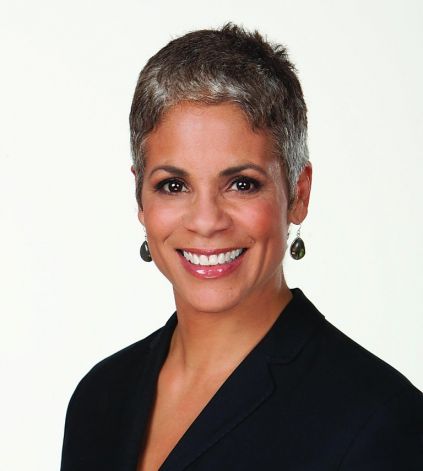
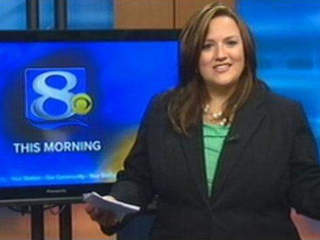
Admittedly, I’m becoming a little obsessed with this hair issue, but I started thinking about a local newscaster here in San Francisco, Dana King. I remembered reading a story about her last year on SFGate (a site I used to blog for.)
When King let her hair go gray, she was flooded with email. So much so that she had to go air, assuring viewers that her health was fine; she’d just made a decision to stop dying her hair.
Can you imagine viewers freaking out about a man with gray hair?
CNN’s Anderson Cooper?
CNN’s John King?
Those are just the first two who pop into my head. I bet on your local news, you’ve probably got co-anchors: a man with gray hair and a woman who is twenty years younger than he is, or trying to look twenty years younger so that she won’t get fired from her job.
When I was a producer for KGO Radio, one of the hosts there, Christine Craft, had been fired years earlier from a TV station for being too ugly and too old. At the time of her dismissal, Craft was 37 years old. She filed a lawsuit for gender and age discrimination. She lost the suit. She wrote a book about her experience and went on to became a lawyer. And, of course, a host on radio.
It is all so fucked up because obviously women are obsessed with their looks. It’s not because women are vain or superficial or born with some girl-vanity gene; women are trying to survive in the world. And what is even more fucked up is that “beauty” has nothing to do with beauty.
Curious about Dana King, today I Googled her. I found out that just last week, she announced she was leaving her post on TV to work on art full time. Here is what she said to The Huffington Post:
“I’ve reported stories from all over the world and yet I got more email reaction for going gray than anything else over my entire career,” King said Wednesday. “And looking back, that might have been the beginning of a huge shift for me — a move to really start following my heart.”
Earlier this year, King moved across the bay to Oakland, purchasing a home and work compound that she shares with several other artists. She bemoaned the fact that when it came time to leave for the station, she would be forced to leave behind her sculpting and “clean the crud out of her hair and fingernails.”
After I posted about Rhonda Lee, a meteorologist who was fired after defending her “ethnic” hair on Facebook to a racist and sexist commenter, I was thinking about black hair.
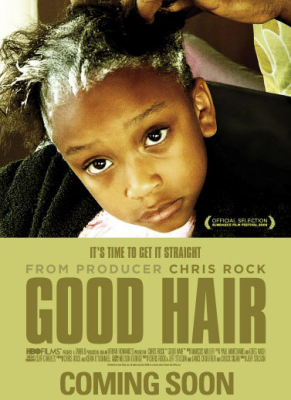
Right after I started Reel Girl, I saw an excellent documentary by Chris Rock on this subject called “Good Hair.”
The film begins with stills of Rock’s two young daughters. (I love that this film was inspired by these girls.) While we look at their pictures on screen, we hear Rock:
Those are my daughters, Lola and Zara. The most beautiful girls in the world. And even though I tell them that they’re beautiful every single day, sometimes it’s just not good enough. Just yesterday, Lola came into the house crying and said ‘Daddy, how come I don’t have good hair?’ I wonder how she came up with that that idea?
The film goes on to document just how these little girls got the idea that their hair wasn’t good enough.
In the film, actress Nia Long tells Rock:
There’s always a sort of pressure within the black community, like, oh, if you have good hair, you’re prettier or better than the brown skinned girl that wears the afro or the dreads or the natural hair style…The lighter, the brighter, the better.
Comedian Paul Mooney explains the phenomenon to Rock most concisely:
If your hair is relaxed, white people are relaxed. If you hair is nappy, they’re not happy.
“Good Hair” ends as it begins, with images of Lola and Zara shown at a playground while Rock muses: “So what do I tell my daughters? I tell them that the stuff on top of their heads is nowhere near as important as the stuff inside of their heads.”
A few months after I saw “Good Hair,” I watched nine year old Willow Smith bust out of the gender/ race matrix, exuberantly celebrating her hair and her independence with her hit song and video, “Whip My Hair.”
Willow sings:
Whip your hair back and forth,
Don’t let haters keep me off my grind,
Keep my head up,
I know I’ll be fine.
She explained the song to MTV:
Whip My Hair’ means don’t be afraid to be yourself, and don’t let anybody tell you that that’s wrong. Because the best thing is you.
Just a couple weeks ago, when this picture of Willow, now 12 years old, made the rounds on the internet, her mother, Jada Pinkett Smith, was derided for bad parenting.
Jada responded to the criticism on her FB page:
This subject is old but I have never answered it in its entirety. And even with this post it will remain incomplete. The question why I would let Willow cut her hair. First the ‘let’ must be challenged. This is a world where women, girls are constantly reminded that they don’t belong to themselves; that their bodies are not their own, nor their power or self determination. I made a promise to endow my little girl with the power to always know that her body, spirit and her mind are her domain.
Willow cut her hair because her beauty, her value, her worth is not measured by the length of her hair. It’s also a statement that claims that even little girls have the right to own themselves and should not be a slave to even their mother’s deepest insecurities, hopes and desires. Even little girls should not be a slave to the preconceived ideas of what a culture believes a little girl should be.
How cool is that? And how different is Jada Pinkett Smith’s public message to her daughter, and about her daughter, than the more conventional and ubiquitous “good mom” message from this Elizabeth Arden ad?
And speaking of beauty, there are few factors more obvious to reveal that what we call “beauty” is indicative of the time we happen to live in than hairstyles. “Beauty” is all about culture and class, status and money.
If African-American women represented the majority of CEOs in America, professors and department heads of Ivy League universities; if they dominated our boards and Academy Award winners, movie dierctors and nightly news anchors and on and on, do you think for one second any viewer would write in that the black lady on TV looks like she has cancer?
The racist comment has nothing to do with hair or “beauty” and everything to do with what it means to be black and a woman in America.
You’ve got a better chance getting into the power ranks if you look the part. Every woman knows how important her appearance is and how intimately what she looks like influences her chances of success.
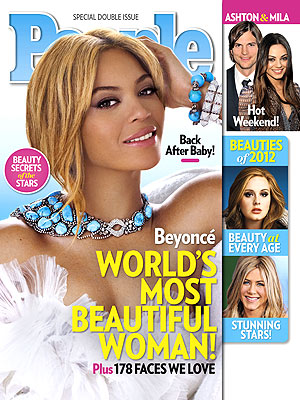
In the history of People Magazine, only two African-Americans have graced the “World’s Most Beautiful Woman” cover. I guess white people are just prettier than black people. Go figure. Note that Beyonce wins the title as a blonde.
If women ran Hollywood, do you think People would create a “most beautiful” issue at all? Or would the magazine come out with something more like “The Sexiest Woman Alive” featuring older stars on its cover? Real life “Sexiest Man Alive” winners include Pierce Brosnan at age 48, Harrison Ford at age 56, and Sean Connery at age 59.
Of course, it helps to come off as “sexy” when you’re portrayed in movie after movie as a hero and shown with “hot” sidekicks who are desperately in love with you. Though People covermen do have one thing in common with the women: Denzel Washington is the only African-American ever deemed “sexy” enough to win.
When Rhonda Lee defended her hair to a racist commenter, she wrote:
Little girls (and boys for that matter) need to see that what you look like isn’t a reason to not achieve their goals.
That’s the same reason Chris Rock made his documentary. It’s the same reason Willow Smith wrote her song, and Jada Pinkett Smith spoke up for her daughter. Is Rhonda Lee not famous enough or powerful enough to speak up for herself without getting punished for it?
In another example of the ongoing wonderful, incredible, super duper “new niceness” internet phenomenon, another teenage girl has killed herself after repeatedly being called a slut and a “fuckin ugly ass hoe” by internet commenters.
Friends of 16-year-old Jessica Laney, who hanged herself on Sunday, “say bullying through social media played a major role,” according to WPTV.
A TV meteorologist, Rhonda Lee, is the victim of looks based/ internet harrasment/ sexism and she defends herself. She says that she does so in order to protect girls and teach them not to be victims. She gets fired for speaking up.
Supposedly, Lee was fired because her employer KTBS, has a policy, one Lee never saw, that employers not respond to comments. Do you think that policy might not make much sense in the year 2012?
Here is Gawker’s analysis of it:
Regardless, the Lee story seems to be further evidence that many companies still have no idea how to navigate the complexities of social media, despite obviously drinking the Kool-Aid when it comes to the idea that social media is an integral part of success nowadays. The result is a company getting a Facebook page in order to facilitate community engagement while simultaneously hampering its employees from engaging even slightly with that community. Essentially, they’re stripping all the “social” out of “social media,” and then firing employees who push back at all against their archaic policy.
the black lady that does the news is a very nice lady. the only thing is she needs to wear a wig or grow some more hair. im not sure if she is a cancer patient. but its still not something myself that i think looks good on tv.
Lee responded:
Hello Emmitt–I am the ‘black lady’ to which you are referring. I’m sorry you don’t like my ethnic hair. And no I don’t have cancer. I’m a non-smoking, 5’3, 121 lbs, 25 mile a week running, 37.5 year old woman, and I’m in perfectly healthy physical condition.
I am very proud of my African-American ancestry which includes my hair. For your edification: traditionally our hair doesn’t grow downward. It grows upward. Many Black women use strong straightening agents in order to achieve a more European grade of hair and that is their choice. However in my case I don’t find it necessary. I’m very proud of who I am and the standard of beauty I display. Women come in all shapes, sizes, nationalities, and levels of beauty. Showing little girls that being comfortable in the skin and HAIR God gave me is my contribution to society. Little girls (and boys for that matter) need to see that what you look like isn’t a reason to not achieve their goals.
Conforming to one standard isn’t what being American is about and I hope you can embrace that.
Thank you for your comment and have a great weekend and thank for watching.
KTBS defends its decision to fire Lee, claiming that she violated a company policy, one that she has allegedly violated before, concerning social media.
If harsh viewer comments are posted on the station’s official website, there is a specific procedure to follow. Ms. Rhonda Lee was let go for repeatedly violating that procedure after being warned multiple times of the consequences if her behavior continued. Rhonda Lee was not dismissed for her appearance or defending her appearance. She was fired for continuing to violate company procedure.
Lee said that she has yet to see this policy.
Lee’s response to the comment couldn’t have been more calm, focused, or right on target. It gave me chills to read it. How could someone in management (if they planned on responding at all rather than ignore it, that is, allow it) have responded any better than that? Do you think they would have or could have written:
Little girls (and boys for that matter) need to see that what you look like isn’t a reason to not achieve their goals.
No one could say that but Lee, the victim of the sexism and racism. She has to speak for herself, without shame. That is the lesson to teach kids about bullying, racism, and sexism.
But instead, the lesson learned is that when Lee refused to be a silent victim, she was punished. Fired. How can a nation that acts like it is concerned about bullying, whose President speaks on the issue and says its important one for the whole country, allow this to happen?
Livingston defended herself in an on air editorial that lasted longer than four minutes. She finished her statement by thanking her colleagues, family, friends and all the others who came to her defense. Her story made headlines and she was on “Good Morning America” talking about her experience.
Just like Lee, Livingston mentioned young people:
“This was a personal attack,” Livingston said. “Calling me obese is one thing. Calling me a bad role model for our community that I’ve worked at for 15 years and especially for young girls when I have three girls was a low blow and I thought it was uncalled for and I wanted to call him out on it.”
Livingston also urged children who were victims of bullying to defend themselves, a lesson she says she teaches her own daughter. By making her speech on TV, Livingston walked her talk.
It is particularly important that women speak out publicly because, historically, women have been shamed into silence. This shaming/silence tactic is evident with everything from rape to sex tapes; again and again, it is the victim and not the perpetrator who is supposed to be humiliated.
Just yesterday, Anne Hathaway was “shamed” when someone took a photo of her. When Matt Lauer smirked during a scheduled interview on the “Today Show” that he’d seen a lot of her lately, Hathaway didn’t hide away, but responded: “I’m sorry that we live in a culture that commodifies the sexuality of unwilling participants.” By speaking out, Hathaway directed the shame back where it belongs, on Lauer for his idiotic comment when she was trying to promote her movie, on the photographer who took the photo, and on the one who paid for the picture.
The attack on Lee is sexist. No one would be upset about that hairstyle if she were male. The taunting and comments that women receive on the internet about our appearance is epidemic and shows that sexism is alive and well in America. Attacking women for how they look, just putting out the threat that women could be attacked for how they look, has been an effective way to keep women in their place for much too long. Courageous and public acts like Lee’s and Livingston’s show all women how to deal effectively with this kind of bullying.
Of course, the attack on Lee is also racist.
It’s great that media outlets, viewers, activists, and colleagues supported Livingston when she defended herself against a bully. Lee deserves that same support now. That racism and sexism are protected in America in 2012 so that a woman defending herself against it loses her job makes me sick.
Are you looking for a Middle Grade book that will magically transport your child and you to a different time and place?
I just finished reading Leyla, The Black Tulip to my daughters ages 6 and 9. Wow. We read this book in just one day. You know how sometimes you are reading to your kids and you’re so bored with the story, you want to scratch your eyes out? (If you think that’s an exaggeration, you’ve never been a victim of the endless Rainbow Magic series.) Leyla had us all hooked, and I’m 43, from page one until the end. When we took a reading break, I found my 9 yr old sequestered behind a chair, secretly reading ahead.
The narrative takes place in the 1700s. It is the story of a twelve year old Turkish girl who, after her father doesn’t return from war, sells herself into marriage so that her family won’t starve. On a ship to Istanbul, from the horrible conditions and whispers of other girls, Leyla realizes that she has, in fact, sold herself into slavery.
By using her wits and her talents, Leyla is able to avoid the worse fate and ends up tending the gardens of the Padishah’s harem at his palace in Istanbul. When Leyla passes the “gates of felicity” into the harem, we enter a different world.
Reading this book, my daughters and I leaned all about Turkey, Istanbul, the clothing, the food, the architecture, religion and traditions. We learned Turkish words and about the history of the Ottoman empire, all in a way that was integrated with the story and completely engrossing for all of us.
Not only all that, but Leylais the story of a brave girl who saves her family and discovers her destiny. It is about the meaning of love, freedom, and art.
Leyla is my first venture into The American Girl series. This one is one of eight books of the Girls of Many Lands. The only reason I knew of this book is because I was lucky enough to meet the writer, Alev Croutier, at a party. When I told her that I was writing a MG book, she told me about Leyla. I since learned that Croutier is the only female novelist from Turkey to be published extensively worldwide. Her books have been translated into 21 languages. She is best known for her international best-seller: Harem, the World Behind the Veil. Here she is with my daughter, Alice.
Like many American Girl books, Leyla comes with a doll. Leyla is fascinating to look at. Her expression is so thoughtful, you can see how smart she is.
The details of the doll are amazing, replicating the description in the narrative exactly, from the pearls woven into her braids, to her earrings and slippers.
It’s hard to believe that the other books in the series are as good as this one, but I will be finding out for sure.
“How DreamWorks Animation Became One of Hollywood’s Most Female-Driven Studios”
Jeffrey Katzenberg now employs far more women producers than men: “You can have a life and still work here.”
Great photo, nice quote, but I have two questions. How many directors of DreamWorks movies are women? How many protagonists in DreamWorks movies are female?
I think I can answer the second question.
Here’s a list of films from Hollywood’s “most female driven” studio. Out of 21 movies, 2 feature female protagonists. TWO. “Chicken Run” and “Monsters and Aliens.”
That’s great, Jeffrey! Awesome job.
The movies:
Shrek 1, 2, 3, all starring…SHREK!
Puss In Boots (Shrek spin off, giving another male protagonist his own film)
Prince of Egypt (Obvious, right?)
Wallace and Gromit (2 males)
Chicken Run (females in this one)
How to Train Your Dragon (Boy trains male dragon)
Kung Fu Panda 1, 2
Madagascar 1,2,3 (gang of 3 males, 1 female)
Over the Hedge (centers on male raccoon)
Bee Movie (Jerry Seinfeld, need I say more?)
Flushed Away (stars male rat)
Antz (stars Woody Allen)
Shark Tale (centers on a fish voiced by Will Smith)
Monsters versus Aliens (Reese Witherspoon stars in this one!)
Sinbad Legend of the Seven Seas (Obvious?)
Rise of the Guardians (Guardians are 4 males/ 1 female; centers on Jack Frost)
The New York Times chief film critic is living in an entirely different universe than my three daughters and me, or he has the lowest expectations imaginable.
Scott writes:
There is a smattering of evidence to support the impression that they have, because 2012 was, all in all, a pretty good year for movies and also a pretty good year for female heroism.
Yes, we got “Brave” this year. Thank you director Brenda Chapman for making Pixar’s first movie ever with a female protagonist. I’m sorry that you, one of the only women to direct animated movies produced by a major studio, were fired half way through production and replaced with a male director.
But “Brave” is just one movie. The exception proves the rule. It’s December now, and sadly, it’s time for me to admit that once again, in the movies made for children in 2012, girls go missing. In staggering proportions, males are consistently front and center; females are mostly sidelined or not there at all.
If you look at the gender placement in the images on the movie posters below, the meaning of “marginalized” couldn’t be more clear. Remember, these are movie for kids. So when your children go to the movies, they are learning, time and time again, that boys are more important than girls…
Only 16% of protagonists in movies are female; only 16% of women make it into power positions in almost all professions across America. Children’s movie posters, and of course the movies themselves, are an effective way that we acclimate a new generation to expect and accept a world where females go missing.
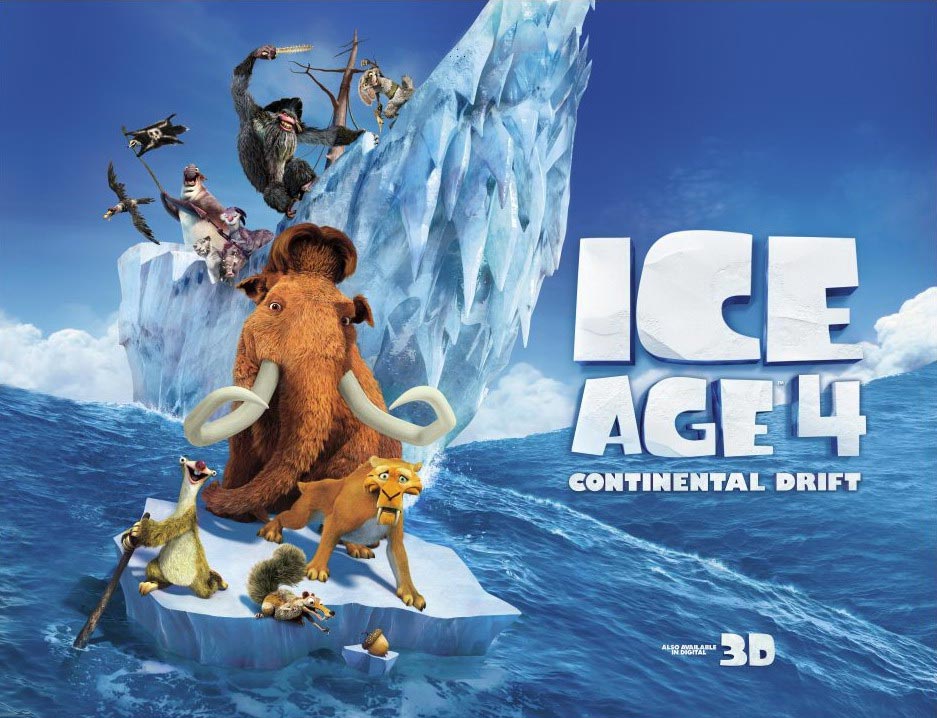
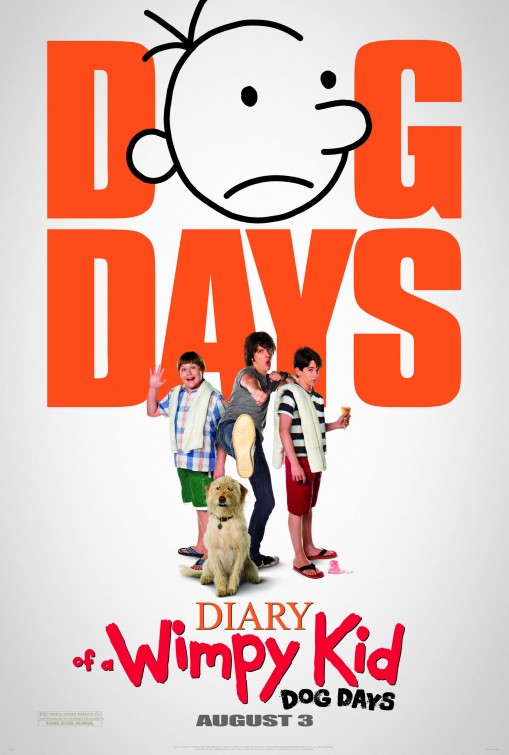
Out of the 16 posters for children’s movies in 2012 pictured below, just 4 represent movies starring females: “Mirror, Mirror,” “Brave,” “Secret World of Arrietty” and “Big Miracle.”
Here’s the Gallery:
This Gallery is about the last thing I would want to tell my three daughters– ages 3, 6, and 9– that this is what year of heroine worship looks like.
George and Martha: The Complete Stories of Two Best Friends
The George and Martha series is practically perfect. The characters are great, smart, compassionate, and real. Their friendship is magical and special; there is nothing saccharine about this pair. The stories are beautifully illustrated and as short and poetic as haikus.
Of course, I love that the entire series is based on a cross-gender friendship; it’s impossible to label this series for girls or for boys.
As with most books that feature a character of each gender in the title, George comes first. This annoys me. If this sequence happened once in a while, or even half the time, it would be no big deal, but the consistency of this pattern in kidlit is quite amazing.
Reel Girl rates George and Martha ***HH***
A Bargain for Frances
I named my first daughter Lucy after the heroine from Narnia, my second Alice after you know who, and I almost named my third Frances. I didn’t because Frances doesn’t hold the iconic stature in my imagination as the other two (no one did except for Dorothy, but because that isn’t one of my favorite names, I went with Rose.) But I will always love Frances.
The entire series is great, but Bargain is my favorite. Thelma, Frances’s frenemy does some serious mean plotting, but Frances uses smarts to get her back. The only issue with this story is that young kids won’t get it. It takes some sophistication to keep up with Frances’s revenge. One thing I love about this story is how it shows the high-level strategies going on behind an “innocent” tea party game.
Other books are great to see how Frances copes with her little sister, Gloria, and also to witness the cross gender friendship between Frances and Albert.
If you have a kid who loves to make up songs, this is the perfect book for him.
Reel Girl rates A Bargain for Frances ***HHH***
Madeline
Madeline is one of the absolute best children’s books of all time. Madeline’s spirit is remarkable. She’s not afraid of mice or tigers or teetering on a bridge over the Seine. When she gets her appendix out, she proudly bares her scar. And when you read the book, you get to take a trip through the most beautiful places in Paris. You can’t beat that.