If you follow Reel Girl, you know I am a sucker for narratives, and there aren’t many games out there that inspire storytelling like Clue.
Clue was my favorite board game when I was a kid. After 30 years, I played it last weekend at my sister’s with my kids and my nieces, and it was so fun. I love all of the rooms, imagining being in a mansion, and plotting or discovering a murder. The kids love all that, too, of course. The secret passages from room to room and the detective pads are also cool. If you’re not familiar with Clue, all of this may sound complicated, but it’s not.
So, now for the characters. There are three males and three females. You can’t get more equal than that, right? But here’s the problem. The male characters are Professor Plum (he must be smart, right?) Colonel Mustard (another status moniker) and Mr. Green. Poor Mr. Green, you think, he’s got no title, but at least his identity is concealed behind the ambiguous “Mr.” The females don’t fare so well: Miss Scarlet, Mrs. Peacock, and Mrs. White. Not a “Ms.” among them.
As a kid, I was always Miss Scarlet. I thought she seemed powerful and mysterious, and rebellious; she smoked.
I was disappointed to see that Miss Scarlet in my sister’s game looks far less dangerous.
Though I would’ve preferred modernizing Mrs. White and Mrs. Peacock to “Ms,” I am pleased with their new portraits. They look more complex and real than the originals.
Beyond the names or art, Clue is as equal opportunity as you can get: any character could have committed the murder with any of the weapons. The females are just as likely to whack a victim with a candlestick or a wrench as they are to shoot her. No sexism involved in solving this mystery if you want to win the game. That factor trumps all others in my book.
This game is a lot of fun for families. No tears so far.
You know how when you say something is sexist, like, say, the genre of animated movies marketed to kids, people will tell you it’s all in your head? They will say you don’t know what you are talking about and to stop picking on Nemo or Ratatouille or Frakenweenie or whomever.
Well, guess what? Geena Davis, goddess that she is, just scored 1.2 million dollars from Google to develop software that will analyze the portrayal of females in children’s media. This technology will scan hours of media content and through voice recognition and other features, will calculate how much screen time females get, how they appear, and the roles they play. This technology will calculate as quickly as Nielsen ratings so that it can show statistics about what appeared on TV the night before the very next day.
Gee, I wonder what this technology is going to tell us about gender roles and children’s media. How cool is that Davis got funding for an objective system that no one can argue with? She rocks.
I’ve been avoiding writing this post. I knew that female characters in children’s movies were not faring well in 2012. Not in number and not in stature. But I kept hoping. Hoping that somehow, before January, something would change, a slew of movies were going to appear from nowhere, stats would magically shift.
Yes, we got “Brave” this year. Thank you director Brenda Chapman for making Pixar’s first movie ever with a female protagonist. I’m sorry that you, one of the only women to direct animated movies produced by a major studio, were fired half way through production and replaced with a male director.
But “Brave” is just one movie. The exception proves the rule. It’s December now, and sadly, it’s time for me to admit that once again, in the movies made for children in 2012, girls go missing. In staggering proportions, males are consistently front and center; females are mostly sidelined or not there at all.
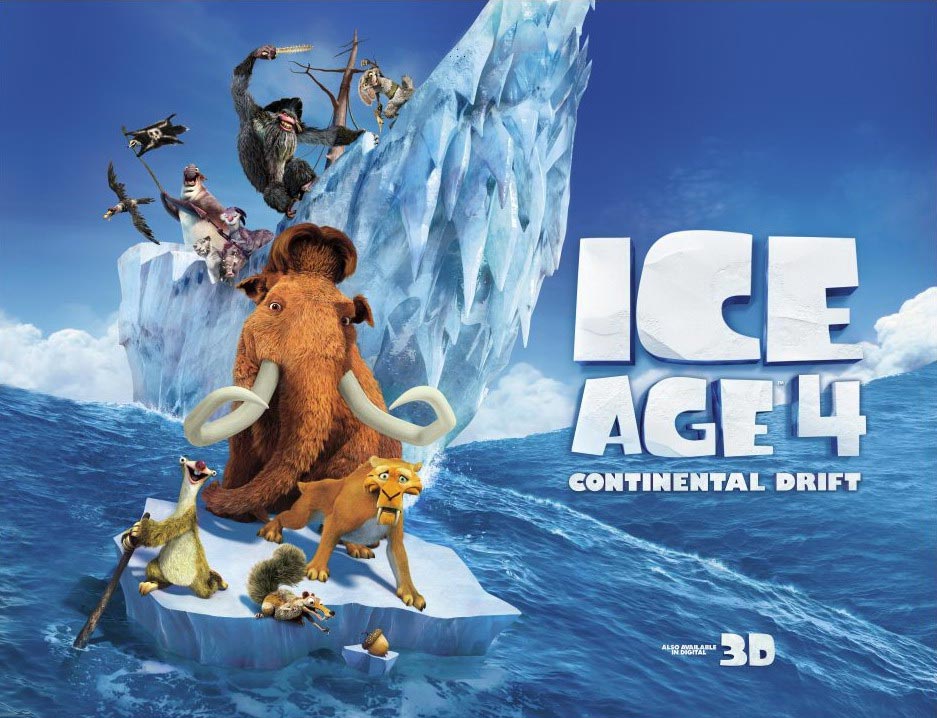
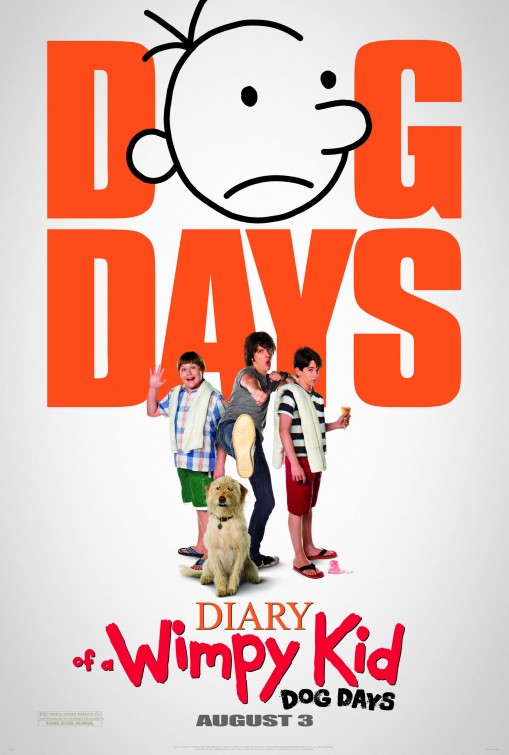
If you look at the gender placement in the images on the movie posters below, the meaning of “marginalized” couldn’t be more clear. Remember, these are movie for kids. So when your children go to the movies, they are learning, time and time again, that boys are more important than girls.
For those of you who say there are alternative posters that I didn’t put in Reel Girl’s Gallery, you may find them on Google images, but these are the ones I saw all around San Francisco. Even if you find a poster on Google featuring, say, Tooth, the one female Guardian out of five (a typical gender ratio, by the way) that’s a pretty pathetic argument for her relevance.
For those of you who say the posters below do not reflect the movie, that the movie has a strong female in it, maybe even two, maybe three, you are, most likely, referring to the Minority Feisty. No matter how many Minority Feisty there are in an animated film, they are represented as a minority. The irony is, of course, that females are not a minority, not a special interest, not even a fringe group. Females are, in fact, half of the population. Girls are half of the kid population. Why aren’t they represented that way in movies made for children?
I call the Minority Feisty “Feisty” because that is, invariably, the adjective reviewers use to describe the “strong” female character in an animated film. “Feisty” is diminutive. It is what you call someone who plays at being powerful, not someone who is actually powerful. Would you ever call Superman “feisty?” How would he feel if you did?
The role of the Minority Feisty, like a cheerleader or First Lady, is to help the male star along on his important quest. Children need to see females front and center, as protagonists, as the heroes of their own stories.
Finally, even apart from the movie, these posters– and ads– are their own media. Whether or not your kid goes to the movie, she sees these posters everywhere. The movie poster is one of the reasons that I was so thrilled about “Brave.” Finally, San Francisco was papered with an image a daring girl, an image marketed to kids. Obviously, the biggest impact of a narrative is made when kids get to know the character through the movie and then see that character on clothing, food packaging, and toys.
As you look at these posters, imagine the reverse, the gender ratio and the character placement, switched; the movie’s title reflecting the female star. Would you do a double take? How many of us grown-ups don’t even notice the dominance of male characters anymore? How many of us experience the annihilation of females as totally normal, not to mention adorable and child-appropriate?
There is no good reason for the imaginary world to be sexist. Or is there?
Only 16% of protagonists in movies are female; only 16% of women make it into power positions in almost all professions across America. Children’s movie posters, and of course the movies themselves, are an effective way that we acclimate a new generation to expect and accept a world where females go missing.
Out of the 16 posters for children’s movies in 2012 pictured below, just 4 represent movies starring females: “Mirror, Mirror,” “Brave,” “Secret World of Arietty” and “Big Miracle.” The “Big Miracle” poster diminishes Drew Barrymore pretty effectively. I loved “Arrietty,” as I love every Studio Ghibli film, but was surprised to see the boy so big on the poster.
I have always loved Pigtail Pals for its cool clothing, its brilliant founder, Melissa Wardy, and its high quality product. But today, I have one more reason for romance, something that trumps all other loves: today, my three year old daughter dressed herself. She chose all of her own clothing, from underwear to socks, and arrived upstairs for breakfast, fully prepared for the day. What was she wearing, you ask? Lucky for you, we stopped at Whole Foods on the way to school and I got a photo:
All black. Hee hee. Except for the blue socks, of course, which, I’m sure you notice, match. Hallelujah! (Where is her arm though? I can’t wait to show her this. She looks like ghost-girl.) But best of all, and this goes back to Pigtail Pals, check out the back of her T-shirt:
My daughter loves the words, the colored-spiral of them, the bumpy feel, and also, how incredibly soft the material is.
Seeing this outfit reminded me of what a great Xmas shopping destination Pigtail Pals is if you are looking for clothing for children.
Melissa Wardy founded Pigtail Pals when she had a baby daughter, named her after Amelia Earhart, and then couldn’t find a single onesie that showed a girl with a plane on it. Then, Melissa realized she couldn’t find children’s clothing showing girls doing much of anything at all. So she came up with some designs and started a company. Years later, Pigtail Pals has grown into a successful business and Wardy is coming out with a book on “redefining girly.”
Here are Pigtail Pals best-selling ‘Full of Awesome’ T-shirts.
I keep giving you these sites for shopping because there are alternatives out there. It sucks that sometimes we have to look so hard for them, but I think the more we talk about them, (along with the way marketing, in general, is shifting to FB, Twitter) we can get the word out to more people.
Final photo of a proud three year old, her shirt covered in doughnut crumbs just in time for school.
I am such a fan of Louis C. K. My husband and I stream his show about every other night and it cracks us up. I have never seen a man speak publicly about fatherhood so accurately. Louis has two daughters (we have three) and the conflicted emotions he expresses about raising his kids are spot on.
I just Googled “Louis C. K. contemporary fatherhood” and came up with a recent piece from The Atlantic.
Of course, to earn the title of America’s Dad (from someone other than me, I mean) Louis probably has to have a higher Nielsen share than what he currently pulls in.
So that’s me and the writer of this Atlantic article at least, so far. Join the club! If you are not watching Louis yet and are interested at all in parenting issues, you’ve got to check this guy out. He is X-rated and, at times, his language and the topics he goes into leave my mouth hanging open. But at the same time, he is charming.
The show we watched last night made me really think about all the basic ways in every day life, our culture does not support fatherhood.
Here is Louis C.K. on the challenges of having to use the bathroom the same time his daughters do:
I was at the airport with my kids, I was at JFK, and they had to go to the bathroom and I had to go to the bathroom. So take yourself through that logically. Where do I… What do I do? I can’t take them to the ladies room. I can’t just… “Go on in there, girls… Into the public restroom of an international airport.” Just release my custody of them to whoever’s in there. “Go ahead, good luck to you. Maybe I’ll see you later.”
So I gotta take them into the men’s room, that’s what I have to do, is take them into the John F. Kennedy Airport men’s room. Look here, girls! Nine penises! Nine penises that are all peeing at the same time. Nine farting men from all over the world, with their dicks out, shaking off droplets of pee from their syphilitic penises. Look, three of them have foreskins. You can see the difference now.’
So much of Louis’s show is about these interactions with his daughters, not sanitized. Clearly, his kids are a part of his life. If there were more fathers like Louis C.K., I bet there would be more family bathrooms in airports.
Louis also does an amazing job of expressing the conflicted feeling parents have towards children. He hides his ice cream from his daughters. When his kids are finally asleep, to get them back for staying up so late, Louis takes his bowl of ice cream into their room and eats it in the dark over their sleeping heads.
The Atlantic posts another example of his ambivalence:
“When am I going to go to momma’s again?” Louis’ daughter asks as they do their pre-bedtime routine. “I like momma’s better. I like momma’s better because she makes good food. And I love her more so I like being there, too. I like being here, too. It’s just not as great.” Louis takes it in with great equanimity and, as she turns away to go to sleep, he gives his little daughter the finger.
When we have more fathers like Louis C.K., the world will be a better place.
My daughter and I have a favorite song on Red: “All Too Well.” I think it’s about Jake Gylenhaal, clues being: reference to sister, plaid shirt, he’s close to his mom, Taylor had Thanksgiving with his family at Maggie G.’s house and that’s scarf season, right?
Whatever you think about Swift, and I’m a fan, she’s great with lyrics. Some lines from “Well” I really like “you called me up again just to break me like a promise”…”Cause here we are again on that little town street, You almost ran the red cause you were looking over at me” (Can totally picture that) and finally “Time won’t fly it’s like I’m paralyzed by it.”
Swift is a talented story-teller. I recommend the whole CD.
“All Too Well”
I walked through the door with you
The air was cold but something ’bout it felt like home somehow and I
Left my scarf there at your sister’s house
And you still got it in your drawer even now
Oh, your sweet disposition
And my wide-eyed gaze
We’re singing in a car getting lost Upstate
The autumn leaves falling down like pieces into place
And I can picture it after all these days
And I know it’s long gone, and that magic´s not here no more
And it might be okay, but I’m not fine at all
Cause here we are again on that little town street
You almost ran the red cause you were looking over at me
Wind in my hair, I was there, I remember it all too well
Photo album on the counter
Your cheeks were turning red
You used to be a little kid with glasses in a twin-sized bed
And your mother’s telling stories ’bout you on the t-ball team
You tell me about your past thinking your future was me
And I know it’s long gone, and there was nothing else I could do
And I forget about you long enough to forget why I needed to
Cause here we are again in the middle of the night
We’re dancing round the kitchen in the refrigerator light
Down the stairs, I was there, I remember it all too well
Yeah
And maybe we got lost in translation
Maybe I asked for too much
But maybe this thing was a masterpiece
´til you tore it all up
Running scared, I was there, I remember it all too well
Hey you called me up again just to break me like a promise
So casually cruel in the name of being honest
I’m a crumbled up piece of paper lying here
Cause I remember it all all all too well
Time won’t fly it’s like I’m paralyzed by it
I´d like to be my old self again
But I’m still trying to find it
After plaid shirt days and nights when you made me your own
Now you mail back my things and I walk home alone
But you keep my old scarf from that very first week
Cause it reminds you of innocence and it smells like me
You can’t get rid of it, cause you remember it all too well Yeah
Cause there we are again when I loved you so
Back before you lost the one real thing you’ve ever known
It was rare, I was there, I remember it all too well
Wind in my hair, you were there, you remember it all
Down the stairs, you were there, you remember it all
It was rare, I was there, I remember it all too well
I LOVE TowardTheStars.com so much, I interviewed the founder, Ines Almeida.
The pics I posted below include images of girls b/c that is what Reel Girl is about, and I love collecting these images. Check out Merida’s expression, how cool is she? And in all the Merida dolls, I never saw this one before. That’s why I love TowardTheStars, Ines culls through everything and finds the best. My oldest daughter is also into detectives and spies, so I posted some of those images, and a few other toys/ games that I’m buying. So this is my personal list. TowardTheStars has all kinds of great toys and products for kids.
Why did you start TowardTheStars?
I have an engineering degree in Computer Science for all of my life I have been part of male-dominated environments where I was a minority. My career progressed from engineering to management and executive roles and during this journey I was confronted with the gender biases from others and with my own limiting beliefs that sometimes stopped me from voicing my opinions or applying for a particular role.
As I started coaching my female colleagues, I found out that we shared a lot of common patterns: we struggled with the lack of female role models, and we were trying to overcome the “fairy tale syndrome”, a need to be perfect, congenial and at the same time highly effective. This left little space for taking healthy risks and for being audacious.
Six years ago a little girl came into my life, Ally, she was 2.5 years-old at the time. As I spent more time with her and started to look at the world through her eyes and started experiencing the messages she was getting all day long from society, toys, media and marketing, I started becoming more uncomfortable with what I was experiencing. I was looking at the root cause for all my own limiting beliefs; I was looking at the reason why my colleagues struggled to speak up, why women were risk-averse, why girls don’t pursue science, engineering, technology, math, sports and leadership.
Ally was surrounded by toys, books and media that were constantly telling her that her worth came from her external appearance. Everything related to science, maths, leadership, risk taking, audacity, sports seemed to be missing from products targeted to girls.
I decided to do something about it and started to raise awareness with parents and educators via social media. I created my own ipad app with empowering stories for girls 7Wonderlicious, I created a small website with a list of empowering books for girls and another focused on short youtube videos with all the PSAs and documentaries I could find about gender stereotyping and sexualisation of girls, it was all cobbled together very quickly. My community grew to 100,000 people online across several social media channels. This year I decided to leave my corporate executive role in IT to launch TowardTheStars a global online marketplace for empowering gifts for girls. It is a natural progression and I am now pulling together all the work achieved previously into one single site and committing all my time to this worthy cause that I am so passionate about.
What are your most popular items?
We have a couple of small clothing businesses with empowering messages that are doing extremely well turning over close to 1000 dollars in the first month.
Products that support charitable causes are also very popular, people love to know that by buying a gift they are helping to improve the lives of girls somewhere in the world. We have fair trade gifts that are handmade by Indigenous communities in Africa and Australia for example.
Of course my book site (now fully integrated with TowardTheStars) is also extremely popular, people love to discover books with young bold female protagonists. I also spent years compiling top quality resources for parents, our parenting books are a huge hit, parents are always very grateful and enthusiastic when they discover that there is expert advice in book form that will help them counter stereotypes, sexualisation, body image issues etc.
Do you mostly support small businesses?
My goal with TowardTheStars is to create a venue for parents, educators, businesses, independent producers and not for profits to come together to discover new innovative ways to put an end to the stereotypes that are so prevalent in our society and in products targeted at children. I strongly believe that small businesses, artists and craftspeople are central to this movement because until we create great alternatives we are stuck with media and toys that belong in the middle ages.
This is why I invested in developing a true multisided marketplace where people can setup their shop in a few minutes and list their items directly on the site. This was a huge software development project but now the movement can grow organically. New independent producers join every day. It is a real pleasure to wake up every morning and discover new delightful items listed on the site. This girl empowerment intension box was listed last week for example, I was delighted to discover Ann’s work for the first time because she found TowardTheStars and decided to join us.
TowardTheStars will always give more visibility, priority and support to small businesses; I consider them my partners in crime and will do anything within my reach to make them successful. These are the people that welcomed me into the community two years ago and inspired me to create this venue.
TowardTheStars also provides products from larger businesses via our affiliate model with Amazon.com. We do this for the following of reasons:
To give access to parents and educators to our growing list of empowering books that was created more than 2.5 years ago. We want to ensure our amazing authors are represented within our community. I am privileged to be able to call some of these authors and experts my friends, many have supported this project from its inception.
To ensure that our community has access to products related to STEM that are less likely to be produced by small businesses.
To ensure our community has access to good alternatives being created by the large corporations. Great movies like Brave by Pixar, series like Doc McStuffins by Disney or anything from Studio Ghibli.
By providing a comprehensive range of products that counter stereotypes and/or are gender neutral we keep our community coming back to the site, which of course will benefit our small businesses too.
How does a business join your site? What are you looking for?
As soon as they register and login they are able to create their own shop and list their items, it is very user friendly and a business can setup shop in just a few minutes. Of course all items must comply with the strict guidelines that we put together with the help of some of the top child development experts in the world. This site will remain free of sexualisation and stereotypes. I review all listed products myself.
This video gives an excellent summary of what we are looking for.
My hope and dream is that this movement will inspire many others to innovate and produce great stereotype free products. I am already quite impressed with the level of conversation between buyers and sellers. The community is keen to provide feedback and our small business quickly respond to the desires and feedback of the parents and educators. Several of our businesses have already adapted/evolved their products based on feedback. We had a number of awesome t-shirts listed on the site with really great empowering designs and quotes but they were only available in pink initially, after some feedback from the community our sellers were happy to provide new colour options.
What are your future plans for TowardTheStars?
Continue to provide great resources and options to parents and educators looking for media and toys for their children;
Continue to support and engage small businesses and independent producers, inspiring them to innovate and produce outstanding items;
Do as much as I can to drive visibility to the site and promote the great work of our businesses, make them successful;
Expand our community functionality on the website to enable real conversations and ideas to emerge.
Get help! This project is growing fast. I am looking to expand my team as I am literally working night and day. I barely get any sleep. I am tired but very happy!
Sam Gordon is the first female football player ever to be shown on a Wheaties box. She is nine years old.
We are a cereal eating family. At any given time, we have about 7 boxes in our pantry. My children’s favorites right now are Cheerios, granola, and Special K with strawberries. My kids are also obsessed with looking at, or if they can, reading the boxes. Each one will place the box in front of her bowl to give her “privacy” and easy access to the info. (Don’t ask me, but apparently, my husband also did this as a kid, and from the time and energy marketers put into these boxes, my guess is it’s a common practice.)
About a year ago, I blogged about the awful, horrible, offensive Special K box . Check out who my daughters get to read about in the morning:
That’s right, this woman’s weight loss gave her “a sense of pride I’ve never felt before.” She’s telling my daughters that the biggest accomplishment of her life is losing weight. That’s just the lesson I want my daughters to digest along with their morning cereal.
Around the time I blogged about Special K, I posted pics of the “junk” cereal boxes. Even I was shocked at the total lack– LACK– of female characters. If a female does show up on the box, she is literally marginalized.
Here’s Cocoa Pebbles. On the front of the box, there’s Fred, waving at us. At the top of the box, you can see buddies, Fred and Barney, driving cars and having fun.
More fun for Fred and Barney can be found on the back on the box. There they are playing a racing game with their cars. A game you can access on your smart phone as well. How cool is that?
Where’s Wilma? Is she car racing? Is she in a game at all? No, silly. Women can’t drive! They’re not fast, they don’t compete, they don’t care about winning. Women are above all that boy stuff. Women, just like the Special K lady, care about “health.”
There’s Wilma, on the side of the box, hoping kids are getting enough Vitamin D.
I was on FB and saw this post from my friend Lateefah Simon, that shows what I meant perfectly. Here is her post:
This sweet lady ran like a bat out of hell to catch the Caltrain this morning. Her cute black boots were moving at crazy light speed. She didn’t have time to swipe her clipper before boarding the train. She was soaking – breathing hard but managed to find a seat. The ticket taker dude approaches her first. Lady with the cute rain boots pulls out clipper and tells story about what happened. She’s kicked off the train. Next one comes in an hour. Sad cause it’s storming.
Sadder because I hate waiting. Booooo! At least my boots are fresh. Just wanna get yo work. Sheesh.
This is about catching a local train, right? No big deal. But clearly, the runner is a hero and the ticket taker dude, a villain.
If you were writing a story about a woman catching the train, running for it “as if her life depended on it” you might create a plot situation where her life actually depend on it; that will evoke the emotion in the reader that the runner experiences. To evoke and communicate that emotion, you have to make the reader care if she catches the train, understand what it means if she misses it so that the reader misses it to. For me, coming from this place, plot doesn’t feel contrived but the opposite, fully accurate.
Writing a Middle Grade book has been one of the best experiences of my life. I am learning so much, and every day is a new adventure, both in my story and the real world.
About five years ago, I wrote a novel and though it got me an agent, the book didn’t sell. Editors universally told my agent: great writing, not enough plot/ motor. ( An adapted part of the novel is published as a short story in an anthology that came out last year from Ecco, Sugar In My Bowl)
Plot had never really interested me, as a reader and as a viewer of movies as well. Most important to me is character and then, in books, language. Watching movies, I would often space out during the plot and then, five minutes later, have no idea what was going on.
In my book that didn’t sell, most of the action takes place in the character’s head. I still love to read books like that and, like any writer dealing with rejection, can think of many examples of writers in that style– Virgina Woolf, come on, people! But you know where that style absolutely will not fly? A Middle Grade book, a book for kids. Kids don’t want to read pages of introspection. They want action, adventure, but still, thank goodness, they want loveable characters.
Writing the MG book has shown me why plot is important in general: a fiction writer needs to show, not tell. Everyone knows that, but I never really understood it until this book. A writer can describe a character but what really shows the reader who she is her actions. It’s like how I tell my kids, “It’s not what you say, it’s what you do.” You know how I learned that, I mean deeply learned it? From being a parent. I can talk at my kids until I’m blue in the face, or I can show them. The latter is the only thing, the only thing, that really works. I think that is why being a parent is so challenging; if you’re yelling at your kid, you’ve got to look at your own pattern of behavior and who wants to do that?
Before, when I was told that all narratives had a pattern, I was kind of annoyed. Weren’t we all more original than that? Recently, I turned to Joseph Campbell’s Hero with a Thousand Faces, a book thatI’d first read in my early twenties. Back then, and now at 43, it’s obvious that the “universal quest pattern” is tailored to male experience. For example, Campbell has sections on “Woman as Temptress” and also, throughout, females are the prizes to be won, the reward at the end of the adventure, or as with Odysseus, symbolic of homecoming.
I wondered, for a female hero, do we just flip the genders to complete the quest pattern?
In some ways, yes. As I’ve blogged about quite a bit, if women were mostly in power positions, if women had written most of the narratives that create our “universal” cultural imaginary, men would be sidelined, sexual objects, and relegated to the romance section.
“Inclination to help” doesn’t create heroes, it waters down drama. Writers need to raise the stakes, not lower them, or the story is a bore. Writers don’t raise the stakes because humans are tragic and neurotic, we love pain blah blah blah. Writers raise the stakes so the readers will “get it;” feel it. A kid feels like “the walls are caving in” when she has to move to a new city, share a room with her sister, share a toy, invite someone she doesn’t want to to her party; a writer literally will show the walls caving in, a world being destroyed.
So this is how I’ve come to understand internal action, action in a character’s head and physical action. I believe in the pattern Joseph Campbell lays out, and believe that it is a universal human experience/ sequence: (the call to adventure; refusal of the call; supernatural aid– the “helpers” I just blogged about; crossing the first threshold and on and on. Read the book, it’s great.) But here is where I differ with Campbell. I don’t think this pattern is representative of a life story, that a narrative mirrors the trajectory of a life experience compacted. I think its the opposite: the narrative pattern is the magnification of a moment. These moments we experience every day. Many “little” moments are heroic and feel heroic to us. Getting out of bed for my three year old, cleaning our room, sitting down to write. On a slightly larger level: quitting a job, starting a job, going to a new school, going on a trip, making a new friend, learning a new skill. We take risks that may seem small to an observer but to us, in our hearts and our heads, they are full of drama and symbolism.
This is why it gets me so upset that females aren’t protagonists in children’s media nearly enough. That in the rare occasions that females do get to star, most often they are surrounded by male characters; that females, except for the pink ghetto, almost always exist in the minority. Males have whole cast of characters to help them take risks and achieve their dreams. Females don’t.
But instead of lecturing you about now much a new model is needed, I’m going to get back to writing that book and show you.