Commenters ask me a lot about the Bechdel Test created by Alison Bechdel in 1985 to check for sexism in movies. It names the following three criteria for a movie: (1) it has to have at least two women in it (2) who talk to each other (3) about something besides a man.
I love Bechdel’s test. Here’s my version, inspired by Bechdel and adapted for children’s movies: (1) At least two females who are friends (2) go on an adventure (3) and don’t wear revealing clothing.
The Magowan Test is for movies marketed to little kids.
I’m grateful to you for giving me the term ‘Minority Feisty’, because indeed, there is a girl character (a nerdy, excluded type with a monobrow who plays the witch in a play) in Paranormal who has very few lines, but one of those lines is a feminist piece about the mistreatment of witches throughout history, or something similar.
Plotwise, it’s up to Norman to save the world (or community, at least) from a witch. Which he does.
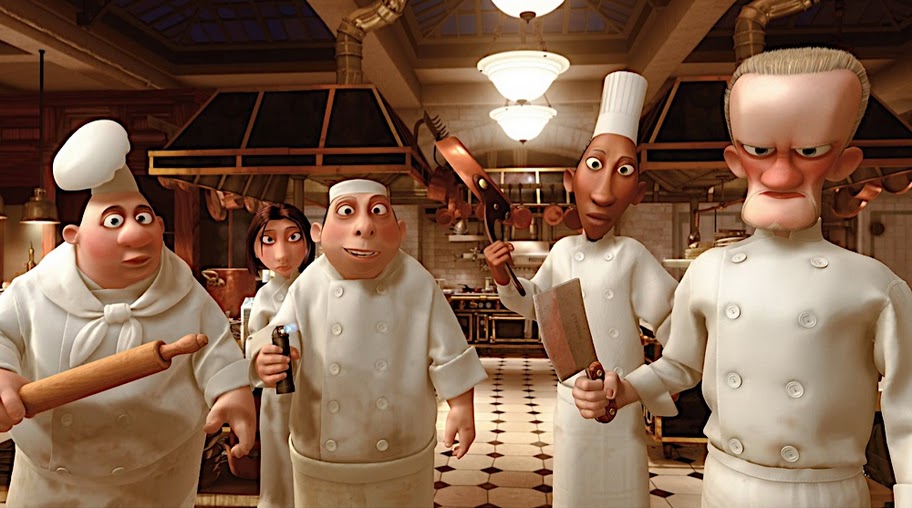
I haven’t seen “ParaNorman” but from Stace’s description, the female character is classic Minority Feisty. As with Colette in “Ratatouille,” she delivers a feminist line or two. Her place in the narrative allows parents to breathe a sigh of relief and think: OK, this movie is about a boy, there are more males than females in it, but it’s still feminist.
And one more thing about the word “feisty” so often used to describe strong female characters in children’s films. “Feisty” doesn’t imply strong, it implies playing at being strong in a cute way. Think about this: Would you call Superman feisty? How would he feel if you did?
See that lone, blonde Smurfette surrounded by 5 male Smurfs?
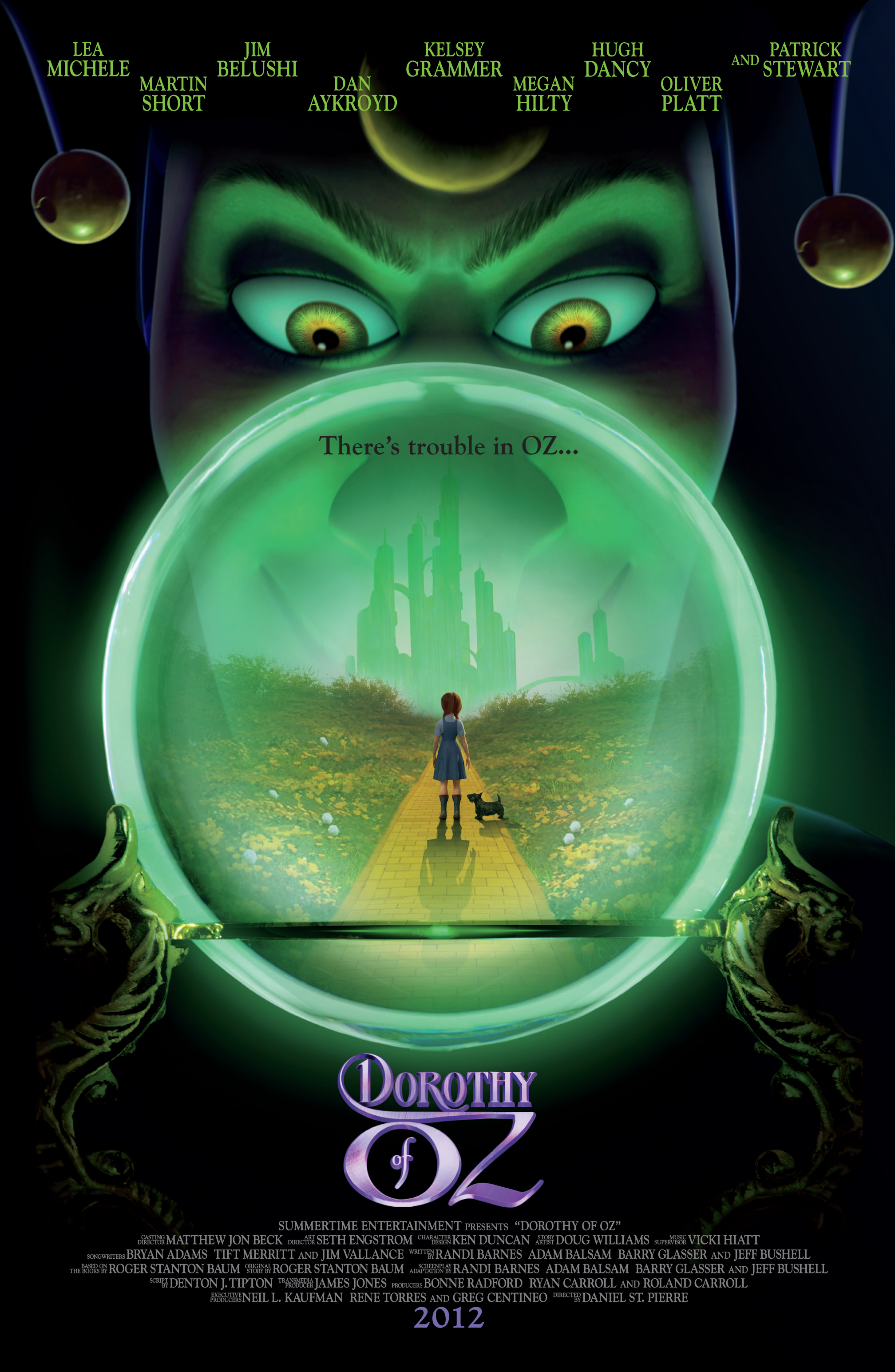
This is a poster for just one of 21 children’s movie posters coming out in 2013. All but 4 movies for young kids feature male protagonists. Of the “female-centric” films, “Dorothy of Oz” lists 7 famous male actors at the top of its poster. “Epic” shows the female protagonist surrounded males. Only two movies with female protagonists are titled for the female while 10 of the 16 movies with male protagonists are titled for the male star. Please look at Reel Girl’s Gallery of Girls Gone Missing From Children’s Movies in 2013. It looks like this year will be the worst one for female characters in movies for young kids since I started Reel Girl.
Back in 1991, feminist critic Katha Pollitt wrote about the ‘Smurfette principle‘ for the New York Times: the idea that kids’ narratives too often allow just one lone female character to exist in a group of males.
Here is the “progress” 22 year later: girls are half of the kid population, but in movies for young children, females are presented as a minority. If you see an animated film today, it’s likely to include one or two strong female characters who reviewers will call “feisty.” In “How to Train Your Dragon,” Astrid; in “Toy Story,” Jessie; in “Ratatouille,” Colette. She’s supposed to make us feel like the movie is contemporary and feminist, unlike those sexist films of yesteryear. She is the Minority Feisty.
The problem is that because Pixar or Disney has so magnanimously thrown in this “feisty” female (who may even have some commentary about sexism or male domination) we’re no longer supposed to care that almost all of the other characters in the film are male, including the star who the movie is often titled for and usually his best buddy as well. The crowd scenes in the film are also made up of mostly males.
There can be 1, 2, or 3 Minority Feisty in a children’s film. (The term is like “fish,” it can be singular or plural.) Whatever the number, the gender ratio will heavily favor male characters.
Parents, the next time you watch a children’s movie, try not to let the “feminist” character(s) distract you. Except for the pink ghetto, in children’s films females are presented as a minority. This is the definition of marginalized. When your children go to the movies, they learn that boys are more important and get to do more things than girls.
I have an idea for a themed art show that could travel the museums of the world: “Clothed men, naked women: a retrospective.” How many galleries and halls do you think would overflow?
I just posted about repetitive gender imagery in “riding bitch,” where the female is shown behind the male on a bike, animal, imaginary creature etc. This sexism is persistent in depicting a fantasy world marketed to children. Amazing how the imaginary world is just as sexist as the real one, huh? Wonder how that happens…
Lynley Stace linked to one of my posts, and that’s when I saw Nick Cave’s new CD cover on her blog.
Stace writes:
As one woman commented on Facebook, this image is problematic because it depicts a naked woman opposite a fully-clothed man (in a suit, no less). The woman looks upset or humiliated because her face is covered and Nick Cave looks as if he’s ordering her to go to her room (i.e. he is treating her like a child).
What I would add to that comment is that the woman, judging by her youthful body, is much younger than Nick Cave. Nick Cave is currently 55 years old. That female body looks under 30. So the power is with Nick Cave in every possible respect.
Also, check this out. The image is getting as much traction as Cave can get out of it. Stace writes: “Also, the album cover isn’t JUST the album cover. Turns out this image is being used for general promotional advertising.”
I used to be a fan of Cave. No more. What really gets me is when you look at this image, you can feel how radical and cool Cave thinks he is.
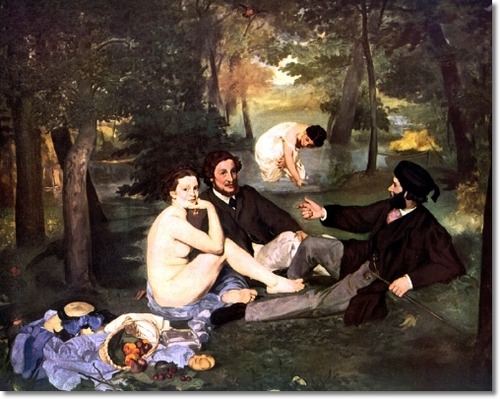
Hey, Nick, it’s been done. Throughout history, again and again. Here’s a version from Manet:
GQ:
Vanity Fair:
I could fill my entire blog with these images. Cave, you’ve lost your originality and you’re showing your 55 years. You’ve become a copy cat, a cliche, and no more an avante-garde artist than Larry Flynt was a proponent for free speech.
#NotBuyingIt
and if you agree,
Please Tweet: Nick Cave’s Push Away the Sky been there, seen that and #NotBuyingIt
More than any other pattern of sexist imagery in the fantasy worlds created for children, I hate the girl on the back of the bike, dragon, or hippogriff. Recently, I posted:
This image of male driving and the girl along for the ride is ubiquitous in the imaginary world. You almost never see a girl in front and a boy behind, or even a girl alone, and also, it’s extremely rare to see a girl on a female magical creature.
After my post, Orlando wrote in this comment:
Shall I share with you the moment when I learned to loathe Kerouac? This is it (from “On the Road”):
“In the empty Houston streets of four o’clock in the morning a motorcycle kid suddenly roared through, all bespangled and bedecked with glittering buttons, visor, slick black jacket, a Texas poet of the night, girl gripped on his back like a papoose, hair flying, onward-going, singing.”
Familiar image? What happened was two people went past; what they saw was one person plus accessories.
The Kerouac quote pretty much epitomizes the poetic subjugation of women in that repetitive image (coupled with the the adventurous title of the book, of course.) Kerouac is such a good writer and he does this image so well. And again, the image/ narrative would not be a problem if it were one of many; it is its dominance over our imaginations, the way other narratives have become restricted and repressed, even in fantasy, that is the tragedy.
I’m going to keep a running tally on Reel Girl of images normalizing what I learned is called “riding bitch.” Please let me know if you see any and PLEASE let me know if you see the reverse gender positions.
Two recent disappointments:
I was very bummed to see the usually feminist Studio Ghibli put out this image to promote “From Up on Poppy Hill”
In 2012, I waited until the last possible minute. It wasn’t until December that I posted Reel Girl’s Gallery of Girls Gone Missing from Children’s Movies in 2012. Even though in the age of the internet, the facts were impossible to miss, I kept hoping that, somehow, I’d overlooked something.
This year, I’m going to face the upcoming year of multi-million dollar sexism marketed directly at my three daughters– ages 3, 6, and 9– head on, in January.
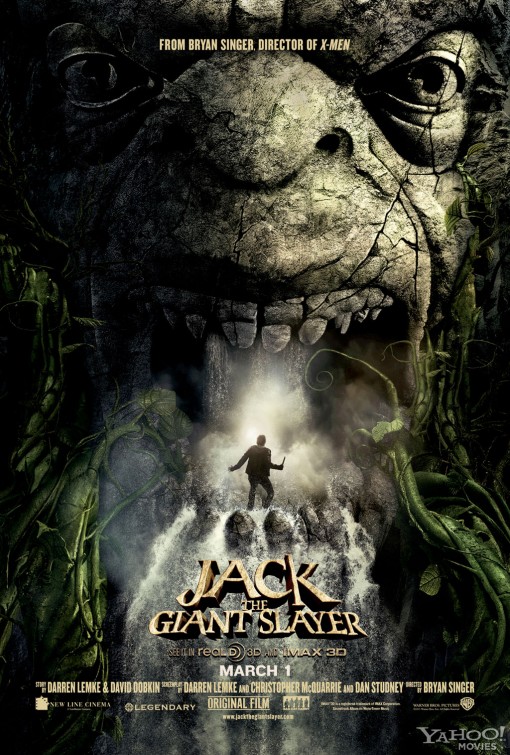
Of the 21 movie posters for young kids pictured below, only 4 appear to feature a female protagonist; 16 seem to feature a male protagonist and 10 are named for that male star. In one case, “Peabody and Mr. Sherman,” the movie is titled for its 2 male protagonists.
Of the 4 movies starring females, just two are titled for the star. It’s the small budget 7 million film from Moscow, “Snow Queen,” that was brave enough to name its film after a female. “Frozen” is the title chosen for Disney’s version, the same movie studio that changed “Rapunzel” to “Tangled,” to obscure its female star. Fittingly, in the poster for “Frozen,” the woman’s image also fades into the background.
Both “Dorothy” and “Epic,” buffer the female on the poster with males, Epic with a constellation of them and “Dorothy” by listing no less than 7 famous male actors.
From the position of characters on the poster in “Cloudy With A Chance of Meatballs 2,” it looks like the male is the star, but maybe, hopefully I’m wrong. When you look at the poster, try to imagine a gender flip, the female in front and the male’s legs and hip in the female’s red-carpet-ready pose. That image will make you laugh.
If you are going to argue that there could be strong females in all of these movies, even if they are not the star of the movie, that’s not the same. Please read The curse of the Minority Feisty in kid’s movies.
Author P.L. Travers travels from London to Hollywood as Walt Disney Pictures adapts her novel Mary Poppins for the big screen.
That movie could be really cool. But why, why, why is the movie called: “Saving Mr. Banks?” If there is a female protagonist in this film, could she be concealed any more? I know the androgynous “P.L. Travers” is how the writer’s name is shown on her books, but Mary Poppins came out in 1934. The writer had to use the initials to sell her book. Of course, J.K. Rowling opted for the same tactic years later, but hasn’t her success done anything for women writers? The year is 2013. When are writers going to be able to come out as women? Finally, and I hate writing this, and I hope that I’m wrong: From what I see on the internet it looks like the protagonist of the movie is, in fact, Walt Disney played by Tom Hanks.
I have not yet seen any of these movies. As I’ve written about a lot on Reel Girl, movie posters are their own media. Even if a kid doesn’t see the movie, she sees the ads drive by her on the sides of buses or loom above her pasted on walls. She hears the movie titles. Not to mention, she sees the protagonists on TV, cereal boxes, diapers, clothing, toys, sheets, and in video games.
The posters below are found from Google images. There are multiple posters, and I chose the one I’m predicting that I’ll see around town. Whenever I see a movie poster on a bus or wall with a female character solo, front and center who is not surrounded by multiple male characters, or when multiple female characters are shown, I rush to post the sighting on Reel Girl.
As you look at the posters below, ask yourself: Who looks like the star/ leader/ protagonist of this movie? What would this poster look like if the positions, number of male characters, and title references were switched to female characters? Why are females, half of the kid population, presented as a minority in children’s films? Why is the imaginary world, a place where anything should be possible, sexist at all?
So here we go.
Reel Girl’s Gallery of Girls Gone Missing from Children’s Movies in 2013
My sister, Kim Magowan, has an excellent short story in the Gettysburg Review. “Nothing In My Mouth” follows a young woman in Amsterdam who tries to redeem herself after making a heartbreaking mistake. Order the Winter issue here.
Best Boy and Girl Toy winners at the Toy Industry Awards this week. What’s your thoughts?
There is a “boy” toy and a “girl” toy award? The best “boy” toy is shown in action, shooting a web; he is a superhero who saves the world. The best “girl “toy is a possy of hair, make-up, shoes and bags; the dolls pose as if someone is taking their picture.
Here were my thoughts: This can’t be right. Cynical, jaded blogger that I am, I still don’t believe that the Toy Industry Awards would be so publicly, blatantly, offensively sexist. These are children we are talking about, after all. Why would anyone segregate and stereotype kids in this way?
So I Googled “Toy Industry Awards 2012.” I am sad to report Let Toys be Toys is absolutely correct. From Toy News:
The 2012 Toy Industry Awards winners have been revealed. The awards ceremony took place at London Olympia’s West Hall last night, organised by the British Toy & Hobby Association and the Toy Retailers Association…Girls’ Toy of the Year Monster High Ghouls Rule Doll Assortment, Mattel Boys’ Toy of the Year Web Shooting Spider-Man, Hasbro
Yesterday, I posted about the excellent and amazing Disney made for TV movie: “Avalon High.” The story is about the reincarnation of heroes and villains from the King Arthur legend of Medieval times to a contemporary high school in the U.S. The protagonist of the show, Allie– brave, smart, strong, and kind– turns out to be…King Arthur. With that gender flip, this Disney movie shows girls and boys that females can be heroic and at the center of the action.
Then, I got this comment from Lesley:
SPOILER SPOILER
In the book, the Allie character is NOT King Arthur, but the Lady of the Lake, who gives Arthur the powerful Excalibur. Will is Arthur. The twist is that there are hints she is Elaine (her character is called “Ellie” in the book) the weepy victim of unrequited love dumped by Lancelot. So, she turns out to be a crucial element in Will’s development as king but she doesn’t become king herself.
My daughter Callie and I both loved this movie for the same reasons you did, and we were crowing with delight at the changed ending!
As I wrote back to Leslie, I am totally shocked. I can’t think of another time– tell me if you can– where a kid’s book has been changed by the kid’s film (not grown up film) to be more feminist.
I am amazed Disney did this. Really. And also, Meg Cabot, the writer: WTF? Lady of the Lake? She is not cool, powerful, or that important in the story. If you are seeking remnants of evidence of female power, she will do, but obviously, King Arthur is the central figure in the legend. The best line of the movie is when Mordred says to Allie something like: “You? I thought maybe you could be Lady of the Lake, but Arthur?”
The translation of that quote goes way beyond the specific characters of Arthur and Lady of the Lake: Mordred is saying that a girl can’t be a hero and Allie shows that villain how wrong he is. I love how that is done here, through the characters and action, and not in the usual, boring way where the bad guy says something to the effect of– ew, you’re a girl. That, to me, kind of reinforces sexism: we’re all supposed to get the insult is wrong but too often, we don’t see it in the story beyond a moral/ ethical issue. Here, we get it: Don’t underestimate me. I won’t underestimate myself either.
It’s interesting because right after we saw the movie, I went to Amazon to buy my daughter the book, and I didn’t buy it. I wasn’t sure exactly why I didn’t want to. The cover didn’t grab me. I know, don’t judge a book by its cover, but Meg Cabot’s other books looked very pink and seemed to be about girls who were mostly interested in boys. Of course, that could easily be the marketing department who designs the cover. Maybe I thought I needed to do more research, and I didn’t have time right then. Whatever the reason, I didn’t click “buy.” Thank goodness Lesley commented because if I got that book, I would have been so pissed and disappointed. Though Lesley is more considerate than me with her spoiler alert, I feel it is my duty to warn you : )
I NEVER thought I would say this but KUDOS TO DISNEY. I am quite curious to know the story behind this adaptation. And also, Hollywood: Are you listening? Here is an example of how to use some imagination and innovation– 2 things you are, after all, supposed to be known for, supposed to encourage– to remake a classic without girls going missing. This gender flip is not about “girls being boys” or “girls acting like boys” or any other ridiculous justification to keep girls on the sidelines because that’s just where they belong as we recycle the same narratives, generation after generation.
After I read Lesley’s comment, I saw something quite incredible posted by Sara on Reel Girl’s FB page. Here is the new Rolling Stone cover, and quoting Vulture: “Why is Tina Fey Lois Lane?”
Why is Tina Fey riding bitch? This same old image of the male driving, the girl along for the ride is ubiquitous in the imaginary world. Why did Rolling Stone put Tina Fey, one of the most successful women in the world, in that position?
Vulture writes:
Tina Fey co-hosted the Golden Globes to universal praise. Her seven-season critical darling 30 Rock — which is still really damn funny — is ending in two weeks. She has seven Emmys, two Golden Globes, three Producers Guild awards, four SAG awards, and a Mark Twain prize. She’s synonymous with contemporary humor. Out of curiosity, Rolling Stone, what would it take for her to be Superman on the cover?
Do you see how fucked up it is for women to continually contort themselves into the sidekick? The distortion is not in the gender flip, in the rare times it is actually made, but in continually keeping women secondary to men. Our cultural imaginary (to borrow a phrase from Lucy Irigaray) is so warped that Tina Fey is cast in the sidekick/ girlfriend role here. If Tina Fey isn’t a superhero, I don’t know who is.
The real world and the imaginary world are endlessly intertwined. What is happening to Tina Fey, on Rolling Stone, happens every day to all women everywhere in the world: Move over lady, a man wants to fly.
Who would have thought that Rolling Stone magazine would be so pathetically conventional and a Disney made for TV movie could be so radical?