Roughhouse with your kid, it’ll make her brain grow

I first saw the post “The Importance of Roughhousing with your kids” on the Pigtail Pals Facebook page, where I get much of my information. I wish Melissa Wardy were the editor of the New York Times, because the post she linked to is about a year old, and I’d never seen it, heard of it, or heard any of the information about roughhousing before I saw it on her page.

On the blog, Art of Manliness, the post reads:

Helping your child develop a resilient spirit is one of the best things you can do as a parent. The ability to bounce back from failures and adapt to unpredictable situations will help your kids reach their full potential and live happier lives as adults. And an easy way to help boost your kids’ resilience is to put them in a gentle headlock and give them a noogie.

Roughhousing requires your child to adapt quickly to unpredictable situations. One minute they might be riding you like a horse and the next they could be swinging upside-down. According to evolutionary biologist Marc Bekoff in his book Wild Justice, the unpredictable nature of roughhousing actually rewires a child’s brain by increasing the connections between neurons in the cerebral cortex, which in turn contributes to behavioral flexibility. Learning how to cope with sudden changes while roughhousing trains your kiddos to cope with unexpected bumps in the road when they’re out in the real world.

This theory resonated with me because if I could define health in one word it would be “resilience” and sickness would be “stuck.”

Roughhousing as a positive influence for kids seems consistent with what Po Bronson wrote about years ago in Nurture Shock: New Thinking About Children. According to Bronson’s research, you don’t compliment the kid on the finished task, but on the effort. The most important skill for success and happiness is learning to tolerate frustration and learning to work through it. Rewarding the process, not the end goal. (Artists, are you listening?)

A similar thesis is presented in a new, popular book: How Children Succeed: Grit, Curiosity, and the Hidden Power of Character. The author, Paul Tough argues that the qualities that matter  aren’t test scores, but emotional intelligence, skills like perseverance, curiosity, conscientiousness, optimism, and self-control.

Optimism is also now understood not as a personality trait but a skill set: making a plan of action, seeking advice from others, training to look at problems as a temporary setback to be overcome.

Art of Manliness describes roughhousing as just that:

Additionally, roughhousing helps develop your children’s grit and stick-to-itiveness. You shouldn’t just let your kids “win” every time when you roughhouse with them. Whether they’re trying to escape from your hold or run past you in the hallway, make them work for it. Playtime is a fun and safe place to teach your kids that failure is often just a temporary state and that victory goes to the person who keeps at it and learns from his mistakes.

Remarkably, back to testing:

Psychologist Anthony Pellegrini has found that the amount of roughhousing children engage in predicts their achievement in first grade better than their kindergarten test scores do. What is it about rough and tumble play that makes kids smarter? Well, a couple things.

First, as we discussed above, roughhousing makes your kid more resilient and resilience is a key in developing children’s intelligence. Resilient kids tend to see failure more as a challenge to overcome rather than an event that defines them.  This sort of intellectual resilience helps ensure your children bounce back from bad grades and gives them the grit to keep trying until they’ve mastered a topic.

In addition to making students more resilient, roughhousing actually rewires the brain for learning. Neuroscientists studying animal and human brains have found that bouts of rough-and-tumble play increase the brain’s level of a chemical called brain-derived neurotrophic factor (BDNF). BDNF helps increase neuron growth in the parts of the brain responsible for memory, logic, and higher learning–skills necessary for academic success.

I love this theory from a feminist perspective as well. I am so sick of hearing about “boy energy.” As I’ve written about extensively on this blog, girls are not intrisically quieter than boys. Boys’s roughhousing is tolerated, but girls are told to settle down and be quiet. They are rewarded when they do. I see this all the time, and I’m sure you do too. Not to mention ridiculous generalizations like girls are “artsy” and literary, quiet activities. Girls are “artsy” when its about construction paper and Elmers’ glue. If we’re talking great artists, paintings that sell for the most money, or shows at the MOMA, all of a sudden, it’s boys who are artsy. The same is true with “great” writers; wow, men are verbal! Who knew? Not to mention “cooking” becomes masculine when we’re talking about great chefs and who gets the most cooking shows and awards. “Masculine” and “feminine” qualities have everything to do with stereotypes and status.

But I digress. Check out this whole post on roughhousing, it’s really great.

Rick Riordan and the persistence of the Minority Feisty

My nine year old daughter is tearing through the Rick Riordan books for the third time. Third time. She’s obsessed. She reads them at breakfast and then in the car on the way to school. She’ll forget the book at school and beg me to go to the bookstore down the street and buy her another because she can’t imagine getting through the night without huddling under her covers, reading, with her flashlight. Of course, I refuse, so she calls up her seven year old cousin who is also addicted and asks to borrow it. She won’t give it up because she’s reading it.

Middle Grade experts recommended that I read Rick Riordan since I am writing an MG book and he has “perfect pacing.”

I read the first three and liked them very much. The characters and stories are compelling, and I’ve always loved Greek Mythology, though there is a challenge for female characters in a series based on legends of a patriarchy. That patriarchy is not something in the background but an integral part of the narrative. In the three books I read, there is a lot of talk about “the big three:” Zeus, Poseidon, and Hades. When I blogged about Lightning Thief, I rated it ***H***.

There is a strong female character, Annabeth. It is striking how similar the gender ratio and relationships are to the Harry Potter series: two boys and a girl who are BFFs. This is the essence of the Minority Feisty set up: there is a girl and she is strong, so we can all sigh with relief, but she is not the protagonist. She helps the male on his quest.

I know, don’t judge a book by its cover, but but there are so many Riordan books, and so many covers. Let’s check them out and see what they have in common.

The Lightning Thief:

thelightningthief

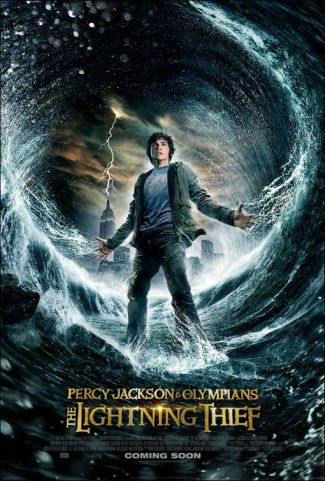
Here’s the movie poster from 2010:

movie_the_lightning_thief_ver3_000

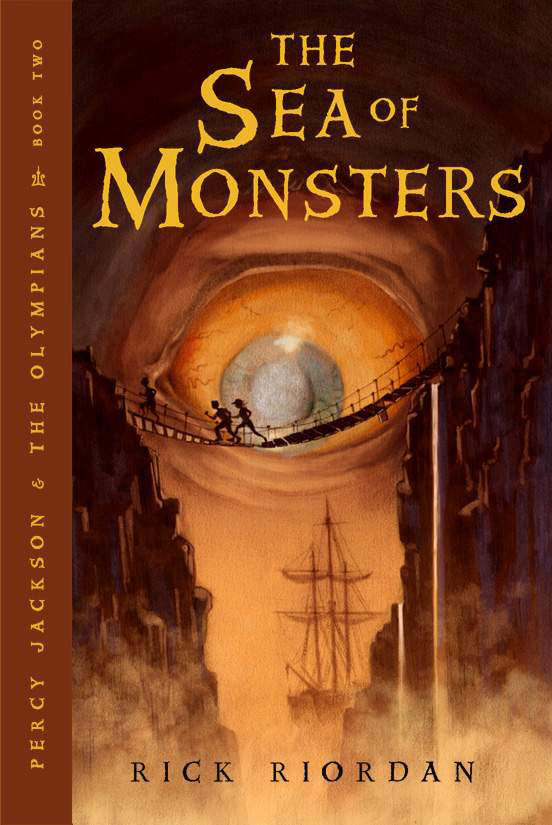
Sea of Monsters, the second book in the series:

The_Sea_of_Monsters-1

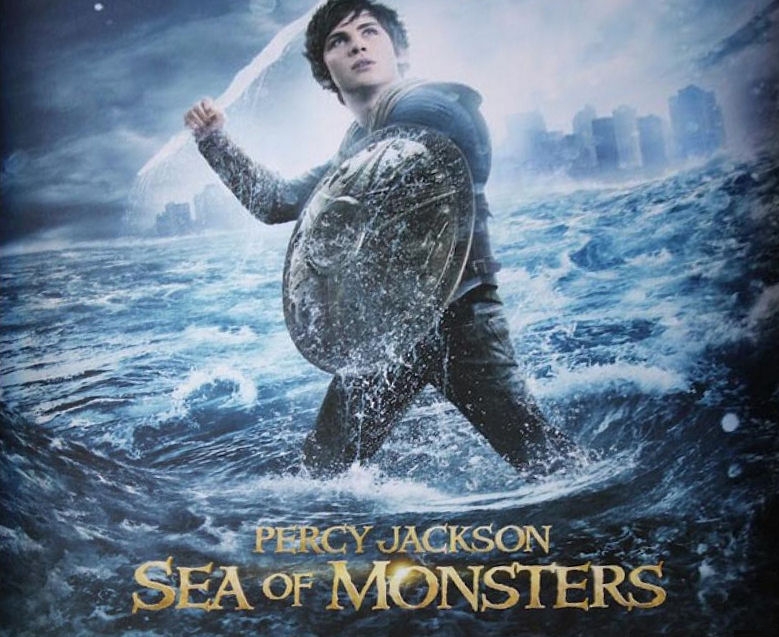
Here’s the movie poster, coming out this year and shown in Reel Girl’s Gallery of Girls Gone Missing From Children’s Movies in 2013. On Google, you can find posters with Annabeth, but I doubt that is the version our kids will see around town. This movie, like the Harry Potter movies, prominently displays the male protag’s name.

Percy Jackson 2 Sea of Monsters

Next in the series is The Titan’s Curse and the cover shows a solo male astride a magical creature. It’s a beautiful, exciting image and a thrill females in the imaginary world rarely get to experience:

the-titans-curse

Battle of the Labyrinth:

PercyBattleLabyrinth

The Last Olympian:

lastolympian

So that’s the first Riordan series: 5 books, 2 movies, male protag/ male star, male solo on 4 out of 5 books. Male’s name in the title every time. Once again, I am a fan of Riordan. These books are great. But just imagine your kids– girls and boys– getting the opportunity to read a fantasy series of 5 books with a female protag, her female BFF and male BFF helping her on her quest. And just to be clear, this series is the definition quest narrative.

Girls fare better in the Egypt series: The Red Pyramid is narrated by siblings Sadie and Carter. Though there are more males than females, there is another very cool female, Zia. I wish the book was all about her. The cover is good, too. Sadie makes it on, though behind Carter.

Riordan_Red pyramid

And now, my favorite Riordan cover: Throne of Fire.

THRONE_OF_FIRE_jktFINAL[1]


The Serpent’s Shadow also has a pretty great cover:

The-Serpents-Shadow

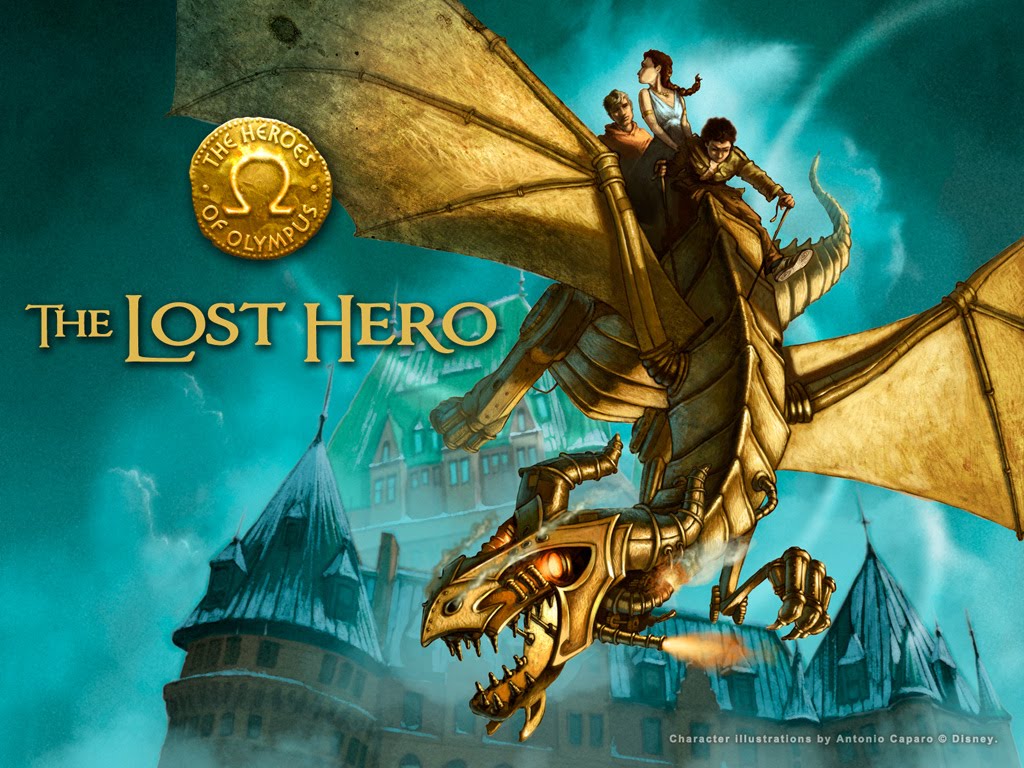
The next Riordan series, Heroes of Olympus, goes back to the standard Minority Feisty imagery. Here’s the first cover. See those three on the cover? They are not Percy, Annabeth, and Gus. They are Jason, Piper, and Leo. Guess who the protag is?

The Lost Hero

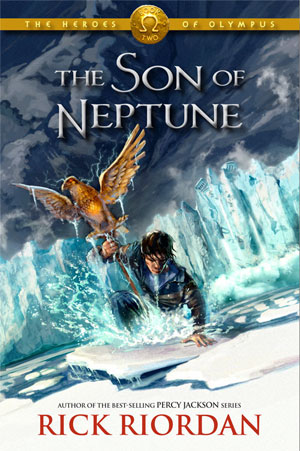
In Son of Neptune, Percy is the protag again, and this time, his friends are Hazel and Frank. It’s remarkable how consistent, persistent, and repetitive the Minority Feisty model is in the imaginary world.

SoNcover

Are you ready for the next one, and this is the BEST one, really according to my daughter and her aunt: Mark of Athena. YAY. A female makes it into the title! There are 7 main characters in this one and 3 are female. Less than half, so still the Minority Feisty, but not a bad showing for the consistent sexism in fantasy kidworld, right? But check out the cover:

The_Mark_of_Athena

WTF? No girl riding a pegasus and the owl of Athena fading into the background. ARGH!


It’s a bird, it’s a plane, it’s…Reel Girl!

Finally, Reel Girl is here! Her mission: to liberate the imaginations of children and grown-ups everywhere.

reelgirl2.gif

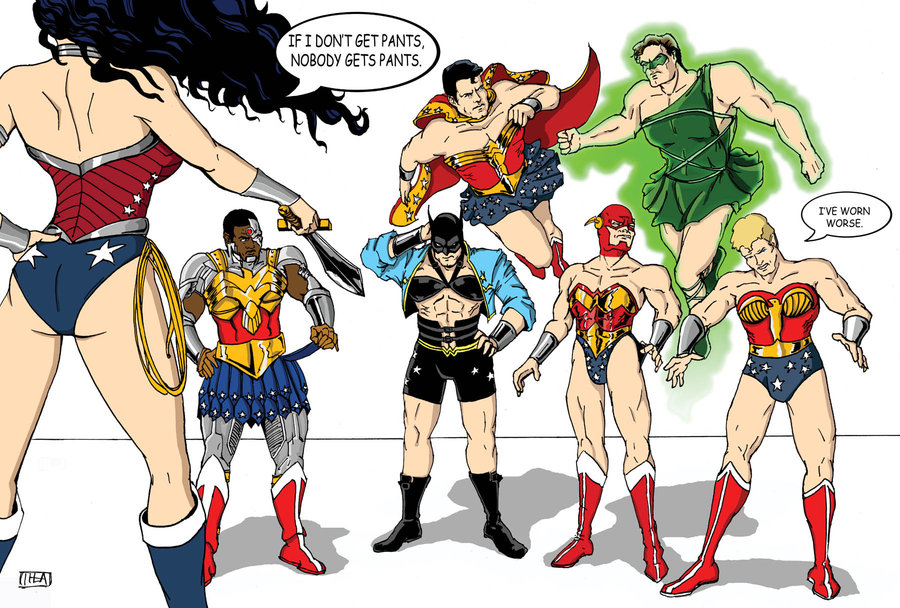
This blog’s new banner was drawn by the artist, Cynthia Rodgers, AKA Theamat. I first saw her work on the internet when I came across the fabulous “If I don’t get pants, nobody gets pants.”

wonderwoman

Theamat created Reel Girl’s face from these images of my daughters. Before taking the pics, I asked them to imagine they were up against something powerful; it was up to them to save the world.

In creating Reel Girl, Theamat used Lucy’s intense eyes,

photo

Alice’s speck of a smile,

serious


and Rose’s wild curls.

curls


If you’re craving a soap, ‘Revenge’ trumps ‘Downton Abbey’

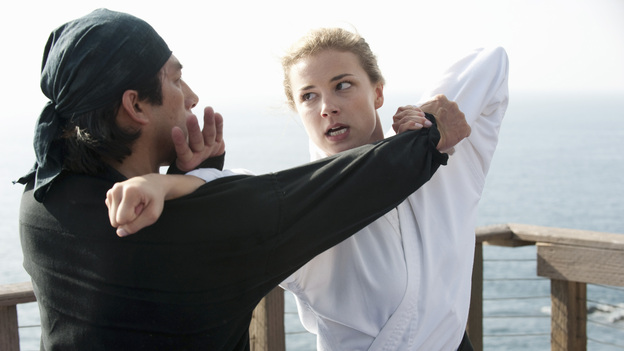
I love Emily Thorne, the protagonist of “Revenge.”

Karate3

Thorne is unlike any female protagonist I’ve seen on TV or film. First of all, she is independently wealthy. Viewers learn of her financial status on the first episode when her friend is planning a benefit. Thorne casually says “Count me in” for a $10,000 ticket.

My mouth dropped open when I heard that line. A young, smart, beautiful, strong female who is also rich? That doesn’t happen. It’s way to much power to give a girl.

If you don’t believe me, check out the Forbes 15. Every year, Forbes does a survey on the 15 richest imaginary characters, including Scrooge McDuck, Richie Rich, Smaug (dragon from Tolkein) Bruce Wayne (Batman), Mr. Monopoly, Carlisle Cullen (Twilight saga), C. Montgomery Burns (Simpsons). At most, 2 females make the list, in 2012 Lisbeth Salander (Girl With Dragon Tatoo) and Jo Bennett. Women are rarely permitted to control billions, in the imaginary world or the real one.

But Emily Thorne isn’t just rich. She is super smart. Every time I watch someone try to get the better of her, I have total confidence she’ll outsmart him. If it doesn’t come down to  a battle of wits, Thorne can kick some serious ass. She’s a black belt in karate and this woman has no fear. She is driven and focused in every way. I feel a unique combination of calmness and excitement watching Thorne get into trouble that I’ve only felt before watching superheroes or James Bond: it’s fun to watch the action, how she pulls it all off, but you know she’ll be OK.

While “Downton Abbey” does a great job depicting how much it sucks to be a woman in 1900s upper class British society, “Revenge” shows women breaking through the limits imposed on them. I quit watching Downton because though the acting is good, it’s too prissy for me. “Revenge” doesn’t have Maggie Smith’s acting, but it all takes place in the Hamptons so you still get to gawk at rich people in fancy clothing who spend most of their time at parties.

I’ll be honest and admit that after more than one episode I’ve groaned and said, “I cannot watch this again.” But I always do.

Reel Girl rates “Revenge” ***HH***

Reel Girl goes around the web!

The good news is that three of my absolute favorite sites on the internet– Women and Hollywood, Jezebel, and Miss Representation— linked to and posted about Reel Girl’s Gallery of Girls Gone Missing From Children’s Movies in 2013.

The bad news is Reel Girl ran out of bandwith not once, but twice. ARGH.

The good news is the sexist posters from kids movies are back up. If you haven’t seen them, you can look now.

You should also check out Laura Beck’s post on Jezebel. She writes about the bad influence the limited representations of females has on kids:

As for how it leaves girls feeling, this is probably something many of us can relate to. As a child, I strived for the perfection of a Disney Princess, perhaps subconsciously knowing I’d never achieve that, I started imagining myself in the shoes of more adventurous male characters. I’ve talked to many women who’ve had similar experiences, this sort of transference. Lacking decent female role models, it’s not surprising many girls live stories through the eyes of boys and men.

There’s a passage in Margaret Cho’s hilarious 2002 autobiography I’m the One That I Want that talks about this in terms of race. This is paraphrased, but she basically says that, as a young girls, she couldn’t wait to grow up and become white like everyone on TV. Heartbreaking, and I think this experience resonates with many people. When you don’t see yourself reflected in media, you push yourself into it.

Beck also goes on to tell a creepy but unsurprising story:

Now, a personal anecdote. I have a friend who’s a writer working in children’s TV. She’s constantly taking meetings and pitching stories, and she told me when she first started in the business, she pitched stories with girl leads. However, after being told to change the protagonist to a male character more than a few times — and once being told to actually turn the movie into a live action rom com for adult women!? — she now pitches almost entirely male-driven stories. And guess what? She’s selling.

What is surprising is that so many people buy the bullshit line: “Girls will see movies about boys, but boys won’t see movies about girls.”

How can we see cool movies about girls when no one will make them?


Reality TV hits new low: ‘Biggest Loser’ kids infiltrate Scholastic News

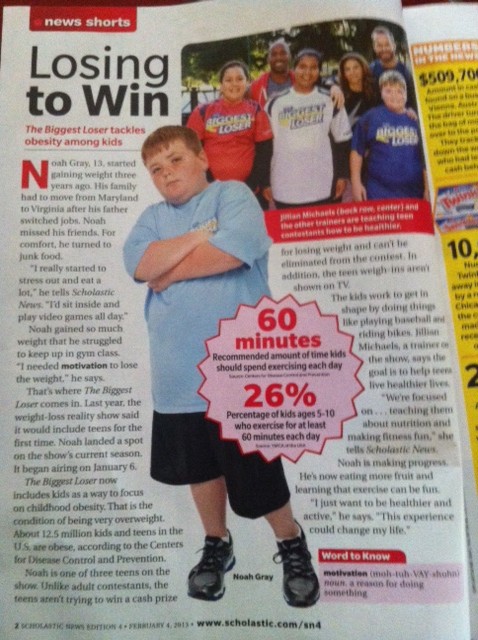
Today, when my fourth grade daughter brought home her weekly Scholastic News, which she has to read weekly for homework, I was horrified to see a full page article endorsing the new “The Biggest Loser” episodes with kids.

biggestloser

Kids don’t belong on reality TV at all, not to mention on a fat-shaming show that stereotypes and stigmatizes children based on their current body type.

Bitch’s take on the Biggest Loser kids episodes:

At one point in last week’s season premiere, Jillian Michaels talks to the three kids about bullying, and tells them she’s here to help. While Michaels may have the best of intentions, her brand of helping means changing the kids to conform to the bullies’ standards, not challenging the norms that make the bullying okay in the first place. It’s fine if teens want to eat healthy and get in shape—go for it you healthy teens!—but exploiting fat kids on national television in an environment that is known to be unrealistic and risky just so NBC can get more ratings is all kinds of wrong. And the more research we see, the more we learn that fat and health aren’t as closely related as we thought—which makes The Biggest Loser: Chubby Kid Edition even worse.

The non-profit About-Face blogs:

this odious piece of programming’s definition of mentoring means exposure to fat shaming, intensely restrictive diets, and excessive exercise. The Biggest Loser is synonymous with fueling a national environment that promotes fat phobia, body shaming, and unhealthy means of weight loss…But attempting to integrate youth into the most fat-shaming, weight loss glorifying TV show in America just to expand the target audience is horrifying. Our society is already massively confused about the relationship between size and health and riddled with misconceptions that one is an indicator of the other.

Even the LA Times writes about the show:

There’s certainly an argument to be made that reality TV has no business putting kids in the limelight. There is just no telling how it might impact young lives 20 years from now.

At the very least, the idea of putting kids on this program to improve their health is highly debatable. In fact, when my daughter told me that there was an article that made her uncomfortable, I assumed she was talking about the debate section of the mag, where one kid supports something and another kid is against it. But, no. “The Biggest Loser” piece is on page 2, presented with zero controversy. My daughter told me that she felt sorry for the boy, because people were making him feel bad for being fat. She said, “This is horrible. Why would they do that?” Am I supposed to tell her NBC just cares about his health?

The Magowan Test for gender bias in children’s movies

Commenters ask me a lot about the Bechdel Test created by Alison Bechdel in 1985 to check for sexism in movies. It names the following three criteria for a movie: (1) it has to have at least two women in it (2) who talk to each other (3) about something besides a man.

I love Bechdel’s test. Here’s my version, inspired by Bechdel and adapted for children’s movies: (1) At least two females who are friends (2) go on an adventure (3) and don’t wear revealing clothing.

The Magowan Test is for movies marketed to little kids.


Classic Minority Feisty in ParaNorman

I got this comment from Stace:

I’m grateful to you for giving me the term ‘Minority Feisty’, because indeed, there is a girl character (a nerdy, excluded type with a monobrow who plays the witch in a play) in Paranormal who has very few lines, but one of those lines is a feminist piece about the mistreatment of witches throughout history, or something similar.

Plotwise, it’s up to Norman to save the world (or community, at least) from a witch. Which he does.

I haven’t seen “ParaNorman” but from Stace’s description, the female character is classic Minority Feisty. As with Colette in “Ratatouille,” she delivers a feminist line or two. Her place in the narrative allows parents to breathe a sigh of relief and think: OK, this movie is about a boy, there are more males than females in it, but it’s still feminist.

It’s not.

In a fantasy world, an animated movie for little kids, it’s hardly feminist to illustrate sexism. It is far more feminist and inspiring to show kids images and narratives of females being strong and brave, making choices and taking risks. Fore example, it would have been much better for girls– and boys– to see Colette be the star of the movie instead of listening to her recite a monologue on sexism in French kitchens.

And one more thing about the word “feisty” so often used to describe strong female characters in children’s films. “Feisty” doesn’t imply strong, it implies playing at being strong in a cute way. Think about this: Would you call Superman feisty? How would he feel if you did?

The Smurfette principle ‘evolves’ into the Minority Feisty

This year, children will get to see Smurfs 2:

smurfs-2

See that lone, blonde Smurfette surrounded by 5 male Smurfs?

This is a poster for just one of 21 children’s movie posters coming out in 2013. All but 4 movies for young kids feature male protagonists. Of the “female-centric” films, “Dorothy of Oz” lists 7 famous male actors at the top of its poster. “Epic” shows the female protagonist surrounded males. Only two movies with female protagonists are titled for the female while 10 of the 16 movies with male protagonists are titled for the male star. Please look at Reel Girl’s Gallery of Girls Gone Missing From Children’s Movies in 2013. It looks like this year will be the worst one for female characters in movies for young kids since I started Reel Girl.

Back in 1991, feminist critic Katha Pollitt wrote about the ‘Smurfette principle‘ for the New York Times: the idea that kids’ narratives too often allow just one lone female character to exist in a group of males.

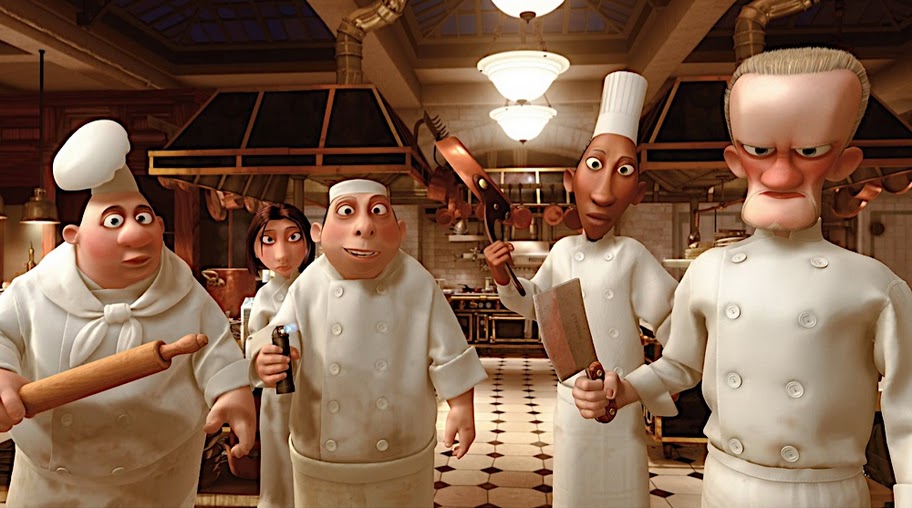
Here is the “progress” 22 year later: girls are half of  the kid population, but in movies for young children, females are presented as a minority. If you see an animated film today, it’s likely to include one or two strong female characters who reviewers will call “feisty.” In “How to Train Your Dragon,” Astrid; in “Toy Story,” Jessie; in “Ratatouille,” Colette. She’s supposed to make us feel like the movie is contemporary and feminist, unlike those sexist films of yesteryear. She is the Minority Feisty.

remy3

The problem is that because Pixar or Disney has so magnanimously thrown in this “feisty” female (who may even have some commentary about sexism or male domination) we’re no longer supposed to care that almost all of the other characters in the film are male, including the star who the movie is often titled for and usually his best buddy as well. The crowd scenes in the film are also made up of mostly males.

There can be 1, 2, or 3 Minority Feisty in a children’s film. (The term is like “fish,” it can be singular or plural.) Whatever the number, the gender ratio will heavily favor male characters.

Parents, the next time you watch a children’s movie, try not to let the “feminist” character(s) distract you. Except for the pink ghetto, in children’s films females are presented as a minority. This is the definition of marginalized. When your children go to the movies, they learn that boys are more important and get to do more things than girls.

On tvtropes.org, a link to my blog described the Minority Feisty as “essentially a more modern take on the Smurfette Principle.” In response, someone protested: “the term Minority usually points to racial minority as opposed to gender.”

Exactly. Females are not a minority, yet they are presented as one in films for children. Why?

Here is an interesting correlation: 16% of protagonists in movies are female. All across America, in most professions, women at the top don’t make it past 16%. Children’s movies normalize an entire new generation to a world where females go missing.


See “Pixar’s female problem: Please stop asking ‘What about Jessie?,” a great post by Peggy Orenstein on the Minority Feisty issue