Just as marketing intended, boy thinks central character of ‘Frozen’ is the Snowman

I just read a fascinating interview from Pajiba.com titled: A Conversation With a Six-Year-Old Boy About ‘Frozen,’ Princess Movies, and Female Heroes.

Frozen-movie-poster

The boy is six years old, and if you read this interview, it’s obvious that he thinks that the star of the movie, “Frozen,” is not one of the two female protagonists, but Olaf, the snowman.

Here’s part of the interview:

Me: What would you say that this movie is about?


Kid: Well, it’s about a snowman, and the freezing cold, and frozen stuff, and people who are trying to get warm, and safe from the Queen (Idina Menzel), and about the Queen just trying to help instead of getting ice everywhere, and she wanted to get away from everyone because of her powers. She hurt some people with her powers, and she didn’t want to.


The movie does not begin with the Snowman, nor is the Snowman the central figure of the plot, so why do you think the kid begins his plot description with the Snowman?

You see the poster, above. Who is in the center?

Here’s the preview. From this, who do you think stars in the movie? Who is missing from this preview?

I was super-critical of the marketing of “Frozen” before the movie came out. On Reel Girl, I often write about marketing, because marketing is its own media. Even if kids don’t see the movie, they see the ads on TV, the posters, and the toys. My blog about Frozen’s marketing,  “Disney diminishes a heroine in 4 easy steps,” is about how the powerful females in the movie are concealed by (1) taking her name out of the title (2) changing the plot so she doesn’t rescue a male (3) not showing female characters in the first preview (4) not showing female clearly in the first poster.

The actual movie, I liked. Aside from the 2 protagonists looking like twin Barbies, their characters are great. You can read my review Heroines of “Frozen” melt my bitter heart.

But back to the kid in this interview, here’s why he liked the movie:

Me: What did you think of Frozen?


Kid: It was awesome. It was so awesome. It was my favorite movie ever.


Me: Really? I think it was one of my favorite kids’ movies, too.


Kid: I really loved Olaf [the snowman, voiced by Josh Gad], but I thought it was going to be a peaceful movie, but Daddy, it wasn’t a peaceful movie.

No matter what the interviewer asks the kid about, he steers the conversation back to Olaf.

Me: Did the Queen listen?


Kid: No, because all she wanted to do was keep people away from her powers. Hey Daddy, ask the question, ‘Did Olaf (the snowman) melt?’ That’s an important question.


Me: OK. Did Olaf melt?


Kid: No. Another good question is, ‘What did Olaf like?”


Me: What did Olaf like?


Kid: Warm hugs. And he also liked summer, and that was really funny.

And again:

Me: Do you think girls would like Frozen?


Kid: They might like it, but they might not. But they would definitely like Olaf.

The boy acknowledges that girls are the heroes of the movie, but he can’t resist going back to Olaf one more time:

Me: Do you think your sisters would like Frozen when they are older?


Kid: Yes.


Me: Why?


Kid: Because the girls are the heroes, and I think they would like the snowman.

The reason this is important is because there is a popular myth out there, loyally supported by most grow-ups: girls will see movies about boys but boys will not see movies about girls. As I’ve written often here, girls are trained from the moment they are born that stories about boys are important and for everyone, whereas stories about girls are only for girls. Stories for boys are mainstream while stories for girls are special interest. You can even see this if you look at something like “On Demand” where the “Girl Power” category has shows with female protagonists, in their own section because they are different/ separate/ other. Kids experience this gender dichotomy everywhere– movies, TV, books, and school

Right now, I’m reading The Hobbit. I’m writing a fantasy book, so I thought it would be good for me to read the “father” of fantasy. In The Hobbit, there are trolls, elves, dwarfs, wizards, goblins, dragons, and not one damn female. How could J.R.R. Tolkien write this book, a book for kids, a book that takes place in fantasy world, where all kinds of creatures exist, and magic happens, and completely leave out half of the kid population? And what is remarkable is The Hobbit is considered to be a book for everyone, mainstream, not some “special interest boy book.” I just read an interview with Evangeline Lilly, who plays a female character added to the movie, and she says The Hobbit was her favorite book as a kid. Can you imagine a male, a celebrity male with a role in a huge movie, saying that his favorite book as a child was one with about 50 female characters and no male characters? He would be some kind of freak. I actually don’t even know if a story exists with the reverse gender ratio as The Hobbit and the Lord of the Rings trilogy.

Here’s the thing: all kids are as just as self-centered as the six year old in this interview. Girls don’t come out of the womb anymore altruistic or open minded that boys do. They all want to see themselves mirrored out there. This is why girls are obsessed with princesses. Not because pink and frilly is in their DNA, but because they want to see girls, and princesses is pretty much what they get. All kids need to see more narratives with star girls as strong,  protagonists, because what do you think happens to kids’ imaginations and aspirations when they learn in childhood that stories about girls are not important? A new generation gets comfortable with a segregated world where females go missing.


If you won’t buy your kids racist presents, don’t buy them sexist ones

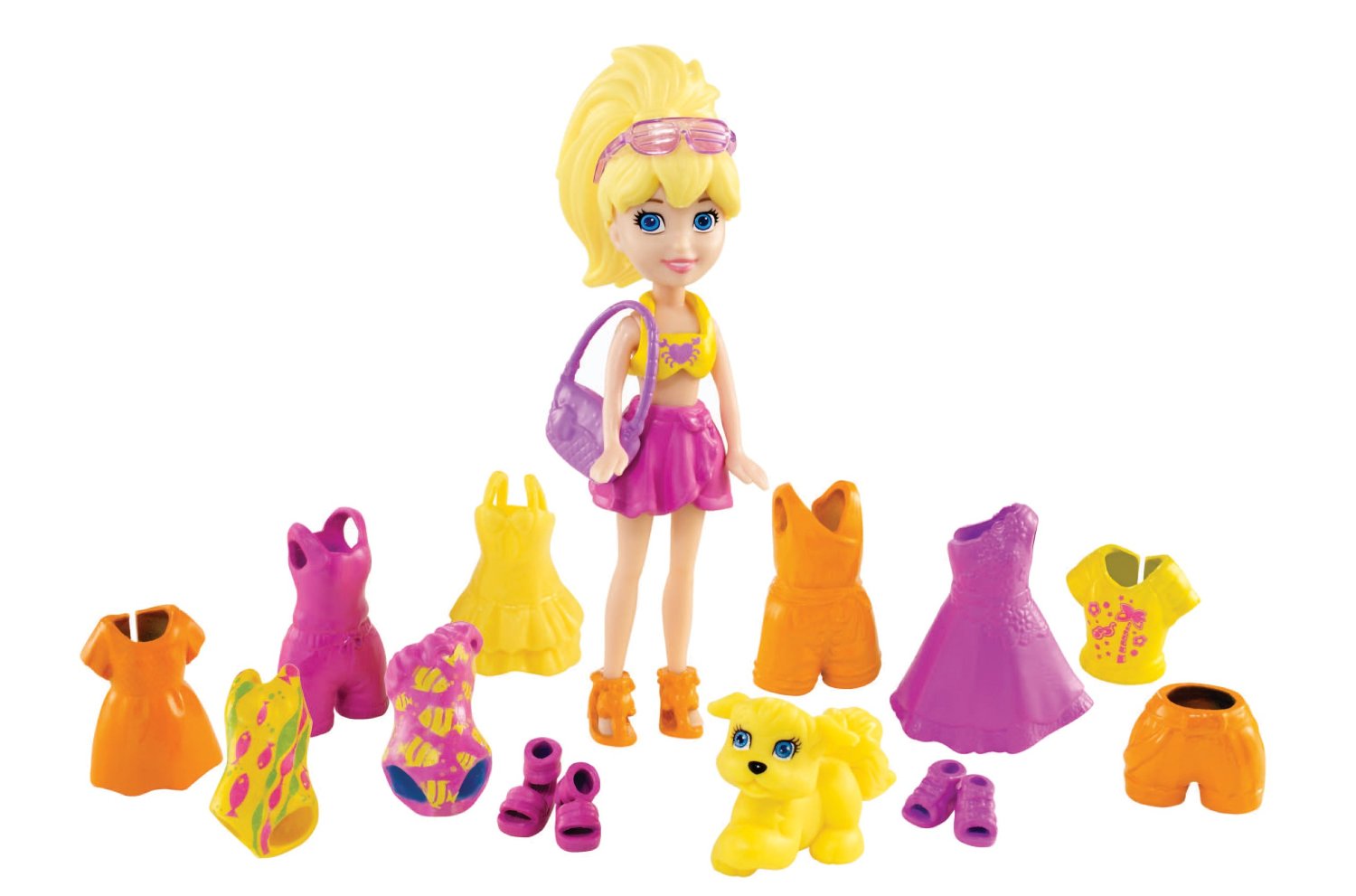
Maybe it’s because Santa is an old, white guy, but the Christmas season has a special way of bringing out the inner sexist in grown-ups. In fact, I started my blog, Reel Girl, 2 days after Christmas, 4 years ago, because I was blown away by the gender stereotyped presents my three daughters, then ages 10 months, 3 and 6 years, received. It was Polly Pocket who drove me to blog.

Polly-Pocket1

I call her Polly Prostitute, partly due to her fashion choices which include boots, heels, and minis that barely cover her ass. Before you get mad at me for “slut-shaming,” this is a doll marketed to little girls. Why do kids, ages 4 – 7 (the group Polly is supposedly for) need to be choosing belly-baring outfits for Polly? But, really, the bigger question is: Why do girls need to be choosing any kind of outfit for Polly at all?

1301704_orig

This tiny plastic doll has about 50 million even tinier plastic articles of clothing, all impossible to keep track of, like fluorescent stilettos or a hairband with kitty ears smaller than my pinky nail. I have a hard enough time not losing the tiny clothing that the three real humans in my house wear, why in Santa’s name would I want this shit lying around around to sort and organize, all so my daughters can get trained to focus on clothing, shopping, fashion, and appearance?

All three of my daughters received multiple “age appropriate” gifts back in 2009, and have every year since, that involved dressing: paper dolls with paper clothes, magnetic dolls with magnetic clothes, soft dolls with clothes you can button and tie, and of course, Barbies, and American Girl dolls at $100 a pop. The list goes on.

I’m here to tell you that these toys are not cute, nor are they a phase girls are ever allowed to “grow out” of. This focus on appearance never disappears from a girl’s life; it simply mutates. That, my friends, is dangerous. We wonder how and why girls get so obsessed with their bodies. Mystified, we conclude this preoccupation is “natural.”  Kids keep getting sexualized and sexually abused. Eating disorders are epidemic, and still, we, authority figures and role models, keep giving girls toys that teach them and train them that how they look is the most important thing. Can you imagine doing this to boys? Giving them endless toys to dress, providing them with very few other male images, from the moment they exit the womb? Would we label that abusive?

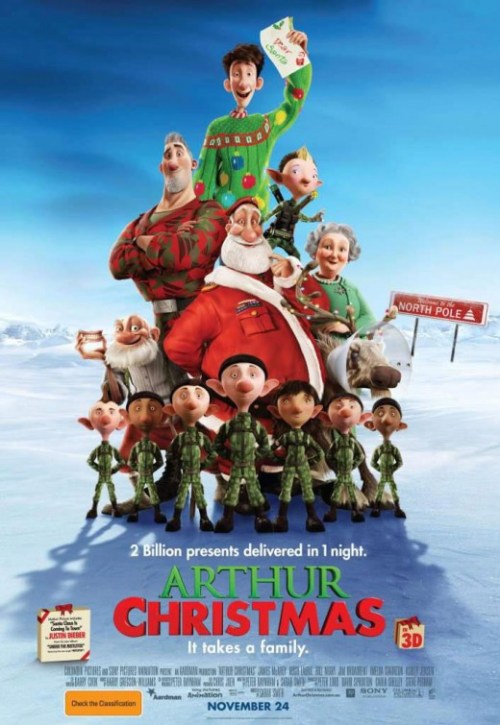
If female characters don’t look like Polly Pocket, they pretty much go missing from kidworld all together. Part of that is due to Hollywood. Female protagonists go missing from most of the narratives made into mainstream movies and marketed to kids. Every year, on Reel Girl, I post all the children’s movies coming out that year, and female protagonists are few and far between. If you look at the posters, you can see how females, literally, get marginalized. Check out this recent Christmas movie, as a typical example.


arthur1

Do you think if parents saw a poster with this many female characters for a mainstream movie in theaters across America, they might do a double take? But this gender ratio is so normal, hardly any one notices. It’s in the Hobbit, Tinitin, Star Wars. And then the toys come out based on those films. This year, my seven year old daughter wanted a more adventurous LEGO set than Friends, where the girls sit at cafes and bakeries. We looked in stores for Leia. This is what we found.

1459127_591015430953231_969825805_n

Yep, there’s our girl, in a metal bikini, chained to a giant, green beast. I bet Polly would love that outfit, too. And what’s crazy is that we got this set in the hope that it would be empowering for her, because it included Leia. I know if I search on the internet, I can find a few female minifigs that aren’t quite as awful, but why can’t I see them in a toy store? Why can’t kids experience powerful females as they go about their day, on cereal boxes and embossed on diapers, the way we see powerful and varied male characters everywhere we look? Why are powerful females presented as if they were some kind of special interest group if they exist at all? Why are girls, anywhere outside of the Pink Ghetto, shown as in they are a minority when they are, in fact, one half of the kid population?

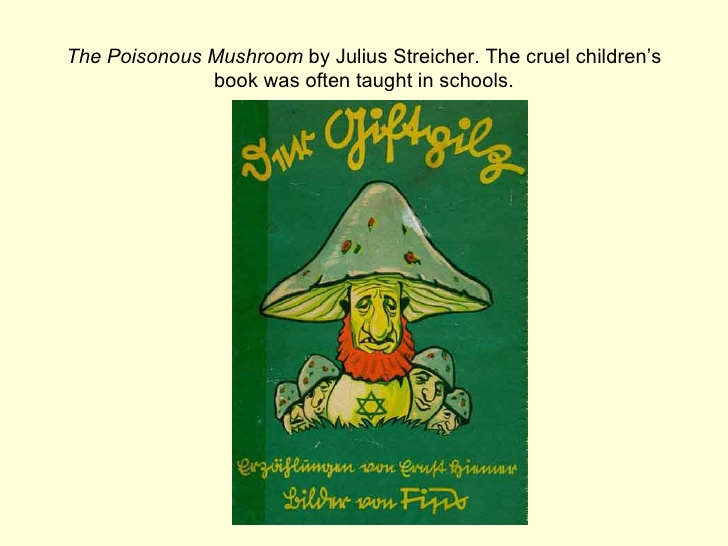
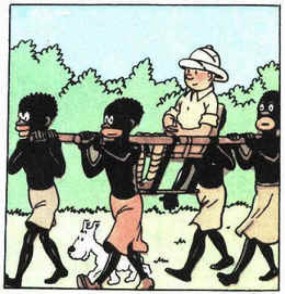
Here’s a brief history lesson on racist propaganda and children’s media.

Images/ narratives of Jews 1938

nazibook

Africans 1931

tin_tin_in_congo11

Females 2013

bratzwallpaper-source_4cj

Be on the right side of history. Please, say no to sexist toys for your kids this Holiday season.


‘The Cardboard Bernini,’ extraordinary film about art and life

“The Cardboard Bernini” is an extraordinary film about art and life that I’ve been trying to blog about for a year.

wide_people

It’s subject, the artist Jimmy Grashow, is so fascinating that I want to write down practically every thing he says. I have no idea how filmmaker, Olympia Stone, edited him down to 76 minutes. The documentary is going to be on my local Bay Area PBS station this Monday at 8PM, at an even shorter length of 56 minutes. I’ll be watching it again, and I hope you do too.

The film covers Grashow’s 3 year project to make a sculptured fountain out of cardboard– inspired by Bernini’s Trevi fountain in Rome– that he plans to put out into the elements and let the rain wash away. Why and how Grashow destroys his own work is the subject of the film.

Right away, you see Grashow is a different kind of artist because of the material he uses. He describes it this way:

When I was a little kid, my parents would bring me these presents, for Christmas or Holidays or something, and I couldn’t wait to get rid of the present and start building with the cardboard box.


Another reason Grashow favors cardboard seems to involve risk.

If you pay for great paper or canvas or paints, you can’t make a mistake. Every inch is valuable. Cardboard is worthless. It is so grateful to be rescued from trash.  It’s just like you. We aspire to be something more, to be holy, to be grand, to be eternal, but we’re tied to mortality. Cardboard and people, we’re almost from the same DNA.


I think what he’s saying is that cardboard allows him to take the leaps he needs to.

If you make 20 little flower paintings, or if I were to go out to a field and paint tractors and do 20 tractor paintings, or I could make fish… There’s something unbelievably thrilling about standing out on a ledge and doing something heroic that nobody wants.

After Grashow went to art school and excelled in all kind of mediums, and achieved commercial success, he always returned to his childhood love of cardboard.

I understood that I couldn’t be a Sixteenth Century Florentine. I could never have the color sense of a guy who looked at olive trees and those beautiful terracotta roofs all day long. The Arno didn’t flow through Brooklyn. My aesthetic was totally predicated on what I saw around me. On the funny papers that I grew up with…All my sensibility was formed from 1950 Brooklyn.

Grashow’s fountain is an elaborate sculpture that includes the great Poseidon and his trident, horses, dolphins, and fish. He describes it this way.

The idea of this fountain is to build it. I try to make something eternal, something extraordinary, but in the end, the plan is to put it out someplace and let the rain and elements wash it away, like Afghan Buddhas, like everything has its time. All artists talk about process, they talk about the beginning, but no one talks about the full term process, to the end, to the destruction, to the dissolution of the piece. Everything dissolves in eternity. I’d like to speak to that.


So basically, what he’s doing is pushing this cardboard/ DNA idea to the next/ furthest level by watching its destruction, making that into art. And Stone’s film clearly shows, it is art. After watching Grashow build his masterpiece, an intricate level of detail involving everything from tiny fish scales to eyebrow hair, he puts it in an outdoor courtyard at a museum. Near the end of the film is a sped up sequence of the sculpture washing away. It’s absolutely gorgeous and sad and like nothing I’ve ever seen.

I’ve watched the film multiple times, and part of me always hopes that Grashow will decide not to sacrifice the fountain. Then, when he does, I get mad about it. Grashow’s wife, Guzzy, is frustrated with him too. “It’s upsetting,” she says. “It’s hard for me to embrace, working on this so much.” To which Grashow responds, “That’s the tragedy of life. That is exactly what life is. It’s so sad.”

(This scene in the film, by the way, totally reminds me of Louis C.K. Grashow has that same morbid death obsession humor.)

I get that it’s about mortality, and we’re all cardboard, but isn’t choosing to destroy your work, or allowing it to be destroyed, more like suicide than accepting death? Is it more about cowardly control than truly letting go?

But here’s the thing I’ve realized. Grashow does this project for himself, not for me, or you, or anyone watching. He’s standing on that ledge, doing something heroic, so he can go on to the next thing. When you see the film, you understand that part of Grashow’s desire to make this project is because his dealer, inexplicably, tied some of Grashow’s sculptures up to a tree in his back yard where they decayed in bad weather. Grashow only discovered the ruined art after his dealer died, when he went to his house to pay respects. When Grashow saw the fate of his pieces, he was heartbroken. For him, it was a confirmation of every bad feeling he’s ever head about himself and the value other ascribed to his work. But though his desire to re-enact the painful event may have been part of why he did this project, the piece became much more– everything he’s wanted to risk saying about life and death and art.

For that reason, after Grashow made this art, he felt like it might be his last work. He wasn’t sure if he had anything left to say. Afterwards, he felt lost. But then, something happened.

I was at services, thinking about what I’m going to do and the emptiness of life. So, I’m sitting in this auditorium, alone, with my head down, asking myself the questions, what am I going to do, who am I, what does it all mean anyway, all the amount of work that you do if you come up empty in the end anyway. And I look down on the floor in this gigantic auditorium. I had chosen a seat, and right at my foot was a pencil. A little pencil.

I can’t wait to see the next extraordinary thing Jimmy Grashow does.


“The Cardboard Bernini” will air December 9 at 8PM on KQED

Oder the film from Floating Stone Productions

 Read about “the Cardboard Bernini” in the New York Times


‘Gender neutral’ not exactly what I’m going for…

Friday, on the local San Francisco public radio station, KQED, I heard a show about children and gender neutral toys. It was a great program, featuring the brilliant Peggy Orenstein, among others, and I was psyched to hear the topic of kids and toys debated as we go into the Christmas season. But, I’ve got to say, I’m not entirely on board with the term “gender neutral” that the host kept using to define a goal. And that is a term that the media seems to cling to when the topic of sexism in kidworld is discussed. When I was on Fox News, the host kept trying to put the same words in my mouth, and I didn’t like it.

Let me be clear here. I absolutely believe toys in stores should be divided by type– building, outdoor, figures/ dolls etc– not by gender. I don’t believe objects should be color coded to imply they should be played with by boys or girls. I am hard pressed to think of something more absurd and simultaneously socially accepted than this. I desperately want to see girls and boys pictured playing together on boxes. When the term “gender neutral” is used, I think this is the goal referred to, a goal I share with all of my heart.

I guess the issue from me is that powerful female characters are already drastically missing from the fantasy world created by grown-ups for children. When we talk about “gender neutral,” I fear that girls will continue to go missing from this debate– about children, toys, play, and sexism– even more. “Gender neutral” needs to be a goal of sorts, but we also have to keep in mind that all kids need to see more girls and women doing more things. Do we call that “gender neutral”?

Another problem for me with the term is that “gender neutral” doesn’t inspire me. “Gender neutral” makes me think of a bunch of grown-ups or academics or psychiatrists sitting around wearing super thick glasses and holding notebooks.

Here is what I want to see in kidworld: More females having adventures. More females doing cool shit. Got it? Do you call that gender neutral or do you call that being alive?

I want options. Variety. Diversity. Multiple narratives. I want all kids to see many more images of powerful and complex females, to see girls taking risks, saving the world, being brave, smart, and going on adventures in the fantasy world and in the real one. You could argue that we need to see more images of boys being kind and geeky and paternal, but from my vantage point, as a reader, movie goer, and watcher of TV shows, that’s pretty covered. I honestly believe the best way to help boys get out of gender stereotypes right now is to show them females being strong, being the star of the movie, or the central figure in a game that everyone wants to play.

But, as it stands, this is not the case at all. Strong female characters have gone missing. Part of this lack is because there are so few female characters in kids’ movies. Those narratives get licensed into LEGO and diapers and clothing. But even when female characters show up, they get “make-overs” or companies like Stride Rite will remove Wonder Woman, Black Widow, and Leia from their Justice League, Avengers, and Star Wars products and marketing. It’s really shocking how strong female characters keep disappearing from toys, clothing, and all kinds of children’s products.

Here’s my four year old daughter (holding a lunchbox from the Seventies.)

supergirl-e1377394963456

My daughter isn’t a “tomboy” or a “girlie-girl.” She likes pants; she likes dresses; she like yellow, she likes pink, she likes black. She likes to race and play soccer and read and make art. She loves superheroes and her mermaid Barbie. But the older she gets, the more I see her choices getting influenced and limited by stores and marketing and media and peers. My goal is to have her world grow, not shrink. I’m not sure that “gender neutral” is what she needs.


Anyone read ‘Goddess Girls?’ I hate the covers.

After Thanksgiving, my two older daughters came home from their cousin’s house with at least three Goddess Girls books. I haven’t read them yet, but I’ve seen the covers before, in stores, and I hate the look of the goddesses.

unnamed

I know you shouldn’t judge a book by its cover, and that I often do, but I don’t know how to get past the giant heads, doe eyes, and tiny bodies. Even when Artemis is killing a serpent, she looks like she’s in an Estee Lauder ad. Obviously, goddesses are supposed to be beautiful, but this limited, distorted 2013 depiction of what is attractive makes my stomach turn.

The books could still be good, I suppose. One Barbie movie is on Reel Girl’s recs: Fairytopia Mermaidia. It’s a great adventure where two brave girls rescue a prince and the entire ocean. The just released “Frozen,” which is also great, has some pretty terrifying skinny, big-headed protagonists. It drives me crazy, because the message here is, and I got this same message when I was a kid: If you want exciting adventures to happen to you, then you must be “beautiful.” Otherwise, you’re invisible. The end goal here is not to be pretty, it is to exist.

But maybe you’ve read Goddess Girls and can tell me how great they are.

Heroines of ‘Frozen’ melt my bitter heart

Today, I saw ‘Frozen’ with 4 kids ages 4 – 11, and we all loved it. The second it ended, my oldest daughter asked if we could go see it again, tomorrow. When I said no, she said maybe she could go with her aunt. All the kids couldn’t stop talking about how cool the “ice queen” is (ha ha, but those are their words.)  The Queen is my favorite character in the movie too, and  I can’t think of a Disney story with a female hero– not villain– that powerful and magical. The Snow Queen’s name is Elsa, and I wish she were in the movie more. I still wish the damn movie was titled for her.

disney-frozen_elsa-wide

I blogged on Reel Girl about how pissed off I was with the tactics Disney used to adapt the story— struck the powerful female from the title, changed the plot so the heroine doesn’t rescue a boy, elevates males to costars, and leaves out the female stars from the first preview. Matters were made worse when the movie’s head animator said it was difficult to make female characters show anger differently and challenging also since girls have to be pretty. Of course, all this comes from a company that has been marginalizing female characters, presenting them as a minority and sticking them into supporting roles, only glorifying them in a limited way when they are princesses.

I look forward to the day when Disney markets a movie with a female protagonist by putting her name in the title, placing her front and center on the posters around town, and making it obvious in the preview that she’s the star. Marketing is its own media and too often, as with “Frozen,” Disney’s presentation is sexist. Girls go missing. But, still, the actual movie is really good.

“Frozen” has a princess, but it also has a Queen. The princess, Anna, is a good character too. She rescues the man in love with her at least twice. The “true love” in this story is about sisterhood, not romance. But another thing I liked about the movie is that Anna is not in an either/ or situation that so many female characters are: be strong or be in love. Just like a guy character, Elsa gets to have it all.

Is the movie perfect? No way. If I were head of Disney, my Snow Queen movie would be completely different. Besides all the great plot points and characters missing from the original, I hated the Barbie look of Elsa. If you were in a snow palace in the mountains, all alone no less, would you wear heels? A dress, slit to your thigh? I felt like I was watching a doll, to the point that at times, she was painful to see. Elsa and Anna do seem too much alike physically. Also, if you were a Martian and you saw “Frozen,” you would still think females are in the minority. In spite of two female protagonists, there are many scenes in the movie where male characters far outnumber females, including scenes with no females at all. There are no scenes with multiple females and no males.

In spite of these complaints, the movie is the best animated one I’ve seen this year for female characters. There is no question that this narrative belongs to Elsa and Anna. It’s an adventure with smart, brave heroines who may look the same but act differently. Most of all, I was thrilled that my kids got to experience a magical female learning how to use her power. Can we please have some more of that, Disney?

Reel Girl rates “Frozen” ***HH***


‘Catching Fire’ torches Hollywood’s gender stereotypes

I could not have loved ‘Catching Fire’ more. It’s even better than ‘Hunger Games.’ I want to see this movie again, and I never see a movie a second time when it’s still in theaters. It’s that good.

The_Hunger_Games__Catching_Fire_62

I saw ‘Catching Fire’ yesterday with my 10 year old daughter at an IMAX. I’ve never been to an IMAX before, and I felt like I was in the movie. I was stunned by the whole thing. In this installment, all the characters get more depth including two-dimensional ones from Part One like Effie, Katiniss’s mom, and Prim. It was great to see Prim grow up and use her medical skills in a crisis and also, fascinating to see Effie finally getting that the Capitol is evil.

the-hunger-games-catching-fire-trailer-screenshot-prim

The deadly arena design is one of my favorite parts of Catching Fire, and the movie’s rendition of it does not disappoint. My favorite scene was watching the poisonous fog creep towards Katniss. It’s hypnotizing and terrifying and gorgeous.

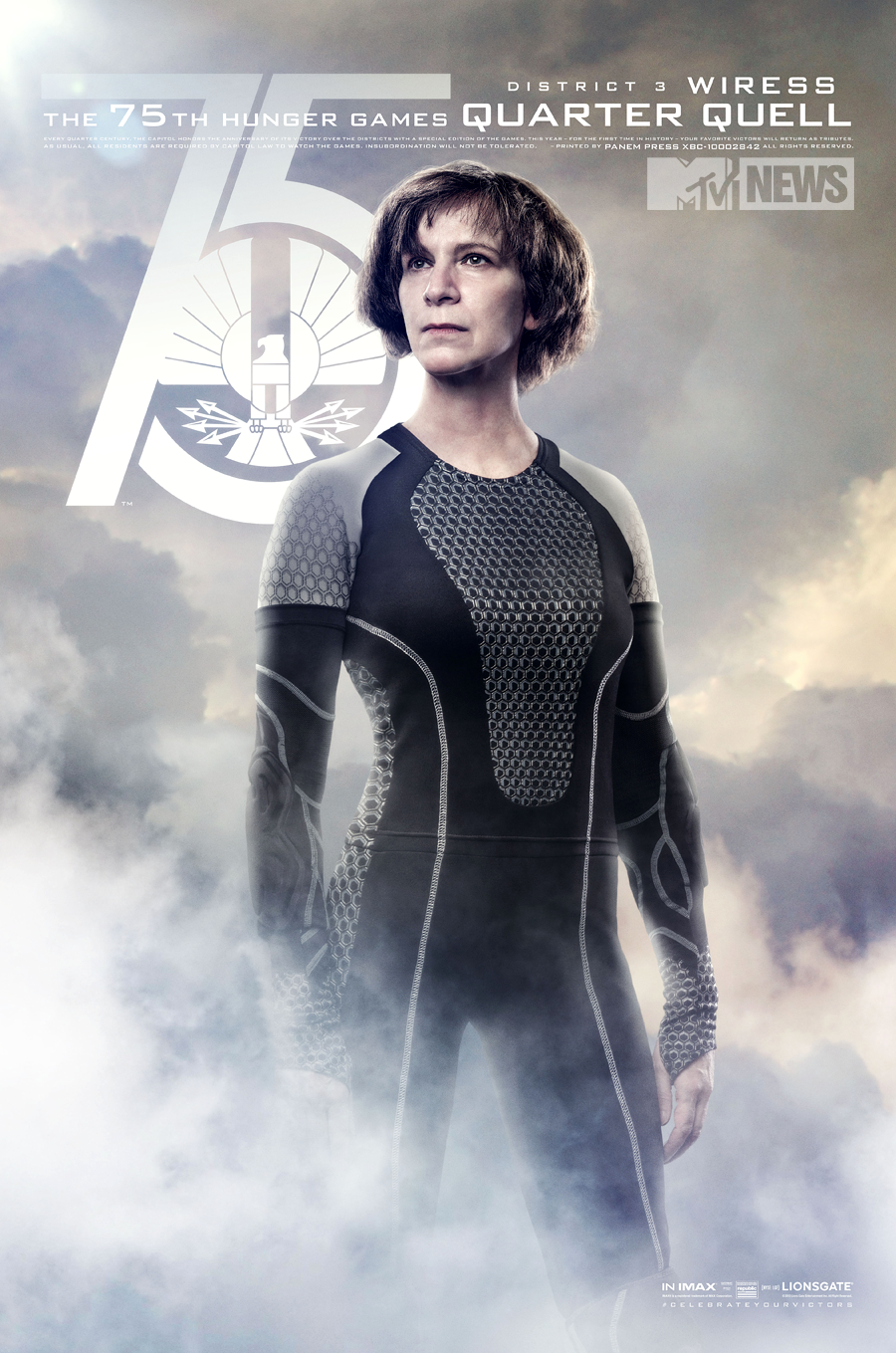
There are so many great female characters in ‘Catching Fire.’ Besides the ones I’ve already mentioned, tributes include Mags, who is older and courageous, Wiress, a tech-wizard, and Joanna, who is even angrier than Katniss.

Quarter_quell_mags

Watching Joanna and Katniss walk off together, two skilled warriors, I felt like I was viewing something revolutionary in film. I was thrilled that my daughter got to witness this scene as well.

wiress_full


Even details of this movie, like the male tributes and the female tributes wear the same costume, black and gray– no frills, exposed midriffs, or cleavage for my kid to have to see. And still, without all that “feminine” bullshit, Katniss has two men in love with her. Those heroes love Katniss for her brain and courage, not as separate from her beauty, but they find that beautiful.

Jennifer Lawrence’s acting is top-notch, as always. All her quotes on her PR tour, about how she wasn’t going to starve herself to play Katniss , not to mention her short hair cut, make me even more grateful she’s playing this part. I could not have imagined a better role or actress to play her. (I don’t think it’s a coincidence that Emma Watson, who plays Hermione, also makes empowering statements about female characters and young women. If an actress gets to play someone strong, it’s easier for her to become a role model in public. How many actresses get that chance?)

The male characters are also great. Phillip Seymour Hoffman is as believable as he always is. Lenny Karvitz’s Cinna is one of my favorite characters.

As with ‘Hunger Games,’ the violent scenes in “Catching Fire’ are brief. There is no lingering over blood, assaults, and death. Same with the kissing scenes. With this kind of stuff, as far as deciding whether its OK for younger kids, it really matters how long the camera spends on it.

“Catching Fire’ burns through gender stereotypes but not in a way that seems contrived or forced. Watching this movie, all you feel is captivated by the story of a brave girl saving the world. The narrative is a metaphor, about a protagonist facing her deepest fears and triumphing, something kids hardly get to see a girl do. My daughter is afraid of elevators, and after the movie, when she stalled in front of of one, we talked about Katniss in the arena, and she jumped right in.

Reel Girl rates ‘Catching Fire’ ***HHH****


Reel Girl’s working list of movies with female protagonists for ages 10 and up

Along with wanting to walk to the store all by herself and going to bed later, my 10 year old has parted ways with her two younger sisters at movie time. She wants to see stuff “for older kids.” To her, right now, that means no animation. Ever since we saw “Soul Surfer,” which the whole family enjoyed, she’s been asking for more of the same. So now, on Saturday and Sunday, she and I have been watching together. Last week, we saw “Whale Rider,” which was amazing, and “The Craft,” also good. Last night we saw “A Little Princess,” which I liked too, but I could’ve done without the repetition of “every girl is a princess!” even though, clearly, the term meant special and worthy.

So, on Facebook, I asked Reel Girl fans for suggestions. Here are my requirements for what I want my 10 yr old to see, which has little to do with what the MPAA deems age appropriate. The movie must have a heroic female protagonist. Swearing is OK, so  are sexual references, and some drug use. Not okay: gore, nudity, glorification/ focus on drugs/ alcohol.

Ideally, what I am really looking for, as with animation, is narratives where girls and women are strong, cool, and smart. I prefer not to see a sole girl continually struggling against the patriarchy, where she is told she can’t do this or that because of her gender. I understand, obviously, the importance of that story, but I, for one, am sick of it. Why do my kids need to learn about sexism before they can see girls being strong? Can’t they just see girls being strong? But, that is just my hope, not a disqualification. “Whale Rider” is all this conflict, where the female protagonist is continually shunned for her gender. Again, a great movie, but I hate having my daughters hear and see, repeatedly, at this age, that girls they can’t do something because they’re female.

Also, ideally, girls/ women work together to save the world. I realize this is super hard to find.

Again, the four movies I’ve just seen that make Reel Girl’s list:

Soul Surfer

Whale Rider

The Craft

A Little Princess

We have also seen “Hunger Games” together. This movie makes the list. I know some feel the violence is too much for a 10 year old, but I disagree. The violence is not graphic. I’ve written quite a bit about violence on this blog and how in narratives, its metaphorical, to illustrate intense feelings of “being attacked” or solitude or the world caving in. Humans, and certainly kids, have big emotions and violence depicts that in a way we can see.

Also, in the past we have seen “Avalon High” which is GREAT.

Below are your suggestions complied from Reel Girl’s Facebook page. Please keep the ideas coming. I hope to put together an official list of Reel Girl recommendations, as I have for younger kids. Please do not suggest animated movies, or movies for younger kids, as I have a list for those already. Thank you! So here they are:

Moonrise Kingdom

Run Lola Run

Man in the Moon

Pitch Perfect

Bedknobs and Broomsticks (Angela Landsbury)

The Worst Witch

Fried Green Tomatoes

Anne of Green Gables

When Billie Beat Bobby

How to Make an American Quilt

 A Far Off Place

Cold Comfort Farm

Sisterhood of the Traveling Pants

Winn Dixie

Big Business

Now and Then

Ghost

My Girl

Roman Holiday

Elektra

Supergirl

Beaches

Foxfire

Now and Then

Saved

True Grit

Secret Life of Bees

V for Vendetta

Central Station

Reaching for the Moon

Paper Moon

Miss Potter

Belle

Violette

Wadjda

Polar Bear King

Journey of Natty Gan

Sapphires

Little Women

Emma

Pride and Prejudice

Serenity

Rigged

Wanted

Missing

Centurion

Million Dollar Baby

Æon Flux

Pacific Rim

Tank Girl

Space Camp

Wild Hearts Can’t Be Broken

Freedom Writers

The Parent Trap

The Miracle Worker

Little Women

Uptown Girls

Erin Brockovich

National Velvet

Miss Firecracker

Broadcast News

Just Wright

Bride and Prejudice

Becoming Jane

Because this is a list in progress, I will transfer movies I’ve taken off the suggestions list from above to make up Reel Girl’s official list below.

The movies listed below feature a heroic female protagonist, and, except where noted, get a Triple H rating. Movie with links, I’ve reviewed on Reel Girl.

These movies may include swearing; sexual references, brief sexual encounters like making out but no nudity; violence but not gore; brief drug use but no focus or glorification of drugs/ alcohol

Soul Surfer

Whale Rider

The Craft

A Little Princess

Hunger Games

Avalon High

Ever After

Snow White and the Huntsman

Wrinkle in Time

Charlie’s Angels **HH**

Catching Fire

Hanna

Clueless ***HH***

Freaky Friday (2003) ***HH***

Bend It Like Beckham

Akeelah and the Bee

Rabbit Proof Fence

Gravity

From Time Magazine to animation: female chefs go missing

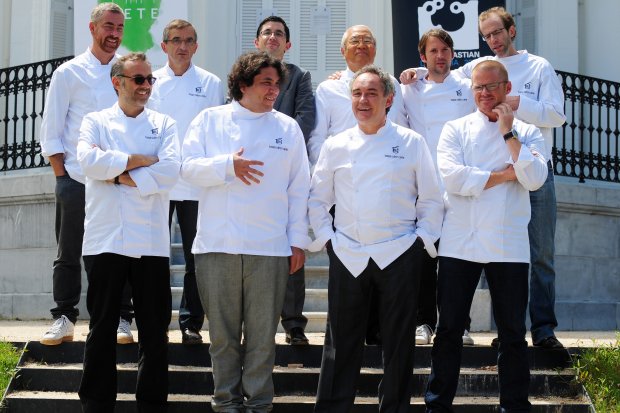
Time Magazine’s “Gods of Food” of story features zero women. That’s right, ZERO. Here are the gods.

godsoffood

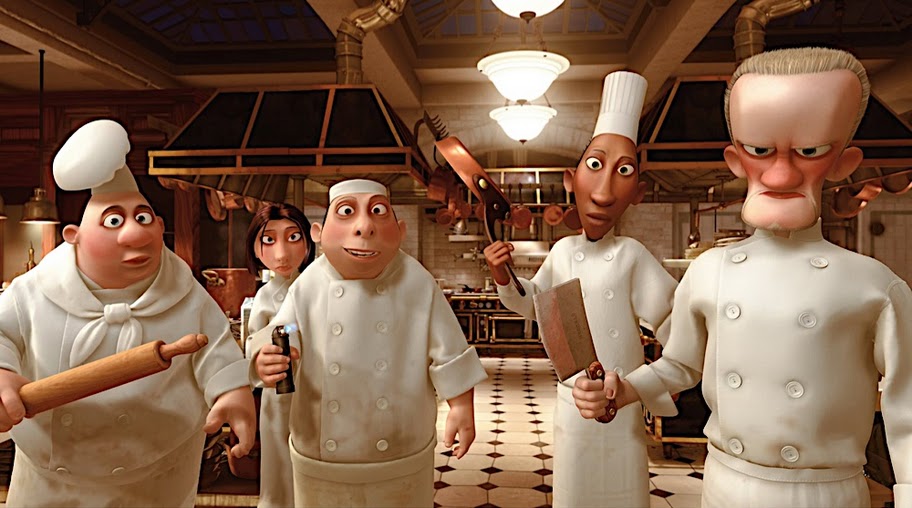
Now, take a look at these chefs from the children’s movie “Ratatouille.” Do you notice any similarity in the pictures?

remy3

The photo above is actually missing the two male costar chefs of the movie: the rat, Remy, and his BFF, Linguini. Here they are.

remy-and-linguini-form-a-friendship_jpg

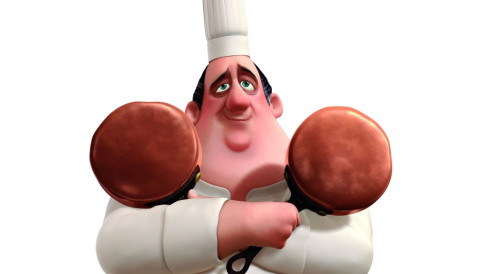
Oh, wait. There’s another male chef featured prominently in this children’s movie, Remy’s idol, Auguste Gusteau.

Auguste_Gusteau

The Daily Beast comments on Time’s sexism:

If aliens landed on our planet and picked up a copy of Time magazine, they would think that men do all the cooking in the world.


Here’s the thing: children are kind of like aliens. They’ve just landed on earth, and this is the world grown-ups show them? A fantasy world, created with children in mind, no less, where females go missing. “Look, honey, you can grow up to be invisible! That’s right, daughter, it’s more likely that a talking rat can become a world class chef than a female human child.”

You think I’m exaggerating the lesson kids are learning here? See that one female chef in the second picture, looking sad in the background? Her name is Colette, and she actually has a monologue in the movie where she bemoans the sexism of French kitchens. Parents are supposed to hear that speech, smile, and think: “You see, there’s a feminist in the movie! Isn’t that great?”

I call Colette’s character the Minority Feisty, and there are clones of her in most children’s movies made today. She is a “strong female character,” and there can be more than one in a film, but she’s always in the minority compared to male characters. Her role is usually to help the male on his quest. Like a First Lady, she cheers him on and gets to give him a kiss. Still, when parents see the Minority Feisty, they’re grateful and somehow miss that instead of teaching a 4 year old all about sexism, it would be much cooler, and more effective, to show kids females actually doing stuff– having adventures, taking risks, solving problems, and being heroic. Like, for example, instead of Colette’s 2 minute talk, why not make a movie starring a female chef and her female rat BFF with a female mentor, cooking in a room of females? Or at least, a room half full of females? Because, believe it or not, girls are one half of the kid population, but if you were an alien and you saw the G movies on earth– whether they featured humans, animals, toys, fish, robots, cars– you would think girls were a tiny minority on this planet.

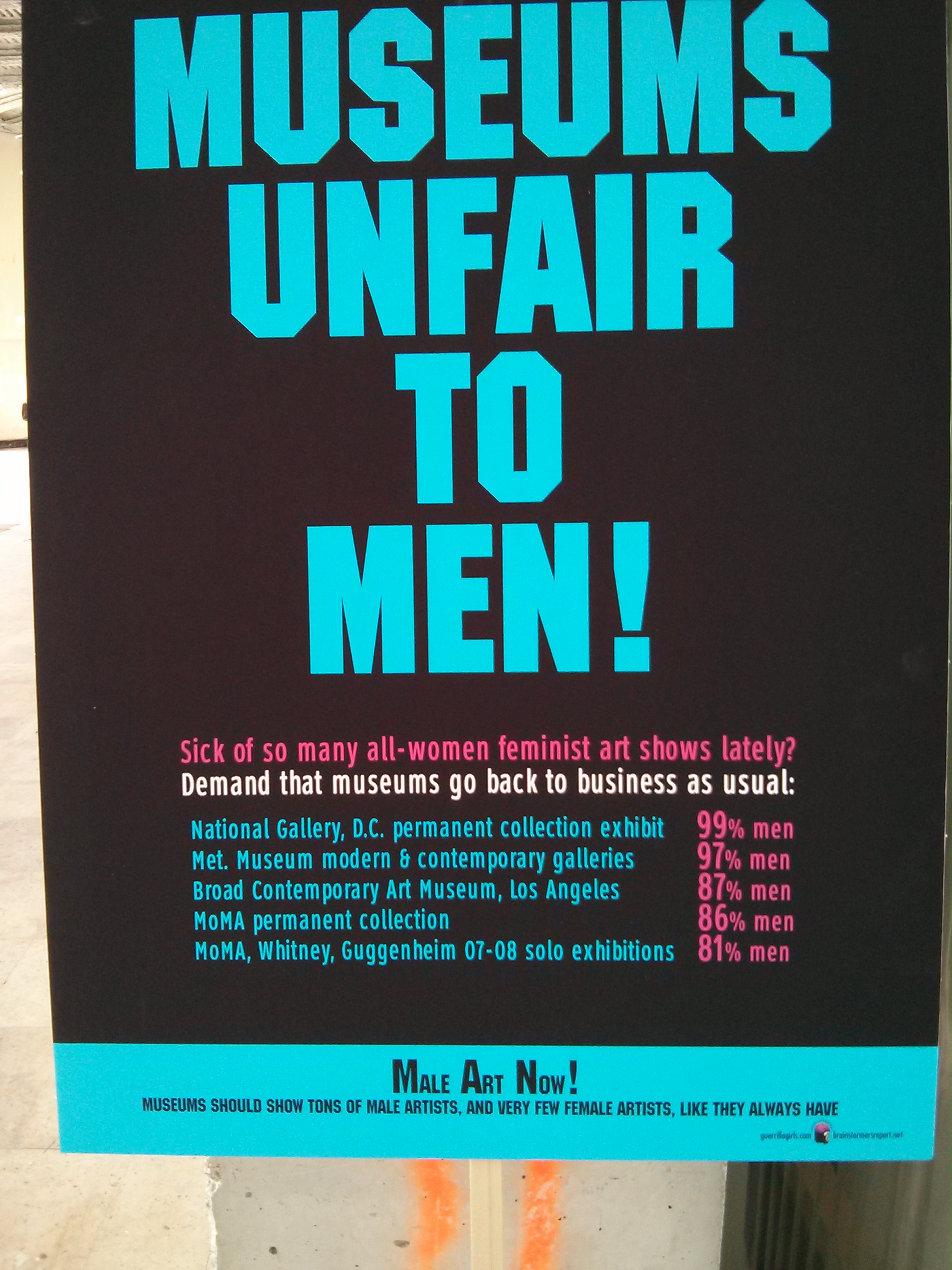
Another thing drives me absolutely crazy about this cooking sexism. In kidworld, rumor has it that cooking is a girlie thing. “Girl” toys and dolls involve cooking, while “boy” toys and dolls– whoops, I mean action figures—  involve fighting and stuff. So how come everything shifts and cooking becomes a guy thing? Seems like if cooking earns money and acclaim, then abracadabra, it’s for the opposite gender. The same is true for all kinds of gender stereotypes that dominate kidworld, for example, the belief that girls are artsy and verbal (the latter referring to reading and writing, not actually speaking.) But how come female writers get designated to chicklit? if girls are so artsy, why are the “great” artists are mostly men? Check out this image from the Guerrilla Girls.

museumsunfairtomen

The truth about this stereotype is that we prefer our girl children quiet, with a nose in a book, coloring, or doing something “girlie” like that. While, you know, boys will be boys, loud and misbehaving, with all their “boy energy.”

Gender stereotypes of kidworld have nothing to do with innate ability and everything to do with social status. Sadly, we perpetuate those made up differences in movies made for kids and brainwash a new generation. Take a look at this video from the Geena Davis Institute on Gender and Media.

Kids trained to think stories about boys for everyone, stories about girls only for girls

Soraya Chemaly is my new favorite writer. I can’t get enough of her blogs on Huffington Post and Salon. From her post What Does it Mean that Most Children’s Books are About White Boys:

One day when my daughter was in third grade, she had to explain to a classmate what sexism was. Four kids — two boys and two girls — had been put in a reading group together, given a basket full of books and asked to talk about them and decide together which one they wanted to read and discuss.

As they went through their choices, the boy picked up a book whose cover showed an illustration of a woman in a hoop skirt. He quickly tossed it aside. My daughter suggested that it might be good, and asked if he’d already read it, because she would like to. He said no, it was a girl book and he wouldn’t read it. Her response was pretty cut and dry: “That’s a sexist thing to say,” she explained. He was a friend of hers and an intelligent kid. He paused long enough for her to realize he wasn’t sure what she meant.

“Do you know how many books with boys in them I read?” she said. “You should read girl books, too. Not reading them just because they’re about girls is sexist.”

Frankly, today, I’m pretty certain that what she, a 9-year old, told her classmate was more than most adults can muster.


Chemaly is so right. Sexism gets passed on, generation to generation, from parents who continually read their kids stories and take their kids to movies starring males. What happens when the narrative is about a girl, when a girl is shown front and center on the book cover or on the movie poster? Parents, too often, decide that kind of entertainment is just for girls.  Of course, multinational industries like Target and Disney support and enforce and make money off of gender segregation. Disney execs, when changing the title of a movie from “Rapunzel” to “Tangled” and making Flynn Ryder a costar to the female, hold a press conference, telling us, with no shame at all, that while girls are happy to see movies about boys, boys refuse to see movies about girls. So are girls just born open-minded, generous, and altruistic, perfectly happy to be marginalized, cast in the supporting roles, if they get to exist in the story at all? Or, are girls trained, from day one, from before day one, frankly, while still in the womb, that stories about boys are important?

Chemaly goes on:

Do you know what percentage of children’s books feature boys? Twice as many as those that feature girl protagonists. In the most comprehensive study of children’s literature during a period of 100 years, researchers from the University of Florida found that:

  • 57% of children’s books published each year have male protagonists, versus 31% female.

  • As with television and film, books with animated characters are a particularly subtle and insidious way to marginalize based on sex, gender and race. In popular children’s books featuring animated animals, 100% of them have male characters, but only 33% have female characters.

  • The average number of books featuring male characters in the title of the book is 36.5% versus 17.5% for female characters…

    Researchers of the study above concluded, “The gender inequalities we found may be particularly powerful because they are reinforced by patterns of male-dominated characters in many other aspects of children’s media, including cartoons, G-rated films, video games and even coloring books.”


    Please seek out books and movies and games with smart, strong girls for all of your kids. Here is a list of movies Reel Girl recommends. Check out the “Reel Girl recommends” category as well. Other categories to explore on Reel Girl include books, games, television shows, Cool and Radical Girls, and Top Heroine Rating. Or do a search for a book or movie title on Reel Girl to get my review. I rate media and products with 1 – 3 S’s for gender stereotyping and 1 – 3 H’s for heroines. For media or products to avoid, look into Reel Girl’s Worst Stereotyping category. Everything I rate, I’ve personally read, played, or viewed, often with my three daughters, now ages 4, 7, and 10. Great resources also include A Mighty Girl and Toward the Stars.