When will the USA take sexual assault seriously?

Today, I received an email from Jennifer Siebel Newsom, founder of The Representation Project, with the subject: “How Harvard Is Failing Its students.”

Dear Friend,


This week, in an open letter to the Harvard Crimson, a young woman called out one of the country’s most prestigious universities for failing to adequately help her and other survivors of sexual assault on campus.

The anonymous letter, titled “Dear Harvard: You Win,” details how the student spent months living in the same building as her alleged assailant and how she was shamed by administrators who ignored her complaints or blamed the attack on her own behavior.[1]

This isn’t an isolated incident – sexual assault can happen anywhere and to anyone – but when even our most revered (and best funded) universities are failing to properly address the crime, it’s indicative of a much wider cultural problem.

Someone is sexually assaulted in the United States every two minutes, and yet so many of our political leaders seem ill-equipped to even discuss the issue, let alone lead policy change.[2] Our media reinforces this culture of silence by shaming survivors (women and men), while our courts excuse criminal behavior with harmful gendered concepts like “boys will be boys.”[3]

April is Sexual Assault Awareness Month (SAAM) in the U.S., and an opportunity for all of us to take action to fight this national epidemic. This week, tweet this list of 5 easy ways to get involved during SAAM. And use the resources at Know Your IX to examine and improve your current or former school’s sexual assault policy.

Let’s work together to make sure the voices of survivors continue to be heard, and to end “rape culture” once and for all.[4]

Onwards,

Jennifer Siebel Newsom, Imran Siddiquee & The Representation Project team


I blog about this all the time, but it’s baffling to me that the USA, the so-called leader of the free world, from its “greatest” universities to its own military, refuses to take women’s rights seriously. In a rare exception, former U.S. president, Jimmy Carter, has written a new book about this issue: A Call To Action: Women, Religion, Violence, and Power. ThinkProgress reports:

Former President Jimmy Carter is issuing a call to action to end the abuse and subjugation of women, which he refers to as the “worst and most pervasive and unaddressed human rights violation on Earth…

There’s significant data to back up his claims. The World Health Organization (WHO) estimates that one in three women around the world is subject to sexual violence at some point in her life. In many parts of the world, women still aren’t receiving adequate health care and education. Every year, about 14 million girls under the age of 18 are given away as child brides, and an additional 4 million women and girls are bought and sold into slavery. And according to the United Nations, at least 125 million girls in Africa and the Middle East have undergone female genital mutilation….

Carter’s book makes the case that the United States is at least partly responsible for perpetrating the ongoing violence against women around the globe, since the U.S. wields such great international influence. The former president also sees issues of violence and abuse occurring within America’s borders, particularly as the issue of properly handling sexual assault causes on college campuses and military bases has recently come to a head.

“Exactly the same thing happens in universities in America that happens in the military. Presidents of universities and colleges and commanding officers don’t want to admit that, under their leadership, sexual abuse is taking place,” Carter noted. “Rapists prevail because they know they’re not going to be reported.”


Carter’s thesis is similar to Pulitzer Prize winning journalists, Nicolas Kristof and Sheryl WuDunn, who wrote Half the Sky in 2009:

in the 19th century, the paramount moral challenge was slavery. In the 20th century, it was totalitarianism. In this century, it is the brutality inflicted on so many women and girls around the globe: sex trafficking, acid attacks, bride burnings and mass rape….


When a prominent dissident was arrested in China, we would write a front-page article; when 100,000 girls were kidnapped and trafficked into brothels, we didn’t even consider it news.


Kristof and WuDunn are referring to front page news for the American publications they worked for. The whole world is affected when the USA doesn’t take brutality against women seriously. When our own policies and practices, from our justice system to our media, protect sexual assault perpetrators and victimize survivors, every woman is affected by this misogyny. Even if she hasn’t been sexually assaulted, she must to fear it, she grows up fearing it, knowing that if it happens to her, her voice is likely to be silenced, her words ignored, that her experience won’t matter and her story won’t be told. That basic reality influences every female on this planet. I wrote “The Shame of Rape” for Salon in 2002. Either things have gotten worse since then, or we’re just more aware of how bad things are, which I suppose you could call progress.

The “shame” of rape

The


When 7-year-old Erica Pratt was abducted on July 22 and tied up in a basement by her kidnapper, she chewed through the duct tape that covered her mouth, freed her hands and feet, and broke through a door to escape. Electrified by the young girl’s feat, the media celebrated Pratt with a prolonged blitz of coverage. She smiled luminously for cameras as awed police officers praised her bravery. Her photo graced the front pages of newspapers across the nation, and she was named Time magazine’s “Person of the Week.”

When Tamara Brooks and Jacqueline Marris were abducted at gunpoint nine days later from a remote teenage trysting spot in Lancaster, Calif., they devised a plan to break free by stabbing their abductor in the neck. When one girl had the chance to escape, she didn’t take it for fear that the other girl — whom she hadn’t met before that night — would be killed if she abandoned her. These were brave and loyal girls — heroines who endured mind-numbing terror before police found them and killed their captor, who authorities believe was preparing to murder them and dump their bodies.

But Brooks and Marris were not honored by Time magazine or identified as heroes in other media outlets. Why not? What made their story so different?

Just as newspapers and the networks were scrambling to cover the story, they learned that the girls had been sexually assaulted during their ordeal. Because most mainstream media observes a self-imposed policy of withholding the names and faces of sexual assault victims, the coverage abruptly, and somewhat awkwardly, ground to a halt.

Newspapers and TV broadcasters explained the shift as a matter of courtesy. But in concealing the identities of the young women on the grounds that rape is so intimate and horrendous that they should be spared undue attention, the media helped to promote the unspoken societal belief that somehow, when sexual assault is involved, the victim is partly — or wholly — to blame, and should be hidden from view.

TV stations began digitally obscuring the girls’ faces. Newspapers like the New York Times rushed to delete the names and photos of the girls from the next day’s paper. Some publications, like USA Today, had already gone to press, and printed the story with photos and names on the front page.


The lopsided coverage was especially disorienting because early in the story, the girls’ identities were broadcast everywhere — constantly — as a means of saving their lives. The idea was to familiarize as many Americans as possible with the girls’ names and faces so that average citizens might assist in tracking them, and their kidnapper, down. And it worked. But once the teens went from being kidnapped youths to rescued rape survivors, their status changed. They were branded with the Scarlet R. They had been raped. It was suddenly better for them, and us, to contemplate this shame without fanfare.

In effect, the girls disappeared twice — once when abducted, and again when the media erased them.

The policy of hiding the rape survivor makes the media complicit in shaming and stigmatizing her. It reinforces the myth that women are too weak, traumatized and tainted to decide whether they want to tell their own stories — of victory, not victimhood. And this assumption becomes a self-fulfilling prophecy. If raped women were granted the same status as Erica Pratt, there would be no reflex to make them disappear. Their survival would be cause for public honor and respect. Their rescues would be complete; their recovery would begin with heartfelt acceptance by everyone who prayed for their return.

Silence and shame protected the Catholic Church and one of its dirtiest secrets for years. And church officials made the right assumption: If you can’t see it, no one will believe it is happening and, more importantly, victims who are shamed and controlled will be quiet, silenced by a sense of complicity and sin. What if all those alleged male sexual assault survivors who went on “60 Minutes” and “20/20″ had their faces covered with a gray dot? What if no newspapers or magazines had been willing to publish their names? How much credibility or validity or power can you have when you have no face and no name? Would the public have believed these things had happened if faces had not been attached to the charges?

You can’t put a faceless woman on the cover of Time magazine.

Not all rape survivors take the media’s cue and withdraw. Many have told their stories as part of their recovery, most famously authors like Maya Angelou in “I Know Why the Caged Bird Sings” and Dorothy Allison (“Bastard Out of Carolina”), and singers including Fiona Apple and Tori Amos. Current bestselling author Alice Sebold has said repeatedly in interviews that she could not have written “The Lovely Bones” until she wrote the story of her rape in her first book, “Lucky.”

With each of these acts of bravery has come further acknowledgment that rape is a horrible event and that everyone abhors it, yet hypocrisy — public and institutional — still exists. Rapists are rarely successfully prosecuted. For every 100 rapes reported in this country, only five rapists end up in prison. Sentences are relatively light, averaging just 10.5 years, and the usual time served is approximately five years.

U.S. Attorney General John Ashcroft doesn’t support the notion that a raped woman should have the right to an abortion. And U.S. foreign policy does not include sanctions, even strongly stated warnings, against countries like Saudi Arabia where men are allowed to rape their wives, and married women raped by men other than their spouses are punished for adultery. In Pakistan, when a young woman was ordered raped by a tribal council as punishment when her brother was seen in public with a woman not in his family, the U.S. State Department took no action.

At the same time that it is no longer socially acceptable to blame or stigmatize a rape survivor for what has happened to her, it appears to be socially unacceptable to recognize her as a hero and honor her for survival. But that may be about to change, thanks, in large part, to Marris and Brooks, two rape survivors who demanded to be seen.

A day after she was rescued and her identity had been quickly masked in the media, Marris appeared on KABC, the local Los Angeles news station, to talk frankly, without embarrassment, about her ordeal. She revealed, among other details, the fact that she and Brooks had tried to escape by stabbing their abductor in the neck.

A few days later, Brooks and Marris both appeared on the “Today” show to tell the story of their capture and captivity, a gripping account in which they described being threatened with a loaded gun, smashing their abductor in the face with a whiskey bottle, and later watching him die.

When asked why they chose to talk about their experience, Brooks said that she wanted to do it, and came forward with the support of her parents, who braved some criticism about the decision. She and Marris, Brooks said, “want to get the message across to everybody to never give up on anything. If you ever give up, you’ve lost. Whatever obstacles you have, you’ve got to fight your way through it.”

Drop everything and take your kids to see ‘Divergent’

There are so many things I love about “Divergent,” I’ll go through the major points here.

-Divergent-still-tris-and-four-34776713-1000-1000

The movie, in a nutshell, is about facing your fears. You get to watch a brave, smart, and compassionate female protagonist test and challenge herself again and again. You see her make choices, grow, and become her own person, a true leader. I write a lot about violence on Reel Girl, and how it is not comparable to sexualization. Narratives are metaphors, and just like in dreams, images express feelings. We, humans, experience universal emotions like fear and aggression. These are not “boy” feelings or “girl” feelings, they are just part of being alive. What is unique, or relatively unique, is what triggers these feelings in each of us. ‘Divergent’ addresses this specifically, by showing the characters go through their “fear landscapes” where they face their terrors and make choices. I loved that my daughter saw a female hero do this again and again.

Another thing that is so great about this movie is the romance. Four, the supporting male character, is in love with Tris because of her bravery. Her bravery makes her attractive. While we see so many narratives where males are celebrated for their attributes, females get defined by their “beauty.” Males have the reputation of being divorced from their feelings, but in my experience, it’s female characters– and of course, actual female people– who get a lifetime of training in experiencing their own bodies as objects and accessories, separate from who they are. ‘Divergent’ is a narrative where the heroine is integrated and unified– body, mind, and soul– and that is rare to see. When you watch the movie, you will understand, how literally Tris defies allowing herself to be fractured into separate factions.

Shailene Woodley made a comment which I loved, differentiating the love story in ‘Divergent’ from ‘Twilight:’

Twilight, I’m sorry, is about a very unhealthy, toxic relationship. [The protagonist Bella] falls in love with this guy and the second he leaves her, her life is over and she’s going to kill herself! What message are we sending to young people? That is not going to help this world evolve.”


On one of my favorite blogs, Women and Hollywood, Melissa Silverstein chided Woodley for that comment, stating without ‘Twilight’ proving movies based on YA novels with female protagonists can make money, ‘Divergent’ would not exist as a film. While that may be true, I don’t think Woodley was speaking from a business perspective, but from her heart about how different the love stories are in these two movies.

A third aspect of the movie that is great is Natalie, the mother of Tris, played by Ashley Judd.

images

Judd’s part is small as far as screen time, but some of my favorite scenes in the movie were watching mom and daughter work together to save the world. Again, how often do we get to see that?

Kate Winslet as the evil Jeanine is amazing. She is wickedly fun to watch.

divergent-movie-jeanine-matthews-kate-winslet-666

Here’s something very cool to tell your kids: the author of the series, Veronica Roth, is 25 years old.  When they read the book– I recommend it for kids age 9 and up– make sure they see Roth’s photo. She’s an inpsiring role model. There’s a great interview with her at the end of the book. When Roth was in college, she was studying psychology, specifically phobias, and learning about a kind of therapy where you repeatedly do what you are afraid of. One day she was driving, listening to music, and she saw a scene in her head of a person jumping off a building, not for a self-destructive reason. She put hat scene together with what she was leaning about experiencing fears and boom! ‘Divergent’ was born.

20130718divergent_veronica_roth_01

When Roth is asked what characteristics she kept in mind when coming up with her main character, she responds:

I don’t think I ever sat down and thought about how Beatrice was– I just had this sense of her. I knew her. I did set myself a rule that was hard to follow, though: Beatrice is always the agent. That is, she’s always choosing, always acting, always moving the plot by her behavior.

This is exactly the advice I give my kids when they are writing a story. Of course, too often, we see male characters acting and making choices. We are so used to that gender role that as writers, just as Roth describes, its important to keep in the forefront, that the female character needs to keep making choices that drive the plot. In ‘Divergent,’ it’s beautiful to watch a female hero be a true protagonist, commanding her own film and her own story. I look forward to the day when a sentence like the one I just wrote seems ridiculously dated.

I wish Zoe Kravitz as Christina had a more interesting part/ character arc. Once again, we have the girl of color as the BFF to the white protagonist.

divergent-movie-tris-christina

As we all know, marketing is its own media. Even if children don’t go to the film, they are likely to see this ridiculous butt pose poster, where Tris is positioned awkwardly to show ass and breast.

divergent_poster_hq


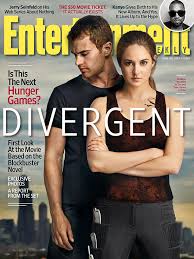
I prefer this image in the cover of Entertainment Weekly.

index

Reel Girl rates ‘Divergent’ ***HHH***

(I recommend the movie for ages 9 and up, but depends on the kid. If you read Reel Girl, you know I think kids desperately need to see female characters with power and agency, and I mostly rate for that. You also know, if you read this review, how I feel about violence. This movie is not gory. As you can tell, I’m a huge fan of the romance here as well. I am concerned with context when I rate (sadly, an anomaly) and I like the context of this love story very much. There are sensual scenes but not extended and no nudity. The movie is rated PG-13 if that means anything to you, though IMO the MPAA is useless and I prefer Common Sense Media if I need to look up specifics about sex/ gore aside from context, which, as noted, too few, including CSM really consider.)


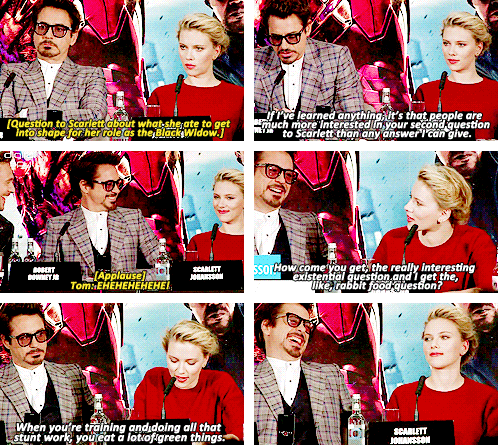
Another so-called journalist comments on Scarlett Johansson’s underwear

Isn’t The New Yorker supposed to be a serious magazine? Slate reports on the 5,000 word profile of actress Scarett Johansson by so-called journalist Anthony Lane:


Scarlett Johansson’s eyelashes are like a camel’s. Her lush womanliness takes vibrant, palpable form. There is a beguiling, peppery charm to this irresistiblescreen siren, no lie. She begins to speak and, oh, what a voice!


Here’s more:

Would it be construed as trespass, therefore, to state that Johansson looks tellingly radiant in the flesh? Mind you, she rarely looks unradiant, so it’s hard to say whether her condition [pregnancy] has made a difference.


Johansson was, indeed, gilded to behold. She seemed to be made from champagne.


Then came the laugh: dry and dirty, as if this were a drama class and her task was to play a Martini.


Johansson’s backside, barely veiled in peach-colored underwear …


 … using nothing but the honey of her voice …


What the fuck? This is The New Yorker. I write this whole blog about gender equality in the fantasy world, and how are we ever going to get anywhere when the “best” writers for our “best” magazines repeatedly reduce actresses to objects? This guy’s job title is film critic. As Esther Breger writes in The New Republic: “Try to imagine The New Yorker running this about Matthew McConaughey, or Michael Fassbender.”

Perhaps, it won’t surprise you that Lane, though the most prestigious, is not near the first interviewer to comment on Johansson’s underwear.

Screen-Shot-2012-08-02-at-20.26.46

In another earlier interview, after Robert Downey Jr comments on the sexist questions directed at Johansson, she says to him: “How come you get the really interesting existential question and I get the, like, rabbit food question?”

Yes, how come world? Why is that?


Screen-Shot-2012-08-02-at-20.26.001

During the Academy Awards, The Representation Project started the hashtag #AskHerMore to get journalists to interview actresses about subjects other than their clothing/ appearance:

Even at the Oscars, where we celebrate the highest artistic achievements in film, reporters often focus more on a woman’s appearance than what she has accomplished. This Sunday night we’re encouraging the media to #AskHerMore!


Part of the inspiration for the hashtag was Cate Blanchett’s irritated response at a previous awards show when the camera panned her body up and down. Blanchett asked: “Do you do that to the guys?” PolyMic reported: “Blanchett’s reaction shows yet another subtle moment of sexism that even the most successful women have to deal with.”

It’s kind of sad that these moments are considered “subtle.” Enough already. When will the media treat women like actual human beings?

Images from http://ohdeargodwhy.tumblr.com/

Gender stereotyping leads to bullying

When Grayson Bruce, age 9, brought his My Little Pony lunch sack to school, the principal advised his mother to tell her son that in order to avoid bullying, he should leave his lunch sack at home.

Wow. That is the advice of the school principal? To conform? That’s the best the leader of the school can do?

My 4 yr old daughter was bullied at her preschool for wearing “boy” shoes (translation “Star Wars” sneakers.) How did we deal with it? We talked about it and made a video.

I spoke with my daughter’s teachers who then spoke to the kids about how shoes are for everyone. I make an effort to call out gender stereotyping when I am with my daughter. I ask her questions about what she thinks when we see girls or boys portrayed in stereotypical ways.

After my daughter’s experience, I did a Google search: “bullied for boy shoes.” On Coupon Cilpinista I saw this:

Yesterday my 4 year old wore her waterproof slip-on shoes for boy or girl to school (they are black Timberland moccasins) and she told me this morning, “The girls would not play with me yesterdays because they said I was wearing boys shoes, can you please put sparkly shoes on me ???”

I was in shock. Are you serious? Is this something I should address with the school??? BULLYING starting THIS YOUNG??? I don’t know what to think– my daughter loves those shoes and her sparkly shoes are not comfortable or for winter weather but she wants to wear them to appease the bullies in her classroom.

What would you do?????


Almost worse than the bullying, here’s some advice she got from fans of hers, without irony, each one confirmed with multiple likes:

Cover them in glitter. Change the shoelaces to a girlie style.


Bedazzle her moccasins


Add something to moccasins to make it more “girly”


This is so sad – I’d talk to the teacher for sure. I also like the ideas of “girling up” her boots with shoe laces, etc. Good luck CouponClipinista


put sparkles on the shoes…that should do it.


Yep. I would bedazzel the crap out of em. I can tell you from experience, the school wont do anything!!


I agree. Bedazzle them. glue on a few rhinestones or a bow.


Bedazzle her shoes :o )


Note to parents: Gender stereotyping CAUSES bullying. Bedazzling shoes? Not a solution here. What is that teaching your kid? To do whatever the bullies say to do. And what is it teaching the other kids? Keep bullying. Is that really the lesson we want children to be learning? I honestly don’t even think these 4 year olds know they’re bullying, because not enough parents and teachers are telling them that. I think these kids believe that they are stating a fact. It’s up to grown-ups to teach them differently. Don’t know how? Tell your children colors are for everybody, as are games, books, TV shows, and movies. Seek out narratives with strong female protagonists for your sons and daughters. Still confused? Here’s some great advice from Chicago Now.


Memo to ‘best of’ listmakers: Narratives with powerful female protagonists are FOR EVERYONE

When Cate Blanchett accepted her Oscar a couple weeks ago, she told the world that movies with women at the center are not a niche market, that those movies make money. I couldn’t agree more. And it’s not just my opinion, or Blanchett’s, of course. “Catching Fire” starring Jennifer Lawrence as Katniss Everdeen is the highest grossing movie of 2013 while “Frozen,” starring sisters Elsa and Anna, just crossed the billion dollar mark in worldwide ticket sales.

So why do we still think of women and girls, one half of the human population, like some kind of special interest group? As the mom of three young daughters, I am particularly frustrated by how this gender myth– that boys won’t engage in media about female protagonists– is perpetuated in kidworld, where stores like Target or Toys R Us divide merchandise into generalized and stereotyped boy/ girl aisles and On Demand categorizes TV shows starring girls into a separate group.

There’s another place we really need to stop segregating kids and that’s in the girl empowerment community. There are so many great “best of” lists that go around the internet featuring media with strong girls, but too often, there’s a persistent preposition problem: books about girls are promoted as for girls. Books about girls are for everyone.

GirlPowerReadingList

New York Public Library’s site just put out a great list featuring books like Inside Out and Back Again by Thanhha Lai, The Skin I’m In by Sharon Flake, and Breath, Eyes, Memory by Edwidge Danticat, among others. Typically, this is how the list is headed:

Girl Power: Books for Bold Women.


The listmaker goes on to introduce her amazing books with this qualifier:

Smart, strong women deserve books filled with smart, strong female characters. Luckily, there are many books with protagonists who speak out for justice, make courageous choices, and know that womanhood is beautiful. That’s why we’ve compiled a list of recommendations for the woman who expects her fiction to be as bold as she is. From Haitian short fiction to literature of the southern immigrant experience, these books will make you believe in girl power.


Smart, strong people deserve books filled with smart, strong female characters.

If I didn’t see this happen so many times, I wouldn’t blog about it, but here’s the thing: I’m grateful dedicated people are making these lists, but as long as we keep segregating the fiction world, we’ll segregate the real one. Please, keep an eye out for how often you see media about women and girls marketed as for women and girls. If you’re a parent, please seek out books, movies, games, and apps featuring powerful female protagonists for your sons as well as your daughters.

Update: Please sign the petition from Let Toys Be Toys For Girls and Boys asking publishers of children’s books to stop marketing to books to girls or boys.


Titles like “The Beautiful Girls’ Book of Colouring” or “Illustrated Classics for Boys” send the message that certain books are off-limits for girls or for boys, and promote limiting gender stereotypes.


How can a story or a colouring page be only for a girl or only for a boy? A good book should be open to anyone, and children should feel free to choose books that interest them. It’s time to Let Books Be Books.


Sexist MTV Movie Awards excludes females from hero category

How backwards is this? In the year 2014, when you’d hope we’d all be beyond this degree of sexism, the MTV Movie Awards completely excludes females from its “Best Hero” category.

catching-fire

That’s right, Katniss Everdeen is not among MTV’s nominees for “Best Hero,” an all male round up that incudes Superman, Iron Man, Bilbo, Thor, and Jon Kale. Don’t know who John Kale is? Neither did I. He’s played by Channing Tatum in “White House Down,” a movie no one liked or watched. Ok, that may be an exaggeration, but “Catching Fire,” starring Jennifer Lawrence, was the top-grossing movie of 2013. Katniss is a household name, the protagonist of a top selling book series, she’s got her own doll, not to mention, she kicks ass in an amazing movie. Would MTV ever ignore a male hero from a top-grossing, critically acclaimed film like this? Isn’t MTV supposed to be cool and hip and appeal to young people? How can they be so clueless? MTV, your sexism is shocking and unacceptable.

Sophie Azran has started a petition against MTV. On the petitionsite.com, she writes:

There is not a single woman in the Hero Category. Don’t let a strong woman like Katniss be overlooked!


Please sign and share this petition before April 13 to demand that MTV add Katniss Everdeen to the “Best Hero” category at the MTV Movie Awards.


Young women already have too few female heroes represented in film and television. We’re constantly shown by the entertainment industry that men are brave, powerful, or successful, while women are often given supporting roles and weak characters.


I loved The Hunger Games, not just because it was a thrilling story, but because I admired the courage, intelligence, and persistence of Katniss Everdeen. Teen girls and young women everywhere need to see that courageous, principled women can be rewarded just like men.


The MTV Movie Awards are widely watched by a young adult audience. It’s appalling to me that the event’s producers are ignoring this female hero, especially since this film beat out all the others at the box office. But unlike the Oscars, the MTV Movie awards encourages public involvement, allowing the public to vote on winners. If enough of us ask for Katniss to be added, I’m confident that MTV will listen.


Sign this petition before April 13 to demand that MTV add Katniss Everdeen to the “Best Hero” category.


I couldn’t agree more with everything Azran writes. Please go to this link and sign her petition.

Every dog needs a boy: ‘Mr. Peabody and Sherman’ continues pattern of sexism in kids’ movies

“Mr. Peabody and Sherman” repeats the same old sexist pattern of so many kids’ movies where male characters get to star while females are stuck on the sidelines, in supporting roles.

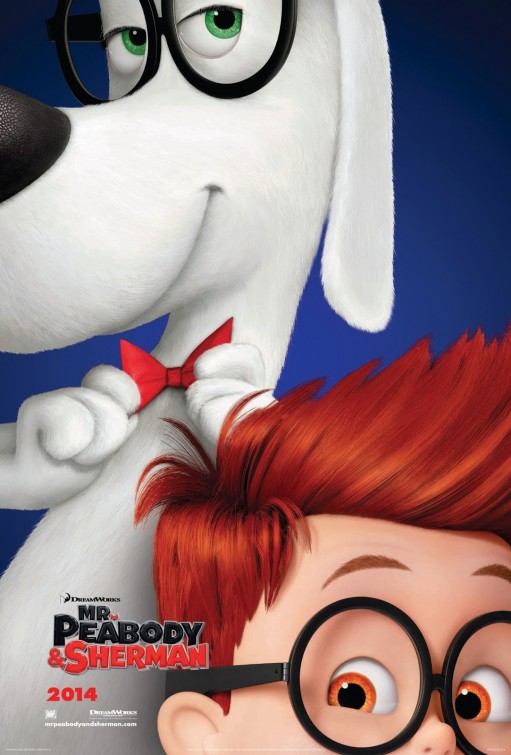
Let’s start with the title of the movie: “Mr. Peabody and Sherman.” Note this title features the name of not one, but two, male stars. That’s right– “Mr. Peabody and Sherman” is yet another father-son story. While movie studios strategically switched the title of “Rapunzel” to “Tangled” and “Snow Queen to “Frozen” to hide female stars, the marketing for “Peabody” showcases males, and I’m not only referring to the movie title. I live in San Francisco, and here’s the poster that my three daughters and I see all around town:

mr_peabody_and_sherman

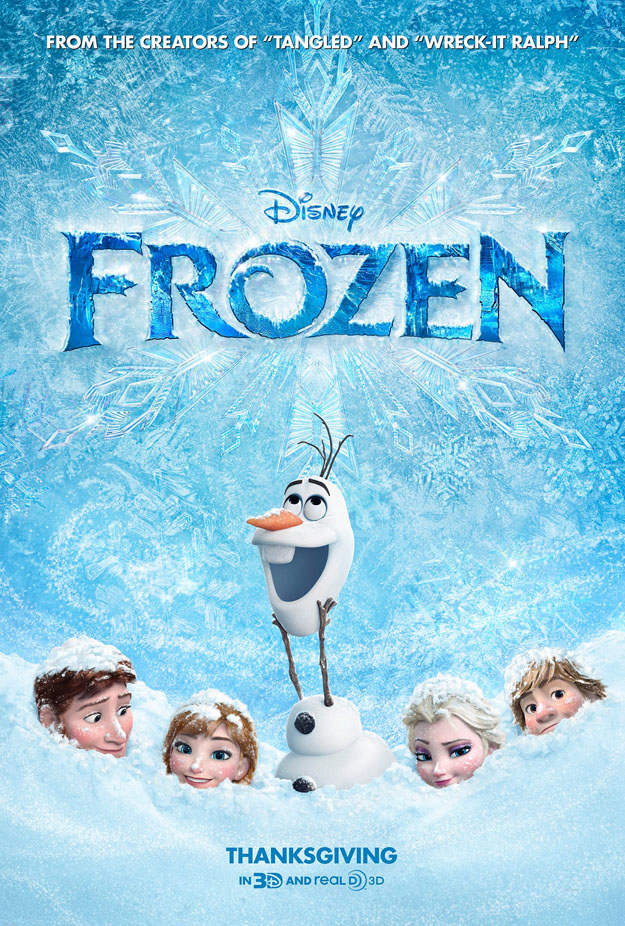
Major close up of two male stars. Compare that to “Frozen,” one of the rare children’s movies to feature not one but two female protagonists. Anna and Elsa get buried in the snow. The marketing implies that Olaf, the snowman, is the star of the movie.

frozen-poster-small

A major problem with this sexist marketing is that even if your children don’t see the movies, they see the posters. From this media, kids see that boys get to be front and center while females get sidelined or are invisible all together. The repetition of these gendered images teaches all children that boys are more important and get to do more things that girls.

Like most children’s movies, “Mr. Peabody and Sherman” features a Minority Feisty. The Minority Feisty is “a strong female character” (or two or three) who plays a crucial role in helping the male star achieve his quest. There may be more than one Minority Feisty in a movie, but there are always a minority of female roles compared to male roles, even though girls are one half of the kid population. The purpose of the Minority Feisty is to make parents overlook the lack of female protagonists, because, hey, at least there’s a strong female in the narrative. To really get how sexist this gender ratio is, imagine gender flipping the characters. How likely is a it that a studio would put out a movie called “Ms. Peabody and Sharon” with a close-up of the two female stars on the poster? When is the last time you saw a children’s movie advertised with two female stars in the title and a just two females in the poster all around your town or city?

I blog a lot about a particular trope in children’s media that makes me crazy called “riding bitch.” While male characters often soar through the sky on all kinds of magical creatures, from dragons to hippogriffs, female characters usually are put in the passenger seat, not steering or deciding where to go, just along for the ride. Even though I’ve noted this trope endless times, I was shocked by how sexist it is in “Mr. Sherman.” Here’s what happens in the movie. Mr. Peabody, Sherman, and Penny go back in time to visit Leonardo da Vinci. Penny sees da Vinci’s flying machine and, as the Minority Feisty is wont to do, she hops on. Sherman is afraid but follows. Penny flies through the sky and whoops in delight while Sherman shrieks. My 7 year old daughter saw this scene in the preview and told me about it, she was so excited. But here’s the bummer:

Yes, Penny starts out flying the machine, but then she encourages Sherman to try. He refuses and she repeatedly tells him that he can do it. When Sherman continues to shy away, Penny lets go of the steering wheel, and they almost crash before Sherman finally takes control. This is the length the female character goes to put the male back in the driver’s seat. Sherman flies and he’s great at it, until Mr. Peabody sees him and says. “Sherman! You can’t fly!” reinforcing that all Sherman needed was a good girl to believe in him. When Sherman crashes, da Vinci runs up to Sherman, who is with Penny in a pile of debris, and says, “You are the first man to fly!” At no point does Sherman say, “No, actually Penny is the first woman to fly.” ARGH. What do my kids– and all kids– learn from this narrative? The same thing they learn from the whole goddam movie: it is the role of the female to help the male, to make him feel good and secure in his role as star, while she is happy and content as the sidekick; that’s where she belongs.

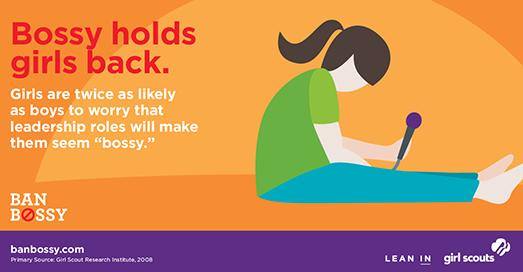
Lean In and Girl Scouts just started a “ban bossy” campaign which I love. But how much hope do these organizations have of getting a different message across when narratives like Penny’s are mass-marketed to little kids?

1979664_691165907593504_490680381_n

There’s a lot more I didn’t like about gender in “Mr. Peabody.” Penny goes back in time, not to meet a suffragist or Joan of Arc or Queen Elizabeth, but to be the child bride of King Tut. That narrative is all about her wedding. UGH. If they wanted to do ancient Egypt, couldn’t she at least have encountered Cleopatra? Time and time again, Penny is a damsel in distress/ Minority Feisty who gets to play a small– but crucial role– in her own rescues, and is ultimately saved by Sherman again and again.

The last line of the movie pretty much sums up how males are front and center while girls go missing. Mr. Peabody, watching Sherman go off to school, says, “Every dog needs a boy.” What about a girl? What about at least saying “kid” or “child”? Instead, females don’t exist at all.

I get that this movie is a remake but that’s no excuse to recycle sexism for a new generation of kids. We had three Shrek movies (the first, of course, based on an original story) and in each one, Fiona, a Minority Feisty, gets a smaller part. This is a typical interpretation of “remake.” By the last Shrek movie, the narrative devolves into another father-son story (co-starring Justin Timberlake.) There was a spin off, and still, it was not Fiona, but Puss In Boots who got his own solo movie, featuring the Minority Feisty Kitty Softpaws. When will Kitty get her own movie? Ever? Do your kids even know who she is? The other problem with remakes is that when girls star, in each new incarnation characters like Strawberry Shortcake, Dora, the Powerpuff Girls, get “makeovers” where they get less powerful and more sexualized.

Once again, I write this: I would not have a problem with “Mr. Peabody and Sherman” if it were just one narrative. The problem is the repeated pattern of sexism that kids see again and again and again. Children learn through repetition, and I am beyond sick of this sexism marketed to kids. If you want a refresher of how many movies for kids star males versus how many star females take a look at Reel Girl’s Galleries of Girls Gone Missing From Children’s Movies:

2011 http://reelgirl.com/2011/07/heres-a-visual/

2012 http://reelgirl.com/2012/12/reel-girls-gallery-of-girls-gone-missing-from-childrens-movies-in-2012/

2013 http://reelgirl.com/2013/01/reel-girls-gallery-of-girls-gone-missing-from-childrens-movies-in-2013/

2014 http://reelgirl.com/2014/01/reel-girls-gallery-of-girls-gone-missing-from-childrens-movies-in-2014/

Reel Girl rates “Mr. Peabody and Sherman” ***H***


Dear Barbie

Dear Barbie,

Thank you for your letter explaining the decision to put you in Sports Illustrated wearing your zebra stripe bathing suit.

AP_barbie_sports_illustrated_sr_140212_16x9_992

As the mother of three young daughters, I have some issues with your letter I want to address.

You write:

My bathing suit now hangs beside a Presidential power suit, Pastry Chef hat, and Astronaut gear in a wardrobe reflecting the more than 150 careers I’ve pursued to illustrate for girls that they can achieve anything for which they aim. And yet, I am still seen as just a pretty face. It’s simpler to keep me in a box—and since I am a doll—chances are that’s where I’ll stay.

The problem is that while my daughters, in their short lives, have already seen thousands of women celebrated in magazines for how “beautiful” they look in a bathing suit, they have yet to see a woman grace the cover– or “promotional overlap”– of a magazine for being president of the USA. Of course, that’s because there has never been a female president in this country.

As far as the pastry chef hat, celebrating great female cooks in the media is also lacking. Just one recent example, in Time Magazine’s recent “Gods of Food” story, there are zero women.

Female astronauts? The Mars Explorer Barbie is described:

Mars Explorer Barbie® doll launches the first “one-doll” mission to Mars. Ready to add her signature pink splash to the “red planet,” Barbie® doll is outfitted in a stylish space suit with pink reflective accents, helmet, space pack and signature pink space boots.

Do you think “adding a signature pink splash” is the best way to inspire our daughters to become astronauts? Barbie’s professions aren’t defined by much more than what she wears. The emphasis is still on her outfit. The message to girls is that how they look is the most important thing about them.

Next in your letter, you write:

Every year, Sports Illustrated’s Swimsuit drums up conversation and controversy. Upon the launch of this year’s 50th anniversary issue, there will again be buzz and debate over the validity of the women in the magazine, questioning if posing in it is a blow to female equality and self-image. In 2014, does any woman in the issue seriously need permission to appear there?


A woman doesn’t need permission to be in SI, but you, as the opening sentence of your letter states, are a doll, a doll made “for girls.” So when you’re in a magazine created for adults, and girls see your picture, they’ll think that this magazine is for them. They’ll want to flip through the pages, and if they do, they’ll see picture after picture of mostly naked adult women in sexual poses. When I blogged about Barbie in SI earlier, someone made this comment:

To me this just proves Barbies are NOT really children’s toys at all! Maybe that’s what they are “unapologetic” about? As in “Haha, suckers! You’ve been buying your daughters miniature sex dolls for 50+ years!”


If you’re coming out a sex doll, that’s Mattel’s choice, but the rest of the company’s advertising should reflect a consistent message. Stop trying to appeal to children, because that’s confusing, and confusing kids and sex is dangerous: one out five girls is sexually abused. When a culture is accustomed to seeing girls sexualized, we stay apathetic towards identifying it and taking action towards stopping this epidemic. In case you’re not familiar with sexualization, it’s different that healthy sexuality. Sexualization is when girls understand sexuality as performance, when its not connected to real feelings or desire. Sexualization happens when girls are exposed to adult sexuality too early. Here’s the definition of sexualization from the the American Psychological Association:

There are several components to sexualization, and these set it apart from healthy sexuality. Sexualization occurs when

  • a person’s value comes only from his or her sexual appeal or behavior, to the exclusion of other characteristics;
  • a person is held to a standard that equates physical attractiveness (narrowly defined) with being sexy;
  • a person is sexually objectified — that is, made into a thing for others’ sexual use, rather than seen as a person with the capacity for independent action and decision making; and/or
  • sexuality is inappropriately imposed upon a person.

All four conditions need not be present; any one is an indication of sexualization. The fourth condition (the inappropriate imposition of sexuality) is especially relevant to children. Anyone (girls, boys, men, women) can be sexualized. But when children are imbued with adult sexuality, it is often imposed upon them rather than chosen by them. Self-motivated sexual exploration, on the other hand, is not sexualization by our definition, nor is age-appropriate exposure to information about sexuality.


In your letter, you go on to defend models as more than pretty faces, claiming you want them to be recognized for their other achievements as authors, entrepreneurs, and philanthropists. But if you want more recognition for these professions, why showcase Barbie in her bathing suit?

You write:

Models choosing to pose in a bikini aren’t the problem.

How much “choice” is really involved when modeling is one of the only professions where women outearn men? How much choice is involved when ever since women were girls, they’ve seen women repeatedly celebrated on the cover of magazines– not so much for being authors, entrepreneurs or philanthropists– but for how they look in bathing suits? When female writers are relegated to chicklit, when the female CEO of General Motors earns half of her male predecessor’s salary, and when women hold 1% of the world’s wealth, making the “choice” to be a model may seem like the best way to success among such limited, sexist options.

There’s nothing innovative about Barbie in Sports Illustrated. This magazine has let a woman on the cover of a non-swimsuit issue only 66 times. That’s about once a year. These pictures are the same old, same old except for one thing: Barbie is taking the sexualizing of girlhood to an offensive and dangerous new low.

Sincerely,

Margot Magowan


Sexualizing toys hits new low: Barbie makes cover of SI’s swimsuit issue

Sports Illustrated announced Barbie will be on the cover of the magazine’s 50th anniversary swimsuit issue.

AP_barbie_sports_illustrated_sr_140212_16x9_992

Sports Illustrated, do you realize every time my 4 year old or 7 year old daughter sees the cover of your magazine, she will think that it’s made for her? About her?

I guess you do, because Target will be selling a limited edition of the SI Barbie to coincide with this issue of the magazine.

So grown-ups, once again, are teaching kids that females are valued for how their bodies look while males are valued for what their bodies can do. I am so fucking disgusted. I cannot believe the sexualization of girls is this mainstream, accepted, normal, and OK.

The Atlantic reports:

In the 57 years since Sports Illustrated‘s founding, a woman has appeared on a (non-swimsuit issue) cover 66 times—on average, just over once a year.


Your tagline for the campaign is #unapologetic. So you’re not sorry– proud rather– that you are contributing to a culture where we are all so used to girls being sexualized? Do you get the damage you are helping to create?

The American Psychological Association reports:

There are several components to sexualization, and these set it apart from healthy sexuality. Sexualization occurs when

  • a person’s value comes only from his or her sexual appeal or behavior, to the exclusion of other characteristics;
  • a person is held to a standard that equates physical attractiveness (narrowly defined) with being sexy;
  • a person is sexually objectified — that is, made into a thing for others’ sexual use, rather than seen as a person with the capacity for independent action and decision making; and/or
  • sexuality is inappropriately imposed upon a person.

All four conditions need not be present; any one is an indication of sexualization. The fourth condition (the inappropriate imposition of sexuality) is especially relevant to children. Anyone (girls, boys, men, women) can be sexualized. But when children are imbued with adult sexuality, it is often imposed upon them rather than chosen by them. Self-motivated sexual exploration, on the other hand, is not sexualization by our definition, nor is age-appropriate exposure to information about sexuality.


Statistics on sexual abuse show 1 in 5 girls is sexually abused.

Sports Illustrated, how can you be #unapologetic?

Update: Love this comment on Reel Girl’s Facebook page from RG fan Sarah Schiebel:

To me this just proves Barbies are NOT really children’s toys at all! Maybe that’s what they are “unapologetic” about? As in “Haha, suckers! You’ve been buying your daughters miniature sex dolls for 50+ years!”


‘Lego Movie’ builds on gender stereotypes, pieces together sexist cliches

Though my kids and I saw “The Lego Movie” last week, I’ve been avoiding blogging about it.

the-lego-movie-poster-full-photo

Contrary to what some commenters claim, I don’t relish seeing yet another movie for kids with the same old sexist pattern that’s been done so many times my head spins. I’m so fucking sick of the Minority Feisty, I could scream. I cannot believe Hollywood keeps churning out this shit. And, yet…

The last line of the movie, the finale, is all you really need to know to understand the sexist stereotyping throughout. Batman (a major character, while Wonder Woman gets two lines) urges his girlfriend, Lucy, to go off with, the movie’s protagonist, saying: “No, Lucy. He’s the hero you deserve.” The girl– and she is the girl– is the prize to be won. Literally. Why can’t a girl be the fucking hero? Really, LEGO, why?

Here’s what drives me crazy about this film. “The Lego Movie” is all about prizing creativity above all, yet,  when it comes to gender, innovation flies right out the window and cliche dominates the imaginary world. It’s just like how in “Turbo” the movie’s message is that a snail can win the Indy 500, follow your dreams, be anything you want to be…unless you happen to be a girl. Same with “Planes:” anyone can become a champion, even a crop duster, except for…females. What are children supposed to think about possibility and potential when in narrative after narrative girls are stuck in supporting roles if they get to exist at all?

The bad guy (yes, bad guy) in “The Lego Movie,” Mr. Business, is evil because he wants all the LEGO sets to stay only with their intended pieces. He wants to build impenetrable boundaries to make sure nothing too creative goes on. His deadly weapon, the kragle, is superglue. To Mr. Business, LEGO is not about process and creativity, but a static, finished, perfect product.

This is a brilliant message to teach kids. Art is about process (not to mention, life.) LEGO’s self-awareness about its toy surprised and impressed me. The movie’s narrative illustrates the problem I have with LEGO sets (besides their sexism, of course.) Every time I struggle through yet another 1,000 piece project with my kids, I wonder: What is the point here? What are we learning, how to follow directions?

Near the end of the movie, Will Ferrell, who voices Mr. Business appears in human form. He’s angry with his son (yep, his son) who’s in the basement, playing with Ferrell’s completed LEGO sets. The kid has put a dragon on top of a building, where it’s not supposed to be. Ferrell gets mad, and the kid says, “But it’s a toy! See the box? For 8 to 14 year olds.” Ferrell says, “That’s just a suggestion!”

At this point, like so many other times in the movie, I cracked up. The villain is my husband. While I lie there wondering what the point of LEGO is, he’s snatching up pieces, trying to finish the set himself, do it all perfectly, and once it’s done, he puts it somewhere high up where no one can reach it. So, this is what I want to know: LEGO, how can you be so creative, smart, and funny but then fall into tropes when it comes to gender roles? Why can’t you break through the impenetrable boundary of your own sexism?

There’s one Minority Feisty gleam of hope that comes at the end of the father son scene. After an epiphany, Farrell lets his kid enjoy the LEGO and says, “Now that you’re allowed down here, we’ll have to let your sister play too.” Cue the scary music. Could this be the next movie? Girls are allowed to play, front and center? And what if those girls are actually seen having an adventure, not shopping or eating at a cafe or taking care of sick puppies or whatever LEGO Friends allows them to do? LEGO’s world would change. Not to mention ours. That would be an adventure.

Reel Girl rates “The Lego Movie” ***H***

Update: For those of you who don’t know about LEGO’s history of sexism, here are some posts you should read:

A father recently wrote about the sexism his son is learning from LEGO http://taasa.org/blog/prevention-2/building-a-new-kind-of-lego-city-2/

There is a lot I’ve written here on Reel Girl, here’s one on shopping with my daughter http://reelgirl.com/2013/11/if-a-stormtrooper-had-no-epic-would-he-exist/

If you want to see how male protagonists dominate children’s movies while female characters are continually sidelines or go missing all together, check out Reel Girl’s Galleries:

Here are the children’s movies from 2011 http://reelgirl.com/2011/07/heres-a-visual/

2012 http://reelgirl.com/2012/12/reel-girls-gallery-of-girls-gone-missing-from-childrens-movies-in-2012/

2013 http://reelgirl.com/2013/01/reel-girls-gallery-of-girls-gone-missing-from-childrens-movies-in-2013/

2014 http://reelgirl.com/2014/01/reel-girls-gallery-of-girls-gone-missing-from-childrens-movies-in-2014/