Two weeks ago in Chibok, a village in North Eastern Nigeria, 230 schoolgirls were kidnapped. There was no word of what happened to these missing girls until Monday when a schoolteacher, Samsn Dawah called the villagers together.
We have heard from members of the forest community where they took the girls. They said there had been mass marriages and the girls are being shared out as wives among the Boko Haram militants
My wife keeps asking me, why isn’t the government deploying every means to find our children
Did I find out about this horrific story on Google News? The front page of New York Times? The cover of Time or Newsweek? Anywhere in Time or Newsweek or a U.S. newsweekly? No. I heard about these girls sold into slavery from Gloria Steinem’s Facebook page where she posted the link with this statement:
230 schoolgirls were kidnapped in the north-eastern Nigerian village of Chibok two weeks ago and potentially sold to militants. We’re trying to make sure it gets the attention it deserves so that authorities take swift action. Please stand in solidarity with the families of the girls and spread the word! #Freeourgirls#BringBackOurGirls
When Pulitzer Prize winning journalists Nicolas Kristof and Sheryl WuDunn wrote Half the Sky, they explained the need for their book:
When a prominent dissident was arrested in China, we would write a front-page article; when 100,000 girls were kidnapped and trafficked into brothels, we didn’t even consider it news.
Please don’t be passive bystander to gender Apartheid and sexual slavery– or should I just say Apartheid and slavery– in 2014. Speak out. Share this story. Sign this petition. Don’t let these girls disappear.
Here’s another quote from Half the Sky:
in the 19th century, the paramount moral challenge was slavery. In the 20th century, it was totalitarianism. In this century, it is the brutality inflicted on so many women and girls around the globe: sex trafficking, acid attacks, bride burnings and mass rape….
Misogyny is not a “cultural” issue. It’s a human rights issue. Stop the violence against women.
Please watch and share this video about putting an end to sexual assault on college campuses in the USA. (Also featuring Vice President Biden, Daniel Craig Benicio del Toro, Dulé Hill, Seth Meyers, and Steve Carell.)
The federal government on Thursday released the names of 55 colleges and universities that are under investigation for their handling of sexual violence or harassment complaints. Many of the schools responded by saying they take the allegations seriously and are evaluating their sexual-assault policies and procedures.
Thank you, President Obama, for taking action to protect the human rights of girls and women.
The Internet spreads all kinds of social ills, from cyberbullying to mainstreaming hardcore pornography, but for me, the good far outweighs the bad, because I’ve “met” people like the excellent and amazing author of Redefining Girly, Melissa Wardy. Melissa’s blog and online community are a truly invaluable resource that support protecting childhood and raising healthy kids. Now, lucky you– she’s written a book.
From author Melissa Wardy: Hi Margot and hello to all of your Reel Girl readers. I’m so thrilled to be making a stop on the Redefining Girly Blog Tour at one of the blogs that I personally really love. I hope all of you enjoy reading Margot’s thoughts on my new book Redefining Girly: How Parents Can Fight the Stereotyping and Sexualizing of Girlhood, Birth to Tween and at the end of the post find out how you can win one of two Redefine Girly t-shirt gift packs.
Melissa started her children’s clothing company, Pigtail Pals and Ballcap Buddies, not long after her daughter was born, because she couldn’t find a single onesie that showed a girl with an airplane. Really not cool, especially when she named her child after Amelia Earhart. On her site, Melissa writes:
Pigtail Pals was born in May 2009 with the mission to Redefine Girly! I believe girls need to see messages in early childhood that show females being smart, daring, and adventurous. As the saying goes, “You can’t be what you can’t see.”
What I love about Melissa is that she walks her talk. A mom can tell her daughters all day long that pretty isn’t the most important thing about them, but if she’s obsessed with her appearance and dieting, what is she showing her kids about her values? The sad truth of parenting is that actions matter more than words, and kids learn from what they experience, not from what they hear you talk at them. That, in my opinion, is the hardest thing about being a mom: trying not to be a hypocrite. Notice I write trying, which brings me to why I value Melissa’s book and believe it’s essential reading for every parent. She helps me to not be a hypocrite and– this is super important– to be kind as well. I know how to be reactive, to tell the truth and be angry about it (as Gloria Steinem famously said, “The truth will set you free, but first it will piss you off.)” I’m not always sure how to effectively handle a sweet teacher who tells my daughter every morning how pretty she is, a “princess party” birthday invitation sent by a best friend, or a proposed “playdate” to the mall.
In 2014, the world our children live in is horribly sexist, a place where teachers, doctors, and family, often the people your children love and respect, indoctrinate them to expect and accept all kinds of gender stereotypes. But thanks to Melissa, you don’t have to cave in or isolate. You actually have choices in how you respond and act. Knowing this is liberating and calming. Melissa helps families transition from victims of gender stereotyping to creative heroes who are redefining a nd restoring childhood for our kids. For example, Melissa teaches you how to redefine girly in your own home, again by showing kids a new way with, for example, a hands on dad in the family who does laundry, by encouraging her son to play with dolls, by being a mom who uses tools and fixes things (along with cooking and cleaning), by eating desert with her kids and enjoying it. She gives advice on what to do if a friend or family member gives you hand me down clothes or toys that don’t fit with your ideal:
We’ll say “Thank you so much for thinking of us” and then politely decline or donate away items that carry messages that don’t fit with our family morals.
Simple, right? Yet, so many of us get tongue tied. Melissa’s book is full of useable, practical advice. With her signature combination of compassion and unflinching directness, Melissa gives tips for how to get friends and family on board. First, she reminds you: what you are doing is important. You are not insane. If you care about redefining girly, have no doubt that people will tell you the sexism that you see hurting children is trivial or doesn’t exist at all. Melissa writes:
Remember that you are not alone or crazy for seeing problems with the emotionally toxic ways our culture treats girls. The Resources section at the end of this book is full of alternatives, information, and the names of experts who can help. Our daughters deserve a girlhood free of harm and limitations.
Melissa lists specific tips on how to deal with criticism of your views:
Have a prepared team response you and your parenting partner will use that lets family know this is an issue you take seriously and that you want to have your wishes respected. My husband and I use “We want Amelia to be healthy and happy and we feel this is the best path to achieve that.” (We use the same message for our son.)
Have fun alternatives ready to suggest to family and friends who bring media into your home that you feel are unhealthy. This way you are not just saying no to their media, you are saying yes to healthier choices.
Have a secret signal for your kids to use so they can communicate to you that they need to ask you a question or talk to you about something later (like a baseball coach signal– helpful when a gift is given or a comment is made that your kids know goes against what you teach in your home.)
Melissa also has great one-liners that come in handy including: colors are for everyone, pretty’s got nothing to do with it, toys are made for kids not genders, there are many ways to be a boy/ girl.
Excellent sections in the book include: Encouraging kids at play– the Diverse Toy Box, Around the Kitchen Table– Fat Talk and Body Image, Using Your Voice and Consumer Power To Fight the Companies Making Major Missteps, and my favorite– Becoming the Media You Want to See.
I can’t recommend this book more. Not only will it help you redefine girly, but it shows you how to have fun and be happy while you’re changing the world. I’ve been trying to blog about this book since it came out in January and I tore through it, but it was too damn hard because I wanted to quote the entire thing. Today, I set myself a time limit and my time is up. (I only got through my notes on the first couple chapters.) So I’ll end with THANK YOU MELISSA. I think you’re about 10 years younger than me, but you’re my role model. I can’t wait to see what you do next.
From author Melissa Wardy: Thank you Margot for those wonderful words about my book. It is an honor to receive accolades from such a well-versed writer in this area but also from a woman and mom whom I highly respect. I would love to hear from your audience now and have them share either something they have learned from Redefining Girly if they have already read it, or have them describe an issue/concern they have currently with their daughter that they are hoping to learn more about when they do read the book. I’ll pick two winners to receive a Redefining Girly t-shirt gift pack (two tees + shipping). Winners will be chosen Friday May 30 at 8pm PST so make sure to get a comment in before then! Okay Reel Girl readers, what are your thoughts on Redefining Girly?”
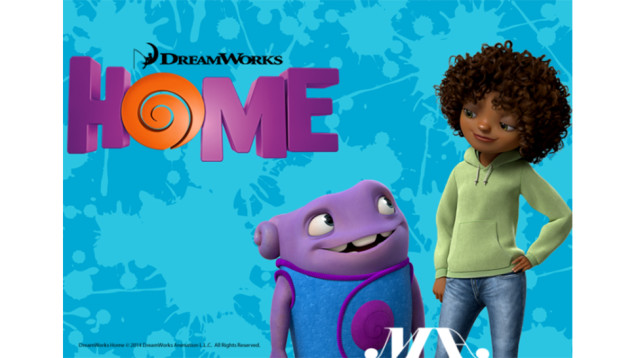
I’ve seen the animated short “Almost Home” twice, before “Rio 2” and “Peabody and Mr. Sherman.” Both times, it pissed me off that there were no female characters with speaking parts in this mini-movie.
So here’s my question, Dreamworks: Why is Tip missing from the promotional short? Please, don’t give me the reason it “makes sense” that she’s gone because in the sequence shown, she wouldn’t be in the story yet. Writers and producers make up the story, they can put anything they want out there, so why did they choose an all male narrative showcasing Steve Martin?
It’s kind of like how the two female stars of “Frozen” were missing from the movie’s first preview which featured the Olaf, the snowman, and Sven the reindeer.
Also, in the posters for “Frozen,” Olaf, once again, gets the front and center position, while the female stars are buried in snow.
Recently, Valentina Perez wrote “Judging a Movie by its Trailer” for Harvard Political Review, about sexism in marketing for children’s movies:
While later trailers did show Anna, even the title distanced itself from any fairy tale or princess story audiences might already be familiar with. Disney did this intentionally to appeal to boys, basing their decision on past Disney research reporting that boys do not want to watch movies with the word “princess” in the title…
Disney’s marketing strategy for Frozen reflects a longstanding belief of movie studios that boys will not watch movies with female leads. This has contributed to the scarcity of movies with speaking, leading, or complex female characters. According to a study by the University of Southern California’s Annenberg School for Communication and Journalism, just 28.4 percent of speaking characters in the 100 highest-grossing American films of 2012 were female, a five-year low…
This change in Disney film content reflects the wider Hollywood belief that women and girls are a niche market, meaning that the longstanding, male-focused business model for movies persists as the standard.
Women and girls are not a “niche market.” We are 50% of the population. Not only that, as “Frozen” and “Catching Fire” show movies with female protagonists make money. Hollywood, please stop hiding the girls. You’re teaching sexism to our kids, to expect and accept a world where girls go missing. It’s not kids that won’t see movies starring girls, but sexist parents who don’t read their kids narratives or show their kids movies where girls star. Right now, the group Let Toys Be Toys For Girls and Boys is running a campaign to convince publishers not to create or market books “for boys” or “for girls.” Stories are for everyone. Why don’t we market them that way?
Before I saw “Rio 2,” I was holding out hope that Jewel, the bird played by Anne Hathaway, and her husband, Blu, played by Jesse Eisenberg, would be equals in the movie, meaning actual costars. I stuck with this possibility partly based on what I saw in the movie poster.
While Jewel is posed coyly with a submissive head tilt and a pink flower on her head, she’s still front and center, right there with Blu. (All the other characters pictured on this poster are male.) I checked the synopsis for “Rio 2” on imdb.com:
It’s a jungle out there for Blu, Jewel and their three kids in RIO 2, after they’re hurtled from that magical city to the wilds of the Amazon. As Blu tries to fit in, he goes beak-to-beak with the vengeful Nigel, and meets the most fearsome adversary of all – his father-in-law.
Well, I’m sorry to report that I’ve seen the movie with my kids and “Rio 2” is Blu’s story. He’s clearly the star with all the screen time, he goes through the transition, and it’s his wits that save the world. So make that 19 children’s movies in 2014 that star males.
I have three daughters, ages 5, 7, and 10, and they’ve seen 5 movies so far this year: The Nut Job,The Lego Movie,Mr. Peabody and Sherman, Muppets Most Wanted, and Rio 2– Every single one features a male protagonist. Just in case you were wondering, only 5 children’s movies have come out so far this year. So once again, when our children go to the movies, they’re learning that males star while females belong in supporting roles. And — surprise, surprise– each children’s movie so far this year features Minority Feisty: female characters whose number are in the minority compared to males, but they’re allowed to be “strong” in these supporting roles. Usually, that means the females play a crucial part in helping the male complete his quest. That is, in kidworld, females are permitted power as long as its circumscribed. If you read Reel Girl, you know I call these female characters Minority Feisty because not only are they in the minority, but they are always referred to by critics as “feisty,” a seriously diminutive adjective. “Feisty” doesn’t describe anyone who is really strong but someone who plays at being strong. Would you ever call Superman feisty? How would he feel if you did?
To wit, in an article about Anne Hathaway in last week’s people magazine, the journalist writes:
There have been other big changes as well for the actress who reprises her role as the feisty macaw Jewel in the new animated film ‘Rio 2.’
Here it is in black and white.
I make this point because the sexism in children’s movies is a ridiculously repetitive pattern, yet hardly anyone calls it out. The sexism is so obvious that paradoxically, it’s become invisible, the pink elephant of kidworld that gets ignored. If males starring and females supporting happened just sometimes, or even half the time, it wouldn’t be a big deal, but this sexism is relentless in narratives are created for kids.
Once again, I ask: In the imaginary world, anything is possible, so why is it so sexist? Why can’t we show children a magical world where there’s gender equality?
Reel Girl rates “Rio 2” ***H***
See Reel Girl’s Galleries of Girls Gone Missing From Children’s Movies:
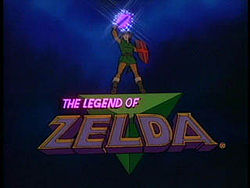
My three kids see the Mario Brothers everywhere, but I dislike this pair of brothers for obvious reasons (but pointed out so well by Anita Sarkeseesian in this video about the perpetual damsel in distress trope played by Princess Peach.) Last night, I decided to let my kids try the also highly advertised “Legend of Zelda.” Both shows/ games are created by the same guy, Shigeru Miyamoto, and often appear together in marketing. Today, while I was making dinner, my 5 year old daughter went on rant about how disappointing “Zelda” was for her. One reason I created Reel Girl, to rate kids’ media for girl empowerment, is because titles can be so misleading to parents. I’m posting this video so that you can be more informed than I was. I’m listening to my daughter and staying away from “Legend of Zelda.” I hope you do too.
Just looked it up, here’s the diamond she’s talking about:
Research has confirmed what most parents of young children can already see for themselves — that children are born to learn, rather than to be taught, as Abbott puts it. Driven by an inborn desire to make sense of the world and find purpose in life, they naturally observe, deconstruct, piece together and create their own knowledge. They learn best when this intrinsic motivation is harnessed in what he calls “highly challenging but low-threat environments.”…
Children learn most from what they see going on around them,” he explains. “We become who we are based on things around us that we admire or not. Children don’t just turn their brains on when they go to school.”
I hate to be nitpicky, but: Since the point of the joke is that the women are nonconsenting, then it’s not really simulated sex so much as simulated rape. Funny!
And all this time, I thought women were the ones who weren’t funny.
This morning I went for a walk. It’s a beautiful, sunny day. My body felt powerful, fast, and strong, and I was getting all of these great ideas about the next chapter of my book. Then, I stopped to tie my shoe, and this picture popped into my head. All of a sudden, my experience of my body totally changed. I felt frightened, humiliated, and exposed. I tried to shake off the image. I kept walking, and the feeling faded, but I never got back the high I had before I bent to tie my shoe. It makes me so mad that women have see ourselves, experience ourselves, how men see us and experience us. As the great art critic John Berger wrote: Men watch. Women watch themselves being watched. This state of being is not because “men are visual” (total bullshit– humans are visual) but because men have created the culture and reality that dominates our lives. I’m sick of it.
Here’s the Berger quote:
“To be born a woman has to be born, within an allotted and confined space, into the keeping of men. The social presence of women is developed as a result of their ingenuity in living under such tutelage within such a limited space. But this has been at the cost of a woman’s self being split into two. A woman must continually watch herself. She is almost continually accompanied by her own image of herself. Whilst she is walking across a room or whilst she is weeping at the death of her father, she can scarcely avoid envisaging herself walking or weeping. From earliest childhood she has been taught and persuaded to survey herself continually. And so she comes to consider the surveyor and the surveyed within her as the two constituent yet always distinct elements of her identity as a woman. She has to survey everything she is and everything she does because how she appears to men, is of crucial importance for what is normally thought of as the success of her life. Her own sense of being in herself is supplanted by a sense of being appreciated as herself by another….One might simplify this by saying: men act and women appear. Men look at women. Women watch themselves being looked at. This determines not only most relations between men and women but also the relation of women to themselves. The surveyor of woman in herself is male: the surveyed female. Thus she turns herself into an object — and most particularly an object of vision: a sight.”
Today, we had Captain Crunch with crunch berries for breakfast. (Not the healthiest choice, I know, blaming my husband who loved the “food” as a kid.) There are no female mascots on children’s cereal. That’s right, zero. You may not think that’s a big deal but it’s one more space in kidworld where girls go missing. Children spend hours studying these cereal boxes and playing the games on them. They’re like newspapers for children, and just like newspapers for adults, males dominate the stories. What if there were no male mascots on children’s cereal? Do you think anyone would notice that?
A while back, in an effort to help my kids learn not to take missing females for granted, as something expected and normal, we invented a new game: Find the Girls on the Cereal Box. It’s actually fun because it’s challenging, and you can have some great discussions about what makes a boy a boy and a girl a girl, according to cereal box creators.
Try it yourself. Here’s my 5 year old daughter with the back of a box of Captain Crunch.
The answer is: 4 girls and 9 boys including Captain Crunch on this box. The photo is not great, and details are key so don’t be too hard on yourself if you got it wrong.
Here’s a close up of the girls we found.
Girl #1 is a girl because her hair is pink, has long curls, and she has eyelashes.
Girl #3 is the smallest and hardest to find, discovered by my keen-eyed 8 year old daughter. We know this girl is a girl because… you guessed it: eyelashes and ponytails.
In 12 step programs, people talk about the pink elephant in the living room.That phrase, you probably know, refers to the experience of seeing something totally fucking obvious, right there in front of you, in your living room, but no one else acknowledges it.
What you experience isn’t real. What you see isn’t happening. At best, later in life, those people who were in the living room might say: OK, maybe that happened, but really, it’s too trivial to make a fuss over, more like a pink mosquito.
If my now 45 year old self could say something, not even to my child self, but to the 30 year old me, it would be this: you’re not crazy. What you see is real. What you see is happening, and it matters.
In honor of that message, I’m re-posting something I wrote for the San Francisco Chronicle when I was 31, right after I saw my first “reality” (get it?) TV show. I was scared to write the op-ed, not only because I worked at a talk radio station where many people didn’t agree with me (or maybe just hadn’t thought deeply about the issue “too trivial”) but because, as I put down those words, I realized how I felt about marriage was changing radically. Marriage was never in my life plan. Fourteen years later, I have a husband and three kids. Of course, I can’t credit the gay marriage movement with all of that, but I can’t deny it planted a seed. I see the words right there. (Did you hear that, radical right, isn’t that what you want for the ladies? Maybe rethink your strategy?)
I DIDN’T think TV could shock me anymore. But then, during sweeps week last week, I watched Fox’s new hit, “Who Wants to Marry a Multimillionaire?” and realized modern television had sunk to a new low.
The show began with the introduction of 50 women, all competing for the grand prize of marriage to a multimillionaire, their union to be sealed with a $34,000 engagement ring.
The women stepped into the klieg lights wearing everything from bathing suits to wedding gowns, exposing their bodies to be rated and judged. Meanwhile, Mr. Multimillionaire was safely shrouded in a darkened booth. The whole scene brought to mind the voyeuristic ambiance of a peep show.
During one of the show’s worst sequences, each finalist had 30 seconds to convince Mr. Multimillionaire that she was the one he should choose. While guitar porn rock played in the background, the women said things like, “I know just how to please a man.”
At the end of the show, Mr. Multimillionaire finally appeared in a tux and chose his bride, the blondest and thinnest of them all.
I was stunned by this degradation and mockery of the marriage ceremony. How can there be any presumption of honesty or integrity in marriage vows when the groom takes them – as Mr. Multimillionaire did – just moments after meeting his wife to be, promising to love her until death?
Are those elements that I thought were key to marriage – vows and love and commitment – without real meaning?
A wedding ceremony should be a sacred celebration, inspired by devotion so powerful that those in love want to make a lifelong commitment to each other publicly.
Yet on the Fox Network, marriage became a modern-day flesh auction with women transformed into a commodity to be purchased by a wealthy man.
I’m not completely naive. I know that marriage was initially created as a financial contract. I know that in Biblical times the purpose of marriage was to control the means of reproduction – that is, women.
I know that when women had no social, political or financial power, when they were not allowed to own property and were only valued for how many children they could bear, marriage existed just to ritualize the transfer of ownership of women from fathers to husbands.
I know that remnants of these ancient roles of womanhood are still prevalent in marriage ceremonies, but I had thought they no longer had significance.
Though brides still traditionally wear white, the color has lost its relevance as a symbol of virginal innocence, once so prized in a woman. Few recall now, when the priest asks if anyone has just cause why the marriage should not take place, that the question was originally meant to determine if anyone had evidence that the bride was, in fact, not a virgin.
Fast forward a few thousand years to the debut of Fox’s top-rated show. After watching these women on TV, whose worth was measured by how well they conformed to limited ideals of beauty, while male worth was measured by wallet size, I was feeling pretty cynical about gender roles and matrimony.
Then something happened to restore my faith. The debate on Proposition 22, the ballot initiative on gay marriage, caught my attention.
As supporters of the initiative condemned gay marriage for defiling a holy institution, I thought of the irony. An elegantly packaged prostitution ring on prime time television is perfectly legal, yet two people in love who want to make a public and legal, lifetime commitment to each other, with sincere vows, are forbidden legal recognition of their marriage because they are of the same sex.
While “Who Wants to Marry a Multimillionaire?” illustrates the worst of marriage, defeating Prop. 22 would bring out the best of it. Allowing gay people to marry shatters all of the antiquated sex stereotypes that still threaten to be resurrected in popular culture.
If marriage is to survive and thrive in this millennium, it needs to evolve. The marriage contract is a living document. We need to keep the best of it – the love, the romance, the vows – and leave behind those elements that reduce human beings to property.
If Californians really are concerned with family values, they should be fighting for the right of people who truly love each other to legalize their commitment.