Elizabeth Gilbert writes story of woman saved by work

There is so much to love about this interview with Elizabeth Gilbert in Slate, you’ve got to read the whole thing. Gilbert explains that she feels, in her life, she was saved by her work. Not once, but many times. She didn’t see that story in literature so she decided to write it.

I really did set out to try to write a 19th century novel with a more complete female experience. The only two endings that women ever got in those books—which are stupendous books with fantastic characters and extraordinary women—but at the end you either married Mr. Darcy or you were under the wheels of a train. I really wanted to write a book about a woman whose life is saved by her work, which I feel is not a story we see often, but as somebody whose life has been saved many, many times by my own work, it’s a really important story to me.


Do you relate? I sure do.

Gilbert talks about what happened to her when she wrote a man’s story and when she wrote a woman’s story.

It has not escaped my attention that when I wrote about a man’s emotional journey they gave me the National Book Award nomination, but when I wrote about a woman’s emotional journey, they shunted me into the “chick lit” dungeon.


And here’s some inspiring advice.

If we’ve somehow internalized this idea that it’s disgraceful or lacking in seriousness to discuss our feelings, our dreams, the ways in which we want to become better human beings—either that somehow those are trivial topics, and of course they are not at all; they’re the big topics, the only topics—if we’ve somehow decided that that’s going to subject us to ridicule or dismissal then that’s kind of our own fault, I think. Just refuse it! I don’t know any other way. Just refuse it, and push through, and eventually, everybody else will catch up…I think the only thing you can do is to battle with your acts. Your acts are your axe. You put your work forward and you don’t back down. I think that’s all you can do. You can get mad, but don’t live there, because that becomes its own paralysis. Just get to work!


Elizabeth Gilbert’s new book is called The Signature of All Things. And now, I’m getting off line to finish mine.


New York Review of Books tells you who’s important: men

This from VIDA on intellectuals/ thought leaders:

New York Review of Books’ Summer 2013 issue. So, VIDAs, wouldn’t you say it’s time to cancel your subscription or write to the editor or something? I mean, WTH??

VIDA

A couple things really get me about this snobby sexism:

(1) Progressive does NOT equal feminist. A couple weeks ago a study came out that the New York Times, that bastion of liberalism, quotes 3.4 men for every woman. Slate reports:

The endless trend pieces about how women accessorize, parent, and hook up today have failed to materialize into equal representation across the newspaper. In the Times, men are individuals who are quoted to represent countries, corporations, academics, and citizens; women are quoted to represent other women.


The UNLV students who did this study conducted a similar study in 2010 about NPR with similar results. Did you read that part about NPR?

I write a lot about how PBS, the “education/ liberal/ progressive” station is just as male focused in its shows for kids as Disney.

(2) Feminine does NOT equal artsy unless absolutely no status is involved. If you are in kidworld, you deal a lot with stereotypes about how boys are active and girls are artsy, as if this is a biological truth. This “reality” has nothing to do with biology and everything to do with raising, affirming, and validating quiet and well-behaved girls. When it comes to artists in the grown-up world with big shows who make lots of money, they’re almost all men. J. K. Rowling, already hiding her gender with one name, just used a made up male name to write a detective story. Don’t get me started on “chicklit” versus literary geniuses. Who decides who is a genius? Why, the New York Review of Books, of course!

To complain email editor@nybooks.com or Tweet:  Where are the women? #NotBuyingIt

Justin Timberlake’s sexist new video turns him from creative to cliche

Justin Timberlake, your new video for “Tunnel Vision” isn’t cool or original. It’s tired and cliche. Can’t you think up anything else besides the clothed man/ naked woman trope? Been there, done that.

Are you copying Nick Cave?

nickcave-pushtheskyaway

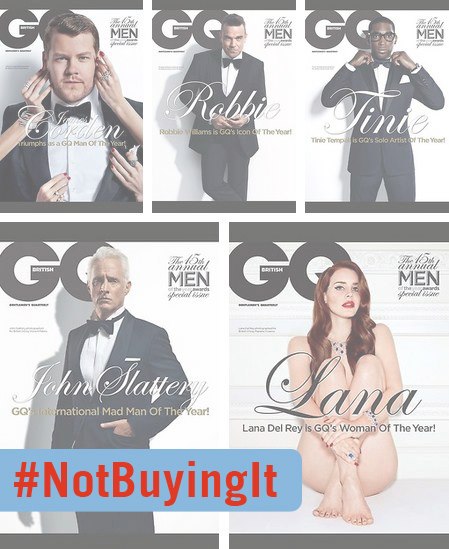
GQ?

gq

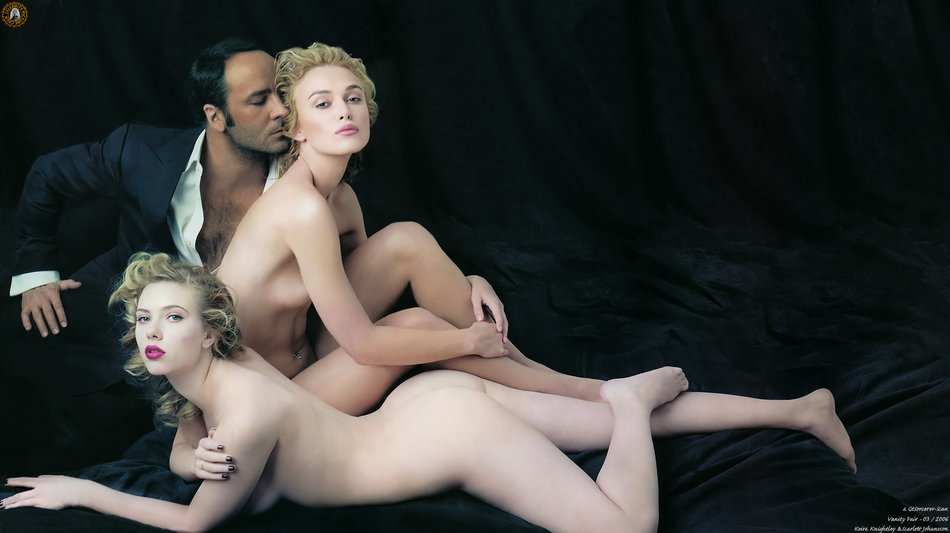
Perhaps Vanity Fair?

scarlett-johansson

Edouard Manet?

manet

This is, of course, just a tiny collection of images. Thousands more of the dressed man/ naked woman trope can be found in museums.

As Miss Representation posted about GQ:

The implication is that the men here are valuable for something beyond what they look like… but that the woman is valuable only for what she looks like.

The clothed man/ naked woman trope isn’t about “beauty” but about power.

What would art look like and music sound like if women were the ones who’d been celebrated for making it for thousands of years? These images are a history lesson of what the world looks like when men are in power. “Tunnel Vision” is the latest incarnation of the classic male gaze. Aren’t we ready for something different in 2013?

After massive protest, Disney pulls new Merida from site

Exciting news! Today, Rebecca Hains, blogger and media studies professor, reports:

“As of today, Disney has quietly pulled the 2D image of Merida from its website, replacing it with the original Pixar version. Perhaps we’ll be spared an onslaught of sexy Merida merchandise yet.”

YAY! Check out the link, it’s true! BRAVE Merida is back.

I guess Disney was right to be so terrified of creating a strong, BRAVE, female protagonist (along with Pixar studios which hadn’t had ANY female protags before “Brave.”) It looks like Merida could be turning Disney’s franchise on it’s head. That’s pretty damn heroic.

Another mistake Disney made with “Brave?” They hired a female director. They fired her, but it was too late. Brenda Chapman wrote “Brave” based on her daughter. She was furious with the character’s transformation and wrote publicly about Disney’s terrible mistake.

Of the debacle Hains writes:

That’s right: Although Merida was created by a woman as a role model for girls, the male-dominated consumer product division at Disney has ignored the character’s intended benefits for young girls, sexualizing her for profit. Compared with her film counterpart, this new Merida is slimmer and bustier. She wears makeup, and her hair’s characteristic wildness is gone: It has been volumized and restyled with a texture more traditionally “pretty.” Furthermore, she is missing her signature bow, arrow, and quiver; instead, she wears a fashionable sash around her sparkly, off-the-shoulder gown. (As Peggy Orenstein noted when she broke the news of the redesign, “Moms tell me all the time that their preschool daughters are pitching fits and destroying their t-shirts because ‘princesses don’t cover their shoulders.’” I’ve heard the same from parents, as well.)

Is the sexualized  image of Merida gone for good? Has Disney learned a lesson? Or will that lesson be: No more strong female characters leading a film! No more female directors writing about their daughters! Keep the females weak and quiet!

It’s up to you. This could be a turning point. Parents, please use your voice and your wallet to keep strong, heroic females showing up in narratives and images marketed to your kids. Right now, girls are missing from children’s media and when they do appear, they’re sexualized. This is normal. Not healthy, but tragically, perfectly normal.

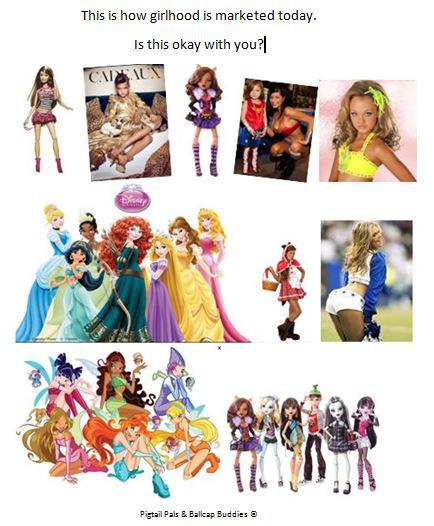
Yesterday, Melissa Wardy posted this image on her Pigtail Pals Facebook page, reminding us Merida’s new image was not created in a vacuum.

pigtails

Objectifying and sexualizing girls is dangerous. A first step to abuse is always dehumanizing the victim. Propaganda, in the form of images and narratives, effectively dehumanizes on a mass scale.

Images/ narratives of Jews circa 1938

nazibook

Africans circa 1931

tin_tin_in_congo11

Females circa 2013

bratzwallpaper-source_4cj


It’s easy to look back on history and wonder: How did people ever put up with that? I’d never buy into it, not to mention expose my child to it. But what are you participating in right now that is completely accepted, not to mention celebrated, by our culture?

Be part of the solution. Demand narratives with strong female characters for your kids.

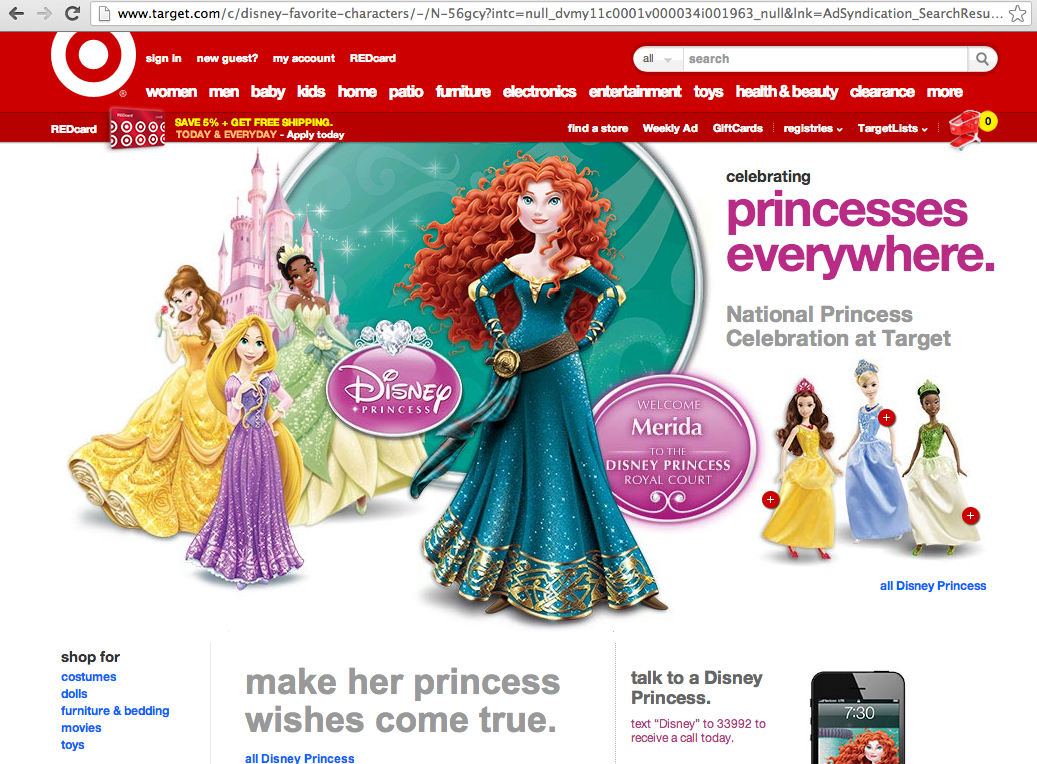
Update: New Merida may be off Disney’s site but she’s showing up all over the place including Target. Below is Target’s web page.

meridatarget


King Fergus of ‘Brave’ demands to know: ‘Where’s my makeover?’

Since his daughter, Princess Merida, made national headlines with her makeover– she’s skinnier with tamed curls, a new off the shoulder gown, and the belt that once held her quiver has morphed into a fashion sash– King Fergus wants to know: “Where’s my makeover?”

"BRAVE"

Fergus says, “It’s not fair. I’m the King! Why are princesses always the ones who get to look pretty? Some would call me fat, hairy, and I’m missing a leg for goodness sake. Where’s my stylist?” Throughout DunBroch, Fergus has posted these before and after pics of Merida:

meridamakeover

Now, King Fergus wants to know:  “Artists, what can you do for me?”

Fergus won’t be getting a makeover because male characters are allowed to occupy a whole range of looks (including rats or planes) and personalities. Male characters aren’t clones. Please sign the petition to Disney: “Say No to the Merida Makeover, Keep Our Hero Brave.” (100,000 signatures and counting!)

Artist’s how-to video shows distorted propotions for female characters

On Reel Girl’s Facebook page, Ana Campos shared a YouTube video by Marc Crilley, one of her favorite Manga artists. Crilley is an incredibly successful writer and illustrator of children’s books. The video is fascinating because Crilley takes you through the steps of how artists distort female anatomy. First, Crilley draws a regularly proportioned teenage girl. Then, he demonstrates the typical pattern and process of how artists exaggerate her proportions, drawing three well-known, female animated characters.

Crilley narrates:

It’s troubling, really in a way that artists, maybe many of them male, have this way of reducing the width of the female waist when they’re drawing it to just ridiculously small proportions and you know, you do sort of fear that this contributes to women’s body image, this crazy idea of the super narrow waist, but nevertheless you see it again and again. Finally, the big difference here, the knees, the line of the knees, much, much higher than in real life. So what’s interesting is you see that the whole area of the waist is being raised up here so as to create these incredibly long legs as an exaggerated style. To me, its sort of like Barbie doll style legs…

While watching this video, I was thinking about the incredible influence of the artist to create reality. When you combine images with narratives, it can be so powerful, like being God. Not to mention repeating and repeating the same sequence to the growing brains of little kids.

Here’s the video:

What are your kids learning about gender in art class?

My six year old daughter goes to an excellent public school, but like most public schools, its resources are limited. I supplement my daughter’s education with art classes, music, and sports outside of school. She goes to art class at a place called 4Cats every week, and she loves it. I love it too. Every season’s session 4Cats picks one or two artists. The children study all about the artist, her life, and her work. Simultaneously, they create a painting in that artist’s style. Since starting 4Cats, my daughter has studied Leonardo Da Vinci, Monet, Vermeer, Lichtenstein, and Frida Kahlo. I asked her who her favorite is, so far. Her answer: Frida Kahlo, and then she asked me, “Why is there only one girl?”

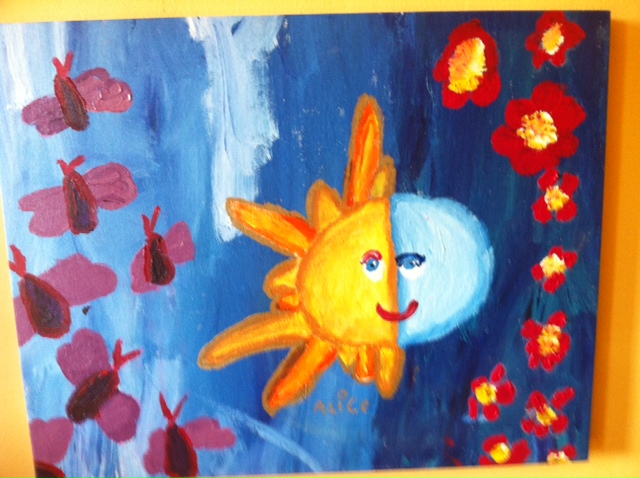
Here’s Alice’s Frida Kahlo.

frida

I was thinking that it’s great my daughter is getting exposure to art, but also how, and this reminds me of the post I just wrote on boarding school, the more “educated” we get, the more we can “learn” to internalize sexism. Before 4Cats, my daughter had no idea there were many more male artists than female artists. Now she knows. Will that limit how she evaluates her own potential? Her dreams? Her aspirations? Of course, I tell her she can be anything she wants to be. But words are just words. Showing a kid something, modeling it for her, is much more effective. That’s how kids really learn, and grown-ups for that matter. My words contradict what my daughter sees.

My temporary solution? Art class is today, and I’m going to ask 4Cats if they’ll consider featuring more female artists in the curriculum.

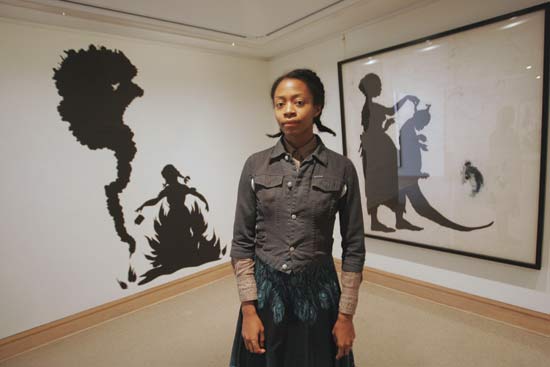
Update I spoke with my daughter’s teacher who is wonderful with these kids. She told me that in the 4Cats curriculum, there are only two female artists. 4Cats studios are all over the U.S., Canada, and Mexico. Each franchise (the one we go to is in San Francisco) can select who they want use out of that established curriculum. The curriculum includes books for kids on the artist, apps, and games, along with other related activities. Alice’s teacher said that the 4Cats curriculum reflects who the important artists are and that’s why there are mostly males taught. I suggested a few females– Mary Cassatt, Artemisia Gentileshi, and Georgia O’Keefe. I love Kara Walker’s silhouettes, and I bet the kids would have so much fun making those.

kARA-WALKER-721276

The teacher told me she’d forward this blog to whoever is in charge of curriculum. So if this blog, gets to you, we love learning about art. Half of the kid population– and most likely, at least half of your students– are female. It would be great if 4Cats made an effort to educate and inspire kids by teaching them about female artists.

Marvel markets sexism with Avengers T-shirts

Just saw Marvel’s sexist T-shirts on the Huffington Post (there’s some link to Reel Girl but I can’t find it?)

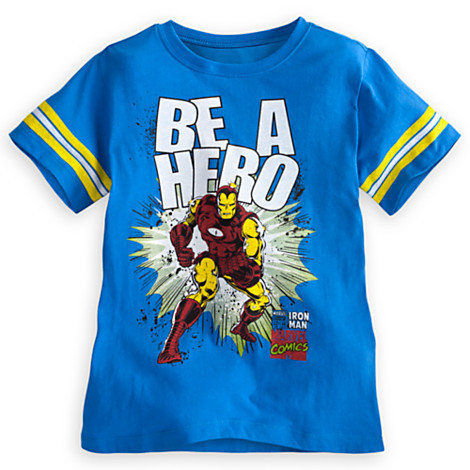
Marvel’s T-shirt for boys.

original

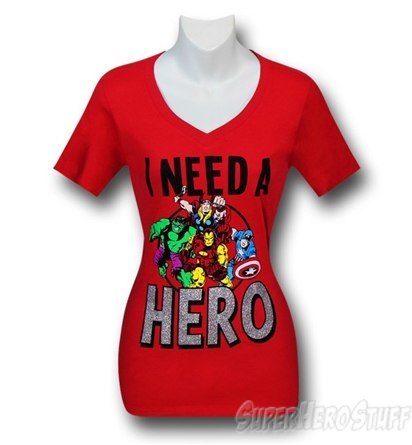
Marvel’s T for girls.

girls

Argh!

This sexism, by the way, goes beyond the specific imagery of a superhero. “Be a hero” translates to “act, take risks, make choices. “I need a hero” means “I’m a minor character. I’m passive, and I wait.”

See the difference?

The insidious problem with this stereotyped gender casting is that women are constantly sidelined and marginalized, remarkably, in the roles they play in their own lives. Females are cast in the supporting role, defined by their relationships as girlfriend, wife, mother, or helper. This sexist narrative has been going on for a long, long time, and we keep recycling it. I just saw this Virginia Woolf quote Tweeted by Bitchflicks:

And I tried to remember any case in the course of my reading where two women are represented as friends…They are now and then mothers and daughters. But almost without exception they are shown in their relation to men. It was strange to think that all the great women of fiction were, until Jane Austen’s day, not only seen by the other sex, but seen only in relation to the other sex. And how small a part of a woman’s life is that.


How small a part! But who would ever guess from looking at how women are depicted in the media– movies, TV, books, advertising– in 2013? Ironically, and this is what is so fucked up and twisted, females get to exist, get to play a part at all when they are sexualized and marginalized.

“Avengers” has the classic Minority Feisty ratio of 5 male superheroes to one female. As artist Kevin Bolk illustrates, the lone female is highlighted by her ass.

avengers

What is the solution to this sexism? Be a hero. Women, write your own stories. Make your own art. No one else can do it for us.

Update Here’s a comment from Nick:

The solution is not only for women to write their own stories, but for men to understand why this is sexist. There is a dearth of great female superheroes, and when they exist, they usually suffer from the Women In Refrigerators trope, where they die or lose their powers not doing something heroic, but assassinated while cooking in their kitchen, sometimes horrifically placed in the refrigerator, where the trope’s namesake comes from.

The solution has to be EVERYWHERE. Men and women alike should write compelling female superheroes. Some men don’t understand why Women in Refrigerators or Damsel in Distress tropes are inherently sexist, so education on this is also key.

For my part, I read up on feminist blogs like ReelGirl and watch Anita Sarkeesian videos (and the reaction videos, because she is very one-sided). I try to avoid making the same mistakes as other writers when dealing with women. I don’t ever assume I can write a compelling female character, I always question myself and I always push myself to do better.

I think that’s another good answer to this problem – each of us individually pushing the status quo.

And my response:

Hi Nick,

Totally agree the solution has to be everywhere. Thanks for this comment and for the thought and research you put into writing female characters.

Margot


Obviously, it’s a sexist world out there, and when women make art, it’s often ignored or marginalized. It would help if women were running the major Hollywood studios or had the funds to bankroll those studios, not to mention lead the prestigious organizations and comprise the boards that give awards to “great” artists.

That said, women need to keep writing and creating. Making art is risky and dangerous, engaging in the process is being a hero. Persevering is especially challenging when your work gets dismissed and rejected because stories about women aren’t valued. But, even with all of this against us, women must put our stories and visions out there. I really believe this is the only way we’ll ever achieve full gender equality.

Here are a couple posts I wrote on the issue of women making art: What if Van Gogh took Prozac? and Why aren’t there more women artists?

Update Miss Representation started a petition against these shirts. I signed and hope you do too.

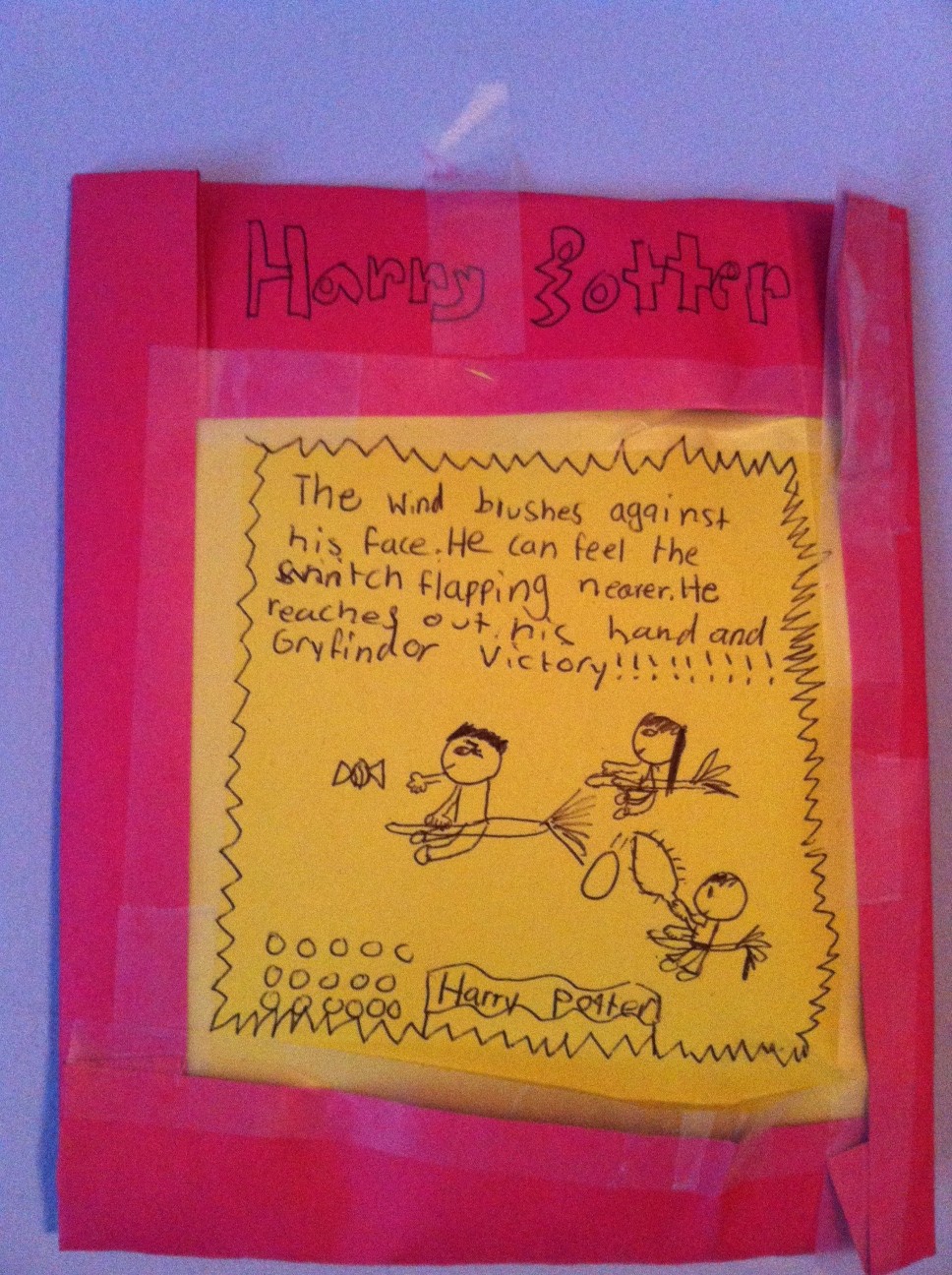
My daughters get inspired by Harry Potter

When my nine year old daughter was reading the Harry Potter series for the third time this year, she drew this picture: harrylucy

This scene didn’t happen in the book but she was inspired by the book.

Lucy’s drawing shows a typical gender matrix you see all over children’s media: 2 boys, 1 girl; boy in front, girl behind; text supports male competition and victory.

Last year, when she was asked to write a story during school, Lucy used a male protagonist. When I asked her why she chose a male, she said, “Because everybody did.”

Can you imagine if in a class of third graders, every kid wrote about about female protagonists? Do you think the teacher would notice?

I just blogged about how my six year old daughter has started reading Harry Potter. Last night, we took turns reading to each other. We are at the part in the book where Harry is with Hagrid, shopping for his first broom in Daigon Alley. Alice, like Lucy, was inspired to create her own scene.

witchphoto

She made up this character, a witch and her cat soaring through the sky on a broom surrounded by many crescent moons. I was pretty psyched about this witch, but then again, we’re only on Book 1. Do you think it’s possible to get through this wonderful series, not to mention her childhood, with her still drawing magical, powerful females, and putting them front and center in her stories?