After I posted about Seth MacFarlane’s offensive, misogynistic, and not funny hosting of the Oscars, some people asked me if I’d always hated him. The answer is no. His name was familiar, but I didn’t know who he was before the Oscars. Though a while ago a commenter posted a clip on Reel Girl from what I now know to be MacFarlane’s “Family Guy.” The clip totally cracked me up. I don’t know if MacFarlane wrote it, but I love it, and totally relate to it as a writer. Clearly, the clip’s creator has subjects besides demeaning women in a series of cliches. I’m reposting it here. Writers, this is for you:
Like Miss America, Michele Pred‘s “Miss Conception” also dons a crown and scepter. Yet instead of jewels and gems, the latter’s pageant gear is adorned with birth control pills.
Pred says:
It really started with the growing concern before the election… There are still many states that make it very difficult for women and teenagers to have easy access to birth control.
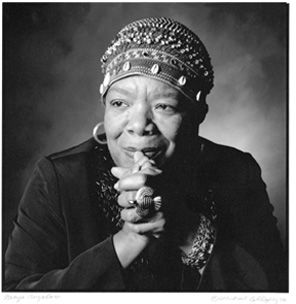
My daughter was assigned “Life Doesn’t Frighten Me” to memorize for school. Tonight, I got to listen to her recite it over and over.
Thank you, Maya Angelou, for an incredible evening.
Here’s the poem.
Life Doesn’t Frighten Me by Maya Angelou
Shadows on the wall
Noises down the hail
Life doesn’t frighten me at all
Bad dogs barking loud
Big ghosts in a cloud
Life doesn’t frighten me at all.
Mean old Mother Goose
Lions on the loose
They don’t frighten me at all
Dragons breathing flame
On my counterpane
That doesn’t frighten me at all.
I go boo
Make them shoo
I make fun
Way they run
I won’t cry
So they fly
I just smile
They go wild
Life doesn’t frighten me at all.
Tough guys in a fight
All alone at night
Life doesn’t frighten me at all.
Panthers in the park
Strangers in the dark
No, they don’t frighten me at all.
That new classroom where
Boys pull all my hair
(Kissy little girls
With their hair in curls)
They don’t frighten me at all.
Don’t show me frogs and snakes
And listen for my scream,
If I’m afraid at all
It’s only in my dreams.
I’ve got a magic charm
That I keep up my sleeve,
I can walk the ocean floor
And never have to breathe.
Life doesn’t frighten me at all
Not at all
Not at all
Life doesn’t frighten me at all.
Do you think the ghost of Ted Hughes could be haunting Britian’s Faber publishing house? It seems like only he could’ve come up with something so distorted to cover Plath’s work.
For a book all about a woman’s clinical depression that’s exacerbated by the suffocating gender stereotypes… it’s pretty fucking stupid to feature a low-rent retro wannabe pinup applying makeup.
Couldn’t agree more.
Total bummer, but I’m going to leave you feeling slightly better about depictions of women in good old America in 2013. Here’s a very cool new stamp celebrating Rosa Park’s 100th birthday:
Finally, Reel Girl is here! Her mission: to liberate the imaginations of children and grown-ups everywhere.
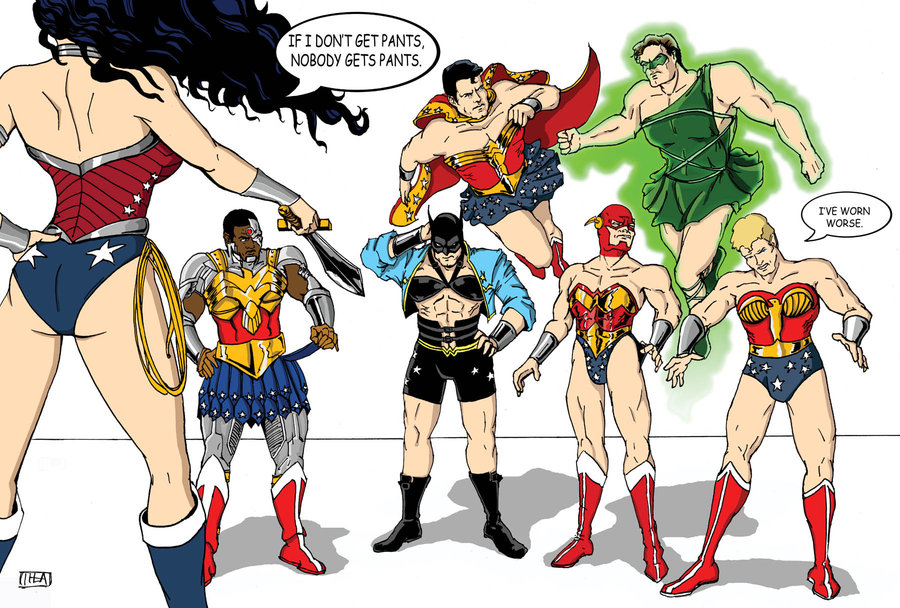
This blog’s new banner was drawn by the artist, Cynthia Rodgers, AKA Theamat. I first saw her work on the internet when I came across the fabulous “If I don’t get pants, nobody gets pants.”
Theamat created Reel Girl’s face from these images of my daughters. Before taking the pics, I asked them to imagine they were up against something powerful; it was up to them to save the world.
In creating Reel Girl, Theamat used Lucy’s intense eyes,
Here is some pretty cool art, though its beauty can’t really captured on an iphone: “The Bookbinder’s Daughters” by Chris Dorosz from a show at the Scott Richards gallery in San Francisco.
I love Dorosz’s art because the images seem so alive, almost moving. When you see this piece and you walk around it, it looks different from every angle. Every figure conveys her own personality.
Here is how the press release describes Dorosz’s work:
Using the two-dimensional images as a guide, Dorosz then creates three-dimensional models, which he arranges in a group. To make the works, the artist employs a technique he has developed over the years: he fabricates a grid of clear nylon rods suspended vertically within a Plexiglas stage; he then applies drops of paint to the rods, and the images materialize.
The resulting figures seem to move, fracture apart, and reform—almost like holograms—as the viewer walks around them, bringing to mind digital pixels or even DNA. The moment of action is suspended in time and space, as indicated by the show title and the titles of all of the works in this series: Stasis, a state of equilibrium.
“Out of material discovery,” Dorosz says, “I began to regard the primacy of the paint drop, a form that takes shape not from a brush or any human-made implement or gesture, but purely from its own viscosity and the air it falls through.” Editing all the way down to a drop of color, the smallest element of a painting, Dorosz is pushing the medium, and the creation of image, to its very limits.
Of course, every artist needs inspiration. Here are the models: that’s me in the middle, my sister Kim on the left and my sister Hilary on the right. Dorosz made this piece from a photograph taken by my mother, a bookbinder.
She was an artist, photographer, war correspondent, model, and girlfriend of the famous surrealist Man Ray.
There’s an exhibition right now at San Francisco’s Legion of Honor “Man Ray/ Lee Miller: Partners in Surrealism.” It was fascinating for me to see this show the day after I went to the Cindy Sherman retrospective at the SF MOMA. In many ways, Miller seems like a precursor to Sherman. Like Sherman, Miller was obsessed with depicting females and female body parts in a way these subjects, though done so many times before, hadn’t yet been presented.
Miller’s photographs show heads that appear to be severed by using lighting techniques or positioning them over cloaks, and one that I loved of a hand that appears to be floating, fiercely clutching an elaborate hair do. The creepiest and most Shermanesque image– or I suppose Sherman is Milleresque: the photographer stole severed breasts from a hospital (where a patient had a radical mastectomy) and photographed them on dinner plates. It amazes me that Miller had the guts to create this photograph, in 1930 no less. Miller has many more fascinating shots in the show including a female head suffocating under a bell jar (before the more famous Sylvia Path used that image) and a model pinned against the wall by knives thrown by another woman.
The next gallery documents Miller and Man Ray’s break-up. When she left him, he was tormented, writing pages of her name: “Elizabeth.” There are also framed love letters and a series of art works of Miller’s body parts by the obsessive Man Ray: giant lips floating through the air, an eye attached a metronome, severed legs. You can see why Miller experienced herself as so fragmented and disembodied. Her career as a model obviously contributed to this experience.
In one fascinating pairing in the exhibition, there is nude portrait of Miller by Man Ray next to Miller’s nude self-portrait. While Man Ray’s photograph has Miller in a typical seductive pose with typical soft lighting, Miller’s joyful art in a powerful pose is far more unusual and striking. When I looked at Miller’s photograph, the highlighted biceps and subtle smile– it also reminds me of poses made famous so many years later by Madonna.
Another gallery shows Miller’s war correspondent work, she was one of the few females to photograph war time– still not a profession that many women venture into.
This show is a beautiful and fascinating documentation of how a passionate relationship creates great art.
Reel Girl rates “Man Ray/ Lee Miller: Partners in Surrealism” ***HH***
If you’ve ever rolled your eyes at entering yet another museum gallery full of Carvaggios or Della Francescas, bare-breasted Madonnas gazing lovingly at their chubby, man-faced babies; or any bare-breasted women gazing at any baby; or seen one too many portraits of important looking old men with bald heads and big noses, the Cindy Sherman show at the SF Moma is for you. When I walked into the room of her Old Master parodies, featuring stiff poses, prosthetic breasts, giant noses, and garish bald caps, Sherman in all of them, I felt like getting on my knees and giving thanks. It was like she was saying, “Fuck you, Old Masters. You’re all the same. How do you think women feel when they’re stuck in gallery after gallery of the same old thing? You know what it looks like to us? Check this out.”
Sherman doesn’t only mock Old Masters. If you’ve ever been grossed out looking at a portrait of a possy of TV housewives in Us Weekly, if you’ve ever thought those women looked more alien than human, you will love Sherman’s art. With garish make-up and enormously scaled photographs, Sherman shows the grotesque in images we find normal, or are supposed to find normal. Or fun. Or cute. Or titillating. The way the show text describes the themes is that Sherman uses “images embedded in our imagination.” I love that description because that is also what Reel Girl is all about. A lot of what I find seriously creepy, Sherman does as well, and it’s all in this show: clowns, society women, hardcore porn, fairy tales and aging movie stars. (Now, if I could just get her take on My Little Pony and Polly Pocket.)
What is so great about this exhibition is that Sherman is in all of her own photos. She is subject and object. By taking on both of these roles, she shows how fucked up it is that women exist in a world that is so male dominated that we actually experience ourselves through male eyes and male narratives. As John Berger wrote: Men watch. Women watch themselves being watched. I’ve read about that idea, thought about that idea, written about it, but I’ve never seen it presented so brilliantly as in this show.
One thing that is kind of a bummer: everything is grotesque and ugly. By the time I was through the rooms, I was desperate for some beauty. I started to wonder what Sherman found beautiful, if anything. Of course, she must see beauty. This show was not the place where she wanted to present that particular aspect of existence. Maybe her art isn’t focused on showing beauty at all. Which is fine, of course, she’s the artist, but I found myself hopeful to see a show where she was doing more acting and less reacting.
You know what these absurdly sexist covers remind me of?
“Picnic in the Grass” by Edouard Manet.
I just saw this painting at the Musee D’Orsay in July when I was visiting Paris with my eight year old daughter. She asked me why the men were dressed and the woman was naked.
On the multiple covers of their latest issue, all of GQ’s “men of the year” are dressed exactly the same, while their singular “woman of the year” – singer Lana Del Rey – is not dressed at all. The implication is that the men here are valuable for something beyond what they look like (since they are all presented almost identically), but that the woman is valuable only for what she looks like (since she is visually presented so differently from the others).
Manet’s painting was completed in 1863. We’ve been looking at this same old image of dressed men and naked women for years before and years since. We’ve been looking at it for so long, it seems normal to everyone except for crazy feminists or little kids.
It’s only “normal” because throughout history, there haven’t been enough recognized women artists. In 2012, there aren’t enough women on magazine covers who are celebrated for their achievements and not “beauty.” Lana Del Rey, by the way, is a singer. Do you think that if she’d refused to pose naked, GQ would let her on the cover? Or would GQ’s response be more like Vanity Fair’s when Rachel McAdams wouldn’t shed her clothes for that magazine’s cover? There’s Scarlett Johanssen and Keira Knightley, but McAdams went missing.
That naked woman in Manet’s painting? Her name is Victorine Louise Meurent. Besides being Manet’s favorite model, she was also an artist. She had a self-portrait at the 1876 Salon when Manet’s submission was rejected. Ever heard of her? She died an alcoholic, in poverty.
And Manet? We’re still imitating him on the cover of GQ. It’s time for a change, a little more originality, please. Isn’t that what art is supposed to celebrate, after all?
The night before Susan and Rob allowed their son to go to preschool in a dress, they sent an e-mail to parents of his classmates. Alex, they wrote, “has been gender-fluid for as long as we can remember, and at the moment he is equally passionate about and identified with soccer players and princesses, superheroes and ballerinas (not to mention lava and unicorns, dinosaurs and glitter rainbows).”
Here, the writer, Ruth Padawer, sets up a series of stereotyped binary/ boy-girl opposites: soccer players and princesses, superheroes and ballerinas, lava and unicorns, dinosaurs and glitter rainbows. I waited for her to explore any reasons why our culture promotes this symbology. Unfortunately, I waited for the whole article.
Why are princesses considered to be the epitome of femininity? Could it, perhaps, have little do with with genes and everything to do with the fact that perpetuating the image of a passive, “pretty” female is popular in a patriarchal culture? Just maybe?
A few more sentences down:
Some days at home he wears dresses, paints his fingernails and plays with dolls; other days, he roughhouses, rams his toys together or pretends to be Spider-Man.
Most kids on Planet Earth would paint their fingernails if they weren’t told and shown by grown-ups that it’s a “girl thing.” Nail polish has nothing to do with penises or vulvas or genes, or even anything as deep and profound as “”gender fluidity.” To kids, nail polish is art play, brushes and paint. That’s it. Oh, right, art is for girls. Unless you’re a famous artist whose paintings sell for the most possible amount of money. Then art is for boys.
On an email that Alex’s parents sent to his school:
Of course, had Alex been a girl who sometimes dressed or played in boyish ways, no e-mail to parents would have been necessary; no one would raise an eyebrow at a girl who likes throwing a football or wearing a Spider-Man T-shirt.
What? Does this writer have young daughters? Has Padawer heard about the boy’s baseball team from Our Lady of Sorrows that recently forfeited rather than play a girl? Or what about Katie, the girl who was bullied just because she brought her Star Wars lunch box, a “boy thing,” to school? Does Padawer know Katie’s experience isn’t unusual? How rare it is to find a girl today who isn’t concerned that a Spider-Man shirt (or any superhero shirt or outfit) is boyish and that she’ll be teased if she wears it? My whole blog, Reel Girl, is about that “raised eyebrow.” Has Padawer seen summer’s blockbuster movie “The Avengers” with just one female to five male superheroes? The typical female/ male ratio? Or how “The Avengers” movie poster features the female’s ass? Think that might have something to do with why females care more than males about how their asses are going to look? You can see the poster here along with the pantless Wonder Woman. Does Padawer get or care that our kids are surrounded by these kinds of images in movies and toys and diapers and posters every day? How can Padawer practically leave sexism out of a New York Times piece 8 pages long on gender?
First sentence of paragraph 3: (Yes, we’re only there.)
There have always been people who defy gender norms.
No way! You’re kidding me. Like women who wanted to vote? Women who didn’t faint in the street?
Moving on to page 2:
Gender-nonconforming behavior of girls, however, is rarely studied, in part because departures from traditional femininity are so pervasive and accepted.
Um, wrong again. Been to a clothing store for little kids recently? Ever tried to buy a onesie for a girl with a female pilot on it? Or a female doing anything adventurous? Check out Pigtail Pals, one of the few companies that dares to stray from “pervasive and accepted” femininity. One of the few. And we’re talking toddlers here.
The studies that do exist indicate that tomboys are somewhat more likely than gender-typical girls to become bisexual, lesbian or male-identified, but most become heterosexual women.
Is the writer really writing a piece on gender fluid kids and using the word “tomboy” without irony?
Next page:
Still, it was hard not to wonder what Alex meant when he said he felt like a “boy” or a “girl.” When he acted in stereotypically “girl” ways, was it because he liked “girl” things, so figured he must be a girl? Or did he feel in those moments “like a girl” (whatever that feels like) and then consolidate that identity by choosing toys, clothes and movements culturally ascribed to girls?
Hard not to wonder. Exactly! Finally, the writer wonders. But, not for long. Here’s the next sentence:
Whatever the reasoning, was his obsession with particular clothes really any different than that of legions of young girls who insist on dresses even when they’re impractical?
Once again, I’ve got to ask: Does Padawer have a young daughter? Legions of young girls “insist on dresses” because like all kids, they want attention. Sadly, girls get a tremendous amount of attention from grown-ups for how they look. Today, my three year old daughter wanted to wear a princess dress to preschool, because she knew that if she did, the parents and teachers would say, “Wow, you’re so pretty! I love your dress.” And if it’s not a girl’s dress everyone focuses on, it could be her hair, or perhaps her shoes which are probably glittery or shiny or have giant flowers on them because that’s what they sell at Target and Stride Rite. Unfortunately, focusing on appearance is how most adults today make small talk with three year old girls.
The next two graphs are the best in the article so I will paste them in full, though notice the use of “tomboy” again with no irony.
Whatever biology’s influence, expressions of masculinity and femininity are culturally and historically specific. In the 19th century, both boys and girls often wore dresses and long hair until they were 7. Colors weren’t gendered consistently. At times pink was considered a strong, and therefore masculine, color, while blue was considered delicate. Children’s clothes for both sexes included lace, ruffles, flowers and kittens. That started to change in the early 20th century, writes Jo Paoletti, a professor of American studies at the University of Maryland and author of “Pink and Blue: Telling the Boys From the Girls in America.” By then, some psychologists were arguing that boys who identified too closely with their mothers would become homosexuals. At the same time, suffragists were pushing for women’s advancement. In response to these threatening social shifts, clothes changed to differentiate boys from their mothers and from girls in general. By the 1940s, dainty trimming had been purged from boys’ clothing. So had much of the color spectrum.
Women, meanwhile, took to wearing pants, working outside the home and playing a wider array of sports. Domains once exclusively masculine became more neutral territory, especially for prepubescent girls, and the idea of a girl behaving “like a boy” lost its stigma. A 1998 study in the academic journal Sex Roles suggests just how ordinary it has become for girls to exist in the middle space: it found that 46 percent of senior citizens, 69 percent of baby boomers and 77 percent of Gen-X women reported having been tomboys.
The piece is riddled with more gender assumptions that aren’t questioned.
When Jose was a toddler, his father, Anthony, accepted his son’s gender fluidity, even agreeing to play “beauty shop.”
But why is beauty shop feminine? We all know beauty toys and products are marketed to girls, but why? Here’s that Avengers ass poster again. In a male dominated world, women are valued primarily for their appearance. They are taught to focus on how they look and that if they do so they can get power and prestige. Appearance is the area where girls are trained to channel their ambition and competition. Oh, sorry, girls aren’t competitive or ambitious. That’s a boy thing.
On gender fluid child, P.J., the author writes:
Most of the time, he chooses pants that are pink or purple.
Wait a minute, didn’t she write a few pages back about Jo Poletti’s book Pink and Blue? Remember, pink used to be a “boy” color; it’s only recently that it’s perceived as a “girl” color?
Here might be the most fucked up quote:
When a boy wants to act like a girl, it subconsciously shakes our foundation, because why would someone want to be the lesser gender?
i am NOT the lesser gender!
why can’t people see how insulting that is? i mean, who would *openly* call a race or ability or sexual orientation “lesser” and not largely be considered a bigot?
It was that comment that inspired me to write this post, because the whole piece is insulting to girls and women. I hope it’s insulting to boys and men as well.