Unfawning in 2026! Who’s with me?

You’ve heard of the trauma responses: fight, flight, and freeze, but have you heard of fawning? I’m obsessed with the new book: Fawning by Dr. Ingrid Clayton. Every person—but really, urgently, every woman—needs to read it.

Dr. Clayton quotes psychotherapist Pete Walker defining fawning as “a response to a threat by becoming more appealing to the threat.” In her book, she writes that fawning isn’t a gendered response, anyone can fawn, which I agree with, but Walker’s definition—becoming more appealing to the threat—seems to describe exactly how women are trained to be “safe” in a patriarchy. Dr. Clayton elaborates her definition throughout the book, but here it is in a nutshell: “Fawners mirror or merge with someone else’s desires or expectations to defuse conflict rather than confront it directly.”

I’ve actually read a lot about trauma, I read Pete Walker’s books years ago, and so I’d heard of fawning. But when I read Dr. Clayton’s in-depth analysis, I understood for the first time that fawning is not a conscious response, something you decide to do. Instead, your nervous system activates a fawning response. This understanding helped me be more aware and compassionate when I fawn, as opposed to getting angry at myself, or judging or shaming myself.

As a feminist, as someone who speaks out for causes she believes in, who debates Tucker Carlson on national TV, I may appear to be someone who doesn’t fawn. But now I see my endless arguing, debating, explaining, is in some ways, an attempt to win others over, to get them on my side, “to connect to protect,” as Dr. Clayton describes fawning.

That is not to say debate, arguing, explaining is wrong, it can be necessary and useful. But it’s also helpful to be aware of when and how I’m choosing to spend my precious time, energy, and brain cells.

But how I find Fawning most helpful and enlightening is in supporting me to be a cycle breaker as a mom of three daughters living in a capitalist patriarchy. The unpaid, unappreciated labor of being a mom, from endless scheduling to filling out forms to driving your kids everywhere, even just the energy and skill you need to value emotions and emotional regulation skills, in a society that doesn’t believe feelings matter, is kind of shocking. At least it was for me.

In her book Discovering the Inner Mother, Bethany Webster writes:

“I once saw a video on Facebook that was geared toward mothers who are feeling stressed, sleep deprived, and unappreciated. At the end it said, ‘Look into the eyes of your child and know that you matter.’ Line after line expounded upon how the mother is elevated in the eyes of the child, implying that should be enough to get you through. The entire point of the video was that a mother need only look into her children’s eyes for validation. I found it odd that it didn’t mention the support of friends, partners, or communities to help women through the tough times as mothers. It didn’t mention self-care. It didn’t help women see themselves as inherently valid and important.

At first glance, this can seem like a harmless video with the intention of honoring the ceaseless work mothers do. It was ‘liked’ by thousands of people. But I found the video disturbing for many reasons. For mothers, it perpetuates the illusion that the approval of one’s children should be compensation enough for the brutally unending, thankless, isolating work of motherhood in the modern world. And it sets up the child for bearing the emotional burden of a mother’s struggles and learning how to overfunction as an emotional caretaker. It sets up the child to feel that she “owes” her mother a version of herself to protect her from her pain…

Our culture, with its hostility toward women as expressed in diminishing access to reproductive healthcare, the wage gap, lack of ample maternity leave, and male violence against women as well as systemic barriers like institutional racism, all combine to isolate the mother and to coerce the child into carrying the burden of emotionally validating the mother in the absence of support from partners, adults, institutions, and society in general. This is a void that a child can never fill.”

Webster is describing how mothers and daughters are locked into a fawning trauma response that can continue for generations unless we forge a different path.

In some ways, when I had kids, I thought I was going to get a fan club! Part of me was surprised that healthy kids are usually not showering moms with love and gratitude.

Dr. Clayton writes: “Those of us with an overactive fawn response might unconsciously want our children to fawn. That is how we survived so it can feel like our children won’t be safe in the world without learning to appease, get quiet, and comply, all under the guise of respect. When our children don’t shapeshift for our benefit, we simply don’t have the skills to help because we haven’t learned regulation ourselves. It’s so important for parents to address their own fawning. By doing so, we take responsibility for our dysregulation and break the cycle of living in survival mode, teaching our children a different path forward.”

My New Year’s resolution for 2026 is to unfawn. Are you with me?

Kids Speak in Metaphor—Can Parents Listen for What Matters?

When my teenage daughter was in residential treatment for behavioral health challenges, she would tell her therapists about the time my husband kicked her out of his truck on the freeway.

That never happened.

The first time my husband and I heard her story, we were shocked and defensive. “How could she say something like that?” We asked the therapist. “Is she trying to hurt us?”  

“Lying is a consistent problem for her,” the therapist told us. “We’ll confront her together in a family session. If she can’t be truthful, she won’t get better.”

Finally, all in one room, my husband and I demanded our daughter tell us why she made up negative stories about us. We restated what really happened: “When you yell at us, get physical in the car and threaten us, when you grab the steering wheel, or shove the car into park and your sisters are in the back seat, we cannot continue to drive. We’ll pull over and ask you to get out to calm down. We do that to keep everyone safe. We would never force you out on a freeway.”

Our daughter’s eyes glazed over, and she wouldn’t say anything or respond to us at all. My husband and I got more agitated, frustrated, and defensive. That session ended, like so many others, in radical disconnection.

Several therapists later, when we heard the same story yet again, I rolled my eyes. “I can’t go through this in another session, it’s a waste of time and money.”

 “What about just listening to her?” said the therapist.

“What?” I said. “She’s lying.”

“But what was she feeling?” asked this therapist.

“What was she feeling when the thing that never happened happened?” I said, my body stiffening.

“We’re not going to enable her,” said my husband, reciting the counsel of so many experts. “She’s manipulating us.”

“Can you listen for the emotions underneath her story?” said the therapist. “Could that be the truth for her?”

I’m a writer, skilled in translating emotion into metaphor, and still hearing the therapist emphasize feelings beneath the narrative, my brain short-circuited.  “You mean how would she feel if we had left her on the freeway?”

“Yes, can you picture that?”

I closed my eyes. I felt like I had to harness every brain cell in my head to even imagine my daughter abandoned on 101 North. “She would be terrified,” I said. “Totally alone.” When I spoke those words, I felt them. I finally experienced the empathy for my daughter that always eluded me when I pictured her on a tree-lined street.

In our next family session, when the freeway story came up, I blinked and saw her standing on the shoulder, cars whizzing by. “That must’ve been really scary,” I said.

 “Yes, it was scary,” she said. She went on to talk about how lonely and sad she was, and how much shame she felt for acting out— this from a kid who would never tell me what she was feeling. And tragically, I spent so many years begging and ordering her to open up. Not long before that session, I’d written in a letter to her:

“Time and time again, we’ve asked you to be honest with us, to be specific about what is happening for you, what problems you face and how you work through them, but what we get is lies or half truths and you taking a victim role. We are not asking you to be perfect. What we need is for you to approach our talks with honesty, openness and authenticity, to feel the words that you’re saying.”

I was asking my daughter to choose to feel, as if that were a conscious decision she could make—and then I expected her to somehow summon the courage to share those painful, vulnerable feelings with me, her angry and frustrated mother.

In her new book, Fawning, Dr. Ingrid Clayton writes: “My brother once told his teachers in elementary school that our parents made him sleep outside at night, in the freezing cold. He said he curled up in an empty hot tub with nothing but the cover for a blanket. This is NOT what was happening in our house, but even as a kid, I remember thinking, that is genius. Because that loneliness, that fear, that neglect…was.”

When my daughter found her own ingenious way to share her internal world with me, I didn’t meet her with curiosity. I yelled at her for lying.

All these years later, I sound like I’m judging myself, and that isn’t my intention. I want to share how desperately I wanted to connect with my daughter, how much she wanted to connect with me, and how we repelled each other like magnets. Too many mental health experts and treatment centers push parents to create and hold firm boundaries in order to achieve behavior change, instead of showing us how to connect with our kids. Professionals handing down wisdom from mountaintops can’t guide us when they don’t know how to listen to us or our children.

Reading about the Reiner family tragedy, I was struck by a similar moment of clarity when the parents spoke about their son Nick’s history in treatment. In 2015, Rob Reiner told a reporter: “The program works for some people but it can’t work for everybody. When Nick would tell us that it wasn’t working for him, we wouldn’t listen. We were desperate, and because the people had diplomas on their wall, we listened to them when we should have been listening to our son.”

Michele Reiner added, “We were so influenced by these people. They would tell us he’s a liar and he’s trying to manipulate us. And we believed them.”

My husband and I didn’t have a magical, instantaneous metamorphosis the first time we heard my daughter’s feelings underneath her words. We were still scared, defensive, and confused as we all muddled our way through recovery. But what shifted dramatically that day was our orientation, our goal, our North Star. We no longer prioritized fact-checking, scanning words for accuracy, evaluating for objective truth, and deciding how much we agreed with everything said. Instead, slowly but committed, we turned towards the principles of Nonviolent Communication (NVC) and began practicing empathic listening with each other. Developed by clinical psychologist Marshall Rosenberg, NVC centers on identifying feelings and the universal human needs beneath them. Rosenberg taught that conflict arises not from those needs, but from the strategies we use to try to meet them—and that when needs are heard, compassion becomes possible.

I have no doubt my family will spend a lifetime continuing to learn how to listen to each other, but all these years later, my daughter is happy, healthy, and though forever poetic, no longer depends on metaphor to risk expressing her truth.

If you’d like to learn more about NVC and my parent coaching visit my website. You can also find me on Instagram: @Listen2ConnectCoach and TikTok: @reelgirlreviews

Sad my daughter broke up with her boyfriend

Just after my 16 year old and I finished a college tour, she got a text from her older sister that she’d broken up with her boyfriend. She wrote back: Is this a prank?

We didn’t believe it was true because they seemed so in love and so happy. The text was not a prank and my daughter shared more of the complicated story about why and how she’d made her decision. I’m impressed by my daughter’s insight, awareness, and health. I wish I had that level of maturity at 22. And I’m so sad! I’m sad because I liked this guy and I’ll miss him. I wanted it to work out. I wish I could fix it.

Even after all I’ve learned—connect, don’t fix is my mantra—I would still love magical powers to skip over the pain, my pain, her’s and his too. I’d like to tell him exactly what to do to make everything better. Just a little advice. I want to go where I don’t belong to meet my own needs for comfort, ease, and joy.

I’m grateful I’ve learned Compassionate Communication and know how to differentiate my needs from her own, and also to have the self-compassion skills to feel what I’m feeling. And it hurts!! This is my first experience as a mom in this situation. Please share your stories if you have any.

If you’re interested in learning more about Compassionate Communication—also called Nonviolent Communication and Heart-Centered Communication—please check out my new web site Listen2connect. In the “About” section, you’ll see the story of what happened with my daughter and me that completely changed my life and led me to become a parent coach.

In the “Media” section of my site, you can listen to recent podcasts I’ve guested on: What happens when a seasoned debater embraces the compassionate lens of Nonviolent Communication (NVC)? In this episode, I’m joined by writer and commentator Margot Magowan, who has debated on Fox News, CNN, MSNBC, and “Good Morning America”—and now finds herself navigating the delicate intersection between advocacy and empathy.

You can follow my coaching/ parenting on Instagram @listen2connectcoach and Substack @listen2connect.

Here’s a cut and paste of my story:

I discovered Nonviolent Communication when my own parenting felt stuck in cycles of frustration and disconnection.

When my daughter was struggling with behavioral health challenges I often resorted to yelling, arguing, and threats. I was scared for her health and safety. I didn’t know how to regulate my own emotions and show up as the resourceful, strong, connected parent she needed.

Over the next several years, my daughter had access to all kinds of mental health treatment including wilderness therapy, residential therapy, dialectical behavioral therapy, cognitive behavioral therapy, family therapy, hospital stays, psychiatry, and a seemingly endless rotation of medications.

During that time, my husband and I started to learn Nonviolent Communication. I was intrigued by NVC but the skill set seemed like such a radically different modality than what we were learning from all the mental health experts. Rather than boundaries, rules, and consequences, NVC prioritized curiosity, compassion, and presence. I wasn’t sure if I trusted NVC or believed in it. I didn’t know if it would “work.”

Then my daughter was in a devastating car accident where she broke her neck. While my husband took care of our two younger daughters in San Francisco, I went to live with her in Utah as she rehabilitated. I finally decided to take the risk to fully embrace the compassionate listening skills taught in NVC. Nothing else was having the impact on my daughter’s health and safety that I kept hoping for. I realized NVC was something I could choose to do, that it was in my power to change my behavior, rather than continually focusing on how to “fix” my child.

When I met my daughter with curiosity, everything started to change. Instead of closing herself off in her room, she started talking to me about what she was feeling and thinking. I could sense her begin to trust me and open up. NVC teaches that these kind of relational shifts can happen when your child experiences inner safety. I felt so grateful that I was getting another chance to know her, to meet her where she was. During those weeks, she decided to start studying for her GED. As she took steps to focus on what she wanted, I learned to support her on her path instead of evaluating or judging how “successful” or “safe” I thought her choices were.

After that trip, I committed to fully immersing myself in NVC. I spent the next four years training with leading NVC teachers including Oren Jay Sofer, Roxy Manning, Ranji Ariaratnam, Kathy Simon, Kathleen Macferran, Sarah Peyton, Newt Bailey, John Kinyon, and Miki Kashtan.

My daughter did her own work as well, and now she’s thriving. She’s back in San Francisco, living in her own apartment, working, going to school, truly happy and engaged in life. All of her relationships are healthy and fulfilling. She’s also medication free except for ADHD meds. I know recovery isn’t a perfect line, challenges will arise, but what’s so different now is we have skills to stay connected, grounded, and centered through any ups and downs.

As I studied and practiced NVC, not only did my relationship with my daughter change, but all of my relationships became healthier, too. While my younger daughters didn’t experience the behavioral challenges my oldest did, they benefited by getting a more empathic, connected, calm mother. Recently, my sixteen year old shared that she now understands no one can “make you feel” a certain way, how emotions rise and pass, and that she wishes more kids her age could know what she does now.

I became a parent coach because NVC had such a profound and dramatic effect on my family, I want more parents get access to these life-changing skills more quickly and easily than I did. My hope is to support other families in avoiding some of the rabbit holes we went down that cost our family enormous resources of time, money, and energy. Listening to your kids is a such a game changer and a completely teachable skill, yet not enough parents know how.

NVC doesn’t just transform relationships—it transforms leadership. As a nonprofit founder, writer, and activist, I used to struggle with disagreement. I didn’t know how to challenge someone’s views without demonizing them. Just as I couldn’t really hear my kids, I couldn’t hear people who were offended by gay marriage or opposed to reproductive rights. NVC taught me to recognize universal human needs and to respond to others with more openness, empathy, and creativity in finding effective strategies to meet those common needs.

I can’t think of a more urgently needed skill set in the world today.

It’s been a minute!

Hi Reel Girl fans!

I’ve missed you. The world has been insane and so have I and I’m guessing you have too.

First of all, let’s celebrate that Reel Girl began long before #Metoo and everything written here, talked about here, discussed here, became FINALLY a national, an international conversation on sexism, misogyny, and the film industry. People finally seemed to make the link between men running Pixar and Disney and the plots of the movies created “for kids” being rooted in patriarchy.

Sadly, we also of course got Donald Trump and some of the most blatant and disgusting grab-her-by-the-pussy hatred for women in America than we have seen in decades. I guess some would argue, and this would include me, the hatred for women has always been here and right now, it’s less white washed. Overturning Roe v Wade obviously goes way beyond window dressing and having Trump and his followers in power rolls back rights so deeply, recovery will take a long time for us to overcome. But we will overcome it. We will overcome it together and we are going to start here by imagining gender equality in the fantasy world, because if we don’t have our imaginations, we have nothing.

Who is with me?

Welcome back. Reviews start soon. And we’re going to begin with favorite celebrations of fantasy books with female protagonists and female casts.

Let me know what you’d like to see me review. I’m planning on starting with:

*A Darker Shade of Magic by V.E. Schwab

*Children of Blood and Bone by Tomi Adeyemi

*The Fifth Season by N.K. Jemison

Let’s get going. We have work to do.

Please follow me on my new Tik Tok, @reelgirlblog and IG reelgirlblog

When our male allies harass, assault, and abuse, feminists need to choose a side and support survivors

Al Franken, Louis C.K., Jeffrey Tambor, Charlie Rose, John Conyers, Bill Clinton.

For feminists, our male allies are so few and far between, when we discover they’ve exploited others, we don’t want that reality to be true. We know from personal experience all the good things those men did for us, for women in general, we witnessed it, experienced it, and those feminist acts are incongruous with the harassment, abuse, and assault stories. The cognitive dissonance is painful and traumatic on every level. A part of us keeps repeating: “He never did that to me.” But deep down (why does it have to be so deep down?) we know: just because it didn’t happen to me doesn’t mean it didn’t happen.

Here’s a post I wrote in 2010, not long after a professional mentor of mine, a talk radio host, went to prison for possession and distribution of child pornography. At some point, I’ll blog my ideas about a coherent, strategic way for feminists to move forward as the list of progressive men who abuse grows as we all know it will. For now, I want to share this record of my experience when my hero fell. Please feel free to share your stories in the comment section.

Missing Bernie Ward

Mostly, I miss Bernie Ward on Sunday mornings, when I hear “Godtalk” on KGO Radio. The first time I ever met Bernie was when he was hosting that show. I’d come to San Francisco from New York, just for the weekend. My sister was having an engagement party that I traveled to California for, and I ended up never going back home. I went to Austin for a while, as a PA on a film, and after that wrapped, I got a job working for Willie Nelson on an hour length music video. (As far as I know, that particular piece of art never made it to TV or even video.) Then I came back to San Francisco. I went to KGO to see if I could get a producer job. I’d worked in New York for Alan Colmes who had, at the time,  a radio talk show out of a network called Daynet that used ABC’s studios. KGO was also out of ABC then so it all felt familiar to me.

KGO told me I could be a fill in, an on-call producer, which would probably entail late nights– Ray Taliaferro’s shift. And the weekends, odd hours. That was fine with me. I was twenty-six years old. I had no problem staying up all night.

So there I was at 6AM, light just coming up, and Bernie walked into his studio. He sat down and played a recording of “Amazing Grace” on bagpipes. It was beautiful. I remember thinking: this is so weird. How did I get here at 6AM, listening to “Amazing Grace,” listening to this guy talk about Jesus?

My mother is Jewish, my father is Episcopalian. I didn’t grow up with any religion. I was fascinated listening to Bernie go on about God, argue with the church, speak about the real messages of Jesus’ teachings, this Jewish carpenter, Bernie called him.

Not long after I met Bernie, a producer spot opened for his night time show. It was the most fun job I’ve ever had, and Bernie, in spite of his reputation  as angry, cranky, or mean, was great to work with. He was kind, attentive, brilliant and hilarious. We had many disagreements, right from the start on the issues he discussed on air. I began working for him around the time of the whole Monica Lewinsky scandal. Bernie basically believed Hillary Clinton’s whole right wing conspiracy theory. Not that I didn’t believe that, I did. But for me, there was more to the story. I’d voted for Clinton as a young woman in my twenties, and I hated that this new kind of president, who I believed would do great things for women, had messed around with an intern. Instead of advancing powerful women, Clinton’s presidency was perpetuating antiquated sexual stereotypes that go back to biblical times i.e. a young woman’s sexuality destroys a powerful man.  I was so tired of that same old imagery and pissed off Clinton was reincarnating it again. “Imagine if Madeline Albright was considered sexy because of her brilliance, position of power and stature. Imagine that her young male interns had crushes on her. Do you see the sexism now?”

“I never thought about it that way,” Bernie said, and he put me on air for the first time. It felt great to have my ideas amplified through that microphone, wafting out over the Bay Area. Bernie essentially disagreed with me, but he was able to see my point of view and then elaborate on it. That’s a talent few people have. He encouraged me to write down my thoughts. I started publishing pieces in newspapers and magazines. Then I started getting invited on TV programs– CNN, FOX News, Good Morning America. Bernie taught me how to debate, that it was OK to interrupt, that I only needed to have three points I wanted to make and to just keep re-making those points.

Producing Bernie’s show– a liberal, no-less– I realized how many more men called up than women, eager to go on air. Also, when I invited women experts to come on the show as guests, they often refused, claiming they weren’t qualified, recommending a “better” colleague, often a male. My experience at KGO inspired me to start a non-profit that provided  professional training for women including media skills.

After seven years of producing the show, I left. That’s a pretty long time to be a producer in talk radio world. I had a baby, and initially my idea was that I would take care of the baby during the day and my husband would watch her at night. But I had no clue what being a mom was really like. I was exhausted all the time. I never saw my husband. Plus, I had my writing and the non-proft to work on by that time, and I didn’t really need KGO anymore. So I quit.

A couple years later, I got a call from Bernie. He told me that federal agents had come into his home and seized his computers; he would be charged with possession and distribution of child pornography.  He was sentenced to almost seven years in prison.

Since Bernie has been in prison, I think of him often, but I haven’t written him or visited him. I can’t reconcile in my head the Bernie I knew and the Bernie that was accused of so many things. I think seven years is a harsh sentence for someone who did not create any pornography. That said, I can’t see how Bernie could look at those kinds of images and not feel anything for those little kids.

I’ve never had something like that happen in my life, watch a good friend, a mentor, someone I idolized, have his whole life fall apart. I hope I can write him. I’d like to be able to visit him. But for now, I just miss the Bernie I knew.

Reel Girl’s Top 10 List Of ‘Progressive’ People, Places and Things That Are Sexist

Because I’m so sick of the public referring to sexist people, places, and things as progressive or liberal, because sexism is everywhere and women are trapped in double-bind that is hardly acknowledged, getting little or no support from our “allies,” staying stuck in a matrix that doesn’t allow us to achieve real power, I came up with this list.

Reel Girl’s Top 10 List Of “Progressive” People, Places and Things That Are Sexist:

  1. Hollywood Hopefully, the stories of Harvey Weinstein’s sexual assaults will be a turning point for Hollywood and the beginning of the end of the misogyny that runs rampant in the movie industry. My blog, started in 2009, is dedicated to reporting on sexism in Hollywood with a focus on children’s media and the toys and products that come from that media. Actress Emma Thomson just did a great job summarizing the systemic misogyny in ‘liberal’ Lala Land in reference to Weinstein’s behavior.
  2. The New York Times When this publication broke the story about Harvery Weinstein’s chronic sexual harassment and assault of women, the report was illustrated with a photo of Hillary Clinton with Weinstein. That’s right, Weinstein’s behavior is Hillary’s fault. The NYT is also the publication that kept stories going about Hillary’s emails and the “corruption” of the Clinton foundation throughout Hillary’s campaign. Aside from Hillary, I’ve blogged extensively about the many instances of sexism in the stories of the NYT, from what they choose to cover to the sources they use to cover it. My complaints have been posted in Letters to the Times. Just do a search on Reel Girl to see my posts on sexism at the Times.
  3. PBS I’ve blogged on Reel Girl about the lack of female protagonists on PBS shows  for kids including the dominance of male characters on well-loved programs like “Sesame Street,” and how the “educational station” can be more sexist than the Disney channel.
  4. Gandhi Twisted views about sexuality, bodies, and menstruation led Gandhi to treat women as lower than men, including his own wife, and to put the blame on women when they were raped or assaulted. I include Gandhi in my list to emphasize how crucial it is for women (and men) to have women leaders who fight for women’s rights around the world if we want to achieve equality.
  5. Martin Luther King Jr Like Gandhi, MLK focused on the misdeeds of women when it came to men’s sexual behavior. He didn’t allow women to be real leaders in his organization.
  6. Dr. Seuss With all of Dr. Seuss’s amazing creativity, the crazy-beautiful characters he drew, the names and the entire language he came up with, his spectacular imagination failed to stretch to include gender equality. Seuss’s characters are mostly male with even his crowd illustrations rarely featuring female characters. I’ve blogged a great deal on Reel Girl about Seuss’s sexism and though my blogs have been picked up and quoted by Jezebel  (a “women’s news” site) Seuss’s sexism is rarely acknowledged. Seuss is a huge influence on childhood and it’s tragic that along with learning to read, kids are learning sexism, that it’s normal for girls to go missing. Recently children’s author Mo Willems signed a letter condemning Seuss’s racism but sexism isn’t mentioned in the letter.
  7. Rock and roll and the music industry Men dominate the songs on Billboard’s Hot 100, get paid more, get covered seriously by more media, headline more concerts, objectify and degrade women in their lyrics, get called poets instead of boy-obsessed, don’t have to appear naked to sell music, and aren’t frequently sexually assaulted. Like Hollywood, the music industry is systemically sexist and misogynistic, exposed publicly most recently when singer Kesha fought in court to break her contract with producer Dr. Luke. Kesha’s story is only the beginning of tackling the unfair treatment of women performers.
  8. College campuses Right wings think tanks were started as an alternative to “liberal” and “progressive” college campuses, but these places are dangerous for women: 1 out of 5 female students is sexually assaulted at college.
  9. Museums Art is progressive, right? Once again, creativity is limited by sexism. Male artists earn more money, have more shows in galleries, and totally dominate museum shows and the permanent collections in the “great” museums around the world. And I thought girl children were supposed to be the artsy ones!
  10. My “progressive” male friends on social media: The men of Hollywood aren’t coming out to condemn Harvey Weinstein in the numbers that they should be, but what about my own male friends? While men I know and love regularly post about racism, police violence and other issues dear to their hearts, they rarely post about sexism and misogyny. My own posts about sexism rarely receive likes or shares or retweets from my male friends. Until our male friends join the fight for gender equality, prioritize it, consider it important, take action to support it, and stop being passive bystanders, women won’t get as far as we need to go.

My list is just a beginning, hopefully to publicize the wide reach of sexism and misogyny into almost every aspect of our lives. Feel free to add in my comment section your items of “progressive” people, places and things that are actually sexist.

Update:

#11 Joe Biden

Read today’s post on Biden’s hypocrisy.

Will Reel Girl’s official list grow to Top 20? Top 30? Top 100? Ugh.


Beware of flattery, it’s probably manipulation

Hi Reel Girl fans,

You haven’t heard from me for a while. That’s because when I went back and read the draft of my middle grade fantasy-adventure novel, I realized I’ve become a much better writer. The good news is I’m a better writer! The bad news is I’ve had to rewrite the beginning of the book. While I’ve written for my whole life, I’ve never done this genre before, and I’ve gotten pretty good at pacing. While my earlier draft was bloated, so far, I’ve shaved 50 pages off of Part One.

Whatever happens with this book, writing it has changed my life. I’ve learned so much. Now, I understand optimism is essential to creating art for me. While this lesson contradicts the stereotype of the suffering artist, I’ve run into plot hole after plot hole, and now I see that with creativity, I can find solutions to my problems. I think this process may also involve what people call “grit” or just plain resilience.

Here’s another big lesson I’ve learned that has rippled into every aspect of my life. Beware of flattery. I’m not talking about being suspicious if someone gives you a compliment, but if someone compliments you repeatedly for specific character traits, how great you are at something and how essential you are in their life, how special, how necessary, how important, how amazing you are, it’s likely you’re not being loved; you’re being used. I’ve learned that this type of flattery keeps you locked in a role that you’re performing for someone else. Flattery such as this is the enemy of growth and growth is essential to making art.

One example of how “flattery” can facilitate confinement is how women are “flattered” for being “beautiful.” We get to be on covers of magazines if we’re “pretty,” but often what’s really happening is our lives are being limited to serve others. We’re being kept small.

To write this novel, I’ve had to risk doing things I didn’t feel I was good at, to fall on my face and get up again. I hope I’m still doing that when I’m an old, old lady.

I can’t wait to share my book with you!

Margot


Are you on Team Pussy or Team Trump? Show your support and get a shirt!

“I will totally accept the results… if I win,” Donald Trump told a cheering crowd, reaching a new misogynistic low. Yes, it keeps being possible. By questioning the legitimacy of any victory but his own, Trump acts as if the glass ceiling Hillary Clinton busted just by being the nominee was somehow rigged for her all along.

teampussy

Like many of you, I feel stunned and sickened watching our country race backwards under the rubric “make America great again.” From #Repealthe19th (a sentiment you can only call fringe if Trump is fringe) to his hopes for mass deportation (“we have some bad hombres here and we need to get them out”) Trump’s effort to whip his angry, white, male voters into such a frenzy, they’ll stampede to the polls, terrifies me.

Team Pussy is a movement to get out the vote. It was created to mobilize and inspire women and men, young and old, to show up at the polls on November 8 to support women’s rights, that is human rights. Team Pussy comes at a unique moment in history. We’re on the verge of electing America’s first female president, a candidate who has worked tirelessly for thirty years to support women’s rights. Even Trump concedes she’s a fighter. We’re also in the midst of a national conversation about pussy. And it’s conversation that hasn’t always gone the way I’d like it to.

When the video leaked where Trump bragged to Billy Bush about grabbing women, pundits and politicians seemed more offended by the word “pussy” than “grab.” Republicans like House Speaker Paul Ryan, who’ve spent careers blocking or dismantling policies that empower women (reproductive rights, paid family leave, coverage for contraception, higher minimum wage, the Lilly Ledbetter Fair Pay Act) reacted to Trump’s “vulgarity “or “lewdness” while taking no action to stop sexual assaults.

On CNN, when Ana Navarro quoted Trump, noted his misogyny, and demanded Republicans do more for women, Trump apologist Scottie Nell Hughes responded: “Will you please stop saying that word? My daughter is listening.”

Pussy isn’t the problem, it’s the solution. By shining a spotlight on sexism in the USA, Trump has done this country a warped kind of service. His personal, overt disdain for women is exposing America’s national, covert disdain. Misogyny is so ubiquitous in our country that, ironically, it’s become invisible to so many citizens; it’s so normal and reflexive that we’re lulled into colluding with a system of sexism we hardly notice anymore. Don’t look away now. Instead, let’s ignore Scottie Nell Hughes and talk about pussy.

I first researched and wrote about “pussy” in 2001 after a male friend used the word to insult a guy who backed out of a business deal. Of course, I’d heard it before, possibly said it myself, but suddenly, it struck me as wrong to use it to imply cowardice or ineffectiveness. Why must we equate weakness with the female sex organ?  Why have we for so long?

On Salon, I wrote:

I began to wonder how one — how we — might take the wussy out of pussy.

Is it possible to change the meaning of the word, to restore to “pussy” its deserved glory? Could we use pussy as a compliment? Could pussy denote someone or something as cool or heroic or impressive? “Rosa Parks — what a pussy!”…

Pussy has so much potential, it’s a shame to limit it to the immature and derisive mocking of weak boys. Let’s give it a shot in the arm! I envision hit songs featuring “pussy” — “Who Let the Pussies Out?” or “The Real Slim Pussy” or “The Real Shady Pussy.” Hallmark-type cards that read “Thanks for being such a pussy!” Colloquial expressions: “You da pussy!” “Stand up and fight like a pussy!”…

And when, and if, Joe consummates his next business deal, I’ll be there to toast him, saying, “You’re so pussy.”

Flattered, he’ll smile.

I wrote the post before social media and “going viral” were phrases we all used, but I created a bunch of “Team Pussy” T shirts  (at that time, just black with “Team Pussy” written in pink cursive) which sold out through my email in a few days. Though I was passionate about Team Pussy, I didn’t have the time or resources to dedicate to it, so I went on with life, trying to interject the word when I could. Fast forward to Trump’s video. People on social media started messaging me they were wearing their shirts or looking for their shirts. And then I watched the last debate and heard Trump asked if he would accept the results of the election, and heard him reply “I will look at it at the time.”

Let’s give the guy something to look at.The sides are so clear. You’re either on Team Pussy or Team Trump. Here’s a chance to make your choice loud and proud and inspire everyone who sees you. All merchandise features our cat and is available at our Team Pussy shop.  Our favorite shirt looks just like the art posted here. Its reverse sides reads: “Vote Nov 8.” All shirts are high quality, 100% cotton with a navy blue background and come in fitted or straight cut. We also have gorgeous, durable white totes with red handles showing the same art and “I’m with her” on the reverse side. The T shirt with just the cat will be available soon. I saved 4 XL vintage “Team Pussy” shirts from 2001 and I’m making those available now at the store.

Feel free to use our Team Pussy art as your profile pic which we urge you to do at least until November 8! This image below is sized perfectly for your Twitter profile. Suggested intro Tweet: “Joined #TeamPussy to GOTV on Nov. 8. I’m with her.”

pussy2

If you see a news story about someone doing something brave or cool, for example as Ijust did: Salma Hayek Claims Trump Leaked a False Story After Turning Him Down, then Tweet the story: “Salma Hayek is so pussy! #TeamPussy.” Nominate a #Pussyoftheday or give a shout out to one of your evergreen favorites: “Jessica Jones is so pussy! #GoTeamPussy.”

marvel-netflix-jessica-jones-images-krysten-ritter


For Instagram, here’s art sized perfectly if you want to switch up your profile pic.

instagram

Post photos of you wearing #TeamPussy gear and our goal is to send you a free button or magnet once we get those in.

Our Team Pussy cat is worn out and pissed off, but she’s a fighter. She’s going to be out there every day with all of you, working hard to make sure Hillary Clinton wins big on November 8 with results that even Donald Trump won’t dare contest. Please join her. Thanks, pussies! Go team!

Follow #TeamPussy on Instagram @team.pussies.unite and Twitter @Pussiesvote

Visit our Team Pussy store now!

Can’t wait til November 8!!!!!!!!


At Billy Bush’s prep school, girls referred to as ‘toys’

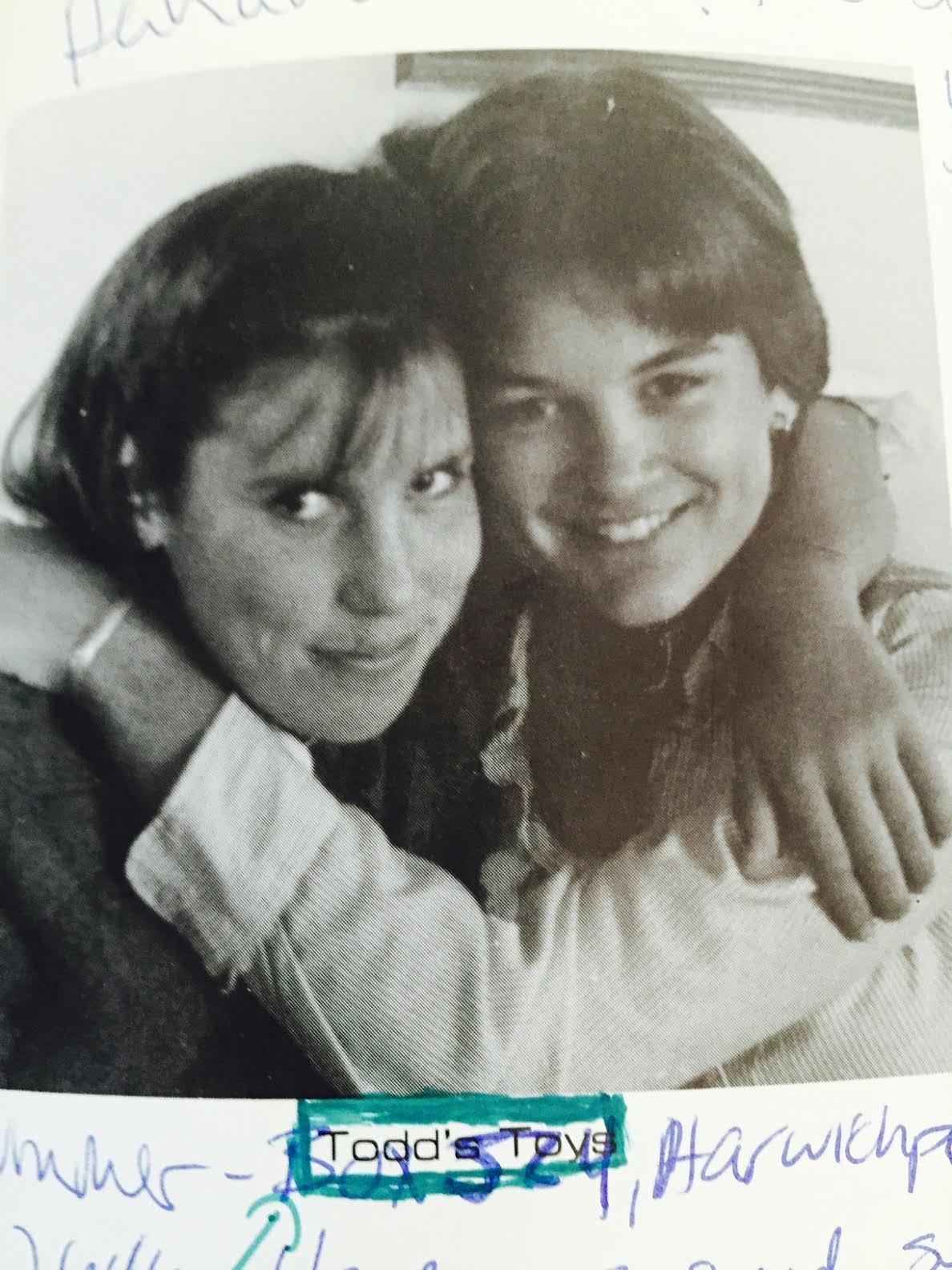
Time Magazine just published a post: Colby Student: Billy Bush Exemplifies the Hypermasculinity on College Campuses with the tagline “A student from Bush’s alma mater says not much has changed.” Here’s my story. Billy Bush and I went to the same boarding school, St. George’s in Newport, Rhode Island. You may have read about the school recently in The New York Times or The Boston Globe or Vanity Fair because an investigation recently concluded that scores of students were raped and assaulted at the school, mostly during the 70s and 80s. While I was lucky enough not to be a victim of assault, this “elite” institution that supposedly educates “the best and the brightest,” like so many boarding schools was a bastion of sexism and racism, an old boys club where a culture of silence was encouraged and rewarded. The photo below is of me (on the left) and my friend, freshman year, in our high school yearbook from 1984. The caption reads “Todd’s toys.”

toys

Todd was a senior prefect. The saddest thing to me about this photo is that I, at 14 years old, aspired to be liked, desired, by older boys, that I believed my value and worth was determined by whether or not older males– the guys with the power– were attracted to me. St. George’s did nothing that I can recall to recognize this sexism or to empower female students. To the contrary, the school seemed to condone misogyny. There was an annual event at St. George’s called Casino Night where all the new girls, mostly freshman and sophomores, dressed up as bunnies, as in playboy-type bunnies, complete with fishnet stockings and cotton tails on our butts. Our job was to sell the boys– who were fully clothed and pretended to gamble– candy and fake cigarettes. Casino Night was not a secret event, it took place to much fanfare in the school dining hall. Every teacher and administrator knew about it.

When I heard the Billy Bush/ Donald Trump tape I wanted to scream because it was like everything I learned in high school, the objectification of women and girls, the metamorphosis of teenager from San Francisco into a “toy” bunny plaything, was being reinforced by a would-be president of the United States of America.I felt ill and the nausea hasn’t left me since.

What are girls supposed to think and feel and be when we grow up surrounded by this kind of sexism, when it’s so normal that no one even notices it? When teachers condone it by never addressing it?

After I learned about the sexual assaults and rapes at St. George’s, about a year ago, I started blogging about the story. Though even before I was told about the abuse and the cover ups, I’d written about the sexism I experienced there in blog titled Women, class, and the problem of privilege: Everything I learned about sexism, I learned at boarding school. 

I spoke to the investigators because they said they wanted to know about the culture of sexism at the school, how the place could’ve allowed the rapes to happen and go unreported. I was disappointed that the investigators didn’t publish more about the rape culture at the school, and I wrote many blogs about it, including one titled with a quote from a survivor: ‘There’s no sense of why so many assaults happened at St. George’s, what the school did to create cultural backdrop that allowed and encouraged rape.’

The links to the posts I wrote about St. George’s are listed below, though I removed the photos from the blogs. I had posted a photo, also from our 1984 yearbook, of a freshman girl dressed as a bunny on Casino Night. To me, the shame was on the school, not the girl, but when she told me she wanted it down, I respected her wishes. I took all the pictures  of students down except for the one with me in it that you can see above.

Misogyny is so ubiquitous in America, paradoxically, it’s invisible. It’s in our schools and colleges and the air we breathe, but we don’t even notice it. I’m not 14 years old anymore. I have three daughters of my own now. I want them to have the right to control their own bodies, to find their value in their achievements not in how they appear to men, to be ambitious, creative, and inspired, to dream big and to acquire the skills to realize their vision, to be valued as people, not toys. That’s why I’m voting for Hillary Clinton for president on November 8.


Reel Girl posts on St. George’s:

St. George’s, how should law enforcement respond to 911 call about possible rape at your school?


Back to school: Teach your kids healthy risk-taking instead of self-sabotage

Our deepest fear is not that we are inadequate.
Our deepest fear is that we are powerful beyond measure.
It is our light, not our darkness that most frightens us.
We ask ourselves, Who am I to be brilliant, gorgeous, talented, fabulous?
Actually, who are you not to be?
You are a child of God.
Your playing small does not serve the world.
There is nothing enlightened about shrinking so that other people won’t feel insecure around you.
We are all meant to shine, as children do.
We were born to make manifest the glory of God that is within us.
It’s not just in some of us; it’s in everyone.
And as we let our own light shine, we unconsciously give other people permission to do the same.
As we are liberated from our own fear, our presence automatically liberates others. — Marianne Williamson

When I was in my twenties and first saw the words above, they were misattributed to Nelson Mandela. I’m grateful for the mistake because at that time, I don’t think I would’ve have listened to a middle-aged white woman spiritualist. Nelson Mandela, on the other hand, was a hero so I got teary eyed. I felt the truth of what “he” said, maybe for the first time in my life.

Today was the first day back at school for my kids, and last night our house full of the annual excitement and anxiety. Along with my kids’s emotions, my husband and I were dealing with The Schedule, which, like for all parents I think, is a source of unending, brutal calculation and miscalculation.

So here’s how a typical conversation went  about setting up the schedule with one of my daughters who loves art.

Me: Would you like to take an art class?

Daughter: I suck at art.

Stab in my heart Me: No, you don’t!

Daughter: I want to be good but I suck.

More stabbing Me: Why do you say that?

Daughter: I’m bad at art!

I really fucked up.  How did I fuck up so badly? My10 year old daughter is convinced she’s bad at art. Something as subjective, as dynamic, as unfixed as art. All art? How can this be? How can she love it and think she’s bad at it? And then I looked at her, and I saw fear in her face. I remembered Williamson. I thought she’s afraid to take a risk. What is making art about if not risk?

Me: Why don’t you try the class and see if you like it?

Daughter: I told you, I’m bad at art.

Me: Can I tell you something it took years for me to learn?” I said. “It may not be true for you, but it was true for me.”

Daughter: Okay.

Me: Saying or just thinking I was bad at something was a really safe place to be. When I put myself down, there was nowhere to fall. But if ever I was feeling good about myself, someone could always come along and knock me down.

She nodded.

Me: Here’s what I know now. Putting yourself down isn’t cool or modest, it comes out of fear, because you’re scared. And I totally get being scared. But trying something new is a much more helpful way to deal with fear. Maybe you won’t like this art class, but you could meet a kid in the class who will become your best friend, or maybe you’ll discover you like horses from drawing horses. Maybe you’ll find out you love pastels and not water color.  You don’t know what will happen, but anything could and that makes scary but exciting.

She was looking at me, not talking.

Me: When you try something new, there will times when you’re going to fail. Guaranteed.  hundreds, thousands of times, and that’s a great sign. Failure means you’re learning. If you’re not messing up, you’re not learning anything.

She told me she wanted to try the class. I hope she got the message I was trying to convey. When adults think about taking risk, we often think of dramatic behavior: climb Mount Everest, fly a plane across the Atlantic, but for a kid, a huge risk can be trying a new food or saying hi to a classmate. The truth is adults feel the same way about risk, because when it comes down to it, risks are emotional. I hope to teach my kids to risk experiencing the full range of their emotions, to understand humans are verbs, dynamic and ever-changing instead of pigeon holed, stagnate, and “safe.”

Please feel free to add any personal stories in the comment section about your family stays emotional healthy. I always want to learn more.