Kids Speak in Metaphor—Can Parents Listen for What Matters?

When my teenage daughter was in residential treatment for behavioral health challenges, she would tell her therapists about the time my husband kicked her out of his truck on the freeway.

That never happened.

The first time my husband and I heard her story, we were shocked and defensive. “How could she say something like that?” We asked the therapist. “Is she trying to hurt us?”  

“Lying is a consistent problem for her,” the therapist told us. “We’ll confront her together in a family session. If she can’t be truthful, she won’t get better.”

Finally, all in one room, my husband and I demanded our daughter tell us why she made up negative stories about us. We restated what really happened: “When you yell at us, get physical in the car and threaten us, when you grab the steering wheel, or shove the car into park and your sisters are in the back seat, we cannot continue to drive. We’ll pull over and ask you to get out to calm down. We do that to keep everyone safe. We would never force you out on a freeway.”

Our daughter’s eyes glazed over, and she wouldn’t say anything or respond to us at all. My husband and I got more agitated, frustrated, and defensive. That session ended, like so many others, in radical disconnection.

Several therapists later, when we heard the same story yet again, I rolled my eyes. “I can’t go through this in another session, it’s a waste of time and money.”

 “What about just listening to her?” said the therapist.

“What?” I said. “She’s lying.”

“But what was she feeling?” asked this therapist.

“What was she feeling when the thing that never happened happened?” I said, my body stiffening.

“We’re not going to enable her,” said my husband, reciting the counsel of so many experts. “She’s manipulating us.”

“Can you listen for the emotions underneath her story?” said the therapist. “Could that be the truth for her?”

I’m a writer, skilled in translating emotion into metaphor, and still hearing the therapist emphasize feelings beneath the narrative, my brain short-circuited.  “You mean how would she feel if we had left her on the freeway?”

“Yes, can you picture that?”

I closed my eyes. I felt like I had to harness every brain cell in my head to even imagine my daughter abandoned on 101 North. “She would be terrified,” I said. “Totally alone.” When I spoke those words, I felt them. I finally experienced the empathy for my daughter that always eluded me when I pictured her on a tree-lined street.

In our next family session, when the freeway story came up, I blinked and saw her standing on the shoulder, cars whizzing by. “That must’ve been really scary,” I said.

 “Yes, it was scary,” she said. She went on to talk about how lonely and sad she was, and how much shame she felt for acting out— this from a kid who would never tell me what she was feeling. And tragically, I spent so many years begging and ordering her to open up. Not long before that session, I’d written in a letter to her:

“Time and time again, we’ve asked you to be honest with us, to be specific about what is happening for you, what problems you face and how you work through them, but what we get is lies or half truths and you taking a victim role. We are not asking you to be perfect. What we need is for you to approach our talks with honesty, openness and authenticity, to feel the words that you’re saying.”

I was asking my daughter to choose to feel, as if that were a conscious decision she could make—and then I expected her to somehow summon the courage to share those painful, vulnerable feelings with me, her angry and frustrated mother.

In her new book, Fawning, Dr. Ingrid Clayton writes: “My brother once told his teachers in elementary school that our parents made him sleep outside at night, in the freezing cold. He said he curled up in an empty hot tub with nothing but the cover for a blanket. This is NOT what was happening in our house, but even as a kid, I remember thinking, that is genius. Because that loneliness, that fear, that neglect…was.”

When my daughter found her own ingenious way to share her internal world with me, I didn’t meet her with curiosity. I yelled at her for lying.

All these years later, I sound like I’m judging myself, and that isn’t my intention. I want to share how desperately I wanted to connect with my daughter, how much she wanted to connect with me, and how we repelled each other like magnets. Too many mental health experts and treatment centers push parents to create and hold firm boundaries in order to achieve behavior change, instead of showing us how to connect with our kids. Professionals handing down wisdom from mountaintops can’t guide us when they don’t know how to listen to us or our children.

Reading about the Reiner family tragedy, I was struck by a similar moment of clarity when the parents spoke about their son Nick’s history in treatment. In 2015, Rob Reiner told a reporter: “The program works for some people but it can’t work for everybody. When Nick would tell us that it wasn’t working for him, we wouldn’t listen. We were desperate, and because the people had diplomas on their wall, we listened to them when we should have been listening to our son.”

Michele Reiner added, “We were so influenced by these people. They would tell us he’s a liar and he’s trying to manipulate us. And we believed them.”

My husband and I didn’t have a magical, instantaneous metamorphosis the first time we heard my daughter’s feelings underneath her words. We were still scared, defensive, and confused as we all muddled our way through recovery. But what shifted dramatically that day was our orientation, our goal, our North Star. We no longer prioritized fact-checking, scanning words for accuracy, evaluating for objective truth, and deciding how much we agreed with everything said. Instead, slowly but committed, we turned towards the principles of Nonviolent Communication (NVC) and began practicing empathic listening with each other. Developed by clinical psychologist Marshall Rosenberg, NVC centers on identifying feelings and the universal human needs beneath them. Rosenberg taught that conflict arises not from those needs, but from the strategies we use to try to meet them—and that when needs are heard, compassion becomes possible.

I have no doubt my family will spend a lifetime continuing to learn how to listen to each other, but all these years later, my daughter is happy, healthy, and though forever poetic, no longer depends on metaphor to risk expressing her truth.

If you’d like to learn more about NVC and my parent coaching visit my website. You can also find me on Instagram: @Listen2ConnectCoach and TikTok: @reelgirlreviews

‘Caring for myself is not self-indulgence, it is self-preservation, and that is an act of political warfare’

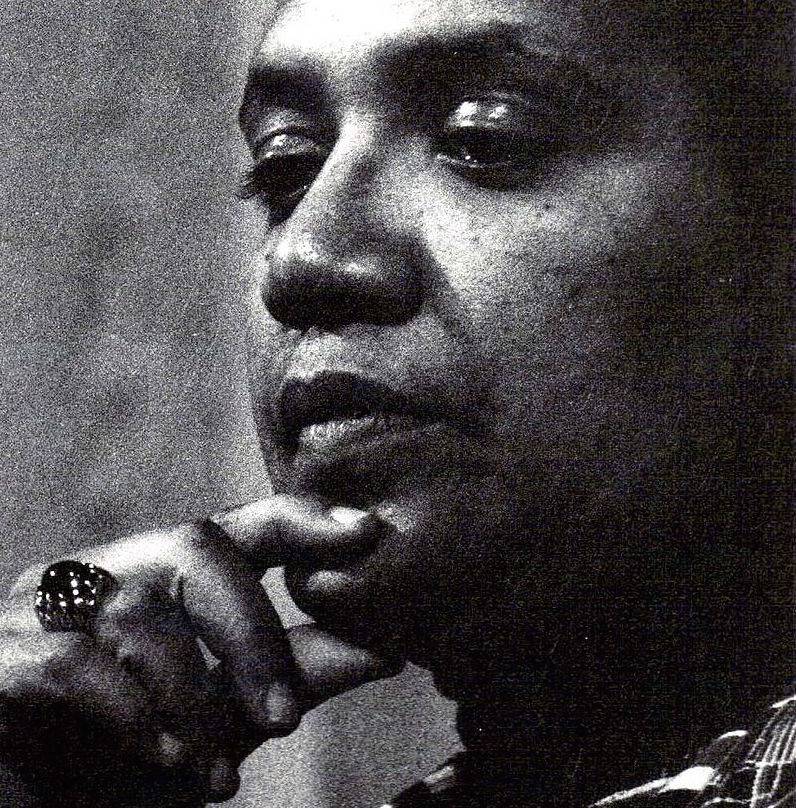
To cope, I keep repeating to myself: “Self-care, self-care, self-care.” That’s how I’m managing to crawl out of bed, get my kids breakfast, drive them to school, and just now, I finished writing the last chapter of my book, a project that I’ve been working on for six years. While I have another voice in my head consistently telling me everything I try to do is pointless, all my work is for nothing, my actions have no effect, the poet Audre Lorde motivates me now: “Caring for myself is not self-indulgence, it is self-preservation, and that is an act of political warfare.”

800px-audre_lorde-1_0

Caring for myself is an act of political warfare.

Self-destruction, depression, hopelessness is so easy, but Lorde helps me see that is the self-indulgence. That is not to say I’m not grieving and crying and throwing up and in despair. But I’m also finishing my book and writing this blog. I also read this stat today:

The exit polls are in. Despite all of the fair and empirical reservations Black Women had on putting our future in a Clinton presidency for a second time, 91 percent of Black Women with a college degree voted for HRC. Without a college degree? 95%

Don’t believe the narrative that feminists who enthusiastically supported Hillary were out of touch with the “real” America. It’s just another story telling us that women’s lives don’t matter.

Another great post is titled I’m a Coastal Elite From the Midwest: The Real Bubble is Rural America:

To pin this election on the coastal elite is a cop-out. It’s intellectually dishonest, and it’s beneath us.

We, as a culture, have to stop infantilizing and deifying rural and white working-class Americans. Their experience is not more of a real American experience than anyone else’s, but when we say that it is, we give people a pass from seeing and understanding more of their country. More Americans need to see more of the United States. They need to shake hands with a Muslim, or talk soccer with a middle aged lesbian, or attend a lecture by a female business executive.

We must start asking all Americans to be their better selves. We must all understand that America is a melting pot and that none of us has a more authentic American experience.

Do what you can to take care of yourself today. Please share you actions here, no matter how small.

Are you on Team Pussy or Team Trump? Show your support and get a shirt!

“I will totally accept the results… if I win,” Donald Trump told a cheering crowd, reaching a new misogynistic low. Yes, it keeps being possible. By questioning the legitimacy of any victory but his own, Trump acts as if the glass ceiling Hillary Clinton busted just by being the nominee was somehow rigged for her all along.

teampussy

Like many of you, I feel stunned and sickened watching our country race backwards under the rubric “make America great again.” From #Repealthe19th (a sentiment you can only call fringe if Trump is fringe) to his hopes for mass deportation (“we have some bad hombres here and we need to get them out”) Trump’s effort to whip his angry, white, male voters into such a frenzy, they’ll stampede to the polls, terrifies me.

Team Pussy is a movement to get out the vote. It was created to mobilize and inspire women and men, young and old, to show up at the polls on November 8 to support women’s rights, that is human rights. Team Pussy comes at a unique moment in history. We’re on the verge of electing America’s first female president, a candidate who has worked tirelessly for thirty years to support women’s rights. Even Trump concedes she’s a fighter. We’re also in the midst of a national conversation about pussy. And it’s conversation that hasn’t always gone the way I’d like it to.

When the video leaked where Trump bragged to Billy Bush about grabbing women, pundits and politicians seemed more offended by the word “pussy” than “grab.” Republicans like House Speaker Paul Ryan, who’ve spent careers blocking or dismantling policies that empower women (reproductive rights, paid family leave, coverage for contraception, higher minimum wage, the Lilly Ledbetter Fair Pay Act) reacted to Trump’s “vulgarity “or “lewdness” while taking no action to stop sexual assaults.

On CNN, when Ana Navarro quoted Trump, noted his misogyny, and demanded Republicans do more for women, Trump apologist Scottie Nell Hughes responded: “Will you please stop saying that word? My daughter is listening.”

Pussy isn’t the problem, it’s the solution. By shining a spotlight on sexism in the USA, Trump has done this country a warped kind of service. His personal, overt disdain for women is exposing America’s national, covert disdain. Misogyny is so ubiquitous in our country that, ironically, it’s become invisible to so many citizens; it’s so normal and reflexive that we’re lulled into colluding with a system of sexism we hardly notice anymore. Don’t look away now. Instead, let’s ignore Scottie Nell Hughes and talk about pussy.

I first researched and wrote about “pussy” in 2001 after a male friend used the word to insult a guy who backed out of a business deal. Of course, I’d heard it before, possibly said it myself, but suddenly, it struck me as wrong to use it to imply cowardice or ineffectiveness. Why must we equate weakness with the female sex organ?  Why have we for so long?

On Salon, I wrote:

I began to wonder how one — how we — might take the wussy out of pussy.

Is it possible to change the meaning of the word, to restore to “pussy” its deserved glory? Could we use pussy as a compliment? Could pussy denote someone or something as cool or heroic or impressive? “Rosa Parks — what a pussy!”…

Pussy has so much potential, it’s a shame to limit it to the immature and derisive mocking of weak boys. Let’s give it a shot in the arm! I envision hit songs featuring “pussy” — “Who Let the Pussies Out?” or “The Real Slim Pussy” or “The Real Shady Pussy.” Hallmark-type cards that read “Thanks for being such a pussy!” Colloquial expressions: “You da pussy!” “Stand up and fight like a pussy!”…

And when, and if, Joe consummates his next business deal, I’ll be there to toast him, saying, “You’re so pussy.”

Flattered, he’ll smile.

I wrote the post before social media and “going viral” were phrases we all used, but I created a bunch of “Team Pussy” T shirts  (at that time, just black with “Team Pussy” written in pink cursive) which sold out through my email in a few days. Though I was passionate about Team Pussy, I didn’t have the time or resources to dedicate to it, so I went on with life, trying to interject the word when I could. Fast forward to Trump’s video. People on social media started messaging me they were wearing their shirts or looking for their shirts. And then I watched the last debate and heard Trump asked if he would accept the results of the election, and heard him reply “I will look at it at the time.”

Let’s give the guy something to look at.The sides are so clear. You’re either on Team Pussy or Team Trump. Here’s a chance to make your choice loud and proud and inspire everyone who sees you. All merchandise features our cat and is available at our Team Pussy shop.  Our favorite shirt looks just like the art posted here. Its reverse sides reads: “Vote Nov 8.” All shirts are high quality, 100% cotton with a navy blue background and come in fitted or straight cut. We also have gorgeous, durable white totes with red handles showing the same art and “I’m with her” on the reverse side. The T shirt with just the cat will be available soon. I saved 4 XL vintage “Team Pussy” shirts from 2001 and I’m making those available now at the store.

Feel free to use our Team Pussy art as your profile pic which we urge you to do at least until November 8! This image below is sized perfectly for your Twitter profile. Suggested intro Tweet: “Joined #TeamPussy to GOTV on Nov. 8. I’m with her.”

pussy2

If you see a news story about someone doing something brave or cool, for example as Ijust did: Salma Hayek Claims Trump Leaked a False Story After Turning Him Down, then Tweet the story: “Salma Hayek is so pussy! #TeamPussy.” Nominate a #Pussyoftheday or give a shout out to one of your evergreen favorites: “Jessica Jones is so pussy! #GoTeamPussy.”

marvel-netflix-jessica-jones-images-krysten-ritter


For Instagram, here’s art sized perfectly if you want to switch up your profile pic.

instagram

Post photos of you wearing #TeamPussy gear and our goal is to send you a free button or magnet once we get those in.

Our Team Pussy cat is worn out and pissed off, but she’s a fighter. She’s going to be out there every day with all of you, working hard to make sure Hillary Clinton wins big on November 8 with results that even Donald Trump won’t dare contest. Please join her. Thanks, pussies! Go team!

Follow #TeamPussy on Instagram @team.pussies.unite and Twitter @Pussiesvote

Visit our Team Pussy store now!

Can’t wait til November 8!!!!!!!!


St. George’s, how should law enforcement respond to 911 call about possible rape at your school?

SGS for Healing posted a shocking police report from 2011 revealing rape and subsequent cover ups at St. George’s school may not be, as the school seems to claim, events that only happened 30 years ago.

gmyk8kh9u8ggcfax7uok

The report states that a St. George’s campus security officer, Christopher Simanski, called 911 when he saw a male climb out the window of an all girls dorm and run towards the road with no shoes on. When Middletown police officer David Hurst arrived on the scene, Simanski told him he’d chased the male but couldn’t catch him. Simanski returned to the dorm, went to the room with the window, and saw a girl sitting on her bed crying, another girl sitting next to her. He wrote that she was upset, visibly shaken, and “indicated there had been a male in her room and on her bed.”

While Simanski was recounting the events to Hurst, the dean of students, Katie Titus, came out of the dorm and approached them. What do you think happened next? She helped them investigate a possible crime, right?

Here’s how Hurst tells it:

I asked Titus where the alleged victim was and Titus ignored my question and only replied by telling me that the girl was upset. I asked Titus again where the alleged victim was and again she did not answer me. I reiterated to Titus that I was there to investigate a possible assault or sexual assault and that I would need to speak to the victim to determine the nature of the incident and obtain crucial information for any possible suspects.

Titus still refused to let Hurst investigate, insisting that she would speak for the victim. She would speak for the victim? Hurst continued to press her, letting her know that he needed vital information. Titus gave him some information of her own. She said she knew the male who ran from the window. He was student who had just graduated. But then, she refused to give the officer his name or any other facts about him.

SGS for Healing writes:

When 911 is called and there’s a report that a girl may have been sexually assaulted, how the adults around her respond makes a world of difference. They can ensure that she gets immediate professional treatment and care, optimally provided by a team that includes a medical provider, a sexual assault examiner, and a rape crisis counselor. They can facilitate police evidence collection, which depending on the jurisdiction, needs to happen within days following the incident. This kind of rapid response leads to better health outcomes for victims and an increased chance that associated criminal charges are filed.

So what happened next?

According to the report, Titus told Hurst that she’d reached the recent graduate on her cell phone. (She had his number on her cell? Maybe that’s totally normal for a dean’s contact list in these digital days?) The nameless male assured Titus that he hadn’t been on campus. Hurst writes in his report: “Titus apparently accepted the alibi at face value.”  Again, she refused to give Hurst any more information about him. I haven’t read many police reports but this seems like an odd order of events. Was Titus trying to pacify the officer at first, saying she knew the male, thinking he’d leave it all alone, let her take this mess over? Then, when Hurst asked for more information, did Titus regret telling him she knew his identity? We’ll never know because just at that moment, Titus was called away for a family emergency.

Assistant dean, Lucy Goldstein, arrived on the scene to take over. More police officers also arrived, including a lieutenant who insisted on speaking to the girl to confirm the chain of events. At that point, Goldstein went and talked to the girl for 20 minutes before allowing the lieutenant to speak with her. The girl told him that she let the male into her room, they started kissing and he wanted it to become more intimate. She “declined” and he “agreed not to press the issue and left through the window.”

The report ends with:

Having no further evidence of a crime or witnesses to come forward to contradict the series of events, all units cleared from the scene. School safety supervisor Lombardi advised that he would follow up in the morning regarding how the school staff handled the initial investigation and its cooperation or lack there of in the investigation conducted by this department.

I don’t see any information that a follow up actually happened.

SGS for Healing writes that the report raises a number of questions including: Why didn’t the SGS Dean Katie Titus immediately allow the officer to see the female student? Why did the Middletown police call Ms. Titus uncooperative? Why did Ms. Titus call the adult male? Why didn’t she help the officer talk with him and why did she refuse to give the adult male student’s name and telephone number? Sometime after the Middletown Police were on the scene, a female sexual assault officer from Newport arrived. Why did the school continue to refuse to allow her access to the alleged victim? How did the school help the student get professional treatment and care? How were the police aided in gathering physical evidence?

Last night, I saw “Spotlight,” the movie about the sexual abuse and the Catholic church that just won the Best Picture Oscar. There’s a great line: “If it takes a village to raise a child, it takes a village to abuse them.” This story is so much bigger than St. George’s. It’s about how when institutions (whether its the church, the government, businesses, or schools) are put before individuals, children suffer. Ultimately, we all do because this pattern of abuse happens far too often and isn’t symptomatic of the kind of world healthy people have the great potential to create.

Katie Titus left St. George’s school this year. She’s about to start her new job as head of Mercersburg Academy, a boarding school in Pennsylvania.


Reel Girl’s posts about St. George’s are below. If you read them, you will see that as an alumna of the school, I started to write about the institutionalized sexism I witnessed there long before I learned about the rapes and cover-ups.

Open letter to Bishop Knisely about sexual assaults and cover ups at St. George’s school

Why is a justice who argued against statutory rape laws on the R. I. Supreme Court?

St. George’s school continues to hold back information in sexual assault investigation

St. George’s releases report on sexual assaults at the school

St. George’s alumna creates fund for survivors sexually assaulted at school

Comments on petition asking St. George’s for fair investigation into assaults make me cry

St. George’s School continues to flub investigation into sexual assaults

Lawyer investigating St. George’s sexual assaults is partner of school’s legal counsel

‘There’s no sense of why so many assaults happened at St. George’s, what the school did to create cultural backdrop that allowed and encouraged rape.’

Prep school alumni respond to St. Paul’s rape trial verdict

Women, class, and the problem of privilege: Everything I learned about sexism, I learned at boarding school

Tucker Carlson, Jerry Garcia, and me


Of Fish Faces and Filters: Middle Age and Selfie-Esteem

This is a guest post for Reel Girl by Melissa Duge Spiers


“Cosmetic surgeons say patients who once requested celeb features now come armed with their own ultra-filtered selfies. About 1 million self-portraits are taken daily, and more than a third of these are retouched…” —Women’s Health Magazine

collage

There is so much that is disturbing in the preceding statement it would take volumes to unpack, so when I initially read it I focused on the part I’d never heard before: ultra-filtered, retouched selfies? Like most, I had abstractly pondered bits and pieces of the selfie phenomenon (why do so many women take them in the driver’s seat of their car?) but I had only occasionally wondered about the photos themselves: the round-faced FB acquaintance whose rotating stock of profile photos shows random cheekbone prominence, the celebrity we all know to be zaftig suddenly appearing waifish. I saw them, but I didn’t really THINK about them, sort of like we all know our parents had sex because, well, here we are, but we really don’t give it any credence: it must have been a lucky shot somehow…surely not intentional.

I had frankly just ignored the whole selfie phenomenon, hoping it was a passing fad like jeans belted below the butt. It has, of course, become abundantly clear that both unsightly crimes of overexposure – both so self-consciously “casual” yet so obviously calculated – are here to stay. And while the low-pants problem seems to hobble only those who sport the style, the retouched selfie has a deep and reverberating effect on all women.

With the help of new apps and filters today’s self-portraitists make no attempt at truth: they have become impressionists, not photo-realists. Standard filters in every social media platform let you create perfect skin, erase wrinkles and blemishes, adjust your coloring and add or subtract makeup effects. Dozens of other free, downloadable apps and filters can make you appear taller, skinnier, curvier, blonder, or tanner, not to mention redesigning your nose and jaw, making your eyes bigger, and perfecting your skin. With Perfect365 you can adjust the structure of your face, create a new jawline, and make your eyes bigger. ModiFace also lets you change your nose, the size of your lips and the angles and curves of your jaw. Spring and Facetune give you tools not only to change your face but your whole body: create or diminish curves and height with a simple pinch of your fingers. Want to be taller and thinner, with a narrower waist, bigger boobs, and curvy hips, but skinny thighs? Just squeeze, slide, and save. Modern selfies are reproducing their subjects about as accurately as Picasso reproduced Dora Maar.

Of course, for years before Instagram, Photoshopping celeb photos was the dirty secret of magazine wizards, slimming down and prettying up their cover subjects and advertisement models. There used to be regular protests and outcry against such gross distortion and misrepresentation; suddenly there are no more critiques. Celebrities regularly tweak nearly all their candids and selfies (whole websites and blog posts are devoted to pointing out the doctoring of famous faces and posteriors), and where the social-media aristocracy has gone the rest of us have followed.

Talk to any teenage girl and she will confess to at least “trying” the face- and body-altering apps. Already struggling to grow up in the overly sexual, image-saturated 21st century with anything remotely resembling a positive body image (or, more important, a positive self-image based on something other than her body), girls now feel compelled to make Bratz dolls out of their photos. And while it’s so easy to blame “society” for this mess – those dolls, those magazines, those tv stars and models – a quick flip through Facebook or OurTime reveals that we can’t just finger media sources and stars. Beyonce and Kim Kardashian are not the only ones presenting unreal images to the world; we need to look closer to home. Instagram and Facebook (with an overwhelmingly middle-aged, female base) overflow with profile photos in the ubiquitous fish-lip kissy pose (instant cheekbones! Wrinkles smoothed! Puffy lips!) and now with over-processing from filters and apps our middle-aged-mom photo collections are becoming a veritable Madame Tussauds guessing game: is it plastic surgery or filters or Facetune?

Yahoo Labs’ reported, after studying nearly 8 million selfies, that “doctored shots were more likely to be viewed and draw likes” than natural ones. Instead of using our wisdom and experience to denounce this sham contest of popularity-based-on-pretend, women of a certain age are lining up like baby birds, mouths agape (with lips artfully puffed by app or derm), and competing for attention. In our younger, pre-selfie world we shored up fragile egos by fishing for compliments in the locker room, moaning “I’m so fat!” and counting on a chorus of “you are NOT. I’M fat!” and “You are SO not fat. I wish I had YOUR legs!” to make us feel better. Now when we feel a little insecure we post a soft-focus, subtly slimmed, kiss-puckered selfie with an aren’t-I-just-playful title like “My goofy date night face!” Or we post a blown-out b&w photo so artistically grainy you can’t tell if our eyes are open or closed and we demur modestly by using Trump-speak third person “Just me – just Suzie…no makeup – no filter…” Then we sit back and wait for the pile of predictable, soothing views, likes, and comments to roll in: “wow! Beautiful!” “You are so gorgeous, girl!” “Beautiful inside and out!”   Et voila – instant Selfie-worth! Selfie-esteem! Selfie-confidence!

The truth hurts, they say, and right now it’s staring middle-aged mothers in our over-filtered faces. We’re probably not fooling anyone with our fish kisses and filters, skinnied “Spring” selfies and sexy soft focus, but we are damaging our daughters without a doubt. We’re buying into a falsified reality – creating it ourselves, and using it to bolster our self-esteem…and we’re modeling it for our daughters in a very public forum. The real problem, obviously, is not the filters or fillers, the soft focus or Facetune. The problem is that we’re still getting our self-worth from our looks – and now they aren’t even our looks any more.

Read Melissa Duge Spiers previous posts for Reel Girl:

Thoughts that come with Dove’s footsteps by Melissa Duge Spiers, guest post

Say it isn’t so, Siri by Melissa Spiers, guest post

No Comment! A Commentary on the ChapStick Story, guest post by Melissa Spiers

Chapstick sticks it to women by Melissa Spiers, guest post


Melissa Duge Spiers is a freelance writer based in Watsonville, California. You can follow her on Instagram (@mdugespiers) or Twitter (@MDugeSpiers) – she promises never to post a doctored selfie.

St. George’s alumna creates fund for survivors sexually assaulted at school

Faulkner Fox, who graduated from St. George’s in 1981 and was a prefect at the school, has set up the SGS Alumni Therapy Fund to help survivors who were sexually assaulted at St. George’s and in need of therapy.

gmyk8kh9u8ggcfax7uok

When I asked her why she wanted to create the fund, she told me:

I was so concerned when I heard that alumni were in distress, some suicidal, after reading THE BOSTON GLOBE article. Not everyone has a therapist or a strong support network of friends and family.  It is unconscionable that St. George’s School has not set up immediate counseling and referral services.  I wanted to help support the vital 24/7 therapy service put in place by Anne Scott’s lawyers.

Here’s the text from SGS Alumni Therapy Fund page on generosity.com.

Dozens of alumni from St. George’s School were sexually abused while they were students at the school.  More victims have been coming forward since the BOSTON GLOBE ran a front page story, “A Prep School’s Dark Legacy,” on 12/15/15.  Some are very distressed, even suicidal, and they need to speak to a therapist immediately.  St. George’s School has not yet made such a service available.  We, concerned St. George’s alumni and supporters, are raising money to pay for psychologist, Dr. Paul Zeizel, a well-known clinician and trauma expert who treated many of the victims of the Boston Marathon bombing, to counsel St. George’s alumni who are in crisis.


Dr. Zeizel is available seven days a week to provide crisis assistance and local referrals to  people who were sexually assaulted at St. George’s.  Consultations are free to alumni and completely confidential.  Dr. Zeizel’s phone number is:  857 472 2704.  His email is paulzeizel@comcast.net.


If we raise enough money, Dr. Zeizel will also process requests for reimbursement for therapy that relates to past sexual abuse at St. George’s School.  He will maintain absolute confidentiality, yet his clients will be free to speak to anyone they choose about their abuse and who is paying for their therapy.

You can make credit card donation on the fund’s page.

If you want to make a donation by check, you can go to any Wells Fargo branch and ask to make a donation to the “SGS Alumni Therapy Fund.”

If you want to mail a check for Faulkner to deposit or if you have any questions about the fund, you can contact her at dfofaulkner@gmail.com

If you don’t know anything about the sexual assaults at St. George’s or want to learn more, you can look at previous blogs below.

Thank you for your support.

Comments on petition asking St. George’s for fair investigation into assaults make me cry

St. George’s School continues to flub investigation into sexual assaults

Lawyer investigating St. George’s sexual assaults is partner of school’s legal counsel

Prep school alumni respond to St. Paul’s rape trial verdict

Comments on petition asking St. George’s for fair investigation into assaults make me cry

I’m so grateful for the bravery I see while reading through the comment section of the petition created by alumni of St George’s asking for a fair investigation into the sexual assaults at the school.

SGS03A

I’m reposting some comments here:

I’ve seen first hand efforts by the current SGS administration to silence, intimidate, threaten lawsuits and even arrest of those who’ve reported abuse or stand up for victims. Dara Brewster Little Compton, RI

I witnessed this and did nothing Max Cottrell, Fairfield, CT

In support of friends who have bravely struggled for a long, long time  Willard Sistare Simsbury, CT

St. George’s School continues to flub investigation into sexual assaults

Last Monday, the Boston Globe published a front page article about sexual abuse and cover ups at St. George’s School, an elite private school that I attended.

SGS03A

When Anne Scott initially brought a suit against the school about her molestation by athletic trainer, Al Gibbs, lawyers representing St.George’s claimed she “has a tendency to lie.” They also said that if the 15 year old had sex with the 67 year old, it was consensual. Let me remind you, lawyers representing a school seemed to have no concept of statutory rape. St. George’s also sought to change the case from a “Jane Doe” to use Scott’s real name. Intimidated, Scott dropped her case. Years later, still suffering from the abuse at St. George’s, Scott demanded the school contact alumni about abuse that may have happened. Scott was certain there were other victims. She wanted the school to be accountable and to reach out to others who may  need help. St. George’s started an investigation and sent out letters. According to the school, “tens of women” have responded that they are survivors of abuse. But one of the problems with the investigation is that more victims have said they are not comfortable talking about their experiences to Will Hannum, the lead investigator hired by St. George’s. Hannum is not only a lawyer but a partner of the counsel for St. George’s, not the ideal person to speak with about these experiences. I have been contacted by women who feel this way.

In August, after news about the St. Paul’s rape, another boarding school, the night of “senior salute” I blogged about “Casino Night” a sexist “tradition” when I went to St. George’s. On “Casino Night” all the new girls were supposed to dress up as playboy-like bunnies and sell candy to the older boys who gambled. After that blog (which I learned roughly coincided with St. George’s letter about its investigation) I was contacted by a former student from St. George’s who was sexually assaulted at the school around that time. She was scared to talk to Hannum because she was concerned his goal might be to gather information to protect the school from a lawsuit. Since my blogs, I’ve been contacted by others, first and second hand, about sexual assaults at the school who didn’t know where to turn. Apparently, I’m not the only one who has been approached.

Here are more facts since the Globe article came out about how St. George’s continues to fail it’s alumni from the counsel for Anne Scott (’80), Joan (Bege) Reynolds (’79) and Katie Wales (’80): Eric MacLeish (SGS ’70)


  • Since the December 15, 2015 article in the Boston Globe we have received reports from eleven additional alumnae who were sexually molested and assaulted by former SGS athletic trainer Al Gibbs. We also have other calls to return so that figure will rise tomorrow
  • Virtually all of the alumnae are or have suffered psychological injury as a result of their abuse by Gibbs and some are currently in states of crisis. Two have reported suicidal ideation. We are referring alumnae to the Boston Area Rape Crisis Center (which has agreed to handle calls from outside Massachusetts). We are searching immediately for a clinician to provide crisis services for these individuals and to make referrals. We have asked SGS to retain such a clinician but SGS has not responded
  • Based on Mr. Zane’s notes of four Gibbs victims in the Scott case and the three clients who we represent, the number of Gibbs alumnae victims that we are aware of currently total eighteen
  • SGS has still refused to disclose the number of victims who have come forward to the School alleging sexual assault by Gibbs. This number is likely much higher than the eighteen alumnae victims that we are aware of
  • Headmaster Peterson stated in his letter of November 2, 2015 to alumni that the “majority” of the abuse reports center around three individuals and that most of the reports fall in the 1970’s and 1980’s. We have received reports of abuse from alumni over the past four days, including reports from two former Trustees, regarding five SGS former employees; one report was as recent as 2004
  • SGS has shown a pattern of conduct since 1979 of coercing alumnae who were abused by Gibbs into silence. A student who alleged she was abused in 1979 was told that she was mentally ill and was required to see the School’s consulting psychologist. More recent tactics under current school leadership include requiring a victim seeking mental health care because of Gibbs’ abuse to sign an agreement prohibiting the victim from speaking of about the abuse publicly and, further, that she not “disparage” the School
  • SGS employees violated the Rhode Island Mandatory Abuse reporting law on Gibbs sexual molestation thereby subjecting other children to risks of abuse as Gibbs was alive for fifteen years after he left SGS. We have also received credible reports that SGS violated the same law in 1988, at which time the alleged perpetrator left SGS and went on to teach at another prep school for 11 years
  • Many alumni who came forward to report abuse to the “independent” investigator which Headmaster Peterson referred to in his April 7th letter to alumni were not told by the investigator that he was a partner in a law firm that was actually representing SGS
  • The School’s victim assistance package continues to contain a confidentiality clause which prevents alumni from disclosing that SGS is paying for assistance. At the same time, the agreement contains no provision that requires SGS to keep a victim’s name and assistance package confidential


  • SGS alumni have started an online public petition requesting that the School take immediate measures to conduct an independent investigation and provide for an alumni mental health assistance program that is consistent with what other independent school programs have done in similar situations. The petition can be found

Over the past four days, we have received reports that Headmaster Peterson has been aware of Gibbs’ abuse of SGS students for many years; it was only after he was approached by Anne Scott in February of 2015 that the School sent out its first alumni letter. Mr. MacLeish contacted Mr. Peterson urging him to send out an alumni letter on Gibbs in 2012

From Counsel for Anne Scott (’80), Joan (Bege) Reynolds (’79) and Katie Wales (’80): Eric MacLeish (SGS ’70) and Carmen Durso.

Contact information:  

Anne Scott 443-282-4487, annewmscott@gmail.com;

Eric MacLeish, 617-494-1920, rmacleish@chelaw.com;

Carmen Durso, 617-728-9123, carmen@dursolaw.com

If you care about helping survivors of sexual assault and protecting all kids from having this happen to them, please sign this petition 

 UPDATE: Eric MacLeish contacted me with this info: we retained a clinician, Dr. Paul Zeizel, who is available 7 days a week for SGS victims. He can provide crisis counseling for SGS alums that is confidential. His mobile phone is 857 472 2704. His email is paulzeizel@comcast.net


Awww, look at that cute, little fetus on the cover of Newsweek!

Newsweek’s cover story “America’s Abortion Wars” is illustrated not with a woman, but a digitally enhanced picture of fetus.

landscape-1450382107-elle-newsweekabortionwars

Elle critiques the image:

Nine out of ten abortions take place inside the first twelve weeks of pregnancy, meaning that the Newsweek fetus represents the upper end of the range, not the average; in many cases, the embryo being removed is less “futuristic Gerber baby,” more “lentil-sized clump of cells.”

This is objective news, the so-called liberal news media? Covering reproductive rights by showing a cartoonish looking baby picture? Sadly, this bias against women is not unusual for newsweekly covers. Here are 2 previous images from Reel Girl’s Hall of Shame.

newsweekcover

Can Anyone Imagine a Gender Reversal For This Cover?

360_cover_0127

Reason #1,001 to skip Disney’s new (ha!) “Cinderella”

I’ve seen so many movies for you guys and for this blog. I’ve sat through “Spongebob” and “Planes” and “Tintin.” I’m so sorry, but I don’t think I can do another fucking “Cinderella.” “Ever After” is great. If your kids want to see a Cinderella movie, please show them Drew Barrymore’s fantastic feminist version of this fairytale. If you’re somehow mystified as to why “Cinderella” should be skipped, please read the About section of my blog. In fact, read any post on my blog, or better yet, get off the internet and read Peggy Orenstein’s fabulous book Cinderella Ate My Daughter. But here’s a bonus, reason 1,001 to skip Disney’s latest money grab. (Yes, that number is random, only not far larger because I didn’t want to use up characters in my blog title with infinite zeros.)  Today, I read on Jezebel:

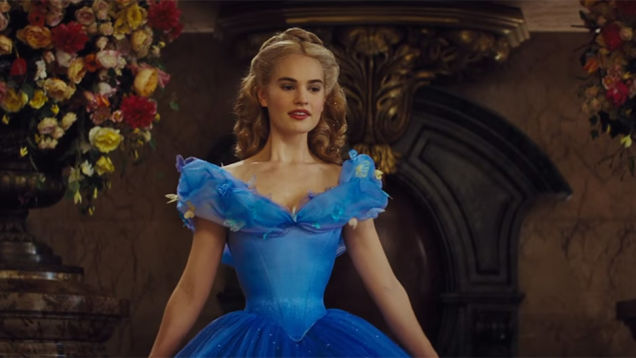
Lily James went on a partial liquid diet to accommodate that stupid corset. In a recent interview with E!, James explained how she made it work on set by foregoing solid food.

ywtddo8tto97s5lkrbvw

No solid food. That’s right children, our female protagonist did not transform into her best, most beautiful, desired self through her Fairy Godmother’s magic but by not eating. Yes, little girls, you too can starve and make all of your dreams come true!

Reel Girl rates “Cinderella” without even seeing the movie ***SSS***