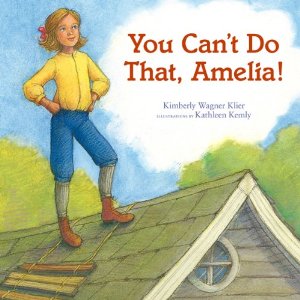
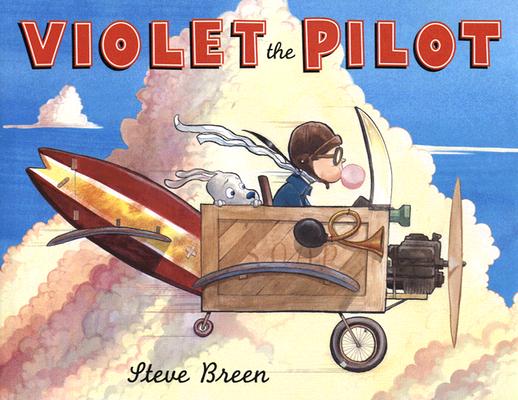
After Thanksgiving, my two older daughters came home from their cousin’s house with at least three Goddess Girls books. I haven’t read them yet, but I’ve seen the covers before, in stores, and I hate the look of the goddesses.
I know you shouldn’t judge a book by its cover, and that I often do, but I don’t know how to get past the giant heads, doe eyes, and tiny bodies. Even when Artemis is killing a serpent, she looks like she’s in an Estee Lauder ad. Obviously, goddesses are supposed to be beautiful, but this limited, distorted 2013 depiction of what is attractive makes my stomach turn.
The books could still be good, I suppose. One Barbie movie is on Reel Girl’s recs: Fairytopia Mermaidia. It’s a great adventure where two brave girls rescue a prince and the entire ocean. The just released “Frozen,” which is also great, has some pretty terrifying skinny, big-headed protagonists. It drives me crazy, because the message here is, and I got this same message when I was a kid: If you want exciting adventures to happen to you, then you must be “beautiful.” Otherwise, you’re invisible. The end goal here is not to be pretty, it is to exist.
But maybe you’ve read Goddess Girls and can tell me how great they are.
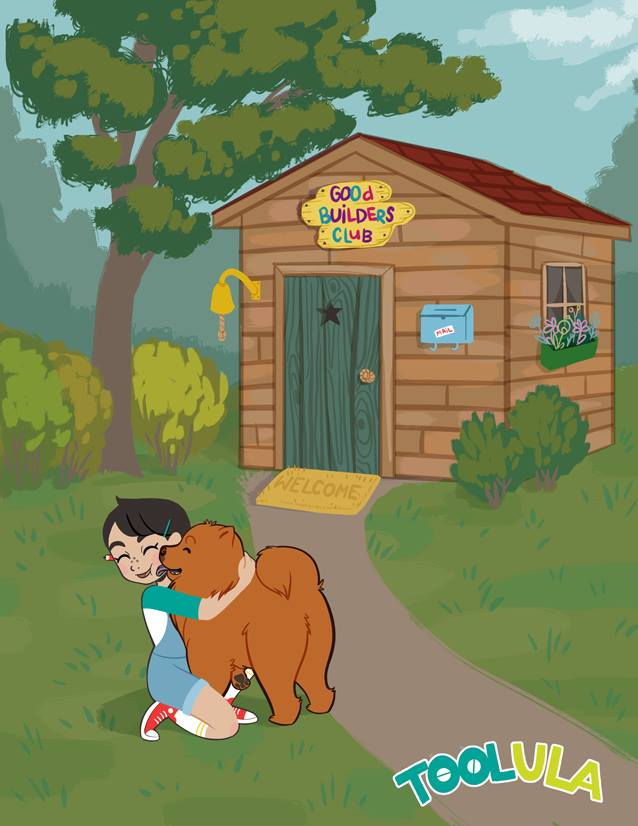
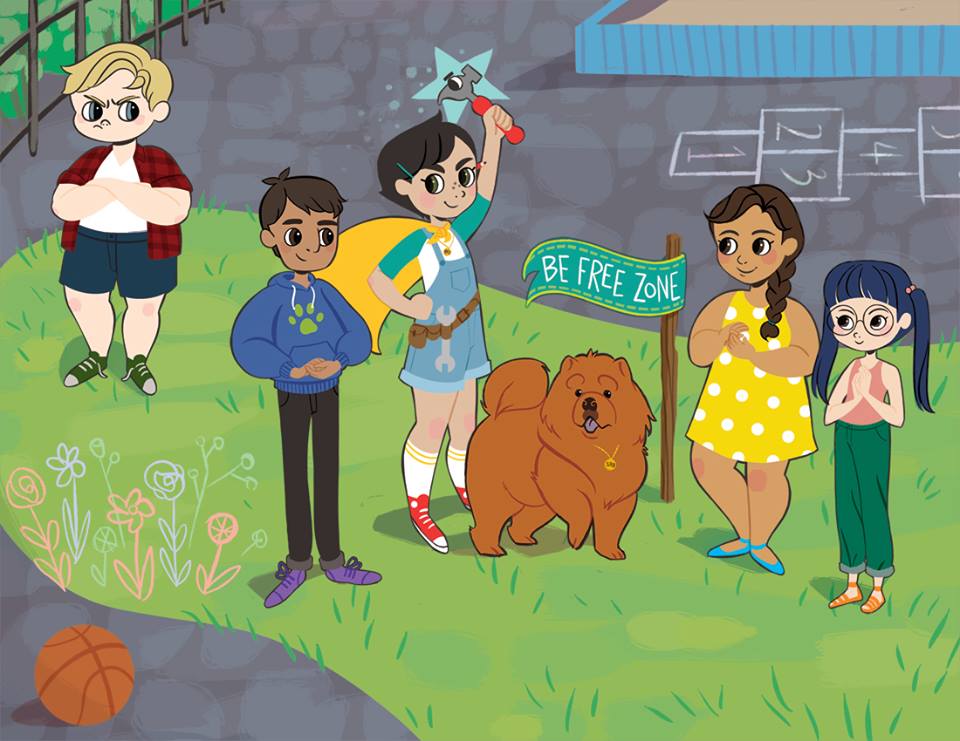
Have you heard of Super TooLula created by Michele Sinisgalli-Yulo of Princess Free Zone? Before you complain, Sinisgalli-Yulo doesn’t hate princesses. She wants to provide kids with another option. Sinisgalli-Yulo has written a book called Super TooLula and created a treatment she is shopping around to networks This show looks so cool and creative. There’s nothing quite like it on TV, and I can’t wait for my kids to watch it.
Here’s Lula with her dog, Chewie.
Lula is a female version of Handy Manny or Bob the Builder, but with the added underlying social components of bully prevention with a focus
on undoing gender stereotypes that are often the root cause of bullying by children. Providing children with an understanding of empathy and compassion is key to preventing future occurrences of bullying. The show recognizes the importance of teaching kids about the emotions underlying bullying incidents—from the perspective of the victim and the bully. It also encourages them to get beyond being a bystander by either speaking to an adult or standing up for others.
Here’s a summary of one episode:
While on a trip to Mexico, where the whole family is helping a relative irrigate their farm. Lula and her family invent a new way to divert water and use it to water plants. Lula and her Dad help with planning, measuring and digging. Soon they befriend a group of local kids. The kids reveal a big problem. Super TooLula is needed to face a Giant bully that had been terrorizing the local kids for years. It turns out the Bully was a long tormented little brother of an even bigger Bully. Super TooLula teaches both bullies how to help others. Soon, the bully brothers become local heroes to all that had fear them when they help build the last section of the new irrigation system.
Lula is helped along by some tools:
Harry the Hammer
Harry is the toughest of all the tools. He is the team leader and director. He knows that sometimes you just have to be tough. He may come off like a drill sergeant, but he always looks for action with a smile!
Sammy the Saw
Sammy (short for Samantha) knows that sometimes you just have to remove or separate some things to make it better. So she whirls like a tornado to shape parts and pieces out of wood, plastic, soft metal or to cut through a tough problem!
Dusty the Drill
Dusty is tough and clever. When
a problem stymies others, he knows how
to break through! Dusty very persistent and always stands up for the underdog. He stutters when overly excited.
Carla Compass
Carla is able to locate lost objects, and if you’re lost, she can point you in the right direction. She is very maternal. She’s scared of other magnets and afraid of heights.
Lucy Level
Lucy is the one to always make sure everyone is balanced and level headed. She is the nurturer of the team. Calms down the others.
Maddy Measuring Tape
Maddy is always thinking ahead. She is all about details, measurements and plans. She is the practical one that makes sure parts will fit together or through tight spaces. Maddy’s friends think she needs to learn how to have more fun!
Gabi Goggles
Gabi is able to see right into the heart of a bully. She is able to see in the past and pinpoint the reasons why they are unhappy and end up hurting others. She is a precautious soul. And she is always the one to remind us all about being safe!
Ricky the Wrench
Ricky is very strong and not afraid of hard work. He knows hard work gets things done. He can open and unlock stuck objects that others can’t. He hates rust
more than anything.
The Talking Nail Heads
Do not actually talk. They are vocal instruments
who express themselves in emotion-filled, wordless music. Some do the bass line, some do mouth drum sounds, but they all can really jam or lay down a phat beat to sing over!
There are humans in the stories as well.
Naomi is Lula’s eight-year-old Japanese-American cousin. Naomi is a genius with arts and crafts like origami and revels in teaching others what she knows. Lula and Naomi love each other and spend a lot of time together along with their families. Naomi can often be found humming or singing impromptu songs and playing her favorite juice harp (which she also plays in their band). She always tries to get Lula to eat odd and spicy things.
Ten-year-old Wesley is the school bully in Lula’s class. He is also TooLula’s ultimate nemesis. It is his mission to turn good kids mean by bribing them with things he knows they like, but he has a difficult time when Lula and her friends step in. Deep down, Wesley really likes Lula and just wants her attention, but he doesn’t know how to show his true feelings and is afraid Lula and others might laugh at him. Oh Wesley!?
One day when my daughter was in third grade, she had to explain to a classmate what sexism was. Four kids — two boys and two girls — had been put in a reading group together, given a basket full of books and asked to talk about them and decide together which one they wanted to read and discuss.
As they went through their choices, the boy picked up a book whose cover showed an illustration of a woman in a hoop skirt. He quickly tossed it aside. My daughter suggested that it might be good, and asked if he’d already read it, because she would like to. He said no, it was a girl book and he wouldn’t read it. Her response was pretty cut and dry: “That’s a sexist thing to say,” she explained. He was a friend of hers and an intelligent kid. He paused long enough for her to realize he wasn’t sure what she meant.
“Do you know how many books with boys in them I read?” she said. “You should read girl books, too. Not reading them just because they’re about girls is sexist.”
Frankly, today, I’m pretty certain that what she, a 9-year old, told her classmate was more than most adults can muster.
Do you know what percentage of children’s books feature boys? Twice as many as those that feature girl protagonists. In the most comprehensive study of children’s literature during a period of 100 years, researchers from the University of Florida found that:
57% of children’s books published each year have male protagonists, versus 31% female.
As with television and film, books with animated characters are a particularly subtle and insidious way to marginalize based on sex, gender and race. In popular children’s books featuring animated animals, 100% of them have male characters, but only 33% have female characters.
The average number of books featuring male characters in the title of the book is 36.5% versus 17.5% for female characters…
Researchers of the study above concluded, “The gender inequalities we found may be particularly powerful because they are reinforced by patterns of male-dominated characters in many other aspects of children’s media, including cartoons, G-rated films, video games and even coloring books.”
Yesterday, a teacher at my daughter’s preschool told me that she saw two boys and a girl spinning the knobs of a play oven. Boy #1 says: “I’m a pilot! I’m flying a plane.’ Boy #2 says: “Me too!” The girl is quiet, so the teacher says to her: “What about you, are you a pilot?” The 3 year old girl replies: “I can’t be a pilot. I’m a pilot’s wife.”
So what do you think has happened in this little girl’s short life to make her believe it’s more likely that she would be a pilot’s wife than a pilot?
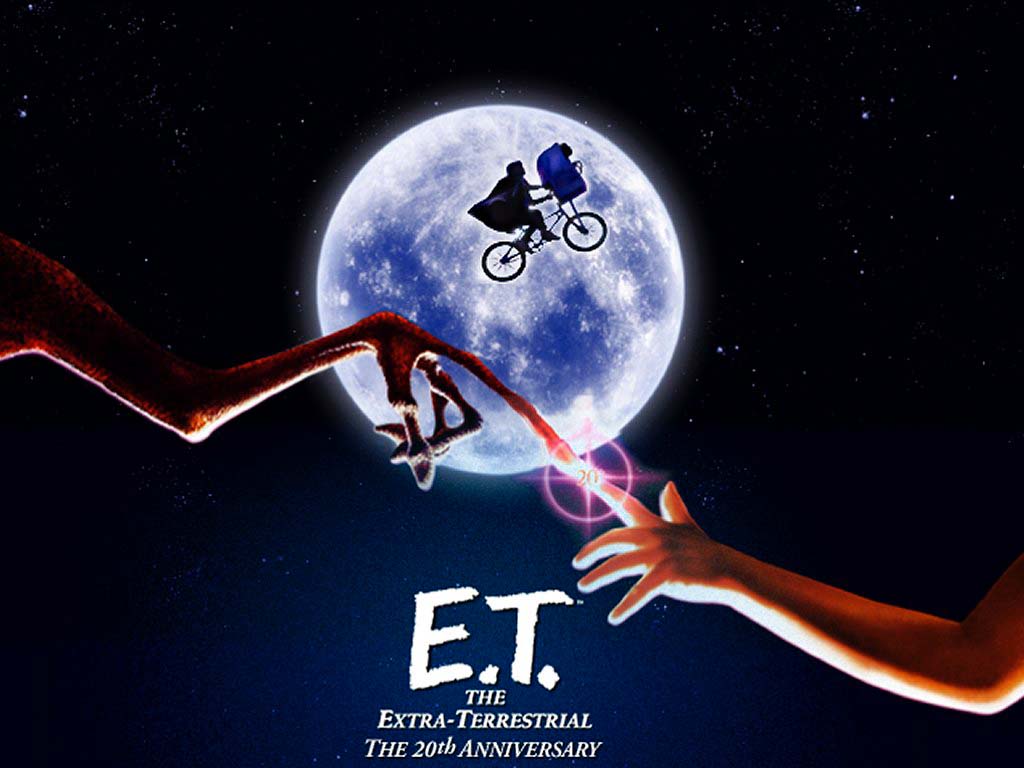
Could it be that in her world, those are the gender roles she sees? While books, movies, and TV shows for children are full of images of boys riding magical creatures into the sky– from “ET” to “How to Train Your Dragon” to Harry Potter — girls are stuck in the passenger seat if they get to soar at all. Here are three images repeated endlessly in the media.
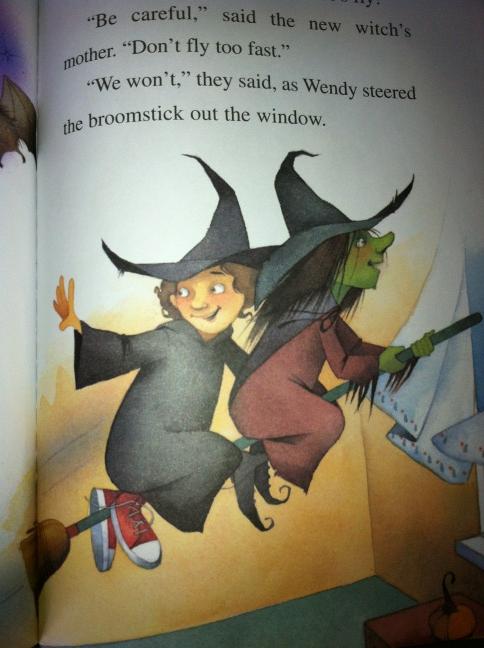
I’m always on the look out for images in children’s media of girls flying, and they are few and far between. If I seek them out, I can find them, but these pictures rarely cross my children’s path, not in movies, or posters for those movies, or on most of the book covers they come across when we’re shopping at a local store. Here’s a picture from The Witch Who Was Afraid of Witches that I photographed a while ago, because it’s so rare.
Today, on Facebook feed I saw that Toward the Stars is celebrating Female Flying Daredevils week, posting “We wave enthusiastically to all our girls and boys that aspire to travel above the clouds.”
We also have Angela’s Airplane which my 4 year old daughter loves.
You may not have seen these books around. They may not have been made into major motion pictures for kids or toys or LEGO sets, but, please click on the links. Stock your libraries. Read these books to your kids, and that includes your sons. All children need to see far more female daredevils.
Keep watching Toward the Stars all week for more recommendations of fearless females flying the skies.
Update: So right after I post this, I see on Facebook info about the documentary:”We Served Too: The Story of Women Air Force Pilots of World War II.” You’ve got to watch this trailer.
These women flew over 60 million miles within a 2 year period…However, after a nasty and aggressive campaign by male pilots who wanted the WASPs jobs, they were the only wartime unit that was denied military status by congress…For many years the WASPs kept their achievements quiet. Their service in World War II would only be known by a few. They are not mentioned in our history books, nor is their story taught in schools.Their accomplishments of being the first women to fly in the military would even be forgotten.
One pilot says, “Such a shame that when we disbanded, they took all of our records and they sealed them, and they were stamped either classified or secret and filed away in the government archives.”
Sealed records! I am so mad about this. Again, women’s stories are repressed and hidden, affecting a new generation of kids. I haven’t seen the film yet, so don’t know if it’s good for young kids. Wouldn’t it be great to make a children’s version? A book to go along with it? A computer game? App? A LEGO set? What do you think the chances are we’ll see any of that? They’re low, because in 2013, we still live in a world where women’s stories go missing.
In music, we love the idea of the screwed-up, shooting-up. fucked-up artist. The one bleeding in the garret having cut his own ear off. Jay-Z is a new kind of 21st-century artist where the canvas is not just the 12 notes, the wicked beats, and a rhyming dictionary in his head. It’s commerce, it’s politics, the fabric of the real as well as the imagined life.
Stephen Mitchell in Can Love Last, the Fate of Romance Over Time
It is the hallmark of the shift in basic psychoanalytic sensibility that the prototype of mental health for many contemporary psychoanalyitc authors is not the scientist but the artist. A continual objective take on reality is regarded as neither possible nor valuable in contrast to the ability to develop and move in and out of different perspectives of reality.
New York Times, October:
Public narratives about a career make a difference. The most common career aspiration named on Girls Who Code applications is forensic science. Like Allen, few if any of the girls have ever met anyone in that field, but they’ve all watched “CSI,” “Bones” or some other show in which a cool chick with great hair in a lab coat gets to use her scientific know-how to solve a crime. This so-called “CSI” effect has been credited for helping turn forensic science from a primarily male occupation into a primarily female one.
Jezebel reacting to New York Times piece:
The New York Times today would like to suggest that storytelling is powerful, that, in the whole art/life dynamic, it’s life that imitates art, not the other way around, at least not when it comes to kids imagining viable career paths for themselves.
Whoopi Goldberg:
Well, when I was nine years old Star Trek came on. I looked at it and I went screaming through the house, ‘Come here, mum, everybody, come quick, come quick, there’s a black lady on television and she ain’t no maid!’ I knew right then and there I could be anything I wanted to be.
In the fantasy world, anything is possible, so why do little kids see so few female heroes and female protagonists on TV and in the movies? While boy “buddy stories” are everywhere you look, why is it so hard to see two females working together to save the world? Why are females, half of the kid population, presented as a minority in fantasy world? Why are TV shows, movies, and books about boys “for everyone” while shows and movies about girls “just for girls?” When we pass on stories to our kids, what are we teaching them about gender, about who they are right now and who they will become?
One more quote for you from neuroscientist, Lise Eliot:
“Babies are born ready to absorb the sounds, grammar, and intonation of any language, but then the brain wires it up only to perceive and produce a specific language. After puberty, its possible to learn another language but far more difficult. I think of gender differences similarly. The ones that exist become amplified by the two different cultures that boys and girls are immersed in from birth. This contributes to the way their emotional and cognitive circuits get wired.”
Eliot believes: “Simply put, your brain is what you do with it.”So let’s all use our brains to imagine gender equality in the fantasy world, take actions to manifest that vision, and see what happens next. I bet it’ll be amazing.
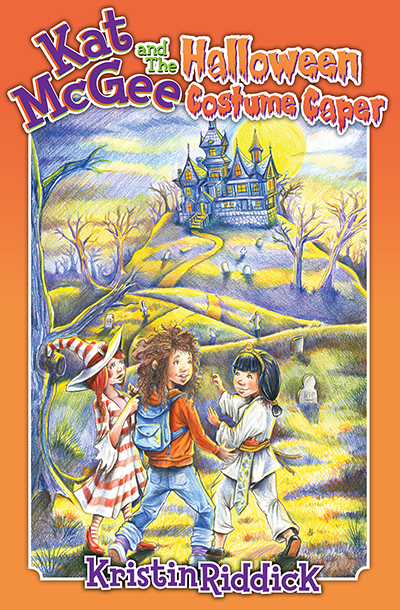
My kids and I just finished Kat McGee and the Halloween Costume Caper, the story of a courageous girl who teams up with Jujitsu Princess and Candy Cane Witch to save Halloween from the evil Snaggletooth.
There are some very cool things about this book:
(1) Three girls share an adventure. It always drives me crazy when they say girls like stories about “friendship” but boys like stories about “adventure.” A ridiculous premise in the first place, but what are “buddy movies” for goodness sake? Adventure stories are, often, about friendship, yet in children’s media, we don’t get to see girls taking big risks together as much as we should. In Halloween Costume Caper, we witness a trifecta of heroines, “Team Kat” facing their fears and working together to save the world.
(2) All kinds of other cool, female characters show up. Not only do we see the three awesome girls just mentioned, we meet so many more. Gram is magical, powerful, and wise. Dolce is a “Maker of Magic and Mischief” who helps Kat on her quest. Costumes who makes cameos in the story include Merida, Goldilocks, Bride of Frankenweenie, Tinkerbell, Wonder Woman, Red Riding Hood, American Girl Dolls, and more. You can’t read this story an miss that there are so many things that girls can be.
(3) All about Halloween. From Dr. Seuss’s Grinch Who Stole Christmas to “Yes, Virginia, there really is a Santa Claus,” there are lots of narratives about saving Christmas, but I’ve never read one about Halloween, and we desperate for some female-centered Halloween narratives. I just posted a list of girl-centered monster movies for little kid sto watch this Halloween and you know how many films made that list? Only 9. Last Halloween, no less than 3 movies– Frankenweenie, Hotel Transylvania, and ParaNorman– all featured male protagonists. Here’s to hoping Halloween Costume Caper becomes a movie.
(4) Kat McGee makes her own costumes. Not only is Kat brave, she is creative. Every year she wins the contest for the best costume. She takes pride in her work, and if your kids read this book, it’s a good bet you can talk them into making their own costume, just like Kat.
(5) Published by In This Together Media.Though I interviewed the new publishing company, In This Together Media, a few months ago, Halloween Costume Caper is the first book the company put out that I’ve read. ITTM is dedicated to producing “better quality books for and about girls– stories where the main character’s whole reason for being isn’t to be kissed, or the other extreme, to be some kind of superchick. We wanted to broaden the narrative possibilities, and that comes from more layered, nuanced characters.”
After reading Halloween Costume Caper, I’m excited to get more of ITTM books for my kids. You can learn more about ITTM and order books here.
Just rushed to the book store to get Rick Riordan’s House of Hades, which hit stores Oct. 8. Now, I have three hours of guaranteed, absolute quiet, at least from daughter #1. YAY. Thank you, Rick Riordan. Now, about those covers…
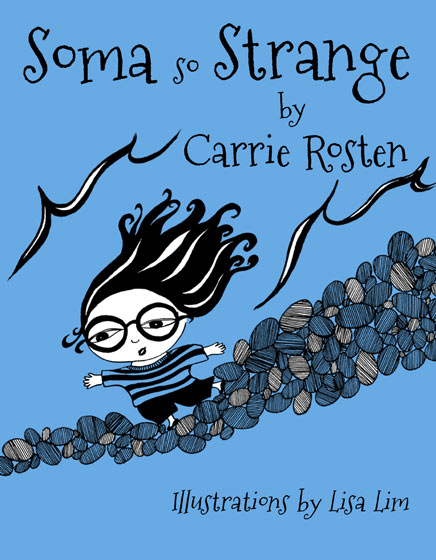
With the fabulous book, Soma So Strange, not only did I read a cool story starring a fascinating girl, but I finally got past my ebook block. YAY. I’ve been trying to liberate myself for years, and Soma is only an ebook, so if I wanted to read it, I had no choice but to break free of paper.
Soma lives is a dull, small place, “on a map, it’s the size of a sixth of a pea” where “all the villagers obey ancient, old rules/ Like walking on tip toes and eating fish and gruel.” Soma loves sushi, “she can’t stand fish and gruel!” For this, and many other “strange” attributes, Soma is mocked. “She can’t help but make noise at her school. Asking how and why are quite natural for her. Tip toe around? Stompin’s what she prefers.”
Not only do the townspeople, the Meanies, treat Soma terribly, but her own mother “can’t stand her.” I love this aspect of Soma’s story, because, though lots of children’s narratives refer to mean kids, fewer refer to the feeling of being a stranger in your own family which can be more common than kidlit lets on.
Soma’s physical differences match her mental ones: “Her glasses are funny, she won’t brush her hair/ When she walks into town, you can’t help but stare/ Soma’s so messy, so odd-shaped, so strange, the Meanies say Soma is simply deranged.”
Soma goes on to meet a talking cat who gives her a magical potion allowing her to turn the Meanines into pies. How cool is that?
The lyrics in Soma are beautiful and well, strange. Reading this story, I felt like I’d found a feminist Dr. Seuss or Shel Silverstein. I love look of Soma, too, with her billowy dark hair, striped shirt, and big glasses. The black and white illustrations pop. Not to mention, reading an ebook is really fun. The pages turn beautifully. My kids loved the story and reading it on my ipad too. Here’s to hoping author, Carrie Rosten, writes many more.
Click here to buy Soma So Strange and use the code SomaFam to get a dollar off.
Read more about Soma So Strange and author Carrie Rosten here.
There is so much to love about this interview with Elizabeth Gilbert in Slate, you’ve got to read the whole thing. Gilbert explains that she feels, in her life, she was saved by her work. Not once, but many times. She didn’t see that story in literature so she decided to write it.
I really did set out to try to write a 19th century novel with a more complete female experience. The only two endings that women ever got in those books—which are stupendous books with fantastic characters and extraordinary women—but at the end you either married Mr. Darcy or you were under the wheels of a train. I really wanted to write a book about a woman whose life is saved by her work, which I feel is not a story we see often, but as somebody whose life has been saved many, many times by my own work, it’s a really important story to me.
Do you relate? I sure do.
Gilbert talks about what happened to her when she wrote a man’s story and when she wrote a woman’s story.
It has not escaped my attention that when I wrote about a man’s emotional journey they gave me the National Book Award nomination, but when I wrote about a woman’s emotional journey, they shunted me into the “chick lit” dungeon.
And here’s some inspiring advice.
If we’ve somehow internalized this idea that it’s disgraceful or lacking in seriousness to discuss our feelings, our dreams, the ways in which we want to become better human beings—either that somehow those are trivial topics, and of course they are not at all; they’re the big topics, the only topics—if we’ve somehow decided that that’s going to subject us to ridicule or dismissal then that’s kind of our own fault, I think. Just refuse it! I don’t know any other way. Just refuse it, and push through, and eventually, everybody else will catch up…I think the only thing you can do is to battle with your acts. Your acts are your axe. You put your work forward and you don’t back down. I think that’s all you can do. You can get mad, but don’t live there, because that becomes its own paralysis. Just get to work!
Elizabeth Gilbert’s new book is called The Signature of All Things. And now, I’m getting off line to finish mine.
I just posted on the excellent Graceling trilogy and added that I would not let my 10 year old read it because of the rape and incest. I suggested 15 might be a good age. Then I went back and edited, remembering the rape and incest, while central to Bitterblue, is only implied near the end of Graceling. It’s not in Fire. So then, I thought maybe 12 years old for the first two and 15 for Bitterblue? And then, it occurred to me that rape and incest happens to kids all the time. In that case, reading about it in this context would be helpful. How ironic to censor something in a book that describes what’s happening in a kid’s real life. So, then I concluded, it’s such an individual choice. With sex, I didn’t want my kids reading about it or seeing movies that referenced it, before I had “the talk.” I wanted them to learn about sex from me first, rather than from a kid at school or from a movie. I had the conversation with my daughter last Spring, when she was nine. It went really well, and since, she’s come to me with questions, and she seems comfortable talking about it. But rape and incest, I’d like to protect her from the knowledge of a little longer.
I did a Google search, remembering something I’d read on dark YA lit a while ago that was good. Here’s a quote from the post and the link.
The underlying assumptions behind Gurdon’s piece seem to be rooted in the idea that children read books with heavy content and ‘go bad,’ when in fact the opposite is true. Some children lead dark lives and they read books with intense themes to find protagonists they identify with in an often hostile world. Some young adults read about rape and bullying and violence, eating disorders and self harm and mental illness, because these are things they experience.
Alas, the belief that bad things do not happen to children and young adults is not limited to naïve Wall Street Journal columnists, and it does far more damage than mere dubiously-sourced articles that attract a storm of commentary. The belief that childhood is a happy place, where bad things don’t happen, where you don’t need rose-tinted spectacles because everything is already rose-tinted, has direct and harmful impacts on children and young adults in danger.
I don’t think my child would “go bad” from reading about this stuff. Nor do I think if a child is into these books, that means she’s leading a “dark” life. I think, and I could be wrong, if my ten year old daughter picked up Bitterblue, she’d read it cover to cover.
Also, for my kids, I do believe childhood is a pretty happy place for them and should be protected as such. Obviously, that doesn’t mean Disneyworld to me. I think Disneyworld is tremendously warped. But it does mean I want my kids to experience the belief in safety and also in magic. I believe that covering up “reality” to protect a child’s developing imagination is an important part of parenting and also, of being a kid. If your child has safe boundaries, she feels brave enough to take healthy risks. Psychologist Stephen Mitchell explains this well in his excellent book, Can Love Last: the Fate of Romance Over Time:
One of the things good parents provide for their children is a partially illusory, elaborately constructed atmosphere of safety, to allow for the establishment of “secure attachment.” Good-enough parents, to use D. W. Winnicott’s term, do not talk with young children about their own terrors, worries, and doubts. They construct a sense of buffered permanence, in which the child can discover and explore without any impinging vigilance, her own mind, her creativity, her joy in living. The terrible destructiveness of child abuse lies not just in trauma of what happens but also the tragic loss of what is not provided– protected space for psychological growth.
It is crucial that the child does not become aware of how labor intensive that protracted space is, of the enormous amount of parental activity going on behind the scenes.
What are your thoughts on all this?
Update: Heather comments that her 8 year old daughter learned about rape and incest when a classmate brought porn to school.
Based on the brief snippets of content she saw, I had to not only have “the talk”, but also explain a LOT of things I never thought I’d have to address at that age. Because of this, conversely, she is now very educated on both sex, misogyny, and rape/assault/child abuse. Therefore, I think these books that are written about very serious issues — but in the comprehension style of a young person who can find the characters identifiable — is a great source of information…I have not read these books to endorse them, but now I am interested and will be checking them out at the library. Thank you.
Heather’s comment make me think that if your child knows about rape or incest, these books are appropriate for her or him. (I really hope parents of sons will get their kids this trilogy.)