Today, I saw ‘Guardians of the Galaxy’ with my daughter and niece. I enjoyed the movie (especially the 80s music and the jokes) as did they (mostly Groot, the resilient, dancing tree,) Gamora, played by Zoe Saldana, is a kick-ass smart assassin who saves the universe with a team of misfits, but I had a minor (hint, hint) issue with her role. Tell me, what do you notice about the gender ratio in this poster for the “GOTG?”
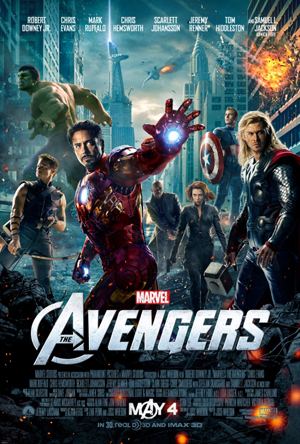
Notice anything in common with the gender ratio of “The Avengers”?
What about this recent Justice League comic cover?
Lest you think this 1:4/5/6 female/ male gender ratio is exclusive to superheroes, here’s my post on the Minority Feisty:
The curse of the Minority Feisty in kids’ movies
Posted on
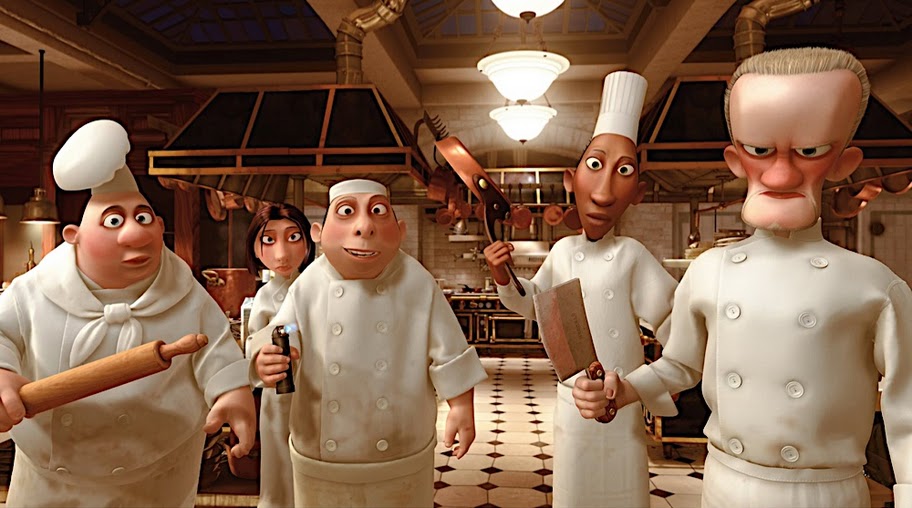
If you see an animated film today, it’s likely to include a token strong female character or two who reviewers will call “feisty.” In “How to Train Your Dragon” Astrid; in “Toy Story,” Jessie; in “Ratatouille,” Colette. She’s supposed to make us feel like the movie is contemporary and feminist, unlike those sexist films of yesteryear.
Just one recent example: PeopleMagazine describes Anne Hathaway’s role as Jewel in “Rio 2:”
There have been other big changes as well for the actress who reprises her role as the feisty macaw Jewel in the new animated film ‘Rio 2.’
The problem is that because Pixar or Disney or Marvel has so magnanimously thrown in this “feisty” female (who may even have some commentary about sexism or male domination) we’re no longer supposed to care that almost all of the other characters in the film are male, including the star who the movie is often titled for and usually his best buddy as well. The crowd scenes in the film are also made up of mostly males.
“Feisty” isn’t a word that describes someone with real power, but someone who plays at being powerful. Would you ever call Superman “feisty?” How would he feel if you did?
The Smurfette Principle has evolved into the Minority Feisty. Now instead of a “token” female in a children’s movie, we may see a few females sprinkled around, a “minority” of them. Parents, the next time you watch a children’s movie, try not to let the Minority Feisty population distract you from the limitations female characters are almost always forced into. Ask yourself: Is the female the protagonist in this film? Does the narrative revolve around her quest? Or is she there to (play a crucial role in) helping the male star achieve his goal/ dream?
Imagine if the gender ratio presented in movies for kids was reflected in their world. Girls would be a minority instead of one half of the kid population. When females go missing from children’s media, another generation gets trained to expect and accept a world where girls go missing. It seems normal to them that there has never been a female president of their country, that there is just one great female chef among males, or perhaps, none at all as shown in this Time Magazine article on the greatest chefs, titled “Gods of Food.”
In the imaginary world, a world created for kids, anything is possible, so why is it so consistently sexist?
I haven’t seen the movie “Gone Girl,” and neither have you as it’s hitting theaters on October 3, though I did read the book this summer. I was horrified by the misogyny woven through the narrative. Perhaps I was so surprised by the sexism because the only controversy I’d heard of before I read the book was that people didn’t like the ending. I did like the ending. I’ll tell you why, and also go into the plot points of “Gone Girl” but before I do, consider yourself warned: spoilers will be in this post. If you’re going to read Gone Girl— and it is, like so many sexist books I critique, well written and well plotted, I’m talking about technique here– you may not want to proceed much further, except, perhaps, to take a look at this cover of Entertainment Weekly. There you see Amy, the protagonist of “Gone Girl,” shown as a “beautiful” female corpse, a trope Anita Sarkeesian dissects in her latest video: Women as Background Decoration: Part 2 – Tropes vs Women in Video Games. This image of the dead, sexualized female body is, quite literally, everywhere in popular culture. After you check out this cover, I want you to know just one more thing.
For heaven’s sake, what kind of question is that? Would you want to be friends with Humbert Humbert? Would you want to be friends with Mickey Sabbath? Saleem Sinai? Hamlet? Krapp? Oedipus? Oscar Wao? Antigone? Raskolnikov? Any of the characters in The Corrections? Any of the characters in Infinite Jest? Any of the characters in anything Pynchon has ever written? Or Martin Amis? Or Orhan Pamuk? Or Alice Munro, for that matter? If you’re reading to find friends, you’re in deep trouble. We read to find life, in all its possibilities. The relevant question isn’t “is this a potential friend for me?” but “is this character alive?”
Get that, people? Is this character alive?
OK, moving on to spoilers, if you don’t want them, it’s time to leave.
It turns out that the protagonist of Gone Girl, Amy Dunne (played in the movie by Rosemund Pike) fakes her own rape, pregnancy, stalking, beatings, and murder. That’s right, Amy goes through a veritable list of practically every act/ crime that a wicked and conniving (are men ever conniving?) woman can manipulate. While Amy fakes her victimhood, her husband, Nick, played in the movie by Ben Affleck, is falsely accused of killing his pregnant wife. Why, you ask, is Amy motivated to be so awful? She’s a woman scorned, of course, who discovered her husband’s affair with his student.
Here’s one passage describing Amy’s fakery:
I took a wine bottle, and I abused myself with it every day, so the inside of my vagina looked…right. Right for a rape victim. Then today I let him have sex with me so I had his semen…
That particular scene, by the way, refers to another man Amy is setting up, not her husband.
Here’s the problem, and once again, it’s not that Amy is a villain or unlikeable.
But Gone Girl is fiction not fact, you say. Why am I listing stats here? Am I trying, once again, to censor artists with my PC beliefs? Surely Amy’s story can fall into the 1- 2% of women who falsely accuse men of rape. This is a free country.
This is also a country where Washington Post columnist George Will, a man known as the “most powerful journalist in America” recently wrote that being a rape survivor is “a coveted status.” When others challenged Will that rape is not, in fact, something women want, the conservative group, Women’s Independent Forum called a conference “Rape Culture and Sexual Assault,” putting out this press release:
The White House has embraced the statistic that 1 in 5 women is sexually assaulted while in college…The White House has released its “first ever report” on the issue and are using it to push their policy agenda…But many question the validity of the White House’s one-in-five statistic, even as those who challenge this figure are silenced as being uncaring about women…The IWF takes any accusation of sexual assault very seriously. But we are concerned that there is a potentially harmful hysteria developing about this issue. Where does this come from? Where is it going? And who will be harmed?
Lucky for us, Gone Girl answers every single one of the IWF’s (hysterical) questions: Where does it come from? In Gone Girl, overachieving Harvard grad, Amy Dunne, was used but never truly loved by her egotistical writer parents. They penned a best-selling YA series based on their daughter. Where is it going? Female anger and, yes, hysteria, not to mention jealousy, vindictiveness, and aging, leads to violence. Who will be harmed? Nick, of course, innocent men in America who are falsely accused, lied to, manipulated, and victimized by the scorned, bitter women in their lives.
Yes, Of course Gillian Flynn can write about whatever she pleases, but I find it sadly ironic that when I argue for more diverse stories to permeate our popular culture, a culture where people believe that 50% of rape accusations are false, a culture where stories of rape remain secret to the point that the media hides names and identities of survivors, a media dominated by the same old trope ridden narrative, that I am the one who’s accused of stifling creativity. Gone Girl is a best-selling book about to be blockbuster movie that will help to perpetuate the myth/ story that rape and violence against women is not epidemic but mostly exists in our imagination.
By the way, the end of the book, you know why people don’t like it? Because Amy ends up OK. She and Nick get back together, they’re going to have a baby. (Pregnant for real this time, she stole his sperm.) Apparently, the no punishment-for-Amy-finale is so unpopular that the director changed the ending to make it more of crowdpleaser.
One in four women (25%) has experienced domestic violence in her lifetime.
85% of domestic violence victims are women.
Nearly three out of four (74%) of Americans personally know someone who is or has been a victim of domestic violence.
Domestic violence is one of the most chronically under reported crimes.
Only approximately one-quarter of all physical assaults, one-fifth of all rapes, and one-half of all stalkings perpetuated against females by intimate partners are reported to the police.
On average, more than three women are murdered by their intimate partners in this country every day.
Reel Girl rates Gone Girl ***SSS*** for gender stereotyping
After I read Gone Girl, I searched the internet about the book’s misogyny, here are some interesting posts
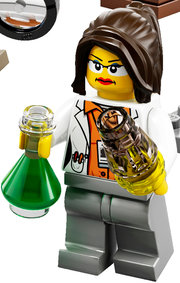
Within days of its appearance early this month, the Research Institute — a paleontologist, an astronomer and a chemist — sold out on Lego’s website and will not be available at major retailers, including Target and Walmart.
Toys “R” Us did carry the line, but according to associates reached by telephone at two of its New York stores, it sold out at those locations as well.
A Toys “R” Us spokeswoman, Kathleen Waugh, said in an email that it would be available in about a week at the company’s Times Square and F.A.O. Schwarz stores.
Lego said the set was manufactured as a limited edition, meaning it was not mass-produced. The true enthusiast can still buy the Research Institute at Amazon.com, however, but for about three times its $19.99 retail price.
So instead of launching a major marketing campaign for the scientists, the way they did for Friends, for example, showing non-stop ads on TV and creating mini-movies featuring the figs all over the internet, these scientists will be hidden from kidworld. The figs won’t be seen on T-shirts, shoes sold at Stride Rite, lunchboxes or cereal boxes. There is no upcoming blockbuster movie where a chemist, astronomer, and paleontologist are a team of brilliant, brave heroes fighting evil. No, instead, LEGO’s female scientists are destined to a similar fate as female superheroes, possible to find if parents scour the internet, but missing from your children’s daily life, not present in stores that sell kids’ clothing, books, and toys, a venue where our children will mostly likely have to settle for slave Leia
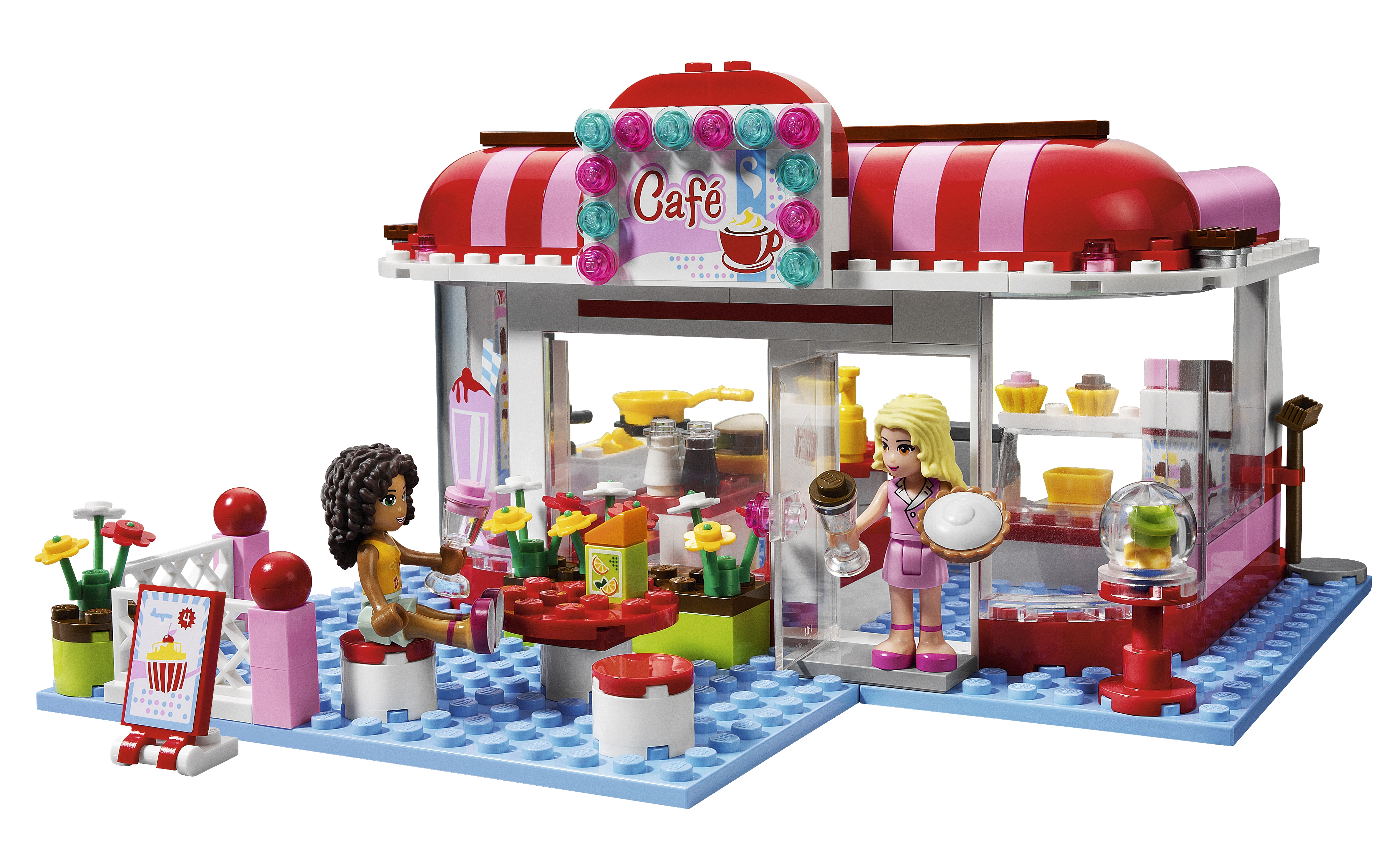
or girls who hang out at the cafe or beauty salon.
Almost since I started this blog, I’ve been writing about the ridiculously sexist stereotypes marketed to kids by LEGO. The problem for me is I see so much potential in this toy. It’s a great toy, but it’s so limited in what it creates. I’ve blogged about LEGO’s great gender inclusive ad from the early 80s,
I remember when we broke up the first time
Saying, “This is it, I’ve had enough,” ’cause like
We hadn’t seen each other in a month
When you said you needed space. (What?)
Then you come around again and say
“Baby, I miss you and I swear I’m gonna change, trust me.”
Remember how that lasted for a day?
I say, “I hate you,” we break up, you call me, “I love you.”Ooh, we called it off again last night
But ooh, this time I’m telling you, I’m telling youWe are never ever ever getting back together,
We are never ever ever getting back together,
You go talk to your friends, talk to my friends, talk to me
But we are never ever ever ever getting back togetherLike, ever…I’m really gonna miss you picking fights
And me falling for it screaming that I’m right
And you would hide away and find your peace of mind
With some indie record that’s much cooler than mineOoh, you called me up again tonight
But ooh, this time I’m telling you, I’m telling youWe are never, ever, ever getting back together
We are never, ever, ever getting back together
You go talk to your friends, talk to my friends, talk to me (talk to me)
But we are never ever ever ever getting back togetherOoh, yeah, ooh yeah, ooh yeah
Oh oh ohI used to think that we were forever ever
And I used to say, “Never say never…”
Uggg… so he calls me up and he’s like, “I still love you,”
And I’m like… “I just… I mean this is exhausting, you know, like,
We are never getting back together. Like, ever”No!We are never ever ever getting back together
We are never ever ever getting back together
You go talk to your friends, talk to my friends, talk to me
But we are never ever ever ever getting back togetherWe, ooh, getting back together, ohhh,
We, ooh, getting back togetherYou go talk to your friends, talk to my friends, talk to me (talk to me)
But we are never ever ever ever getting back together
I’m going on vacation with my family. You may have noticed I haven’t been blogging that much lately because I’ve been using all my free time to try and get ready to go. My goal is to stay off the internet while I’m gone and just hang with my husband and kids, but we’ll see how that goes. Have a great summer. See you in August.
“The court, I fear, has ventured into a minefield.”
Do you agree with Justice Ruth Bader Ginsburg?
Do something. Don’t stand by and watch women continue to be denied human rights. Tell Washington that the U.S. government is discriminating against women and that is not acceptable in America. Sign the petition from Planned Parenthood and please give money. If we all do something and take action, we can create change.
The letter from Planned Parenthood is pasted here, follow the links at the bottom to sign it and to give money.
Subject: JOIN THE DISSENT
To The Supreme Court:
To the five members of the Supreme Court who have given bosses — based on their own personal beliefs — the power to deny women coverage for birth control:
I dissent. Your ruling is an insult to the generations of women who have fought for control over their own bodies and their own futures. It is a step backward, and a threat to the future of women’s health and rights in America.
To employers like Hobby Lobby, who believe that their personal beliefs are more important than women’s fundamental rights:
I dissent. Religious freedom means that every person should be allowed to follow her own conscience, whether she owns a company or works for an hourly wage. Women earn health care coverage the same way they earn a paycheck — and they shouldn’t have it taken away because of the personal views of their employers.
To the politicians who support the Supreme Court’s decision — and want to go even further to deny more women access to birth control:
I dissent. I will continue to fight for the right of every woman to make her own private medical decisions without interference from anyone — not her boss, not politicians, not the Supreme Court. I call on lawmakers at every level to take immediate action to protect women’s access to health care no matter what their bosses say.
This is about our health and our lives. This is about our fundamental right to have control over our own bodies. This is about justice. And I’m not done fighting back.
Signed, [Your Name] [Your Address] [City, State ZIP]
Follow this link to sign the petition and to donate funds.
The day after the Supreme Court’s Hobby Lobby ruling, a group of religious leaders sent a letter to President Barack Obama asking that he exempt them from a forthcoming executive order that would prohibit federal contractors from discriminating against LGBT people.
The letter, first reported by The Atlantic, was sent on Tuesday by 14 representatives, including the president of Gordon College, an Erie County, Pa., executive and the national faith vote director for Obama for America 2012, of the faith community.
“Without a robust religious exemption,” they wrote, “this expansion of hiring rights will come at an unreasonable cost to the common good, national unity and religious freedom.”
The leaders noted that the Senate-passed Employment Non-Discrimination Act included a religious exemption:
“Our concern about an executive order without a religious exemption is about more than the direct financial impact on religious organizations. While the nation has undergone incredible social and legal change over the last decade, we still live in a nation with different beliefs about sexuality. We must find a way to respect diversity of opinion on this issue in a way that respects the dignity of all parties to the best of our ability. There is no perfect solution that will make all parties completely happy.”
This is exactly what I just blogged about would happen, should and must happen, because it makes no sense to discriminate against one group because of “religious freedom” and not be allowed to discriminate against any group.
Pregnancy is a medical condition. I had an emergency c-section with my first child, not a rare end to a pregnancy in the USA. Pregnancy related diseases include ectopic pregnancies (also life-risking), blood clots, urinary tract infections, thrush, severe back pain, and the list goes on.
Why is it OK for religions to decree that women cannot have health care but it is not OK for them to demand that gay employees or black employees don’t get health care? Female bodies are different than male bodies and require different medical treatment. Why is it OK to deny one gender the medical treatment that their bodies require? Is the reason that sex is optional, therefore the medical condition of pregnancy is optional, therefore preventative health care is not required by law? Putting aside the situation of rape (which is just “rape hysteria” anyway, right) are we saying that medical conditions created by optional behavior should not receive health care? So if I choose to go skiing and break my leg, I shouldn’t get my health care paid for by my employer? If I choose to go on a hike and get bit by a tic, my employer should not be required to pay for treatment for my lyme disease?
I am ashamed to be an American today.
(I’m still wondering about Christian Scientists, by the way. Why should a Christian Scientist business leader be forced to pay medical expenses for any employee? Especially one who would be willing to let her own child die for that belief?)
All I have to say is: Oh my God, how could anyone read this spellbinding book and not like it?
The protagonist in the story, Hazel Grace Lancaster, is smart and outgoing but suffers from lung cancer. No one can read this book without bursting in to tears, and that’s good. If you have read this book and, like all humans, have cried, you felt a connection to the characters in John Green’s story.
This is probably my favorite book and movie ever, because the heroine, Hazel Grace, has to deal with so much when she’s only 17. Augustus Waters, Hazel’s boyfriend, always tells her she’s beautiful. That’s not all he tells her. He always says how amazing she is and how smart she is, because he knows she is so much more than another pretty face. I think this book is amazing and like my mom always does, I rate it HHH. I thought about what i was going to rate this, and it took some time to decide, but it really deserves a triple H. I have been wondering why I love this book so much and I have come up with a couple of reasons.
It makes you feel as if you are there and you’re watching it all happen.
It is written beautifully and has cliff hangers. I guarantee you’ll never get bored once in this book.
I was so connected to Hazel Grace, I felt like she was my sister, that I already knew everything about her before I met her.
If you have not read this enchanting book read it now, and you wont have any regrets. Some helpful advice: bring tissues when you do, trust me you’ll need them.
I’m going to go through the press release, beginning with the opening:
The White House has embraced the statistic that 1 in 5 women is sexually assaulted while in college…
Embraced is not the verb I would use. Do you know how hard it’s been and how many years we have been working to get the U.S. government to acknowledge that violence against women is epidemic is the USA?
The White House has released its “first ever report” on the issue and are using it to push their policy agenda…
Think the IWF put “first ever report” in scare quotes because it’s such a silly concept or because it’s so shocking that its taken until 2014 for the U.S. government to take note that its most honored educational institutions are not protecting female students?
“Push their policy agenda”? Which is…um… human rights for women?
But many question the validity of the White House’s one-in-five statistic, even as those who challenge this figure are silenced as being uncaring about women…
Would that “silencing” be referring to George Will who questioned the stat in the Washington Post in his syndicated column that runs in newspapers all over this country, where he also called rape survivors “a coveted status that confers privilege”? About the stat, Will wrote:
The statistics are: One in five women is sexually assaulted while in college, and only 12 percent of assaults are reported. Simple arithmetic demonstrates that if the 12 percent reporting rate is correct, the 20 percent assault rate is preposterous. Mark Perry of the American Enterprise Institute notes, for example, that in the four years 2009 to 2012 there were 98 reported sexual assaults at Ohio State. That would be 12 percent of 817 total out of a female student population of approximately 28,000, for a sexual assault rate of approximately 2.9 percent — too high but nowhere near 20 percent.
To which Jezebel responded:
Rape is underreported, here is how many women reported being raped, therefore rape is overreported. These reports are flawed! Can’t you tell by these flawed reports? Your honor, I rest my case.
Who reads Jezebel by the way? Same influential, power-playing crowd who reads Reel Girl? Unlike Will, Jezebel hasn’t won a Pulitzer yet, but I’m sure it’ll receive that international honored any day now. Continuing with this theme of “silencing,” a feminist responded to Will’s column, writing in the Huffington Post:
At its most basic level, as a scholar who has studied violence against women for 20 years, I’m struck that neither I nor any of my colleagues who have devoted decades to producing the best research on these issues has ever had the opportunity to tell the story in this way in such a prestigious outlet as The Washington Post. Instead we are relegated to the back pages of online outlets like The Huffington Post and Slate.com. Don’t get me wrong, I’m incredibly grateful that my voice can be heard in these outlets, but I’m also painfully aware that millions more people, and especially people (men) with privilege, read The Washington Post than The Huffington Post blog pages…
But back to the IWF press release. Next line:
The IWF takes any accusation of sexual assault very seriously. But we are concerned that there is a potentially harmful hysteria developing about this issue. Where does this come from? Where is it going? And who will be harmed?
In 2014, we are still using the word hysteria around women’s issues? Hysteria, in case you don’t know, comes from the Greek word “hyster” for womb, the “ancient” belief being that women are crazy because they have wombs. A better word for America’s response to rape might be apathy.
So who is on the IWF panel? If you watch news channels or read news media, you know these “experts” and the prestigious think tanks they’re affiliated with: Christina Hoff Summers is an author and Fellow of the America Enterprise Institute; Stuart Taylor is an author and a Fellow at the Brookings Institute; Cathy Young is a columnist for Newsday; Andrea Bottner is a lawyer and a former director of the Office of International Women’s Issues for the Bush Administration. It’s great to know that Bush put someone in the USA in charge of international women’s issues who believes in rape hysteria.
Straight Talk Panel on “Rape Culture” and Sexual Assault – See more at: http://iwf.org/media/2794316/#sthash.GOGH0pTl.dpuf
Pregnancy is a medical condition. I had an emergency c-section with my first child, not a rare end to a pregnancy in the USA. Pregnancy related diseases include ectopic pregnancies (also life-risking), blood clots, urinary tract infections, thrush, severe back pain, and the list goes on.
Why is it OK for religions to decree that women cannot have health care but it is not OK for them to demand that gay employees or black employees don’t get health care? Female bodies are different than male bodies and require different medical treatment. Why is it OK to deny one gender the medical treatment that their bodies require? Is the reason that sex is optional, therefore the medical condition of pregnancy is optional, therefore preventative health care is not required by law? Putting aside the situation of rape (which is just “rape hysteria” anyway, right) are we saying that medical conditions created by optional behavior should not receive health care? So if I choose to go skiing and break my leg, I shouldn’t get my health care paid for by my employer? If I choose to go on a hike and get bit by a tic, my employer should not be required to pay for treatment for my lyme disease?
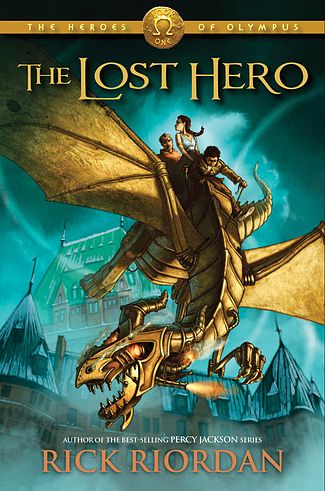
This morning I was reading The Lost Hero by Rick Riordan out loud to my 7 year old daughter.
Like her sister before her, she is obsessed with Riordan’s series. I, too, am a huge fan. The pacing is perfect. The characters are smart, funny, and brave. The writing is great. But I’ve got a an issue with the books. As I always blog on Reel Girl, if the pattern in The Lost Hero were in just one book, or even half the books, it would not be a problem for me, or for my kids, or for kids in general. My problem is the repetition of the same old, same old in narrative after narrative after narrative. Read this passage and see if you can tell me what my objection to Riordan is:
“There’s four of us,” Hedge whispered urgently. “And only one of him.”
“Did you miss the fact that he’s thirty feet tall?” Leo asked.
“Okay,” Hedge said. “So, you, me and Jason distract him. Piper sneaks around and frees her dad.”
They all looked at Jason.
“What?” Jason said. “I’m not the leader.”
“Yes,” Piper said. “You are.”
They’d never really talked about it but no one disagreed, not even Hedge. Coming this far had been a team effort, but when it came to a life-and-death decision, Leo knew Jason was the one to ask. Even if he had no memory, Jason had a kind of balance to him. You could just tell he’d been in battles before, and he knew how to keep his cool. Leo wasn’t exactly the trusting type but he trusted Jason with his life.