My 10 year old reviews ‘Gravity’

Hi, I’m Lucy, and I’m going to review “Gravity.” Last night, I wanted to watch a movie with my mom and dad. We were choosing from the list that you all recommended for her. “Gravity” is on that list. Now let’s start with the basics. This woman has really bad luck. “Gravity” is a very scary movie, and I think to watch it you should be at least 10. I almost peed in my pants (a couple of times.) “Gravity’s” main character is a female. There’s not a lot of females as the protagonist so this is rare.

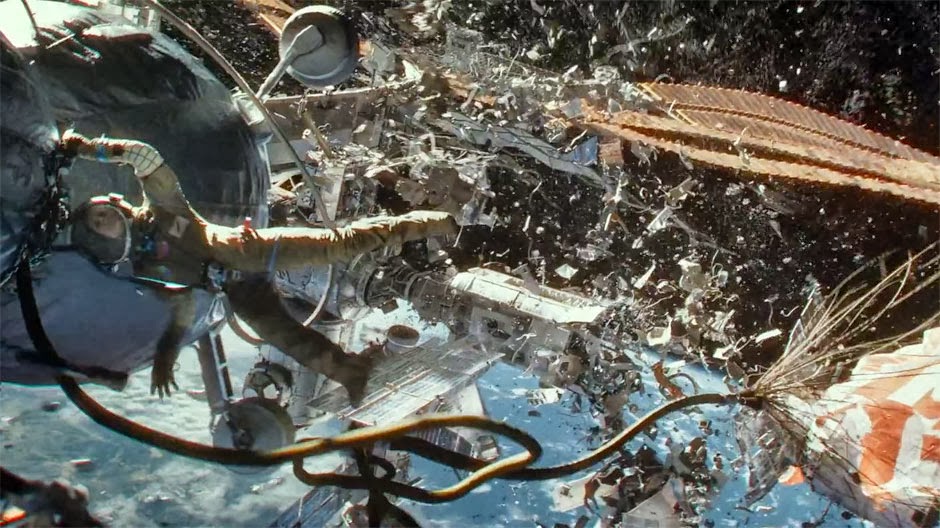
gravity-explosion-1

In my picture, you can kinda see what I meant about bad luck.The protagonist is a brave woman and she never gives up. Whenever I watch a movie about someone who’s brave and never gives up, I always wonder what it would be like to be that person. You’d have a lot of pressure (just like I have a lot of pressure when my mom puts broccoli on my plate.)

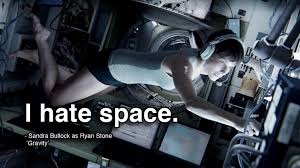
Ryan gave up at one point, thinking she had nothing to live for. Then, she realizes she’s going to have to keep trying, and after that, she  knows she can make it. Ryan’s daughter died when she was 4. Ryan misses her very much. She misses how happy she was when she saw her daughter having fun. Remembering her love for her daughter, she knew she couldn’t give up even though it was going to be a hell of a journey. Ryan says:

images

I really think this is a good movie, and all of the people who have watched “Gravity” should tell people about it. Tell them how brave and smart Ryan is. Tell them about her sacrifices, the ones that she knew had to happen. Tell them about how she learned to never give up.


Does ‘Maleficent’ depict matriarchy vs patriarchy or world where gender isn’t destiny?

This is my fifth post on the fabulous ‘Maleficent’ movie which I saw with my three daughters and my husband last Friday. I’m obviously a little obsessed.

Maleficent-2014-image-maleficent-2014-36106527-738-1082

If you’ve been following my blogs, I keep arguing, contrary to what almost everyone else seems to believe, that when Stefan cuts off Maleficent’s wings, it’s not necessarily a rape metaphor. I’d like to set one thing straight given the comments I’ve received. Yes, everyone is allowed their own interpretation. My blogs, about how this scene is not rape, I am quite aware come from my own bias that I want to lay out for you here:

(1) I am 45 years old and exhausted with seeing women raped on screen. I just wrote about my fatigue regarding bell hooks’s forum: Are You Still a Slave ? Liberating the Black Female Body with a blog title borrowed from a hooks quote: “If I never see another naked, enslaved, black woman on screen, I’ll be happy.”

(2) I have 3 daughters ages 5, 7, and 10, and I am desperate for them to experience fantasy worlds where gender equality exists. This wish of mine probably goes back to my first point, that I am 45 and sick of seeing the “feminist” trope where the female struggles against the patriarchy. It’s not just that I’ve seen it one million times before, but that in order for my children to see a girl struggling to be taken seriously or be strong or powerful even though she’s a girl, first my kids have to understand sexism. In order to “get” the story, first they have to understand that the world believes girls are less than boys. I would prefer, certainly for little kids, that they be exposed to fantasy worlds where girls and boys are depicted as equal, where girls are not made fun of, put down, or limited because of their gender. I understand how important the narrative of the girl proving she’s “just as good as a boy”  is historically, I’m not asking for it to be obliterated, I’m just asking for more stories where there is gender equality. If we can’t imagine gender equality, we cant create it. At this point, The Hunger Games may be the only fantasy world I’ve read where gender is not an issue.

(3) There are several reasons I believed “Maleficent” depicts a fantasy world where gender isn’t destiny rather than matriarchy vs patriarchy. Everyone is allowed their own interpretation, author’s intention is dead, but it can still be a factor in understanding the movie. I believed that it was both the screenwriter’s and Angelina Jolie’s intention that the conflict in the movie was not male vs female but human vs Fairy. Here are the reasons why:

A. The narrator introduces the movie as one about two worlds, one human and one magical.

B. When Stefan is first introduced, Maleficent is curious about him because he is a human, not because he is a boy.

C. With most of the scenes between them being childhood ones, I experienced the relationship between Stefan and Maleficent as special because it was a friendship between two warring species.

D. This quote from the writer, Linda Woolverton:

I had to figure out what possibly could have happened to her to make her want to hurt an innocent baby. Something that would equal that act. In the animated movie, she had no wings. She just threw her robes open like wings. I thought, ‘Is that it? Did someone take her wings?

Maleficent’s wings defined her as a Fairy. These wings were cut. This violence had nothing to do with her genitals/ rape. Why must we assume that when violence is done to a woman, it must involve her genitals? When Delilah put Samson to sleep in her lap and his hair was cut, was that a rape metaphor? As someone on Reel Girl’s Facebook page commented, the Maleficent scene could be compared to cutting off the hand of a concert pianist or, I might add, cutting off the wings off a Fairy!

E. This quote from Angelina Jolie made me think she wanted “Maleficent” to depict a world where gender isn’t destiny instead of matriarchy vs patriarchy.

“Our movie has all this strength and all this feminism, but, what I think is so nice is that, sometimes, in order to do that you have to make the man an idiot. Instead, we have this very elegant, wonderfully handsome, prince who, in the end, is great. He doesn’t need to be less than to make us more than. We don’t have to simplify or cheapen the men, or to detract from one to make the other better. I think that’s a mistake that’s often made in movies.


But, here’s my new news. It’s been one week since I saw “Maleficent,” and now I realize, to my dismay, though I still love this movie, I agree with so many others: “Maleficent” is not a world where gender isn’t destiny but depicts the conflict of matriarchy versus patriarchy. So why my change of heart? Is it that I now agree the wing cutting is clearly a rape metaphor? That the relationship between Stefan and Maleficent is primarily romantic?

No. What’s made me change my perception is I’ve been dwelling on my one earlier disappointment with the movie. The human crowd scenes are populated by all male characters. Please, tell me I missed something, but from my recollection, the king’s army is comprised of all male soldiers. When the king sends his followers to kill Maleficent, wishing for an heir, the circle around him is all male. And when Stefan returns with Maleficent’s wings, the king says something to the effect of, “Take my daughter.” If the king had been surrounded by half women when he sends his minions off to kill, if the army had been half women fighters, if we’d seen Maleficent use her power to strike down women soldiers as well as male ones, this fantasy world would’ve been one where gender doesn’t matter. But we did not see this. Therefore, the movie is clearly about patriarchy vs matriarchy, thus, the rape scene makes perfect sense.

Still, Angelina Jolie may have intended for her movie to depict a world where gender isn’t destiny rather than matriarchy vs patriarchy. But, if this is the case, she should’ve made sure the crowd scenes showed men and women equally. The scene could be primarily males just because of Jolie’s– and the producer’s, writer’s, director’s obviously–  unconscious bias. But this is why author’s intention doesn’t matter, because viewers see things in the story that are there whether the creator “chose” to put them there or not.

The Geena Davis Institute does extensive research on gender bias in children’s films, coming up with two– just two– main ways to make kids’ films show gender equality:


Step 1: Go through the projects you’re already working on and change a bunch of the characters’ first names to women’s names. With one stroke you’ve created some colorful unstereotypical female characters that might turn out to be even more interesting now that they’ve had a gender switch. What if the plumber or pilot or construction foreman is a woman? What if the taxi driver or the scheming politician is a woman? What if both police officers that arrive on the scene are women — and it’s not a big deal?

Step 2: When describing a crowd scene, write in the script, “A crowd gathers, which is half female.” That may seem weird, but I promise you, somehow or other on the set that day the crowd will turn out to be 17 percent female otherwise. Maybe first ADs think women don’t gather, I don’t know.


It’s sort of like how someone said, I forget who it was, that we won’t have gender equality when female geniuses make it through the glass ceiling, when exceptional women break barriers, but when the mediocre, average ones make it into the power structure, just like all the average white men are up there. It’s all about the crowd scenes.

Alternative title for this post: What happens when an over-educated woman has three daughters and gets stuck watching way too many Disney movies? She blogs.

Update:  I’m getting comments on Reel Girl’s Facebook page asking if I still recommend Maleficent for kids. Yes, absolutely take your children to see this movie, rape metaphor or no. They will not get the metaphor. It’s only disappointing to me because, as I wrote, I would like children to experience fantasy worlds where gender equality exists, and I’ve come to believe that “Maleficent” isn’t one of those worlds. Still, the movie has a great female protagonist (rare in kids’s films) and shows other strong, complex female characters as well. All three of my kids and my husband enjoyed the movie. Read the last post listed below for my full review.

Reel Girl’s posts on “Maleficent:”

What if ‘Maleficent’s’ Stefan had been Stefanie?

‘Maleficent’ beats MacFarlane at the box office (and she didn’t even show her boobs)

‘Maleficent’ is not ‘a woman scorned’ so stop calling her that

Magnificent ‘Maleficent’ is for all the girls who always wanted to fly


Slut-shaming Princess Leia or protecting childhood from adult sexuality?

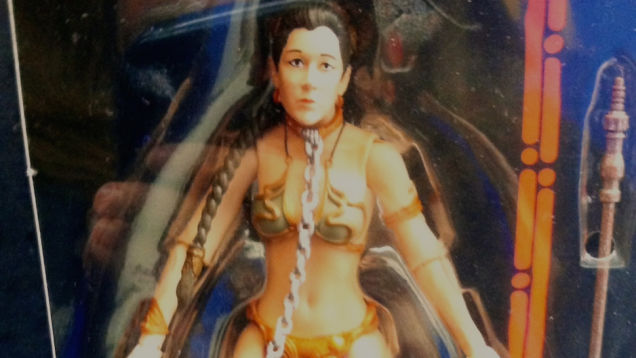
As news spreads that Disney will be adding Leia themed toys to its merchandise, I’m seeing more instances where others have noted how often Leia is shown as a slave in kidworld. Last week, Jezebel posted this:

Why Is Slave Leia the Only Princess Leia Toy Available at Toys”R”Us?

Over the weekend we received a tip from a concerned mother who had come across something very disconcerting while perusing the aisles of Toys R Us. Apparently the only available toy or figurine of the Star Wars character Princess Leia is of her in the “Slave Outfit” from Return of the Jedi. Bikini? Check. Loin cloth? Check. Chain around the neck? Check. And in case you were wondering if it was actually geared towards children, it’s listed for kids ages 4+….This is a perfect and heart-breaking example of how ingrained sexism is in geek culture. It’s not like there’s a Chewbacca toy in a banana hammock


ga0srxewuclpmbk8uxig

This makes me so mad. It’s so twisted. Taking the heroic Leia, one of the few females in the Star Wars franchise at all, certainly the most famous one, then showing her chained and in a bikini again and again and again.

Yesterday, I posted this picture of a LEGO set I bought for my daughter. I chose it because the salesperson told me it was the only one in the store that includes Leia. I regretted the purchase as soon as I saw this mini-fig. Now, I know to check more carefully.

1459127_591015430953231_969825805_n

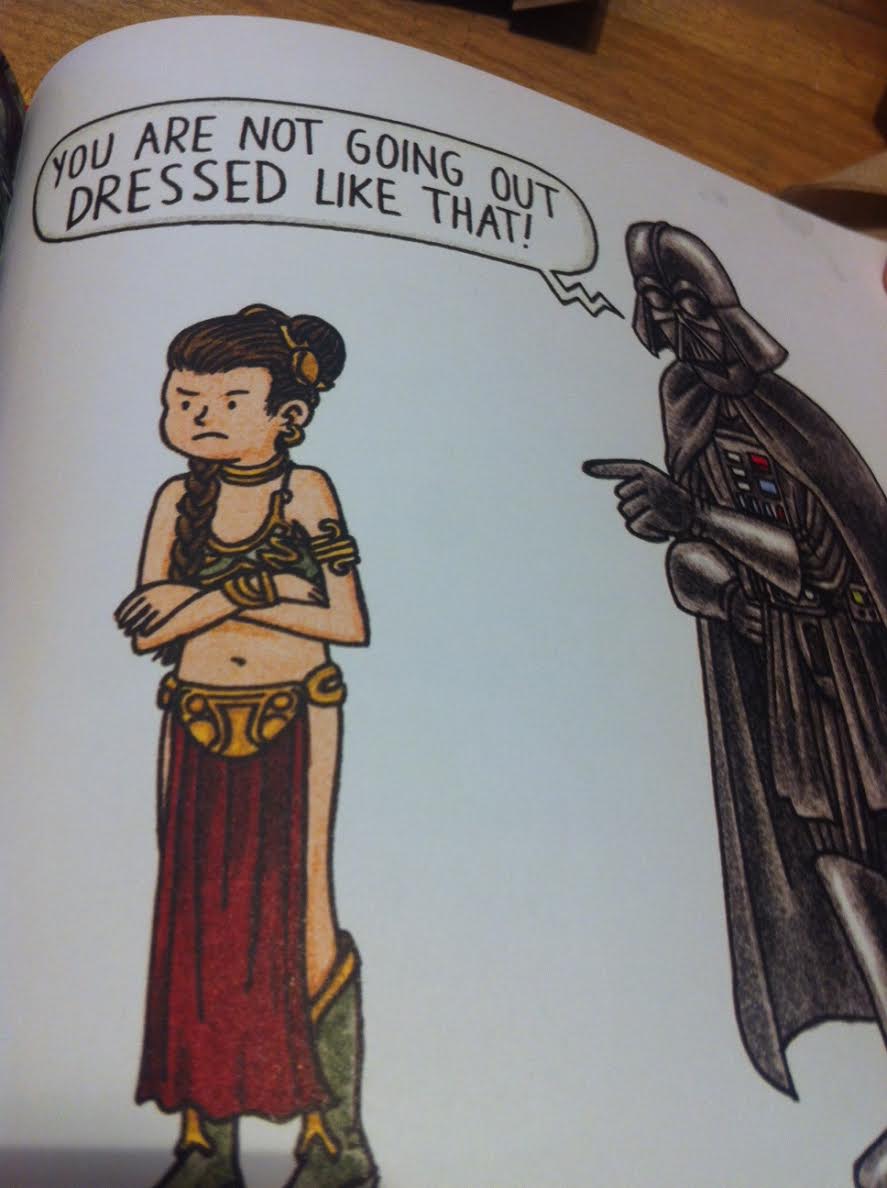
I also posted yet another picture of an illustration from Vader’s Little Princess, where the distorted narrative depicts the slave outfit as Leia’s independent, rebellious choice:

unnamed3

The book has another illustration with the same message:

unnamed4

I haven’t yet been accused (that I know of) for slut-shaming Princess Leia yesterday, though whenever I complain about toys and media created for little kids where the females are consistently half dressed, commenters often put me in the role of Vader in these illustrations: I’m the one curtailing the independence, rebellion, and freedom of girls.

I’ve written about Polly- Pocket where the whole point of the toy is to dress Polly is various belly baring shirts, mini skirts, hot pants, and bathing suits. Polly is marketed to 4 – 7 year olds.

Polly-Pocket1

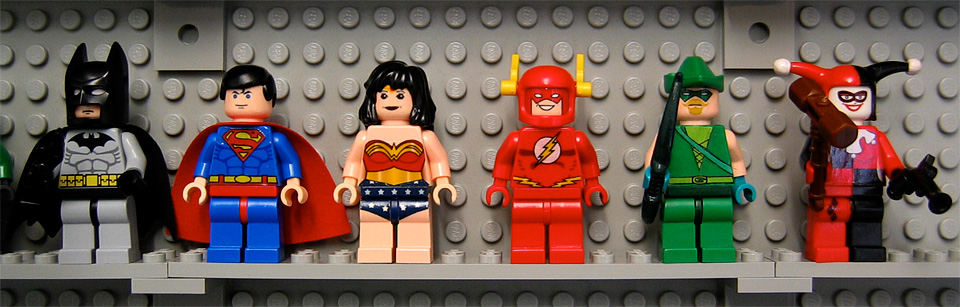
Desperate for female superheroes to show my kids, I purchased the DVD set of the Wonder Woman TV series starring Lynda Carter. My 5 year old daughter wanted to know: “Why is she in her underwear?”  Here’s Wonder Woman as a LEGO minifig (not easy to find at a toy store or Target, even half dressed.)

wwww

When Pigtail Pals founder Melissa Wardy dropped her kids off at school, they were walking behind a first grader with a Winx backpack:

Winx-backpack

On her blog, Wardy writes:

Try this test: If the image can be lifted from the child’s toy/backpack/t-shirt and placed on the billboard for a strip club and not look out of place, then things are seriously fucked.

I’m not saying that 4 year old kids know what being half naked has to do with adult sexuality, but these repeated images teach all children that it’s normal to sexualize girls. Sexualization is very different from sexuality. In her best-selling book, Cinderella Ate My Daughter, Peggy Orenstein quotes Stephen Hinshaw from his book The Triple Bind:

“Girls pushed to be sexy too soon can’t really understand what they’re doing…they may never learn to connect their performance to erotic feelings or intimacy. They learn how to act desirable, but not to desire, undermining, rather than promoting, healthy sexuality.

In short: sexualization is performance; it’s all about being desirable to others. Sexuality is understanding and connecting to your own desire.

At the reading, Orenstein shared this passage from Cinderella Ate My Daughter:

Let me be clear here: I object– strenuously– to the sexualization of girls but not necessarily to girls having sex. I expect and want my daughter to have a healthy, joyous erotic life before marriage. Long, long, long before marriage. I do, however, want her to understand why she’s doing it: not for someone else’s enjoyment, not to keep a boyfriend from leaving, not because everyone else is. I want her to explore and understand her body’s responses, her own pleasure, her own desire. I want her to be able to express her needs in a relationship, to say no when she needs to, to value reciprocity, and to experience true intimacy. The virgin/ whore cycle of the pop princesses, like so much of the girlie girl culture, pushes in the opposite direction, encouraging girls to view self-objectification as a feminist rite of passage.


That last sentence is again, exactly how Leia is presented in Vader’s Little Princess.

Older girls and women can choose to wear a bikini, or a even chain around their necks if they want, but girls and women should not feel like they have to be “attractive” to men all the time, 24 hours a day. Or even 12 hours a day. Or 6. Or any hours at all. Nor should they feel like they have to be attractive to all men. It’s this kind of fucked up mentality– be attractive to all men, all the time, that leads to men feeling entitled to women’s bodies. I could go on here about the legal ramifications of this as far reproductive rights, coverage for contraception etc, but that’s another post. The point of this one is that 4 year old girls should not be trained that it’s completely normal to be half naked most of the time. The females in kidworld  should not be constantly baring their bellies. Please stop selling kids toys and media where females are half dressed. Parents, please stop buying these kinds of toys for your children. They set a dangerous precedent. That’s no slut-shaming but protecting childhood from adult sexuality.

I’d like to collect some images of Princess Leia here that you all think would be good for Disney to base its merchandise on. Here’s a couple to start:

3_bg

12

More great posts on this issue from around the web:

Why Representations of Women and Girls Can’t Be Slut-Shamed

‘Slut-Shaming’ Has Been Tossed Around So Much, It’s Lost All Meaning

When Do We Allow Our Girls To Partake in Commercialized Sexualization?


Responding to #WeWantLeia campaign, Disney will stock stores with Leia toys

Breaking news!

After the public complained far and loud about the annihilation and degradation of Princess Leia in kidworld, Disney announced its rectifying the omission of this warrior-freedom-fighter princess, telling Time Magazine:

The current assortment of Star Wars products at the Disney Store launched earlier this year, and is just the beginning of what is to come,” Disney spokeswoman Margita Thompson told TIME. “We’re excited to be rolling out new products in the coming months, including several items that will feature Princess Leia, one of the most iconic characters in the Star Wars galaxy.


I am so excited, both about the product and that we are making a difference! Good job everybody.

Note to Disney, we do not want to see Leia in her slave girl-S & M-metal bikini chained to Jabba the Hut, as she is in this LEGO set that I regretted purchasing for my 7 year old daughter.

1459127_591015430953231_969825805_n

Nor do we want to see narratives where Leia is again in said bikini arguing with her father that she actually wants to wear it– when it was Jabba that forced her into the outfit in the first place– as in Vader’s Little Princess which I regretted reading to my 5 year old daughter.

unnamed3

We’re over the metal bikini. Leia has been hard enough to find in toy sets, on T-shirts or sippy cups. We want to see a strong and powerful action figure saving the galaxy.


Memo to the world: objectifying fat women is objectifying women

Just saw this from Buzzfeed on Miss Representation’s Facebook page:

Plus-size swimwear company Swimsuits for All set out to prove that “sexy curves go beyond a size four” by shooting its own swimwear calendar, including a picture reenacting this year’s Sports Illustrated swimsuit issue.

enhanced-20712-1401659090-8

Are you kidding me? Do you think I’d be any happier if my 3 daughters saw that picture in the Safeway checkout line instead of this one?

1782096_715803071785441_1361267479_n-640x852-450x600

All right, maybe I’d be a smidgen happier that my kids wouldn’t have to see more starving women defined as beautiful, but my goals and expectations are so much higher than what this image from Swimsuits for All represents. I want to see images of women where they are not defined by their sexuality, by whether whomever is looking at them finds them sexy or not, where what they look like in bathing suits is not the be-all end-all, where who thinks they are attractive only matters in a very particular context, like when they are with someone who they love or want to have sex with.

Swimsuits for All is in the business of selling swimsuits. The company has got to sell its product, so posing women in the merchandise that it’s marketing makes sense. I’m not indicting the company, but pretending as if seeing this image all over the internet is liberating is ridiculous. Also, it might be nice to see the women swimming in their suits. What about playing volleyball on the beach? Building awesome sandcastles? Doing something? There could be a shot of a woman or two sunbathing, as long as the “aren’t I sexy” poses were not the dominant, ubiquitous ones.

I’ve written this for a long time, but “fat” women beauty contests don’t represent progress. Women no longer paraded as meat is progress.


Still confused or want to see more images to make this point? Please take a look at Reel Girl’s recent post: Why do men in America feel entitled to women? A gallery of reasons. You’ll see this famous painting by Manet along with contemporary images of dressed men paired with naked women.

manet


What if ‘Maleficent’s’ Stefan had been Stefanie?

I’m seeing so many posts comparing the cutting of Maleficent’s wings to rape or genital mutilation, along with commentary that the movie is anti-men, that I’m wondering: How might the movie change if Stefan had been Stefanie?

MALEFICENT_PRODUCTION_NOTES_Hi-Res_4-30-14_Page_05_Image_0001

When violence in a narrative happens to a woman, must we think of her genitals? In the story of Samson and Delilah, she “puts him to sleep in her lap” and then cuts off the source of his strength– his hair. Is that a rape metaphor?

For me, Maleficent’s character is primarily a Fairy, a magical creature who happens to be female. Stefan is primarily a human who happens to be male.

Either way– if the violence is or is not a rape metaphor– clearly, the movie is about Maleficent’s recovery, so that’s the important thing. It’s just irritating to me because I’m so sick of watching women get raped on screen. To watch a movie and not have that experience, but then to see so many others have it, is frustrating.

So bear with me: consider the plot switch, from Stefan to Stefanie. For me, the structure of the narrative wouldn’t change much at all. I realize Maleficent falls in love with Stefan and receives her first kiss from him, but that aside, assuming she’s not gay, here’s how the plot would go– pretty much the same: The first thing Maleficent asks Stefan is if he’s a human or not. Maleficent’s attraction to Stefan had to do with his human-ness, not his man-ness.Humans live in a separate world than the magical world. That’s how the narrator introduces the whole story, and the difference between Maleficent and Stefan primarily as Fairy/ Human rather than woman/ man. Their relationship is primarily a dramatic friendship forged between two species who are supposed to fear and hate each other.

I’ve written about this before, but after his human-ness, Stefan is defined by his ambition: he steals in the first scene, and he says he wants to love in the castle. Easily, an ambitious human “Stefanie” could’ve played this part. “Stefanie” is then tasked by the king to kill “the winged creature.”  Yet, when it comes to the moment of killing, she can’t quite do it, so she takes Maleficent’s power– her wings– from her. The betrayal is still deep, committed by a childhood friend, destroying a bond formed two species, Humans and Fairies, who were supposed to hate and fear each other. We’d also get another starring female part and no more tangential talk all over the internet about “man-hating.” Obviously, the movie is not about “man-hating” anyway. Aurora ends up with a loving, cute, brave guy, as well as remaining a friend to Maleficent. In Angelina Jolie’s own words:

We wanted to tell a story about the strength of women and the things they feel between one another,” Jolie said. “Our movie has all this strength and all this feminism, but, what I think is so nice is that, sometimes, in order to do that you have to make the man an idiot. Instead, we have this very elegant, wonderfully handsome, prince who, in the end, is great. He doesn’t need to be less than to make us more than. We don’t have to simplify or cheapen the men, or to detract from one to make the other better. I think that’s a mistake that’s often made in movies.

So, if Stefan had been Stefanie, this whole “man-hating” interpretation would be nicely cleared up. Do you think Hollywood would make a movie with three female leads? Two female villains? Wouldn’t that be great? Tell me what you think.

‘Maleficent’ beats MacFarlane at the box office (and she didn’t even show her boobs)

This weekend, ‘Maleficent’ surpassed industry expectations becoming the top money-maker at the box office taking in 70 million, making it the biggest opening of Angelina Jolie’s career.

Maleficent-2014-image-maleficent-2014-36106527-738-1082

Meanwhile, Seth MacFarlane’s “A Million Ways to Die in the West” disappoints, bringing in just 17 million.

(Pause here for victory dance celebrating girls and women everywhere.)

“Maleficent” is the latest female driven film, after “Frozen” and “Catching Fire,” to make tons of money and debunk the ridiculously sexist myth that only movies with male protagonists are super profitable. This powerful lie influences the movies that get made for children as well. For example, in 2014, 18 kids’ movies star males while only 6 star females.

It’s especially great to see MacFarlane stumble because the guy is such a sexist pig. He’s the Oscar host who sung the horrible, offensive, and not funny “We Saw Your Boobs” song. MacFarlane called out great actresses like Meryl Streep, Nicole Kidman, and Helen Hunt, telling them that he “saw their boobs,” acting like this on screen nudity was a show just for him– and all males– and had nothing to do with the narratives or the parts these women played. He sung that he saw Jodie Foster’s boobs when she played a rape survivor in “The Accused.” The guy makes me sick. That night, he sung that he saw Angelina Jolie’s boobs as well. Now, who’s the boob? It looks like it’s time for MacFarlane to start thinking about what he can show to get people to buy tickets for his boring, loser movies.

‘Maleficent’ is not ‘a woman scorned’ so stop calling her that

There is so much talk in the feminist internet about ‘Maeficent’ being portrayed as ‘a woman scorned’ that I feel I must right the misconception here. As far as I can tell, the false rumor was fueled by this review in the LA Times:

Alas, though Maleficent’s magical forest is equipped with stomping tree beasts and squat, mud-slinging gnomes, she has no Top 40 station to teach her that her lifelong boyfriend should have put a ring on it. So she does what any wounded woman would do: Curse his baby daughter to an inescapable coma.


Like Oz the Great and Powerful, Maleficent considers itself a revisionist fairy tale that spins a demonized witch into a feminist icon. Hardly. Both movies hinge on a man, as though the sheer power of being rejected by one dude is enough to make any girl nuts. Maleficent and the Wicked Witch of the West can terrify armies, but they cede their emotional strength to a mortal twerp.

I really don’t get how the reviewer could twist and reduce this movie to come up with such a simplistic and ridiculous analysis. Maleficent is pissed because her wings were cut off. A perfect metaphor that should be obvious to anyone who watches this movie. If you need more proof, here’s a lovely quote from the writer, Linda Woolverton, about what was going through her head as she re-imagined this fairytale:

“I had to figure out what possibly could have happened to her to make her want to hurt an innocent baby. Something that would equal that act. In the animated movie, she had no wings. She just threw her robes open like wings. I thought, ‘Is that it? Did someone take her wings?’

Maleficent curses the baby because she’s lost her wings, she’s lost her power. Clearly, Maleficent enjoyed those wings. They were taken from her. Wouldn’t that make you angry?

Also, the guy who cut off Maleficent’s wings, she befriended when she was a kid. Stefan was always been greedy and lustful for power. When Maleficent first meets him, he’s just stolen something. One of the first things Stefan tells Maleficent is that he wants to live in the castle. But Stefan is not all bad. He’s charming, the two of them have fun together, he tosses his iron ring when he sees that the metal hurts her. And once again, they are children. Haven’t you stuck around with a friend because you’ve been friends for so long? Stefan’s character is contrasted with Maleificent’s in that her heart grows cold as well, but she changes, she acts while Stefan sits around and mopes.

Jezebel also has complaints about the movie. Regarding Maleficent:

And the whole place is governed by this whimsical child-mayor named Maleficent (seriously, HOW DID YOU GET ELECTED YOU ARE EIGHT)


Because she is the most powerful Fairy! That is how she is introduced by the (female) narrator at the beginning of the movie.

Jezebels’ next complaint is obviously kind of tongue in cheek, but again, it implies the interaction between Maleficent and Stefan in anti-feminist:

When she wakes up in the morning, her huge beautiful majestic wings have been sawed off and stolen.

Let me repeat. In Maleficent, a PG-rated Disney movie, a man ROOFIES A FAIRY AND VIOLENTLY TAKES HER “WINGS” WHILE SHE’S UNCONSCIOUS.

Wait, maybe it’s not tongue and cheek:

I was surprised. I think of myself as having a pretty consistently perceptive and sensitive Good Feminist™ barometer, and—the groaningly cheap and clumsy rape allegory aside (as far as you can set such a thing aside)—I’d enjoyed Maleficent mostly without pause.

Seriously? Protagonists have been drugged in narratives from time immemorial. I didn’t get any kind of predatory sex vibe from this scene. Is the reviewer saying females cannot be drugged in a narrative because that must be understood as date rape? That was the last thing from my mind watching this part of the movie, and this is my mind that we’re talking about. Once again, please refer back to the writer’s quote.

Jezebel has more problems with the feminist cred of the movie:

The more my friend and I talked about it, the more problems came to the surface. Did the final battle have to be so brutal and soooooooo long?

Yes, it did. We had to see Maleficent revel in her power. And it wasn’t even that long. Violence is a part of narratives because art is metaphorical and depicts emotional realities. Here’s what Peggy Orenstein wrote about it in Cinderella Ate My Daughter:

“Violent play is not by definition bad or harmful for kids. Any child shrink worth her sand table will tell you it can help them learn about impulse control, work out the difference between fantasy and reality, and cope with fear….Children of both sexes crave larger than life heroes. They need fantasy. They also, it seems, need a certain amount of violent play…something that allows them to triumph in their own way over this thing we call death, to work out their day-to-day frustrations; to feel large, powerful, and safe.”


Next problem:

Did the meet-cute have to be so shallow?

I don’t know what that means.

Did Maleficent have to be punished so profoundly for succumbing to her completely justified rage?

Huh? She’s triumphant in the end and redeemed. I loved that about the movie.

Did the supporting female characters have to be so useless?

Yes, they were contrasting to Maleficent who protected and watched out for Aurora (and that’s why they were not the “mayors” of the moors even though they were older, Maleficent was always the smartest and most powerful and born to rule.)

Read my review of “Maleficent’ here.

‘An open letter to privileged people who play devil’s advocate’

There is an amazing post on feministing.com titled: An open letter to privileged people who play devil’s advocate. I am so thankful that Juliana Britto wrote these words. I am so fucking sick of people arguing with me just to argue, just because it’s fun for them. It drives me crazy that people act like I haven’t heard all of their arguments “proving” me wrong about one million times before. I mean, seriously, Western civilization is based on your arguments, and you really think I haven’t heard them before???? When people persist with me, frustrated that I’m not “into it” they often claim that I’m the one “censoring” them or “closing my mind.”  Britto writes about this issue much more eloquently than I:

Some might challenge that I am shutting myself off to new ideas and censoring important opportunities for growth.

But these ideas you are forcing me to consider are not new. They stem from centuries of inequality and your desperate desire to keep them relevant is based in the fact that you benefit from their existence. Let it go. You did NOT come up with these racist, misogynistic theories. We’ve heard them before and we are f*cking tired of being asked to consider them, just one. more. time.


Got that? Don’t want to hear it. I’ve already heard it, read it, seen it for my entire life. Britto makes another important point people who argue with me for fun don’t seem to get:

It is physically and emotionally draining to be called upon to prove that these systems of power exist.


Right on, sister. Please, don’t use me for your fun and entertainment. I’m interested in changing the world, not keeping you from boredom. Again, Britto is more eloquent than me:


Imagine having weights tied to your feet and a gag around your mouth, and then being asked to explain why you think you are at an unfair disadvantage. Imagine watching a video where a young man promises to kill women who chose not to sleep with him and then being forced to engage with the idea that maybe you are just a hysterical feminist seeing misogyny where there is none. It is incredibly painful to feel that in order for you to care about my safety, I have to win this verbal contest you have constructed “for fun.”


When I was 28 years old, I was a producer for a talk radio show. The host of that show gave me a gift that changed my life. He consistently– even if he disagreed with me– helped me figure out my thought process. When I was at Point A and I wanted to get to Point Z, he helped me get there. I would make a point and he would say, “Yeah, I get it,” and then give several reasons why what I said made sense or was true. It was a remarkable skill that helped me to develop and grow as a thinker and as a person. Most people, when you say something new, will argue with you at Point A, tell you all the reasons why what you’re saying doesn’t make sense or can’t be true, so you never, ever get to Point Z. That, or silence. Those responses can be soul killing, especially if you are young, a young woman not used to being listened to or taken seriously, with baby ideas that you’re trying to develop.

Read the whole Britto’s whole post here.

Magnificent ‘Maleficent’ is for all the girls who always wanted to fly

WOW I loved loved LOVED Maleficent. From the opening to the ending, I was mesmerized and so was my husband (“she kicked ass!”) as well as my three daughters. I cannot recommend this movie more to you and your entire family.

The movie begins with the young Maleficent.

MALEFICENT_PRODUCTION_NOTES_Hi-Res_4-30-14_Page_05_Image_0001

My kids always love seeing the part of the movie that features a younger version of the female protagonist, the one who is closer their age. I remember that being one of my favorite things to watch when I was a kid too. The movie starts with the young Maleficent soaring across the screen, and it is so magical to see her fly and fly and fly. These scenes are especially wonderful because we’ve all been subjected to movies from “ET” to “How to Train Your Dragon” where its the males who fly, while the girls, if they’re lucky, get to cling on to some dude’s back while stuck in the passenger seats.

Maleficent is so powerful and magical. She is not a Minority Feisty. Not only is Aurora AKA Sleeping Beauty also a starring part, and wonderfully played by Elle Fanning, but there are the three Fairies (formerly known as Flora, Fauna, they have different names in this movie) with big supporting roles

When Maleficent is stripped of her power, her wings are clipped. Can you imagine a more perfect metaphor for women and cinema? Her wings are incredibly done too, huge and magnificent and beautiful. She relishes flying and she relishes her power. You see that in Angelina Jolie’s face throughout the film. I was worried that Jolie would be too made up, the way Johnny Depp sometimes is, so that you couldn’t experience her great acting. But that was not the case.She doesn’t get lost in the special effects. They are done perfectly to enhance her character.

20140317_maleficent_onlinespotwingreveal

Maleficent and Aurora have a complicated, evolving relationship like nothing I’ve ever seen before in a Disney movie where, so often, women are pitted against each other, especially older and younger ones. Not only is that not the case here, but the whole dichotomy of hero/ villain is also turned on its head. One of my favorite parts of the movie is when Aurora is crowned a queen, not a princess.

I’ve always been more interested in Disney’s female villains than its one dimensional princess/ heroines. And of these villains, Maleficent was always my favorite. You can’t beat that horned, caped silouette. (Here’s a picture of my 10 year old daughter in my Disney female villain nightshirt, which is several years older than she is.)

Bo6Y5btIIAAEv1Z

Thank you to Angelina Jolie for getting this movie made so my children– and all children– can witness a powerful, magical female in all of her spectacular glory.

Reel Girl rates ‘Maleficent’ ***HHH***

Read more Reel Girl posts on this movie:


‘Maleficent’ is not ‘a woman scorned’ so stop calling her that

‘Maleficent’ beats MacFarlane at the box office (and she didn’t even show her boobs)

What if ‘Maleficent’s’ Stefan had been Stefanie?