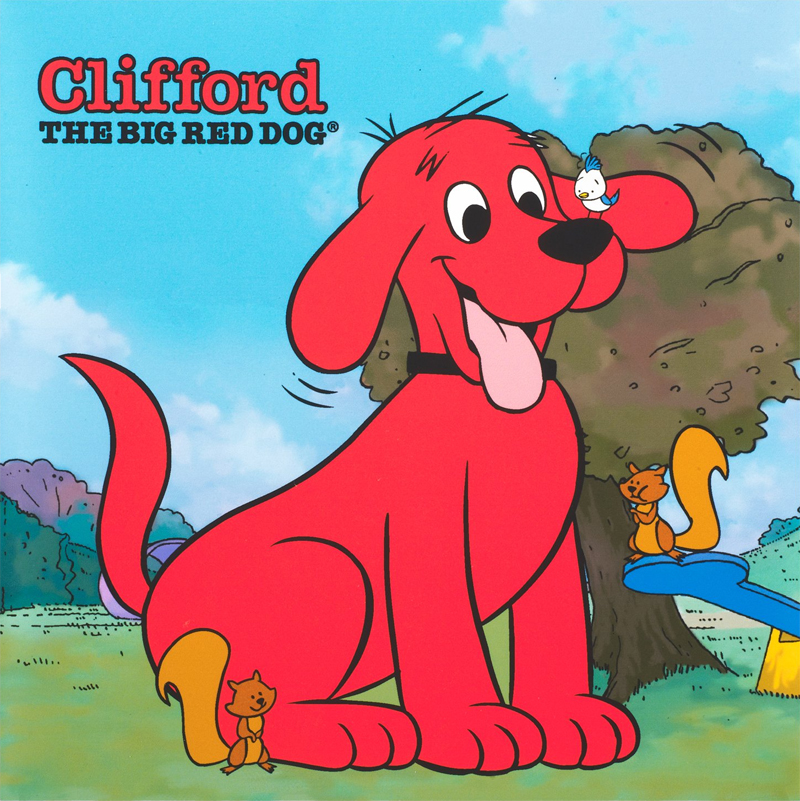
My youngest daughter and I used to have a schedule where, after the older 2 went off to school, I put on PBS while I did morning chores. PBS is good for kids, right? Educational and all. Sadly, all the three shows in the morning line up had a male protagonist whose name was featured in the title: Caillou, Clifford, and Curious George.
For a while, instead of Clifford, we had…Arthur!
All year, I’ve been doing drop-off, so now I leave the house with 3 kids at 7:10 (and don’t get back until 9AM but that’s another blog rant.) Today, our schedule is off so I have the little one, and I turned on the TV with an eye roll, expecting the bald 4 year old (don’t get that) the giant red dog, or the monkey with his yellow buddy-man, or the aardvark with no nose. What did we find? A new show! “Daniel the Tiger.” ARGH.
It’s really shocking to me how unimportant (or should I say “important”) gender is to PBS programmers. Thanks, PBS, for the early morning lesson in sexism for my four year old daughter. It’s great to know we’ve got a channel dedicated to education that teaches kids males are front and center while females are sidelined or not there at all.
After I posted about Seth MacFarlane’s offensive, misogynistic, and not funny hosting of the Oscars, some people asked me if I’d always hated him. The answer is no. His name was familiar, but I didn’t know who he was before the Oscars. Though a while ago a commenter posted a clip on Reel Girl from what I now know to be MacFarlane’s “Family Guy.” The clip totally cracked me up. I don’t know if MacFarlane wrote it, but I love it, and totally relate to it as a writer. Clearly, the clip’s creator has subjects besides demeaning women in a series of cliches. I’m reposting it here. Writers, this is for you:
After Tina Fey and Amy Poehler rocked the Golden Globes last month, I hoped Hollywood producers would catch on: putting women in power positions means a high quality show with good ratings. But then, Seth MacFarlane. Last night’s Academy Awards featured the the most sexist, worst Oscars hosting I’ve ever seen.
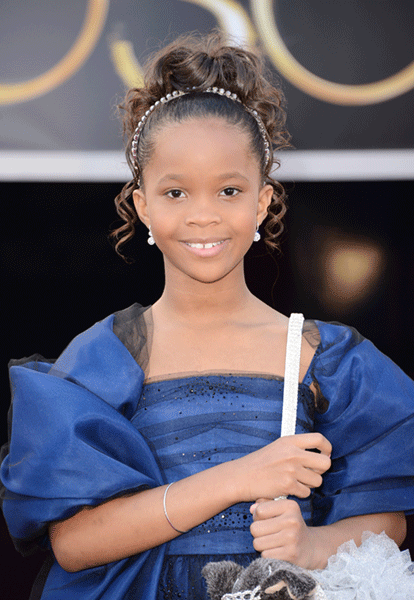
I get that MacFarlane tried to pre-empt this blog, and many like it, with his boring, stupid, Captain Kirk snore-fest-skit. But, Seth, your fake headlines last night don’t get close to describing what a pig you are. Best Actress nominee Quevenzhane Wallis is nine years old. She was so proud. That was the biggest moment of her life, and you called her George Clooney’s girlfriend? Why would you do that to a kid? How is she supposed to feel when you say that? Are you that insecure that you want to cut down a little girl?
Jessica Chastain had the rare opportunity to play a heroic, female protagonist and you trivialized her character, transforming her lifetime accomplishment into nagging, saying she possessed the innate female ability to never let anything go.
You sang a “boob song” that was more repetitive than my three year old, and you made jokes about domestic violence. That’s all I saw, but apparently, I missed some sexism.
Where were your jokes about men? Part of the reason your jokes were not funny is because women get demeaned and trivialized every day in this country, especially in Hollywood. All you did was jump on the bandwagon and push things a little further in the same, old, tired direction. Watching you tell your sexist jokes at a venue where in 85 years, only 4 women have been nominated for Best Director, was like watching someone point up and say, “The sky is blue,” for three and a half hours. Seth MacFarlane, you are such a bore.
Your performance did help me to explain the meaning of the term “bully pulpit” to some children. So, thanks for that, I guess.
Here’s to hoping Sarah Silverman hosts the Oscars in 2014.
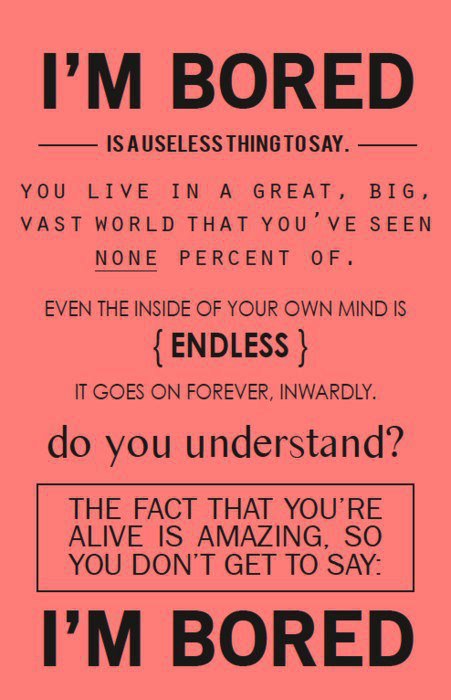
On Facebook, I saw a great quote that I recognized immediately from one of my favorite episodes. This morning, when my daughter complained that she was bored, I tried it on her.
She burst into a huge smile.
Thank you, Louis C. K., for getting insight to my daughter, making her happy, and rescuing our family from a cranky morning.
I love Emily Thorne, the protagonist of “Revenge.”
Thorne is unlike any female protagonist I’ve seen on TV or film. First of all, she is independently wealthy. Viewers learn of her financial status on the first episode when her friend is planning a benefit. Thorne casually says “Count me in” for a $10,000 ticket.
My mouth dropped open when I heard that line. A young, smart, beautiful, strong female who is also rich? That doesn’t happen. It’s way to much power to give a girl.
If you don’t believe me, check out the Forbes 15. Every year, Forbes does a survey on the 15 richest imaginary characters, including Scrooge McDuck, Richie Rich, Smaug (dragon from Tolkein) Bruce Wayne (Batman), Mr. Monopoly, Carlisle Cullen (Twilight saga), C. Montgomery Burns (Simpsons). At most, 2 females make the list, in 2012 Lisbeth Salander (Girl With Dragon Tatoo) and Jo Bennett. Women are rarely permitted to control billions, in the imaginary world or the real one.
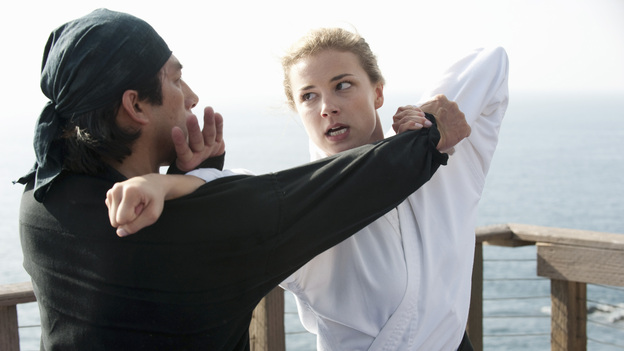
But Emily Thorne isn’t just rich. She is super smart. Every time I watch someone try to get the better of her, I have total confidence she’ll outsmart him. If it doesn’t come down to a battle of wits, Thorne can kick some serious ass. She’s a black belt in karate and this woman has no fear. She is driven and focused in every way. I feel a unique combination of calmness and excitement watching Thorne get into trouble that I’ve only felt before watching superheroes or James Bond: it’s fun to watch the action, how she pulls it all off, but you know she’ll be OK.
While “Downton Abbey” does a great job depicting how much it sucks to be a woman in 1900s upper class British society, “Revenge” shows women breaking through the limits imposed on them. I quit watching Downton because though the acting is good, it’s too prissy for me. “Revenge” doesn’t have Maggie Smith’s acting, but it all takes place in the Hamptons so you still get to gawk at rich people in fancy clothing who spend most of their time at parties.
I’ll be honest and admit that after more than one episode I’ve groaned and said, “I cannot watch this again.” But I always do.
Yesterday, I posted about the excellent and amazing Disney made for TV movie: “Avalon High.” The story is about the reincarnation of heroes and villains from the King Arthur legend of Medieval times to a contemporary high school in the U.S. The protagonist of the show, Allie– brave, smart, strong, and kind– turns out to be…King Arthur. With that gender flip, this Disney movie shows girls and boys that females can be heroic and at the center of the action.
Then, I got this comment from Lesley:
SPOILER SPOILER
In the book, the Allie character is NOT King Arthur, but the Lady of the Lake, who gives Arthur the powerful Excalibur. Will is Arthur. The twist is that there are hints she is Elaine (her character is called “Ellie” in the book) the weepy victim of unrequited love dumped by Lancelot. So, she turns out to be a crucial element in Will’s development as king but she doesn’t become king herself.
My daughter Callie and I both loved this movie for the same reasons you did, and we were crowing with delight at the changed ending!
As I wrote back to Leslie, I am totally shocked. I can’t think of another time– tell me if you can– where a kid’s book has been changed by the kid’s film (not grown up film) to be more feminist.
I am amazed Disney did this. Really. And also, Meg Cabot, the writer: WTF? Lady of the Lake? She is not cool, powerful, or that important in the story. If you are seeking remnants of evidence of female power, she will do, but obviously, King Arthur is the central figure in the legend. The best line of the movie is when Mordred says to Allie something like: “You? I thought maybe you could be Lady of the Lake, but Arthur?”
The translation of that quote goes way beyond the specific characters of Arthur and Lady of the Lake: Mordred is saying that a girl can’t be a hero and Allie shows that villain how wrong he is. I love how that is done here, through the characters and action, and not in the usual, boring way where the bad guy says something to the effect of– ew, you’re a girl. That, to me, kind of reinforces sexism: we’re all supposed to get the insult is wrong but too often, we don’t see it in the story beyond a moral/ ethical issue. Here, we get it: Don’t underestimate me. I won’t underestimate myself either.
It’s interesting because right after we saw the movie, I went to Amazon to buy my daughter the book, and I didn’t buy it. I wasn’t sure exactly why I didn’t want to. The cover didn’t grab me. I know, don’t judge a book by its cover, but Meg Cabot’s other books looked very pink and seemed to be about girls who were mostly interested in boys. Of course, that could easily be the marketing department who designs the cover. Maybe I thought I needed to do more research, and I didn’t have time right then. Whatever the reason, I didn’t click “buy.” Thank goodness Lesley commented because if I got that book, I would have been so pissed and disappointed. Though Lesley is more considerate than me with her spoiler alert, I feel it is my duty to warn you : )
I NEVER thought I would say this but KUDOS TO DISNEY. I am quite curious to know the story behind this adaptation. And also, Hollywood: Are you listening? Here is an example of how to use some imagination and innovation– 2 things you are, after all, supposed to be known for, supposed to encourage– to remake a classic without girls going missing. This gender flip is not about “girls being boys” or “girls acting like boys” or any other ridiculous justification to keep girls on the sidelines because that’s just where they belong as we recycle the same narratives, generation after generation.
After I read Lesley’s comment, I saw something quite incredible posted by Sara on Reel Girl’s FB page. Here is the new Rolling Stone cover, and quoting Vulture: “Why is Tina Fey Lois Lane?”
Why is Tina Fey riding bitch? This same old image of the male driving, the girl along for the ride is ubiquitous in the imaginary world. Why did Rolling Stone put Tina Fey, one of the most successful women in the world, in that position?
Vulture writes:
Tina Fey co-hosted the Golden Globes to universal praise. Her seven-season critical darling 30 Rock — which is still really damn funny — is ending in two weeks. She has seven Emmys, two Golden Globes, three Producers Guild awards, four SAG awards, and a Mark Twain prize. She’s synonymous with contemporary humor. Out of curiosity, Rolling Stone, what would it take for her to be Superman on the cover?
Do you see how fucked up it is for women to continually contort themselves into the sidekick? The distortion is not in the gender flip, in the rare times it is actually made, but in continually keeping women secondary to men. Our cultural imaginary (to borrow a phrase from Lucy Irigaray) is so warped that Tina Fey is cast in the sidekick/ girlfriend role here. If Tina Fey isn’t a superhero, I don’t know who is.
The real world and the imaginary world are endlessly intertwined. What is happening to Tina Fey, on Rolling Stone, happens every day to all women everywhere in the world: Move over lady, a man wants to fly.
Who would have thought that Rolling Stone magazine would be so pathetically conventional and a Disney made for TV movie could be so radical?
My three daughters and I are flummoxed by On Demand’s menu categories. Under “Kids,” subcategories include: Nickelodeon, Disney Junior, Cartoon Network, on and on. Then, you list: “Girls Rule!”
We were wondering why shows with male protagonists are marketed as mainstream while “Girl’s Rule” is one category out of 20? Girls are 50% of the population, so why the niche programming?
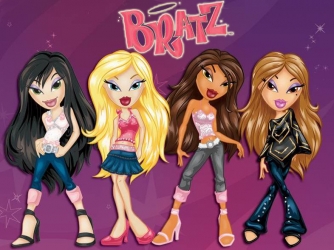
Regardless of the language you use, attributing 5% of shows to the “girl” category doesn’t feel like ruling. Especially not when the list includes shows like “Bratz” which stereotypes and demeans girls, depicting them with a myopic focus on fashion, appearance, and shopping.
A more accurate label for On Demand’s menu would be “Pink Ghetto.” Here’s Webster’s definition:
ghet·to
[get-oh]
noun, plural ghet·tos, ghet·toes.
a section of a city, especially a thickly populated slum area, inhabited predominantly by members of an ethnic or other minority group, often as a result of social or economic restrictions, pressures, or hardships
If you are a feminist and love the King Arthur legend, you will be a fan of “Avalon High.” I am so into this Disney made for TV movie. Yes, I just wrote that. I can’t believe it myself. Oh yeah, your kids will love the movie too.
This weekend, my nine year old daughter had a playdate, and it was her friend recommended the movie. This particular friend recommended “A Wrinkle in Time” during the last playdate, so I trusted her opinion. My daughter loved “Avalon High” so much, she begged me to watch it with her again the next day.
The protagonist is female. Allie Pennington is smart, brave, beautiful, kind, and athletic. She has just moved to a new area because her parents, scholars of Medieval literature and experts on King Arthur, got jobs at the local university. Allie is studying the King Arthur legend in her high school class as well, and it is there that she and her friend Miles first learn about a prophecy on the reincarnation of King Arthur: The Order of the Bear. Soon, they identify their friend and star quarterback, Will Wagner, as the new King Arthur. He is “perfect” so it seems obvious that her is the famous king. The danger in the story is that there is also an incarnation of the evil Mordred who Will must be protected from. After mysteries and adventures, it turns out that it is Allie, herself, who is the reincarnation of King Arthur. I knew that only because my daughter gleefully told me in order to convince me to watch. If I had not been warned, I never would have guessed. Your kids won’t. How many times in your life have you seen a Disney movie and not figured out the fabulous end? That, alone, makes “Avalon High” worth showing your kids.
Here are some more aspects I admired about the show:
Allie Though from my description– smart, beautiful, athletic, kind– may seem too perfect, Allie is a hero. Heroes are idealized. Too often, we don’t get to see idealized females except when the perfection revolves around beauty. Allie is super fast. She is a track star, ambitious, dedicated, and she knows she is good. There are several scenes in the movie where you see her running. I like that she was not cast as “plain” or an outcast/ nerd or as someone that gets a makeover in the end. Allie’s character defies the “smart” “pretty” split seen so often with female protagonists and hardly ever with male ones.
No mean girls There are no mean girls in this movie! YAY. Mean girls can be well done when kids relate by sympathizing with the protag who is victorious in the end; the lesson learned is “be kind.” But we’ve seen that so many times. I’m sick of it. “Avalon High” is original. Allie is disappointed when she meets Will’s girlfriend just after meeting him, but Jen is nice to her and she is nice back, throughout the whole movie. I was so surprised seeing this kind female relationship depicted that after Allie and Jen met on screen, I turned to my daughter, and said, “She’s nice?” My daughter said, “Yeah, she’s complicated.” She’s complicated, in a Disney movie. Hallelujah!
Action scenes We see Allie running, as I mentioned. We also see scenes of her galloping on a horse and battling in brutal sword fights. That said, I can’t find any pics on Google images of Allie fighting, running, or riding, while I can of Will. ARGH.
Cross-gender friendships Allie is good friends with Miles (who turns out to be the reincarnated Merlin.) Though she has a crush on Will, they are also shown as good friends.
Scenes of Allie admired by male characters for her skill There are several of these including when Allie beats Will in a race and when Will stops to watch her run, awed. Here, we see the equation we so often get with male protagonists but rarely with female ones: skill + talent = attractive
The only thing that slightly bugged me about this movie is that there are cheerleaders and Jen is one. But, then again, that casting clearly shows that Allie, our hero, is not one.
This movie made me long for an Middle Grade book that is a feminist version of King Arthur, sort of a Mists of Avalon, but for kids. Does this exist? I know its problematic because of the Arthur-Lancelot-Guinevere triangle (which is in Avalon High and well done.) This film is based on a book by Meg Cabot.
I have not liked a movie of this genre as much since “Escape to Witch Mountain.” Reel Girl rates Avalon High ***HHH***
Last night, “Brave” won the Golden Globe for Best Animated film.
YAY!!!!!!!!!!!!! I wish director Brenda Chapman could’ve accepted the award since “Brave” was a story she created, inspired by her daughter, but I know that’s not protocol.
Still, with that wish in my heart, it annoyed me that the male on stage talked and the female didn’t say one thing. I’m assuming they were producers of “Brave.”
The biggest bummer for me was Kevin Costner. He is so arrogant and annoying. But the good news is, we didn’t have to watch three hours of arrogant men. The night belonged to women.
It was so great to see Tina Fey and Amy Poehler up there on stage.
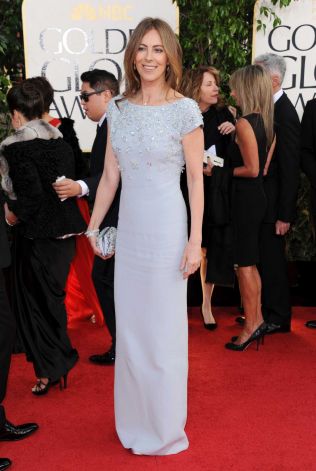
They were so funny. I loved how they quipped about Bill Clinton: “That’s Hillary’s husband!” And then called him Bill Rodham Clinton. Introducing some of the nominees in the audience, they joked about dieting. Fey said, “The Hunger Games…also what I call the six weeks it took me to get into this dress.” Poehler added: “Life of Pi”…which is what I’m gonna call the six weeks after I take this dress off!” Their porn jokes were funny too, and also how they said to Kathryn Bigelow: “When it comes to torture I trust the lady that spent 3 years married to James Cameron.”
I loved the end of Jessica Chastain’s acceptance speech for Best Actress in a Drama:
I want to thank Kathryn Bigelow my director. I can’t help but compare my character of Maya to you, two powerful fearless women that allows their expert work to stand before them. You’ve said that filmmaking for you is not about breaking gender roles but when you make a film that allows your character to disobey the conventions of Hollywood, you’ve done more for women in cinema than you take credit for.
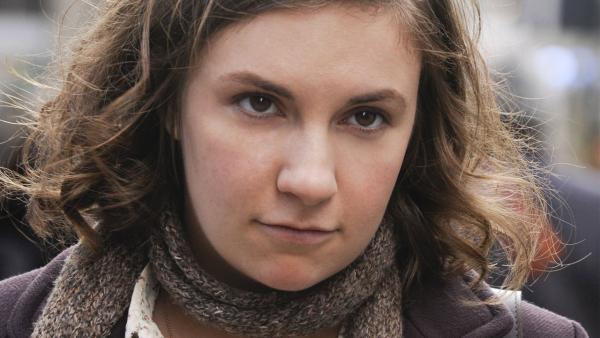
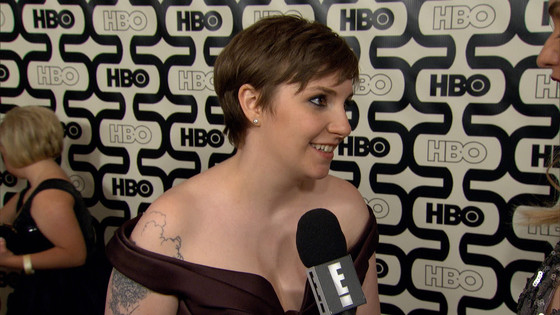
It was excellent to see Lena Dunham win and get up on stage twice. She said: “this award is for every woman who didn’t think there was a space for her. I found my space.”
Jennifer Lawrence won for Best Actress in a comedy. I still haven’t seen “Silver Linings Playbook,” but I’m dying to.
Claire Danes won her excellent portrayal of the smart, complex heroine of “Homeland.”
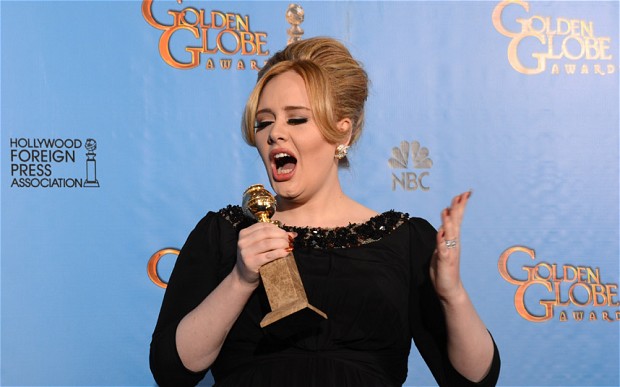
The incredibly talented Adele took home an award for showcasing her kick-ass voice in “Skyfall.”
Julianne Moore won for her role in “Game Change” as Sarah Palin.
It was funny to see Fey and Moore joke about playing Palin, a character who, of course, neither woman would’ve had the chance to play if she didn’t exist in the real world.
Jodie Foster’s speech was funny and moving and strange and I was so happy to see a woman who is 50, relatively young for a lifetime achievement honor, win the Cecil B. DeMille award.
What did I miss? Whoever it could be, without a doubt, the 70th Golden Globes was the best ever for women, and therefore, of course, the best ever at all.
My husband and I watched Lena Dunham’s “Tiny Furniture” over the holidays. I loved the movie and love that a twentysomething woman wrote and directed her own film. I felt appreciation and gratitude for Lena Dunham, that she has the talent, guts, drive, and luck to get her perspective out into the world.
I have been kind of amazed by the level of vitriol hurled at Dunham from young people, old people, men, women, internet bloggers, print media and on and on for her show “Girls.”
On Reel Girl’s FB page, I posted the latest deluge, the horrific comments from Gawker mocking Dunham’s memoir. How dare she write a self-absorbed memoir! WTF? How long have women writers been mocked for being “confessional.” Is Phillip Roth “confessional?”
Did Jerry Seinfeld get shit for being spoiled? As I recall, he was admired for it because it was funny. His show was a comedy. What about “Friends?” What about most shows on TV?
Lena Dunham, like all writers, is influenced by her own life and experiences. She is a middle class white girl. But for some reason, people expect “Girls” to be some kind of ethically pure representation of, what, I don’t even know.
I get the frustration with the lack of diversity in the media. My whole blog is partly inspired by the nonsense that one narrative and one perspective dominates. But the solution to that myopic view is not to burden the one young woman who finally gets her own show on national TV, who gets to write and direct it, with representing everyone else’s narrative.
And then, on top of that, to get mocked for her body type? I LOVE that Lena Dunham doesn’t look like everyone else on TV, especially when it comes to how young women are almost always portrayed, regardless of ethnicity. Young women on TV are skinny, unless they are the fat girl, or the fat friend, never the protagonist, as Dunham is, never the girl with a boyfriend, or many boyfriends. Too many, obviously, Dunham’s character is a slut with no self respect…
In the New York Post, Linda Stasi writes:
“It’s not every day in the TV world of anorexic actresses with fake boobs that a woman with giant thighs, a sloppy backside and small breasts is compelled to show it all.”
I hope that Lena Dunham gets more power, influence, and money (yes, through product placement to make her show economically viable, she should be doing that) and uses her position to help to get other people’s stories out into the world. But shitting all over the occasional person who manages to defy Hollywood’s cookie cutter stereotype to tell her own story in mainstream media only helps to keep all “alternative” stories repressed. I suppose that’s the point.












![70th Annual Golden Globe Awards Press Room [NO Germany, Austria]](http://reelgirl.com/wp-content/uploads/2013/01/clairedanes.jpg)