Kids trained to think stories about boys for everyone, stories about girls only for girls

Soraya Chemaly is my new favorite writer. I can’t get enough of her blogs on Huffington Post and Salon. From her post What Does it Mean that Most Children’s Books are About White Boys:

One day when my daughter was in third grade, she had to explain to a classmate what sexism was. Four kids — two boys and two girls — had been put in a reading group together, given a basket full of books and asked to talk about them and decide together which one they wanted to read and discuss.

As they went through their choices, the boy picked up a book whose cover showed an illustration of a woman in a hoop skirt. He quickly tossed it aside. My daughter suggested that it might be good, and asked if he’d already read it, because she would like to. He said no, it was a girl book and he wouldn’t read it. Her response was pretty cut and dry: “That’s a sexist thing to say,” she explained. He was a friend of hers and an intelligent kid. He paused long enough for her to realize he wasn’t sure what she meant.

“Do you know how many books with boys in them I read?” she said. “You should read girl books, too. Not reading them just because they’re about girls is sexist.”

Frankly, today, I’m pretty certain that what she, a 9-year old, told her classmate was more than most adults can muster.


Chemaly is so right. Sexism gets passed on, generation to generation, from parents who continually read their kids stories and take their kids to movies starring males. What happens when the narrative is about a girl, when a girl is shown front and center on the book cover or on the movie poster? Parents, too often, decide that kind of entertainment is just for girls.  Of course, multinational industries like Target and Disney support and enforce and make money off of gender segregation. Disney execs, when changing the title of a movie from “Rapunzel” to “Tangled” and making Flynn Ryder a costar to the female, hold a press conference, telling us, with no shame at all, that while girls are happy to see movies about boys, boys refuse to see movies about girls. So are girls just born open-minded, generous, and altruistic, perfectly happy to be marginalized, cast in the supporting roles, if they get to exist in the story at all? Or, are girls trained, from day one, from before day one, frankly, while still in the womb, that stories about boys are important?

Chemaly goes on:

Do you know what percentage of children’s books feature boys? Twice as many as those that feature girl protagonists. In the most comprehensive study of children’s literature during a period of 100 years, researchers from the University of Florida found that:

  • 57% of children’s books published each year have male protagonists, versus 31% female.

  • As with television and film, books with animated characters are a particularly subtle and insidious way to marginalize based on sex, gender and race. In popular children’s books featuring animated animals, 100% of them have male characters, but only 33% have female characters.

  • The average number of books featuring male characters in the title of the book is 36.5% versus 17.5% for female characters…

    Researchers of the study above concluded, “The gender inequalities we found may be particularly powerful because they are reinforced by patterns of male-dominated characters in many other aspects of children’s media, including cartoons, G-rated films, video games and even coloring books.”


    Please seek out books and movies and games with smart, strong girls for all of your kids. Here is a list of movies Reel Girl recommends. Check out the “Reel Girl recommends” category as well. Other categories to explore on Reel Girl include books, games, television shows, Cool and Radical Girls, and Top Heroine Rating. Or do a search for a book or movie title on Reel Girl to get my review. I rate media and products with 1 – 3 S’s for gender stereotyping and 1 – 3 H’s for heroines. For media or products to avoid, look into Reel Girl’s Worst Stereotyping category. Everything I rate, I’ve personally read, played, or viewed, often with my three daughters, now ages 4, 7, and 10. Great resources also include A Mighty Girl and Toward the Stars.

Geena Davis wants to know why we see so much Dick

This video by the Geena Davis Institute on Gender and Media is amazing!

Our goal at the institute is to dramatically increase the percentage of female characters and reduce gender stereotyping in film ans television that is made for kids, little kids, 11 and under, and what we found is very disturbing. For every one female character, there are 3 male characters. Not only that, male characters get to do stuff. They get to have fun and have adventures. Females, not so much. We also wanted to know what the percentage of male and female characters was in crowd scenes in movies. We found only 17% of characters in crowd scenes are females. Women make up 50% of population in the world…

Meet Jane. She’s an animated character. She’s adorable, quirky, and has spunk. Her special skill is that she can do absolutely anything that an animator can think of for her to do. Except stand around in a bikini. Not because she can’t, but because she doesn’t want to. So why does Jane look sad? It’s because she has never been cast in an animated film or television show. Why is that? It seems like it would be so easy to cast Jane in some interesting and challenging role for her. I want to see Jane. I mean, we see Dick. We see Dick all the time.


Please donate to the Geena Davis Institute at www.seejane.org

Art creates reality: Imagining gender equality in the fantasy world

Some good quotes here. Let me know what you think

Bono on Jay-Z in November’s Vanity Fair:

In music, we love the idea of the screwed-up, shooting-up. fucked-up artist. The one bleeding in the garret having cut his own ear off. Jay-Z is a new kind of 21st-century artist where the canvas is not just the 12 notes, the wicked beats, and a rhyming dictionary in his head. It’s commerce, it’s politics, the fabric of the real as well as the imagined life.


Stephen Mitchell in Can Love Last, the Fate of Romance Over Time

It is the hallmark of the shift in basic psychoanalytic sensibility that the prototype of mental health for many contemporary psychoanalyitc authors is not the scientist but the artist. A continual objective take on reality is regarded as neither possible nor valuable in contrast to the ability to develop and move in and out of different perspectives of reality.


New York Times, October:

Public narratives about a career make a difference. The most common career aspiration named on Girls Who Code applications is forensic science. Like Allen, few if any of the girls have ever met anyone in that field, but they’ve all watched “CSI,” “Bones” or some other show in which a cool chick with great hair in a lab coat gets to use her scientific know-how to solve a crime. This so-called “CSI” effect has been credited for helping turn forensic science from a primarily male occupation into a primarily female one.

Jezebel reacting to New York Times piece:

The New York Times today would like to suggest that storytelling is powerful, that, in the whole art/life dynamic, it’s life that imitates art, not the other way around, at least not when it comes to kids imagining viable career paths for themselves.


Whoopi Goldberg:

Well, when I was nine years old Star Trek came on. I looked at it and I went screaming through the house, ‘Come here, mum, everybody, come quick, come quick, there’s a black lady on television and she ain’t no maid!’ I knew right then and there I could be anything I wanted to be.


In the fantasy world, anything is possible, so why do little kids see so few female heroes and female protagonists on TV and in the movies? While boy “buddy stories” are everywhere you look, why is it so hard to see two females working together to save the world? Why are females, half of the kid population, presented as a minority in fantasy world? Why are TV shows, movies, and books about boys “for everyone” while shows and movies about girls “just for girls?” When we pass on stories to our kids, what are we teaching them about gender, about who they are right now and who they will become?

One more quote for you from neuroscientist, Lise Eliot:

“Babies are born ready to absorb the sounds, grammar, and intonation of any language, but then the brain wires it up only to perceive and produce a specific language. After puberty, its possible to learn another language but far more difficult. I think of gender differences similarly. The ones that exist become amplified by the two different cultures that boys and girls are immersed in from birth. This contributes to the way their emotional and cognitive circuits get wired.”

Eliot believes: “Simply put, your brain is what you do with it.”So let’s all use our brains to imagine gender equality in the fantasy world, take actions to manifest that vision, and see what happens next. I bet it’ll be amazing.

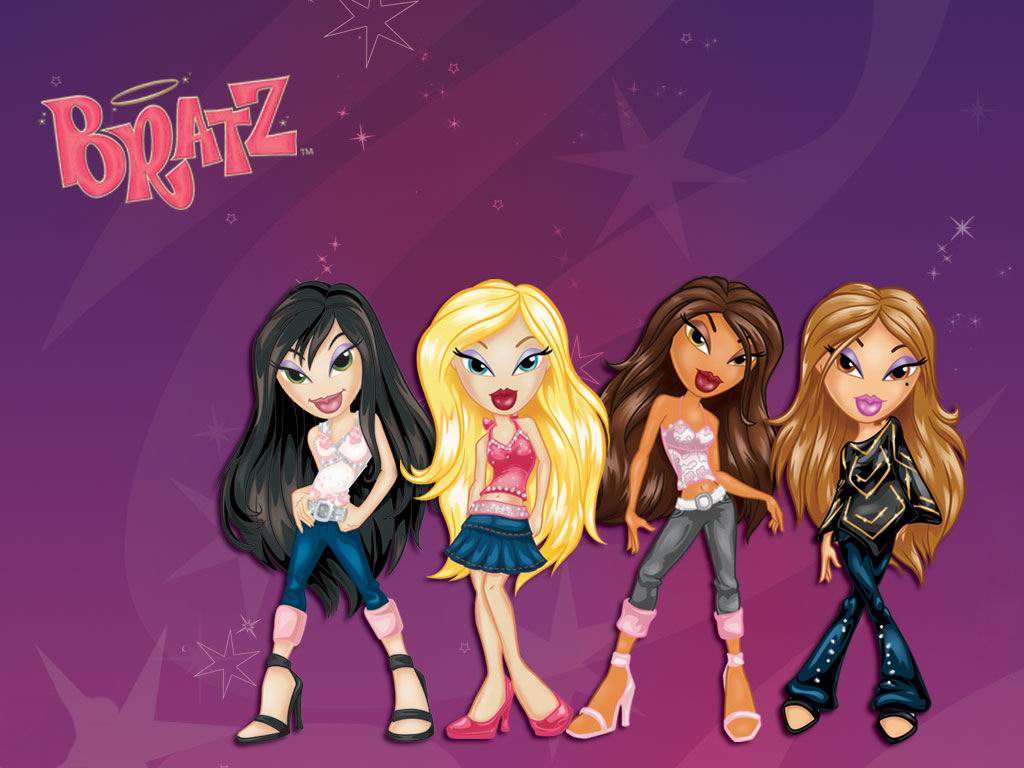
Who can tell me what these images have in common?

Stars of the Bratz TV series

bratzwallpaper-source_4cj

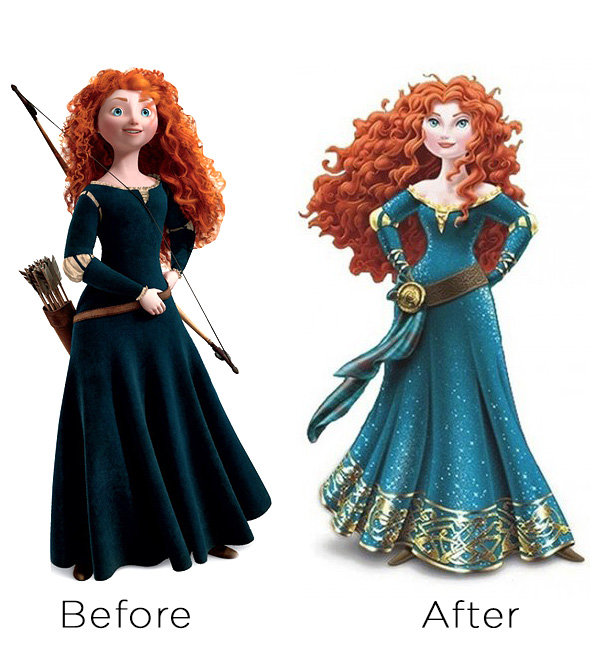
Disney’s makeover for Merida (from Spring, 2013)

meridamakeover

Elizabeth Arden ad “Beautiful gives her daughter something to look forward to.” (from 2012)

elizabetharden

10 year old model in Vogue (from 2010)

Thylane-Blondeauma_1967504a

Hint: If you were a Martian who landed on  earth, what would you think is valuable, important, or powerful about females of the human species? What would you think is important about females if you were a little girl looking at all this? And if you a boy looking?

When Hasbro sexes up My Little Pony, parents need to say ‘ENOUGH’

Coming to your daughters this August from Hasbro, Equestria Girl. First the Tooth Fairy, now this. Can our kids choices possibly get any more homogenized?

Huffington Post reports on the evolution of My Little Pony:

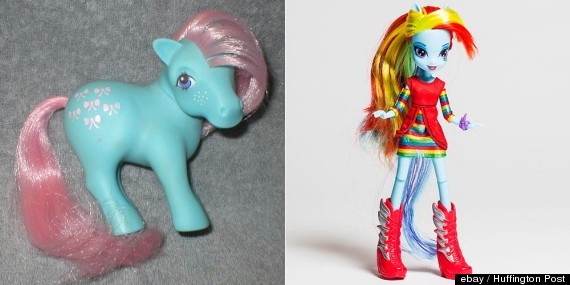
Equestria Girls,” dolls that are pony-girl hybrids (think “goth” Barbies with blue or green skin and a colorful ponytail) along with a special DVD to be released in August. Per a press release, the humanized figures are supposed to represent My Little Pony characters as teenage girls in high school.

The image on the left is an original My Little Pony from 1983, on the right, is 2013’s Equestria Girl.
my little pony

The release goes on to describe these characters with words like “glamour,” “stylish,” “ultra-chic,” and it is noted that each doll features her own signature “cutie splash,” an individual design that is similar to the “cutie mark” on her pony alter ego.


According to the New York Times, there’s much more involved with the Equestria Girls roll out than a DVD:

The new property will get the red-carpet treatment when it premieres as a full-length animated feature at the Los Angeles Film Festival in June. The movie, created by Hasbro Studios, the company’s production division, will then be released in more than 200 theaters nationwide; its trailer will start appearing in theaters on Wednesday.

There will also be a television debut on the Hub network. Do you see how narratives on movies and TV sell products? Are, in fact, created to sell products? Do you see how important it is for girls and boys to see narratives featuring strong, female protagonists?

What really sucks about Equestria Girl is that the “My Little Pony” TV show, while relegated to the Pink Ghetto, features 6 female protags who often get adventurous and exciting storylines. The ultra-skinny, micro-mini clad Equestria Girl above is based on Rainbow Dash. She looks like this.

rainbowdash

On the current show, Rainbow Dash is a jock/ athlete and the fastest flyer in Equestria. My Little Pony fan Kya writes on Reel Girl’s Facebook page, “I feel like if the show’s characters were real they’d be just as horrified to see what they’ve been made into as we are!”

Peggy Orenstein’s reaction, emailed to the HuffPo:

It’s up to parents and those who give a hang about girls actual development and well-being to say absolutely neigh. You want a sexualized, self-objectifying girl? Give her sexualized, objectified dolls. You don’t? Have some conversations with the other parents in your community about the potential impact of self-sexualization and self-objectification on girls’ development — including negative body image, eating disorders, depression, low self-esteem, poor sexual choices, etc. — and choose from the many other toy options that are rising up in response to this inappropriate trend.

Seriously, come on parents! Stop buying into this shit. Speak out against the sexualization of kids. It’s dangerous.

Reel Girl rates Equestria Girl toys ***SSS*** for major gender stereotyping.

After massive protest, Disney pulls new Merida from site

Exciting news! Today, Rebecca Hains, blogger and media studies professor, reports:

“As of today, Disney has quietly pulled the 2D image of Merida from its website, replacing it with the original Pixar version. Perhaps we’ll be spared an onslaught of sexy Merida merchandise yet.”

YAY! Check out the link, it’s true! BRAVE Merida is back.

I guess Disney was right to be so terrified of creating a strong, BRAVE, female protagonist (along with Pixar studios which hadn’t had ANY female protags before “Brave.”) It looks like Merida could be turning Disney’s franchise on it’s head. That’s pretty damn heroic.

Another mistake Disney made with “Brave?” They hired a female director. They fired her, but it was too late. Brenda Chapman wrote “Brave” based on her daughter. She was furious with the character’s transformation and wrote publicly about Disney’s terrible mistake.

Of the debacle Hains writes:

That’s right: Although Merida was created by a woman as a role model for girls, the male-dominated consumer product division at Disney has ignored the character’s intended benefits for young girls, sexualizing her for profit. Compared with her film counterpart, this new Merida is slimmer and bustier. She wears makeup, and her hair’s characteristic wildness is gone: It has been volumized and restyled with a texture more traditionally “pretty.” Furthermore, she is missing her signature bow, arrow, and quiver; instead, she wears a fashionable sash around her sparkly, off-the-shoulder gown. (As Peggy Orenstein noted when she broke the news of the redesign, “Moms tell me all the time that their preschool daughters are pitching fits and destroying their t-shirts because ‘princesses don’t cover their shoulders.’” I’ve heard the same from parents, as well.)

Is the sexualized  image of Merida gone for good? Has Disney learned a lesson? Or will that lesson be: No more strong female characters leading a film! No more female directors writing about their daughters! Keep the females weak and quiet!

It’s up to you. This could be a turning point. Parents, please use your voice and your wallet to keep strong, heroic females showing up in narratives and images marketed to your kids. Right now, girls are missing from children’s media and when they do appear, they’re sexualized. This is normal. Not healthy, but tragically, perfectly normal.

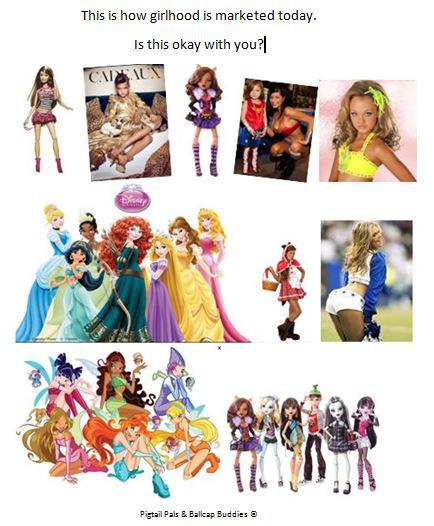
Yesterday, Melissa Wardy posted this image on her Pigtail Pals Facebook page, reminding us Merida’s new image was not created in a vacuum.

pigtails

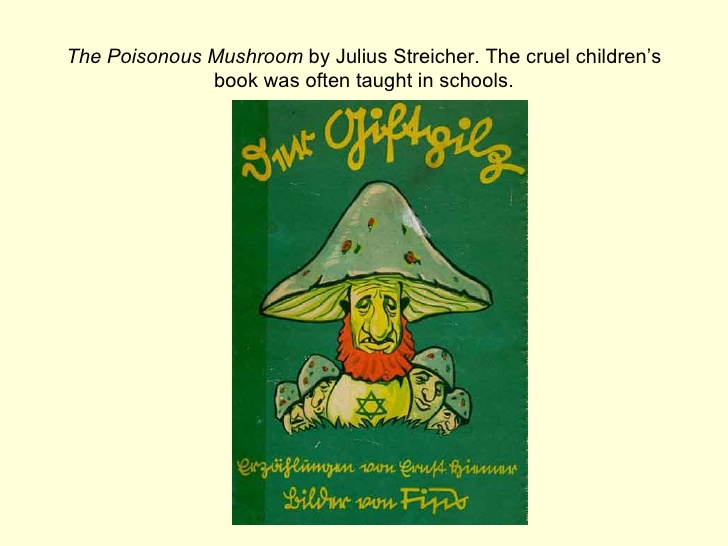
Objectifying and sexualizing girls is dangerous. A first step to abuse is always dehumanizing the victim. Propaganda, in the form of images and narratives, effectively dehumanizes on a mass scale.

Images/ narratives of Jews circa 1938

nazibook

Africans circa 1931

tin_tin_in_congo11

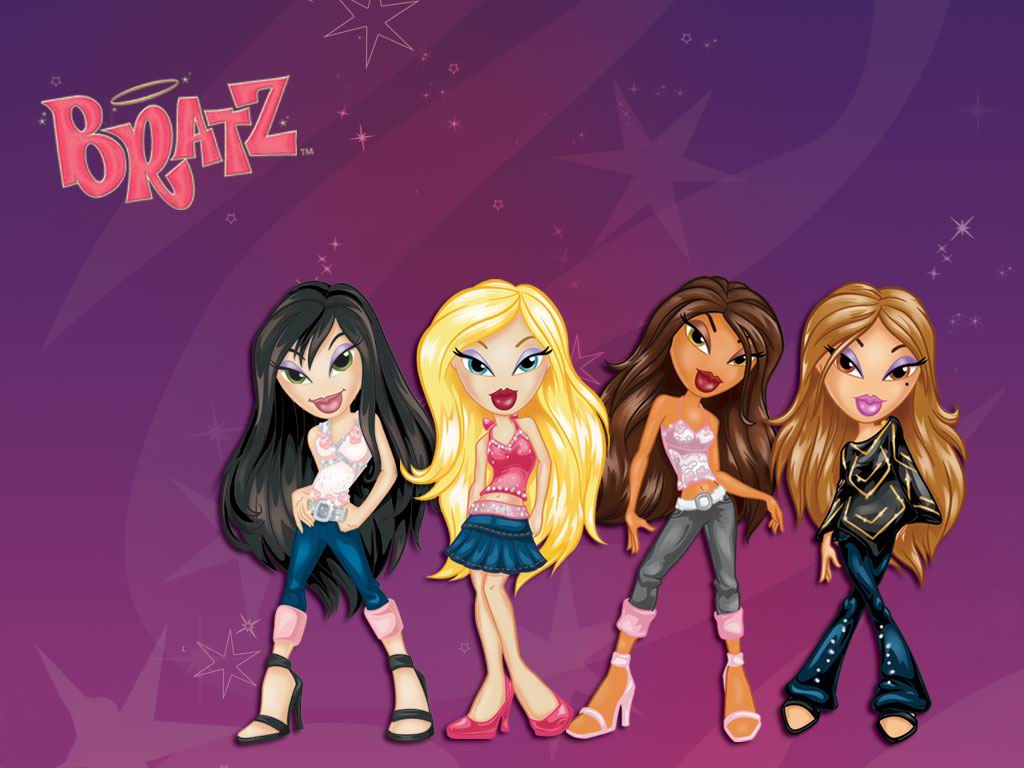
Females circa 2013

bratzwallpaper-source_4cj


It’s easy to look back on history and wonder: How did people ever put up with that? I’d never buy into it, not to mention expose my child to it. But what are you participating in right now that is completely accepted, not to mention celebrated, by our culture?

Be part of the solution. Demand narratives with strong female characters for your kids.

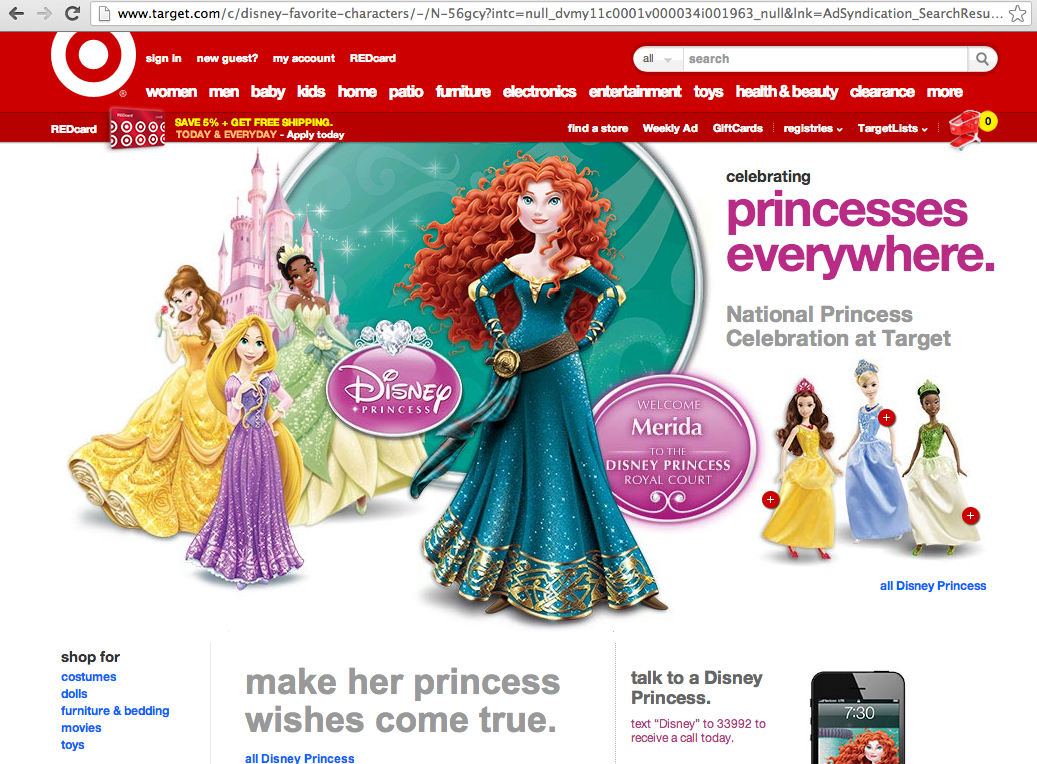
Update: New Merida may be off Disney’s site but she’s showing up all over the place including Target. Below is Target’s web page.

meridatarget


Disney Junior ratings expected to surpass Nick Jr. for first time

I just blogged about watching 3 shows on the Disney channel over Spring break, when I saw a link on Elizabeth Sweet’s Twitter feed to an article on these three shows from today’s New York Times:

On Tuesday Nielsen data for Disney Junior will be revealed for the first time; the new channel is expected to beat its rival, even though Nick Jr. is available in 75 million homes, 25 percent more than Disney Junior.

Disney now has the top three preschool cable programs, led by what appears to be a monster-size new hit, “Sofia the First,” a cartoon that stars a pint-size princess and her zany animal friends.

The 3 programs, the ones I just wrote about, are Doc McStuffins, Jake and the Neverland Pirates, and Sofia the First. That’s the Disney Junior morning line up.

In my blog, I called the home of these 3 shows the Disney Channel. Apparently, the channel is actually called Disney Junior. The goal is to hook kids while they’re young on Disney Junior and then transfer them to the Disney Channel for 6 – 14 yr olds.

“These children are the Walt Disney Company’s most important audience,” Ms. Sweeney said. “They’re the future, and this is their first introduction to our brand.”

I’ve got to admit, out of those three choices– PBS, Nick Jr, and Disney Junior, the latter has the best shows for female protags. The NYT article states Dora is getting dethroned by Sofia. Physically, I prefer Dora’s appearance, especially since both girls are supposed to be Hispanic. Dora actually looks the part. But Dora lost her coolness when she morphed into a princess herself and then was eclipsed by her cousin, Diego. I agree, though for different reasons, Dora has fallen from grace.

PBS’s morning line up is terrible for female characters.

Is the good news about the high Disney Junior ratings that female characters sell?

Disney Channel morning line-up outshines PBS in female characters

Last week, we were on Spring break and staying at the house of a friend of mine up in Tahoe. The TV channels were different, and we found ourselves watching the Disney Channel in the morning. I was pleasantly surprised by it. Possibly, in part, because my expectations were so low. Or perhaps, because I was so disgusted and appalled by the domination of male protagonists on PBS, the “educational” station.

Here is what we watched: “Doc McStuffins.”

DOC

Dottie McStuffins is a six year old girl who wants to grow up to be a doctor like her mother. Her animal friends, 2 female and 2 male, help her out fixing and healing. How cool is that? Also, she’s African-American. Some stuff bugs me, like her purple glittery doctor’s bag along with various other pink and purpleness, but mostly, I love this show. Reel Girl rates Doc McStuffins ***HHH/ S***

Next up is “Jake and the Neverland Pirates.”

princesspirate

Obviously, Jake is the star. And, surprise, surprise, there are 2 main male characters to one female character. Not only that, the Minority Feisty is Pirate Princess. Gag. But, in every episode I saw, she had a big part, second to Jake, and she was smart, brave, and helped to save the day. Clearly, Princess Pirate’s power is safely circumscribed by pink and the more heroic Jake, but Reel Girl rates Jake and the Neverland Pirates ***H/SS***

And finally, “Princess Sofia.”

Princess-Sofia-disney-princess-33640172-590-500

I was so dismayed when I heard about the debut of this supposedly Hispanic princess that Disney decided to make light-skinned and blue-eyed that I didn’t even blog about her. When I finally watched her last week, I liked her okay. The show surprised me in some ways. For example, the princesses had to design their “dream castle.” I groaned, dreading decorating tips. I was thrilled when Sofia said that in her castle, she wanted a laboratory for a Sorceress and a stable for flying ponies. My 4 year old daughter was pretty excited about that too. My main complaint with the show– as with the Barbie movies–is the look of the females. If we could just get them out of the puffy dresses that are so endlessly distracting, it might be a good show. Unfortunately, the way its stands, the message girls get (and boys about girls) is first and foremost, girls must look a certain way. Once you get the look down, adventures and exciting things might just happen to you. If you don’t look this way, you’re invisible, you don’t exist at all. Also, I HATE that demure, shy way she’s standing. Ugh. Reel Girl rates “Princess Sofia” ***H/SS***

PBS blind to its own sexism says former employee

This comment from Lisa on my post “PBS puts another male protag in coveted morning line up:”

Oh, Margot, you have just hit upon one of my pet peeves. I used to work for a PBS affiliate many years ago. At one point in the late 1990s I attended a PBS conference at which they rolled out the slate of new kids’ shows for the coming season. I was appalled not only at how few of them featured female characters, but how several of them were named for the male character: Caillou, Arthur, Franklin, on and on. As we were walking out of the ballroom and everyone was talking excitedly, the (female) VP of Development for our station said something to the effect of, “Wasn’t that great?” to me. I said, “Yeah, but where were the GIRLS? Did you notice these are all shows with boys in the lead?” She looked shocked and then as light dawned she said, “You’re right, where ARE the girls?”

I am disgusted but not surprised that even some 13+ years later, nothing has changed. I think there’s a tendency to think of PBS as more progressive, but presenting a more gender-balanced kids programming division is clearly not a priority for them.

One show that I really enjoyed on PBS once I had my daughters was Sagwa, which followed the adventures of a female Chinese Siamese cat – the title character! Notably, created by the wonderful author Amy Tan. Of course that is no longer on the air….OMG!!  I just looked up Sagwa to see when it aired, etc. and discovered this (via Wikipedia, though cross-checked in a couple other places and it seems to hold up):  “The name of the titular character, Sagwa, literally means “silly melon head”. Although innocuous without context, this phrase is typically regarded by Chinese to be an insult, carrying connotations of incompetence, foolishness, and even mental retardation.”

Wow. So one of the few shows actually named for a female character insults her by giving her a derogatory name. So frustrating!!


I love what Lisa says about “progressive” too, because you so often hear about the “liberal” media, especially PBS. I guess invisible females is just politics as usual. Isn’t it nice that people across the aisle can agree on something?

Girls are as self-centered as all kids

Girls are not born more open-minded or altruistic. Girls read stories about boys and watch movies about boys because they are trained to. (Thank you, PBS. Please see my last post.)

Doesn’t every psychologist and teacher tell us that kids need to be “mirrored?” To create healthy self-esteem, parents aren’t supposed to project their own opinions on to little kids, but reflect what the kid expresses: “You are lifting the box! You’re smiling!” etc.

So why do the “experts” forget mirroring when it comes to gender? Why do we show our kids a warped, stereotyped mirror and then exclaim, “Look at that, girls just love princesses!” Girls want to see girls. They are just as self-centered as all children are. Unfortunately, in kid world, representations of females are severely limited. They will take what they can get.

There’s a positive side to this. We can train all kids to stay open to diverse stories by exposing them to all kinds of protagonists. Please read your kids books, show your kids movies, tell your kids stories and help them write their own, do imaginary play featuring strong female characters. It will help their brains grow not to mention their self-esteem.

reelgirl2.gif