If a stormtrooper had no epic, would he exist?

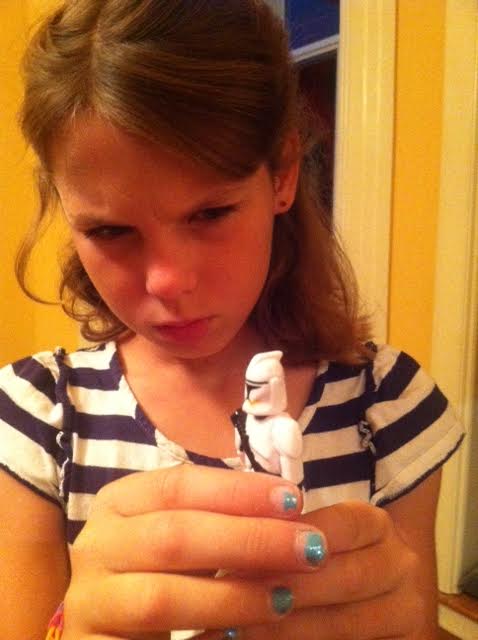
This morning, my three daughters had Honey Nut Cheerios for breakfast. Today, I’m not going to blog about the male Honey Nut bee or how there are no female mascots at all on children’s cereal boxes– that’s right ZERO– because I’ve done that before. I won’t get into how my husband said, as the girls fought over who got to place the brave adventures of Honey Bee in front of her bowl, that cereal boxes are a kid’s first newspaper. Today, I’m blogging about the coveted prize inside the box. What did my kids get? A stormtrooper pen.

Stormtrooper

So here’s my question for you: If there were no “Star Wars” double trilogy (is there a better word for the length of this epic?) would a kid covet a stormtrooper? If toy makers filled the shelves of Target with these white, faceless figures, would kids want them without Hollywood blockbusters providing a context?

The answer is no. To sell a toy, having a story helps a lot. It’s all about the narrative. Next question: Where are the narratives where girls get to be heroes? Where are the narratives, the epic trilogies, the Hollywood blockbusters, where girls get to star? If you think of a female character who is shown, front and center, again and again, who is she? What image comes to mind? Is she, perhaps, a princess?

The gendered toys marketed to children are a symptom. The disease is that girls have gone missing from narratives, sidelined and marginalized, in literature, religion, art, and politics, for thousands of years. In 2013, the consistent narrative where girls get to exist is, still, as the princess.

Yesterday, when I wrote about Goldie Blox selling stereotypes, people told me, if I don’t want pink and princess I should just go to the “boy” aisle. But the problem with the “boy” aisle is that there no female protagonists to be found there. Whether it’s LEGO or a coloring book, whether the product is from the Lord of the Rings, Star Wars, Harry Potter, or the Justice League, female characters are in the minority if they exist at all.

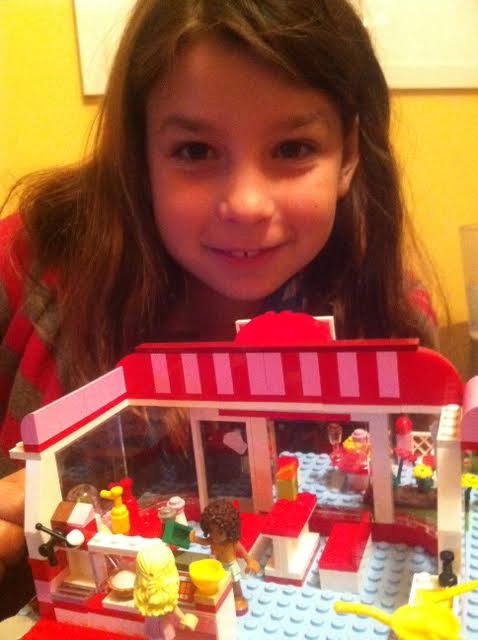
My seven year old daughter wanted a LEGO set. We went to three stores, and found no LEGO where girl figures or girls’ stories were the basis of the game except for LEGO Friends, which we found in the “girl” aisle. What epic, magical adventure were these girl figures engaged in? They were at a cafe. My daughter also completed a set where they were at a bakery. I just bought her a third set where the girls are at a high school.

alice

My older daughter, after getting frustrated with the LEGO choices, opted for The Hobbit set which includes a male Hobbit, a male wizard, and 5 male dwarfs. No females at all.

Hobbit

Toymakers claim when they put “alternative” toys on the shelf, they just don’t sell. This is why I ask: If a stormtrooper had no “Star Wars,” would he exist? Where are the narratives where girls are seen having epic adventures? Until we fix that problem, we’re going to keep seeing gendered aisles at Target.

Did you know viral Goldie Blox ad is selling princess themed toy?

This is how fucked up kidworld has become. Finally, parents are catching on that gender stereotyping children limits potential. So what do we get?  An anti-everything pink and princess themed ad, which is great, selling a princess themed toy. WTF?

Here’s the ad.

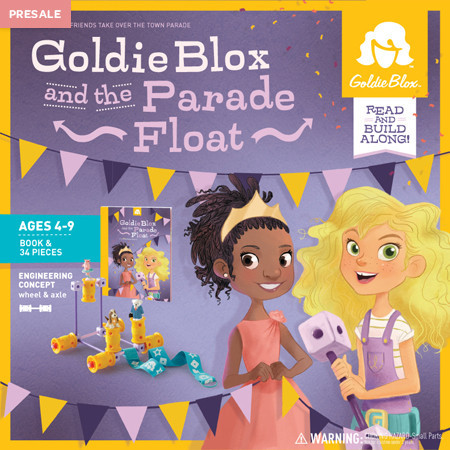
Here’s the toy, which isn’t so great. “In this much-anticipated sequel, Goldie’s friends Ruby and Katinka compete in a princess pageant with the hopes of riding in the town parade. When Katinka loses the crown, Goldie and Ruby team up to build her a parade float as well as other fun rolling, spinning, and whirling designs.”

paradefloat

Read this blog by Rebecca Hains to learn more. “I have been rooting for GoldieBlox since their Kickstarter days, and I love their mission to break stereotypes and spark a love of STEM in girls. But by pandering to princess culture, this new offering just isn’t living up to the promise.”

Melissa Wardy also has a great blog on this: “You cannot create a toy meant to break down stereotypes when you start off with the ideal that ‘we know all girls love princesses.’ ”

Another good one here (though I think it’s fine to change sexist lyrics and make them your own.) Goldie Blox, no thanks. “It’s the same dumb-downed princess bullshit as the rest of the stuff they are shoving down the throats of our daughters.”

I am pretty sure I gave money to Goldie Blox’s Kickstarter campaign. I know I intended to, but I’m not positive I followed through. I certainly promoted the toy in its earliest days on Reel Girl’s blog, Facebook page, an my Twitter feed.

Once again, I like the Goldie Blox ad. I understand the product is supposed to be a step towards getting girls interested in engineering, but this doublespeak makes me feel like I’m being taken for a ride on a big, old float right down Main Street. I would not have given money or promoted a toy like the one above. I don’t know if Goldie Blox’s “success” made it become this or if this was this always the intention. Maybe, like someone on Reel Girl’s Facebook page writes, Goldie Blox is trying to “straddle the market.” If so, that kind of risk-free, inauthentic approach appeals to me even less than the product.

The toy box shown at the end of the ad is Goldie Blox and the spinning machine. You could argue that the Goldie Blox princess is just one image, or one character, of many. But what I thought is that this brand was going to be different. In a market saturated with princess/ pageant narratives, Goldie Blox was going to stand out as moving beyond stereotypes, not just in some products, some of the time. Maybe I misunderstood the message, but aren’t parents seeing this ad misunderstanding it as well?

Here are 4 previous blogs I’ve written about Goldie Blox where you can see how I progressively begin to question what is being created and sold to kids. One of the lines in the adoring media that really creeps me out states that those sweet, caring girls have “an inclination to help.” In boyspeak, we call that same impulse something more heroic: “a rescue fantasy.”

Wouldn’t it be nice if toys, and the language used to market them, was created for humans, not stereotypes?

‘The thing is, 89% of engineers are male, so we literally live in a man’s world’

GoldieBlox: new building toy created around a narrative with female protagonist

Ever heard of a prince with ‘an inclination to help’ a maiden in distress?

Toy companies start marketing sexism as progressive


Female pilot speaks out against sexism

I got this comment on Reel Girl today:

I just wanted to say thank you so much for making this post on female pilots and the lack of recognition towards important female war heroes. As a female pilot in training, hearing about great female pilots is always encouraging especially when aviation is so dominated by males. It’s disgusting with what happened to the WASPs, it just goes to show the existing sexism towards females in our North American society. I’m so sick of it, but I’m really glad I found your blog.


Thanks again for making this post, shortly after I found it I used the WASPs’ story and made a poem about them for an English Language Arts assignment.


Oh and regarding the movie “Planes” I tried watching it despite having little hope for the story and characters being any bit original. Let’s just say that I gagged when the one female plane glomped the sidekick male plane, and covered him in kisses after he “whooed” her with music the previous night. It made me sick on so many levels, I’m so glad I only watched it online…


Here is the poem she wrote, I love it.

We are the WASP

The women who flew,
60 million miles or more.
Two years of service,
the men demand our lore.

Status denied,
but we didn’t quit.
The men may take glory,
but we still flew in our story.

Our achievements forgotten,
only known by few.
In history books erased,
schools without a trace.

Lest we forget,
The first women of wings.
We are the WASP,
the women who flew.

See how real life inspires art inspires real life?

I assume this commenter is a young woman. Imagine how kids feel when they see sexist scenes like the one in “Planes” again and again, like it’s normal and okay and cute. What kind of art do they make? What kind of imaginary games do they play? At my daughter’s preschool, a three year old girl told the teacher she couldn’t be a pilot, but a pilot’s wife. A three year old. Those limits on her imagination are our fault, grow-ups. Do we really want to train a new generation of children to accept gender stereotypes?

One more time, here’s the preview of Disney’s “Planes.”

Plane One: What’s taking this guy so long? Is he really as good as he says he is?

Plane Two: No, better.

Plane One: Whoa! Who was that?

Plane Three: (Descending fast on top of the other two) Well, hello ladies! Ready to lose?

Plane Three goes on to leave the “ladies” in the dust.

As the commenter points out, that’s just one example of the sexism rampant in “Planes.” Sexism that is mirrored in so many movies made for children in 2013.

And here’s a photo of the real life WASPs

wasp3

Women, please tell your stories, real and fictional, and tell them publicly. It will change the world.

Reel Girl’s working list of movies with female protagonists for ages 10 and up

Along with wanting to walk to the store all by herself and going to bed later, my 10 year old has parted ways with her two younger sisters at movie time. She wants to see stuff “for older kids.” To her, right now, that means no animation. Ever since we saw “Soul Surfer,” which the whole family enjoyed, she’s been asking for more of the same. So now, on Saturday and Sunday, she and I have been watching together. Last week, we saw “Whale Rider,” which was amazing, and “The Craft,” also good. Last night we saw “A Little Princess,” which I liked too, but I could’ve done without the repetition of “every girl is a princess!” even though, clearly, the term meant special and worthy.

So, on Facebook, I asked Reel Girl fans for suggestions. Here are my requirements for what I want my 10 yr old to see, which has little to do with what the MPAA deems age appropriate. The movie must have a heroic female protagonist. Swearing is OK, so  are sexual references, and some drug use. Not okay: gore, nudity, glorification/ focus on drugs/ alcohol.

Ideally, what I am really looking for, as with animation, is narratives where girls and women are strong, cool, and smart. I prefer not to see a sole girl continually struggling against the patriarchy, where she is told she can’t do this or that because of her gender. I understand, obviously, the importance of that story, but I, for one, am sick of it. Why do my kids need to learn about sexism before they can see girls being strong? Can’t they just see girls being strong? But, that is just my hope, not a disqualification. “Whale Rider” is all this conflict, where the female protagonist is continually shunned for her gender. Again, a great movie, but I hate having my daughters hear and see, repeatedly, at this age, that girls they can’t do something because they’re female.

Also, ideally, girls/ women work together to save the world. I realize this is super hard to find.

Again, the four movies I’ve just seen that make Reel Girl’s list:

Soul Surfer

Whale Rider

The Craft

A Little Princess

We have also seen “Hunger Games” together. This movie makes the list. I know some feel the violence is too much for a 10 year old, but I disagree. The violence is not graphic. I’ve written quite a bit about violence on this blog and how in narratives, its metaphorical, to illustrate intense feelings of “being attacked” or solitude or the world caving in. Humans, and certainly kids, have big emotions and violence depicts that in a way we can see.

Also, in the past we have seen “Avalon High” which is GREAT.

Below are your suggestions complied from Reel Girl’s Facebook page. Please keep the ideas coming. I hope to put together an official list of Reel Girl recommendations, as I have for younger kids. Please do not suggest animated movies, or movies for younger kids, as I have a list for those already. Thank you! So here they are:

Moonrise Kingdom

Run Lola Run

Man in the Moon

Pitch Perfect

Bedknobs and Broomsticks (Angela Landsbury)

The Worst Witch

Fried Green Tomatoes

Anne of Green Gables

When Billie Beat Bobby

How to Make an American Quilt

 A Far Off Place

Cold Comfort Farm

Sisterhood of the Traveling Pants

Winn Dixie

Big Business

Now and Then

Ghost

My Girl

Roman Holiday

Elektra

Supergirl

Beaches

Foxfire

Now and Then

Saved

True Grit

Secret Life of Bees

V for Vendetta

Central Station

Reaching for the Moon

Paper Moon

Miss Potter

Belle

Violette

Wadjda

Polar Bear King

Journey of Natty Gan

Sapphires

Little Women

Emma

Pride and Prejudice

Serenity

Rigged

Wanted

Missing

Centurion

Million Dollar Baby

Æon Flux

Pacific Rim

Tank Girl

Space Camp

Wild Hearts Can’t Be Broken

Freedom Writers

The Parent Trap

The Miracle Worker

Little Women

Uptown Girls

Erin Brockovich

National Velvet

Miss Firecracker

Broadcast News

Just Wright

Bride and Prejudice

Becoming Jane

Because this is a list in progress, I will transfer movies I’ve taken off the suggestions list from above to make up Reel Girl’s official list below.

The movies listed below feature a heroic female protagonist, and, except where noted, get a Triple H rating. Movie with links, I’ve reviewed on Reel Girl.

These movies may include swearing; sexual references, brief sexual encounters like making out but no nudity; violence but not gore; brief drug use but no focus or glorification of drugs/ alcohol

Soul Surfer

Whale Rider

The Craft

A Little Princess

Hunger Games

Avalon High

Ever After

Snow White and the Huntsman

Wrinkle in Time

Charlie’s Angels **HH**

Catching Fire

Hanna

Clueless ***HH***

Freaky Friday (2003) ***HH***

Bend It Like Beckham

Akeelah and the Bee

Rabbit Proof Fence

Gravity

Could I love Whoopi Goldberg even more? Check out this video

I am happy this beautiful video is going all around the internet, not only because, as bell hooks writes, it’s all about love, but it contains a version of Goldberg’s musings on racial diversity, “Star Trek,” and the future. Here’s what Goldberg says:

Doing Star Trek made me incredibly happy, because without “Star Trek,” people would still think there would be no black people in the future, okay?…Do you know about that? Do you why I say that? Before ’63, which is when I think “Star Trek” appeared on American television, from the inception of film and television until 1963 in any sci-fi movie, there were no black people, and that always bothered me.


Watch this video and see how a TV show can move and inspire people, and then remember, this is not a quote or video just about television, but storytelling, which has had this role of shaping and inspiring the human race since the beginning of time.

Now, producers: Please make this incredible performer the next guest host of “Saturday Night Live. In her entire career, she has NEVER been asked to.” Please Tweet using hashtag #WhoopiHostSNL

From Time Magazine to animation: female chefs go missing

Time Magazine’s “Gods of Food” of story features zero women. That’s right, ZERO. Here are the gods.

godsoffood

Now, take a look at these chefs from the children’s movie “Ratatouille.” Do you notice any similarity in the pictures?

remy3

The photo above is actually missing the two male costar chefs of the movie: the rat, Remy, and his BFF, Linguini. Here they are.

remy-and-linguini-form-a-friendship_jpg

Oh, wait. There’s another male chef featured prominently in this children’s movie, Remy’s idol, Auguste Gusteau.

Auguste_Gusteau

The Daily Beast comments on Time’s sexism:

If aliens landed on our planet and picked up a copy of Time magazine, they would think that men do all the cooking in the world.


Here’s the thing: children are kind of like aliens. They’ve just landed on earth, and this is the world grown-ups show them? A fantasy world, created with children in mind, no less, where females go missing. “Look, honey, you can grow up to be invisible! That’s right, daughter, it’s more likely that a talking rat can become a world class chef than a female human child.”

You think I’m exaggerating the lesson kids are learning here? See that one female chef in the second picture, looking sad in the background? Her name is Colette, and she actually has a monologue in the movie where she bemoans the sexism of French kitchens. Parents are supposed to hear that speech, smile, and think: “You see, there’s a feminist in the movie! Isn’t that great?”

I call Colette’s character the Minority Feisty, and there are clones of her in most children’s movies made today. She is a “strong female character,” and there can be more than one in a film, but she’s always in the minority compared to male characters. Her role is usually to help the male on his quest. Like a First Lady, she cheers him on and gets to give him a kiss. Still, when parents see the Minority Feisty, they’re grateful and somehow miss that instead of teaching a 4 year old all about sexism, it would be much cooler, and more effective, to show kids females actually doing stuff– having adventures, taking risks, solving problems, and being heroic. Like, for example, instead of Colette’s 2 minute talk, why not make a movie starring a female chef and her female rat BFF with a female mentor, cooking in a room of females? Or at least, a room half full of females? Because, believe it or not, girls are one half of the kid population, but if you were an alien and you saw the G movies on earth– whether they featured humans, animals, toys, fish, robots, cars– you would think girls were a tiny minority on this planet.

Another thing drives me absolutely crazy about this cooking sexism. In kidworld, rumor has it that cooking is a girlie thing. “Girl” toys and dolls involve cooking, while “boy” toys and dolls– whoops, I mean action figures—  involve fighting and stuff. So how come everything shifts and cooking becomes a guy thing? Seems like if cooking earns money and acclaim, then abracadabra, it’s for the opposite gender. The same is true for all kinds of gender stereotypes that dominate kidworld, for example, the belief that girls are artsy and verbal (the latter referring to reading and writing, not actually speaking.) But how come female writers get designated to chicklit? if girls are so artsy, why are the “great” artists are mostly men? Check out this image from the Guerrilla Girls.

museumsunfairtomen

The truth about this stereotype is that we prefer our girl children quiet, with a nose in a book, coloring, or doing something “girlie” like that. While, you know, boys will be boys, loud and misbehaving, with all their “boy energy.”

Gender stereotypes of kidworld have nothing to do with innate ability and everything to do with social status. Sadly, we perpetuate those made up differences in movies made for kids and brainwash a new generation. Take a look at this video from the Geena Davis Institute on Gender and Media.

Whoopi Goldberg never been asked to host SNL

In The LA Times, Whoopi Goldberg is quoted on her response to the recent debate about the lack of African-American women on SNL:

“These folks are 15 years late on this question,” Goldberg told Showbiz411. “‘Saturday Night Live’ has looked like this for 15, 16 years. I don’t understand. Why is everyone up in arms? Didn’t anybody see it before? Clearly not.”

whoopi

The story goes on to report that Goldberg has never been asked to host SNL.

What?

I had to read that sentence again. Here it is:

The president of Goldberg’s production company said the Oscar-winning actress and comic had never been asked to host “SNL.”

Not only is Goldberg a comedian, she has been nominated for 13 Emmy awards. She is one of the few entertainers who has won an Emmy, Grammy, Oscar, and Tony Award.

Recently, Kenan Thompson, one of the show’s African-American male actors, complaining he was tired of dressing as females for skits, lamented the slim pickings out there for funny black women: “It’s just a tough part of the business. Like in auditions, they just never find ones that are ready.”

Who could possibly think veteran Whoopi Goldberg isn’t ready to host SNL?

Or do you think, perhaps, the reason we haven’t seen Goldberg host the show has nothing to do with her talent and everything to do with her body? Not only is she female and black, Goldberg doesn’t look like Kerry Washington.

2013 Vanity Fair Oscar Party at Sunset Tower - Arrivals

Washington, with her skinny physique, big eyes, and high cheekbones, in spite of her skin color, manages to tick off our current ideals of what a “beautiful” woman is. That, my friends, is why SNL let her host the show, because she is “beautiful” along with being talented. Let me add here that I love Kerry Washington. I’m a fan of “Scandal.” I’m psyched Washington busted a barrier. But the reason Whoopi Goldberg didn’t do the same “15 or 16 years ago” is because she doesn’t look like a Vogue model, a magazine, by the way, which has had a number of African-Americans on its covers that I could count on my own two hands.

Now, take a second to imagine if the success and exposure of white, male comics was determined by how “attractive” they are. It’s ridiculous to even think about.

People wonder how smart women get so obsessed with their appearance and why the pursuit of female “beauty” is an ever-growing multibillion dollar industry. Are women vain, crazy, superficial? Sadly, it’s more like they’re practical, recognizing how the world opens or slams doors based on how well they taper to a cookie cutter image of how women should look.

One of my favorite quotes about the power of media over little kids comes from Whoopi Goldberg:

“Well, when I was nine years old Star Trek came on. I looked at it and I went screaming through the house, ‘Come here, mum, everybody, come quick, come quick, there’s a black lady on television and she ain’t no maid!’ I knew right then and there I could be anything I wanted to be.”

Hopefully, children today see Whoopi in the media and believe in their own potential. Of course, It would help if more of the guys in charge would put her on the stage, front and center. It would be even better if the guys weren’t the ones in charge of where she gets to stand.


Kids trained to think stories about boys for everyone, stories about girls only for girls

Soraya Chemaly is my new favorite writer. I can’t get enough of her blogs on Huffington Post and Salon. From her post What Does it Mean that Most Children’s Books are About White Boys:

One day when my daughter was in third grade, she had to explain to a classmate what sexism was. Four kids — two boys and two girls — had been put in a reading group together, given a basket full of books and asked to talk about them and decide together which one they wanted to read and discuss.

As they went through their choices, the boy picked up a book whose cover showed an illustration of a woman in a hoop skirt. He quickly tossed it aside. My daughter suggested that it might be good, and asked if he’d already read it, because she would like to. He said no, it was a girl book and he wouldn’t read it. Her response was pretty cut and dry: “That’s a sexist thing to say,” she explained. He was a friend of hers and an intelligent kid. He paused long enough for her to realize he wasn’t sure what she meant.

“Do you know how many books with boys in them I read?” she said. “You should read girl books, too. Not reading them just because they’re about girls is sexist.”

Frankly, today, I’m pretty certain that what she, a 9-year old, told her classmate was more than most adults can muster.


Chemaly is so right. Sexism gets passed on, generation to generation, from parents who continually read their kids stories and take their kids to movies starring males. What happens when the narrative is about a girl, when a girl is shown front and center on the book cover or on the movie poster? Parents, too often, decide that kind of entertainment is just for girls.  Of course, multinational industries like Target and Disney support and enforce and make money off of gender segregation. Disney execs, when changing the title of a movie from “Rapunzel” to “Tangled” and making Flynn Ryder a costar to the female, hold a press conference, telling us, with no shame at all, that while girls are happy to see movies about boys, boys refuse to see movies about girls. So are girls just born open-minded, generous, and altruistic, perfectly happy to be marginalized, cast in the supporting roles, if they get to exist in the story at all? Or, are girls trained, from day one, from before day one, frankly, while still in the womb, that stories about boys are important?

Chemaly goes on:

Do you know what percentage of children’s books feature boys? Twice as many as those that feature girl protagonists. In the most comprehensive study of children’s literature during a period of 100 years, researchers from the University of Florida found that:

  • 57% of children’s books published each year have male protagonists, versus 31% female.

  • As with television and film, books with animated characters are a particularly subtle and insidious way to marginalize based on sex, gender and race. In popular children’s books featuring animated animals, 100% of them have male characters, but only 33% have female characters.

  • The average number of books featuring male characters in the title of the book is 36.5% versus 17.5% for female characters…

    Researchers of the study above concluded, “The gender inequalities we found may be particularly powerful because they are reinforced by patterns of male-dominated characters in many other aspects of children’s media, including cartoons, G-rated films, video games and even coloring books.”


    Please seek out books and movies and games with smart, strong girls for all of your kids. Here is a list of movies Reel Girl recommends. Check out the “Reel Girl recommends” category as well. Other categories to explore on Reel Girl include books, games, television shows, Cool and Radical Girls, and Top Heroine Rating. Or do a search for a book or movie title on Reel Girl to get my review. I rate media and products with 1 – 3 S’s for gender stereotyping and 1 – 3 H’s for heroines. For media or products to avoid, look into Reel Girl’s Worst Stereotyping category. Everything I rate, I’ve personally read, played, or viewed, often with my three daughters, now ages 4, 7, and 10. Great resources also include A Mighty Girl and Toward the Stars.

U.S. lags behind other countries in stopping sexism

This week, Sweden announced it will implement a movie rating system that will inform viewers if the film is sexist. Sweden will use the Bechdel test which requires that the movie have (1) at least two females (2) who talk to each other (3) about something other than a man.

The Guardian reports:

“The entire Lord of the Rings trilogy, all Star Wars movies, The Social Network, Pulp Fiction and all but one of the Harry Potter movies fail this test,” said Ellen Tejle, the director of Bio Rio, an art-house cinema in Stockholm’s trendy Södermalm district…Beliefs about women’s roles in society are influenced by the fact that movie watchers rarely see “a female superhero or a female professor or person who makes it through exciting challenges and masters them”, Tejle said, noting that the rating doesn’t say anything about the quality of the film. “The goal is to see more female stories and perspectives on cinema screens,” he added.


I love the Bechdel test, but I adapted it to rate movies for children to discount the Pink Ghetto. For the Magowan Test for Gender Bias in Children’s Movies (1) at least two females who are friends (2) go on an adventure (3) and don’t wear revealing clothing. Simple requirements, yet surprisingly difficult for Hollywood to even come close to meeting in the many movies put out for little kids every year.

Recently, Saroya Chemaly posted in Salon The MPAA’s backwards logic: Sex is dangerous, sexism is fine:

The real problem in movies today isn’t sex, it’s sexism — often coupled with racist caricatures for even greater effect. Imagine if our movie ratings considered sexism and racism as content that children should not be viewing without parental input. Just a thought.


I couldn’t agree more. The lack of attention to the rampant and repetitive sexism in children’s movies is exactly why I started Reel Girl. I rate children’s movies on a scale of 1 – 3 S’s to denote gender stereotyping. I would much rather my kids hear a swear word than witness more narratives and images where females are sexualized and marginalized. When I started Reel Girl, almost four years ago, I couldn’t find anything else on the internet that rated children’s movies and products for sexism.

The Week also posted recently: Why female pleasure, not sex, is the real taboo:

The common defense of television censorship is the need to protect the young and impressionable. It’s all for the children. So why is it that a national broadcaster in the 21st century feels the need to bleep out a scene of a teenage girl masturbating, while the rest of television is stuffed to the gills with scenes depicting rape, torture, suicide, and sex between middle-aged adults and adolescents?

Sweden gets this hypocrisy and is addressing it. While I am so psyched this country is taking major steps to alert viewers about sexism, I’m upset that the home of the free and the brave remains slow on the uptake. I honestly think my blog, Reel Girl, is the best resource for rating sexism in children’s movies, and I do it for free, when I have a few minutes of time.

It’s not just sexist movies that our country endorses as OK for kids. While the U.S. has made child beauty pageants a national pastime, with TV hits like “Toddlers and Tiaras” and “Honey Boo Boo,” this year, France outlawed the sexist practice. The New York Times reports:


“It is extremely destructive for a girl between the age of 6 and 12 to hear her mother say that what’s important for her is to be beautiful,” Chantal Jouanno, the ban’s champion, said Wednesday. “We are fighting to say: What counts is what they have in their brains.”

Ms. Jouanno, a former junior minister for environment and a senator representing Paris from the center-right party U.D.I., wrote a report on the “hypersexualization” of children in 2011. The report was commissioned by the health minister in response to public outrage over a photo display in Paris Vogue that featured under-age girls in sexy clothes and postures, with high heels, makeup and painted fingernails. The episode drew attention to the increasing use of very young girls in fashion photography and advertisements.

Of course, child beauty pageants don’t just affect the contestants, but everyone who sees the images of these sexualized kids on TV or in magazines.

Moving on to the United Kingdom where after a campaign by Let Toys Be Toys for Girls and Boys, Toys R Us announced it would divide products by type instead of by gender. What about Toys R Us in the USA? Or Target? Not so much.

So why do you think Sweden, France, and the United Kingdom have taken leadership positions in stopping sexism while the U.S. lags behind? I know there’s some bad evidence against us, such as not one female president in our entire history, but aren’t we supposed to support equality and justice for all? Isn’t that our thing?

I have a theory on why the U.S. continues to be a leader in promoting, rather than stopping sexism. While our role as superpower slips as we move further into a global economy, the U.S. remains clearly dominant in one area: culture. American movies dominate the world. While Obama may fall from favor, everyone worldwide knows and adores Angelina Jolie and Brad Pitt. My guess is that because of this role as a culture shaper, the U.S. and its mutinational companies like Disney and everything Hollywood will be reticent to change and risk losing hegemony over world culture. The irony is, if the U.S. continues to lag behind in recognizing sexism, eventually, it will lose its position as #1 culture shaper. The change towards recognizing sexism, so ubiquitous that its, paradoxically, become invisible, is happening much slower than I would like it too, but it is happening. Sweden, France, and Australia are starting to get it. Women are the world’s largest untapped resource. As long as we keep selling women short, we all lose.

On a positive note, I did just get this email from Hillary Clinton.

On Friday, we announced a new initiative to accelerate the progress of women and girls at home and around the world. We call it No Ceilings: The Full Participation Project, and I hope you’ll be a part of it.

No Ceilings has its roots nearly twenty years ago, and we hope it will have an impact just as far into the future.

The great unfinished business of our time In 1995, at the Fourth World Conference on Women in Beijing, 189 countries set an ambitious goal: Women and girls should be able to participate fully in the progress and prosperity of their societies. I was proud to co-lead the American delegation to the conference and to declare to the world that “Human rights are women’s rights and women’s rights are human rights, once and for all.”

We’ve made a lot of progress since that day – more girls are in school, more women hold jobs, and more women serve in public office – but we’re still a long way from the goal of full participation. Women and girls continue to face ceilings that limit what they can achieve and hold back entire economies and societies. More than 100 countries have laws on the books that restrict women’s participation in the economy. Women are nearly half of the world’s population, but hold only 20 percent of all parliamentary seats. Around the world, including in the United States, women tend to earn less than men. And nearly 5 million girls are still married under the age of 15 every year.

The great unfinished business of the 21st century is helping women and girls break through these ceilings and contribute fully in every aspect of life.

I was in Beijing in 1995. I was 26 years old. I felt inspired and hopeful. Maybe what the U.S. needs to risk making change is a female president leading the way.