My seven year old daughter was home sick last week, and we watched “Polar Express.” I’d just complained to a parent about how my 10 yr old no longer believes in Santa Claus, and she recommended this film. Wrong daughter, but I was curious, because this mom was so excited about the movie. So we watched and the animation was gorgeous, but there was only one female character. All the dancing waiters, the guys on the top of the train, the kid that missed the train, Tom Hanks, and the protagonist– all male. And no matter how good the movie is, I get bored when it’s all boys.
I was already thinking about the Christmas special dilemma, because I just wrote about my first blog on Reel Girl which was all about Christmas. That was 4 years ago, my first holiday season where I had three daughters, and we all watched “Rudolph the Red Nosed Reindeer” together. I was so excited, I made a fire and hot chocolate. We all got under the blankets. It was fun, but there are NO girl reindeers who fly. There’s an important scene in the movie where the boy reindeers compete and learn how to fly (“playing reindeer games”) Clarisse, the girl, doesn’t aspire to fly; she gets the role of cheerleader; she supports Rudolph. Herbie, the dentist, is also male. There are no girl elves with speaking parts. The movie is really, really sexist. It may be ruined for me because I hate having my kids watch females with no voices who can’t fly. But, I think I can keep showing it to them, if I can balance it out with some other movies with strong female protagonists. I haven’t done my research yet. I’m going to you, right away, to make a list.
We start out with a challenge: Santa mythology is rooted in a traditional marriage– Santa is the guy with the big job and his wife is known to all by the moniker: Mrs. Claus. Also, the reindeer are all known to be male, with Rudolph as the star. But I’m hoping this radical imbalance has been overcome in some good films or TV shows. Please let me know your suggestions, and I’ll put together a list.
Something just happened to me that has NEVER happened before.
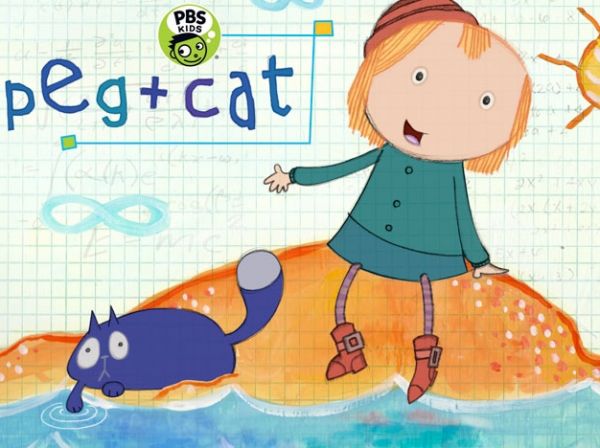
My seven year old daughter is home sick today. Just before 9AM, I made her some toast, got her glass of water and blanket, plopped her in front of the TV, and turned on PBS. Randomly turned on PBS, mind you. I didn’t consult any menus, didn’t order anything On Demand, just turned on my TV to channel 9, and then something quite extraordinary happened. Across my TV screen, there was no Caillou, no Curious George, no Arthur or Clifford the Red Dog or any of the other male protagonists from the regular PBS early morning line up who I’ve blogged extensively about. Instead, there on my TV, in early morning prime sick kid hours, there was a female protagonist! A red-haired girl, and– this is truly breaking news: the series is titled for her. This new series is called “Peg and the Cat.”
I had heard this show was coming out and posted about it on Reel Girl’s Facebook page. But, my experience with PBS shows starring girls like “WordGirl” or “Chole’s Closet” (the latter which is pretty heavy on rainbows, not to mention her adventures come from her clothes, how original for a girl) is that they are never on. I have to hunt them down. The reason that’s a problem is the inconvenience become an obstacle between kids and strong female characters. It keeps shows starring girls in the “special interest” category.
This episode of “Peg” begins with her cat stuck in a tree. Her cat is hilarious. My daughter was cracking up. I liked the cat, but being cynical, I was thinking: Girl star, girl in title of show, she’s going to be surrounded by males. But the next scene, was mind-blowing. To find help to get Cat down, Peg goes to her neighbor’s garage. In that garage were two neighbors: an African-American woman and an Asian woman. Do you realize what I’m writing heer? Three females, zero males, diversity, and they all shared the screen in an eponymous show about a female character– all this randomly turned on in my house in the morning hours.
You’re not going to believe it, but this story gets even better. Peg tells the neighbors that she needs help, and they try to give her a pink dress, which one of them happens to be making, then a tiara, and a bow. Now, if this scene had taken over the story, I would’ve been annoyed. I’m tired of the trope where the strong girl rips off her restricting corset or her frilly dress, just like I am sick of the narrative where the strong princesses gets to decide who to marry. Why does marriage have to be an issue in the story at all? Who cares what she’s wearing? Does her outfit have to be a plot issue? Would it be for a male character? So though I liked Peg rejecting the dress, tiara, and bow, and found it charmingly meta, a female character refusing the gendered accoutrements always in cartoons, I prepared myself for Peg’s narrative now being dominated by a discussion of her appearance. However, I was wrong again. Peg moved on in 5 seconds to her original purpose of finding tools to rescue cat. There was no digression at all, not even a joke about her rejection of pink, tiaras, and bows. That may be a first for me to see on TV as well.
In the next scene, a male friend comes to help Peg and he is African-American. He assists but does not take over. He offers to catch Cat, Cat says no, and then Peg uses her tools to make Cat a slide to get down.
I am so excited about this show! I only saw one episode but it made history today in my house. I have a good feeling it will continue to.
The boy is six years old, and if you read this interview, it’s obvious that he thinks that the star of the movie, “Frozen,” is not one of the two female protagonists, but Olaf, the snowman.
Here’s part of the interview:
Me: What would you say that this movie is about?
Kid: Well, it’s about a snowman, and the freezing cold, and frozen stuff, and people who are trying to get warm, and safe from the Queen (Idina Menzel), and about the Queen just trying to help instead of getting ice everywhere, and she wanted to get away from everyone because of her powers. She hurt some people with her powers, and she didn’t want to.
The movie does not begin with the Snowman, nor is the Snowman the central figure of the plot, so why do you think the kid begins his plot description with the Snowman?
You see the poster, above. Who is in the center?
Here’s the preview. From this, who do you think stars in the movie? Who is missing from this preview?
I was super-critical of the marketing of “Frozen” before the movie came out. On Reel Girl, I often write about marketing, because marketing is its own media. Even if kids don’t see the movie, they see the ads on TV, the posters, and the toys. My blog about Frozen’s marketing, “Disney diminishes a heroine in 4 easy steps,” is about how the powerful females in the movie are concealed by (1) taking her name out of the title (2) changing the plot so she doesn’t rescue a male (3) not showing female characters in the first preview (4) not showing female clearly in the first poster.
The actual movie, I liked. Aside from the 2 protagonists looking like twin Barbies, their characters are great. You can read my review Heroines of “Frozen” melt my bitter heart.
But back to the kid in this interview, here’s why he liked the movie:
Me: What did you think of Frozen?
Kid: It was awesome. It was so awesome. It was my favorite movie ever.
Me: Really? I think it was one of my favorite kids’ movies, too.
Kid: I really loved Olaf [the snowman, voiced by Josh Gad], but I thought it was going to be a peaceful movie, but Daddy, it wasn’t a peaceful movie.
No matter what the interviewer asks the kid about, he steers the conversation back to Olaf.
Me: Did the Queen listen?
Kid: No, because all she wanted to do was keep people away from her powers. Hey Daddy, ask the question, ‘Did Olaf (the snowman) melt?’ That’s an important question.
Me: OK. Did Olaf melt?
Kid: No. Another good question is, ‘What did Olaf like?”
Me: What did Olaf like?
Kid: Warm hugs. And he also liked summer, and that was really funny.
And again:
Me: Do you think girls would like Frozen?
Kid: They might like it, but they might not. But they would definitely like Olaf.
The boy acknowledges that girls are the heroes of the movie, but he can’t resist going back to Olaf one more time:
Me: Do you think your sisters would like Frozen when they are older?
Kid: Yes.
Me: Why?
Kid: Because the girls are the heroes, and I think they would like the snowman.
The reason this is important is because there is a popular myth out there, loyally supported by most grow-ups: girls will see movies about boys but boys will not see movies about girls. As I’ve written often here, girls are trained from the moment they are born that stories about boys are important and for everyone, whereas stories about girls are only for girls. Stories for boys are mainstream while stories for girls are special interest. You can even see this if you look at something like “On Demand” where the “Girl Power” category has shows with female protagonists, in their own section because they are different/ separate/ other. Kids experience this gender dichotomy everywhere– movies, TV, books, and school
Right now, I’m reading The Hobbit. I’m writing a fantasy book, so I thought it would be good for me to read the “father” of fantasy. In The Hobbit, there are trolls, elves, dwarfs, wizards, goblins, dragons, and not one damn female. How could J.R.R. Tolkien write this book, a book for kids, a book that takes place in fantasy world, where all kinds of creatures exist, and magic happens, and completely leave out half of the kid population? And what is remarkable is The Hobbit is considered to be a book for everyone, mainstream, not some “special interest boy book.” I just read an interview with Evangeline Lilly, who plays a female character added to the movie, and she says The Hobbit was her favorite book as a kid. Can you imagine a male, a celebrity male with a role in a huge movie, saying that his favorite book as a child was one with about 50 female characters and no male characters? He would be some kind of freak. I actually don’t even know if a story exists with the reverse gender ratio as The Hobbit and the Lord of the Rings trilogy.
Here’s the thing: all kids are as just as self-centered as the six year old in this interview. Girls don’t come out of the womb anymore altruistic or open minded that boys do. They all want to see themselves mirrored out there. This is why girls are obsessed with princesses. Not because pink and frilly is in their DNA, but because they want to see girls, and princesses is pretty much what they get. All kids need to see more narratives with star girls as strong, protagonists, because what do you think happens to kids’ imaginations and aspirations when they learn in childhood that stories about girls are not important? A new generation gets comfortable with a segregated world where females go missing.
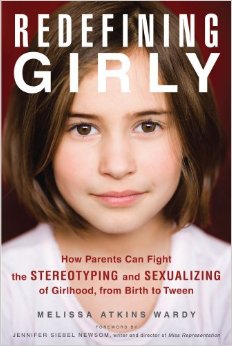
Just received the brand new book by Melissa Wardy of Pigtail Pals: Redfining Girly: How Parents Can Fight the Stereotyping and Sexualizing of Girlhood, from birth to Tween.
I believe that the sexualization of childhood will soon be seen as the children’s right issues of our time. Sexualization affects both boys and girls of all ages but is especially focused on our girls. Sexualization affects all races, economic classes, and geographical areas. It robs children of their right to childhood and to reach psychological developmental milestones fairly, and it affects their self esteem, body image, and performance in school. Sexualization interferes with kids right to develop a healthy sexuality and understanding of intimacy.
I love how Wardy succinctly differentiates between sexualization– sexuality as performance– and real sexuality. I just skimmed the book and it looks like it is full of practical tips about how to raise healthy, strong girls, how to help keep them connected to their minds, hearts, bodies, and deepest dreams.
It makes me so sad when I see how kidworld and parents project such different expectations on boy children versus girl children. I am looking forward to reading a book about how to confront and challenge bias and help change the world.
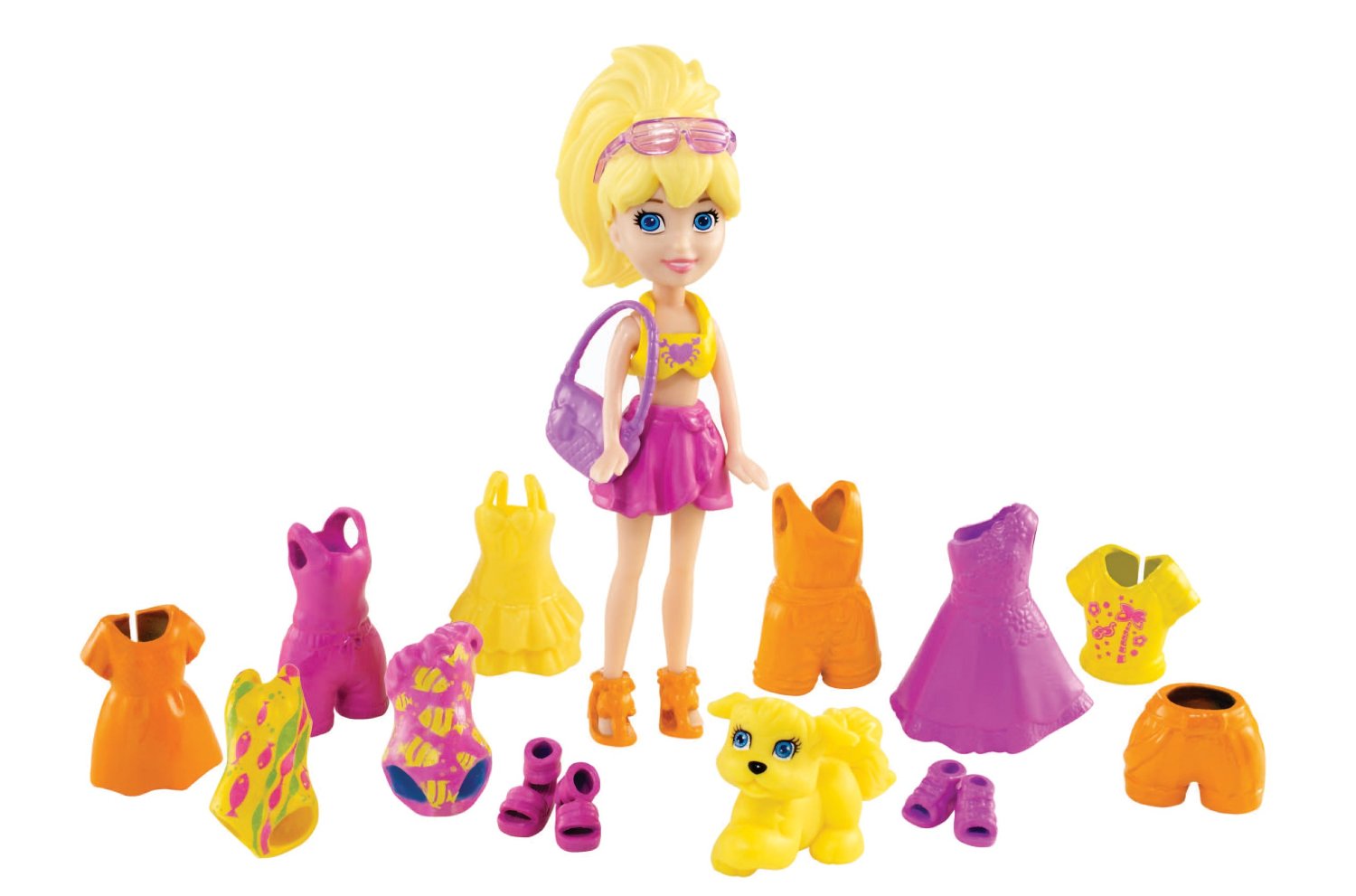
I call her Polly Prostitute, partly due to her fashion choices which include boots, heels, and minis that barely cover her ass. Before you get mad at me for “slut-shaming,” this is a doll marketed to little girls. Why do kids, ages 4 – 7 (the group Polly is supposedly for) need to be choosing belly-baring outfits for Polly? But, really, the bigger question is: Why do girls need to be choosing any kind of outfit for Polly at all?
This tiny plastic doll has about 50 million even tinier plastic articles of clothing, all impossible to keep track of, like fluorescent stilettos or a hairband with kitty ears smaller than my pinky nail. I have a hard enough time not losing the tiny clothing that the three real humans in my house wear, why in Santa’s name would I want this shit lying around around to sort and organize, all so my daughters can get trained to focus on clothing, shopping, fashion, and appearance?
All three of my daughters received multiple “age appropriate” gifts back in 2009, and have every year since, that involved dressing: paper dolls with paper clothes, magnetic dolls with magnetic clothes, soft dolls with clothes you can button and tie, and of course, Barbies, and American Girl dolls at $100 a pop. The list goes on.
I’m here to tell you that these toys are not cute, nor are they a phase girls are ever allowed to “grow out” of. This focus on appearance never disappears from a girl’s life; it simply mutates. That, my friends, is dangerous. We wonder how and why girls get so obsessed with their bodies. Mystified, we conclude this preoccupation is “natural.” Kids keep getting sexualized and sexually abused. Eating disorders are epidemic, and still, we, authority figures and role models, keep giving girls toys that teach them and train them that how they look is the most important thing. Can you imagine doing this to boys? Giving them endless toys to dress, providing them with very few other male images, from the moment they exit the womb? Would we label that abusive?
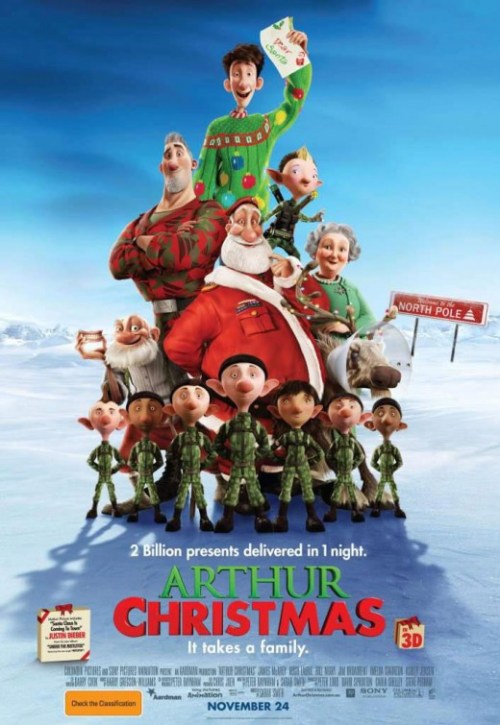
If female characters don’t look like Polly Pocket, they pretty much go missing from kidworld all together. Part of that is due to Hollywood. Female protagonists go missing from most of the narratives made into mainstream movies and marketed to kids. Every year, on Reel Girl, I post all the children’s movies coming out that year, and female protagonists are few and far between. If you look at the posters, you can see how females, literally, get marginalized. Check out this recent Christmas movie, as a typical example.
Do you think if parents saw a poster with this many female characters for a mainstream movie in theaters across America, they might do a double take? But this gender ratio is so normal, hardly any one notices. It’s in the Hobbit, Tinitin, Star Wars. And then the toys come out based on those films. This year, my seven year old daughter wanted a more adventurous LEGO set than Friends, where the girls sit at cafes and bakeries. We looked in stores for Leia. This is what we found.
Yep, there’s our girl, in a metal bikini, chained to a giant, green beast. I bet Polly would love that outfit, too. And what’s crazy is that we got this set in the hope that it would be empowering for her, because it included Leia. I know if I search on the internet, I can find a few female minifigs that aren’t quite as awful, but why can’t I see them in a toy store? Why can’t kids experience powerful females as they go about their day, on cereal boxes and embossed on diapers, the way we see powerful and varied male characters everywhere we look? Why are powerful females presented as if they were some kind of special interest group if they exist at all? Why are girls, anywhere outside of the Pink Ghetto, shown as in they are a minority when they are, in fact, one half of the kid population?
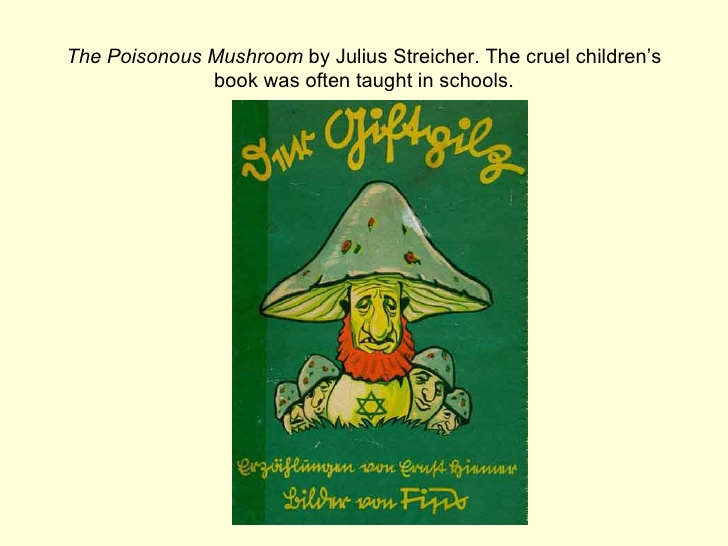
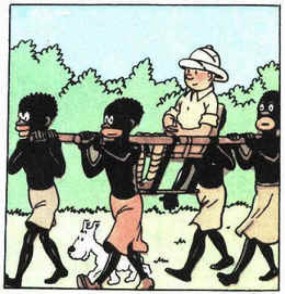
Here’s a brief history lesson on racist propaganda and children’s media.
Images/ narratives of Jews 1938
Africans 1931
Females 2013
Be on the right side of history. Please, say no to sexist toys for your kids this Holiday season.
“The Cardboard Bernini” is an extraordinary film about art and life that I’ve been trying to blog about for a year.
It’s subject, the artist Jimmy Grashow, is so fascinating that I want to write down practically every thing he says. I have no idea how filmmaker, Olympia Stone, edited him down to 76 minutes. The documentary is going to be on my local Bay Area PBS station this Monday at 8PM, at an even shorter length of 56 minutes. I’ll be watching it again, and I hope you do too.
The film covers Grashow’s 3 year project to make a sculptured fountain out of cardboard– inspired by Bernini’s Trevi fountain in Rome– that he plans to put out into the elements and let the rain wash away. Why and how Grashow destroys his own work is the subject of the film.
Right away, you see Grashow is a different kind of artist because of the material he uses. He describes it this way:
When I was a little kid, my parents would bring me these presents, for Christmas or Holidays or something, and I couldn’t wait to get rid of the present and start building with the cardboard box.
Another reason Grashow favors cardboard seems to involve risk.
If you pay for great paper or canvas or paints, you can’t make a mistake. Every inch is valuable. Cardboard is worthless. It is so grateful to be rescued from trash. It’s just like you. We aspire to be something more, to be holy, to be grand, to be eternal, but we’re tied to mortality. Cardboard and people, we’re almost from the same DNA.
I think what he’s saying is that cardboard allows him to take the leaps he needs to.
If you make 20 little flower paintings, or if I were to go out to a field and paint tractors and do 20 tractor paintings, or I could make fish… There’s something unbelievably thrilling about standing out on a ledge and doing something heroic that nobody wants.
After Grashow went to art school and excelled in all kind of mediums, and achieved commercial success, he always returned to his childhood love of cardboard.
I understood that I couldn’t be a Sixteenth Century Florentine. I could never have the color sense of a guy who looked at olive trees and those beautiful terracotta roofs all day long. The Arno didn’t flow through Brooklyn. My aesthetic was totally predicated on what I saw around me. On the funny papers that I grew up with…All my sensibility was formed from 1950 Brooklyn.
Grashow’s fountain is an elaborate sculpture that includes the great Poseidon and his trident, horses, dolphins, and fish. He describes it this way.
The idea of this fountain is to build it. I try to make something eternal, something extraordinary, but in the end, the plan is to put it out someplace and let the rain and elements wash it away, like Afghan Buddhas, like everything has its time. All artists talk about process, they talk about the beginning, but no one talks about the full term process, to the end, to the destruction, to the dissolution of the piece. Everything dissolves in eternity. I’d like to speak to that.
So basically, what he’s doing is pushing this cardboard/ DNA idea to the next/ furthest level by watching its destruction, making that into art. And Stone’s film clearly shows, it is art. After watching Grashow build his masterpiece, an intricate level of detail involving everything from tiny fish scales to eyebrow hair, he puts it in an outdoor courtyard at a museum. Near the end of the film is a sped up sequence of the sculpture washing away. It’s absolutely gorgeous and sad and like nothing I’ve ever seen.
I’ve watched the film multiple times, and part of me always hopes that Grashow will decide not to sacrifice the fountain. Then, when he does, I get mad about it. Grashow’s wife, Guzzy, is frustrated with him too. “It’s upsetting,” she says. “It’s hard for me to embrace, working on this so much.” To which Grashow responds, “That’s the tragedy of life. That is exactly what life is. It’s so sad.”
(This scene in the film, by the way, totally reminds me of Louis C.K. Grashow has that same morbid death obsession humor.)
I get that it’s about mortality, and we’re all cardboard, but isn’t choosing to destroy your work, or allowing it to be destroyed, more like suicide than accepting death? Is it more about cowardly control than truly letting go?
But here’s the thing I’ve realized. Grashow does this project for himself, not for me, or you, or anyone watching. He’s standing on that ledge, doing something heroic, so he can go on to the next thing. When you see the film, you understand that part of Grashow’s desire to make this project is because his dealer, inexplicably, tied some of Grashow’s sculptures up to a tree in his back yard where they decayed in bad weather. Grashow only discovered the ruined art after his dealer died, when he went to his house to pay respects. When Grashow saw the fate of his pieces, he was heartbroken. For him, it was a confirmation of every bad feeling he’s ever head about himself and the value other ascribed to his work. But though his desire to re-enact the painful event may have been part of why he did this project, the piece became much more– everything he’s wanted to risk saying about life and death and art.
For that reason, after Grashow made this art, he felt like it might be his last work. He wasn’t sure if he had anything left to say. Afterwards, he felt lost. But then, something happened.
I was at services, thinking about what I’m going to do and the emptiness of life. So, I’m sitting in this auditorium, alone, with my head down, asking myself the questions, what am I going to do, who am I, what does it all mean anyway, all the amount of work that you do if you come up empty in the end anyway. And I look down on the floor in this gigantic auditorium. I had chosen a seat, and right at my foot was a pencil. A little pencil.
I can’t wait to see the next extraordinary thing Jimmy Grashow does.
“The Cardboard Bernini” will air December 9 at 8PM on KQED
Let me be clear here. I absolutely believe toys in stores should be divided by type– building, outdoor, figures/ dolls etc– not by gender. I don’t believe objects should be color coded to imply they should be played with by boys or girls. I am hard pressed to think of something more absurd and simultaneously socially accepted than this. I desperately want to see girls and boys pictured playing together on boxes. When the term “gender neutral” is used, I think this is the goal referred to, a goal I share with all of my heart.
I guess the issue from me is that powerful female characters are already drastically missing from the fantasy world created by grown-ups for children. When we talk about “gender neutral,” I fear that girls will continue to go missing from this debate– about children, toys, play, and sexism– even more. “Gender neutral” needs to be a goal of sorts, but we also have to keep in mind that all kids need to see more girls and women doing more things. Do we call that “gender neutral”?
Another problem for me with the term is that “gender neutral” doesn’t inspire me. “Gender neutral” makes me think of a bunch of grown-ups or academics or psychiatrists sitting around wearing super thick glasses and holding notebooks.
Here is what I want to see in kidworld: More females having adventures. More females doing cool shit. Got it? Do you call that gender neutral or do you call that being alive?
I want options. Variety. Diversity. Multiple narratives. I want all kids to see many more images of powerful and complex females, to see girls taking risks, saving the world, being brave, smart, and going on adventures in the fantasy world and in the real one. You could argue that we need to see more images of boys being kind and geeky and paternal, but from my vantage point, as a reader, movie goer, and watcher of TV shows, that’s pretty covered. I honestly believe the best way to help boys get out of gender stereotypes right now is to show them females being strong, being the star of the movie, or the central figure in a game that everyone wants to play.
Here’s my four year old daughter (holding a lunchbox from the Seventies.)
My daughter isn’t a “tomboy” or a “girlie-girl.” She likes pants; she likes dresses; she like yellow, she likes pink, she likes black. She likes to race and play soccer and read and make art. She loves superheroes and her mermaid Barbie. But the older she gets, the more I see her choices getting influenced and limited by stores and marketing and media and peers. My goal is to have her world grow, not shrink. I’m not sure that “gender neutral” is what she needs.
When I was a kid, I read Laura Ingalls and Ramona. I wanted to read about things that “really happened.” As a 44 year old woman, I have done a 180, plunging head first into fantasy. While when I was little, I didn’t believe in Santa Claus or the Easter Bunny, and I thought that there was a clear line between what was real and what was fiction. I now understand that no such separation exists: fantasy creates reality creates fantasy. Exploring that interdependent relationship, something I grew so aware of when I became a mother, is the purpose of this blog, Reel Girl. I am very excited to tell you that I just read my first Middle Grade sci-fi adventure.
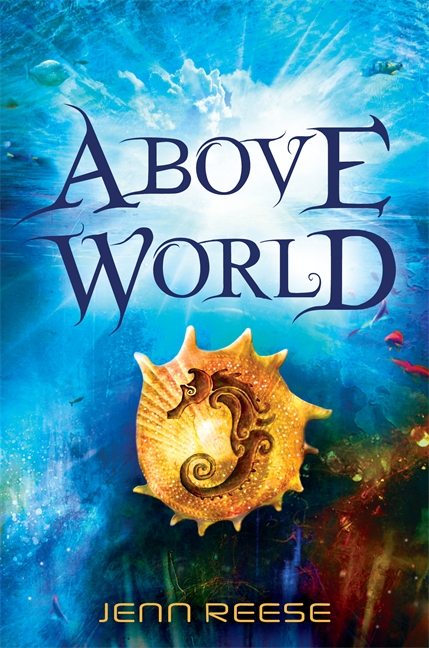
Above World, by Jenn Reese, is the story of Aluna, who is a Kampii– a type of mermaid. She lives in the City of Shifting Tides and her people are dying. Above World takes place in the future, when humans have become so overpopulated and destroyed so much of the planet, that the only way creatures can survive is to use “tech” to adapt to new environments. Kampii are able to live under the sea with the help of breathing technology fastened to their throats, but these machines are failing, they are dying. Still, no one has the courage to venture above world to find the source of the problem and do anything about it. No one but Aluna, who is thirteen years old and about to get her legs transformed into a tail.
Aluna is smart, brave, funny, and loyal. Her friend Hoku tags along on her adventure, and it’s great to experience a girl and boy work together to save the world. Aluna is the fighter while Hoku is into technology. The pair are joined by Kali, an Aviar girl, which is like a winged human. The Aviars are a civilization of female flying creatures that remind me of Amazons. There are many powerful women in this group. The final member of the crew is Dash, a horseboy. The group have many adventures and all kinds of battles where we get to see Aluna use not only her martial arts skills, but her brains and her heart.
I’ve been dying to see a writer create an exciting world about mermaids. There’s so much potential with these mythical fishgirls, but in stories and movies, games, and puzzles, we always see them lounging in bikini tops, giving up their voices or brushing their hair. I am so excited to pass Above World on to my daughters. There are two more books in this series and I can’t wait to read them myself.
After Thanksgiving, my two older daughters came home from their cousin’s house with at least three Goddess Girls books. I haven’t read them yet, but I’ve seen the covers before, in stores, and I hate the look of the goddesses.
I know you shouldn’t judge a book by its cover, and that I often do, but I don’t know how to get past the giant heads, doe eyes, and tiny bodies. Even when Artemis is killing a serpent, she looks like she’s in an Estee Lauder ad. Obviously, goddesses are supposed to be beautiful, but this limited, distorted 2013 depiction of what is attractive makes my stomach turn.
The books could still be good, I suppose. One Barbie movie is on Reel Girl’s recs: Fairytopia Mermaidia. It’s a great adventure where two brave girls rescue a prince and the entire ocean. The just released “Frozen,” which is also great, has some pretty terrifying skinny, big-headed protagonists. It drives me crazy, because the message here is, and I got this same message when I was a kid: If you want exciting adventures to happen to you, then you must be “beautiful.” Otherwise, you’re invisible. The end goal here is not to be pretty, it is to exist.
But maybe you’ve read Goddess Girls and can tell me how great they are.
Today, I saw ‘Frozen’ with 4 kids ages 4 – 11, and we all loved it. The second it ended, my oldest daughter asked if we could go see it again, tomorrow. When I said no, she said maybe she could go with her aunt. All the kids couldn’t stop talking about how cool the “ice queen” is (ha ha, but those are their words.) The Queen is my favorite character in the movie too, and I can’t think of a Disney story with a female hero– not villain– that powerful and magical. The Snow Queen’s name is Elsa, and I wish she were in the movie more. I still wish the damn movie was titled for her.
I look forward to the day when Disney markets a movie with a female protagonist by putting her name in the title, placing her front and center on the posters around town, and making it obvious in the preview that she’s the star. Marketing is its own media and too often, as with “Frozen,” Disney’s presentation is sexist. Girls go missing. But, still, the actual movie is really good.
“Frozen” has a princess, but it also has a Queen. The princess, Anna, is a good character too. She rescues the man in love with her at least twice. The “true love” in this story is about sisterhood, not romance. But another thing I liked about the movie is that Anna is not in an either/ or situation that so many female characters are: be strong or be in love. Just like a guy character, Elsa gets to have it all.
Is the movie perfect? No way. If I were head of Disney, my Snow Queen movie would be completely different. Besides all the great plot points and characters missing from the original, I hated the Barbie look of Elsa. If you were in a snow palace in the mountains, all alone no less, would you wear heels? A dress, slit to your thigh? I felt like I was watching a doll, to the point that at times, she was painful to see. Elsa and Anna do seem too much alike physically. Also, if you were a Martian and you saw “Frozen,” you would still think females are in the minority. In spite of two female protagonists, there are many scenes in the movie where male characters far outnumber females, including scenes with no females at all. There are no scenes with multiple females and no males.
In spite of these complaints, the movie is the best animated one I’ve seen this year for female characters. There is no question that this narrative belongs to Elsa and Anna. It’s an adventure with smart, brave heroines who may look the same but act differently. Most of all, I was thrilled that my kids got to experience a magical female learning how to use her power. Can we please have some more of that, Disney?