“Rabbit Proof Fence” is an intense, gorgeous, inspiring film about three Aborigine girls who escape from a home for “half-castes,” walking hundreds of miles through the Australian bush to return home after being kidnapped. Based on a true story, the heroine is 14 year old Molly, the daughter of an Aborigine mother and white father, who refuses to believe giving up her home, family, and culture just because she is half-white, is the best thing for her, her sister Daisy who is 10, and cousin Gracie who is 8.
I had three daughters throwing up yesterday, and I put this movie on for my 10 year old after the younger two had passed out. My daughter and I were frozen and silent for the next two hours, totally engrossed in this story. We leaned about a different culture, a shameful history, witnessed not one but three brave heroines, and also got to see Australia’s beautiful lands. I highly recommend “Rabbit Proof Fence” and I’m adding it to Reel Girl’s list of films recommended for age 10 and up.
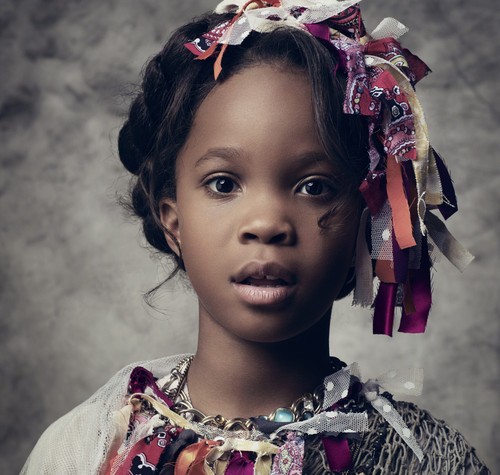
I can’t tell you how excited I was for my daughter to experience this narrative while she was going through something similar in her own life. “Akeelah,” like “Beckham” is about competition and family and culture. “Akeelah” also stars a girl of color. This movie made me cry, and it’s about a spelling bee! If your kids have not seen it, please show it to them ASAP. It’s on Reel Girl’s 10 and up list.
Could I have loved “Bend It Like Beckham” more? I saw it for the first time last Saturday night with my ten year old soccer obsessed daughter and my soccer coaching husband. All three of us were crazy about it.
The star of the movie is a smart, athletic woman of color. Her best friend in the movie is also a soccer superstar. The movie is about competition, family, and culture. It’s incredible, one of my all time favorites. Show it to your kids! I’m putting it on Reel Girl’s list for age10 and up lbut I think younger kids would enjoy it too. Oh, I almost forgot. Kalinda from “the Good Wife” is in it as the protagonists older sister. Need I say more?
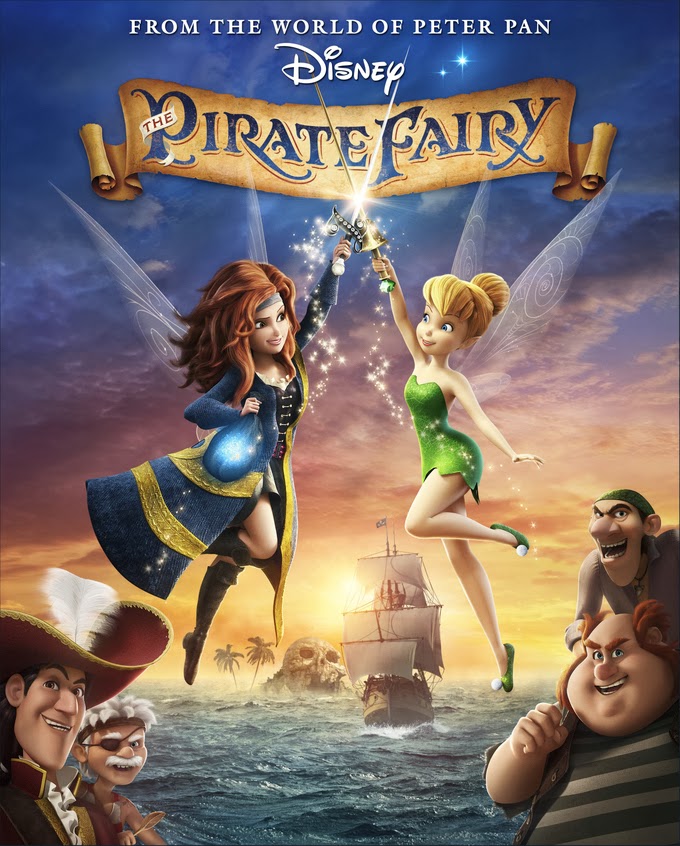
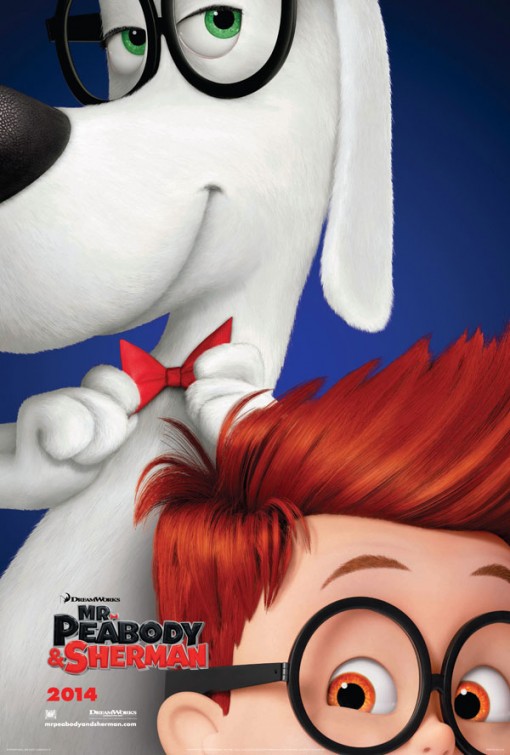
Let’s start with the good news. There are 5 children’s movies coming out in 2014 with female protagonists, titled for that female protagonist. This is a record since I started doing the gallery back in 2011. Those movies are: Legends of Oz Dorothy’s Return, Maleficent, Molly Moon, Annie, and The Pirate Fairy I am super- excited about the first four. I am holding out hope for “Pirate Fairy.” It’s always been challenging for me to get past Tinkerbell’s mini-dress and how she’s always smiling submissively at me when I see her on party napkins or sippy cups. But hey, the movie is called “Pirate Fairy,” meaning that is not an oxymoron, which is a huge leap forward for Disney.
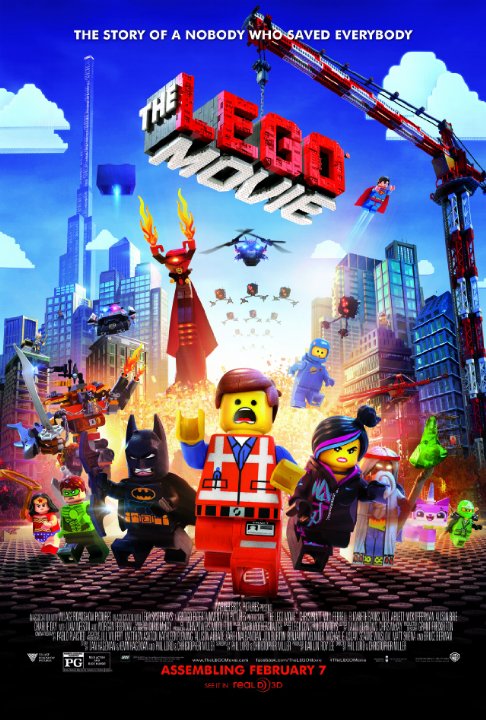
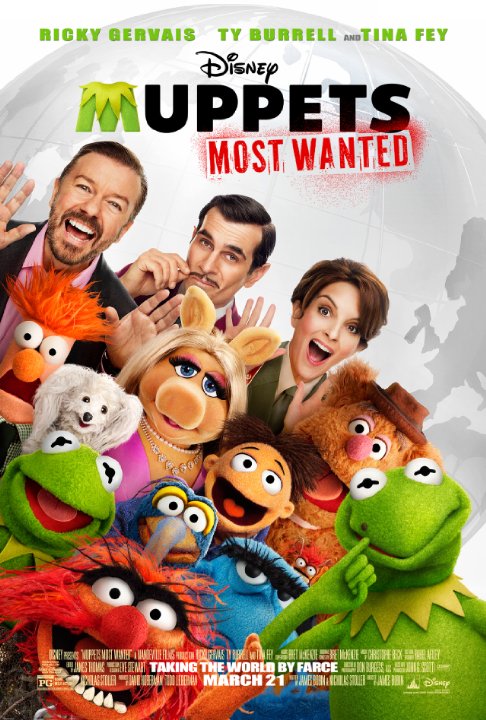
Now, for the bad news. In 2014,18 children’s movies star a male protagonist, that’s more than 3 times as many movies than those starring a female.
There are 2 movies that I’m putting in their own category. For “Rio 2,” I am hoping that birds Jewel and Blu are, in fact, costars. (See how I put her name first?) Here’s imdb’s synopsis: “It’s a jungle out there for Blu, Jewel and their three kids in RIO 2, after they’re hurtled from that magical city to the wilds of the Amazon. As Blu tries to fit in, he goes beak-to-beak with the vengeful Nigel, and meets the most fearsome adversary of all – his father-in-law.” For “Island of Lemurs: Madagascar,” this is the description from imbdb: “A look at the life of wild lemurs living in Madagascar.”Because the lemur on the poster doesn’t have a pink bow or giant eyelashes, my past experience would lead me to believe it’s a male, but because the movie is about lemurs in nature, I hold out hope here too.
Why is the gender of who stars in a children’s movie important? Because girls make up half of the kid population, yet, when kids go to movies, again and again, they see males front and center, while females get sidelined and marginalized.
Today, when kids go to the movies, they will often see the narrative include a strong female or two, but rarely is she the star. The movie is not about her quest. I call these female characters the “Minority Feisty.” The trope has evolved from the Smurfette principle in that there is often more than one, and she is presented as powerful. But her power, lines, and screen time are carefully and consistently circumscribed to show that she is not as important as the male star. Still, the Minority Feisty is supposed to pacify parents, making them feel that, unlike those sexist films of yesteryear, this movie is contemporary and feminist.
Don’t let the Minority Feisty fool you. “Feisty,” an adjective reviewers will invariably use to describe this strong female, is a sexist term. “Feisty” isn’t used to describe not someone who is truly powerful, but someone who plays at being powerful. Would you ever call Superman fesity? How would he feel if you did?
All children need to see more female protagonists. Everyone is the hero of her own life. Kids shouldn’t be trained to see girls and women stuck in supporting roles. In the imaginary world, anything is possible, so why is it sexist? Why is a brand new generation learning it’s normal for girls to go missing?
Here’s the gallery.
Legends of Oz, Dorothy’s Return
Maleficent
The Pirate Fairy
Molly Moon: The Incredible Hypnotist (no poster yet, making my own with this pic)
How To Train Your Dragon 2. No poster yet, but Hiccup is, once again, the protagonist.
Hobbit. No poster yet, but clearly, Bilbo will remain the protag.
Dolphin Tale 2. No official poster yet, but here’s the synopsis from imdb: “The sequel to the 2011 film based on a true story of a boy’s efforts to save an injured dolphin.”
Yesterday, I took 4 kids to see “The Nut Job.” Here’s the poster for the movie, featuring its star, Surly the Squirrel, front and center.
As you can see by the names on top of the poster– Will Arnett, Brendan Fraser, Gabriel Iglegsias, Liam Neason, and Katherine Heigl– males dominate this movie. Heigl plays Andie, who, like most Minority Feisty, is strong, smart, and brave, but “Nut Job” is not Andie’s movie, it’s Surly’s.
There are two more Minority Feisty I liked: Precious, the pug and there’s a girl scout who cracked me up. There is a pigeon who spoke briefly that is also female.
Typical of children’s movies, Surly, the male protagonist, has a male BFF: Buddy (ha ha)
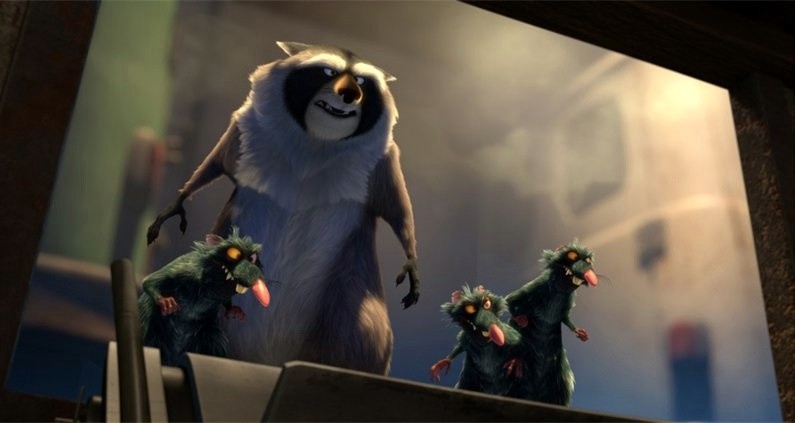
The evil villain, a raccoon, is also a male. So are the evil rats pictured around him, at least any rats that talked.
If the gender ratio of “the Nut Job” were specific to this movie, or even half of movies for kids, it would not be a problem. It is the repetition of assigning the male as the hero and the females in supporting roles that is so damaging for kids to see again and again and again.
Here’s my 4 yr old daughter at the Metreon counting the giant men she saw.
In a fascinating discussion with director Kevin Smith, Dini relates that higher-ups at the cable network urged him to focus his storylines on his male characters and make his female characters “one step behind the boys, not as smart as the boys, not as interesting as the boys.” When Dini proceeded to create fully realized girl characters anyway, the Cartoon Network axed the show.
Here’s the relevant excerpt (emphases added):
DINI: They’re all for boys. “We do not want the girls,” I mean, I’ve heard executives say this, you know, not [where I am] but at other places, saying like, “We do not want girls watching this show.”
SMITH: WHY? That’s 51% of the population.
DINI: They. Do. Not. Buy. Toys. The girls buy different toys. The girls may watch the show —
SMITH: So you can sell them T-shirts if they don’t — A: I disagree, I think girls buy toys as well, I mean not as many as fucking boys do, but, B: sell them something else, man! Don’t be lazy and be like, ‘well I can’t sell a girl a toy.’ Sell ’em a T-shirt, man, sell them fucking umbrella with the fucking character on it, something like that. But if it’s not a toy, there’s something else you could sell ’em! Like, just because you can’t figure out your job, don’t kill chances of, like, something that’s gonna reach an audi — that’s just so self-defeating, when people go, like… these are the same fuckers who go, like, “Oh, girls don’t read comics, girls aren’t into comics.” It’s all self-fulfilling prophecies. They just make it that way, by going like, “I can’t sell ’em a toy, what’s the point?”
DINI: That’s the thing, you know I hate being Mr. Sour Grapes here, but I’ll just lay it on the line: that’s the thing that got us cancelled on Tower Prep, honest-to-God was, like, “We need boys, but we need girls right there, right one step behind the boys” — this is the network talking — “one step behind the boys, not as smart as the boys, not as interesting as the boys, but right there.” And then we began writing stories that got into the two girls’ back stories, and they were really interesting. And suddenly we had families and girls watching, and girls really became a big part of our audience, in sort of like they picked up that Harry Potter type of serialized way, which is what The Batman and [indistinct]’s really gonna kill. But, the Cartoon Network was saying, ‘Fuck, no, we want the boys’ action, it’s boys’ action, this goofy boy humor we’ve gotta get that in there. And we can’t — and I’d say, but look at the numbers, we’ve got parents watching, with the families, and then when you break it down — “Yeah, but the — so many — we’ve got too many girls. We need more boys.”
SMITH: That’s heart-breaking.
DINI: And then that’s why they cancelled us, and they put on a show called Level Up, which is, you know, goofy nerds fighting CG monsters. It’s like, “We don’t want the girls because the girls won’t buy toys.” We had a whole merchandise line for Tower Prep that they shitcanned before it ever got off the launching pad, because it’s like, “Boys, boys, boys. Boys buy the little spinny tops, they but the action figures, girls buy princesses, we’re not selling princesses.”
I heard about this story because a commenter responded on my “Powerpuff Girls” post that CN said it doesn’t want shows focused on girls because girls don’t buy toys. My response was: WTF? I thought girls were shoppers? This explanation is so typical of how actions get gendered based on power and status, for example: girls are the ones who like to cook, unless we’re talking about great chefs, then, cooking is a guy thing; girls are artsy, unless we’re talking about great artists, top selling paintings, or museum shows, then art, once again, becomes a guy thing; girls are verbal unless we’re talking about great literature in which case female writers are designated chicklit and guys are the masters. Boys buy more stuff? Wow. So I went to the link, did some research, and some of what I found I pasted above. There was also a petition based on that interview created on Change.org that has about 16,500 signatures.
Since my post about “Powerpuff Girls,” I’ve gotten lots of comments like this one:
The girls wear skin tight clothing in the show as well. They are not sexualizing them just because they wear latex. Everyone has their own style, and the artist portrayed it that way. Couldn’t the male characters being all muscular be considered sexualizing, they wear tight clothing too. you try to teach equality for all yet you claim everything needs fairly regulated so it’s 50/50, screwing over peoples free choices. People come up with their own ideas, and if theyre male heroes so be it, there is nothing wrong with that. The powerpuff girls were my favorite cartoon growing up, it didnt matter to me if they were male or female, all that mattered was that it was fun watching. Girls and guys alike loved it. And now we have this “movement” where all the ‘equal rights’ activists wanna dissect absolutely everything to feel better about themselves and bitch at the world for making women inferior, when the ONLY times I’ve heard of people refering to women as inferior are pages like this. Pull your heads out of your asses and move on with your lives.
To which I responded:
Exaggerating muscles not the same as breasts, ass etc. Muscles signify strength, what you can do. See Kevin bolks ‘if male avengers posed like the female one’ on Reel Girl or Theamats Wonder Woman– if I don’t get pants no one gets pants. That you don’t notice is the problem. Do you think you might notice if 41 out of 47 shows had female protagonists? I wish I had my head up my ass, that would be a lot less depressing
I wouldnt care if 47 out if 47 had female protagonists, its a cartoon, a show for wasting time, not some life lesson or some forced idea. God you people are fucking annoying.
To which I wrote:
That’s great that you wouldn’t care if the shows featured female protags, would you feel the same way about the movies for adults and the male/ female ratios? As far as ‘its a cartoon, a show for wasting time, not some life lesson or some forced idea’ That’s not how kids experience it. They buy the toys, wear the clothes, act out the stories, dress up as the characters on Halloween
He responds:
And whos to say a girl cant dress like a male superhero? Or a male as a femal superhero? It’s the same thing. Yes, i would feel the same EXACT way of the adult movie industry. You’re claiming that males should be different than females, are you not? By saying that characters are male/female for a reason? Instead if them just being characters? As part of a show to entertain kids and feed their imagination? Now what about BET. black entertainment television? That must be some bad stuff, all those poor white kids wanting to be black because tv told them too hmm? That’s just outrageous, is it not??? I can only imagone how pissed activists would be if there was a mens television channel. OWN, oprah winfreys channel, is pretty much about her and things she believes in and likes, so why isn’t everyone complaining about that!! Or Christian channels that show services. That is horrendous to those whom aren’t christian! Imagine all the other kids who aren’t, those poor souls must be so deprived. I guess it’s a blessing that my neice, whom I love dearly is raised by parents who dont shelter her and fill her mind with radical myths and dramatic stories of all this inequality. She can watch Dora, and she can watch Spongebob, and she loves sesame street. She loves playing with cars and barbies. She is gonna grow up to be a wonderful successful and proud individual. No thanks to you so called “equalists” making everything so equal and wonderful. I am all for equality and I will stand up for anything and anyone who against my bias deserves it. But this is too much. You have taken someones art and therapy, in regards to the artists rendition of PPG, and absolutely blew it out of proportion. THAT is the problem with this world.
Here’s me:
Cartoon Network is a channel FOR KIDS. The channels you list are for adults. Kids deserve and need a protected space where girls don’t get marginalized and sexualized.Do you get it would be messed up if there were channels with shows just for African- American kids, Christians kids etc? Yet, it’s perfectly acceptable in 2014 to segregate girls and boys and create narratives based on gender stereotypes
I reposted all of this because its typical of comments I always get. It confuses me because I thought we all understood that “separate but equal” doesn’t work. I don’t know why when it comes to gender and kids, we throw everything we’ve supposedly learned out the window. These stereotypes are ridiculous. They are not “natural” but based on power.
When kids are radically and repeatedly separated, based on gender, all kinds of stereotypes must result.
My three daughters, ages 4, 7, and 10, are huge fans of “The Powerpuff Girls.” They dress up and act out stories where they play Blossom, Bubbles, and Buttercup.
“Powerpuff Girls” is one of the few shows for little kids where multiple female protagonists work together to save the world, and they don’t wear revealing clothing.That may seem like a ridiculous description of a show, but the sexism in children’s media forced me to come up with my own version of the Bechdel test. The Magowan Test for Gender Bias in Children’s Media goes like this: At least two females who are friends go on an adventure and don’t wear revealing clothing. It’s scary how few shows made for kids manage to pass that simple test.
When it was announced last year that the Powerpuff Girls would be returning for a CGI special, we were thrilled. So, you can imagine my dismay when on The Mary Sue I saw this cover created by Cartoon Network and IDW for Powerpuff Girls #6.
I feel like crying when I look at this. I think I would cry if my kids saw it. How could CN sex up the “Powerpuff Girls?” It really pisses me off that after I went out of my way to introduce my children to these characters, CN exploits and distorts them.
The Mary Sue reports:
The brouhaha about the cover started when comics retailer Dennis Barger Jr., owner of Detroit’s Wonderworld Comics, called IDW out on Facebook for “taking grade school girls and sexualizing them as way older… they are wearing latex bondage wear mini dresses, which on an adult would be fine but on the effigies of children is very wrong… especially on an ALL AGES kids book marketed for children.”
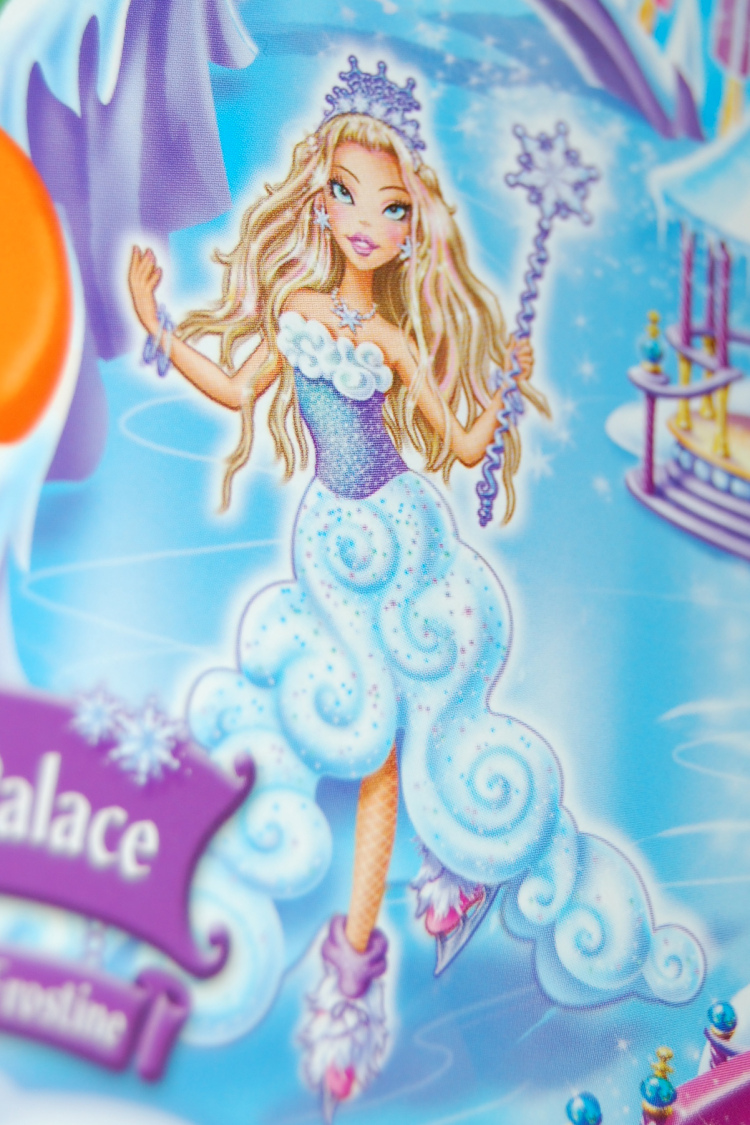
Thank you Dennis Barger for not accepting this. If more comic book retailers and parents and teachers and doctors would say no, loudly and publicly, to sexualizing kids, instead of buying into this stuff, it might stop. But sadly, too many people do the opposite and act as if sexualized images of girls are just normal, which, tragically, they’ve become. Kids need to see images of girls that are not sexualized. It’s sad I had to create a blog to communicate this idea, that it’s radical and alternative while sexualizing kids is mainstream. Sexualized “make-overs” of female characters from children’s media include Merida, Dora, Strawberry Shortcake, and Queen Frostline. Yeah, this is how Candyland has changed since we were kids:
The Mary Sue reports that Dirk Woods, IDW’s VP of marketing responded to Barger with this statement:
That was actually a Cartoon Network mandated cover, by an artist of their choosing. I think they were thinking of it more along the lines of “female empowerment” than the kind of thing you guys are talking about, but certainly, we’re sensitive to the issues here. We love making comics for kids, and always want them to be appropriate. For what it’s worth, CN has been a great partner in that regard… I know an 8 year old and 10 year old really well, and always look at these kinds of things through their eyes… Half of the employees have kids here, and we pride ourselves in making comics they’ll enjoy and not give them a warped view of the world (except, you know, in a good way). Anyway, I certainly see your points, and we’ll be sensitive to these things, as I think we mostly have been.
First of all, I find it really annoying that Woods writes Cartoon Network was thinking about female empowerment as opposed to “the kind of thing you guys are talking about.” Like we’re the ones with the dirty minds here. Mr. Woods, the problem is not Barger and those who agree with them, but people who look at this sexed up image of the Powerpuff Girls and see nothing wrong with it.
Mr. Woods, you say you have two kids and that those you work with are sensitive to these issues, so let me explain the problem with seeing “female empowerment” in this version of the Powerpuff Girls you created. There’s a difference between sexualization and sexuality. Do you understand that? In her excellent book, Cinderella Ate My Daughter, author Peggy Orenstein quotes Stephen Hinshaw:
Girls pushed to be sexy too soon can’t really understand what they’re doing…they may never learn to connect their performance to erotic feelings or intimacy. They learn how to act desirable, but not to desire, undermining, rather than promoting, healthy sexuality.
Does that make sense to you? Sexualization is about performance; it’s all about being desirable to others. That’s the image your Powerpuff Girls #6 cover projects. Sexuality, on the other hand, is about understanding and connecting to your own desire. Got it? Here’s a specific example that might make sense to you. Breasts are secondary sex characteristics, and, besides feeding babies, they exist to give women sexual pleasure. Implants, while they make breasts look a certain way, are often devoid of feeling for the woman. Do you see the difference?
But why do I even need to talk about sexuality versus sexualization in relation to the Powerpuff Girls, for goodness sake? That, in itself, is the problem.
After the protest, Cartoon Network decided to pull the cover and made this statement:
In conjunction with our licensing partners, Cartoon Network Enterprises from time to time works with the artist community to reimagine and reinterpret our brands using their talents and unique points of view. This particular variant cover for The Powerpuff Girls #6 from IDW was done in the artist’s signature style and was intended to be released as a collectible item for comic book fans. We recognize some fans’ reaction to the cover and, as such, will no longer be releasing it at comic book shops.
Did I miss the apology? Because I don’t see it. It sounds to me like CN is shifting the blame to the artist which is ridiculous. Fault belongs with the network and not just because CN chose and paid for the image. The sexed up “Powerpuff Girls” are indicative of the Cartoon Network’s girl problem. CN is a channel for children and girls make up one half of the kid population, so why have female characters gone missing from CN shows?
In my count, 41 out of 47 shows on Cartoon Network feature male protagonists. I listed the shows and descriptions below. The stats get worse. Of those shows, 19 are titled for the male stars: Steven Universe, The Annoying Orange, Batman, Chowder, Courage, Dexter’s Labratory, Ed Edd and Eddy, Flapjack, Garfield, Generator Rex, Gumball, Gym Partner, Johnny Bravo, Johnny Test,Samurai Jack, Scaredy Squirrel, Sidekick, The Problem Solverz, and Uncle Grandpa. Just 4 shows feature a female character in the title. Of those, “Cow and Chicken” and “Billy and Mandy,” share the title with a male character. “Foster’s” is a show with a male protagonist, titled for the orphanage run by a woman. “Powerpuff Girls” is the only show on the Cartoon Network where girls star and get to be in the title without sharing it.
Instead of this pathetic non-apology, Cartoon Network ought to commit to creating and disseminating shows and games with powerful female protagonists. That’s what all of our kids desperately need to see.
A dog named Howie is the manager and leader of the cabana. Each episode follows Howie and his “misfit” crew having unusual adventures in the Banana Cabana.
Steven Universe is the first show created by a female. From Wiki:
It is produced by Cartoon Network Studios, and is the first show by the studio to be created by a woman.
While it features the Crystal Gems, intergalactic female warriors, the protagonist of his eponymous show is male.
The Annoying Orange stars the male orange and his BFF, a male pear (voiced by the same guy who created the show.)
Batman Need I say more?
Ben 10 Omniverse Even Wikipedia’s description seems hopped up on testosterone:
Beware the Batman Oh, look at that, just like the movies, we get multiple Batman shows.
Beyblade Shotgun Steel The protagonist is a male champion named Zero
Billy and Mandy This show looks promising, but how about calling it “Mandy and Billy” and not making Mandy wear pink?
Boomerang is cartoons from yesteryear now owned by the Turner Broadcasting System, and we all know how feminist those are. Actually, “Scooby-Doo,” “Pop-Eye,” and “Tom and Jerry” are pretty tame compared to “Bratz.” I have wondered since I was a kid, if Road Runner could be a female.
Chowder From Wikipedia: “The series follows an aspiring young chef named Chowder and his day-to-day adventures as an apprentice in Mung Daal’s catering company.”
Courage Courage is a male dog. At least he’s a pink male dog.
Cow and Chicken CN’s second show with a female protag who is also in the title, and her name comes first, and that’s a first.
DC Nation based on DC Comics, no Wonder Woman included. Need I say more?
Dexter’s Labratory Dexter is the evil genius protag of his eponymous series
Dreamworks Dragons Based on the movie “How to Train Your Dragon” the protagonist is the male Hiccup.
Ed, Edd, N Eddy No, I did not make up this show and title to parody the male domination of Cartoon Network. It’s really a show, and yes, it really stars three males with the same name.
Flapjack Stars Flapjack and Cap’n K’nuckles, both male
Foster’s From Wikipedia:
The home is run by the elderly Madame Foster, its lovable, elderly founder; her imaginary friend Mr. Herriman, the strict rule-abider and business manager; and her 22-year old granddaughter Frankie, who handles day-to-day operations.
So that’s good, right? 2 females, their name in the title. But then, there’s this:
The series focuses on the escapades experienced by the mischievous Bloo, Mac, and the array of eccentric, colorful characters inhabiting Foster’s Home, or the obstacles with which they may be challenged.
Bloo is male. Mac is male. Oh, well.
The Garfield Show Cynical male cat stars in his eponymous show, don’t even need Wikipedia to write that.
Generator Rex Yet another Man of Action studios creation. Surprise, surprise, Rex is male.
Grojband Includes marginalized females and gender stereotyping, I would not let my kids near this show.
Grojband follows Corey and his three best friends, Laney and twin brothers Kin and Kon, as they work to propel their garage band to international stardom. When they don’t have the lyrics, Corey and his friends get Trina into an emotional diary mode to write lyrics in her diary, so that Corey and his friends can perform a perfect song.
Gumball The protagonist is gumball, a male cat
Gym Partner From Wikipedia:
A boy named Adam is expelled to a middle school established for anthropomorphic zoo animals due to a spelling error making his surname “Lion”. There, he is befriended by a mischievous, eccentric spider monkey named Jake
Hero 108 Looks like Commander ApeTrully is the protag, from Wikipedia:
The storyline in a typical episode follows a formula, although the formula varies and several episodes depart from it: Commander ApeTrully goes on a mission to the castle of an animal kingdom to make peace and ask its inhabitants to join Big Green, bringing a gift of gold as a token of goodwill.
Johnny Bravo Self explanatory right?
Johnny Test Wow, this is just like the Eddies…
Kids next Door Stars 5 kids, 3 boys, 2 girls
Legends of Chima There are several tribes, each has many more male characters than females and some have no females at all
Ninjago I count one female to multiple males. Maybe I missed one, but come on, this is ridiculous.
Pokemon Again, I count mostly male characters but I actually like Pokemon because the females I’ve seen are pretty strong. What about calling it “Pokewomon?” (Update: That was a joke, apparently some of you think I’m not up on my Japanese)
Powerpuff Girls YAY See what I mean?????
Redakai The protag is Ky, this show is all a father-son quest story about power and destiny
Regular Show Protags are a BFF blue jay and raccoon, both male
Samurai Jack No explanation needed
Scaredy Squirell BFF squirrel and skunk, both male
Secret Mountain Fort Awesome About 5 monsters, all 5 are male, I kid you not.
Secret Saturdays stars Zak Saturday
Sidekick You’d think at least this could be about a female, right? But, no.
Teen Titans 3 males, 2 females. Hey CN, what about having females outnumber males in an ensemble cast?
Teen TitansGo See above
Tenkai Knights Multiple knights and unless I’m missing something, all male.
The Problem Solverz They are Alfe, Roba, and Horace, all male
Time Squad Stars Otto and features practically all male cast
Uncle Grandpa Self-explanatory, right?
Young Justice Invasion An adaptation of the DC universe with a focus on young superheroes and just as sexist in the character make up (Update: Commenters tell me YJ has adapted to have an equal number of female and male characters)
Great quote from Gloria Steinem (via Ms. Magazine)
We are human beings first, with minor differences from men that apply largely to the act of reproduction. We share the dreams, capabilities, and weaknesses of all human beings, but our occasional pregnancies and other visible differences have been used — even more pervasively, if less brutally, than radical differences have been — to mark us for an elaborate division of labor that may once have been practical but has since become cruel and false.
And Steinem wasn’t even talking about toys. Well, specifically about toys. Target, are you listening? Can we all please stop training a new generation to accept gender stereotypes as “natural?”
Maxstormer Max Stormer Beth Tweddle, why did you turn down the role of Lord Voldermort? #sportswomen
Trolling went on for two hours straight. The Telegraph reports:
WILL AP MCCOY BE RIDING YOU AT THE NEXT GRAND NATIONAL?
And that’s not taking into account such comments as: “Do you think pregnancy is a poor injury excuse and women should be able to run it off?” and “are all sportswomen lesbians?”
Perhaps Sky should have pulled the gym mat out from under the whole thing at that stage.
Because what followed was almost two hours of trolling: a torrent of vile insults and misogyny. Tweddle was only able to answer a handful of questions and even those were deliberately misconstrued.
<noframe>Twitter: Finlay Gillon – At what point in your life did you know that Gymnastics was going to be a major part of it ?
BETH: I LOVED IT FROM THE AGE OF 7 BUT IT TOOK OVER FROM THE AGE OF 12 #SPORTSWOMEN
Twitter responded to this comment by calling this World Champion sportswoman a “slut” and “bitch”. She was asked whether she wanted “cock” or “anal”. Someone even posted a picture of Jimmy Savile.
Did you get the part about how Tweedle is an Olympic medalist? Instead of being recognized as a hero– as male medalists are– she is publicly shamed and reduced to a sex object. This kind of reaction happens so often to women in public, that I’ve come to believe it’s like a modern day stoning. In the USA, we don’t use the Taliban to silence women, but the media serves to keep women quiet, hidden, and isolated. Come out, and we’ll get you.
Female politicians also get reduced to sexist cliches by the media. After the brutal attacks on Wendy Davis, gubernatorial candidate in Texas, a republican came out to defend her. The Huffington Post reports:
Conservatives are attacking Texas state Sen. Wendy Davis (D) for misrepresenting her background, in particular the hardships she faced as a young single mother. But one Texas Republican is defending Davis’ record, saying the gubernatorial candidate wouldn’t be subject to the same criticism if she were male.
On Sunday, a Dallas Morning News article pointed out some discrepancies in the stories Davis has told — including when she was divorced from her first husband, how long she lived in a trailer and how she paid for law school. In response, conservatives such as Rush Limbaugh have labeled her a “genuine head case” and claimed she had a “sugar daddy.”
Some pundits have even suggested that Davis was a negligent parent for leaving her children with her second husband while she attended Harvard Law School in the early 1990s.
Becky Haskins, a Republican who served with Wendy Davis on the Fort Worth City Council, told the Fort Worth Star-Telegram on Tuesday that Davis was a hard worker who did what she needed to do for her daughters.
“If this involved a man running for office, none of this would ever come up,” Haskins told the Star-Telegram. “It’s so sad. Every time I ran, somebody said I needed to be home with my kids. Nobody ever talks about men being responsible parents.”
Moving on to actresses, when she was body panned by a camera at the SAG Awards, Cate Blanchett crouched down and said, “Do you do this to the guys?”
Blanchett’s reaction shows yet another subtle moment of sexism that even the most successful women have to deal with.
And that’s exactly it, because this treatment happens to public women. When men get more power and success, they are admired. But when women achieve go public with their ambition and accomplishments, the media warns us we are likely to be humiliated. With the risks so great and the rewards so low, how many women are going to try to put their visions out into the world? I guess that’s the point., right?
But here’s some good news. In response to Wheedle’s treatment, Telegraph reports:
What’s been refreshing, in the wake of this latest incident, is the way Tweddle’s treatment has been reported. Far from encouraging women to engage in ‘Twitter silences’ or boycotts, we’re speaking up and doing as Criado-Perez suggested after her experiences last summer: shouting back at trolls.
Sky released this statement:
We’re committed to supporting women’s sport and Beth’s Q&A was a chance for fans to engage with one of Britain’s most successful sports stars,” it said. “We’re appalled that some people chose to abuse her. This experience highlights some of the unacceptable and offensive attitudes that can be encountered by women in the public eye.
New Statesman did an article about it, and Everyday Sexism also responded.
Keep shouting back at the trolls. Don’t be a passive bystander. Really, the worst thing we can do is stay silent. Often harassment reaches the next level. Amanda Hess recently posted “Why women aren’t welcome on the internet” about her abuse, arguing internet stalking is a civil rights issue.
“Ignore the barrage of violent threats and harassing messages that confront you online every day.” That’s what women are told. But these relentless messages are an assault on women’s careers, their psychological bandwidth, and their freedom to live online. We have been thinking about Internet harassment all wrong.”
Hess makes the point that the virtual world is the real world when women are threatened. It’s a great post and you should read it if you haven’t.
Update: Sara comments on Reel Girl:
Isn’t responding to the trolls what they want? I mean, that’s why they call it “feeding the trolls.” I think the media needs to be held responsible for sensoring inappropriate comments. These “public” forums are really not – they are private spaces under the control of media organizations, and they do have the power to delete this garbage. Our first amendment rights only guarentee we can’t be thrown in jail for speaking our minds, but in this case I really wish companies like twitter would hire people to detoxify the cesspool.
Yes, agreed. Sorry if I was not clear. I mean responding that this treatment is not acceptable i.e. Sky’s statement, the New Statesman post, Becky Haskins defending Davis’s record, Cate Blanchett not suffering in quietly etc. Refusing to be shamed or humiliated into silence. Shouting back at the trolls, to me, means keep speaking your truth. Also, I added a link to Amanda Hess’s post on internet abuse. It’s a great post. Take a look if you haven’t seen it. She argues internet abuse is a civil rights issue, which I agree with, though a lot of the sexism women experience doesn’t fall into these kinds of threats, but shaming.
Children come to life innocent, unaware of the harsh aspects of pain and suffering and how cruel people can be. Part of the job of parenting is to protect them from that harsh truth long enough for them to develop a sense of goodness and core values of optimism, trust, internal curiosity, and a hunger for learning. If they see too much too soon–before they’re neurologically and emotionally ready to process it–it can short-circuit that natural curiosity. Boys and girls alike are easily traumatized by premature exposure to the media-based adult culture that cultivates cynicism and cynical values, treats sex and violence as entertainment, routinely sexualizes perceptions of girls and women, and encourages aggression in boys.
This reminds me of a passage from one of my favorite books, Can Love Last? The Fate of Romance Over Time by Stephen Mitchell:
One of the things good parents provide for their children is a partially illusory, elaborately constructed atmosphere of safety, to allow for the establishment of “secure attachment.” Good-enough parents, to use D. W. Winnicott’s term, do not talk with young children about their own terrors, worries, and doubts. They construct a sense of buffered permanence, in which the child can discover and explore without any impinging vigilance, her own mind, her creativity, her joy in living. The terrible destructiveness of child abuse lies not just in trauma of what happens but also the tragic loss of what is not provided– protected space for psychological growth.
It is crucial that the child does not become aware of how labor intensive that protracted space is, of the enormous amount of parental activity going on behind the scenes.
I wish media and toys created “for children” didn’t make it so hard for parents to protect their imaginations.