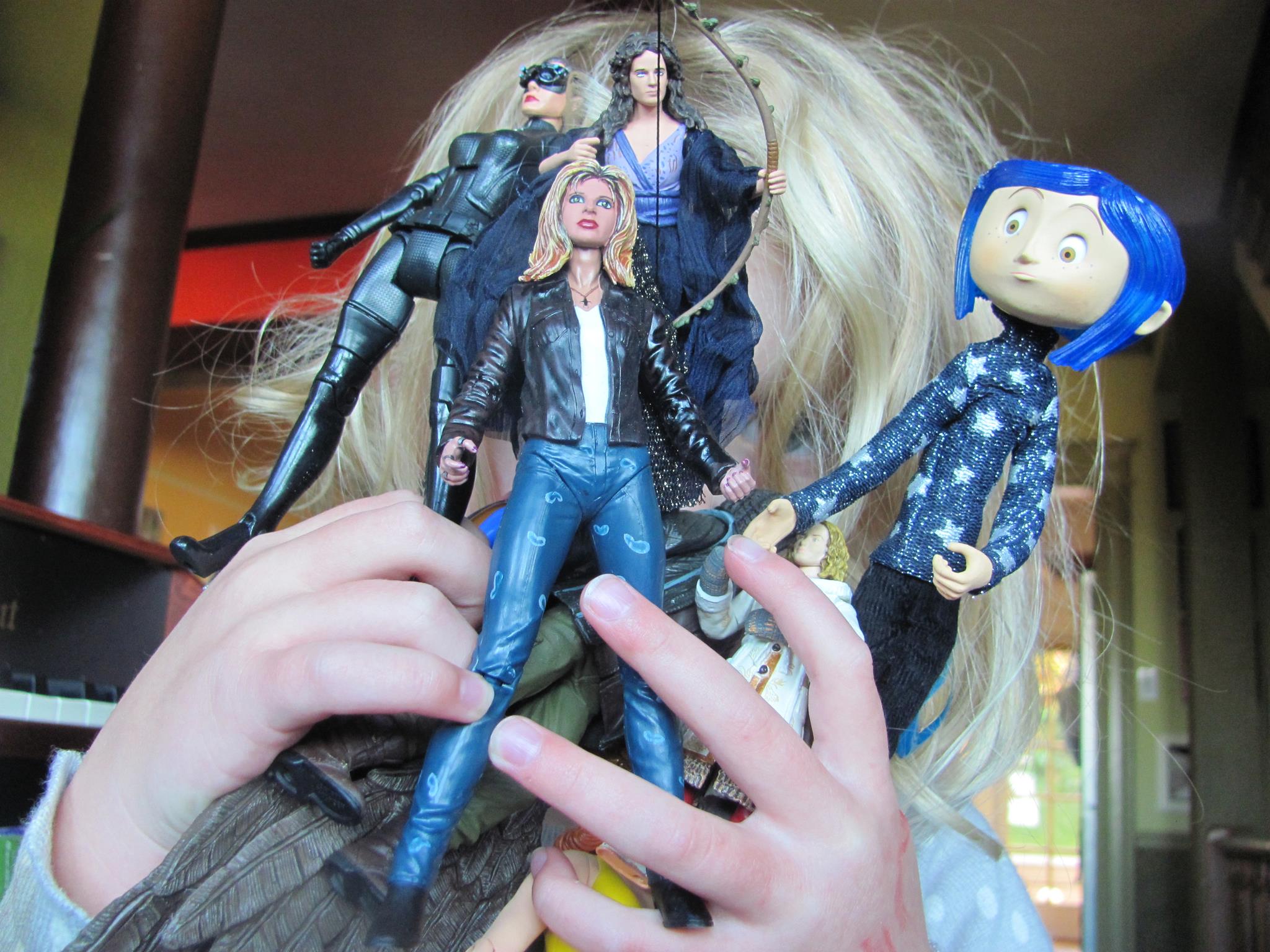
My daughter, Rose, with her new Christmas friends: Catwoman, Buffy, Serafina Pekkala, Hawkgirl, Lyra Silvertongue, and Coraline.
My favorite is Coraline. She belongs to Rose’s older sister, Alice, who loved the book.
These characters are so much better than the ones photographed above for Reel Girl’s header just after Christmas, three years ago, when I started this blog. I took that photo because, as the mother of three young daughters, I was so freaked out and disgusted by the grinning plastic strewn around our living room.
I’m going to post a photo of the whole new crew soon. There are about 15, and I think, seriously, if this group doesn’t comprise all of the non-sexualized female action figures out there, it’s most of them.
Thank you to A Mighty Girl and Toward the Stars. It is on these new sites that I found all of my daughters’s Christmas presents this year. Let’s just say the figures above are not aggressively marketed or found in my neighborhood Walgreens along side the Barbies, stacks of princess coloring books, or Monster High dolls. Cool, inspiring female figures do exist and can be found in targeted searches. But for the most part, they are not mainstream. Coraline costs $100.
We need more figures to be more accessible to more people. Before we can have more female action figures made or mass marketed– featured in games or embossed on clothing sold at Target– we need more movies, TV programs, and books with strong female protagonists. Since the beginning of time, stories have always been the best marketing tool.
When heroic females go missing from stories, they go missing everywhere.
My daughter is home sick today, and we got under a blanket, lit a fire, and watched “Secret of Kells.” Wow. Besides Miyazaki, I don’t think I I have ever seen an animated film so beautiful. The colors and the patterns are mesmerizing. Not only is this film drop-dead gorgeous, but it features one of the coolest female characters to grace animation. If that’s not enough to gush over, that female character, not the protagonist, is the one on the posters and DVD cover. (On Google, there is an alternative cover featuring the protagonist, Brendan, but I’ve never seen that version off the internet.)
“Secret of Kells” came out before my blog, back in 2009 when I still rented DVDs. The guy at the store recommended it to me. Remembering that today and because my daughter was too sick to argue with any movie choice of mine (i.e. one she’d never heard of) we watched “Kells.” As the film went on, I fell in love with it but also remembered why it slipped off my radar.
The story is about how the famed Book of Kells came to be. The narrative revolves around monks and monasteries. You can’t get a much more exclusively male as far as settings go than that. Today, as a couple years ago, I was impressed with the diversity of the monks. They are all body types, (rectangles and circles); they are old and young; they are varied ethnicities, and they are all male.
Brendan, our hero, is an apprentice monk (I’m sure there is a better term for that.) He is the protagonist of the movie and the narrative follows the traditional quest myth pattern. Brendan goes into the forbidden forest to search for some special berries that will make green ink that an old monk needs for the book. In the forest, Brendan runs into a pack of wolves. He is rescued by the brave fairy, Ainsling when she shouts: “What are you doing in my forest?”
Ainsling has me with that opening line. I love how territorial and confident she is. Her magic and familiarity with the forest is evident throughout her scenes. When Brendan sees the berry tree swarmed with bees, Ainsling assures him: “Don’t worry, I told them not to sting you.”
Not only can Ainlsing talk to and control animals, she can climb the tallest trees. She is totally at home in the forest and a protector of it. She is great looking, with long, white hair, bushy-black eyebrows, and huge green eyes.
Ainsling is wonderful, but she is not in the movie nearly enough. I remembered today that the last time I watched “Kells,” her absence annoyed me. This time, immersed for three years in animation, I know how rare a character like Ainsling is, and how rare it is to see a cross-gender friensship like hers and Brendan’s. I still wish she was in the movie more, but I really love this film.
“How DreamWorks Animation Became One of Hollywood’s Most Female-Driven Studios”
Jeffrey Katzenberg now employs far more women producers than men: “You can have a life and still work here.”
Great photo, nice quote, but I have two questions. How many directors of DreamWorks movies are women? How many protagonists in DreamWorks movies are female?
I think I can answer the second question.
Here’s a list of films from Hollywood’s “most female driven” studio. Out of 21 movies, 2 feature female protagonists. TWO. “Chicken Run” and “Monsters and Aliens.”
That’s great, Jeffrey! Awesome job.
The movies:
Shrek 1, 2, 3, all starring…SHREK!
Puss In Boots (Shrek spin off, giving another male protagonist his own film)
Prince of Egypt (Obvious, right?)
Wallace and Gromit (2 males)
Chicken Run (females in this one)
How to Train Your Dragon (Boy trains male dragon)
Kung Fu Panda 1, 2
Madagascar 1,2,3 (gang of 3 males, 1 female)
Over the Hedge (centers on male raccoon)
Bee Movie (Jerry Seinfeld, need I say more?)
Flushed Away (stars male rat)
Antz (stars Woody Allen)
Shark Tale (centers on a fish voiced by Will Smith)
Monsters versus Aliens (Reese Witherspoon stars in this one!)
Sinbad Legend of the Seven Seas (Obvious?)
Rise of the Guardians (Guardians are 4 males/ 1 female; centers on Jack Frost)
The New York Times chief film critic is living in an entirely different universe than my three daughters and me, or he has the lowest expectations imaginable.
Scott writes:
There is a smattering of evidence to support the impression that they have, because 2012 was, all in all, a pretty good year for movies and also a pretty good year for female heroism.
Yes, we got “Brave” this year. Thank you director Brenda Chapman for making Pixar’s first movie ever with a female protagonist. I’m sorry that you, one of the only women to direct animated movies produced by a major studio, were fired half way through production and replaced with a male director.
But “Brave” is just one movie. The exception proves the rule. It’s December now, and sadly, it’s time for me to admit that once again, in the movies made for children in 2012, girls go missing. In staggering proportions, males are consistently front and center; females are mostly sidelined or not there at all.
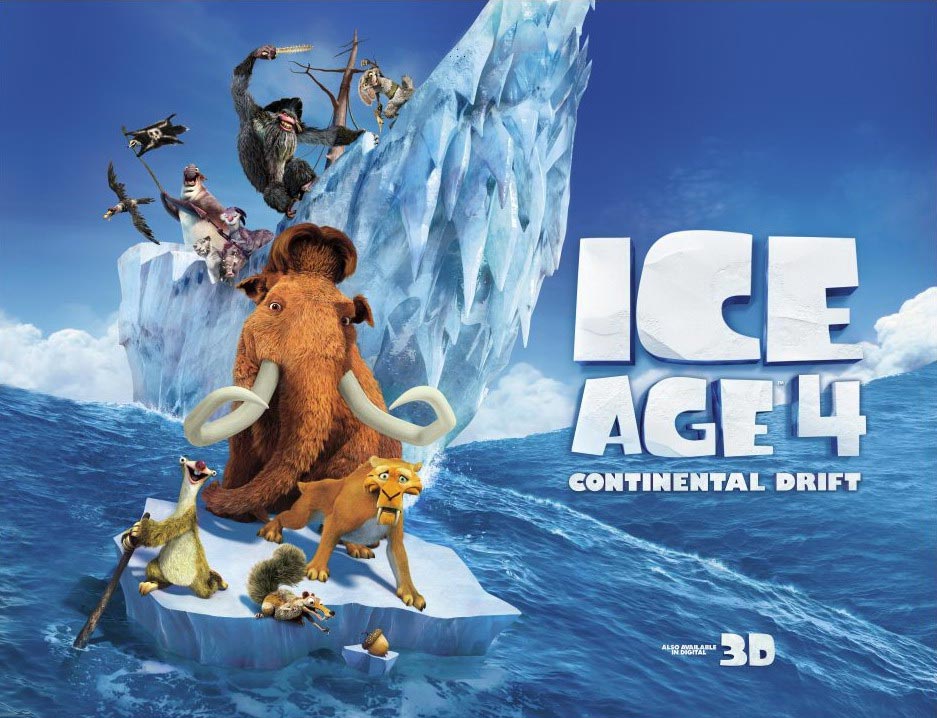
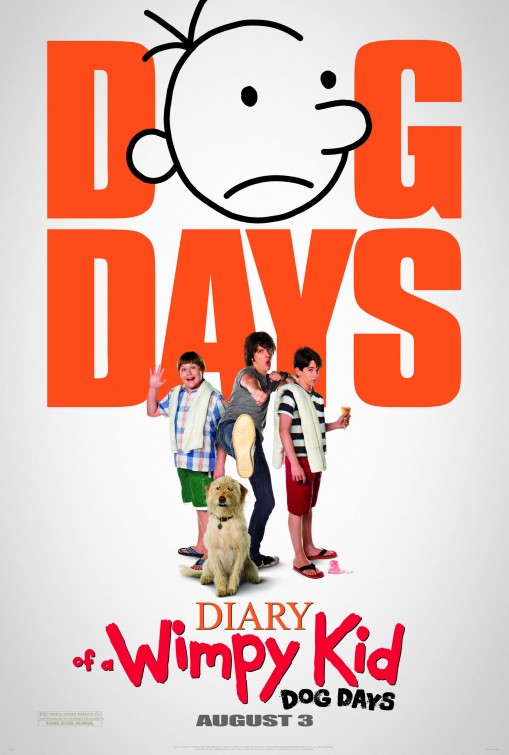
If you look at the gender placement in the images on the movie posters below, the meaning of “marginalized” couldn’t be more clear. Remember, these are movie for kids. So when your children go to the movies, they are learning, time and time again, that boys are more important than girls…
Only 16% of protagonists in movies are female; only 16% of women make it into power positions in almost all professions across America. Children’s movie posters, and of course the movies themselves, are an effective way that we acclimate a new generation to expect and accept a world where females go missing.
Out of the 16 posters for children’s movies in 2012 pictured below, just 4 represent movies starring females: “Mirror, Mirror,” “Brave,” “Secret World of Arrietty” and “Big Miracle.”
Here’s the Gallery:
This Gallery is about the last thing I would want to tell my three daughters– ages 3, 6, and 9– that this is what year of heroine worship looks like.
You know how when you say something is sexist, like, say, the genre of animated movies marketed to kids, people will tell you it’s all in your head? They will say you don’t know what you are talking about and to stop picking on Nemo or Ratatouille or Frakenweenie or whomever.
Well, guess what? Geena Davis, goddess that she is, just scored 1.2 million dollars from Google to develop software that will analyze the portrayal of females in children’s media. This technology will scan hours of media content and through voice recognition and other features, will calculate how much screen time females get, how they appear, and the roles they play. This technology will calculate as quickly as Nielsen ratings so that it can show statistics about what appeared on TV the night before the very next day.
Gee, I wonder what this technology is going to tell us about gender roles and children’s media. How cool is that Davis got funding for an objective system that no one can argue with? She rocks.
I’ve been avoiding writing this post. I knew that female characters in children’s movies were not faring well in 2012. Not in number and not in stature. But I kept hoping. Hoping that somehow, before January, something would change, a slew of movies were going to appear from nowhere, stats would magically shift.
Yes, we got “Brave” this year. Thank you director Brenda Chapman for making Pixar’s first movie ever with a female protagonist. I’m sorry that you, one of the only women to direct animated movies produced by a major studio, were fired half way through production and replaced with a male director.
But “Brave” is just one movie. The exception proves the rule. It’s December now, and sadly, it’s time for me to admit that once again, in the movies made for children in 2012, girls go missing. In staggering proportions, males are consistently front and center; females are mostly sidelined or not there at all.
If you look at the gender placement in the images on the movie posters below, the meaning of “marginalized” couldn’t be more clear. Remember, these are movie for kids. So when your children go to the movies, they are learning, time and time again, that boys are more important than girls.
For those of you who say there are alternative posters that I didn’t put in Reel Girl’s Gallery, you may find them on Google images, but these are the ones I saw all around San Francisco. Even if you find a poster on Google featuring, say, Tooth, the one female Guardian out of five (a typical gender ratio, by the way) that’s a pretty pathetic argument for her relevance.
For those of you who say the posters below do not reflect the movie, that the movie has a strong female in it, maybe even two, maybe three, you are, most likely, referring to the Minority Feisty. No matter how many Minority Feisty there are in an animated film, they are represented as a minority. The irony is, of course, that females are not a minority, not a special interest, not even a fringe group. Females are, in fact, half of the population. Girls are half of the kid population. Why aren’t they represented that way in movies made for children?
I call the Minority Feisty “Feisty” because that is, invariably, the adjective reviewers use to describe the “strong” female character in an animated film. “Feisty” is diminutive. It is what you call someone who plays at being powerful, not someone who is actually powerful. Would you ever call Superman “feisty?” How would he feel if you did?
The role of the Minority Feisty, like a cheerleader or First Lady, is to help the male star along on his important quest. Children need to see females front and center, as protagonists, as the heroes of their own stories.
Finally, even apart from the movie, these posters– and ads– are their own media. Whether or not your kid goes to the movie, she sees these posters everywhere. The movie poster is one of the reasons that I was so thrilled about “Brave.” Finally, San Francisco was papered with an image a daring girl, an image marketed to kids. Obviously, the biggest impact of a narrative is made when kids get to know the character through the movie and then see that character on clothing, food packaging, and toys.
As you look at these posters, imagine the reverse, the gender ratio and the character placement, switched; the movie’s title reflecting the female star. Would you do a double take? How many of us grown-ups don’t even notice the dominance of male characters anymore? How many of us experience the annihilation of females as totally normal, not to mention adorable and child-appropriate?
There is no good reason for the imaginary world to be sexist. Or is there?
Only 16% of protagonists in movies are female; only 16% of women make it into power positions in almost all professions across America. Children’s movie posters, and of course the movies themselves, are an effective way that we acclimate a new generation to expect and accept a world where females go missing.
Out of the 16 posters for children’s movies in 2012 pictured below, just 4 represent movies starring females: “Mirror, Mirror,” “Brave,” “Secret World of Arietty” and “Big Miracle.” The “Big Miracle” poster diminishes Drew Barrymore pretty effectively. I loved “Arrietty,” as I love every Studio Ghibli film, but was surprised to see the boy so big on the poster.
This poster for “The Hobbit” is all over downtown San Francisco where I just was with my 9 year old daughter and her entire class on a field trip. What’s missing here?
I know, I know, it’s not Hollywood’s fault. I should blame J. R. R. Tolkein instead. He created the series around mostly male characters. But before I go into Tolkein, I want to know: Have you ever seen an ad for a major motion picture featuring 13 female characters? Ever? Do you think all the other people passing by noticed that this poster is all male? Or is it so similar to all of the other all male, mostly male, front-and center male posters that no one notices that females go missing? It’s just a “normal” annihilation, kind of like a board room meeting at Facebook.
Here’s why J. R. R. Tolkein can’t shoulder the responsibility of sexism in 2012 USA:
(1) The gender imbalance is not just this movie, it is representative of a pattern, a gender matrix that Hollywood rarely breaks out of.
(2) Everything is derivative. Are we going to be reproducing sexism thousands of years from now because the Bible, the Greek myths, the classics, and DC comics are narratives created by men?
(3) Even when Hollywood makes a movie from a spin off of a character in a classic, time and time again, a male is picked as the new main character i.e. “Shrek 3” led to “Puss In Boots.” The latest?
“Oz The Great and Powerful.” The life story of Oz, the fake ruler, the imposter. He gets his own movie. I’m sure it humanizes him very nicely.
The real ruler of Oz? That would be Ozma. When I was a kid, she was my favorite character in the L. Frank Baum series, because she was the real ruler of Oz, the rightful ruler, and also because she had dark hair like me.
Anyone ever heard of her? Do your children know who she is? There is a book about her. Where is her movie? I didn’t see the preview.
Michael Calleri, a freelance writer who was reviewing movies for the Niagara Falls Reporter, couldn’t figure out why some of his reviews made it to publication while others didn’t.
I emailed the owner again asking for guidance. Why were some reviews making it onto the web and not others? I got my answer in the form of an email that is so shocking, it seems to come from another galaxy, an evil one. What dark void produced what you are about to read is anyone’s guess. What causes a male human being to so rigidly hate the opposite sex that he fears not only the power of women, but also the power of movies…Below is the email I received, exactly as written. It came after a series of phone calls and emails in which I was seeking answers. The initial email in this series was sent by me with the subject line: “Actually, I need direction for Saturday.” The spelling and spacing and punctuation are exactly as written to me by the publisher. In his email, he references the films “Snow White And The Huntsman” and “Headhunters,” which he calls “Headhunter.” Here’s the email:
Michael; I know you are committed to writing your reviews, and put a lot of effort into them. it is important for you to have the right publisher. i may not be it. i have a deep moral objection to publishing reviews of films that offend me. snow white and the huntsman is such a film. when my boys were young i would never have allowed them to go to such a film for i believe it would injure their developing manhood. if i would not let my own sons see it, why would i want to publish anything about it?
snow white and the huntsman is trash. moral garbage. a lot of fuzzy feminist thinking and pandering to creepy hollywood mores produced by metrosexual imbeciles.
I don’t want to publish reviews of films where women are alpha and men are beta.
where women are heroes and villains and men are just lesser versions or shadows of females.
i believe in manliness.
not even on the web would i want to attach my name to snow white and the huntsman except to deconstruct its moral rot and its appeal to unmanly perfidious creeps.
i’m not sure what headhunter has to offer either but of what I read about it it sounds kind of creepy and morally repugnant.
with all the publications in the world who glorify what i find offensive, it should not be hard for you to publish your reviews with any number of these.
they seem to like critiques from an artistic standpoint without a word about the moral turpitude seeping into the consciousness of young people who go to watch such things as snow white and get indoctrinated to the hollywood agenda of glorifying degenerate power women and promoting as natural the weakling, hyena -like men, cum eunuchs.
the male as lesser in courage strength and power than the female.
it may be ok for some but it is not my kind of manliness.
If you care to write reviews where men act like good strong men and have a heroic inspiring influence on young people to build up their character (if there are such movies being made) i will be glad to publish these.
i am not interested in supporting the reversing of traditional gender roles.
i don’t want to associate the Niagara Falls Reporter with the trash of Hollywood and their ilk.
it is my opinion that hollywood has robbed america of its manliness and made us a nation of eunuchs who lacking all manliness welcome in the coming police state.
now i realize that you have a relationship with the studios etc. and i would have been glad to have discussed this in person with you to help you segue into another relationship with a publication but inasmuch as we spent 50 minutes on the phone from paris i did not want to take up more of your time.
In short i don’t care to publish reviews of films that offend me.
if you care to condemn the filmmakers as the pandering weasels that they are…. true hyenas.
i would be interested in that….
Frank
I feel about Frank kind of the same way I felt about Paul Ryan during the VP debate. Sickened but also relieved. At least the guy is honest. There it is in a nutshell.
I don’t want to publish reviews of films where women are alpha and men are beta.
where women are heroes and villains and men are just lesser versions or shadows of females.
There is a lot to love and admire about “Wreck-It Ralph.” In many ways, both conspicuously and more subversively, the movie challenges gender stereotypes. That said, the gender matrix– a sexist framework that dominates animated films made for children– remains intact. Watching “Wreck-It Ralph,” for me, is like reading the Greek Myths; there are strong, complex females to admire but they are only permitted to demonstrate their power within a firmly established patriarchy.
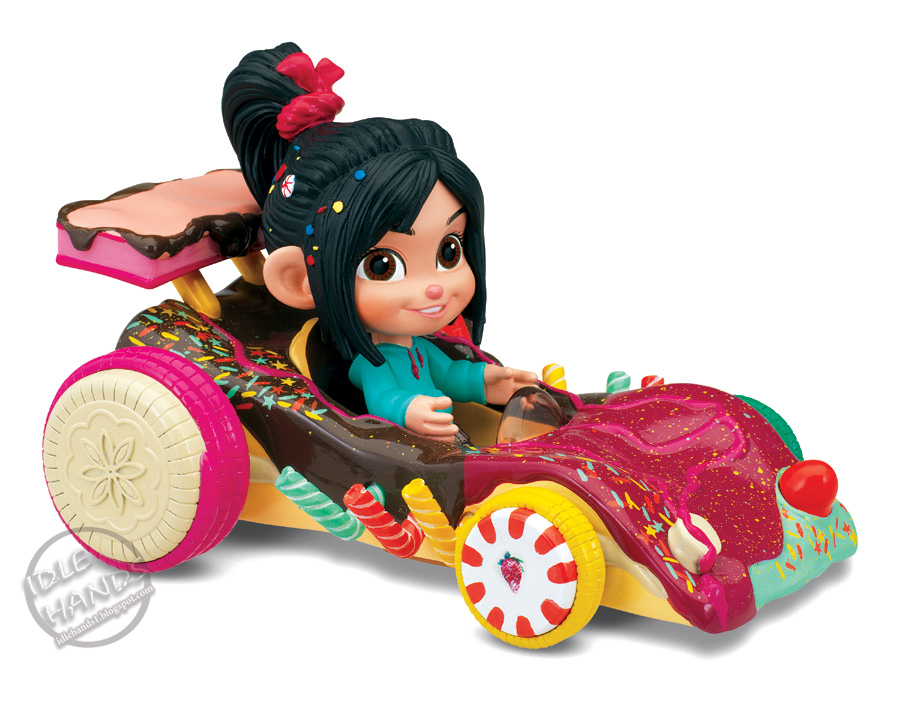
Vanellope von Schweetz is such a cool Minority Feisty. She is smart, funny, daring, talented, compassionate, and vulnerable. She kicks ass but also has a huge heart. Vanellope is voiced by one of my favorite comedians, Sarah Silverman, and let’s just say, those two have a lot in common. Icing on the cake: Vanellope saves Ralph’s life with her speed and smarts. The cross-gender friendship between Vanellope and Ralph is the heart of the movie.
Vanellope is not the only Minority Feisty to love in “Ralph.” Sargeant Calhoun, voiced by Jane Lynch, also plays a complex and cool role. She is a fierce military woman but also passionate with a strong moral fiber.
A third Minority Feisty is Moppet Girl who hangs out at the arcade. Though her gender is a minority in the arcade crowd (I know, I know, that’s how it is is the “real world”) she is there and delivers the key line in the plot. Moppet Girl tells the arcade owner that the Fix-It Felix game is broken. She is also the character who provides the plot bookend, giving a fist bump to Vanellope at the end of the movie when she returns to her rightful position as ruler. It is a rare scene in animation to see two females interacting with each other, expressing power and victory. To put that scene in perspective, the awesome Minority Feisty of “Puss in Boots,” Kitty Softpaws, never meets any of the other 4 females in the movie.
More coolness: One of the crowd scenes– in Vanellope’s game, Sugar Rush– is female dominated. The trio of girls who actually get to speak in that crowd are a stereotype, the trifecta, of mean girls: one bitchy leader flanked by a pair of followers (as seen in “Mean Girls,” “Heathers” “Never Been Kissed,” and many more “chick flicks”.)
But still, females dominating a crowd scene– a crowd scene of race car drivers, no less– is nothing to sneeze at. Those cars may be made out of cookies and candy, the drivers may have names like Taffyta, reminiscent of “My Little Pony” but, still, progress noted.
There are still more depictions of female power in “Ralph.” A few weeks ago, I posted about “riding bitch:” how whether a female in kidworld is on a magic carpet (“Aladdin”) a dragon (“How to Train Your Dragon”) or a hippogriff (Harry Potter), she’s is almost always found behind the male. The message is: the boy leads, the girl is along for the ride. Not in this movie. In “Wreck-It Ralph” Sargeant Calhoun piloted some kind of motorized, flying surfboard and a space ship while Fix-it Felix rode shotgun. Not only was Felix in the passenger seat, but he gazed, admiringly at Calhoun as he watched her do her stuff. Calhoun was shown as attractive and powerful simultaneously. That, my friend, is almost never depicted. Vanellope, herself, becomes a race car driver. She is also shown in the driver’s seat with Ralph behind her. Ralph does teach her how to drive (when he doesn’t know how either) but her skills surpass his and he is shown admiring her for her talent. (I cannot find images on the web of Calhoun piloting with Fix-It Felix by her side or Vanellope driving with Ralph in the back. If you do, please send me the link.)
But here’s the gender matrix. Even breaking all these sexist barriers, Ralph is clearly the protagonist. The movie is named for him. He’s the hero. Fix-It Felix is the “good guy” to Ralph’s “bad guy.” The real bad guy, the villain of the movie, Turbo, is also male. Turbo masquerades as King Candy but when Vanellope is restored to her rightful role as ruler, she is “princess,” not “queen.” In an often used cliche in children’s movies trying to straddle the princess-empowerment image, Vanellope tears off her puffy, pink dress. Later, in the movie, when she has to wear the dress to attend a wedding, she is uncomfortable and scratches her neck. (I actually appreciated that detail much more than the overused “rip off your princess-dress/ corset” cliche. Another awesome factor: the toys from the movie. As far as I can see, the Vanellope figure is shown in her regular clothes or driving her car, not wearing the princess outfit she hates in the movie, which is, unfortunately, how Disney sells Mulan.)
The Bad Guy Anon meetings were hilarious and creative. I was cracking up watching them but these scenes fortify the sexist matrix.
The whole thesis of the movie is about being a bad “guy.” There was only one female in the bad “guy” group and she didn’t get a single line. It is mostly that cast of characters that made the poster that is all over San Francisco.
The bad female is not on this poster, nor is Vanellope, Calhoun, and Moppet Girl. When I posted earlier about the sexist poster, “Wreck-It Ralph” fans responded with hundreds of angry comments on Reel Girl and all over the web. Their first complaint was that the movie features strong female characters. It does. But the male is still the lead. That is what this poster clearly shows. That is why the poster was created to look this way and why the film is titled for Ralph.
Also, the poster is its own media. Even if you don’t see the movie, your kids see the poster on buses and looming over them on the sides of buildings. And again, if 50% of posters around town featured females, there would be no problem with “Wreck-It Ralph.” But, “Wreck it Ralph” fits a pattern, echoed and repeated, where males star and females are sidelined or missing.
Commenters on that blog post also told me the movie is called “Sugar Rush” in Japan. I think that’s pretty cool, but it’s still not called “The Racer, Vanellope” and it’s the U.S. version that sets the cultural standards here. Also, once again, Ralph narrates, the movie is Ralph’s story. Vanellope is his friend.
Why is the gender of the protagonist so crucial? We are all the heroes in our own lives. Again and again, with these films, girls see that there is a limit, a ceiling, to their potential, and it is marked with a male. No matter how important they are or how big a role they get to play, there is a guy who gets more.
Reel Girl rates “Wreck-It Ralph ***HH*** Take your kids to see this movie!
Update: A commenter tells me one of the 3 mean girls is, in fact, a boy. The one on the left. Beggars can’t be choosers, and I claimed claimed RF in spite of evil ways, but she is a he.
So sick of people saying I should be grateful for crumbs and the Minority Feisty. If all goes well, My nine year daughter and I are going to see “Wreck-It Ralph” today. I’ll try to review Saturday morning.
Last year’s post:
Thanksgiving movies a feast for boys, girls go hungry
November 23, 2011
Let’s see, no school today and my daughters want to see a movie.
Is it too much to ask for one holiday movie to put a female character front and center as it does for male characters in all 5 holiday movies?
What about a mother-daughter saga instead of father-son one as in “Arthur” (Santa’s incompetent son) and “Happy Feet” (Mumble’s son can’t dance like he can)?
Or a girl buddy movie as in “Puss In Boots” (Puss and Humpty dream, go on adventures, and finally, transition)?
I don’t know what “Hugo” is about but something tells me not a girl.