Baum was a feminist. He was an avid supporter of women’s suffrage, and was happily married to the outspoken, intelligent, and energetic Maud Gage
And this:
But even more troubling and disappointing about Sam Raimi’s 3D spectacle “Oz The Great and Powerful” is what character it chooses to crown as its hero: The Wizard.
Why is this sad and troubling? Well, as you go through the Oz series, one fact can’t help but jump out at you: The feisty, heroic characters of Oz are all young women. Dorothy returns, again and again, to have adventures in Oz. “Tik-Tok of Oz” features a Dorothy surrogate in Betsy Bobbin (no Toto for Betsy! Her animal companion is a mule named Hank.) Glinda often reappears to do battle. General Jinjur leads an all-female coup against the Scarecrow, and despite its failure, Baum lovingly stops in to see how she’s faring in the common Munchkin life.
But most intriguing and revolutionary of them all is Princess Ozma, who actually makes her first appearance in “The Marvelous Land of Oz” as a young boy named Tip. Tip is the “hero” of the book until it’s revealed an evil witch named Mombi did a magical gender reassignment, and Tip becomes Ozma, restored not only to her rightful throne, but to her own feminine self. It’s a strange and fascinating twist for both Tip and the audience alike, and one with very modern implications.
I have asked again and again: WHY DIDN’T HOLLYWOOD MAKE THE OZMA MOVIE? SHE IS THE RIGHTFUL RULER OF OZ! THE WIZARD??? THE CHARLATAN? ALL THAT, JUST TO GET A MALE PROTAGONIST.
Film.com explains it this way:
No doubt the focus group responsible for “Great and Powerful” convinced themselves that female protagonists weren’t marketable…
Hollywood, we want strong, complex female protagonists. DO YOU HEAR? This is bullshit. Teens, little kids, parents, we are all sick of this sexist crap.
If you’ve never really noticed the absence of women in Star Wars (or movies at large), consider yourself living proof of how the limiting narratives of culture and media can warp our expectations, to the point where the presence of one woman in a cast of dozens of memorable male characters can seem like perfect equality.
Women accounted for a mere 33 percent of the roles in the top 100 Hollywood films in 2011, according to a study commissioned by the Center for the Study of Women in Television and Film. When it came to the leading characters, women were even more dramatically under-represented, comprising only 11 percent of identifiable protagonists.
It gets even worse when you look at all-ages entertainment. Women — who, by the way, make up half the human population — comprised only 28 percent of speaking roles in top-grossing family films last year. And when women did appear, they were far less likely to hold roles of power or influence: making up only 3 percent of executive portrayals, for example, compared to 25 percent in real life….
Criticisms about representations of gender (or race and other diversity) are often countered in fandom by sociological or scientific analyses attempting to explain why the inequality happens according to the internal logic of the fictional world. As though there is any real reason that anything happens in a story except that someone chose to write it that way.
What are kids learning about gender when they watch “Star Wars” again and again and again? All those fantastic creatures the creators of “Star Wars” came up with, but their creativity screeched to a stop when it came to imagining females.
It’s Academy Awards week and the ballots are closed. While we don’t know the winners yet, one thing we know for sure is that no women have again been nominated for best director.This is one of the only times of the year when the world is paying attention to the film business, not just movies. The entire industry is on display this weekend and it is still extremely imbalanced.
This is the second year we have created a video to help make people think about the gender imbalance in Hollywood, especially in the area of directing.
The bad news is Reel Girl ran out of bandwith not once, but twice. ARGH.
The good news is the sexist posters from kids movies are back up. If you haven’t seen them, you can look now.
You should also check out Laura Beck’s post on Jezebel. She writes about the bad influence the limited representations of females has on kids:
As for how it leaves girls feeling, this is probably something many of us can relate to. As a child, I strived for the perfection of a Disney Princess, perhaps subconsciously knowing I’d never achieve that, I started imagining myself in the shoes of more adventurous male characters. I’ve talked to many women who’ve had similar experiences, this sort of transference. Lacking decent female role models, it’s not surprising many girls live stories through the eyes of boys and men.
There’s a passage in Margaret Cho’s hilarious 2002 autobiography I’m the One That I Want that talks about this in terms of race. This is paraphrased, but she basically says that, as a young girls, she couldn’t wait to grow up and become white like everyone on TV. Heartbreaking, and I think this experience resonates with many people. When you don’t see yourself reflected in media, you push yourself into it.
Beck also goes on to tell a creepy but unsurprising story:
Now, a personal anecdote. I have a friend who’s a writer working in children’s TV. She’s constantly taking meetings and pitching stories, and she told me when she first started in the business, she pitched stories with girl leads. However, after being told to change the protagonist to a male character more than a few times — and once being told to actually turn the movie into a live action rom com for adult women!? — she now pitches almost entirely male-driven stories. And guess what? She’s selling.
What is surprising is that so many people buy the bullshit line: “Girls will see movies about boys, but boys won’t see movies about girls.”
How can we see cool movies about girls when no one will make them?
Commenters ask me a lot about the Bechdel Test created by Alison Bechdel in 1985 to check for sexism in movies. It names the following three criteria for a movie: (1) it has to have at least two women in it (2) who talk to each other (3) about something besides a man.
I love Bechdel’s test. Here’s my version, inspired by Bechdel and adapted for children’s movies: (1) At least two females who are friends (2) go on an adventure (3) and don’t wear revealing clothing.
The Magowan Test is for movies marketed to little kids.
I’m grateful to you for giving me the term ‘Minority Feisty’, because indeed, there is a girl character (a nerdy, excluded type with a monobrow who plays the witch in a play) in Paranormal who has very few lines, but one of those lines is a feminist piece about the mistreatment of witches throughout history, or something similar.
Plotwise, it’s up to Norman to save the world (or community, at least) from a witch. Which he does.
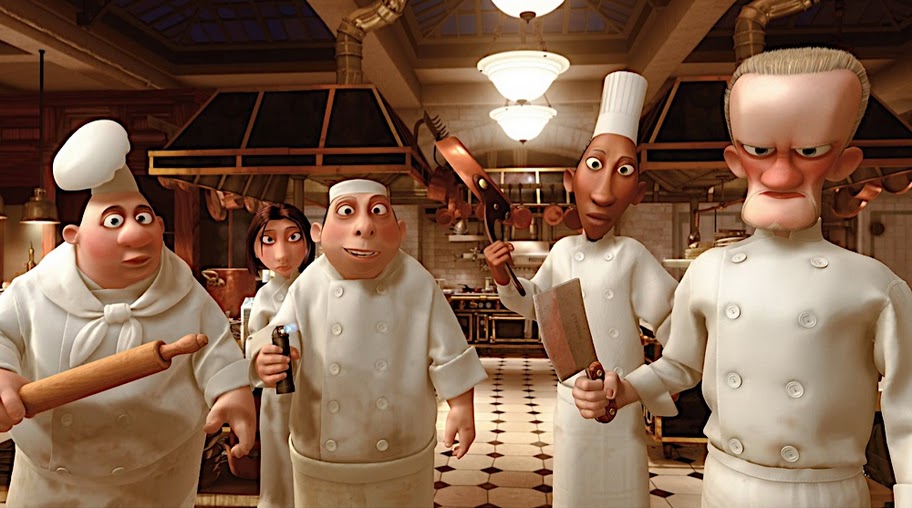
I haven’t seen “ParaNorman” but from Stace’s description, the female character is classic Minority Feisty. As with Colette in “Ratatouille,” she delivers a feminist line or two. Her place in the narrative allows parents to breathe a sigh of relief and think: OK, this movie is about a boy, there are more males than females in it, but it’s still feminist.
And one more thing about the word “feisty” so often used to describe strong female characters in children’s films. “Feisty” doesn’t imply strong, it implies playing at being strong in a cute way. Think about this: Would you call Superman feisty? How would he feel if you did?
See that lone, blonde Smurfette surrounded by 5 male Smurfs?
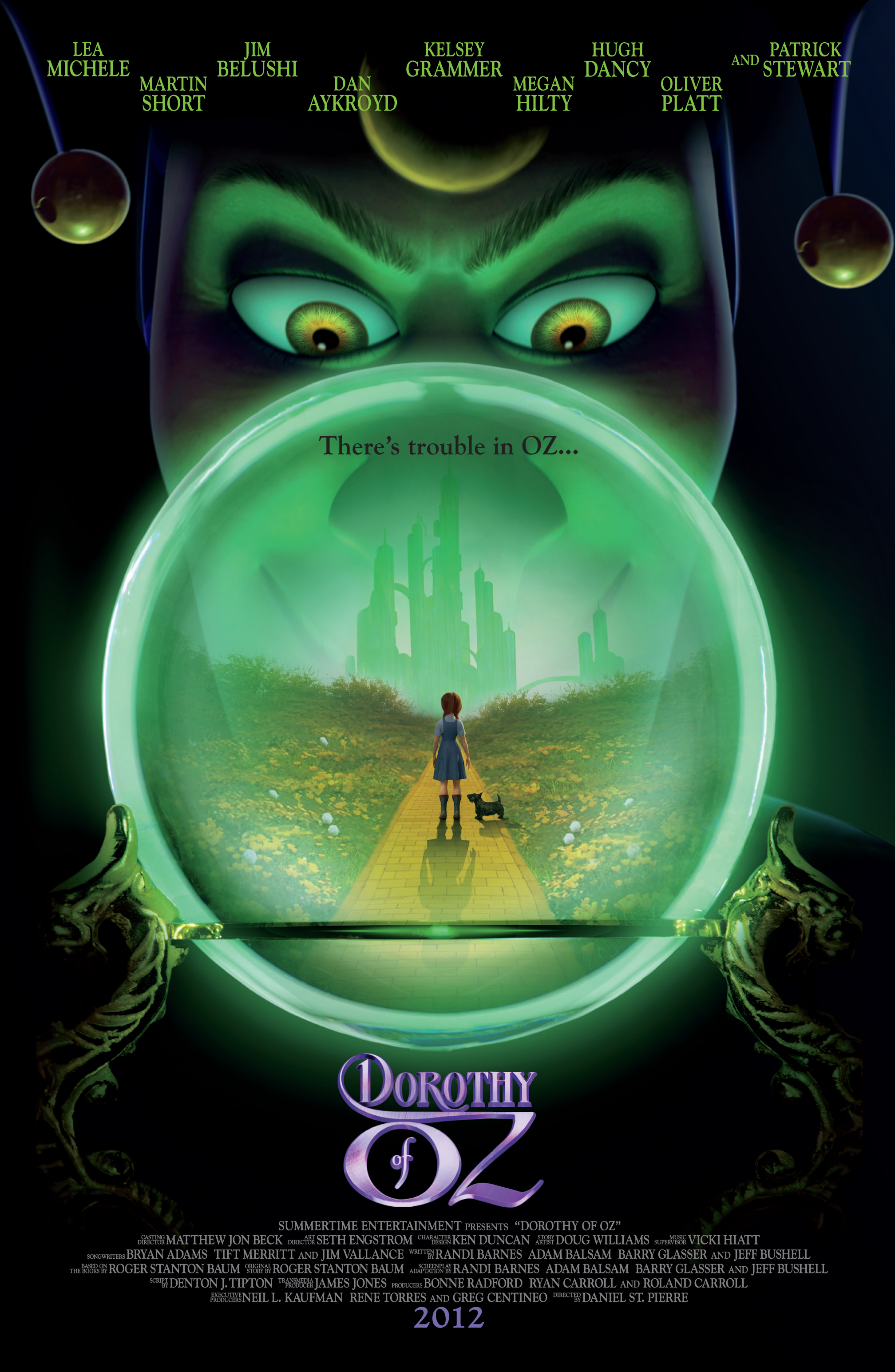
This is a poster for just one of 21 children’s movie posters coming out in 2013. All but 4 movies for young kids feature male protagonists. Of the “female-centric” films, “Dorothy of Oz” lists 7 famous male actors at the top of its poster. “Epic” shows the female protagonist surrounded males. Only two movies with female protagonists are titled for the female while 10 of the 16 movies with male protagonists are titled for the male star. Please look at Reel Girl’s Gallery of Girls Gone Missing From Children’s Movies in 2013. It looks like this year will be the worst one for female characters in movies for young kids since I started Reel Girl.
Back in 1991, feminist critic Katha Pollitt wrote about the ‘Smurfette principle‘ for the New York Times: the idea that kids’ narratives too often allow just one lone female character to exist in a group of males.
Here is the “progress” 22 year later: girls are half of the kid population, but in movies for young children, females are presented as a minority. If you see an animated film today, it’s likely to include one or two strong female characters who reviewers will call “feisty.” In “How to Train Your Dragon,” Astrid; in “Toy Story,” Jessie; in “Ratatouille,” Colette. She’s supposed to make us feel like the movie is contemporary and feminist, unlike those sexist films of yesteryear. She is the Minority Feisty.
The problem is that because Pixar or Disney has so magnanimously thrown in this “feisty” female (who may even have some commentary about sexism or male domination) we’re no longer supposed to care that almost all of the other characters in the film are male, including the star who the movie is often titled for and usually his best buddy as well. The crowd scenes in the film are also made up of mostly males.
There can be 1, 2, or 3 Minority Feisty in a children’s film. (The term is like “fish,” it can be singular or plural.) Whatever the number, the gender ratio will heavily favor male characters.
Parents, the next time you watch a children’s movie, try not to let the “feminist” character(s) distract you. Except for the pink ghetto, in children’s films females are presented as a minority. This is the definition of marginalized. When your children go to the movies, they learn that boys are more important and get to do more things than girls.
In 2012, I waited until the last possible minute. It wasn’t until December that I posted Reel Girl’s Gallery of Girls Gone Missing from Children’s Movies in 2012. Even though in the age of the internet, the facts were impossible to miss, I kept hoping that, somehow, I’d overlooked something.
This year, I’m going to face the upcoming year of multi-million dollar sexism marketed directly at my three daughters– ages 3, 6, and 9– head on, in January.
Of the 21 movie posters for young kids pictured below, only 4 appear to feature a female protagonist; 16 seem to feature a male protagonist and 10 are named for that male star. In one case, “Peabody and Mr. Sherman,” the movie is titled for its 2 male protagonists.
Of the 4 movies starring females, just two are titled for the star. It’s the small budget 7 million film from Moscow, “Snow Queen,” that was brave enough to name its film after a female. “Frozen” is the title chosen for Disney’s version, the same movie studio that changed “Rapunzel” to “Tangled,” to obscure its female star. Fittingly, in the poster for “Frozen,” the woman’s image also fades into the background.
Both “Dorothy” and “Epic,” buffer the female on the poster with males, Epic with a constellation of them and “Dorothy” by listing no less than 7 famous male actors.
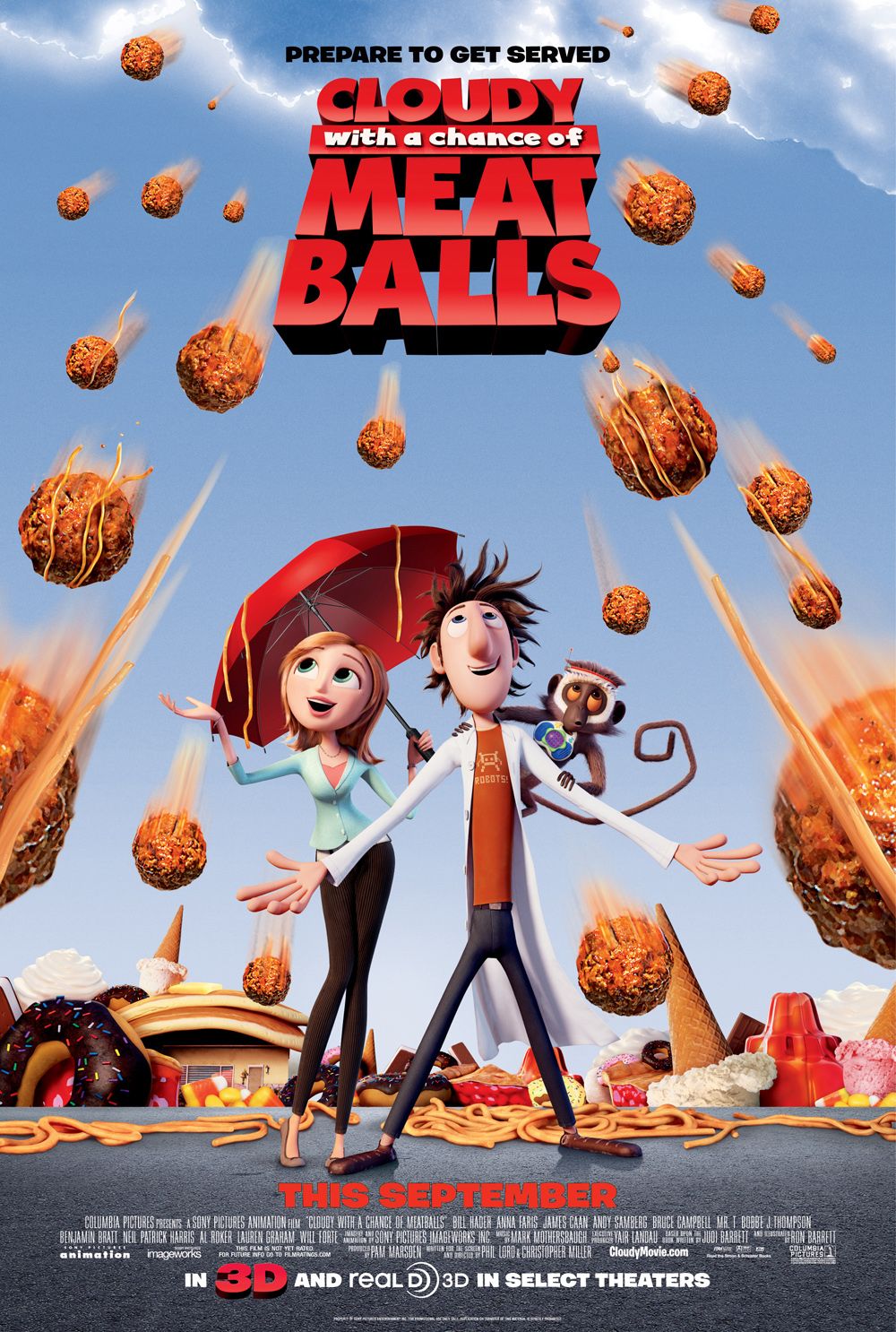
From the position of characters on the poster in “Cloudy With A Chance of Meatballs 2,” it looks like the male is the star, but maybe, hopefully I’m wrong. When you look at the poster, try to imagine a gender flip, the female in front and the male’s legs and hip in the female’s red-carpet-ready pose. That image will make you laugh.
If you are going to argue that there could be strong females in all of these movies, even if they are not the star of the movie, that’s not the same. Please read The curse of the Minority Feisty in kid’s movies.
Author P.L. Travers travels from London to Hollywood as Walt Disney Pictures adapts her novel Mary Poppins for the big screen.
That movie could be really cool. But why, why, why is the movie called: “Saving Mr. Banks?” If there is a female protagonist in this film, could she be concealed any more? I know the androgynous “P.L. Travers” is how the writer’s name is shown on her books, but Mary Poppins came out in 1934. The writer had to use the initials to sell her book. Of course, J.K. Rowling opted for the same tactic years later, but hasn’t her success done anything for women writers? The year is 2013. When are writers going to be able to come out as women? Finally, and I hate writing this, and I hope that I’m wrong: From what I see on the internet it looks like the protagonist of the movie is, in fact, Walt Disney played by Tom Hanks.
I have not yet seen any of these movies. As I’ve written about a lot on Reel Girl, movie posters are their own media. Even if a kid doesn’t see the movie, she sees the ads drive by her on the sides of buses or loom above her pasted on walls. She hears the movie titles. Not to mention, she sees the protagonists on TV, cereal boxes, diapers, clothing, toys, sheets, and in video games.
The posters below are found from Google images. There are multiple posters, and I chose the one I’m predicting that I’ll see around town. Whenever I see a movie poster on a bus or wall with a female character solo, front and center who is not surrounded by multiple male characters, or when multiple female characters are shown, I rush to post the sighting on Reel Girl.
As you look at the posters below, ask yourself: Who looks like the star/ leader/ protagonist of this movie? What would this poster look like if the positions, number of male characters, and title references were switched to female characters? Why are females, half of the kid population, presented as a minority in children’s films? Why is the imaginary world, a place where anything should be possible, sexist at all?
So here we go.
Reel Girl’s Gallery of Girls Gone Missing from Children’s Movies in 2013
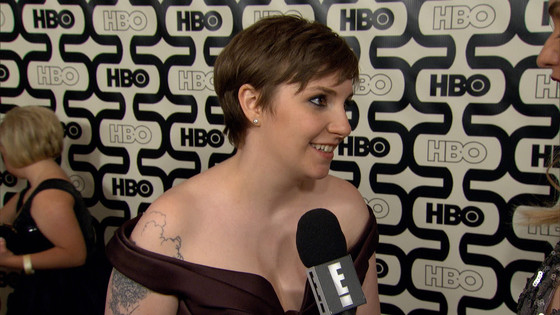
In the run-up to Sunday night’s “Girls” season premiere, the old repetitive war over the show’s content took on a new dimension: Radio shock jock Howard Stern attacked neither the youth nor the perceived entitlement of showrunner/star Lena Dunham, but her display of her body. Stern called Dunham “a little fat girl who kinda looks like Jonah Hill and she keeps taking her clothes off and it kind of feels like rape … I don’t want to see that.” New York Post TV critic Linda Stasi took a similar tack, calling Dunham “a woman with giant thighs, a sloppy backside and small breasts … compelled to show it all.”
In trying to figure out why so many are offended by Lena Dunham’s nudity, D’Addaro interviewed people from editor Jane Pratt of xoJane (“It may not be that she’s driven to show us her body however that body looks. It may be that it’s just part of the story line”); to SF nude activist Gypsy Taub (“Nudity in our society is associated with sex, and a nude woman is automatically considered a ‘slut’ and someone who is asking to be disrespected or raped.”)
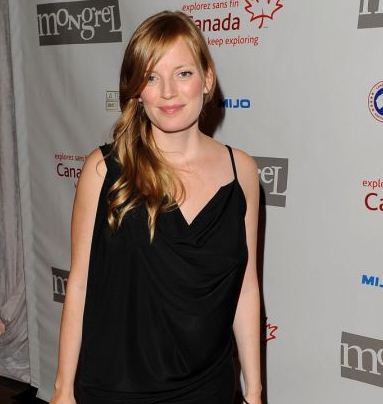
In an interview with Metro on January 8, director Sarah Polley expressed what appears to be a similar view on female nudity to Dunham’s. Here’s the question and response:
There’s a scene featuring a forest of female pubic hair: a bunch of women showering at the gym. We don’t see that much in Hollywood films. I know. Women’s bodies in films are either highly objectified and sexualised or, past a certain age, made fun of. In North American films, there’s no sort of routine nudity so I wanted something that wasn’t particularly eventful for them in that moment.
Famous art critic John Berger said: “Men watch. Women watch themselves being watched.” In Hollywood, over 90% of directors are male. We’ve all grown up saturated with those images. Could it be that all of us, women and men, have almost no idea what women look like through women’s eyes or from the perspectives of women’s experiences? What does that vantage point show us? Anyone know? Hopefully, more female directors will get the courage and opportunity to give us their best guess.
Last night, “Brave” won the Golden Globe for Best Animated film.
YAY!!!!!!!!!!!!! I wish director Brenda Chapman could’ve accepted the award since “Brave” was a story she created, inspired by her daughter, but I know that’s not protocol.
Still, with that wish in my heart, it annoyed me that the male on stage talked and the female didn’t say one thing. I’m assuming they were producers of “Brave.”
The biggest bummer for me was Kevin Costner. He is so arrogant and annoying. But the good news is, we didn’t have to watch three hours of arrogant men. The night belonged to women.
It was so great to see Tina Fey and Amy Poehler up there on stage.
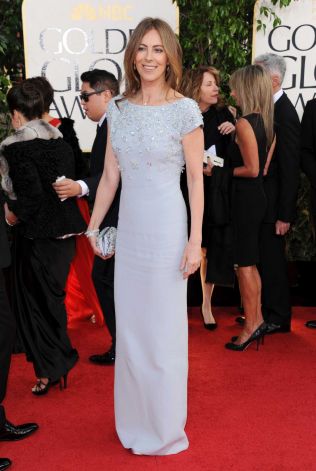
They were so funny. I loved how they quipped about Bill Clinton: “That’s Hillary’s husband!” And then called him Bill Rodham Clinton. Introducing some of the nominees in the audience, they joked about dieting. Fey said, “The Hunger Games…also what I call the six weeks it took me to get into this dress.” Poehler added: “Life of Pi”…which is what I’m gonna call the six weeks after I take this dress off!” Their porn jokes were funny too, and also how they said to Kathryn Bigelow: “When it comes to torture I trust the lady that spent 3 years married to James Cameron.”
I loved the end of Jessica Chastain’s acceptance speech for Best Actress in a Drama:
I want to thank Kathryn Bigelow my director. I can’t help but compare my character of Maya to you, two powerful fearless women that allows their expert work to stand before them. You’ve said that filmmaking for you is not about breaking gender roles but when you make a film that allows your character to disobey the conventions of Hollywood, you’ve done more for women in cinema than you take credit for.
It was excellent to see Lena Dunham win and get up on stage twice. She said: “this award is for every woman who didn’t think there was a space for her. I found my space.”
Jennifer Lawrence won for Best Actress in a comedy. I still haven’t seen “Silver Linings Playbook,” but I’m dying to.
Claire Danes won her excellent portrayal of the smart, complex heroine of “Homeland.”
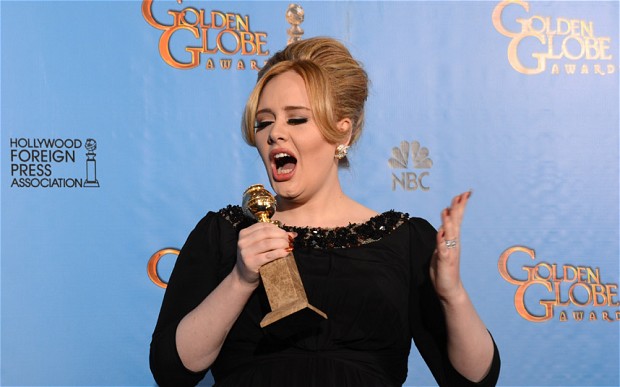
The incredibly talented Adele took home an award for showcasing her kick-ass voice in “Skyfall.”
Julianne Moore won for her role in “Game Change” as Sarah Palin.
It was funny to see Fey and Moore joke about playing Palin, a character who, of course, neither woman would’ve had the chance to play if she didn’t exist in the real world.
Jodie Foster’s speech was funny and moving and strange and I was so happy to see a woman who is 50, relatively young for a lifetime achievement honor, win the Cecil B. DeMille award.
What did I miss? Whoever it could be, without a doubt, the 70th Golden Globes was the best ever for women, and therefore, of course, the best ever at all.














![70th Annual Golden Globe Awards Press Room [NO Germany, Austria]](http://reelgirl.com/wp-content/uploads/2013/01/clairedanes.jpg)