My three daughters and I are flummoxed by On Demand’s menu categories. Under “Kids,” subcategories include: Nickelodeon, Disney Junior, Cartoon Network, on and on. Then, you list: “Girls Rule!”
We were wondering why shows with male protagonists are marketed as mainstream while “Girl’s Rule” is one category out of 20? Girls are 50% of the population, so why the niche programming?
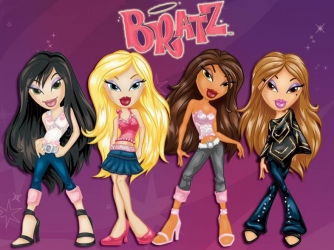
Regardless of the language you use, attributing 5% of shows to the “girl” category doesn’t feel like ruling. Especially not when the list includes shows like “Bratz” which stereotypes and demeans girls, depicting them with a myopic focus on fashion, appearance, and shopping.
A more accurate label for On Demand’s menu would be “Pink Ghetto.” Here’s Webster’s definition:
ghet·to
[get-oh]
noun, plural ghet·tos, ghet·toes.
a section of a city, especially a thickly populated slum area, inhabited predominantly by members of an ethnic or other minority group, often as a result of social or economic restrictions, pressures, or hardships
After I posted about Rhonda Lee, a meteorologist who was fired after defending her “ethnic” hair on Facebook to a racist and sexist commenter, I was thinking about black hair.
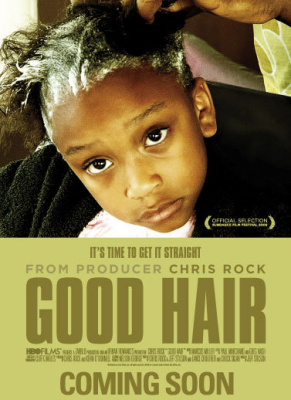
Right after I started Reel Girl, I saw an excellent documentary by Chris Rock on this subject called “Good Hair.”
The film begins with stills of Rock’s two young daughters. (I love that this film was inspired by these girls.) While we look at their pictures on screen, we hear Rock:
Those are my daughters, Lola and Zara. The most beautiful girls in the world. And even though I tell them that they’re beautiful every single day, sometimes it’s just not good enough. Just yesterday, Lola came into the house crying and said ‘Daddy, how come I don’t have good hair?’ I wonder how she came up with that that idea?
The film goes on to document just how these little girls got the idea that their hair wasn’t good enough.
In the film, actress Nia Long tells Rock:
There’s always a sort of pressure within the black community, like, oh, if you have good hair, you’re prettier or better than the brown skinned girl that wears the afro or the dreads or the natural hair style…The lighter, the brighter, the better.
Comedian Paul Mooney explains the phenomenon to Rock most concisely:
If your hair is relaxed, white people are relaxed. If you hair is nappy, they’re not happy.
“Good Hair” ends as it begins, with images of Lola and Zara shown at a playground while Rock muses: “So what do I tell my daughters? I tell them that the stuff on top of their heads is nowhere near as important as the stuff inside of their heads.”
A few months after I saw “Good Hair,” I watched nine year old Willow Smith bust out of the gender/ race matrix, exuberantly celebrating her hair and her independence with her hit song and video, “Whip My Hair.”
Willow sings:
Whip your hair back and forth,
Don’t let haters keep me off my grind,
Keep my head up,
I know I’ll be fine.
She explained the song to MTV:
Whip My Hair’ means don’t be afraid to be yourself, and don’t let anybody tell you that that’s wrong. Because the best thing is you.
Just a couple weeks ago, when this picture of Willow, now 12 years old, made the rounds on the internet, her mother, Jada Pinkett Smith, was derided for bad parenting.
Jada responded to the criticism on her FB page:
This subject is old but I have never answered it in its entirety. And even with this post it will remain incomplete. The question why I would let Willow cut her hair. First the ‘let’ must be challenged. This is a world where women, girls are constantly reminded that they don’t belong to themselves; that their bodies are not their own, nor their power or self determination. I made a promise to endow my little girl with the power to always know that her body, spirit and her mind are her domain.
Willow cut her hair because her beauty, her value, her worth is not measured by the length of her hair. It’s also a statement that claims that even little girls have the right to own themselves and should not be a slave to even their mother’s deepest insecurities, hopes and desires. Even little girls should not be a slave to the preconceived ideas of what a culture believes a little girl should be.
How cool is that? And how different is Jada Pinkett Smith’s public message to her daughter, and about her daughter, than the more conventional and ubiquitous “good mom” message from this Elizabeth Arden ad?
And speaking of beauty, there are few factors more obvious to reveal that what we call “beauty” is indicative of the time we happen to live in than hairstyles. “Beauty” is all about culture and class, status and money.
If African-American women represented the majority of CEOs in America, professors and department heads of Ivy League universities; if they dominated our boards and Academy Award winners, movie dierctors and nightly news anchors and on and on, do you think for one second any viewer would write in that the black lady on TV looks like she has cancer?
The racist comment has nothing to do with hair or “beauty” and everything to do with what it means to be black and a woman in America.
You’ve got a better chance getting into the power ranks if you look the part. Every woman knows how important her appearance is and how intimately what she looks like influences her chances of success.
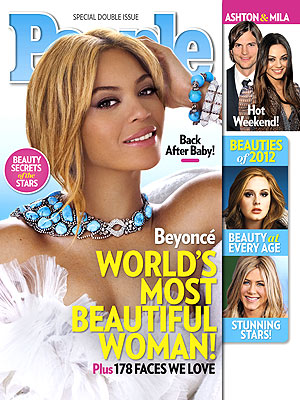
In the history of People Magazine, only two African-Americans have graced the “World’s Most Beautiful Woman” cover. I guess white people are just prettier than black people. Go figure. Note that Beyonce wins the title as a blonde.
If women ran Hollywood, do you think People would create a “most beautiful” issue at all? Or would the magazine come out with something more like “The Sexiest Woman Alive” featuring older stars on its cover? Real life “Sexiest Man Alive” winners include Pierce Brosnan at age 48, Harrison Ford at age 56, and Sean Connery at age 59.
Of course, it helps to come off as “sexy” when you’re portrayed in movie after movie as a hero and shown with “hot” sidekicks who are desperately in love with you. Though People covermen do have one thing in common with the women: Denzel Washington is the only African-American ever deemed “sexy” enough to win.
When Rhonda Lee defended her hair to a racist commenter, she wrote:
Little girls (and boys for that matter) need to see that what you look like isn’t a reason to not achieve their goals.
That’s the same reason Chris Rock made his documentary. It’s the same reason Willow Smith wrote her song, and Jada Pinkett Smith spoke up for her daughter. Is Rhonda Lee not famous enough or powerful enough to speak up for herself without getting punished for it?
blue milk blogger saw her three year son watching the Australian animated show for toddlers “Bananas in Pyjamas.” She blogs:
I was so bewildered by it that I ended up watching the whole episode again on iview to be sure about what I was seeing.”
In the series, there are two banana adult figures and three bears, 2 girls and 1 boy, all friends. In the episode blue milk saw, the boy bear buys a Super Bear costume and then causes all sorts of trouble, getting caught up in his imagination and believing he really is a superhero. The bananas try to help out a little, but don’t get too involved, knowing they get to return home soon. So the clean up is left to the girl bears.
Tellingly, the little girl bears deal with these problems in a way that doesn’t involve Super Bear having to know about it because he would only cause more mess if he tried to help and because they do not want to hurt his dignity or spoil his fun. Worse still, his fun interrupts their own fun and plans and when they express some irritation about it all the Bananas encourage them to be careful not to ruin the boy bear’s illusion of himself as a superhero. It wouldn’t have particularly disturbed me as a story if it was about a parent or uncle cleaning up after the little boy teddy bear…But the sight of two little girls doing the cleaning up and taking care of, instead of having fun and adventures themselves? And the idea that the little boy got to experience the thrill of danger while the little girls got to worry about him? It all struck me as so, so wrong.”
First of all, I am amazed, once again, though I know I shouldn’t be, how universal sexism in kidworld is. It doesn’t matter if you’re a kid in Australia or a kid in the USA, if it’s PBS or Disney, if it’s a movie or TV: except for the Minority Feisty, boys will be boys and girls will clean up.
The TV show blue milk describes really irks me because my whole blog, Reel Girl, is about protecting the imagination of children (and hopefully, eventually, the adults they grown into.) I guess you could look at this episode as enlightening: Look, this is just what happens in real life. Males are encouraged and supported by the world to imagine and act; females are not. But somehow, I suspect three year old children don’t get irony.
And you know what is so amazingly fucked up about this? All of the “Sesame Street” sexy costumes for women ((Bert, Ernie, Big Bird, Elmo, Cookie Monster and Oscar the Grouch) are male characters, because all of the best known characters on Sesame Street — a PBS show created to educate children— are male. I guess I should be grateful no one’s heard of Abby Cadabby. Or Elmo’s fish, Dorothy.
Because some people believe every costume should be available in a sexy version, Yandy is selling these sexy Sesame Street costumes for ladies. They come in Bert, Ernie, Big Bird, Elmo, Cookie Monster and Oscar the Grouch versions, and all are pretty sad looking. Regardless of how you feel about them, if you’re at a Halloween bar party and a girl shows up wearing one because it’s her favorite character you need to tell a bouncer because there is NO WAY she’s legal.
Yesterday was picture day at my children’s school and, according to my kids, the girls were told to tilt their heads while boys were told to sit up straight.
Why is posing for school pictures an issue we ought to care about?
First of all, why is a kid taught to position her head according to what gender she is? How stupid is that?
Secondly, the classic female head tilt is one of the most annoying qualities of the ubiquitous, submissive princess. In coloring books, toy figures, and on diapers, female figures are most often positioned smiling, eyes lowered, and head tilted.
Imagine you are standing next to someone you love and admire, and that person is giving an important talk. How might you pose? Smiling with a head tilt? That would show you are attentive, supportive, and proud of him. Classic First Lady.
Now if you were the speaker delivering the talk, how might you pose? We’ve made those power positions into figures of speech: “Chin up!” or “Hold your head high” and even “Looking down your nose at someone.” That would be the opposite of a head tilt.
Say you’re Ann Romney and you’ve got to make a speech at the Republican convention. How might you pose to show how grateful, sweet, and non-threatening you still are?
Can you imagine Mitt doing this?
On Reel Girl, I’ve posted about gendered posing from the art of Edouard Manet to Wonder Woman. Ever wonder where our kids get trained to stand like a girl or a boy, besides by museums, toys, and politicians? Apparently, authority figures in America’s schools.
Update: I communicated with my kids’ school and was told by the principal that boys and adults were included in the head tilt, that he was asked to tilt his head ‘ever so slightly,’ but appreciates my concern, and will talk to them about it.
I’m psyched he got back to me right away and is talking to them about it. From what I heard from my kids, it wasn’t a slight head tilt, more like the princess kind, and they were telling me about the individual, not group, photos. Here is the web site from the photoform. What do you think of these images? (After you click, wait a second for them to come up)
Slate reports on moms who are shelling out thousands of dollars to gender select girl babies in order to “balance families.” Here’s a typical reason why moms want girls: “I’m not into sports. I’m not into violent games. I’m not into a lot of things boys represent and boys do…”
So what happens when your girl baby becomes a soccer star? Should she get a sex change operation?
WTF? This is Target’s gender segregated Jim Crow toy aisles run amuck.
Rebecca Traister tweets:
Do these moms know that not all of their daughters will like pink princesses and that some of their sons will?
Slate reports:
Gender selection now rakes in revenues of at least $100 million every year. The average cost of a gender selection procedure at high-profile clinics is about $18,000, and an estimated 4,000 to 6,000 procedures are performed every year. Fertility doctors foresee an explosion in sex-selection procedures on the horizon, as couples become accustomed to the idea that they can pay to beget children of the gender they prefer. Why not see who your kid grows up to be instead of deciding her personality for her? Can you try that, parents?
If this gender selection really happens, if parents promoting gender stereotypes are backed up and supported by the medical establishment, America is going to have a generation of confused, unhappy children.
Why not see who your child grows up to be instead of trying your hardest to decide all that for her? Can you try that, parents?
This blog, Reel Girl, is dedicated to imagining gender equality in the fantasy world. There isn’t a mom out there who hasn’t fantasized about who her baby is going be when she grows up. But what if moms tried harder, while doing all that fantasizing, to be a little more creative in what they imagine? I know it can be challenging when we’re surrounded by art, books, films, TV, science, and stores that relentlessly promote gender stereotypes. But what if moms, for example, instead of worrying that their kids might turn out gay, worked to create a world that treats gay people more fairly? Your kid is going to be who she is going to be, right? The best we can do is support them and help to provide real choices for them as their destiny unravels. If moms could truly imagine gender equality in the fantasy world, let it exist in our own heads, I have no doubt, we would change the world. And maybe that’s why it’s so scary to even try.
You know what these absurdly sexist covers remind me of?
“Picnic in the Grass” by Edouard Manet.
I just saw this painting at the Musee D’Orsay in July when I was visiting Paris with my eight year old daughter. She asked me why the men were dressed and the woman was naked.
On the multiple covers of their latest issue, all of GQ’s “men of the year” are dressed exactly the same, while their singular “woman of the year” – singer Lana Del Rey – is not dressed at all. The implication is that the men here are valuable for something beyond what they look like (since they are all presented almost identically), but that the woman is valuable only for what she looks like (since she is visually presented so differently from the others).
Manet’s painting was completed in 1863. We’ve been looking at this same old image of dressed men and naked women for years before and years since. We’ve been looking at it for so long, it seems normal to everyone except for crazy feminists or little kids.
It’s only “normal” because throughout history, there haven’t been enough recognized women artists. In 2012, there aren’t enough women on magazine covers who are celebrated for their achievements and not “beauty.” Lana Del Rey, by the way, is a singer. Do you think that if she’d refused to pose naked, GQ would let her on the cover? Or would GQ’s response be more like Vanity Fair’s when Rachel McAdams wouldn’t shed her clothes for that magazine’s cover? There’s Scarlett Johanssen and Keira Knightley, but McAdams went missing.
That naked woman in Manet’s painting? Her name is Victorine Louise Meurent. Besides being Manet’s favorite model, she was also an artist. She had a self-portrait at the 1876 Salon when Manet’s submission was rejected. Ever heard of her? She died an alcoholic, in poverty.
And Manet? We’re still imitating him on the cover of GQ. It’s time for a change, a little more originality, please. Isn’t that what art is supposed to celebrate, after all?
How does it feel to be a female journalist at a place where, on August 8, you saw this image everywhere you turned? I mean, seriously, a newsweekly? The newsweekly, I guess, they are trying to tell us by the name of this rag. Obviously a name change is in order. Any suggestions?
I emailed this to the editor of the New York Times piece “What’s So Bad About a Boy Who Wants to Wear a Dress” today, though so far the New York Times email isn’t working for me and the one I made up, last name @nytimes.com isn’t working for me either. I emailed something similar to the “corrections” department yesterday, which you send in the same way you post a comment.
Dear Ms. Titunik,
In the New York Times post “What’s So Bad About A Boy Who Wants To Wear A Dress,” journalist Ruth Padawer writes:
“Of course, had Alex been a girl who sometimes dressed or played in boyish ways, no e-mail to parents would have been necessary; no one would raise an eyebrow at a girl who likes throwing a football or wearing a Spider-Man T-shirt.”
Kids and adults do much more than “raise an eyebrow” when young girls stray from gender norms. Stories that received a great deal of media attention about pressuring girls include Katie, the girl who was bullied for bringing her beloved Star Wars lunch box to school, “a boy thing;” and more recently, Our Lady of Sorrows baseball team forfeited a championship rather than play a girl. You can find the links to those stories on my blog Reel Girl which I created, as the mom of three young daughters, in response to that “raised eyebrow.”
As in those two stories above, the pressure for girls to conform often comes through bullying, but it can also be more subtle as well. That subtlety makes the sexism more insidious and harder to call out and change. For the New York Times to print “no one would raise an eyebrow at a girl who likes throwing a football or wearing a Spider-Man T-shirt,” in a story about gender no less, is untrue and irresponsible.
Margot Magowan Reel Girl
The reason this is so important to me is because the gendering of childhood is everywhere.
Just today A Mighty Girl posted about boy and girl magnets/ words:
All we can say to this one is WOW — in case girls and boys had any confusion as to what their appropriate interests should be, these gender-divided magnet sets will help clarify matters. According to this toy manufacturer, “boy words” include bike, swinging, forest, caterpillar and swimming while “girl worlds” include lipstick, jewels, clothes, glitter and dancing. How very limiting for both girls and boys!
Children are segregated; without recognizing the Jim Crow in kidworld, it’s impossible to have a real discussion about gender.