I am happy this beautiful video is going all around the internet, not only because, as bell hooks writes, it’s all about love, but it contains a version of Goldberg’s musings on racial diversity, “Star Trek,” and the future. Here’s what Goldberg says:
Doing Star Trek made me incredibly happy, because without “Star Trek,” people would still think there would be no black people in the future, okay?…Do you know about that? Do you why I say that? Before ’63, which is when I think “Star Trek” appeared on American television, from the inception of film and television until 1963 in any sci-fi movie, there were no black people, and that always bothered me.
Watch this video and see how a TV show can move and inspire people, and then remember, this is not a quote or video just about television, but storytelling, which has had this role of shaping and inspiring the human race since the beginning of time.
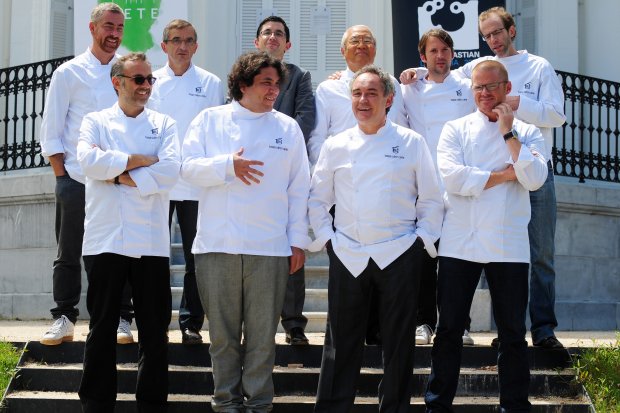
If aliens landed on our planet and picked up a copy of Time magazine, they would think that men do all the cooking in the world.
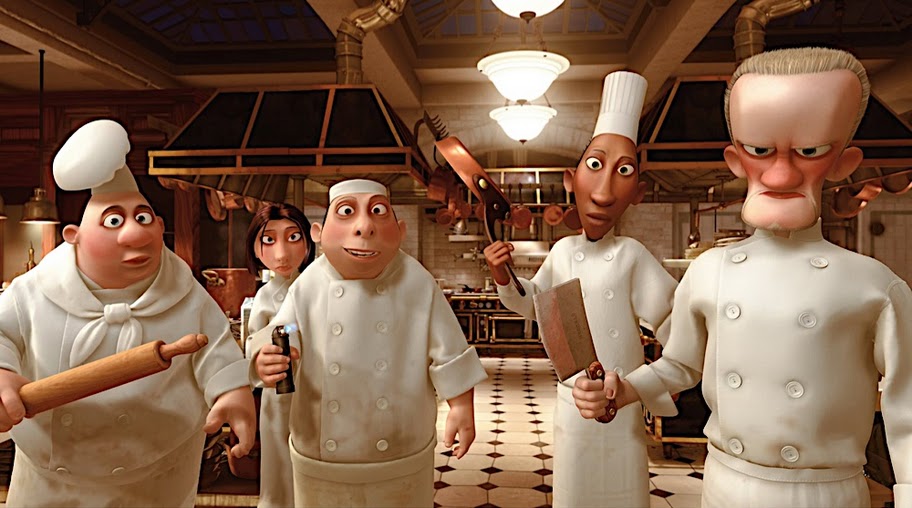
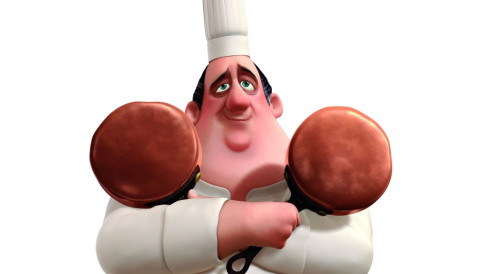
Here’s the thing: children are kind of like aliens. They’ve just landed on earth, and this is the world grown-ups show them? A fantasy world, created with children in mind, no less, where females go missing. “Look, honey, you can grow up to be invisible! That’s right, daughter, it’s more likely that a talking rat can become a world class chef than a female human child.”
You think I’m exaggerating the lesson kids are learning here? See that one female chef in the second picture, looking sad in the background? Her name is Colette, and she actually has a monologue in the movie where she bemoans the sexism of French kitchens. Parents are supposed to hear that speech, smile, and think: “You see, there’s a feminist in the movie! Isn’t that great?”
I call Colette’s character the Minority Feisty, and there are clones of her in most children’s movies made today. She is a “strong female character,” and there can be more than one in a film, but she’s always in the minority compared to male characters. Her role is usually to help the male on his quest. Like a First Lady, she cheers him on and gets to give him a kiss. Still, when parents see the Minority Feisty, they’re grateful and somehow miss that instead of teaching a 4 year old all about sexism, it would be much cooler, and more effective, to show kids females actually doing stuff– having adventures, taking risks, solving problems, and being heroic. Like, for example, instead of Colette’s 2 minute talk, why not make a movie starring a female chef and her female rat BFF with a female mentor, cooking in a room of females? Or at least, a room half full of females? Because, believe it or not, girls are one half of the kid population, but if you were an alien and you saw the G movies on earth– whether they featured humans, animals, toys, fish, robots, cars– you would think girls were a tiny minority on this planet.
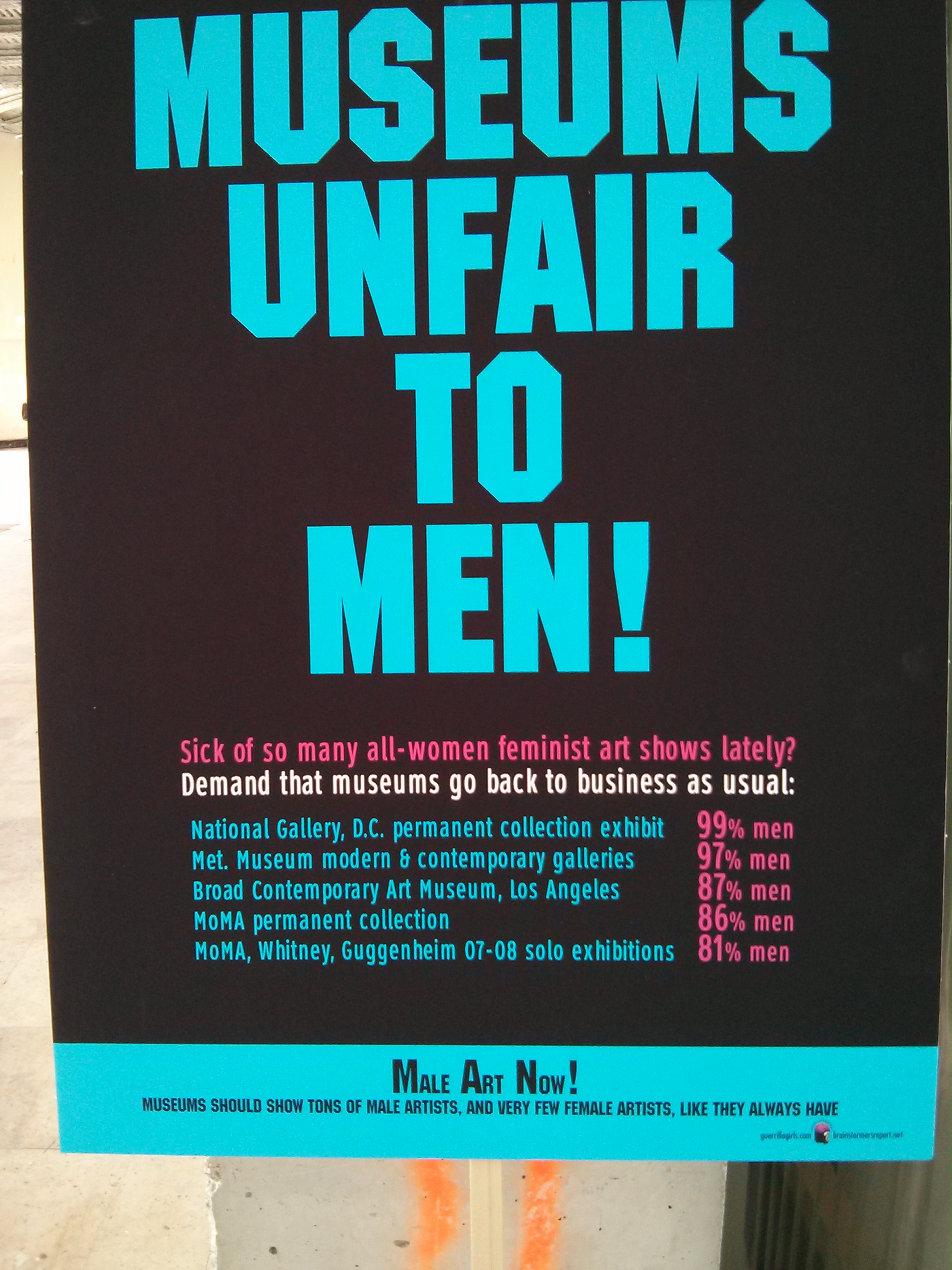
Another thing drives me absolutely crazy about this cooking sexism. In kidworld, rumor has it that cooking is a girlie thing. “Girl” toys and dolls involve cooking, while “boy” toys and dolls– whoops, I mean action figures— involve fighting and stuff. So how come everything shifts and cooking becomes a guy thing? Seems like if cooking earns money and acclaim, then abracadabra, it’s for the opposite gender. The same is true for all kinds of gender stereotypes that dominate kidworld, for example, the belief that girls are artsy and verbal (the latter referring to reading and writing, not actually speaking.) But how come female writers get designated to chicklit? if girls are so artsy, why are the “great” artists are mostly men? Check out this image from the Guerrilla Girls.
The truth about this stereotype is that we prefer our girl children quiet, with a nose in a book, coloring, or doing something “girlie” like that. While, you know, boys will be boys, loud and misbehaving, with all their “boy energy.”
Gender stereotypes of kidworld have nothing to do with innate ability and everything to do with social status. Sadly, we perpetuate those made up differences in movies made for kids and brainwash a new generation. Take a look at this video from the Geena Davis Institute on Gender and Media.
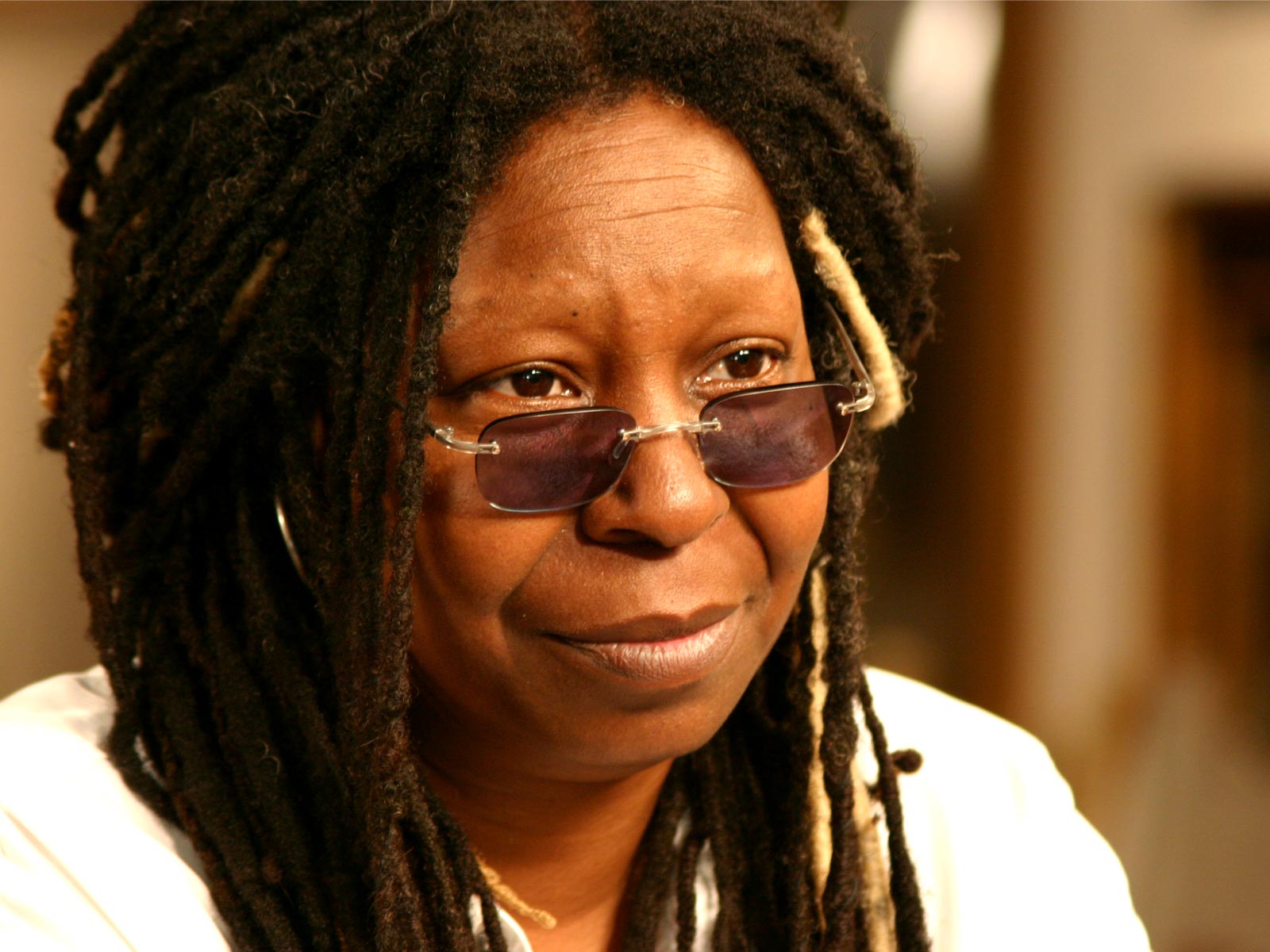
In The LA Times, Whoopi Goldberg is quoted on her response to the recent debate about the lack of African-American women on SNL:
“These folks are 15 years late on this question,” Goldberg told Showbiz411. “‘Saturday Night Live’ has looked like this for 15, 16 years. I don’t understand. Why is everyone up in arms? Didn’t anybody see it before? Clearly not.”
The story goes on to report that Goldberg has never been asked to host SNL.
What?
I had to read that sentence again. Here it is:
The president of Goldberg’s production company said the Oscar-winning actress and comic had never been asked to host “SNL.”
Recently, Kenan Thompson, one of the show’s African-American male actors, complaining he was tired of dressing as females for skits, lamented the slim pickings out there for funny black women: “It’s just a tough part of the business. Like in auditions, they just never find ones that are ready.”
Who could possibly think veteran Whoopi Goldberg isn’t ready to host SNL?
Or do you think, perhaps, the reason we haven’t seen Goldberg host the show has nothing to do with her talent and everything to do with her body? Not only is she female and black, Goldberg doesn’t look like Kerry Washington.
Washington, with her skinny physique, big eyes, and high cheekbones, in spite of her skin color, manages to tick off our current ideals of what a “beautiful” woman is. That, my friends, is why SNL let her host the show, because she is “beautiful” along with being talented. Let me add here that I love Kerry Washington. I’m a fan of “Scandal.” I’m psyched Washington busted a barrier. But the reason Whoopi Goldberg didn’t do the same “15 or 16 years ago” is because she doesn’t look like a Vogue model, a magazine, by the way, which has had a number of African-Americans on its covers that I could count on my own two hands.
Now, take a second to imagine if the success and exposure of white, male comics was determined by how “attractive” they are. It’s ridiculous to even think about.
People wonder how smart women get so obsessed with their appearance and why the pursuit of female “beauty” is an ever-growing multibillion dollar industry. Are women vain, crazy, superficial? Sadly, it’s more like they’re practical, recognizing how the world opens or slams doors based on how well they taper to a cookie cutter image of how women should look.
One of my favorite quotes about the power of media over little kids comes from Whoopi Goldberg:
“Well, when I was nine years old Star Trek came on. I looked at it and I went screaming through the house, ‘Come here, mum, everybody, come quick, come quick, there’s a black lady on television and she ain’t no maid!’ I knew right then and there I could be anything I wanted to be.”
Hopefully, children today see Whoopi in the media and believe in their own potential. Of course, It would help if more of the guys in charge would put her on the stage, front and center. It would be even better if the guys weren’t the ones in charge of where she gets to stand.
One day when my daughter was in third grade, she had to explain to a classmate what sexism was. Four kids — two boys and two girls — had been put in a reading group together, given a basket full of books and asked to talk about them and decide together which one they wanted to read and discuss.
As they went through their choices, the boy picked up a book whose cover showed an illustration of a woman in a hoop skirt. He quickly tossed it aside. My daughter suggested that it might be good, and asked if he’d already read it, because she would like to. He said no, it was a girl book and he wouldn’t read it. Her response was pretty cut and dry: “That’s a sexist thing to say,” she explained. He was a friend of hers and an intelligent kid. He paused long enough for her to realize he wasn’t sure what she meant.
“Do you know how many books with boys in them I read?” she said. “You should read girl books, too. Not reading them just because they’re about girls is sexist.”
Frankly, today, I’m pretty certain that what she, a 9-year old, told her classmate was more than most adults can muster.
Do you know what percentage of children’s books feature boys? Twice as many as those that feature girl protagonists. In the most comprehensive study of children’s literature during a period of 100 years, researchers from the University of Florida found that:
57% of children’s books published each year have male protagonists, versus 31% female.
As with television and film, books with animated characters are a particularly subtle and insidious way to marginalize based on sex, gender and race. In popular children’s books featuring animated animals, 100% of them have male characters, but only 33% have female characters.
The average number of books featuring male characters in the title of the book is 36.5% versus 17.5% for female characters…
Researchers of the study above concluded, “The gender inequalities we found may be particularly powerful because they are reinforced by patterns of male-dominated characters in many other aspects of children’s media, including cartoons, G-rated films, video games and even coloring books.”
This week, Sweden announced it will implement a movie rating system that will inform viewers if the film is sexist. Sweden will use the Bechdel test which requires that the movie have (1) at least two females (2) who talk to each other (3) about something other than a man.
“The entire Lord of the Rings trilogy, all Star Wars movies, The Social Network, Pulp Fiction and all but one of the Harry Potter movies fail this test,” said Ellen Tejle, the director of Bio Rio, an art-house cinema in Stockholm’s trendy Södermalm district…Beliefs about women’s roles in society are influenced by the fact that movie watchers rarely see “a female superhero or a female professor or person who makes it through exciting challenges and masters them”, Tejle said, noting that the rating doesn’t say anything about the quality of the film. “The goal is to see more female stories and perspectives on cinema screens,” he added.
I love the Bechdel test, but I adapted it to rate movies for children to discount the Pink Ghetto. For the Magowan Test for Gender Bias in Children’s Movies (1) at least two females who are friends (2) go on an adventure (3) and don’t wear revealing clothing. Simple requirements, yet surprisingly difficult for Hollywood to even come close to meeting in the many movies put out for little kids every year.
The real problem in movies today isn’t sex, it’s sexism — often coupled with racist caricatures for even greater effect. Imagine if our movie ratings considered sexism and racism as content that children should not be viewing without parental input. Just a thought.
I couldn’t agree more. The lack of attention to the rampant and repetitive sexism in children’s movies is exactly why I started Reel Girl. I rate children’s movies on a scale of 1 – 3 S’s to denote gender stereotyping. I would much rather my kids hear a swear word than witness more narratives and images where females are sexualized and marginalized. When I started Reel Girl, almost four years ago, I couldn’t find anything else on the internet that rated children’s movies and products for sexism.
The common defense of television censorship is the need to protect the young and impressionable. It’s all for the children. So why is it that a national broadcaster in the 21st century feels the need to bleep out a scene of a teenage girl masturbating, while the rest of television is stuffed to the gills with scenes depicting rape, torture, suicide, and sex between middle-aged adults and adolescents?
Sweden gets this hypocrisy and is addressing it. While I am so psyched this country is taking major steps to alert viewers about sexism, I’m upset that the home of the free and the brave remains slow on the uptake. I honestly think my blog, Reel Girl, is the best resource for rating sexism in children’s movies, and I do it for free, when I have a few minutes of time.
It’s not just sexist movies that our country endorses as OK for kids. While the U.S. has made child beauty pageants a national pastime, with TV hits like “Toddlers and Tiaras” and “Honey Boo Boo,” this year, France outlawed the sexist practice. The New York Times reports:
“It is extremely destructive for a girl between the age of 6 and 12 to hear her mother say that what’s important for her is to be beautiful,” Chantal Jouanno, the ban’s champion, said Wednesday. “We are fighting to say: What counts is what they have in their brains.”
Ms. Jouanno, a former junior minister for environment and a senator representing Paris from the center-right party U.D.I., wrote a report on the “hypersexualization” of children in 2011. The report was commissioned by the health minister in response to public outrage over a photo display in Paris Vogue that featured under-age girls in sexy clothes and postures, with high heels, makeup and painted fingernails. The episode drew attention to the increasing use of very young girls in fashion photography and advertisements.
Of course, child beauty pageants don’t just affect the contestants, but everyone who sees the images of these sexualized kids on TV or in magazines.
So why do you think Sweden, France, and the United Kingdom have taken leadership positions in stopping sexism while the U.S. lags behind? I know there’s some bad evidence against us, such as not one female president in our entire history, but aren’t we supposed to support equality and justice for all? Isn’t that our thing?
I have a theory on why the U.S. continues to be a leader in promoting, rather than stopping sexism. While our role as superpower slips as we move further into a global economy, the U.S. remains clearly dominant in one area: culture. American movies dominate the world. While Obama may fall from favor, everyone worldwide knows and adores Angelina Jolie and Brad Pitt. My guess is that because of this role as a culture shaper, the U.S. and its mutinational companies like Disney and everything Hollywood will be reticent to change and risk losing hegemony over world culture. The irony is, if the U.S. continues to lag behind in recognizing sexism, eventually, it will lose its position as #1 culture shaper. The change towards recognizing sexism, so ubiquitous that its, paradoxically, become invisible, is happening much slower than I would like it too, but it is happening. Sweden, France, and Australia are starting to get it. Women are the world’s largest untapped resource. As long as we keep selling women short, we all lose.
On a positive note, I did just get this email from Hillary Clinton.
No Ceilings has its roots nearly twenty years ago, and we hope it will have an impact just as far into the future.
In 1995, at the Fourth World Conference on Women in Beijing, 189 countries set an ambitious goal: Women and girls should be able to participate fully in the progress and prosperity of their societies. I was proud to co-lead the American delegation to the conference and to declare to the world that “Human rights are women’s rights and women’s rights are human rights, once and for all.”
We’ve made a lot of progress since that day – more girls are in school, more women hold jobs, and more women serve in public office – but we’re still a long way from the goal of full participation. Women and girls continue to face ceilings that limit what they can achieve and hold back entire economies and societies. More than 100 countries have laws on the books that restrict women’s participation in the economy. Women are nearly half of the world’s population, but hold only 20 percent of all parliamentary seats. Around the world, including in the United States, women tend to earn less than men. And nearly 5 million girls are still married under the age of 15 every year.
The great unfinished business of the 21st century is helping women and girls break through these ceilings and contribute fully in every aspect of life.
I was in Beijing in 1995. I was 26 years old. I felt inspired and hopeful. Maybe what the U.S. needs to risk making change is a female president leading the way.
Hopefully, by now, you know the story of the repressed history of female pilots in WW2. A couple more quotes for you from the Mary Sue:
“The families of the 38 women who died were not allowed to display gold stars in their windows, because their daughters were not recognized as veterans.”
“The WASPs received a letter informing them that their service was over. Two days after that letter came, “several of us received letters from aircraft companies inviting us to come and be stewardesses,” remembers Rohrer. “I was so angry, I tore that letter up.”
Right now, Wingtip-to-Wingtip, a non-profit is $29,000 short of the funds needed to get a float honoring the WASPs in the Rose Bolw parade. The web site states the deadline is November 8. Please do something to protect women’s history and women’s stories, so we can pass it on to our daughters and sons. Don’t let these women disappear from our cultural mythology. Donate now.
All of this really makes me think how different our world would look if women were the ones with the money.
These women flew over 60 million miles within a 2 year period…However, after a nasty and aggressive campaign by male pilots who wanted the WASPs’ jobs, they were the only wartime unit that was denied military status by congress…For many years the WASPs kept their achievements quiet. Their service in World War II would only be known by a few. They are not mentioned in our history books, nor is their story taught in schools.Their accomplishments of being the first women to fly in the military would even be forgotten.
I haven’t seen the documentary yet, so I don’t know the details of the “nasty and aggressive campaign by male pilots” which successfully erased the stories of these female heroes from our history books. But I am somewhat of an expert on current kid culture, and I can tell you that stories about female heroes continue to go missing right now.
Thousands of years ago, conquering armies smashed the idols of their victims and stole their stories, an extremely effective tactic to destroy a community and steal its power. Christians did this to pagans, but of course, this act is all over history. Just like the goddess morphed into the Virgin, girls are going missing under the guise of celebration. Right now, in 2013, Disney is stealing and sanitizing stories. It’s an annihilation. How long before we all forget the original story? Will our children ever hear it?
I am reeling from this WW2 story, not because of the sexism of the past, but because of the sexism today. Want to see some sexist male pilots? Check out this preview from Disney’s recent hit, “Planes.”
Plane One: What’s taking this guy so long? Is he really as good as he says he is?
Plane Two: No, better.
Plane One: Whoa! Who was that?
Plane Three: (Descending fast on top of the other two) Well, hello ladies! Ready to lose?
Plane Three goes on to leave the “ladies” in the dust.
When I saw that preview with my three young daughters, I thought the plane who mocks the slow flyers by calling them “ladies,” was having a moment of arrogance. The movie would redeem him when he went through his transition. But when I actually saw the movie, I learned that I couldn’t have been more wrong. The sexist joke is his fantasy, the fantasy of a humble crop duster with a fear of heights who wishes he were a racer. It’s the dream sequence of a “likeable” character. Can you imagine a hero making a racist joke and being likeable? In a movie for little kids? Yet, that’s how much sexism we have to wade through before a female flyer is allowed to win a race in animation.
Yesterday, I posted about a three year old girl in my daughter’s preschool who told a teacher she can’t be a pilot, but she can be a pilot’s wife. You can tell your kids, until you’re blue in the face, that they can be anything they want to be, but if you don’t show them, through images and stories, they won’t believe you. They won’t believe in themselves. Little girls are obsessed with princesses and ballerinas, and later, supermodels, because those are the few times females are allowed to be the star in the show. Everyone wants to be the star in their own movie, their own life, but girls, again and again, are literally, pushed to the sidelines.
If you look at the erasure of these female pilots from World War II, the government obviously participated in the sexism. Allowed it to happen and sanctioned it. This is not an isolated event of the past. How can we, literally, sit back and watch it happen again and again?
On my recent post about WW2 pilots, I got this comment from Abnoba
“The actual race in Planes is totally dominated by male competitors.” How shocking! You mean in real life the actual race is not dominated by male competitors?… This stuff is silly nonsense.
This feminist whine that animated movies for kids should reflect “progressive feminist” values is the kind of thing that gives feminism a bad name. Why? Because it’s silly overreach as usual.
The idea that animators see machines that race (airplanes, cars, dunebuggies, drag racers, etc.) as a male world isn’t an irrational sexist bias – it’s simply reality. Males – and especially boys – are by nature gung ho about machines to a degree that girls are not is obvious to anyone not wearing feminist blinders. That it’s necessary to point this out these days is a comment on the nuttiness of the feminist whiners who are constantly arguing that these natural differences are not natural but socially imposed. It’s B.S. Boys and girls are different from head to toe and always have been and always will be.
Please show this picture to your kids. It’s likely they won’t see it anywhere else.
These women flew over 60 million miles within a 2 year period…However, after a nasty and aggressive campaign by male pilots who wanted the WASPs jobs, they were the only wartime unit that was denied military status by congress…For many years the WASPs kept their achievements quiet. Their service in World War II would only be known by a few. They are not mentioned in our history books, nor is their story taught in schools.Their accomplishments of being the first women to fly in the military would even be forgotten.
One pilot says, “Such a shame that when we disbanded, they took all of our records and they sealed them, and they were stamped either classified or secret and filed away in the government archives.”
Sealed records. WTF? Male accomplishments are celebrated and honored and women’s are hidden. ARGH. Sexist decisions of the past are affecting our kids TODAY. More stories about women’s real lives, repressed. Thank God for Jill Bond who made this film. Do you see how reality creates fiction creates reality? Do you see why we need women writers, artists, filmmakers, and on and on? Do you see who goes missing and how distorted reality and our perception of reality becomes when, for thousands of years, women have been existing in stories written by men?
Please, show this picture to your kids.
I haven’t seen the movie yet, but I hope it’s good for children. Wouldn’t it be great to make a children’s version? A book to go along with it? A computer game? An app? A LEGO set? What do you think the chances are we’ll see any of that? They are low, because still, in 2013, we live in a world where women’s stories go missing.
Yesterday, a teacher at my daughter’s preschool told me that she saw two boys and a girl spinning the knobs of a play oven. Boy #1 says: “I’m a pilot! I’m flying a plane.’ Boy #2 says: “Me too!” The girl is quiet, so the teacher says to her: “What about you, are you a pilot?” The 3 year old girl replies: “I can’t be a pilot. I’m a pilot’s wife.”
So what do you think has happened in this little girl’s short life to make her believe it’s more likely that she would be a pilot’s wife than a pilot?
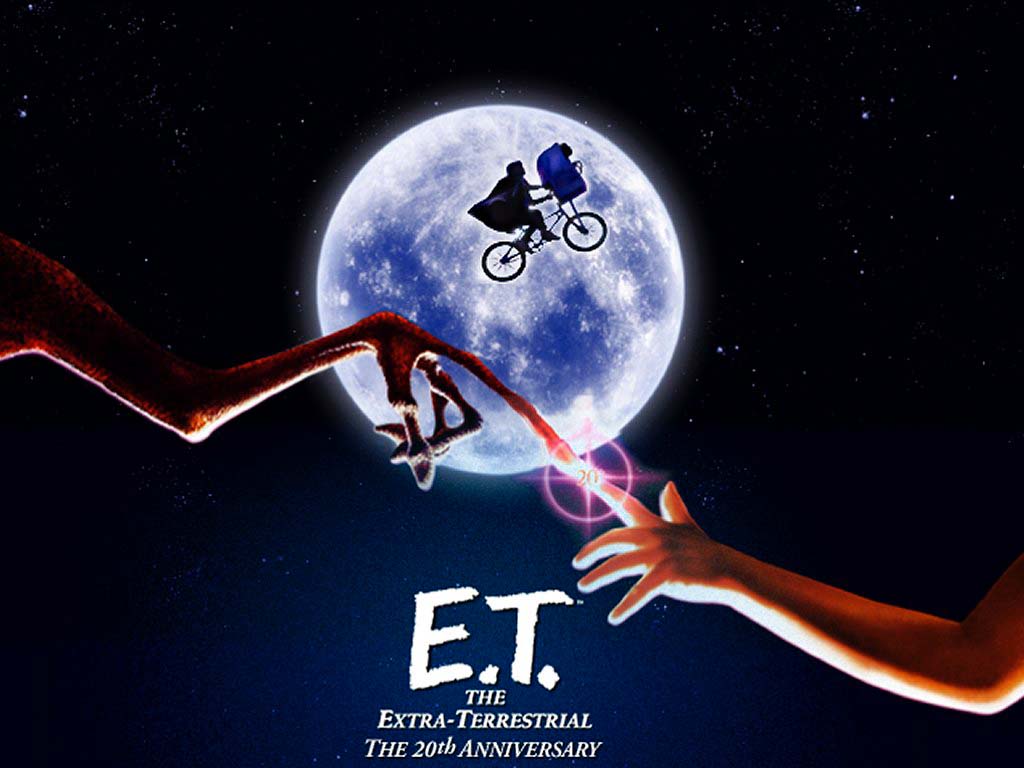
Could it be that in her world, those are the gender roles she sees? While books, movies, and TV shows for children are full of images of boys riding magical creatures into the sky– from “ET” to “How to Train Your Dragon” to Harry Potter — girls are stuck in the passenger seat if they get to soar at all. Here are three images repeated endlessly in the media.
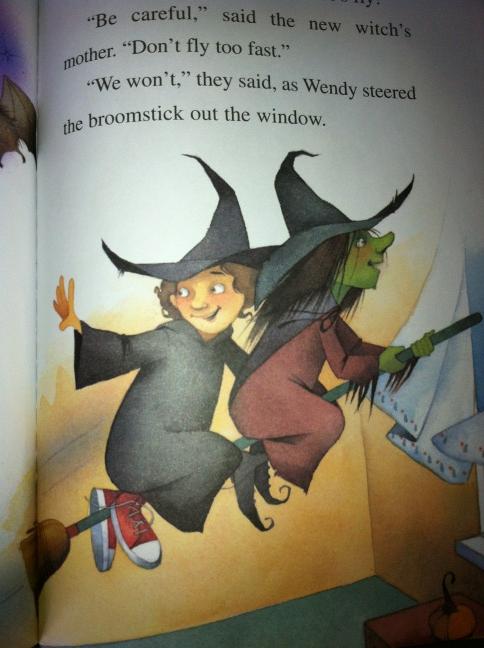
I’m always on the look out for images in children’s media of girls flying, and they are few and far between. If I seek them out, I can find them, but these pictures rarely cross my children’s path, not in movies, or posters for those movies, or on most of the book covers they come across when we’re shopping at a local store. Here’s a picture from The Witch Who Was Afraid of Witches that I photographed a while ago, because it’s so rare.
Today, on Facebook feed I saw that Toward the Stars is celebrating Female Flying Daredevils week, posting “We wave enthusiastically to all our girls and boys that aspire to travel above the clouds.”
We also have Angela’s Airplane which my 4 year old daughter loves.
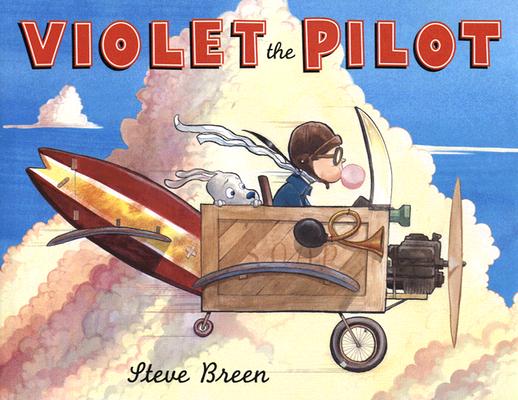
You may not have seen these books around. They may not have been made into major motion pictures for kids or toys or LEGO sets, but, please click on the links. Stock your libraries. Read these books to your kids, and that includes your sons. All children need to see far more female daredevils.
Keep watching Toward the Stars all week for more recommendations of fearless females flying the skies.
Update: So right after I post this, I see on Facebook info about the documentary:”We Served Too: The Story of Women Air Force Pilots of World War II.” You’ve got to watch this trailer.
These women flew over 60 million miles within a 2 year period…However, after a nasty and aggressive campaign by male pilots who wanted the WASPs jobs, they were the only wartime unit that was denied military status by congress…For many years the WASPs kept their achievements quiet. Their service in World War II would only be known by a few. They are not mentioned in our history books, nor is their story taught in schools.Their accomplishments of being the first women to fly in the military would even be forgotten.
One pilot says, “Such a shame that when we disbanded, they took all of our records and they sealed them, and they were stamped either classified or secret and filed away in the government archives.”
Sealed records! I am so mad about this. Again, women’s stories are repressed and hidden, affecting a new generation of kids. I haven’t seen the film yet, so don’t know if it’s good for young kids. Wouldn’t it be great to make a children’s version? A book to go along with it? A computer game? App? A LEGO set? What do you think the chances are we’ll see any of that? They’re low, because in 2013, we still live in a world where women’s stories go missing.
This video by the Geena Davis Institute on Gender and Media is amazing!
Our goal at the institute is to dramatically increase the percentage of female characters and reduce gender stereotyping in film ans television that is made for kids, little kids, 11 and under, and what we found is very disturbing. For every one female character, there are 3 male characters. Not only that, male characters get to do stuff. They get to have fun and have adventures. Females, not so much. We also wanted to know what the percentage of male and female characters was in crowd scenes in movies. We found only 17% of characters in crowd scenes are females. Women make up 50% of population in the world…
Meet Jane. She’s an animated character. She’s adorable, quirky, and has spunk. Her special skill is that she can do absolutely anything that an animator can think of for her to do. Except stand around in a bikini. Not because she can’t, but because she doesn’t want to. So why does Jane look sad? It’s because she has never been cast in an animated film or television show. Why is that? It seems like it would be so easy to cast Jane in some interesting and challenging role for her. I want to see Jane. I mean, we see Dick. We see Dick all the time.
Please donate to the Geena Davis Institute at www.seejane.org