Reel Girl recommends: “Bend It Like Beckham”

Could I have loved “Bend It Like Beckham” more? I saw it for the first time last Saturday night with my ten year old soccer obsessed daughter and my soccer coaching husband. All three of us were crazy about it.

bend-it-like-beckham-2

The star of the movie is a smart, athletic woman of color. Her best friend in the movie is also a soccer superstar. The movie is about competition, family, and culture. It’s incredible, one of my all time favorites. Show it to your kids! I’m putting it on Reel Girl’s  list for age10 and up lbut I think younger kids would enjoy it too. Oh, I almost forgot. Kalinda from “the Good Wife” is in it as the protagonists older sister. Need I say more?

Reel Girl rates “Bend it Like Beckham” ***HHH***

Reel Girl’s Movie Picks: ‘The Last Mimzy’

You all recommended ‘The Last Mimzy’ to me, and I admit, as I started to watch it, I was nervous.

tumblr_m43h6lNy2O1rvwyneo1_1280

Though the movie opens with a female teacher narrator, it shifts right away to a young boy. For the first 20 minutes of the movie, or so, I was worried he would be the protagonist. He has a younger sister, and I did notice right away something truly rare: he treated his sister respectfully. You almost never see siblings get along and work together in a film. This is wonderful watch.

The sister, Emma, discovers a strange object in the water off of Whidbey, one of the San Juan Islands. It turns out the find is a message from the future. It’s up to Emma to decode the message and save the world. She does all this, though its not clear until about halfway through the movie that Emma is the “chosen one.” When a costar reads her brother’s palm, to see if he is the special child, my seven year old daughter rolled her eyes and said, “I knew it.” But our worries were unwarranted. Turns out, Emma is the gifted one, and it is up to her to save the world. An extra plus: the movie title comes from a poem from Alice in Wonderland, a story that is referenced throughout the movie. I’m adding “Last Mimzy” to my recommendations for younger kids, but everyone will love this movie.

Reel Girl rates “The Last Mimzy” ***HHH***

Reel Girl’s Movie Picks: ‘Fly Away Home’

Finally, my kids got to see a movie with a girl pilot. “Fly Away Home” is not a new movie, it’s just the first one they’ve ever seen with a girl pilot on her own flying machine.

Fly_away_home_poster

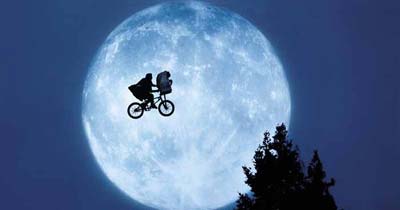
I grew up with this famous image of “E.T” imprinted in my brain.

ET_Moon

“E.T.” is great movie, but once again, no flying girls. I am thrilled, at the age of 45, to have finally found an alternative for my daughters. Of course, I wish it was more obvious from the poster that a 13 year old girl is the pilot, but at least, my kids and I know the story behind the image on the movie poster.

Amy, played by Anna Paquin, is 13 yr old whose mother was killed in a car accident (while talking on her cell phone!) Amy goes to live with her artist/ inventor father and his girlfriend. Alienated and alone, while wandering the grounds, Amy discovers wild geese eggs. The goose mother was killed by developers who are bulldozing the land. Amy makes the eggs a nest in a drawer, the eggs hatch, and the chicks, thinking Amy is their mother and follow her everywhere. In order teach the geese how to migrate, Amy pilots her father’s flying machine, and leads them south. She ends up not only saving the geese but the wilderness as well. “Fly Away Home” is an excellent film, and I am adding it to my list for young kids, though kids of all ages will love it.

Reel Girl rates ‘Fly Away Home’ ***HHH***

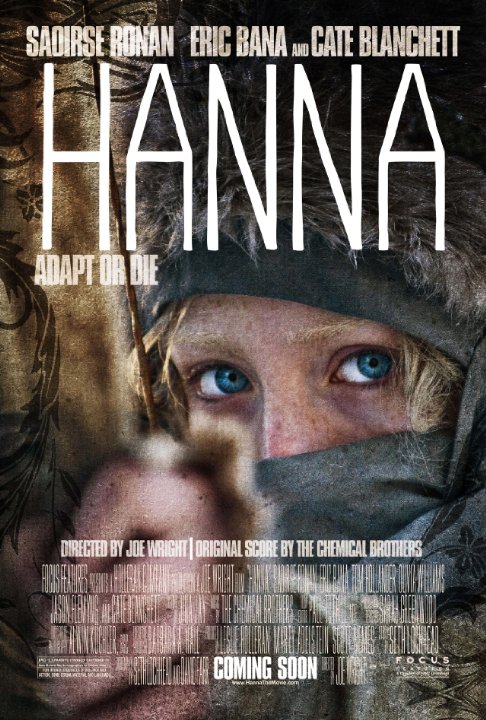
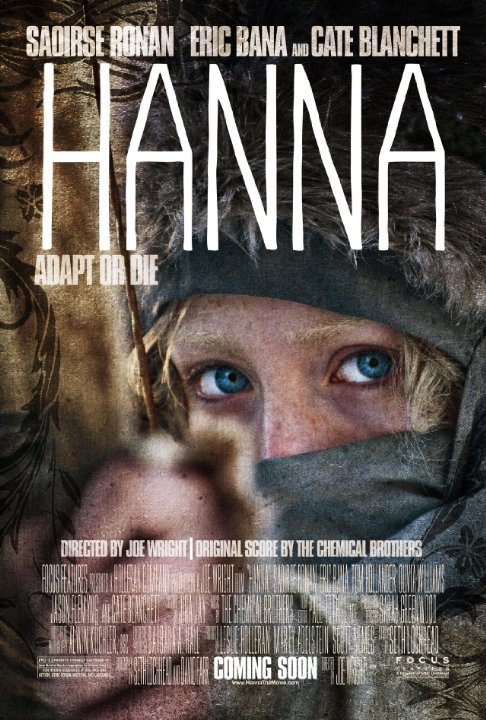
Reel Girl’s movie picks: ‘Hanna’

I am so into “Hanna.” This movie has everything I look for.

MV5BNTAzMTg1NjY0NF5BMl5BanBnXkFtZTcwODc3MTgzNA@@._V1_SX640_SY720_

(1) Powerful girl protagonist Hanna, played by Saorise Ronan, is a 16 year old girl who lives with her father, a former spy, out in the wilderness. He has trained her to be a killer in order to protect herself as powerful people would assassinate her on sight.

(2) Evil female villain The bad guy in this movie, another killer, is a girl, played marvelously by Cate Blanchett.

(3) Great acting I already told you the movie stars Ronan and Blanchett. Need I say more? OK, the dad is Eric Bana.

(4) Great story Usually, on Reel Girl, I don’t mind spoiling stories. I analyze them so I can’t help it. But, I’m not going to tell you this one because so few people have seen the movie. I’ll just say that I love how the narrative is interwoven with Grimm’s Fairy Tales. The symbolism and the filming is beautiful.

(5) Female friendship Hanna makes a friend and their relationship is complex and real.

This movie is violent. More violent than “Hunger Games.” Like “Hunger Games” the camera doesn’t linger over the gore. I let my 10 year old watch it and it’s on my list of recs for 10 and up, but as I’ve written a lot here, I want my daughter to see females with power and agency. If your kid gets scared in movies, this is not the film for her.

Reel Girl rates “Hanna” ***HHH***

Reel Girl’s movie picks: “Clueless” ***HH***

“Clueless” is my favorite of the Jane Austen movies. Alicia Silverstone plays a contemporary Emma, muddling in everyone’s private lives until she finally has her own epiphany and finds true love.

clueless1sh

I could be wrong here, but I think “Clueless” is the only movie I have ever seen where popular girls are not mean. There is no “mean girl” contingent at all. Maybe, for that reason alone,you should show it to your kids.

There is racial diversity in the typical, sidekick way that I just blogged about in “Freaky Friday:” the best friend of the protagonist is African American.

However, this movie does a great job dealing with class. While both Cher, the protag, and Dionne, her BFF, are rich, the one from the other side of the tracks is a white girl named Tai. Usually, I hate movie makeovers, but when Cher and Dionee make Tai their “project,” the transformation happens with commentary that is insightful and powerful. If you’ve read Emma, Cher is very similar to her literary role– you see that she’s superficial, but she’s also likeable. You hope she will have the courage and insight to live up to her potential and she does.

I am deducting one H for the sexy outfits, though the clothing really didn’t bother me so much in this film. I’m trying to figure out why. Is it because there was no cleavage, it was mostly a leg thing? I don’t know. If you’ve see this movie,  tell me your thoughts.

Reel Girl rates “Clueless” ***HH***

‘Gender neutral’ not exactly what I’m going for…

Friday, on the local San Francisco public radio station, KQED, I heard a show about children and gender neutral toys. It was a great program, featuring the brilliant Peggy Orenstein, among others, and I was psyched to hear the topic of kids and toys debated as we go into the Christmas season. But, I’ve got to say, I’m not entirely on board with the term “gender neutral” that the host kept using to define a goal. And that is a term that the media seems to cling to when the topic of sexism in kidworld is discussed. When I was on Fox News, the host kept trying to put the same words in my mouth, and I didn’t like it.

Let me be clear here. I absolutely believe toys in stores should be divided by type– building, outdoor, figures/ dolls etc– not by gender. I don’t believe objects should be color coded to imply they should be played with by boys or girls. I am hard pressed to think of something more absurd and simultaneously socially accepted than this. I desperately want to see girls and boys pictured playing together on boxes. When the term “gender neutral” is used, I think this is the goal referred to, a goal I share with all of my heart.

I guess the issue from me is that powerful female characters are already drastically missing from the fantasy world created by grown-ups for children. When we talk about “gender neutral,” I fear that girls will continue to go missing from this debate– about children, toys, play, and sexism– even more. “Gender neutral” needs to be a goal of sorts, but we also have to keep in mind that all kids need to see more girls and women doing more things. Do we call that “gender neutral”?

Another problem for me with the term is that “gender neutral” doesn’t inspire me. “Gender neutral” makes me think of a bunch of grown-ups or academics or psychiatrists sitting around wearing super thick glasses and holding notebooks.

Here is what I want to see in kidworld: More females having adventures. More females doing cool shit. Got it? Do you call that gender neutral or do you call that being alive?

I want options. Variety. Diversity. Multiple narratives. I want all kids to see many more images of powerful and complex females, to see girls taking risks, saving the world, being brave, smart, and going on adventures in the fantasy world and in the real one. You could argue that we need to see more images of boys being kind and geeky and paternal, but from my vantage point, as a reader, movie goer, and watcher of TV shows, that’s pretty covered. I honestly believe the best way to help boys get out of gender stereotypes right now is to show them females being strong, being the star of the movie, or the central figure in a game that everyone wants to play.

But, as it stands, this is not the case at all. Strong female characters have gone missing. Part of this lack is because there are so few female characters in kids’ movies. Those narratives get licensed into LEGO and diapers and clothing. But even when female characters show up, they get “make-overs” or companies like Stride Rite will remove Wonder Woman, Black Widow, and Leia from their Justice League, Avengers, and Star Wars products and marketing. It’s really shocking how strong female characters keep disappearing from toys, clothing, and all kinds of children’s products.

Here’s my four year old daughter (holding a lunchbox from the Seventies.)

supergirl-e1377394963456

My daughter isn’t a “tomboy” or a “girlie-girl.” She likes pants; she likes dresses; she like yellow, she likes pink, she likes black. She likes to race and play soccer and read and make art. She loves superheroes and her mermaid Barbie. But the older she gets, the more I see her choices getting influenced and limited by stores and marketing and media and peers. My goal is to have her world grow, not shrink. I’m not sure that “gender neutral” is what she needs.


‘Catching Fire’ torches Hollywood’s gender stereotypes

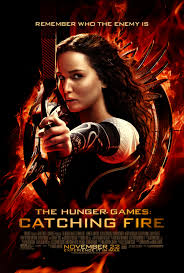
I could not have loved ‘Catching Fire’ more. It’s even better than ‘Hunger Games.’ I want to see this movie again, and I never see a movie a second time when it’s still in theaters. It’s that good.

The_Hunger_Games__Catching_Fire_62

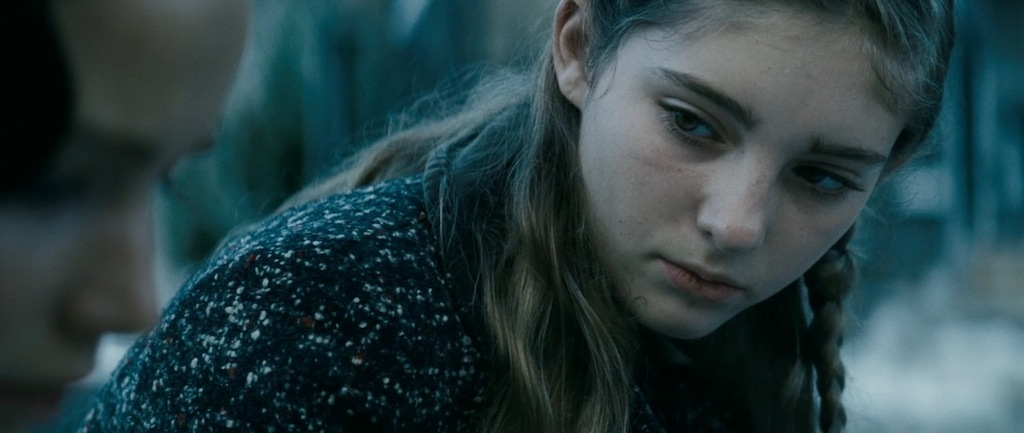
I saw ‘Catching Fire’ yesterday with my 10 year old daughter at an IMAX. I’ve never been to an IMAX before, and I felt like I was in the movie. I was stunned by the whole thing. In this installment, all the characters get more depth including two-dimensional ones from Part One like Effie, Katiniss’s mom, and Prim. It was great to see Prim grow up and use her medical skills in a crisis and also, fascinating to see Effie finally getting that the Capitol is evil.

the-hunger-games-catching-fire-trailer-screenshot-prim

The deadly arena design is one of my favorite parts of Catching Fire, and the movie’s rendition of it does not disappoint. My favorite scene was watching the poisonous fog creep towards Katniss. It’s hypnotizing and terrifying and gorgeous.

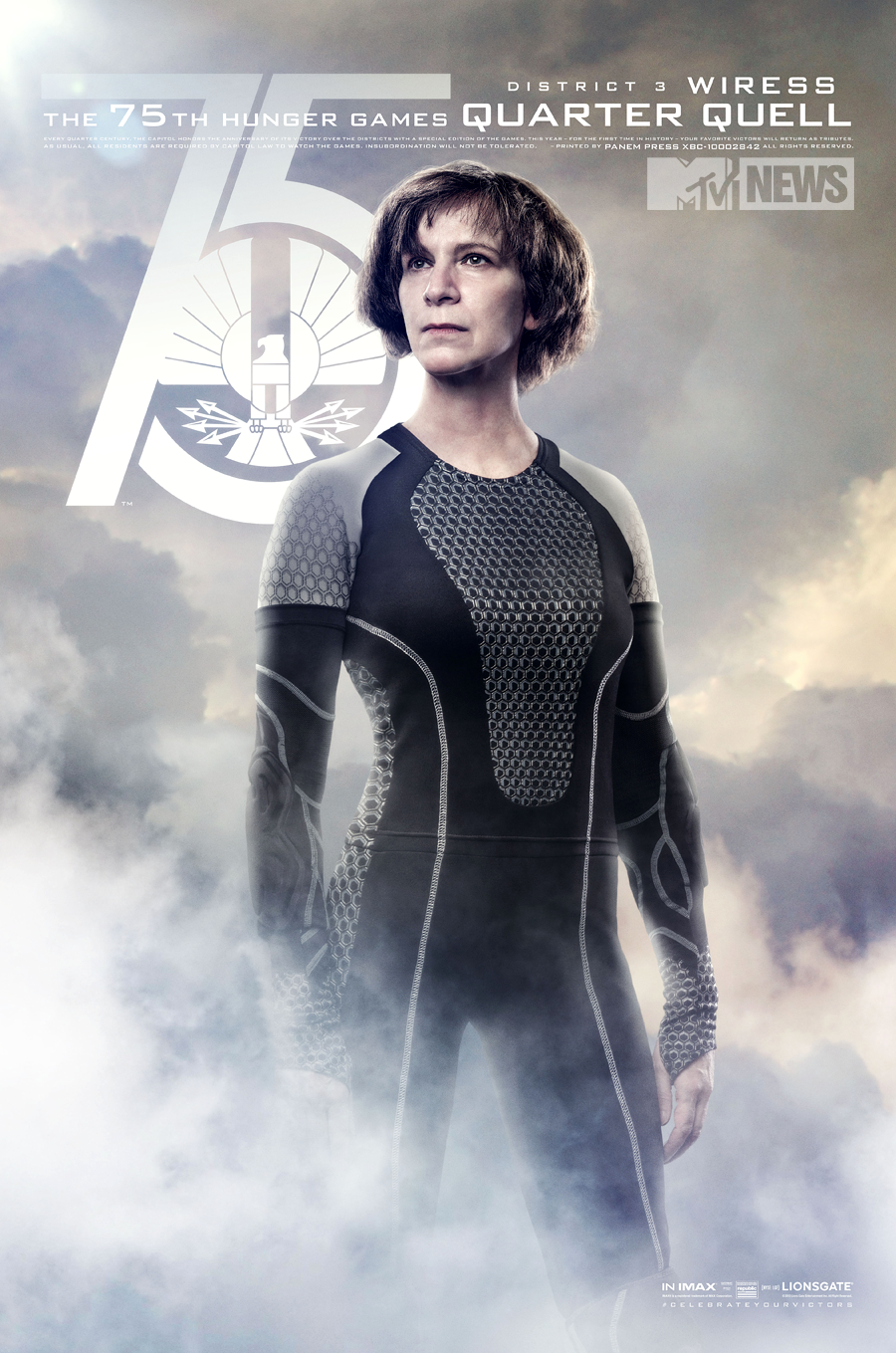
There are so many great female characters in ‘Catching Fire.’ Besides the ones I’ve already mentioned, tributes include Mags, who is older and courageous, Wiress, a tech-wizard, and Joanna, who is even angrier than Katniss.

Quarter_quell_mags

Watching Joanna and Katniss walk off together, two skilled warriors, I felt like I was viewing something revolutionary in film. I was thrilled that my daughter got to witness this scene as well.

wiress_full


Even details of this movie, like the male tributes and the female tributes wear the same costume, black and gray– no frills, exposed midriffs, or cleavage for my kid to have to see. And still, without all that “feminine” bullshit, Katniss has two men in love with her. Those heroes love Katniss for her brain and courage, not as separate from her beauty, but they find that beautiful.

Jennifer Lawrence’s acting is top-notch, as always. All her quotes on her PR tour, about how she wasn’t going to starve herself to play Katniss , not to mention her short hair cut, make me even more grateful she’s playing this part. I could not have imagined a better role or actress to play her. (I don’t think it’s a coincidence that Emma Watson, who plays Hermione, also makes empowering statements about female characters and young women. If an actress gets to play someone strong, it’s easier for her to become a role model in public. How many actresses get that chance?)

The male characters are also great. Phillip Seymour Hoffman is as believable as he always is. Lenny Karvitz’s Cinna is one of my favorite characters.

As with ‘Hunger Games,’ the violent scenes in “Catching Fire’ are brief. There is no lingering over blood, assaults, and death. Same with the kissing scenes. With this kind of stuff, as far as deciding whether its OK for younger kids, it really matters how long the camera spends on it.

“Catching Fire’ burns through gender stereotypes but not in a way that seems contrived or forced. Watching this movie, all you feel is captivated by the story of a brave girl saving the world. The narrative is a metaphor, about a protagonist facing her deepest fears and triumphing, something kids hardly get to see a girl do. My daughter is afraid of elevators, and after the movie, when she stalled in front of of one, we talked about Katniss in the arena, and she jumped right in.

Reel Girl rates ‘Catching Fire’ ***HHH****


Meet TooLula, a girl builder who stops bullying

Have you heard of Super TooLula created by Michele Sinisgalli-Yulo of Princess Free Zone? Before you complain, Sinisgalli-Yulo doesn’t hate princesses. She wants to provide kids with another option.  Sinisgalli-Yulo has written a book called Super TooLula and created a treatment she is shopping around to networks This show looks so cool and creative. There’s nothing quite like it on TV, and I can’t wait for my kids to watch it.

Here’s Lula with her dog, Chewie.

1456526_10202336099104542_136871225_n


  1. Lula is a female version of Handy Manny or Bob the Builder, but with the added underlying social components of bully prevention with a focus
    on undoing gender stereotypes that are often the root cause of bullying by children. Providing children with an understanding of empathy and compassion is key to preventing future occurrences of bullying. The show recognizes the importance of teaching kids about the emotions underlying bullying incidents—from the perspective of the victim and the bully. It also encourages them to get beyond being a bystander by either speaking to an adult or standing up for others.

Here’s a summary of one episode:


  1. While on a trip to Mexico, where the whole family is helping a relative irrigate their farm. Lula and her family invent a new way to divert water and use it to water plants. Lula and her Dad help with planning, measuring and digging. Soon they befriend a group of local kids. The kids reveal a big problem. Super TooLula is needed to face a Giant bully that had been terrorizing the local kids for years. It turns out the Bully was a long tormented little brother of an even bigger Bully. Super TooLula teaches both bullies how to help others. Soon, the bully brothers become local heroes to all that had fear them when they help build the last section of the new irrigation system.

Lula is helped along by some tools:

tools


Harry the Hammer

Harry is the toughest of all the tools. He is the team leader and director. He knows that sometimes you just have to be tough. He may come off like a drill sergeant, but he always looks for action with a smile!

Sammy the Saw

Sammy (short for Samantha) knows that sometimes you just have to remove or separate some things to make it better. So she whirls like a tornado to shape parts and pieces out of wood, plastic, soft metal or to cut through a tough problem!

Dusty the Drill

Dusty is tough and clever. When
a problem stymies others, he knows how

to break through! Dusty very persistent and always stands up for the underdog. He stutters when overly excited.

Carla Compass

Carla is able to locate lost objects, and if you’re lost, she can point you in the right direction. She is very maternal. She’s scared of other magnets and afraid of heights.

Lucy Level

Lucy is the one to always make sure everyone is balanced and level headed. She is the nurturer of the team. Calms down the others.

Maddy Measuring Tape

Maddy is always thinking ahead. She is all about details, measurements and plans. She is the practical one that makes sure parts will fit together or through tight spaces. Maddy’s friends think she needs to learn how to have more fun!

Gabi Goggles

Gabi is able to see right into the heart of a bully. She is able to see in the past and pinpoint the reasons why they are unhappy and end up hurting others. She is a precautious soul. And she is always the one to remind us all about being safe!

Ricky the Wrench

Ricky is very strong and not afraid of hard work. He knows hard work gets things done. He can open and unlock stuck objects that others can’t. He hates rust

more than anything.

The Talking Nail Heads

Do not actually talk. They are vocal instruments
who express themselves in emotion-filled, wordless music. Some do the bass line, some do mouth drum sounds, but they all can really jam or lay down a phat beat to sing over!

There are humans in the stories as well.

lulacrew

Naomi is Lula’s eight-year-old Japanese-American cousin. Naomi is a genius with arts and crafts like origami and revels in teaching others what she knows. Lula and Naomi love each other and spend a lot of time together along with their families. Naomi can often be found humming or singing impromptu songs and playing her favorite juice harp (which she also plays in their band). She always tries to get Lula to eat odd and spicy things.


Ten-year-old Wesley is the school bully in Lula’s class. He is also TooLula’s ultimate nemesis. It is his mission to turn good kids mean by bribing them with things he knows they like, but he has a difficult time when Lula and her friends step in. Deep down, Wesley really likes Lula and just wants her attention, but he doesn’t know how to show his true feelings and is afraid Lula and others might laugh at him. Oh Wesley!?

Art creates reality: Imagining gender equality in the fantasy world

Some good quotes here. Let me know what you think

Bono on Jay-Z in November’s Vanity Fair:

In music, we love the idea of the screwed-up, shooting-up. fucked-up artist. The one bleeding in the garret having cut his own ear off. Jay-Z is a new kind of 21st-century artist where the canvas is not just the 12 notes, the wicked beats, and a rhyming dictionary in his head. It’s commerce, it’s politics, the fabric of the real as well as the imagined life.


Stephen Mitchell in Can Love Last, the Fate of Romance Over Time

It is the hallmark of the shift in basic psychoanalytic sensibility that the prototype of mental health for many contemporary psychoanalyitc authors is not the scientist but the artist. A continual objective take on reality is regarded as neither possible nor valuable in contrast to the ability to develop and move in and out of different perspectives of reality.


New York Times, October:

Public narratives about a career make a difference. The most common career aspiration named on Girls Who Code applications is forensic science. Like Allen, few if any of the girls have ever met anyone in that field, but they’ve all watched “CSI,” “Bones” or some other show in which a cool chick with great hair in a lab coat gets to use her scientific know-how to solve a crime. This so-called “CSI” effect has been credited for helping turn forensic science from a primarily male occupation into a primarily female one.

Jezebel reacting to New York Times piece:

The New York Times today would like to suggest that storytelling is powerful, that, in the whole art/life dynamic, it’s life that imitates art, not the other way around, at least not when it comes to kids imagining viable career paths for themselves.


Whoopi Goldberg:

Well, when I was nine years old Star Trek came on. I looked at it and I went screaming through the house, ‘Come here, mum, everybody, come quick, come quick, there’s a black lady on television and she ain’t no maid!’ I knew right then and there I could be anything I wanted to be.


In the fantasy world, anything is possible, so why do little kids see so few female heroes and female protagonists on TV and in the movies? While boy “buddy stories” are everywhere you look, why is it so hard to see two females working together to save the world? Why are females, half of the kid population, presented as a minority in fantasy world? Why are TV shows, movies, and books about boys “for everyone” while shows and movies about girls “just for girls?” When we pass on stories to our kids, what are we teaching them about gender, about who they are right now and who they will become?

One more quote for you from neuroscientist, Lise Eliot:

“Babies are born ready to absorb the sounds, grammar, and intonation of any language, but then the brain wires it up only to perceive and produce a specific language. After puberty, its possible to learn another language but far more difficult. I think of gender differences similarly. The ones that exist become amplified by the two different cultures that boys and girls are immersed in from birth. This contributes to the way their emotional and cognitive circuits get wired.”

Eliot believes: “Simply put, your brain is what you do with it.”So let’s all use our brains to imagine gender equality in the fantasy world, take actions to manifest that vision, and see what happens next. I bet it’ll be amazing.

Thank you, Daisy Coleman, for telling us shame belongs to rapist, not survivor

The Maryville rape has taken a new turn with this post on xoJane:

I’m Daisy Coleman, The Teenager At The Center Of The Maryville Rape Media Storm, And This Is What Really Happened.

Thank you, Daisy Coleman, for telling your own story.

Please read Coleman’s story and share it. And then ask yourself, what happens when women tell the truth about their lives? How could the world change?

Whether a woman tells her story or not is her choice, but how much of a “choice” does she really have? I wrote “The shame of rape” on this topic for Salon. Ten years later, in too much media and public opinion, shame still goes to the wrong person.

When will we learn to honor rape survivors as the heroes that they are instead of shaming them into silence?

The “shame” of rape

The


When 7-year-old Erica Pratt was abducted on July 22 and tied up in a basement by her kidnapper, she chewed through the duct tape that covered her mouth, freed her hands and feet, and broke through a door to escape. Electrified by the young girl’s feat, the media celebrated Pratt with a prolonged blitz of coverage. She smiled luminously for cameras as awed police officers praised her bravery. Her photo graced the front pages of newspapers across the nation, and she was named Time magazine’s “Person of the Week.”

When Tamara Brooks and Jacqueline Marris were abducted at gunpoint nine days later from a remote teenage trysting spot in Lancaster, Calif., they devised a plan to break free by stabbing their abductor in the neck. When one girl had the chance to escape, she didn’t take it for fear that the other girl — whom she hadn’t met before that night — would be killed if she abandoned her. These were brave and loyal girls — heroines who endured mind-numbing terror before police found them and killed their captor, who authorities believe was preparing to murder them and dump their bodies.

But Brooks and Marris were not honored by Time magazine or identified as heroes in other media outlets. Why not? What made their story so different?

Just as newspapers and the networks were scrambling to cover the story, they learned that the girls had been sexually assaulted during their ordeal. Because most mainstream media observes a self-imposed policy of withholding the names and faces of sexual assault victims, the coverage abruptly, and somewhat awkwardly, ground to a halt.

Newspapers and TV broadcasters explained the shift as a matter of courtesy. But in concealing the identities of the young women on the grounds that rape is so intimate and horrendous that they should be spared undue attention, the media helped to promote the unspoken societal belief that somehow, when sexual assault is involved, the victim is partly — or wholly — to blame, and should be hidden from view.

TV stations began digitally obscuring the girls’ faces. Newspapers like the New York Times rushed to delete the names and photos of the girls from the next day’s paper. Some publications, like USA Today, had already gone to press, and printed the story with photos and names on the front page.


The lopsided coverage was especially disorienting because early in the story, the girls’ identities were broadcast everywhere — constantly — as a means of saving their lives. The idea was to familiarize as many Americans as possible with the girls’ names and faces so that average citizens might assist in tracking them, and their kidnapper, down. And it worked. But once the teens went from being kidnapped youths to rescued rape survivors, their status changed. They were branded with the Scarlet R. They had been raped. It was suddenly better for them, and us, to contemplate this shame without fanfare.

In effect, the girls disappeared twice — once when abducted, and again when the media erased them.

The policy of hiding the rape survivor makes the media complicit in shaming and stigmatizing her. It reinforces the myth that women are too weak, traumatized and tainted to decide whether they want to tell their own stories — of victory, not victimhood. And this assumption becomes a self-fulfilling prophecy. If raped women were granted the same status as Erica Pratt, there would be no reflex to make them disappear. Their survival would be cause for public honor and respect. Their rescues would be complete; their recovery would begin with heartfelt acceptance by everyone who prayed for their return.

Silence and shame protected the Catholic Church and one of its dirtiest secrets for years. And church officials made the right assumption: If you can’t see it, no one will believe it is happening and, more importantly, victims who are shamed and controlled will be quiet, silenced by a sense of complicity and sin. What if all those alleged male sexual assault survivors who went on “60 Minutes” and “20/20″ had their faces covered with a gray dot? What if no newspapers or magazines had been willing to publish their names? How much credibility or validity or power can you have when you have no face and no name? Would the public have believed these things had happened if faces had not been attached to the charges?

You can’t put a faceless woman on the cover of Time magazine.

Not all rape survivors take the media’s cue and withdraw. Many have told their stories as part of their recovery, most famously authors like Maya Angelou in “I Know Why the Caged Bird Sings” and Dorothy Allison (“Bastard Out of Carolina”), and singers including Fiona Apple and Tori Amos. Current bestselling author Alice Sebold has said repeatedly in interviews that she could not have written “The Lovely Bones” until she wrote the story of her rape in her first book, “Lucky.”

With each of these acts of bravery has come further acknowledgment that rape is a horrible event and that everyone abhors it, yet hypocrisy — public and institutional — still exists. Rapists are rarely successfully prosecuted. For every 100 rapes reported in this country, only five rapists end up in prison. Sentences are relatively light, averaging just 10.5 years, and the usual time served is approximately five years.

U.S. Attorney General John Ashcroft doesn’t support the notion that a raped woman should have the right to an abortion. And U.S. foreign policy does not include sanctions, even strongly stated warnings, against countries like Saudi Arabia where men are allowed to rape their wives, and married women raped by men other than their spouses are punished for adultery. In Pakistan, when a young woman was ordered raped by a tribal council as punishment when her brother was seen in public with a woman not in his family, the U.S. State Department took no action.

At the same time that it is no longer socially acceptable to blame or stigmatize a rape survivor for what has happened to her, it appears to be socially unacceptable to recognize her as a hero and honor her for survival. But that may be about to change, thanks, in large part, to Marris and Brooks, two rape survivors who demanded to be seen.

A day after she was rescued and her identity had been quickly masked in the media, Marris appeared on KABC, the local Los Angeles news station, to talk frankly, without embarrassment, about her ordeal. She revealed, among other details, the fact that she and Brooks had tried to escape by stabbing their abductor in the neck.

A few days later, Brooks and Marris both appeared on the “Today” show to tell the story of their capture and captivity, a gripping account in which they described being threatened with a loaded gun, smashing their abductor in the face with a whiskey bottle, and later watching him die.

When asked why they chose to talk about their experience, Brooks said that she wanted to do it, and came forward with the support of her parents, who braved some criticism about the decision. She and Marris, Brooks said, “want to get the message across to everybody to never give up on anything. If you ever give up, you’ve lost. Whatever obstacles you have, you’ve got to fight your way through it.”