‘When the worst thing we say to a boy is he throws like a girl, we teach boys to disrespect the feminine and disrespect women’

I’ve blogged twice about the sexist preview for “Planes,” and after seeing the movie today, I’m afraid I’ve got to blog about this awful scene once more. The sexist scene actually opens the movie. It sets the tone for the whole film, which is the opposite of what I thought the scene was going to do. When I saw the preview, I thought the plane who mocks the slow flyers by calling them “ladies,” was having a moment of arrogance. The movie would redeem him when he went through his transition. But I couldn’t have been more wrong. The sexist joke is his fantasy, the fantasy of a humble crop duster with a fear of heights who wishes he were a racer. The scene is sexism in fantasy world in sexism in fantasy world. Isn’t that meta? It’s the dream sequence of a “likeable” character. Can you imagine a hero making a racist joke and being likeable? In a movie for little kids? Yet, that’s how much sexism we have to wade through before females are allowed to win a race in animation. Here’s the text/ preview, all voices are male:

Plane One: What’s taking this guy so long? Is he really as good as he says he is?

Plane Two: No, better.

Plane One: Whoa! Who was that?

Plane Three: (Descending fast on top of the other two) Well, hello ladies! Ready to lose?


Plane Three goes on to leave the “ladies” in the dust.

Today, in the New York Times, Frank Bruni writes about his discussion with Chris Kilmartin, author of “The Masculine Self.”

“We start boys off at a very early age,” Kilmartin told me during a recent phone conversation. “When the worst thing we say to a boy in sports is that he throws ‘like a girl,’ we teach boys to disrespect the feminine and disrespect women. That’s the cultural undercurrent of rape.”

“Planes” teaches kids just that, and that’s only the beginning of the movie.

Following the sexist fantasy in “Planes,” the narrative progresses exactly as “Turbo” does, the movie for kids that came out just a few weeks ago. Dusty, the male protagonist of “Planes,” is told by his friend he’ll never be a racer: “That’s not what you’re built for.” This is the same conversation Turbo has with his brother who tells him that because he’s a snail, he can’t race. But guess who proves the naysayers wrong, that the hero can do anything, soar to the highest heights, be brave, courageous, and make his dreams come true? Unless, of course, he happens to be a “lady.”

Today, if you see a movie for children, it will most often have a male protagonist, while females, who are, in fact, half of the kid population, are presented as if they were a minority. Within that minority, there will be a strong female or two who reviewers will invariably call “feisty.” I call these characters the “Minority Feisty.” The trope has evolved from the Smurfette principle in that there is often more than one, and she is presented as strong. But rarely is she the protagonist. Her power, lines, and screen time are carefully and consistently circumscribed to show that she is not as important as the male star. Still, the Minority Feisty is supposed to pacify parents, making them feel that, unlike those sexist films of yesteryear, this movie is contemporary and feminist.

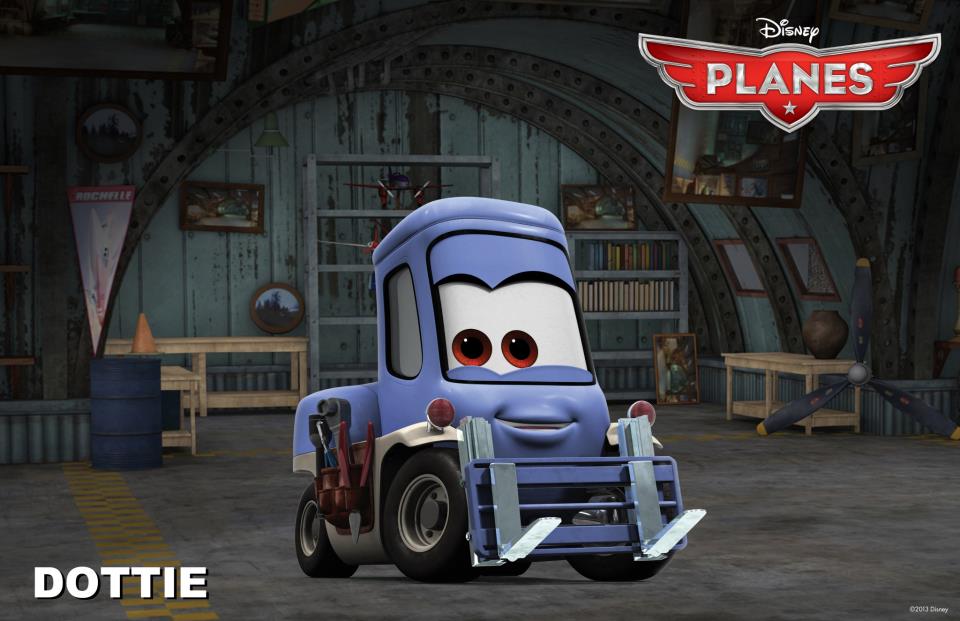
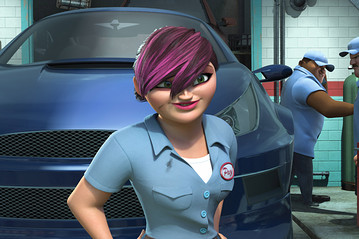
There are strikingly similar Minority Feisty in “Planes” and “Turbo:” Dottie and Paz are both mechanics and both shown in blue. Isn’t that progressive? At first, I thought these mechanics were a coincidence. Then I realized that “female mechanic” is classic Minority Feisty. All the parents watching can think: look a female mechanic! Isn’t that wonderful? And then overlook that Dottie and Paz exist only to help the male hero accomplish his quest in movies that marginalize and demean females.

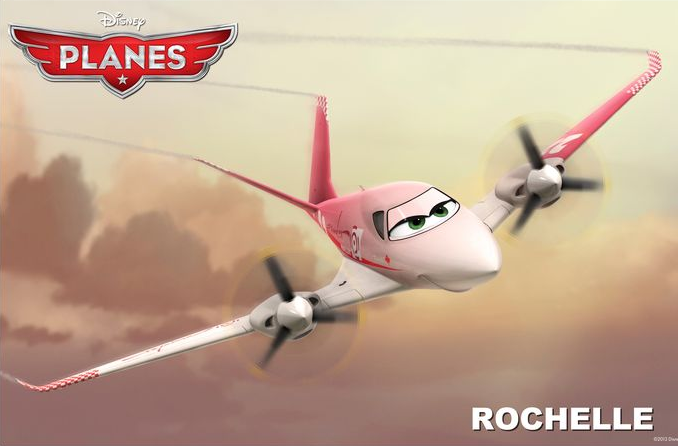
The actual race in “Planes” is totally dominated by male competitors. There are just two female racers: Ishani and Rochelle. “Turbo” has only one, and I missed her name. Both female racers in “Planes” are objects of lust for the males who have bigger parts. One scene is an extensive serenade/ mariachi sequence that sends Rochelle, the pink girl plane, into fits of desire. I thought I was going to throw up. Everyone else in the theater was laughing.

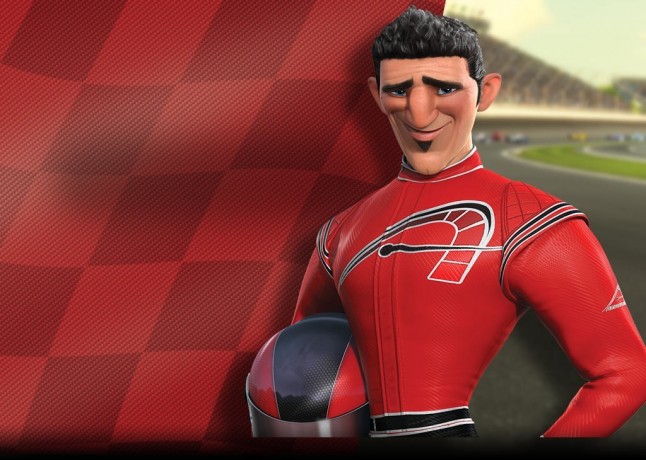
In both “Planes” and “Turbo,” there is an evil champion male rival who is the protagonist’s major competition. In “Planes,” he’s called Ripslinger, “the king of racing.” In “Turbo,” the role is filled by the macho Guy Gagne. Why not do something wild and crazy and put a female in the evil champion role? Dusty’s mentor, his major relationship in the movie, is also with, surprise, surprise, another male: Skipper. Turbo is guided to winning by Tito, a taco maker, who is also cursed with a brother who doesn’t believe in him but comes to see his gifts by the end of the movie. Nice parallel, huh?

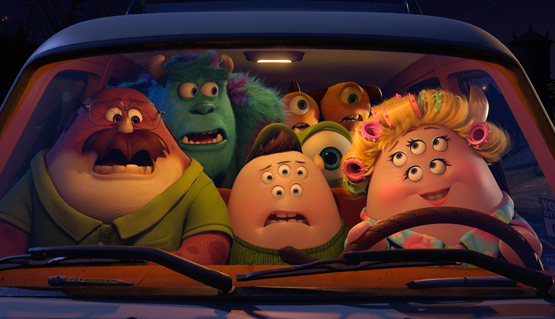
There is actually a third movie about a competition this summer. “Monster University” is about rival fraternities. Rival fraternities. Not one of these movies shows kids that females can win. Even worse, as I began this post with, “Planes” mocks female competitors as losers.

Why do parents put up with this repeated sexism in movie after movie?

There’s an excellent post about “Smurfs 2,” yet another male dominated movie for kids that came out this summer, in The Atlantic: The Banal, Insidious, Sexism of Smurfette.

In The Smurfs 2, there are a lot of Smurfs. And they all have names based on their unique qualities. According to the cast list, the male ones are Papa, Grouchy, Clumsy, Vanity, Narrator, Brainy, Handy, Gutsy, Hefty, Panicky, Farmer, Greedy, Party Planner, Jokey, Smooth, Baker, Passive-Aggressive, Clueless, Social, and Crazy. And the female one is Smurfette–because being female is enough for her. There is no boy Smurf whose identifying quality is his gender, of course, because that would seem hopelessly limited and boring as a character.

These characters, originating as they did in mid-century Europe, exhibit the quaint sexism in which boys or men are generic people–with their unique qualities and abilities–while girls and women are primarily identified by their femininity. The Smurfs 2, which premiered last weekend and came in third at the box office, doesn’t upend the premise of Smurfette…Today, a blockbuster children’s movie can invoke 50-year-old gender stereotypes with little fear of a powerful feminist backlash.


The author doesn’t expand beyond “Smurfs 2″ as far as the sexism marketed to children in movies this summer, but the erasure of female characters is shockingly consistent. And shocking in that it’s not shocking. Not only is there no fear of powerful feminist backlash, when I write about this annihilation in kids’ movies, I often get comments like: You call yourself a feminist? Why don’t you write about something more important than cartoons? Who cares?

About the rape culture, author Kilmartin is paraphrased in the New York Times:

It’s not DNA we’re up against; it’s movies, manners and a set of mores, magnified in the worlds of the military and sports, that assign different roles and different worth to men and women. Fix that culture and we can keep women a whole lot safer.

Kids learn from what they see again and again and again. You can tell girls that they can be anything they want to be until you’re Smurfblue in the face, but if you don’t show them, your words are meaningless. Why not show kids more movies where powerful females win? A crop duster can win a flying race around the world and a snail can win the Indy 500, but a female can’t win anything? What does that teach children? That “you aren’t what you’re built to be” unless you’re built a girl. Suddenly, your options get pretty limited.

Why, I want to know, is the imaginary world, a place where anything should be possible, so sexist? Why aren’t more parents demanding gender equality for their kids during this crucial period in their lives?

Reel Girl rates “Planes” ***SS*** for gender stereotyping

Watch sexist previews for “Madagascar 3,“Pirates : Band of Misfits,” and “The Lorax.”

See Reel Girl’s Gallery of Girls Gone Missing from Children’s Movies in 2013



‘Sea of Monsters’ best female characters in summer movie for kids

Finally, I saw a decent movie today (with my two older kids along with a cousin): “Sea of Monsters.” Afterwards, my seven year old said, “I just want to watch the beginning again and again.” I loved the beginning too! It’s all about how Thalia, the daughter of Zeus, gave up her life to save her three friends: Annabeth, Luke, and Grover. Here’s the actress who plays young Thalia. I can’t find a good shot from the movie.

thalia0_

As a result of Thalia’s bravery, instead of dying, she’s transformed into a tree. The tree provides a magic barrier to protect Camp Half Blood. The plot of “Sea of Monsters” is that this tree is poisoned, so not only is Camp Half Blood vulnerable to monsters, but Thalia is dying. In order to save Thalia, the Golden Fleece must be recovered.

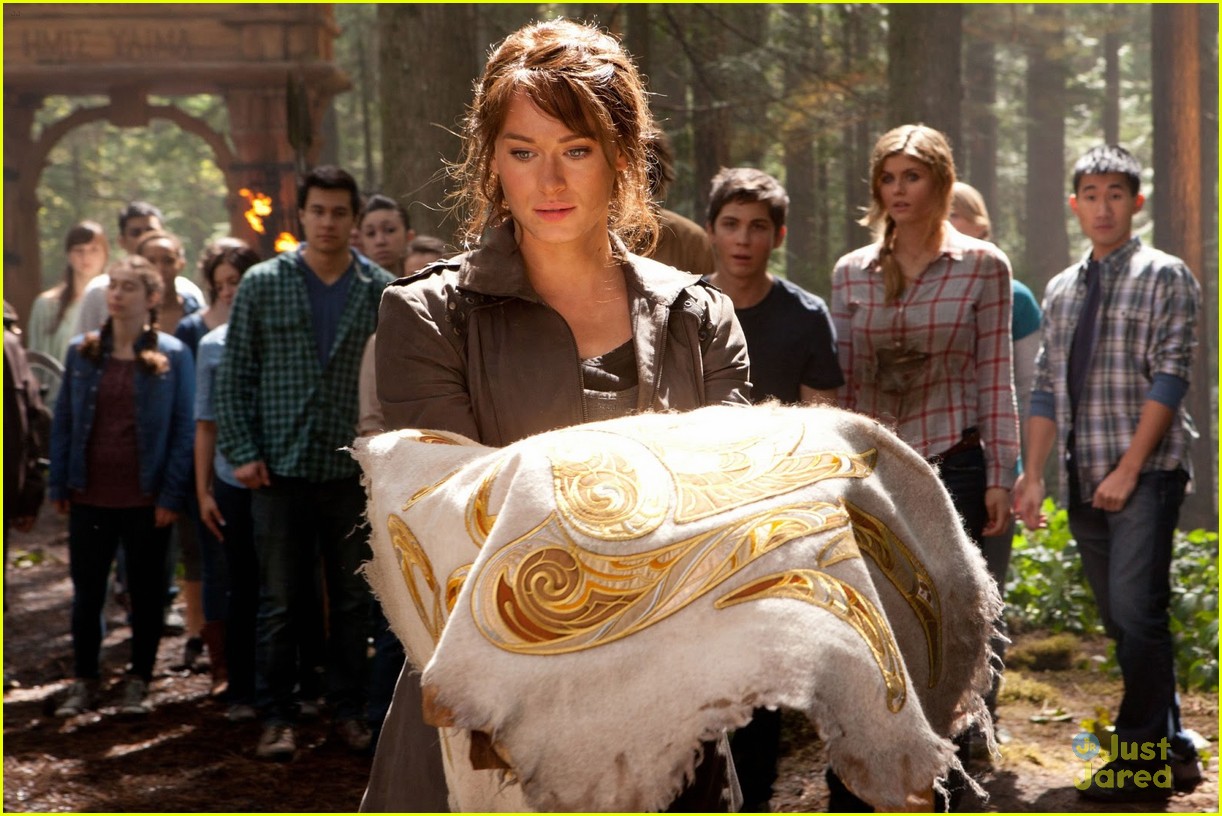
Annabeth, daughter of Athena, is the one who realizes the golden fleece is what is needed to save Thalia. The daughter of the goddess of wisdom, Annabeth is the smart one. Her role as the courageous, brilliant best friend of the hero, Percy, is similar to Hermione’s role in the Harry Potter series.

annabeth

A third strong female is Clarisse, daughter of Ares, the god of war. Clarisse is ambitious and competitive.

For these three characters, I encourage you to take your kids to this movie, though I wouldn’t take a kid under 6. But, I don’t want to mislead you. “Sea of Monsters” is Percy’s movie. He is the hero. The quest of recovering the golden fleece is actually assigned to Clarisse, but when she can’t pull it off, guess who steps in to save the world? The way Percy takes over Clarisse’s quest really annoyed me in the book. It annoyed me slightly less in the movie, because the way this is presented, instead of it being all about Percy, it’s more like Clarisse realizes she needs to work with others. It’s great to see Clarisse be the one to place the fleece on the tree; her important action restores Thalia to life.

clarisse

Kids watching “Sea of Monsters” not only get to see one girl helping another, but the whole movie is driven by Annabeth’s friendship for Thalia. “Sea of Monsters” is one of the very few this year to pass the Magowan Test for Gender Bias in Children’s movies. The Magowan Test is inspired by the Bechdel test. The criteria is (1) At least two females who are friends (2) go on an adventure (3) and don’t wear revealing clothing.

This movie is kind of cheesy. I don’t know why the special effects look so fake as opposed to the Harry Potter movies or the Lord of the Rings movies. Also, while the books are really funny, and the pacing is perfect, the humor doesn’t work in the movie. Scenes that are supposed to make you laugh are just goofy. That said, if I had to pick one movie to take kids to this summer, “Sea of Monsters” would be it.

Reel Girl rates “Sea of Monsters” ***H***

In ‘Planes’ males soar, females get grounded

I’ve blogged twice about the sexist preview for “Planes,” and after seeing the movie today, I’m afraid I’ve got to blog about this awful scene once more. The sexist scene actually opens the movie. It sets the tone for the whole film, which is the opposite of what I thought the scene was going to do. When I saw the preview, I thought the plane who mocks the slow flyers by calling them “ladies,” was having a moment of arrogance. The movie would redeem him when he went through his transition. I couldn’t have been more wrong. The sexist joke is his fantasy, the fantasy of a humble crop duster with a fear of heights who wishes he were a racer. The scene is sexism in fantasy world in sexism in fantasy world. Isn’t that meta? It’s the dream sequence of a “likeable” character. Can you imagine a hero making a racist joke and being likeable? In a movie for little kids? Yet, that’s how much sexism we have to wade through before females are allowed to win a race in animation. Here’s the text/ preview:

Plane One: What’s taking this guy so long? Is he really as good as he says he is?

Plane Two: No, better.

Plane One: Whoa! Who was that?

Plane Three: (Descending fast on top of the other two) Well, hello ladies. Ready to lose?

Plane Three goes on to leave the “ladies” in the dust.

Following this sexist fantasy, the narrative progresses exactly as “Turbo” does. (As I’m writing this, I’m thinking “Turbo” also starts with a fantasy about being in the Indy 500. Am I right?) The male protagonist, Dusty, is told by his friend he’ll never be a racer: “That’s not what you’re built for.” Same conversation Turbo has with his brother who tells him that he’s a snail, he can’t race. Guess who proves him wrong, that he can do anything, soar to the highest heights, be brave, courageous, and dare to make his dreams come true?

There is also a strikingly similar Minority Feisty in both movies. Dottie is the mechanic in “Planes.”

Dottie_(Planes)

Paz is the mechanic in “Turbo.”

paz

Look at them both in blue. Isn’t that progressive? At first, I thought these mechanics were a coincidence. Then I realized that “female mechanic” is the classic Minority Feisty role. All the parents watching can think: look a female mechanic, isn’t that great? And overlook that the roles of Dottie and Paz are minor. They are there to help the male hero accomplish his quest.

The race in “Planes” is dominated by male competitors. There are only two female racers: Ishani and Rochelle. “Turbo” had one, I missed her name.

Rochelle

Both female planes are objects of lust for the males who have bigger parts in the movie. One scene is an extensive serenade/ mariachi sequence that sends Rochelle, the pink girl plane, into fits of desire. I thought I was going to throw up. Everyone else was laughing.

As in “Turbo” there is an evil champion male rival who is the protagonist’s major competition. In “Planes,” its Ripslinger, “the king of racing.” He’s the one I saw in front on all the movie posters, not Dusty. I guess Disney is hoping to market the toy.

Disney-Planes-Movie-Poster

In “Turbo,” that role is filled by Guy Gagne.

guy-gagne

Why not do something wild and crazy and put a female in the evil champion role?

Dusty’s mentor, his major relationship in the movie, is with another male, Skipper.

skipper-popup

My kids have seen three animated movies about competitions this summer: “Monster University,” “Turbo,” and “Planes.” Not one of these movies shows kids that females can win. Even worse, as I began this post with, “Planes” mocks female competitors as losers.

Why do parents put up with this repeated sexism in movie after movie?

There’s an excellent post in The Atlantic today: The Banal, Insidious, Sexism of Smurfette. I haven’t seen “Smurfs 2” which came out last week. The post begins:

In The Smurfs 2, there are a lot of Smurfs. And they all have names based on their unique qualities. According to the cast list, the male ones are Papa, Grouchy, Clumsy, Vanity, Narrator, Brainy, Handy, Gutsy, Hefty, Panicky, Farmer, Greedy, Party Planner, Jokey, Smooth, Baker, Passive-Aggressive, Clueless, Social, and Crazy. And the female one is Smurfette–because being female is enough for her. There is no boy Smurf whose identifying quality is his gender, of course, because that would seem hopelessly limited and boring as a character.

These characters, originating as they did in mid-century Europe, exhibit the quaint sexism in which boys or men are generic people–with their unique qualities and abilities–while girls and women are primarily identified by their femininity. The Smurfs 2, which premiered last weekend and came in third at the box office, doesn’t upend the premise of Smurfette…Today, a blockbuster children’s movie can invoke 50-year-old gender stereotypes with little fear of a powerful feminist backlash.


Please go to The Atlantic and read the post. The art accompanying it is great. But the author doesn’t expand beyond “Smurfs 2” as far as the sexism marketed to children in movies this summer. The erasure of female characters is shockingly consistent. And shocking in that it’s not shocking. Not only is there no fear of powerful feminist backlash, when I write about this annihilation in kids’ movies, I get comments like: You call yourself a feminist? Why don’t you write about something more important than cartoons? Who cares?

Kids learn from what they see. Brains seek out patterns and repetition. You can tell girls that they can be anything they want to be until you’re Smurfblue in the face, but if you don’t show them, your words are meaningless. A crop duster can win a flying race around the world and a snail can win the Indy 500, but a female can’t win a thing? “You aren’t what you’re built to be” unless you happen to be built a girl. Suddenly, your options become pretty limited. Why is the imaginary world, a place where anything should be possible, sexist? Why aren’t more parents demanding equality for their kids?

See Reel Girl’s Gallery of Girls Gone Missing from Children’s Movies in 2013

Reel Girl rates “Planes” ***SS*** for gender stereotyping


My three daughters review ‘Turbo’

You’ve heard it all from me before. Basically, if you added up all of the speaking time of the female characters in “Turbo,” you might get 5 minutes of dialogue. “Turbo” reminds me of “Ratatouille” in that animators really seem to believe that it’s easier to convince audiences a talking rat can cook, or a snail can win the Indy 500, than a female character can be a great chef, a champion racer, or the star of her own movie.

Here are my three daughters reviewing “Turbo.”

Reel Girl rates “Turbo” ***SS*** for gender stereotyping

A note on Reel Girl’s ratings and gender stereotyping. I’ve seen comments about movies I gave a high S rating to (“Monster University” and “Despicable Me 2” most recently) that the male characters in these movies are not typical males. They are complex. Therefore, the gender stereotyping isn’t that bad. I strongly disagree with that assessment. I don’t see the lack of complex male characters as a problem in animated movies for kids. From “Toy Story” to “The Lion King” to “Ratatouille,” there are great male protagonists. Not only that, there are so many male characters in these movies, heroes and villains, cool dudes and geeks, athletes and artists, on and on, that kids get to see all kinds of male representation. Female characters, on the other hand, are barely there, passive, and sexualized. Females are erased and seeing that repeated pattern negatively affects both girls and boys. I can’t think of a better way to address stereotyping of male characters than to show kids strong females who are the stars of their own movies, with males helping and supporting them on their quests.

‘Planes’ movie, all about speed, mocks slow flyers as ‘ladies’

Every time I see a poster around town advertising the upcoming animated movie “Planes,” my heart sinks. A couple months ago, I posted the sexist preview for the movie on Reel Girl where the fastest plane refers to the slower planes as “ladies.” Here’s part of the dialogue:

Plane One: What’s taking this guy so long? Is he really as good as he says he is?

Plane Two: No, better.

Plane One: Whoa! Who was that?

Plane Three: (Descending fast on top of the other two) Well, hello ladies. Ready to lose?

Plane Three goes on to leave the “ladies” in the dust. There are no female characters in this preview at all.

Here it is if you’d like to watch for yourself. You may want to ask your children to leave the room.

The message to kids who watch this mini-movie is that females are losers, not leaders. They can’t compete. Why does my 4 year old have to see a movie made for children where characters are mocked as female to indicate their inferiority?

Is the justification for this sexism that it’s just “true:” the fastest men in the world are faster than the fastest women, and my daughter should know that? The joke “makes sense,” it’s “realistic.” Is it also realistic that planes talk to each other? Why, when it comes to sexism, do people suddenly become so concerned about realism?

Here’s the problem with the repeated pattern of sexism in movies for kids. Narratives involve a hero who goes through challenges to reach a goal. Every kid– and every person– is the hero of her own life. At the most basic level, heroes act, make choices, and take risks. Narratives (and art in general) inspires us. Maybe my daughter’s big risk today will be reaching out for that elusive fourth monkey bar, trying a potsticker for the first time, or telling another kid to stop teasing her. Any of those acts will feel huge to her, just as sitting down at my desk and starting the next chapter of my novel feels huge to me. If I were to show my emotion, I might put myself at the foot of Mount Everest. Narratives are metaphors. They aren’t just a life compacted, but a moment, expanded. Sexism has no part in that story, especially as a repeated pattern, marketed to little kids, where males, again and again, are font and center, while females get stuck in supporting roles, on the sidelines.


‘One Man’ trailer shows relentless pattern of sexism in movies

I swore off blogging to meet a deadline for my novel, but this video is SO GOOD I have to post it.

This “One Man” trailer shows the relentless repetition of the same old sexist narrative where one “unique and original” man saves the world while females go missing.

As I keep posting on Reel Girl, the problem of female erasure is not about each movie, (“one man”) but the repetition of the same old story where females get shoved to the sidelines again and again. The “One Man” video reveals the sexist pattern of Hollywood movies better than anything I’ve ever seen. Now if they would just make one of these featuring animated movies for kids….

Thank you to morecompassion for sending this to me (though you better stop, it’s like crack for me, and at this rate, I’ll never finish my book!)


‘Despicable Me 2’ latest children’s movie to star male, limit females to supporting roles

I really wanted to say great things about “Despicable Me 2,” so I’ll start with the positive. This movie made me laugh a lot. As far as personal enjoyment, I had a lot more fun watching “Despicable Me 2” than I did watching “Monster University.”

It was great to see a movie with my three girls about three girls. Except “Despicable Me” isn’t really about three girls. It’s all about Despicable Me AKA Gru, the star of the movie, played beautifully by Steve Carell. Before you protest as I go on to call “Despicable Me” sexist, please read this next sentence carefully: If the male protagonist with females limited to supporting roles was featured in just a few children’s movies, or even half of them, I would have no problem with the gender roles. The problem is that kids hardly ever get to see a female protagonist in movies made for children. The fantasy world, where anything should be possible, is sexist and unfortunately, “Despicable Me 2” is no exception to this rule.

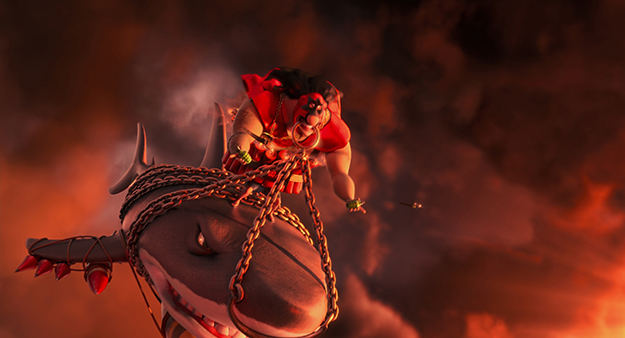
The villain in “Despicable Me,” is also, surprise, surprise, male. I admit, this guy totally cracked me up. First of all, his name is El Macho. When Gru describes him, he says, “El Macho died in the most macho way possible, strapped to a shark, flying into a volcano.” Hilarious and only when I write this, do I remember sharks don’t fly.

Despicable Me 2

Though I was kind of uncomfortable with the Latin lover stereotype– Macho’s open necked shirt reveals a hairy chest and he wears a huge gold chain– I delighted in the gender play.

There is more gender play in “Despicable Me 2” that could’ve been great– and that’s why I wanted to say good things about this movie– but again and again, instead misses the mark. Gru is a single dad of three girls, so there’s a lot to work with there. But just like “Monster University” had sororities with cool characters, but then gives them minimal lines and screen time, “Despicable Me” doesn’t pull off gender equality. It doesn’t try to.

The movie opens with a princess party (ugh)  for Agnes, the youngest daughter, and Gru is dressed as a fairy princess. Again, I laughed when I saw him, but frankly, seeing a female dress up in pink frills ought to be be just as ridiculous. But it’s not, of course. A female looking like this is normal and expected in kidworld.

fairygru

The minions also dress up as females to comic effect, as a maid and also in a grass skirt topped with a pair of coconut shells, to give just two examples.

minion-dressed-like-maid-photo

I laughed during these scenes too, but the whole “boys dressed up as girls, how hilarious” joke solidifies all kinds of gender stereotypes. I wish we could leave it out of kids’ movies. There are so many ways to get kids to laugh without teaching them this one.

Gru’s spy partner, Lucy, is a pretty good Minority Feisty. She’s smart, brave, and enjoys adventure. But Lucy is clearly Gru’s sidekick. After the initial capture, she follows his lead and becomes his love interest.

lucy

There is a truly awful scene where Gru goes on a date with the superficial Shanon, and Lucy shoots a dart in Shanon’s ass. All kinds of unfortunate things happen to Shanon after that, and this part of the movie I didn’t find funny at all.

As far as Lucy’s lipstick taser which you’ve seen if you seen a preview, I for one, am sick of lipstick as a symbol of female empowerment. When Pat Benatar sang about a notch in her lipstick case 25 years ago, it was an original and ironic image. Now it’s a cliche, as overused and tired as an empowered woman ripping off her corset. Though I admit, I did laugh again when, in a desperate moment, Gru uses Lucy’s taser and she calls out “You copied me.” The final insult: the movie shows Lucy as the classic Damsel in Distress, strapped to a rocket and shooting into a volcano, and Gru, of course, saves them.

I liked the three girls, loved that there were three of them, and the oldest is named Margo.

despicableme-girls-group-600-290-01

I would LOVE to see a movie where these three are the stars with Margo as the protag and Gru in the supporting role. Universal, are you listening?

Before you comment on this post, let me say three things:

(1) I like this movie. I love going to the movies in general. That’s why I started blogging about them. Like Anita Sarkeesian of Feminist Frequency who makes videos about sexism in gaming but loves to play: I criticize media because I enjoy it. I want it to be better.

(2) I am not advising you not to take your kids to see these movies. I thought that was obvious because I blog about taking my own kids to see these movies. I try to teach my kids to watch with a critical eye. If the movie is sexist, I usually will not see it again, rent it, buy it, mention it much and try to avoid buying my kids games or clothing with the characters. If the movie has a female protag, I will buy a lot of that stuff. Some movies, I do avoid, for example, I didn’t go see “Oz” or take my kids. I couldn’t take what they did to Dorothy and Ozma, but that was a personal decision as yours, of course, should be.

(3) I wrote this already, but the problem is the repetitive pattern of marginalized females. The pattern, okay? Kids learn from what they see, through repetition.

In children’s media, females, who are half of the population, are presented as a minority. That is why I came up with the term Minority Feisty. Often, today, there is not jut one token female (as with the Smurfette Principle) but several and she is “feisty” ( a demeaning way to describe strong, usually reserved for females, and often used by film critics describing females in kids movies.) But the Minority Feisty is not enough. If we keep moving along at this slow rate, the Geena Davis Institute reports, we won’t have gender parity for 700 years. Your kids won’t experience it, nor will their kids, nor will their kids, on and on.

“Despicable Me” is a classic example of this sexist pattern. There are hundreds, if not thousands, of male minions. Why are there are no females? These scenes are so funny, my favorite parts of the movie, but females are excluded from them.

Two great posts came out this week about sexism in film and the Minority Feisty issue:

The U.N. women’s agency is teaming up with actress Geena Davis to support the first global study of how women and girls are portrayed in family films, saying the images have a strong impact on how females see themselves. Lakshmi Puri, acting head of UN Women, says “the dearth of female characters of substance in the media means children are being taught that girls and women ‘don’t take up half of the space in the world.’ Please read this if you haven’t yet. It’s pretty exciting.

The other great post is from the New Statesman: “Men grow up expecting to be the hero of their own story. Women grow up expecting to be the supporting actress in somebody else’s.”

Please don’t be distracted by the Minority Feisty in children’s movies. She is there to distract you, to make you forget the lack of female protagonists. To the point the New Statesman made, and I have made numerous times on Reel Girl: We are all heroes in our lives. We all have our dragons to slay. But too often, women are trained to find a man in power, someone we can rely on to do the scary deed for us, instead of taking the risk ourselves. No risk, no reward, right? Except that women often don’t get the same cultural rewards men do for being heroes.

In fantasy, a world we can control, why can’t we show children a place where females and males are treated equally instead of perpetuating sexism? If we can’t imagine equality, we can’t achieve it.

Reel Girl rates “Despicable Me 2” ***S*** for gender stereotyping

Update: Just learned there will be a 2014 spin off of “Despicable Me.” YAY, I thought, a movie starring the three cool girls: Agnes, Edith, and Margo, just like I hoped for. But no. It will be a movie about the all male minions. Read about it here.


‘Monster University’ sidelines females in plot about rival fraternities

When Pixar writers (Robert Baird, Daniel Gerson, Dan Scalon) showed the script for “Monster University” to producers, or execs at Disney, or whoever you go to up and down the chain of command to get the green light, did it occur to anyone, anyone at all, that making a movie about rival fraternities might make girls, half of the kid population, feel a tad ignored?

Here’s a pic of OK, the geek fraternity on campus, featuring our buddy-stars: Mike and Sully. “Monster University” centers on this group.

OK

Here are the rivals of OK, the BMOC frat, ROR, led by Johnny Worthington, the one with the horns.

ROR

Rival frats. I am not kidding. That’s what this movie is about. So here on Reel Girl, I don’t have to even analyze or point out how or why this narrative is sexist. After watching it, I’ve got to conclude that in spite of the token “Brave,” Disney/ Pixar really doesn’t give a shit about including females in its narratives in a significant way.

Like most animated movies today that star males, “Monster University” features an excellent Minority Feisty. Dean Hardscrabble is played by Helen Mirren, and she is a bad ass, terrifying and complex. I loved her. I wish she had more lines and more scenes.

Monsters+University

What do you think the chances are that Dean Hardscrabble will get her own spin off movie? (Sort of like how Puss In Boots got his own movie after no less than 3 Shrek movies.) Perhaps Hardscrabble will get a prequel, like “Monster University,” where we see how she grows up, changes from a scared little kid into the fierce and powerful monster she is? Along with the help of a courageous and devoted team of females, of course. See that film coming soon to a theater near you?

I’m also a fan of the librarian, a Minority Feisty who has a brief but impressive part.

Librarian2

Another Minority Feisty I liked is Claire Wheeler, the Greek Council President.

MU-Greek-Council-Claire-Crop

Claire isn’t fabulous, but she can be funny. She doesn’t do anything stupid or offensive.That area is totally covered with the look, name, and poses of the PNK (get it?) sorority: pink and purple, mini-skirted, furry boot wearing girls. I dread the toys and sippy cups.

Monsters-university-PNK

“Monster University” is all about a competition but you hardly notice or care when females get eliminated, as they all do. We don’t get a chance to get attached to any of the female competitors.

There is a cooler sorority, HSS. Its role in the movie is even smaller than PNK, and it gets eliminated earlier. Again, the event is hardly noticed except that Mike and Sully’s frat advances.

Monsters-University-HSS

A Minority Feisty I hated? Ms. Squibbles, Squishy’s mom. Throughout the movie, she is shown in curlers and a housecoat, cooking, doing laundry, or driving a minivan.Think the “Ms.” is feminist? Nope, the moniker is to elucidate her single status. I didn’t think Pixar could get any more gender cliched, but at the end of the movie, Ms. Squibbles actually gets engaged (to her son’s frat brother, no less.)

monsters-university-mothers-day-disney-pixar

Before the movie even starts, Ms. Squibbles shows up in an ad for Swiffer. That’s right– a cleaning product. All the males are sitting on the couch watching football when a hot dog with ketchup gets dropped on the floor and Squishy says: “You guys, my mom just cleaned this place!” The ad could be worse, I suppose. Squishy cleans up the ketchup himself, and Ms. Squibbles dirties the floor up again cheering the team. It’s got that tiny speck of feminism within a sexist framework that we’re supposed to be grateful for. Here’s the ad.

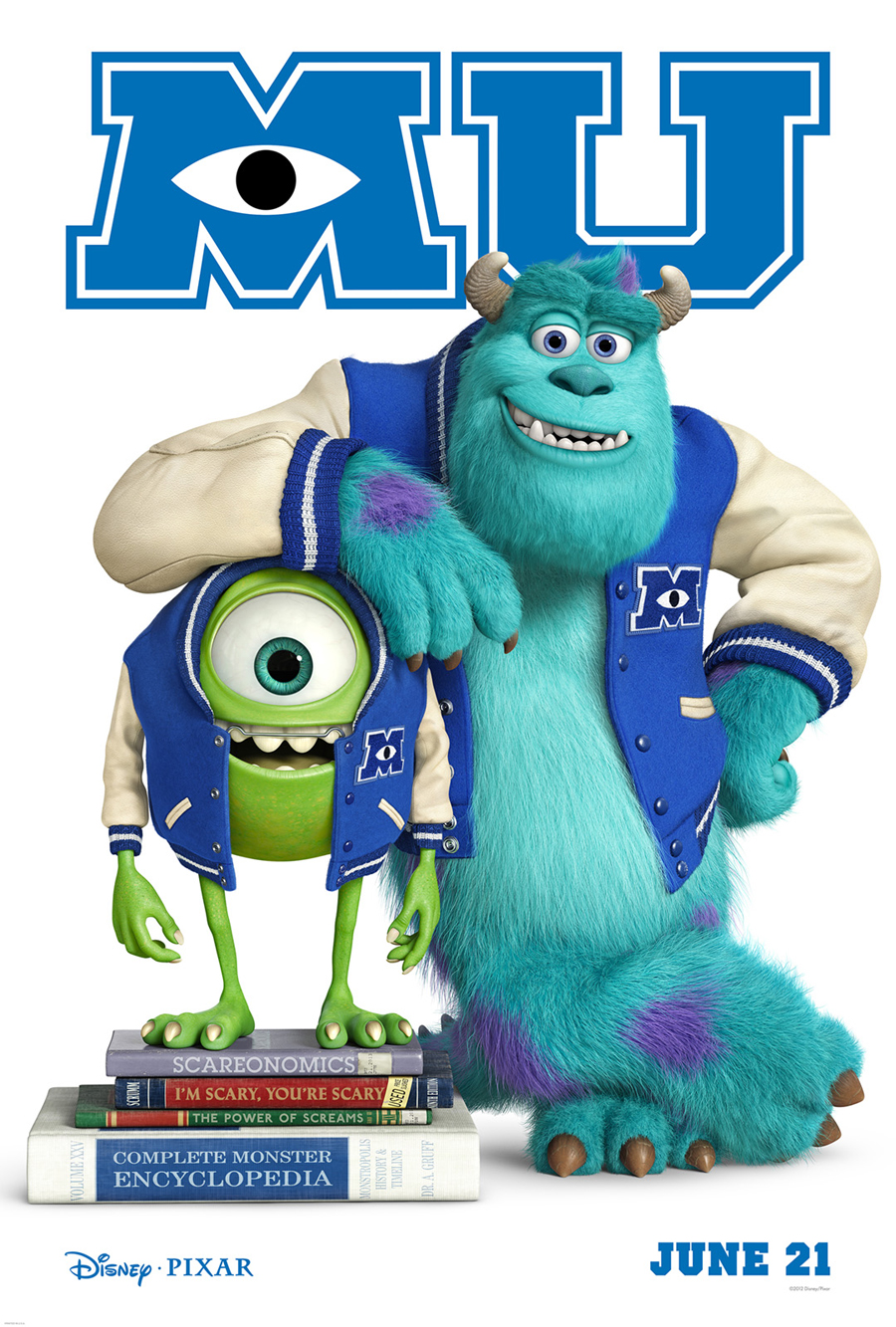
I haven’t seen any Minority Feisty from the movie pictured on posters around San Francisco, where I live. Most show Mike, but some show Mike and Sully. The Leapfrog educational games also feature Mike and Sully.

monsters-university-movie-poster

I’m bottom feeding for images to be grateful for in “Monster University,” but I found a few. There are pink and purple male monsters in this movie. There are also male monsters with eyelashes. Sometimes, I couldn’t tell if a monster was male or female until she spoke, a highly unusual situation for an animated movie, even one about cars or robots or planes or fish or monsters, of course. Thanks a lot, Pixar/ Disney. My three daughters and I are super grateful.

Reel Girl rates “Monster University” ***SS*** for gender stereotyping

‘Epic’ features cool heroine, celebrates matriarchy

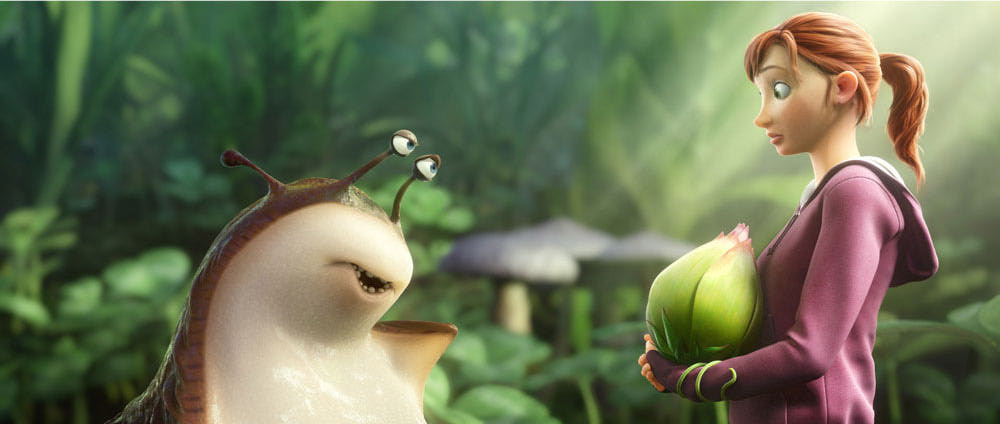
My three daughters and I loved “Epic.” The central heroine, M.K. is smart, brave, funny, compassionate, and independent. I loved her look, too. She’s dressed in a hoodie with a messy ponytail. She doesn’t have a Barbie face, I’d recognize this girl in a crowd.

MK

M.K. narrates the movie. YAY. Do you know how rare it is to get a female narrator in an animated movie for children?

There’s more good news. Queen Tara is another brave, powerful female in this movie who is central to the narrative. Please note QUEEN, not princess. Not only that, GOOD queen, not evil. And…she’s not white. This may be a first, but let me know if there is another animated film with a good queen of color.

tara

Queen Tara is played by Beyonce, and the movie concludes with an awesome song about the matriarchy. The matriarchy, people! It’s so fitting and perfect because the whole movie is about protecting the heir. I was super worried that the next ruler would be male, especially because the evil character, Mandrake, keeps referring to said heir as his “dark prince.” Luckily, the evil dude is wrong, and just after you find that out, the matriarchy song comes on. I laughed when I heard it because I felt like Beyonce was saying to me, “Don’t worry, Margot, I got the girls covered.”

I do have some complaints. I wish M.K. was in the movie more. Much more. You cannot deny she is the protagonist– she is the narrator, she has the quest, and she goes through the transition. M.K. acts, takes risks, and makes choices. She is such a great character, but based on lines and screen time, “Epic” is pretty much an ensemble movie. Most of the other characters are male. The Queen dies early. M.K.’s mother is also dead. The central relationship in the movie is with M.K. and her father.

The evil character is male and he has an evil son. M.K. pals around with two male heroes, so in most of the action scenes, the same old Minority Feisty gender ratio is in your face. Speaking of, M.K. is riding bitch most of the time. Her position “makes sense” in the story because she’s the visitor to the tiny world, but still, writers can make anything happen. I am sick of sexism making sense in plots, and I had hope for M.K. taking the lead here. At one point, she gamely hops on a bird and says, “Come on, let’s go!” Nod, the young male hero, hops on behind her, but in the following scenes, Nod is the one in the driver’s seat again. Argh.

There’s an army of Leafmen, and from what I could tell, they are, in fact, men: 100% male. Comic relief is a male slug and his BFF, a male snail. That pair kind of reminded me of the male krills who steal the show in “Happy Feet 2” or the meerkat/ warthog duo in “Lion King” and countless other cartoon buddy boys. It would be so nice to see a couple of females being friends and being funny in an animated movie.

Finally, I wrote I love M.K.’s look and I do, but both she and Queen Tara are super skinny, and why not give her a blue hoodie, or brown, or red, or any goddam color in the entire universe but pinkpurple?

M.K. is prominently featured on many of the posters seen around San Francisco, another total rarity for children’s movies. Though I didn’t see this one, I want to order it for my kids.epic

Reel Girl rates “Epic” ***HH***


New toy release shows “Monsters University” practically single sex

Just received an email promo from LeapFrog which sells “educational” toys for kids. This one features characters from Disney/ Pixar’s upcoming Monsters University. Looks like while your kids get skills on “reading comprehension” and “problem solving,” they’ll be learning females stay in the background, it’s all Mike and Sully. And they say girls are the ones who care about “friendship”…

MU

Cat’s comment below: “Please tell me [Disney] remembered to add [females] in a movie about a UNIVERSITY!”