Animator protests making female characters slim and sexy

On animator Dave Pressler’s blog, he writes about his biggest pet peeve: being asked by male and female execs to put a bow or long eyelashes on his female characters.


Any boy / man character can be a lump, a ball, or a bucket.  The second it’s a girl we must feminize and give sexuality to the character…That’s how we know she’s a female.  Even when we were making Robot and Monster an executive wanted me to make J.D. more slim and “Sexy”.


Along with male artists Marc Crilley and David Bolk, I’m thrilled Pressler is writing about this sexism, but here’s my issue with his blog:


This is Hank, he is outgoing and a real story teller.  Phil is Hanks other friend.  Phil is a glass half empty kind of guy, but always there when you need him.  Then there’s Julie, the cutest girl in town. She sees the good in everyone.   These would be my initial rough ideas for the characters.


While urging artists to “Make Interesting Choices when you are designing, Illustrating etc.   And don’t fall into this unimaginative trap” why is Julie described as the hot girl? And how much hope do we have of not defining her physically as “sexy” when she doesn’t get to be a described as something interesting or funny like a “storyteller” or “a glass half empty gal”?


Defending his female monster, Pressler writes. “She already is the sexiest monster in the show, exactly how she is.” While I appreciate this monster is beautiful as she is, without a bow or eyelashes, why must we be concerned with her beauty? Isn’t that the larger issue? I’m not familiar enough with Pressler’s work, but from this blog, it seems as if he is focused on changing the stereotypical look without changing the stereotypical narrative. Altering the look is no small feat, especially for our kids who are subjected to this kind of sexism constantly. In animation, female characters from Anna in Frozen to Kim Possible would be so much cooler if they weren’t shown super skinny  with giant eyes or bare midriffs. But the goal has to be much bigger than changing the character’s appearance. The narrative for a female characters has to involve them being funny or cynical, encompassing a whole range of characteristics not typically understood as feminine, and also playing at least half the characters or getting to exist in the majority as well, or getting to be the protagonist way more often, like half the time.


What about making two female best friends, one an “outgoing storyteller,” the other a “glass half empty gal,” and then a male who is the cutest guy in town and always sees the good in everyone? If the narrative changes, it could unlock physical stereotypes as well. Otherwise, kidworld will be stuck with toys and media that look like this.

eyelashbow


Animator protests making female characters slim and sexy

On animator Dave Pressler’s blog, he writes about his biggest pet peeve: being asked by male and female execs to put a bow or long eyelashes on his female characters.

Any boy / man character can be a lump, a ball, or a bucket.  The second it’s a girl we must feminize and give sexuality to the character…That’s how we know she’s a female.  Even when we were making Robot and Monster an executive wanted me to make J.D. more slim and “Sexy”.

Along with male artists Marc Crilley and David Bolk, I’m thrilled Pressler is writing about this sexism, but here’s my issue with his blog:

This is Hank, he is outgoing and a real story teller.  Phil is Hanks other friend.  Phil is a glass half empty kind of guy, but always there when you need him.  Then there’s Julie, the cutest girl in town. She sees the good in everyone.   These would be my initial rough ideas for the characters.

While urging artists to “Make Interesting Choices when you are designing, Illustrating etc.   And don’t fall into this unimaginative trap” why is Julie described as the hot girl? And how much hope do we have of not defining her physically as “sexy” when she doesn’t get to be a described as something interesting or funny like a “storyteller” or “a glass half empty gal”?

Defending his female monster, Pressler writes. “She already is the sexiest monster in the show, exactly how she is.” While I appreciate this monster is beautiful as she is, without a bow or eyelashes, why must we be concerned with her beauty? Isn’t that the larger issue? I’m not familiar enough with Pressler’s work, but from this blog, it seems as if he is focused on changing the stereotypical look without changing the stereotypical narrative. Altering the look is no small feat, especially for our kids who are subjected to this kind of sexism constantly. In animation, female characters from Anna in Frozen to Kim Possible would be so much cooler if they weren’t shown super skinny  with giant eyes or bare midriffs. But the goal has to be much bigger than changing the character’s appearance. The narrative for a female characters has to involve them being funny or cynical, encompassing a whole range of characteristics not typically understood as feminine, and also playing at least half the characters or getting to exist in the majority as well, or getting to be the protagonist way more often, like half the time.

What about making two female best friends, one an “outgoing storyteller,” the other a “glass half empty gal,” and then a male who is the cutest guy in town and always sees the good in everyone? If the narrative changes, it could unlock physical stereotypes as well.


In another sexist cover, Time uses porn cliche for Hillary Clinton story

In the new Time, to illustrate the cover article “Can Anyone Stop Hillary?” the magazine uses cliche porn imagery, showing a man trapped beneath a woman’s shoe.

g9510.20_Hillary.Cover.indd

Seriously, Time?

What did you use for inspiration, this YouTube video? (One of thousands just like it.)

Or perhaps, this shot from a porn site? (One of millions just like it)

femdom-erotica-domme-trampling-her-boy-toy-with-high-heels-498x441

With so many options, I picked this image because its caption “Ending the sexual dark age,” listed in the category “dominatrix in heels standing on male slave’s chest” seems to echo the point Time’s cover attempts to make.

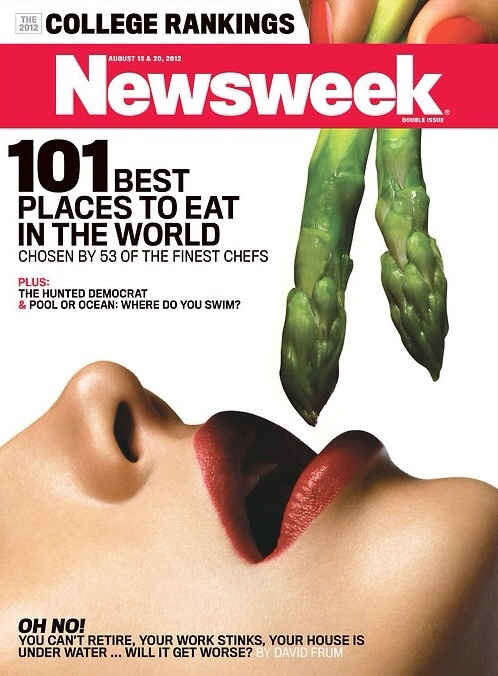
The Hillary Clinton cover isn’t the first time a “news weekly” has borrowed from porn. There was this cover of Newsweek. The subject of the story: great food.

newsweekcover

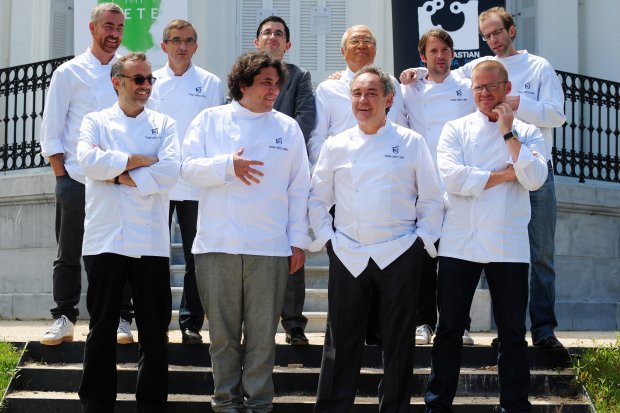
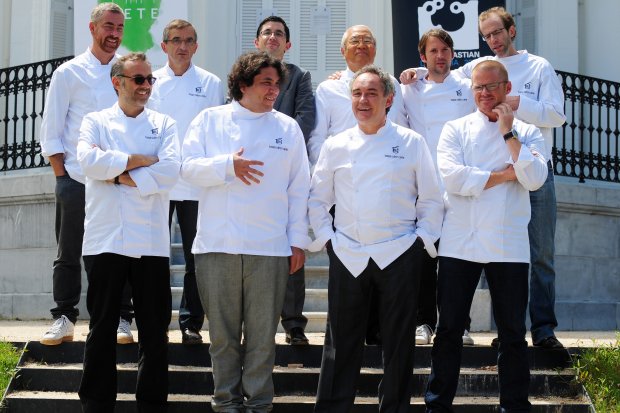
Time also did a story featuring the “best” chefs. No porn, but the magazine opted for this pic. Hmmm…what’s missing here?

godsoffood

That’s right, Time’s “Gods of Food” story featured ZERO women.

Wouldn’t it be nice if “news” magazines weren’t sexist? What would our news look like then? Does anyone even know?

Alameda County DA reports child sex trade epidemic in Oakland

I live in San Francisco and right across the bay, Oakland is the epicenter of human trafficking in the Bay Area. At this moment, 13 year old girls are being sold as sex slaves and practically everyone chooses to look the other way.

That’s right, in 2014 slavery exists in America and the victims are young girls. Of course, this slavery isn’t legal, but when no one does much to stop it, it may as well be.

Starting today,  Nancy O’Malley, the DA of Alameda county is putting up 27 billboards to educate the public about human trafficking, because for some reason, a lot of people seem to know nothing about it.

In an op-ed for the Contra Costa Times explaining her PR move, O’Malley writes:

The FBI has identified Oakland as an epicenter of trafficking in the Bay Area counties. The majority of exploited children are 13 to 16 years old, some as young as 11…Even more shocking, the number of commercially sexually exploited children is increasing, while the average age of those exploited is decreasing…There are two sides — supply and demand — that make sex trafficking of our children possible. Human trafficking exists because there is an endless and disgraceful demand for children for sex and traffickers fill that demand daily.


What can you do? O’Malley is clear on steps she’d like you to take. Below are quotes from her op-ed:

(1) If you see something, say something. Keep the human trafficking hotline in your cellphone, 888-373-7888 or text Be Free (233733), and report anything suspicious. Through this hotline, more than 75,000 calls have come in to identify nearly 9,000 survivors.

(2) You can also sign up for the Alameda County District Attorney’s Office Human Exploitation and Trafficking Watch mailing list at HEAT-Watch.org to learn more about human trafficking and what you can do to join the fight. Download a free toolkit so you can build your capacity to hold traffickers accountable and keep victims safe.

(3) Donate your time and money to organizations that are making a difference, such as Misssey, Bay Area Women Against Rape, West Coast Children’s Clinic and HEAT Watch.

(4) Speak out: Let policymakers know we need the toughest penalties for traffickers and the predators who buy children for sex and resources for victims of human trafficking. Together, we will we put an end to modern-day slavery.

I have another suggestion for you. Please, do what you can to stop contributing to the sexualizing of young girls. Read my post here and don’t help to spread propaganda, in the form of media and toys, that sexualizes young girls. These products are not innocuous but dangerous. Sexualizing girls happens everywhere, so ubiquitous it’s paradoxically invisible.

Here are just a few examples of how we sexualize kids. Take a look at the popular Polly Pocket toy. This toy is marketed to girls ages 4 – 7 and the toy is all about dressing the doll in “sexy” outfits. Why would a parent buy her little daughter a toy like this?

Polly-Pocket1

Here are the Bratz dolls.

bratzwallpaper-source_4cj

Melissa Wardy of Pigtails Pals recently wrote:

Try this test: If the image can be lifted from the child’s toy/backpack/t-shirt and placed on the billboard for a strip club and not look out of place, then things are seriously fucked.

Wardy blogged that after she and her young daughter walked to school behind a first grade girl wearing this backpack.

Winx-backpack

Wardy writes:

Given what we know about how early sexualization harms young girls,  I cannot understand how parents allow this kind of imagery and media in their homes.

This year, France outlawed child beauty pageants because they are so dangerous for children. The New York Times reports:

Ms. Jouanno, a former junior minister for environment and a senator representing Paris from the center-right party U.D.I., wrote a report on the “hypersexualization” of children in 2011. The report was commissioned by the health minister in response to public outrage over a photo display in Paris Vogue that featured under-age girls in sexy clothes and postures, with high heels, makeup and painted fingernails.

But in the USA, we have hit TV shows like “Honey Boo Boo” and “Toddlers and Tiaras” that glorify the exploitation of girls. Here, in the home of the free and the brave, sexualizing kids is accepted and normal. We allow it and condone it.

If you’re not part of the solution, you’re part of the problem. That is my interpretation of O’Malley’s billboards. I am so grateful she is taking a leadership position to end child trafficking. Please follow her example and act to end the sexual abuse of children.


‘It’s been said that you’re too skinny for the part. Wonder Woman is large-breasted, is that going to change?’

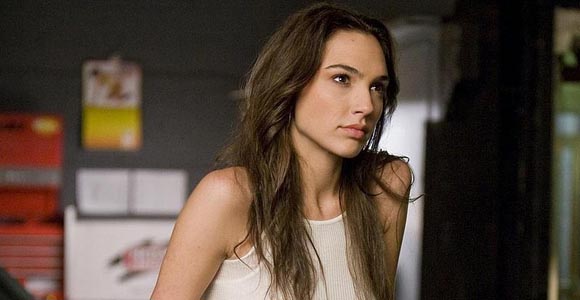
I am so mad right now, I am shaking. Gal Gadot, the actress playing Wonder Women in the Batman vs Superman film (did you get that part about how the film is referred to as Batman vs Superman?) was asked by an interviewer if her small breast size qualified her to play the part.

GalGadotFastFive

From The Mary Sue:

Gadot was interviewed by Good Evening with Gai Pines, an entertainment show in her homeland Israel…


It’s been said that you’re too skinny for the part. Wonder Woman is large-breasted, is that going to change?

Thank you, media for directing the public to focus on Gadot’s breast size. We all need to pay a little more attention to critiquing female anatomy. Also, since Wonder Woman in a movie probably means Wonder Woman in more merchandise, we really need to make sure we get the character’s breast size right for kids’ toys and games.

I can’t even count how many blogs I’ve written about sexualized female superheroes. Wonder Woman finally appears in a movie, not even her own damn movie, but the 8th Superman and the 9th Batman one, and she gets asked about her breast size? Wow. We live in backwards, fucked up, sexist times. In case you think this interview an anomaly, it’s far the first time the media has judged Gadot’s body as inappropriate.

And what does this interviewer even mean: “Is that going to change?” Is he asking Gadot if she is going to get breast augmentation? Or is he asking her if the character will no longer be identified with that particular breast size?

Here’s Gadot’s excellent response. She can add me to her fan list.

Hmm. I represent the Wonder Woman of the new world. Breasts… anyone can buy for 9,000 shekels and everything is fine. By the way, Wonder Woman is amazonian, and historically accurate amazonian women actually had only one breast. So, if I’d really go “by the book”…it’d be problematic.

Female pilot speaks out against sexism

I got this comment on Reel Girl today:

I just wanted to say thank you so much for making this post on female pilots and the lack of recognition towards important female war heroes. As a female pilot in training, hearing about great female pilots is always encouraging especially when aviation is so dominated by males. It’s disgusting with what happened to the WASPs, it just goes to show the existing sexism towards females in our North American society. I’m so sick of it, but I’m really glad I found your blog.


Thanks again for making this post, shortly after I found it I used the WASPs’ story and made a poem about them for an English Language Arts assignment.


Oh and regarding the movie “Planes” I tried watching it despite having little hope for the story and characters being any bit original. Let’s just say that I gagged when the one female plane glomped the sidekick male plane, and covered him in kisses after he “whooed” her with music the previous night. It made me sick on so many levels, I’m so glad I only watched it online…


Here is the poem she wrote, I love it.

We are the WASP

The women who flew,
60 million miles or more.
Two years of service,
the men demand our lore.

Status denied,
but we didn’t quit.
The men may take glory,
but we still flew in our story.

Our achievements forgotten,
only known by few.
In history books erased,
schools without a trace.

Lest we forget,
The first women of wings.
We are the WASP,
the women who flew.

See how real life inspires art inspires real life?

I assume this commenter is a young woman. Imagine how kids feel when they see sexist scenes like the one in “Planes” again and again, like it’s normal and okay and cute. What kind of art do they make? What kind of imaginary games do they play? At my daughter’s preschool, a three year old girl told the teacher she couldn’t be a pilot, but a pilot’s wife. A three year old. Those limits on her imagination are our fault, grow-ups. Do we really want to train a new generation of children to accept gender stereotypes?

One more time, here’s the preview of Disney’s “Planes.”

Plane One: What’s taking this guy so long? Is he really as good as he says he is?

Plane Two: No, better.

Plane One: Whoa! Who was that?

Plane Three: (Descending fast on top of the other two) Well, hello ladies! Ready to lose?

Plane Three goes on to leave the “ladies” in the dust.

As the commenter points out, that’s just one example of the sexism rampant in “Planes.” Sexism that is mirrored in so many movies made for children in 2013.

And here’s a photo of the real life WASPs

wasp3

Women, please tell your stories, real and fictional, and tell them publicly. It will change the world.

From Time Magazine to animation: female chefs go missing

Time Magazine’s “Gods of Food” of story features zero women. That’s right, ZERO. Here are the gods.

godsoffood

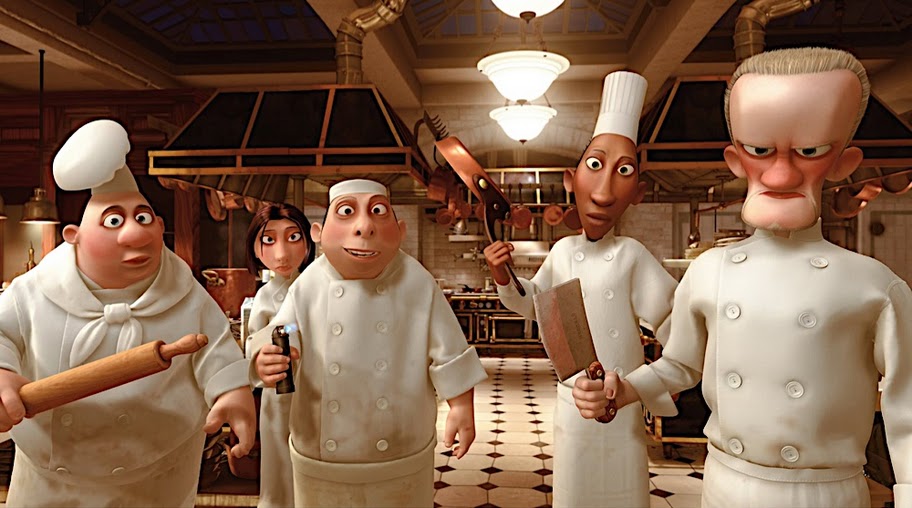
Now, take a look at these chefs from the children’s movie “Ratatouille.” Do you notice any similarity in the pictures?

remy3

The photo above is actually missing the two male costar chefs of the movie: the rat, Remy, and his BFF, Linguini. Here they are.

remy-and-linguini-form-a-friendship_jpg

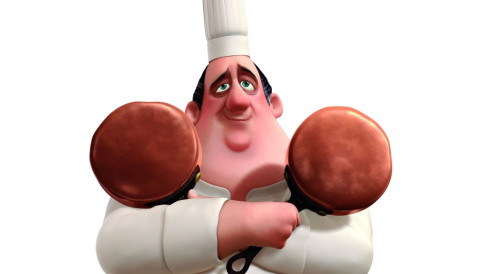
Oh, wait. There’s another male chef featured prominently in this children’s movie, Remy’s idol, Auguste Gusteau.

Auguste_Gusteau

The Daily Beast comments on Time’s sexism:

If aliens landed on our planet and picked up a copy of Time magazine, they would think that men do all the cooking in the world.


Here’s the thing: children are kind of like aliens. They’ve just landed on earth, and this is the world grown-ups show them? A fantasy world, created with children in mind, no less, where females go missing. “Look, honey, you can grow up to be invisible! That’s right, daughter, it’s more likely that a talking rat can become a world class chef than a female human child.”

You think I’m exaggerating the lesson kids are learning here? See that one female chef in the second picture, looking sad in the background? Her name is Colette, and she actually has a monologue in the movie where she bemoans the sexism of French kitchens. Parents are supposed to hear that speech, smile, and think: “You see, there’s a feminist in the movie! Isn’t that great?”

I call Colette’s character the Minority Feisty, and there are clones of her in most children’s movies made today. She is a “strong female character,” and there can be more than one in a film, but she’s always in the minority compared to male characters. Her role is usually to help the male on his quest. Like a First Lady, she cheers him on and gets to give him a kiss. Still, when parents see the Minority Feisty, they’re grateful and somehow miss that instead of teaching a 4 year old all about sexism, it would be much cooler, and more effective, to show kids females actually doing stuff– having adventures, taking risks, solving problems, and being heroic. Like, for example, instead of Colette’s 2 minute talk, why not make a movie starring a female chef and her female rat BFF with a female mentor, cooking in a room of females? Or at least, a room half full of females? Because, believe it or not, girls are one half of the kid population, but if you were an alien and you saw the G movies on earth– whether they featured humans, animals, toys, fish, robots, cars– you would think girls were a tiny minority on this planet.

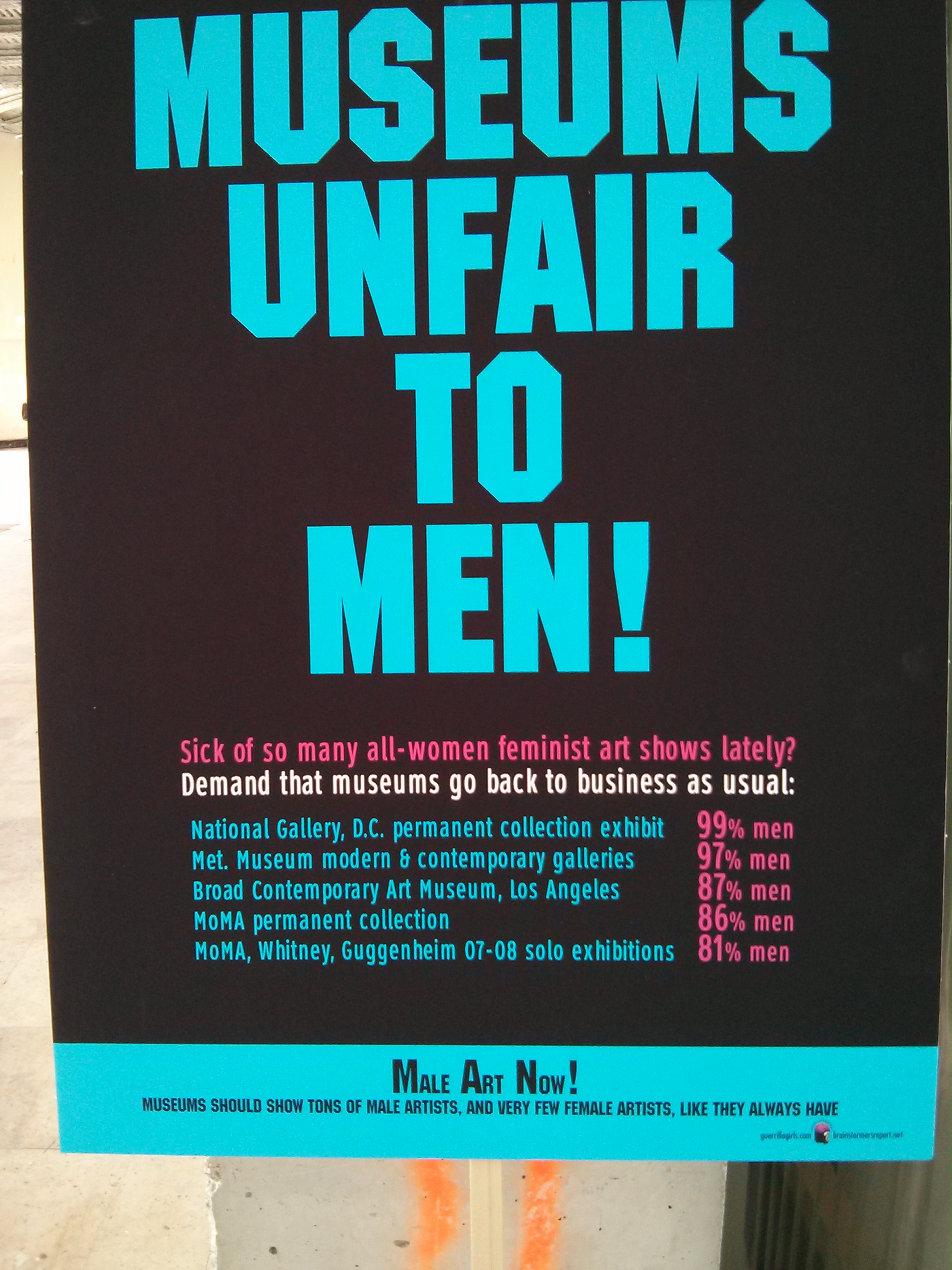
Another thing drives me absolutely crazy about this cooking sexism. In kidworld, rumor has it that cooking is a girlie thing. “Girl” toys and dolls involve cooking, while “boy” toys and dolls– whoops, I mean action figures—  involve fighting and stuff. So how come everything shifts and cooking becomes a guy thing? Seems like if cooking earns money and acclaim, then abracadabra, it’s for the opposite gender. The same is true for all kinds of gender stereotypes that dominate kidworld, for example, the belief that girls are artsy and verbal (the latter referring to reading and writing, not actually speaking.) But how come female writers get designated to chicklit? if girls are so artsy, why are the “great” artists are mostly men? Check out this image from the Guerrilla Girls.

museumsunfairtomen

The truth about this stereotype is that we prefer our girl children quiet, with a nose in a book, coloring, or doing something “girlie” like that. While, you know, boys will be boys, loud and misbehaving, with all their “boy energy.”

Gender stereotypes of kidworld have nothing to do with innate ability and everything to do with social status. Sadly, we perpetuate those made up differences in movies made for kids and brainwash a new generation. Take a look at this video from the Geena Davis Institute on Gender and Media.

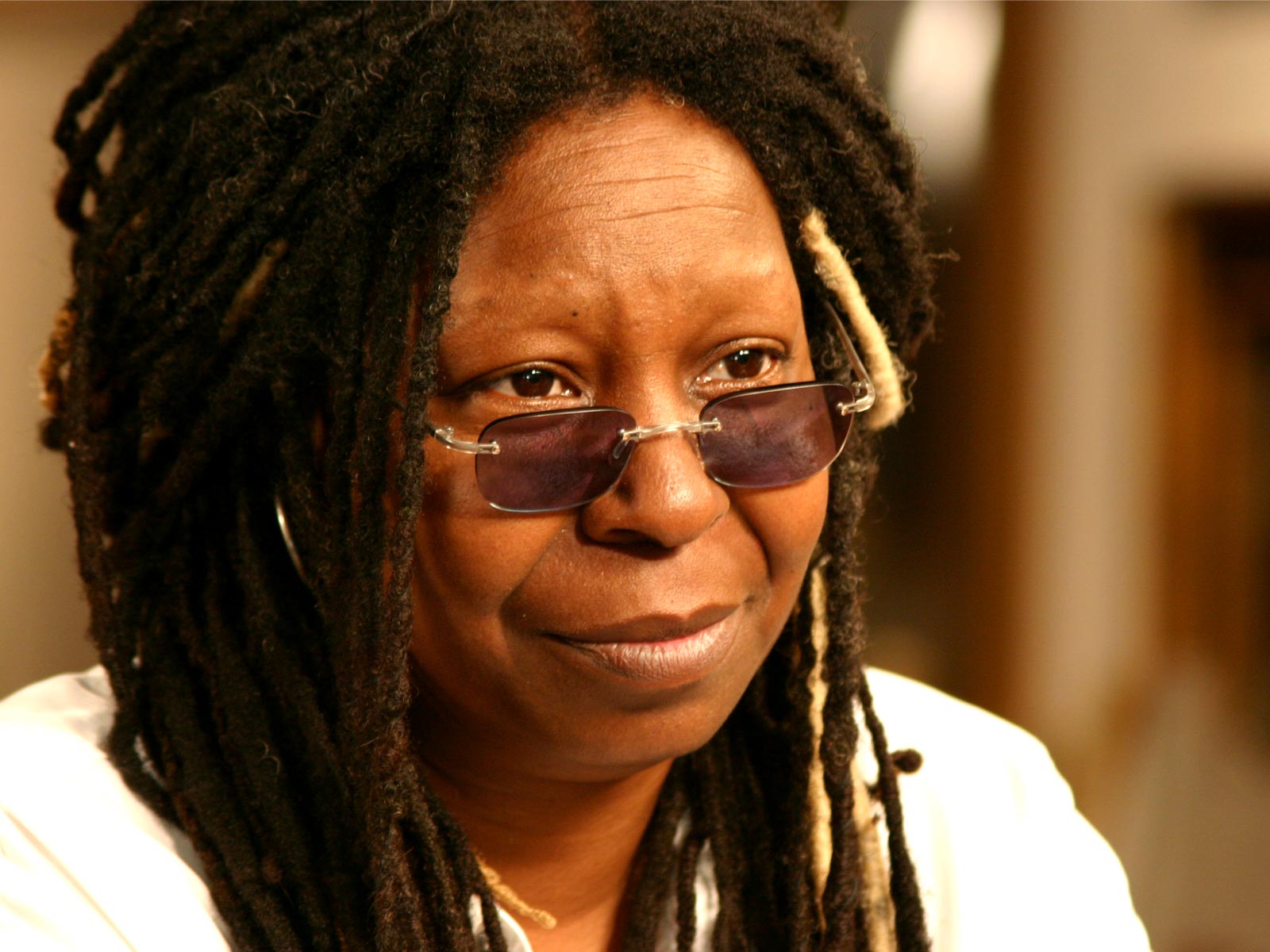
Whoopi Goldberg never been asked to host SNL

In The LA Times, Whoopi Goldberg is quoted on her response to the recent debate about the lack of African-American women on SNL:

“These folks are 15 years late on this question,” Goldberg told Showbiz411. “‘Saturday Night Live’ has looked like this for 15, 16 years. I don’t understand. Why is everyone up in arms? Didn’t anybody see it before? Clearly not.”

whoopi

The story goes on to report that Goldberg has never been asked to host SNL.

What?

I had to read that sentence again. Here it is:

The president of Goldberg’s production company said the Oscar-winning actress and comic had never been asked to host “SNL.”

Not only is Goldberg a comedian, she has been nominated for 13 Emmy awards. She is one of the few entertainers who has won an Emmy, Grammy, Oscar, and Tony Award.

Recently, Kenan Thompson, one of the show’s African-American male actors, complaining he was tired of dressing as females for skits, lamented the slim pickings out there for funny black women: “It’s just a tough part of the business. Like in auditions, they just never find ones that are ready.”

Who could possibly think veteran Whoopi Goldberg isn’t ready to host SNL?

Or do you think, perhaps, the reason we haven’t seen Goldberg host the show has nothing to do with her talent and everything to do with her body? Not only is she female and black, Goldberg doesn’t look like Kerry Washington.

2013 Vanity Fair Oscar Party at Sunset Tower - Arrivals

Washington, with her skinny physique, big eyes, and high cheekbones, in spite of her skin color, manages to tick off our current ideals of what a “beautiful” woman is. That, my friends, is why SNL let her host the show, because she is “beautiful” along with being talented. Let me add here that I love Kerry Washington. I’m a fan of “Scandal.” I’m psyched Washington busted a barrier. But the reason Whoopi Goldberg didn’t do the same “15 or 16 years ago” is because she doesn’t look like a Vogue model, a magazine, by the way, which has had a number of African-Americans on its covers that I could count on my own two hands.

Now, take a second to imagine if the success and exposure of white, male comics was determined by how “attractive” they are. It’s ridiculous to even think about.

People wonder how smart women get so obsessed with their appearance and why the pursuit of female “beauty” is an ever-growing multibillion dollar industry. Are women vain, crazy, superficial? Sadly, it’s more like they’re practical, recognizing how the world opens or slams doors based on how well they taper to a cookie cutter image of how women should look.

One of my favorite quotes about the power of media over little kids comes from Whoopi Goldberg:

“Well, when I was nine years old Star Trek came on. I looked at it and I went screaming through the house, ‘Come here, mum, everybody, come quick, come quick, there’s a black lady on television and she ain’t no maid!’ I knew right then and there I could be anything I wanted to be.”

Hopefully, children today see Whoopi in the media and believe in their own potential. Of course, It would help if more of the guys in charge would put her on the stage, front and center. It would be even better if the guys weren’t the ones in charge of where she gets to stand.


‘I’m not a pilot, I’m a pilot’s wife,’ says 3 yr old girl

Yesterday, a teacher at my daughter’s preschool told me that she saw two boys and a girl spinning the knobs of a play oven. Boy #1 says: “I’m a pilot! I’m flying a plane.’ Boy #2 says: “Me too!” The girl is quiet, so the teacher says to her: “What about you, are you a pilot?” The 3 year old girl replies: “I can’t be a pilot. I’m a pilot’s wife.”

So what do you think has happened in this little girl’s short life to make her believe it’s more likely that she would be a pilot’s wife than a pilot?

Could it be that in her world, those are the gender roles she sees? While books, movies, and TV shows for children are full of images of boys riding magical creatures into the sky– from “ET” to “How to Train Your Dragon” to Harry Potter — girls are stuck in the passenger seat if they get to soar at all. Here are three images repeated endlessly in the media.

ET

How-to-train-your-dragon

book-cover

I’m always on the look out for images in children’s media of girls flying, and they are few and far between. If I seek them out, I can find them, but these pictures rarely cross my children’s path, not in movies, or posters for those movies, or on most of the book covers they come across when we’re shopping at a local store. Here’s a picture from The Witch Who Was Afraid of Witches that I photographed a while ago, because it’s so rare.

alongfortheride

Today, on Facebook feed I saw that Toward the Stars is celebrating Female Flying Daredevils week, posting “We wave enthusiastically to all our girls and boys that aspire to travel above the clouds.”

Toward the Stars recommends You Can’t Do That, Amelia, Yankee Doodle Gals: Women Pilots of World War II, Fly High, the Story of Bessie Coleman, Zephyr Takes Flight, and Violet the Pilot.

amelia

Zephyr-Takes-Flight1

violet

We also have Angela’s Airplane which my 4 year old daughter loves.

angelas-airplane-n4626_xl

You may not have seen these books around. They may not have been made into major motion pictures for kids or toys or LEGO sets, but, please click on the links. Stock your libraries. Read these books to your kids, and that includes your sons. All children need to see far more female daredevils.

Keep watching Toward the Stars all week for more recommendations of fearless females flying the skies.

Update: So right after I post this, I see on Facebook info about the documentary:”We Served Too: The Story of Women Air Force Pilots of World War II.” You’ve got to watch this trailer.

These women flew over 60 million miles within a 2 year period…However, after a nasty and aggressive campaign by male pilots who wanted the WASPs jobs, they were the only wartime unit that was denied military status by congress…For many years the WASPs kept their achievements quiet. Their service in World War II would only be known by a few. They are not mentioned in our history books, nor is their story taught in schools.Their accomplishments of being the first women to fly in the military would even be forgotten.

One pilot says, “Such a shame that when we disbanded, they took all of our records and they sealed them, and they were stamped either classified or secret and filed away in the government archives.”

wasp3

Sealed records! I am so mad about this. Again, women’s stories are repressed and hidden, affecting a new generation of kids. I haven’t seen the film yet, so don’t know if it’s good for young kids. Wouldn’t it be great to make a children’s version? A book to go along with it? A computer game? App? A LEGO set? What do you think the chances are we’ll see any of that? They’re low, because in 2013, we still live in a world where women’s stories go missing.


Art creates reality: Imagining gender equality in the fantasy world

Some good quotes here. Let me know what you think

Bono on Jay-Z in November’s Vanity Fair:

In music, we love the idea of the screwed-up, shooting-up. fucked-up artist. The one bleeding in the garret having cut his own ear off. Jay-Z is a new kind of 21st-century artist where the canvas is not just the 12 notes, the wicked beats, and a rhyming dictionary in his head. It’s commerce, it’s politics, the fabric of the real as well as the imagined life.


Stephen Mitchell in Can Love Last, the Fate of Romance Over Time

It is the hallmark of the shift in basic psychoanalytic sensibility that the prototype of mental health for many contemporary psychoanalyitc authors is not the scientist but the artist. A continual objective take on reality is regarded as neither possible nor valuable in contrast to the ability to develop and move in and out of different perspectives of reality.


New York Times, October:

Public narratives about a career make a difference. The most common career aspiration named on Girls Who Code applications is forensic science. Like Allen, few if any of the girls have ever met anyone in that field, but they’ve all watched “CSI,” “Bones” or some other show in which a cool chick with great hair in a lab coat gets to use her scientific know-how to solve a crime. This so-called “CSI” effect has been credited for helping turn forensic science from a primarily male occupation into a primarily female one.

Jezebel reacting to New York Times piece:

The New York Times today would like to suggest that storytelling is powerful, that, in the whole art/life dynamic, it’s life that imitates art, not the other way around, at least not when it comes to kids imagining viable career paths for themselves.


Whoopi Goldberg:

Well, when I was nine years old Star Trek came on. I looked at it and I went screaming through the house, ‘Come here, mum, everybody, come quick, come quick, there’s a black lady on television and she ain’t no maid!’ I knew right then and there I could be anything I wanted to be.


In the fantasy world, anything is possible, so why do little kids see so few female heroes and female protagonists on TV and in the movies? While boy “buddy stories” are everywhere you look, why is it so hard to see two females working together to save the world? Why are females, half of the kid population, presented as a minority in fantasy world? Why are TV shows, movies, and books about boys “for everyone” while shows and movies about girls “just for girls?” When we pass on stories to our kids, what are we teaching them about gender, about who they are right now and who they will become?

One more quote for you from neuroscientist, Lise Eliot:

“Babies are born ready to absorb the sounds, grammar, and intonation of any language, but then the brain wires it up only to perceive and produce a specific language. After puberty, its possible to learn another language but far more difficult. I think of gender differences similarly. The ones that exist become amplified by the two different cultures that boys and girls are immersed in from birth. This contributes to the way their emotional and cognitive circuits get wired.”

Eliot believes: “Simply put, your brain is what you do with it.”So let’s all use our brains to imagine gender equality in the fantasy world, take actions to manifest that vision, and see what happens next. I bet it’ll be amazing.