She-Hulk author, Marta Acosta, talks to Reel Girl about her book

After the posts around the internet including Reel Girl criticized the new She-Hulk Diaries for appearing like superhero chicklit, author, Marta Acosta, contacted me.

she-hulk-cover-3_4_r536_c534

Acosta wrote:

I was a little flummoxed at the initial reaction to the She-Hulk announcement since I thought people would look me up and see that I’m primarily a satirist and I’ve always addressed issues of gender, race/ethnicity, and class. In fact, I use humor because I can go beyond preaching to the choir and perhaps make people think differently about those issues

Of course, when you’re a Mexican-American, people expect you to write magical realism. When you’re a woman and write a social satire, they assume it’s a romance novel and that you’re anti-feminist. Romance is its own genre with very strict conventions…and I’ve learned that romance writers and fans are generally pretty hardcore feminists. (You should check out the hilarious Smart Bitches website.)

Christine, the author of Rogue Touch, is the penname for a literary fiction writer whose books address gender issues.

Anyway, I like writing comedy and I loved writing She-Hulk, which really focuses on Jennifer Walters trying to have a more normal life, despite the insane time demands of her job as an attorney. The real challenge was finding humor in a character who is described as “painfully shy,” and I hope I succeeded.

ciao!

Intrigued, I asked Acosta some questions. Here’s her take on She-Hulk Diaries.

Why did you write She-Hulk Diaries? Are you a fan of comic books?

My fantastic agent, Peter Steinberg, came up with the idea, and I said, yes, please, I’d love to write it. I liked comic books as a child, but I certainly couldn’t afford them. My older cousin would lend them to us. I’ve always been a fan of speculative stories and tend to prefer darker stories with an element of humor, like Buffy, The X-Files, Battlestar Galactica, Dark City, eXistenz, Firefly, BBC’s Being Human, Misfits

What is She-Hulk Diaries about?

I can’t really reveal too much now, but the story follows Jennifer Walters, She-Hulk’s human identity, as she finds a new job at a high-powered law firm and is assigned an important case with a mysterious scientist client. Jennifer is as shy as She-Hulk is brazen, and she’s determined to have a personal life besides her work and superhero responsibilities, and that means more social and cultural activities, making more friends and, yes, having a healthy romantic relationship. Between her case load, new superhuman activity, and a terrifying trend in NYC, there aren’t enough hours in the day.

Would you describe it as chick-lit, and what do you think of that term? Who do you hope the book will reach?

I hope my book will reach people who will appreciate my comedy. I use humor to entertain, and I also use it to offer different perspectives on issues of gender, race/ethnicity, and social class. When I was writing political satire, I used humor to get across arguments that might otherwise be rejected by those not already in the choir.

I don’t care one way or the other about the term chick lit. It was used as a way to market humor written by women. It was twisted into an insult, which isn’t uncommon for anything that is female-dominated. I like funny women so I’m absolutely going to pick up funny books written by women.

I don’t think women have to join in on the bashing to prove we’re serious thinkers. Men watch and read all kinds of vacuous crap and no one ever criticizes them and magazines don’t lament that men’s reading is making them brain dead.

Were you surprised by the initial negative reaction to Hyperion’s press release about She-Hulk Diaries?

I was! I’ve been writing positive female characters in a succession of novels, and I’ve frequently written about gender issues so I thought people would at least find out who I am before assuming that my story is about a weak woman obsessed with finding a man. My last novel, Dark Companion, nominated as Best Fiction for Young Adults by the American Library Association, has a feminist theme about exploitation. My Casa Dracula series features a wacky, but bright, brave, and goodhearted Latina who writes unsellable political horror stories.

One young blogger who bashed the She-Hulk novel referred to me as “an authoress.”  I love that! Lately I’ve been calling myself a poetess, because I have poetry in my books, but I’m going to switch to authoress.

The Hollywood Reporter said the book was based on 50 Shades of Gray. I admire the madcap ease with which they made that crap up. People assume it’s based on The Carrie Diaries. I’d guess it’s closer to Samuel Pepsys Diaries…except without the Black Death, although I’d include that if I could have found a place for it. (Favorite book on the Black Death, probably Connie Willis’s Doomsday Book.

The issue for me with the cover of She-Hulk Diaries cover is that we are so desperate for female superheroes– kids and grown-ups.  We want them! We’ve had 5 Spiderman movies, 7 Batman movies, and we’re still waiting for Wonder Woman to hit the big screen. My three year old daughter dressed up as Batgirl for Halloween and everyone called her Batman. She didn’t understand, because she doesn’t know how invisible Batgirl is yet. I dread the day she finds out not only is Batgirl “not cool” but she hardly exists. She-Hulk Diaries is not for kids, but there is a “trickle down sexism” effect when characters adults love become movies The LEGO sets, video games, clothing, and apps marketed to kids all are based on these narratives and when girls go missing that sexist representation effects how all kids learn about gender, who is important and who gets to do the fun stuff. I know we are talking about a cover here, but when our images of strong females are so lacking, for me, it’s a bummer to see lipstick. Do you see She-Hulk Diaries as challenging or perpetuating this kind of sexism all over the media? Do you see a lack of powerful and heroic female protagonists in media for kids?

Here’s the deal with covers: they have to grab attention as quickly as possible as both an actual book and as a tiny image for online sales. I love the cover because it instantly says “funny book about a different kind of woman.” Green and purple are Shulky’s iconic colors, and they could have done a green briefcase because much of the book is about her legal work. Or they could have done an image of a purple gun because she goes to the shooting range. Or…you see where I’m going. Conveying humor in cover art is really difficult, and you just can’t overthink cover art.

I didn’t write She-Hulk as a polemic on sexism (though that would have been fun too), but Jennifer/Shulky is always the smartest person in the room, the bravest, and she has the kindest heart. Although she’s personally shy, she doesn’t hesitate to defend those who need an advocate, and she speaks up for herself, too.

As for the lack of powerful and heroic female protagonists, Hollywood, particularly film, is a boys’ club, and those guys assume that both boys and girls are interested in boy stuff, but only girls will be interested in girl stuff. Case in point: J.K. Rowlings’ publisher asked her to use her initials so that boys wouldn’t be scared off the Harry Potter books.

I’m stunned by movies and shows that don’t even bother to include female characters who do more than act as decoration. I’m continually disappointed by the crap that’s marketed to women. Of course, most of it is written, directed, and produced by men who seem to be basing their knowledge of women on characters in other movies written, directed, and produced by men. I don’t know about children’s programming, but I watch lots of British shows because I like the strong, complex women characters and diversity.

Most men are never going to get it, so women should just make our own movies. There are certainly enough women with the money and talent to produce female-positive shows in this country.

I think men would “get it” if they were not trained early, from birth, to see girls as “other,” if female characters in shows marketed to kids were not condemned to the Pink Ghetto where they do “girl stuff.” Look at Reel Girl’s Gallery of Girls Gone Missing From Children’s Movies in 2013. When female characters are marginalized in almost every movie, what are little kids learning about gender? Are your sons growing up to be a new generation of men who are never going to “get it?” All kids would benefit from seeing strong, cool female protagonists, and as we have seen, there is a huge market for it.

The whole Hollywood myth “girls will watch boys characters but boys won’t watch girls” is because (1) that is all that is offered (2) female characters are relegated to the Pink Ghetto; Girls are obsessed with princesses not because they have a pink gene but because that is practically the only time females get to be front and center (3) Parents are just beginning to notice and challenge their own sexism and read boys stories about girls, take boys to movies about girls, play with toys about girls, but this is hard to do when females are relegated to the Pink Ghetto. It’s why we desperately need more female characters and why “Hunger Games” was so successful. Boys loved the story and girls were psyched to read about a strong, female protagonist.

That said, She-Hulk is not a book for kids. After hearing from Acosta what the book is about and why she wrote it, I’m excited to read it. I’ll let you know what I think.

Find out more about Marta Acosta and her books at www.martaacosta.com


What’s the difference between Gloria Feldt’s ‘No Excuses,’ and Sandberg’s ‘Lean In?’

A couple years ago, I read No Excuses: Nine Ways Women Can Change How We Think About Power by Gloria Feldt, the former CEO of Planned Parenthood. While reading the recent criticism all over the internet of Sheryl Sandberg’s new book, Lean In, I thought of Feldt’s similar book. I couldn’t remember a feminist backlash against that author. Was I remembering Feldt’s thesis incorrectly?

9781580053884

Here is how No Excuses is described on Amazon:

In No Excuses, feminist icon Gloria Feldt argues that the most confounding problem facing women today isn’t that doors aren’t open, but that not enough women are walking through them.


Whoaa– Feldt wrote about that? Did feminists freak out?


From the boardroom to the bedroom, public office to personal relationships, she asserts that nobody is keeping women from parity — except themselves.


OK, that’s not a true statement about the world, obviously, and having read the book, from what I remember, that is not what Feldt writes either. In the book, Feldt teaches women how to think about power in a different way in order to embrace it. For example, she talks about how women, having been on the bad end of the power spectrum for so long, often identify power negatively, as “power over,” as dominance. Feldt encourages women to, instead, look at power as “power to,” as competence.

The synopsis goes on:


Through interviews, historical perspective, and anecdotes, examines why barriers to gender equality still exist in American society and discusses how to break them down through organized efforts using movement-building principles.


Ah…this sentence seems seems more ambiguous than the last one. Barriers still exist. The book discusses how to break them down with organized efforts and movement building.

Feldt employs a no-nonsense, tough-love point of view to expose the internal and external roadblocks holding women back, but she doesn’t place blame; rather, she provides inspiration, hope, and courage — as well as concrete “power tools” to aid women in securing equality and justice for themselves — articulated with personal warmth and humor. No Excuses is a timely and invaluable book that helps women equalize gender power in politics, work, and love.


So does this thesis sound familar to you? Can you imagine if Sandberg called her book No Excuses? She’d be tarred and feathered, which she basically has been, in our contemporary way. Sandberg was quoted out of context in the New York Times and Washington Post, not to mention all over the internet, to make her seem like a selfish bitch.

The Washington Post piece is headlined:

Sheryl Sandberg’s ‘Lean In’ campaign holds little for most women

Here’s the lede:

”She had it all — a husband, children, a beautiful home, a seat on the board of a billion-dollar company, a nine-figure net worth of her own. But there was one thing Sheryl Sandberg didn’t have. “I always thought I would run a social movement,” Sandberg said in the PBS/AOL documentary series “Makers.”

But Sandberg wasn’t actually saying she wrote a book because she wants a new toy. Her quote is from a documentary, “Makers,” when she was being interviewed about her career. Sandberg explained that she always thought that she would work at a non-profit and not in the private sector. Here’s the full quote:

I always thought I would run a social movement, which meant basically work at a nonprofit. I never thought I’d work in the corporate sector.

The New York Times printed a correction. The Washington Post has not.

As Gloria Steinem wrote on her Facebook page in her defense of Sandberg: “Only in women is success viewed as a barrier to giving advice.”

In the Guardian today, Jill Filipovic addresses the backlash:

Sandberg did what feminists are always asking powerful women in business and politics to do – stand up for gender equality – which is why it’s so disappointing to see many in the feminist camp essentially telling her to shut up and sit down.

Feldt started out as a teen mom from rural Texas. Most of us know Sandberg as a rich exec at Facebook. So is class bias a good reason to determine that Sandberg has nothing to say to help America’s women?  On the contrary. Didn’t anyone just watch “Makers” for goodness sake? History has shown that when feminism can’t overcome its own prejudices, the move forward is much slower than it needs to be.


My daughters get inspired by Harry Potter

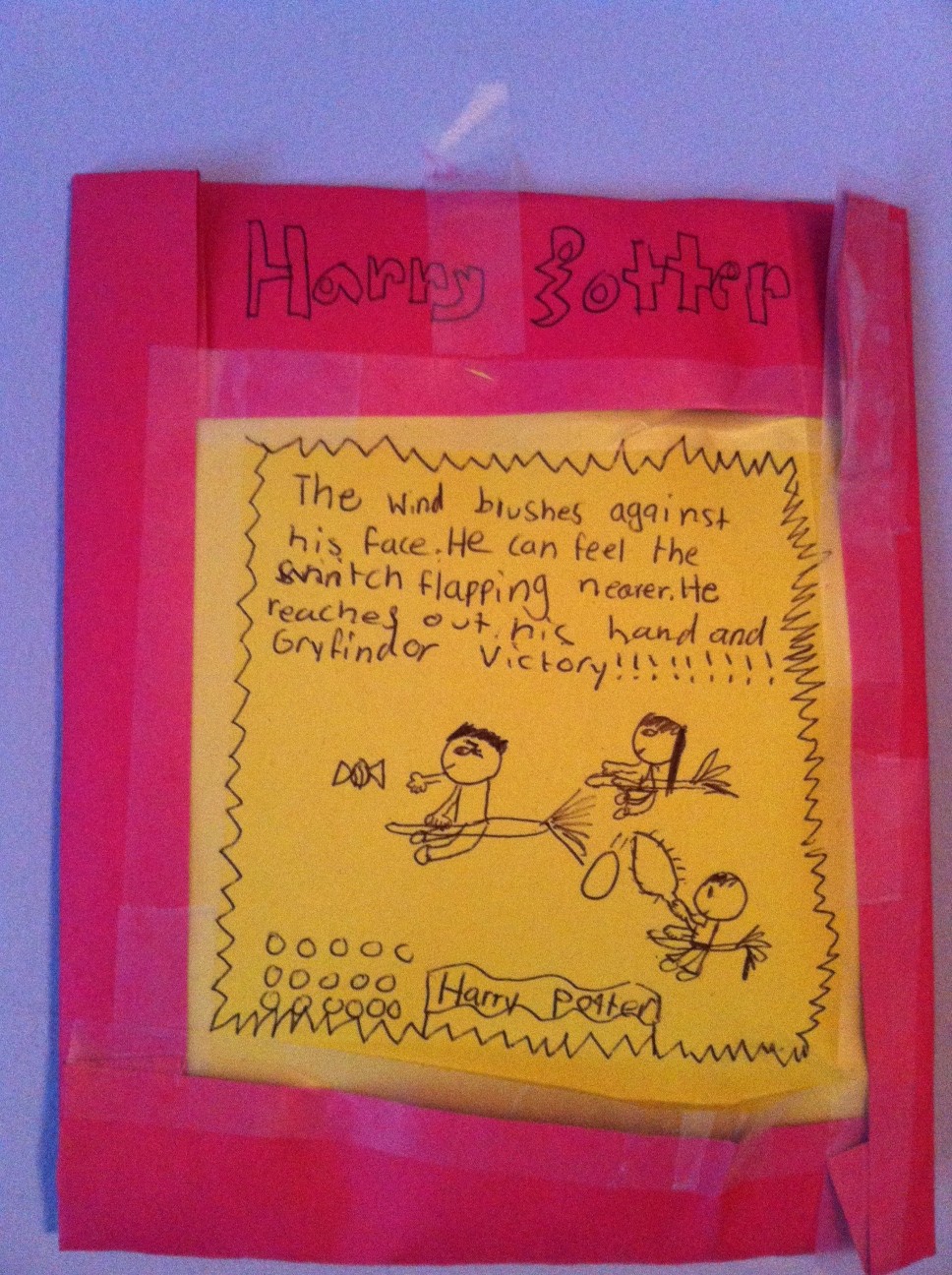
When my nine year old daughter was reading the Harry Potter series for the third time this year, she drew this picture: harrylucy

This scene didn’t happen in the book but she was inspired by the book.

Lucy’s drawing shows a typical gender matrix you see all over children’s media: 2 boys, 1 girl; boy in front, girl behind; text supports male competition and victory.

Last year, when she was asked to write a story during school, Lucy used a male protagonist. When I asked her why she chose a male, she said, “Because everybody did.”

Can you imagine if in a class of third graders, every kid wrote about about female protagonists? Do you think the teacher would notice?

I just blogged about how my six year old daughter has started reading Harry Potter. Last night, we took turns reading to each other. We are at the part in the book where Harry is with Hagrid, shopping for his first broom in Daigon Alley. Alice, like Lucy, was inspired to create her own scene.

witchphoto

She made up this character, a witch and her cat soaring through the sky on a broom surrounded by many crescent moons. I was pretty psyched about this witch, but then again, we’re only on Book 1. Do you think it’s possible to get through this wonderful series, not to mention her childhood, with her still drawing magical, powerful females, and putting them front and center in her stories?


Gloria Steinem gives thumbs up to Sheryl Sandberg’s ‘Lean In’

Today, in response to the massive criticism from feminists and others that Facebook exec Sheryl Sandberg is too privileged to give career advice to women, Gloria Steinem posts on her Facebook page:

Having read “Lean In” by Sheryl Sandberg, I can testify that it addresses internalized oppression, opposes the external barriers that create it, and urges women to support each other to fight both. It argues not only for women’s equality in the workplace, but men’s equality in home-care and child-rearing. Even its critics are making a deep if inadvertent point: Only in women is success viewed as a barrier to giving advice.


gs

YAY Gloria. I fucking love Gloria Steinem.

I haven’t read “Lean In” yet, and I don’t know much about Sandberg, but the vitriol directed at her has rubbed me the wrong way. Maybe Sandberg’s advice won’t apply to you, won’t help you, and won’t affect you, but maybe, it will. Here’s a woman who is writing a book telling you how she got to the top, what it looks like up there, and what her advice to you would be. Not many women get that vantage point, not to mention write about it. Maybe the negative reaction to Sandberg’s book is part of the reason why. This book is based on her experience. Maybe she sounds a little controlling in her directions about how you should apply it to your life. But you’re a big girl. Use your discretion.

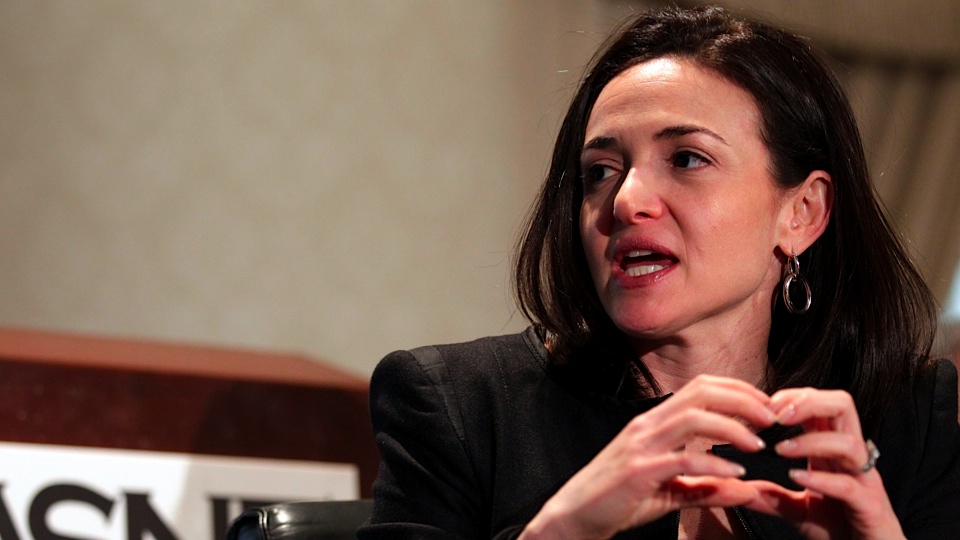
sandbergl

If your fear is that, as I’ve read, that companies, elected officials, whomever, will quote Sandberg to prove the problem here is all women’s fault, and not institutionalized sexism, they might. People often misuse information and take quotes out of context to further their own purpose. Do you think any writer would be able to write anything if she had to analyze all of the ways that someone might manipulate and misuse her information? If Sheryl Sandberg had to do that, she’d never write a book. No one would.

I will be buying “Lean In” and after I read it, I’ll let you know what I think. I hope you do the same.

Update:

The New York Times and The Washington Post quoted Sheryl Sandberg out of context, making her look like a spoiled brat. The New York Times printed a correction. The Washington Post has not.

The quote, printed in both publications and then all around the web, has Sandberg saying: “I always thought I would run a social movement.”

Obnoxious, right? The woman who has everything now wants a social movement as her new toy. How pretentious and demeaning of the little people can you get? What a bitch.

The Washington Post piece is headlined:

Sheryl Sandberg’s ‘Lean In’ campaign holds little for most women

Here’s the lede:

”She had it all — a husband, children, a beautiful home, a seat on the board of a billion-dollar company, a nine-figure net worth of her own. But there was one thing Sheryl Sandberg didn’t have. “I always thought I would run a social movement,” Sandberg said in the PBS/AOL documentary series “Makers.”


While checking the links for the blog above, I noticed a correction had been added to the two (Jodi Kanor’s and Maureen Dowd’s) NYT pieces. Here it is.

This article has been revised to reflect the following correction:

Correction: February 26, 2013

An article on Friday about efforts by Sheryl Sandberg, the chief operating officer of Facebook, to start a national discussion and movement to help women excel in the workplace quoted incompletely from an interview she gave for “Makers,” a new documentary on feminist history. In a video excerpt, which accompanied the article online, she said: “I always thought I would run a social movement, which meant basically work at a nonprofit. I never thought I’d work in the corporate sector.” She did not merely say, “I always thought I would run a social movement.” Maureen Dowd’s column on Sunday, about Ms. Sandberg’s plans, repeated the incomplete quotation from the news article. The article also referred imprecisely to the location of a book party planned for Ms. Sandberg. While Mayor Michael R. Bloomberg will host the party, he will do so at the offices of the Bloomberg Foundation, on East 78th Street — not at his private residence a block away.

Ah, Sandberg wasn’t saying she wants a new toy. When she was being interviewed about her career, she explained that she always thought that she would work at a non-profit and not in the private sector.

Still, apparently, the Washington Post feels no need to make a correction to the article.

It’s ironic that feminists and social activists are so concerned that quotes from Sandberg‘s book will be misused and pulled out of context, yet that’s just what they’re doing all over the internet to Sandberg.


Reel Girl Recs: First Chapter Books

First grade is amazing. My six year old daughter, Alice, began this school year slowly sounding out words in picture books. Now, she saves those to read aloud to her enraptured little sister and then reads Harry Potter to herself.

alice

That said, after spending her entire life in picture books, Alice was tentative to make the transition to chapter books. It wasn’t about skill but familiarity. Here’s the good and the bad history in books of how she did it:

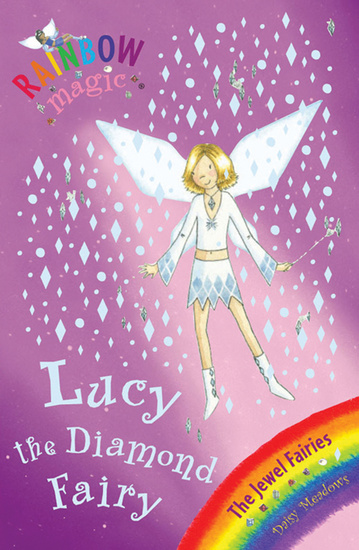
Rainbow Magic Series  ***S***

This was the first chapter book my daughter picked up. I thought I purged the house after my older one grew out of this series, but apparently I did not.

diamond

There are so many damn books in this series that I missed about 10. How did my older daughter acquire so many? All I can say is it happened before I knew better. Generally, I don’t forbid books. I may roll my eyes at a selection. I did refuse to let my eight year old read Twilight but mostly, I “highly encourage” books that I think would be great for them, and they would love and try to ignore the rest. So what did my six year old daughter do when I told her for one too many times she was ready to start chapter books? She picked up Lucy, the Diamond Fairy and brought it to be, beaming, knowing I would cringe. I caved. She read.

To learn more about how and why I hate this series and a few things that are OK about it, read here.

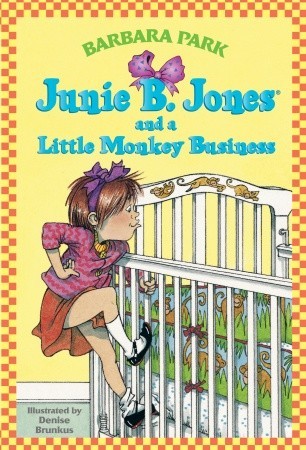
Junie B. Jones  ***HH***

I’m not a fan of Junie B. either. She is super annoying and talks baby talk. I hate baby talk.

junieb

But the print is big, the stories are simple, and my daughter felt accomplished finishing the book. Parts of it are funny. Alice liked it okay. And, I’d rather her read about a brat than a navel baring Fairy who goes on about her outfit for pages. My daughter got through three of this series and then she went on to…

Judy Moody ***HH***

Judy Moody has a similar lay out of print size, book length, and illustration as Junie B.

judy

I like Judy more than Junie. Thankfully, so does my daughter. I was kind of bored by these books, I like more drama. Alice also read a couple and then moved on to…

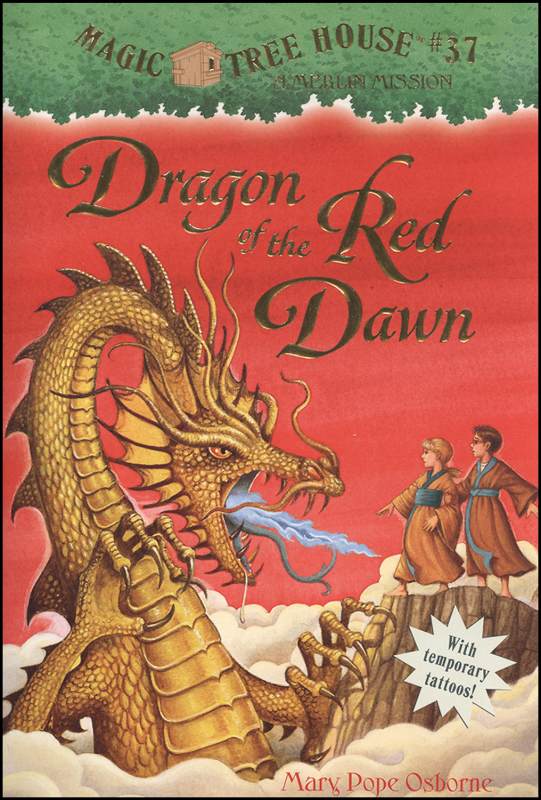
Magic Tree House ***HH***

If your new reader likes Magic Tree House, you’re in luck. There are so many of these books, and the kids always travel to a different place and time.

treehouse

There is a lot of history woven into the stories, and of course, magic. I like these books a lot, though being me, it does bum me out that it is always “Jack and Annie” and never “Annie and Jack.” I mean, we’re talking hundreds of stories, can’t the girl come first at least half the time? When my older daughter got into this series, I was overjoyed and blogged about it here.

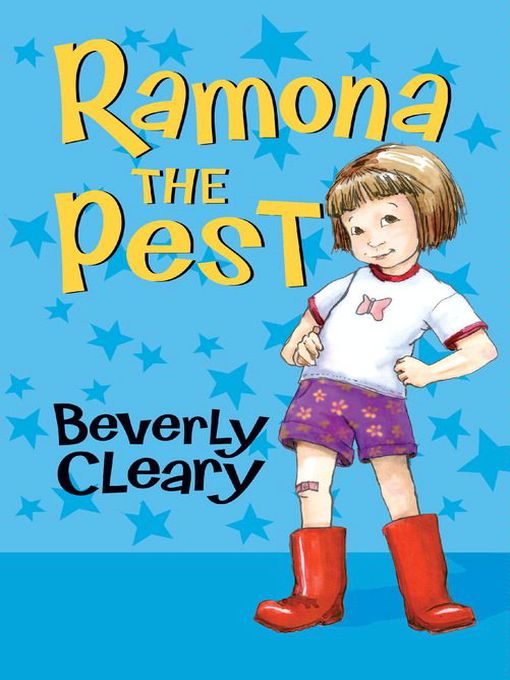
Ramona the Pest ***HHH***

I love Ramona.

ramona

The writing is great and the characters are awesome. This series is a jump from the previous 4: smaller print, longer, and more complex, IMO.

I think the only think I don’t like about this series is that Ramona thinks her brown hair and brown eyes are boring. If this was one book of many that had that theme, I wouldn’t have an issue, but dark haired girls don’t fare well in children’s media, from Rapunzel who literally loses her magic and power when her hair turns brown, to Ramona. Alice has two blue-eyed, blonde sisters, so its even more of a bummer to read about how Ramona is obsessed with other peoples hair. And no, it’s not something my daughter relates to, because she’s never felt like there is anything less good about brown hair. So that’s my tirade about hair. Otherwise, great series, read what I wrote about it here.

The Magic Half **HHH***

After Ramona, my daughter made the jump to The Magic Half.

magic-half-annie-barrows

This is a full on next level book and she plowed through it. I did not read it, but here is the synopsis from Amazon:

Miri is the non-twin child in a family with two sets of them–older brothers and younger sisters. The family has just moved to an old farmhouse in a new town, where the only good thing seems to be Miri’s ten-sided attic bedroom. But when Miri gets sent to her room after accidentally bashing her big brother on the head with a shovel, she finds herself in the same room . . . only not quite.
Without meaning to, she has found a way to travel back in time to 1935 where she discovers Molly, a girl her own age very much in need of a loving family. A highly satisfying classic-in-the-making full of spine-tingling moments, this is a delightful time-travel novel for the whole family.
Based on the rec of Alice and Lucy, I rated it 3 Hs
And that brings us to…
Harry Potter, the Sorcerer’s Stone ***H***
YAY. If you want to know how I feel about the series, begin here. My daughter loves the book so far, especially the way Hagrid talks.
harry


Seth MacFarlane on a better day? Watch this hilarious “Family Guy” clip

After I posted about Seth MacFarlane’s offensive, misogynistic, and not funny hosting of the Oscars, some people asked me if I’d always hated him. The answer is no. His name was familiar, but I didn’t know who he was before the Oscars. Though a while ago  a commenter posted a clip on Reel Girl from what I now know to be MacFarlane’s “Family Guy.” The clip totally cracked me up. I don’t know if MacFarlane wrote it, but I love it, and totally relate to it as a writer. Clearly, the clip’s creator has subjects besides demeaning women in a series of cliches. I’m reposting it here. Writers, this is for you:

#SarahSilvermanHostOscars

I’m HUGE fan of Silverman. Not only is she a great performer, she’s a fantastic writer.

sarah_silverman-wreck_it_ralph-1

Here’s what I blogged about her memoir, Bedwetter, a couple summers ago:

Bedwetter by Sarah Silverman. Silverman, you probaly know, is a comedian; this book is hilarious but also poignant. She wet her bed until she was sixteen years old. One passage totally sticks in my head: Silverman is just back from sleepaway camp, a traumatizing experience for a bedwetter; she secretly wore diapers at night. When she gets off the camp bus, full of shame, her mom is frenetically taking pictures of her. Silverman has a strange feeling of getting attention yet being completely ignored. When I read this, I thought it was a great way to describe the experience many women have of being looked at but not being seen. I blogged about the book here.


I’ve been reading some great posts from around the web about how horrible Seth MacFarlane was last night. From the New Yorker:

Watching the Oscars last night meant sitting through a series of crudely sexist antics led by a scrubby, self-satisfied Seth MacFarlane. That would be tedious enough. But the evening’s misogyny involved a specific hostility to women in the workplace, which raises broader questions than whether the Academy can possibly get Tina Fey and Amy Poehler to host next year. It was unattractive and sour, and started with a number called “We Saw Your Boobs.”

“We Saw Your Boobs” was as a song-and-dance routine in which MacFarlane and some grinning guys named actresses in the audience and the movies in which their breasts were visible. That’s about it. What made it worse was that most of the movies mentioned, if not all (“Gia”), were pretty great—“Silkwood,” “Brokeback Mountain,” “Monster’s Ball,” “Monster,” “The Accused,” “Iris”—and not exactly teen-exploitation pictures. The women were not showing their bodies to amuse Seth MacFarlane but, rather, to do their job. Or did they just think they were doing serious work? You girls think you’re making art, the Academy, through MacFarlane, seemed to say, but all we—and the “we” was resolutely male—really see is that we got you to undress. The joke’s on you.


Vulture.com posts:

the relentless commentary about how women look reinforced, over and over, that women somehow don’t belong. They matter only insofar as they are beautiful or naked, or preferably both.

Please Tweet #SarahSilvermanHostOscars


Seth MacFarlane, you’re a loser

After Tina Fey and Amy Poehler rocked the Golden Globes last month, I hoped Hollywood producers would catch on: putting women in power positions means a high quality show with good ratings. But then, Seth MacFarlane. Last night’s Academy Awards featured the the most sexist, worst Oscars hosting I’ve ever seen.

GG

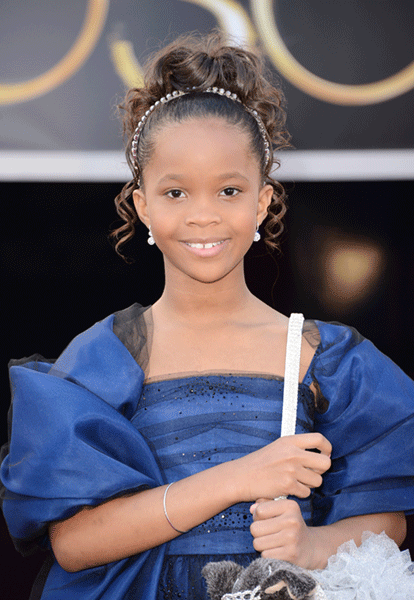
I get that MacFarlane tried to pre-empt this blog, and many like it, with his boring, stupid, Captain Kirk snore-fest-skit. But, Seth, your fake headlines last night don’t get close to describing what a pig you are. Best Actress nominee Quevenzhane Wallis is nine years old. She was so proud. That was the biggest moment of her life, and you called her George Clooney’s girlfriend? Why would you do that to a kid? How is she supposed to feel when you say that? Are you that insecure that you want to cut down a little girl?

quevenzhane-oscars11

Jessica Chastain had the rare opportunity to play a heroic, female protagonist and you trivialized her character, transforming her lifetime accomplishment into nagging, saying she possessed the innate female ability to never let anything go.

You sang a “boob song” that was more repetitive than my three year old, and you made jokes about domestic violence. That’s all I saw, but apparently, I missed some sexism.

Where were your jokes about men? Part of the reason your jokes were not funny is because women get demeaned and trivialized every day in this country, especially in Hollywood. All you did was jump on the bandwagon and push things a little further in the same, old, tired direction. Watching you tell your sexist jokes at a venue where in 85 years, only 4 women have been nominated for Best Director, was like watching someone point up and say, “The sky is blue,” for three and a half hours. Seth MacFarlane, you are such a bore.

Your performance did help me to explain the meaning of the term “bully pulpit” to some children. So, thanks for that, I guess.

Here’s to hoping Sarah Silverman hosts the Oscars in 2014.

sarah_silverman-wreck_it_ralph-1

Please Tweet #SarahSilvermanHostOscars


Star Wars, where are the women?

Love this post from Laura Hudson on Wired.

females


If you’ve never really noticed the absence of women in Star Wars (or movies at large), consider yourself living proof of how the limiting narratives of culture and media can warp our expectations, to the point where the presence of one woman in a cast of dozens of memorable male characters can seem like perfect equality.

Women accounted for a mere 33 percent of the roles in the top 100 Hollywood films in 2011, according to a study commissioned by the Center for the Study of Women in Television and Film. When it came to the leading characters, women were even more dramatically under-represented, comprising only 11 percent of identifiable protagonists.

It gets even worse when you look at all-ages entertainment. Women — who, by the way, make up half the human population — comprised only 28 percent of speaking roles in top-grossing family films last year. And when women did appear, they were far less likely to hold roles of power or influence: making up only 3 percent of executive portrayals, for example, compared to 25 percent in real life….

Criticisms about representations of gender (or race and other diversity) are often countered in fandom by sociological or scientific analyses attempting to explain why the inequality happens according to the internal logic of the fictional world. As though there is any real reason that anything happens in a story except that someone chose to write it that way.

What are kids learning about gender when they watch “Star Wars” again and again and again? All those fantastic creatures the creators of “Star Wars” came up with, but their creativity screeched to a stop when it came to imagining females.

Please read the whole, great post here:

In 85 yrs, 4 women nominated for Best Director

It’s Academy Awards week and the ballots are closed.  While we don’t know the winners yet, one thing we know for sure is that no women have again been nominated for best director.This is one of the only times of the year when the world is paying attention to the film business, not just movies.  The entire industry is on display this weekend and it is still extremely imbalanced.

This is the second year we have created a video to help make people think about the gender imbalance in Hollywood, especially in the area of directing.

Please share this far and wide.