Erica Jong on her new paperback, pornography, and princesses

Sugar In My Bowl, an anthology of women writing about sex, edited by Erica Jong, will be released in paperback on June 26.

Critics have called the collection a “fierce and refreshingly frank collection of personal essays, short fiction and cartoons celebrating female desire…A smart, scrumptiously sexy romp of a read.” (Read more reviews here.) My short story, “Light Me Up,” is included in the anthology along with essays and fiction by 28 other writers.

Erica Jong talks to Reel Girl about Sugar In My Bowl:

Why did you create this anthology?

I think women have more diverse responses to sexuality than is usually known. And I wanted the opportunity to show a full range of response.

How did you choose the writers?

Notice that the anthology is almost equally divided between well-known writers and writers who are published for the first time. It was wonderful to find writers, like you, who had not been published before and to pair them with well-known writers like Eve Ensler and Fay Weldon.

When the hardcover came out last summer, in a controversial essay for the New York Times, you wrote that after putting Sugar In My Bowl together, you wondered if younger women wanted to give up sex. You worried that the younger writers in the anthology seemed obsessed with marriage and monogamy. I admit I am obsessed with monogamy! In part because in so much fiction, the woman’s story just stops when she marries.

For women of my generation– I’m 43, Gen X– because of a lot of taboo busting by yours, being single and sleeping around was pretty safe and normal. At least if you lived in New York or San Francisco and carried condoms. It wasn’t radical to be promiscuous, it was expected. But picking just one guy to love and lust for, committing to him, having a baby with him– that is fucking terrifying. And not because it’s a novelty. I think that our generation, and those after us, see marriage more clearly for what it is: high-risk behavior.

We don’t need men to be our breadwinners or to provide social acceptance for us, so why do we still marry? Why do we, literally, put all our eggs in one basket? I think because we’re brave romantics.

Do you think that women can be obsessed with monogamy and sex? Does it have to be an either/ or situation?

I have also been concerned that the women’s story stops with marriage. In our time, the women’s story sometimes stops with divorce. People live much longer today and have many different adventures in their lives. Many of them marry several times. We don’t have women’s books that reflect this yet.

I think we get married to make a statement that this is my person, and we are determined to make things work. That sort of coupling seems essential for both straight and gay people. It’s a way of saying, here I stand. And this is my partner.

Certainly monogamy and sex can go together. For many people, monogamy is far more satisfying than zipless fuck. You have to know another person’s body to really have great sex. That kind of knowing may come with monogamy.

In your NYT Op-Ed you also wrote:

“The Internet obliges by offering simulated sex without intimacy, without identity and without fear of infection. Risky behavior can be devoid of risk — unless of course you use your real name and are an elected official. Not only did we fail to corrupt our daughters, but we gave them a sterile way to have sex, electronically. Clearly the lure of Internet sex is the lack of involvement. We want to keep the chaos of sex trapped in a device we think we can control.”

I totally agree with this, and it is something I wrote my story about, too. Porn and internet sex are actually the “safest” sex around.

What do you think about the future of sex as far as the promulgation of pornography? How do you talk about its negative effects without being labeled and misunderstood as an anti-sex prude?

Electronic sex is sterilized sex. It offers no risk. It is sanitized. Real sex with a partner is the opposite. Pornography has a very utilitarian function. It is specifically for getting you off, hence its predictability. Sexual literature, on the contrary, is surprising. It doesn’t just show sexual acts, but the feelings behind them. I’m all for sexual literature and kind of bored by strict pornography. What interests me in writing is the human brain revealed. Pornography does not reveal feelings. It is rather a utilitarian form for masturbation.

Author Peggy Orenstein also addresses this flip, when pro-sex is framed as anti-sex and vice versa, in her book Cinderella Ate My Daughter. Here’s what she wrote about the sexualization of girls:

“Let me be clear here: I object– strenuously– to the sexualization of girls but not necessarily to girls having sex. I expect and want my daughter to have a healthy, joyous erotic life before marriage. Long, long, long before marriage. I do, however, want her to understand why she’s doing it: not for someone else’s enjoyment, not to keep a boyfriend from leaving, not because everyone else is. I want her to explore and understand her body’s responses, her own pleasure, her own desire. I want her to be able to express her needs in a relationship, to say no when she needs to, to value reciprocity, and to experience true intimacy. The virgin/ whore cycle of the pop princesses, like so much of the girlie girl culture, pushes in the opposite direction, encouraging girls to view self-objectification as a feminist rite of passage.”

She goes on label this difference sexualizing versus sexuality. What do you think of that distinction?

I agree with Peggy Orenstein’s wishes for her daughter. I am appalled at the idea that young women give blowjobs without experiencing pleasure themselves. They are servicing men rather than experiencing eroticism themselves. I also agree that women should write their own sexual stories. We are so much more imaginative than men have supposed. We can make our sexuality even more various through our imaginations. My anthology is a first attempt to show how imaginative women can be.

I view the pop princesses as sanitized rather than erotic. Why are we attempting to claim that all women must be princesses? Isn’t that another attempt to sanitize sex?

It seems to me that the best way to combat the dominance of limited expressions of sexuality is for more women to write their own stories.

For thousands of years women have existed in a world dominated by narratives created by men.

I love that you put together an anthology about sex by women writers and mixed fiction with non-fiction. Why did you choose to include both genres?

The line between fiction and non-fiction has blurred in our age. Memoir bleeds into fiction, and fiction bleeds into memoir. What is important about a story is that it moves you. Not what genre you label it.

Do you have plans for more anthologies?

I would love to do another anthology of women’s writing. I was disappointed that I didn’t get more sexual diversity and ethnic diversity. It was not for lack of trying. I would like to do an anthology with more lesbian women’s experiences, and a wider range of ethnicities.

What are you working on now?

I am working on a novel about Isadora Wing as a grandmother.

Order Sugar In My Bowl here.

Maurice Sendak’s forgotten female characters

Maurice Sendak died this week at age 83. Sendak, along with William Steig, is among absolute favorite writers and illustrators of books for children.

Like Steig, Sendak’s writing is poetry and also like Steig, Sendak doesn’t have nearly enough female characters.

Sendak does have some great females in his books that you may never heard of. Soon after I started this blog, I wrote about my favorite Sendak book, Outside Over There, all about a brave girl who rescues her baby sister. My brother-in-law recently sent me a YouTube of “Really Rosie,” a Sendak cartoon with great music by Carole King. Rosie is the imaginative director who casts characters and decides which stories are good and which are not, kind of like the job I’d like to have.

Pre-order ‘Sugar in My Bowl’ in paperback!

If you didn’t get a copy of Sugar in My Bowl yet, its coming out in paperback on June 26!

The anthology is edited by Erica Jong and includes essays and short fiction by Gail Collins, Eve Ensler, Daphne Merkin, Jennifer Weiner and many others. My short story “Light Me up” is also in this fabulous collection. I don’t think you’ve every read an anthology quite like this one…

“The women of this collection make the case that good sex is never exclusively about the act, but also about how you approach it.” (NPR )“Reading Sugar in My Bowl offers a rare opportunity to peer in on a breadth of intimate sexual experiences, a wide variety of motivations, and problems and desires you never knew existed-as well as the little thrill of stumbling upon a story that sounds like your own.” (Slate Double XX )“Abundant with affairs, marriages, motherhood and our sexual sense of mortality it is a thoughtful read, a perfect aperitif on a summer evening. The stories penetrate a secret space in our brains we so often neglect: our sense of sexuality.” (Forbes )“Jong has crafted candid accounts of love and passion from renowned female writers into a sensual and sensitive read.” (Interview )

“[Sugar in My Bowl] runs the gamut from pornographic and hilarious to ironic and poignant. The result is a fun, quick, beach read, requiring as much or as little intellectual energy as the reader chooses to invest.” (Chicago Sun-Times )

“You can take these women seriously, laugh, squirm, and put hand over mouth at their weird, exciting, uncomfortable, joyous tales of ardor, while still admiring the agility of their prose.” (The Daily )

“Jong partners with 28 collaborators to create this fierce and refreshingly frank collection of personal essays, short fiction and cartoons celebrating female desire…A smart, scrumptiously sexy romp of a read.” (Kirkus Reviews (starred review) )

“In this no-holds-barred collection of essays by ‘real women’ about ‘real sex,’ Jong has assembled an eclectic group of authors. [Sugar in My Bowl] is at its most profound when truth illuminates sex as a force in which these women found empowerment.” (Publishers Weekly )

“Jong cast a broad net to bring together women writing about sex. The resulting anthology attests the wide range of female sexual experience.” (Booklist )

“Sugar in My Bowl is proof positive that women can write seriously about sex and live to tell. It represents a remarkable smorgasbord of experience and perspective, and there’s a dish here for everyone.” (Shelf Awareness )

“’The Vagina Monologue’‘s Eve Ensler, New York Times columnist Gail Collins, and Jong’s own daughter, Molly Jong-Fast, all opened up about bumpin’ uglies for this scintillating book we couldn’t put down. Sugar In My Bowl may not be better than the big O, but it sure comes close.” (The Frisky )

“These pieces honestly and thoughtfully explore sex and its role in our society from a woman’s perspective, from its place in youth to the golden years….with Sugar in My Bowl Jong has curated a consistently eye-opening and thoroughly readable volume.” (LargeHearted Boy Blog )

“The enticing, thoughtful Sugar in My Bowl proves to be a powerful exploration of women’s relationship to sex.” (Entertainment Realm )

“This book is a Thanksgiving dinner in which each story is a dish more scrumptious, more touchingly homemade than the last. All are so very different, but together they comprise a joyous feast: [an] examination-cum-celebration of female sex and sexuality. A must-read.” (Gender Across Borders )

“The passion, tragedy, and hope—offered by courageous women who express raw feelings that society tends to silence—will resonate.” (Library Journal )

“A refreshing and new contribution to literature about women’s sex lives.” (HerCircleEzine.com )

Pre-order Sugar in My Bowl here.

Reel Girl’s kidlit picks of the week

These are more like picks of the month, it’s been a while! But the good news is that I’ve been dying to write about these three books, and they are worth the wait.

Super Tool Lula by Michele Yulo is a hands-down, all out FABULOUS story about the superhero we’ve all been waiting for: Lula is strong, brave, compassionate and skilled. She’s passionate about carpentry, science, playing drums, and her dog. All characteristics and activities that are traditionally considered for boys. Lula whizzes around on her skateboard saving the day. I love this! I live in San Francisco and all the boys skateboard here. It’s one of the early ways that girls and boys separate.

Not only is Lula talented and smart, but she uses her gifts to rescue kids from being bullied and transforms the bully along the way. Every kid in school should read this book. Lula shows that it is brave to be kind. And in truth, courage is just what kids need to take the risk of being kind to each other when they witness someone getting picked on.

The moment I finished reading Lula, my three daughters made a beeline for the tool box. (Lula is a master at carpentry and uses magical tools to save kids.) I have seen this kind of influence happen many times after I read a book (I wrote about my five year old daughter finally trying to ride a two wheeler.)

Read your kids this book and then talk to them about what they’ve learned from it. The whole Super Tool Lula website is awesome. Visit it for more stories, cool T-shirts, and activities.

Reel Girl rates Super Tool Lula ***HHH***

Lola at the Library is a sweet book about a girl who loves to read.

Reading this book with your kids make them see going to the library as a special event. Not only that, if your kids need a little help in this area, Lola has amazing library etiquette. Before heading there, she puts all her borrowed books into her backpack and she remembers her library card; when she arrives, she stays in the children’s section. Maybe I should adopt this kid. This is a book for little ones, ages 2 – 6.

Reel Girl rates Lola at the Library ***HHH***

Angela’s Airplane is my favorite Robert Munsch book.

Sometimes I think his stories are too goofy or gross (Like Stinky Socks, though my kids love that one, too. Maybe I need to embrace the gross factor…) but Angela hits the perfect balance of absurdity and adventure. Angela goes to the airport with her dad, but then “a terrible thing happened: Angela’s father got lost.”

Angela wanders into an airplane and starts pushing buttons and ends up flying the plane. The part where she realizes she’s up in the air is suspenseful and exciting. Finally, Angela grabs the radio and calls for help. With direction, she lands the plane and is met on the ground by firetrucks, police, and her father who makes her promise never to fly another airplane. She keeps the promise for a long time, until she grows up to become a pilot.

Reel Girl rates Angela’s Airplane ***HHH****

Girl gone missing: Where is Katniss on ‘The Hunger Games’ movie poster?

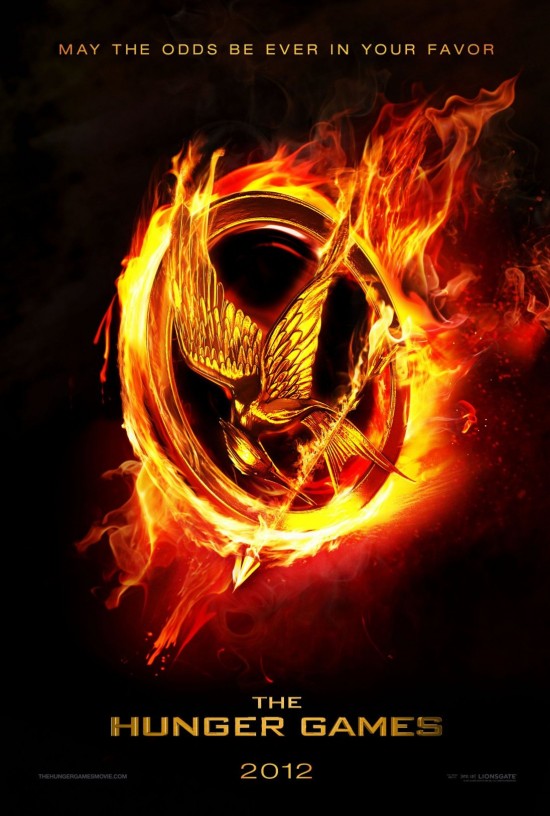
Here’s the movie poster:

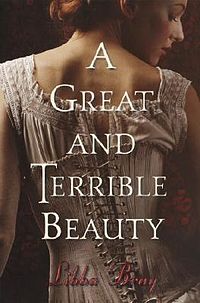
Here’s the book cover:

At least the book isn’t by S. Collins, right? I suppose we should be grateful for that.

According to Google images, there are other movie posters that show the protagonist, Katniss Everdeen, but I haven’t seen one anywhere around the Bay Area. Have you? Please let me know if you do see one and even better, send me a photo.

According to the Wall Street Journal: The publisher, Scholastic, considered dozens of cover designs, including portraits of Katniss, before settling on a more ‘iconic’ image of a bird pendant that plays a role in the story.

Lion’s Gate is hopeful that in spite of the female protagonist, males will go see “The Hunger Games:”

“Set in a dystopian future, “The Hunger Games” centers on Katniss Everdeen, a 16-year-old girl who is called upon to fight 23 other teens to the death in a twisted annual survival competition that is televised to the nation of Panem. The quick pace, strong characters and blood sport of author Suzanne Collins’s trilogy helped attract a robust male readership.”

In some ways, I think that the marketing strategy is great news, because they are not playing up the romance to attract females to the movie.

“They’ve taken away the love story and focused on the hero, who, by virtue of her altruism and fire, is going to stand up against this situation,” says Vincent Bruzzese, president of Ipsos MediaCT’s Motion Picture Group, which does market research for movie studios and filmmakers. “What they are doing is marketing the archetypal themes that are gender-neutral.”

If “gender neutral” means not playing up the love story to attract females, I’m all for that.

Jezebel posts: “Maybe, though, it’d be encouraging to see a movie with a dominant female lead transcend the demographic corrals studio analysts have split us all into.”

Absolutely! Moving past those limited “demographic corrals” would be great. If I have to give up Katniss on the movie poster, I suppose that’s a sacrifice I’m willing to make. I have high expectations for this movie.

I’m half way through the book and I love it. Katniss is smart, cool, complex, beautiful and a total bad ass. She is not a Token Feisty. In the narrative, she is never referred to as unusual or an exception of her gender because of she’s brave and skillful. I’ve continually asked on this blog if there are imaginary worlds where sexism doesn’t exist. Though Panem is a dystopia, this may be it.

I do look forward to the day when a female protagonist can show up on her own poster or book cover without scaring boys away.

Also, while I understand the marketing strategy for “The Hunger Games” it’s unacceptable for the exact same kind of invisible female sexism have such a powerful influence on movies for little kids. Parents should not let five year old boys have the power to make five year old girls invisible. And this isn’t really about five year old boys anyway, but their parents. It’s parents who buy books, buy movie tickets, and buy toys. It’s absurd for movie posters for kids to continuously picture no girls at all or girls on the sidelines as do almost all of the children’s movies in 2011. Just because adults live is a sexist world doesn’t mean our kids have to. At the very least, adults should be trying much harder to present the next generation with imaginary worlds where females are not a tiny minority. Girls are, after all, half of the kid population. It’s time for Hollywood to recognize that.

Long live Lyra Silvertongue and Serafina Pekkala

I finally finished The Golden Compass. This books features a couple of the most excellent female characters that I have ever read about. Lyra kicks ass. So does the witch queen, Serafina Pekkala.

About half way through the book, I posted on how all of the male characters were annoying me somewhat. Lyra was appearing to be too much of a Token Feisty for me, the lone female allowed to interact with several sexist groups: the Oxford scholars, the gyptians, and the bear community where the males are polygamists. Frustrated, I posted: Are there imaginary worlds where sexism doesn’t exist? Mrs. Coulter, the evil mother character, is powerful but she was also used to show how she was the exception to the other females in the story. It just irritates me that so often, when kids finally get to see a girl being brave, it’s woven into the narrative how she’s the exception of her gender.

But two things changed for me as a I read along to make me a die hard fan of The Golden Compass. The first is I absolutely fell in love Iorek Byrinson, the armored bear character. He’s male of course, but once he came on the scene, the book really came alive for me, and it kept getting better after that. Then came the witches. The witch clans are all female, magical, mysterious, and powerful.

While flying to the armored bear’s palace in a balloon through a starry, cold winter night guided by the witch queen, Lyra ask her: “Are there men witches, or only women?” Here is Serafina’s response:

There are men who serve us, like the consul at Trollesund. And there are men we take for lovers or husbands. You are so young, Lyra, too young to understand this, but I shall tell you anyway and you’ll understand later: men pass in front of our eyes like butterflies. creatures of a brief season. We love them; they are brave, powerful, beautiful, clever; and they die almost at once. They die so soon that our hearts are continually racked with pain. We bear their children who are witches if they are female, human if not; and then in a blink of an eye they are gone, felled, slain, lost. Our sons too. When a little boy is growing, he thinks he is immortal. His mother knows he isn’t. each time become more painful until finally your heart is broken. Perhaps that is when Yambe-Akka coems for you. She is older than the tundra.  Perhaps for her, witches lives are as brief as men’s are to us.

Wow, how’s that for an alternate narrative? Clearly, Serafina Pekkala needs her own series. And I no longer mind polygamous bears when kids get to see females in power too.

As you read this book, the writing gets better and better until the end (not the movie ending, the book ending; they are different) which is so dazzling and stunning, it gave me chills.

Reel Girl rates The Golden Compass ***GGG***

Reel Girl’s book recs of the week

JoJo’s Flying Side Kick is about a Tae Kwon Do student who must break a board with a flying side kick in order to win her yellow belt.

JoJo is nervous about the test, telling her Grandaddy: “I’m freakin’ out!” He helps her by giving a tutorial on fancy footwork from his boxing days. JoJo experiences other fears– a creepy-looking tree, the swing that hangs from it, a boy from her class tells her she “yells like a mouse.” In order to nail the side kick, JoJo uses the footwork, imagines the board is the tree, and gives a giant yell: “KEEEYAAAHHH!”

This book is really fun to read out loud. I love how all of the protagonist’s fears are woven together and then conquered in unison. The story teaches kids the great lesson that courage doesn’t mean having no fear but doing something even when you’re terrified. Reel Girl rates JoJo’s Flying Side Kick ***GGG***

Adelaide is the story of a kangaroo born with wings. She knows she doesn’t quite belong in her family of wingless creatures, so she hooks up with a pilot and travels the world, exploring and having adventures.

She decides to stick around Paris where she loves the art and culture but misses kangaroos. One day she saves two children from a burning building but is seriously hurt in the fall. (Her wings can’t carry all that weight.) After a hospital stay, she decides to visit the zoo where she meets and falls in love with a kangaroo named Leon. I really like how this story ends with a wedding and then baby kangaroos but its an unexpected surprise. The “happily ever after” finale isn’t the focus of Adelaide’s quest, but its nice that she finds her soulmate showing heroic, powerful females can fall in love, too. Reel Girl rates Adelaide ***GGG***

Shrek the Third: Fiona’s Fairy-tale Five is kind of chesey, and a cheaply made, stapled together book, but I adore it. There is much to love about the first Shrek story/ movie: how Fiona transforms at the end from “beautiful” princess to fat, green, troll to find true love. How great is that? So much potential here to flip fairy tales– and the notion of what it is to be “happily ever after” and what beauty and love is too– on its head. Not to mention that so much of the Shrek franchise is about making fun of Disney.

But as the far as the big screen, the female potential for greatness in this epic remains tragically unexplored.  All three movies are Shrek’s stories, not Fiona’s. Fiona is only the Token Feisty, the strong female character included in many contemporary animated films so the audience won’t care or even notice that all of the other characters in the film are male, including the star who the movie is often titled for.

Fiona’s role is the love interest. The Shrek movie sequels are even more disappointing with the third one morphing into another animated father-son type saga (and Justin Timberlake vehicle) where Shrek must find an heir– male, of course. Fiona’s part is reduced to nothing. Where did she go? It sucks to see “Shrek 3” with your daughters, to say the least. But luckily, there is this cheap, little book. From the back of  Fiona’s Fairy -tale Five:

 “When Shrek is off finding an heir to the  throne, Fiona must watch the kingdom. But soon Prince Charming and his band of villains storm the castle. Fiona has little time to turn a group of prim and proper princesses into lean, mean fighting machines. Can the fairy-tale five come together to take back the castle?

This book would make such a great movie, it kills me. Imagine the princesses voiced by Tina Fey, Sarah Silverman, Kristen Wiig and Maya Rudolph joining Cameron Diaz’s Fiona. This little story is so subversive too, because Disney absolutely forbids its princesses to interact with each other. (Or even look at each other, embossed on diapers, T shirts, or coloring books each one gazes off in a different direction, ignoring the other. Great model for female friendship, huh?)

But who got the spin off movie from Shrek? That would be Puss in Boots. I want to tear out my hair. But check out this book, it’s also a good “gateway” story if your kids are into princesses. Reel Girl rates Shrek the Third: Fiona’s Fairy-tale Five***GGG/T***

For a ratings key go to the About page.

Reel Girl’s book recs of the week

Reel Girl recs this week feature super passionate heroines. All three Reel Girl rates ***GGG*** Triple Girlpower. Make sure you read these to your sons as well as your daughters!

Knuffle Bunny is one of my all time, absolute favorite books for kids. How do I love thee, let me count the ways…

First, the book begins with my total as yet unrealized fantasy: Father and child do the laundry (they go off to a launrdomat in Brooklyn) while the mom sits on the steps, a book you know she’s about to crack open held lovingly on her lap.

Next amazing thing about this book? Our main character, who I think is younger than two,  sports no bow or curly eyelashes (just like the female Red Wolf of Reel Girl’s last recs.) With her overalls, Trixie wears a pink T shirt, but it’s no big deal. I’m not against pink for God’s sake, just Pink World Domination.

One of my favorite illustrations is in the laundromat when Trixie puts pants on her head and waves a bra in the air, her dad watching and smiling at her. Maybe I’m reading too much into this picture, but I think it’s a lovely commentary on adulthood and the various costumes we all wear.

Next is the best part of the book: When Trixie and her dad walk home and she realizes that she’s lost Knuffle Bunny, her big eyed, terrified expression is priceless. This picture communicates terror better than Munch’s Scream. Trixie tries desperately to communicate the disappearance to her to her dad (“Aggle flaggle klabble!”) but he’s oblivious.

At this point in the reading, I have never seen a kid not be totally wrapped up in the story, relating to what it’s like to lose a favorite animal and to have your parents not understand what’s going on. Both parent and child become increasingly frustrated which leads to my favorite sentence in the book (that my husband and I have used ever since to describe a tantruming child) “She went boneless.”

I won’t tell you how this story ends, but I have no doubt Knuffle Bunny will be one of your kid’s favorites.

Mary Had a Little Lamp is a funny book about a heroine who follows her heart and couldn’t care less what anyone else thinks of her.

This is a great book to read to your kid if she feels uncomfortable around her peers for liking a toy or outfit or anything that the rest of them aren’t into. Kids will also relate to this book because, like Knuffle Bunny, it’s about an attachment object. It’s impossible to read this without a huge grin on your face at the end.

The Old Woman Who Named Things is about another passionate female, but this one starts out afraid of her strong feelings.

She’s elderly so doesn’t want to get attached to something that might die or fall apart, including old furniture or cars. She only wants to get attached to objects she can trust will be there forever. But when a stray puppy befriends her, she can’t help but care for it. (The genderless puppy is either called “it” or “shy brown dog” which I like.) The old woman refuses to name the puppy to try to control her attachment to the animal, but when the dog disappears, she finally starts to take some risks that help to make her feel more alive.

Book inspires my 5 yr old daughter to ride big girl bike

Ever since her fifth birthday last July, I’ve been trying to get my daughter, Alice, to ride a big girl bike.

She wouldn’t do it. She wanted to stay with the training wheels. Alice is often reticent to try things, from sharing a new idea to exploring physical activities. If I can convince her to attempt something different (soccer, monkey bars) she usually ends up loving it and excelling as well, but the first push is often hard.

When I pushed with the bike, she just resisted. She was scared. She’d seen her sister fall and scrape her knees. I think healthy risk-taking builds real self-esteem, and I want my kids to learn how to take risks. And that you can fall and get up again and all that. But I didn’t want to push too hard, making her resist even more. Every time I asked her if she wanted the training wheels off, she’d yell “NO!”

Then last Saturday night, I read her one of a pile of new books I’d collected with female protagonists to read to my kids and review on Reel Girl: Sally Jean the Bicycle Queen. Sally Jean starts out as a baby in a seat on the back of her mama’s bike, progresses to a tricycle, training wheels, a two-wheeler, and by the end of the book can build her own bike. This kid is supercool.

So on Monday, the President’s Day holiday, as we were all heading to the park, Alice asked her dad to take her training wheels off. No prompting from us. We tried to remain calm. I resisted my urge to leap up and down, clapping. Instead, I went ahead to the park with her two older sisters so they wouldn’t rush her. Alice showed up about ten minutes later on a real two wheeler, her dad holding her seat to help her balance. For the next hour, he and I took turns practicing with her until our backs couldn’t take it anymore. She looked so happy and proud afterwards, I wanted to cry.

So coincidence or heroine-influenced?

This event seriously convinced me– as if I wasn’t convinced enough already– how important it is for kids to see girls being brave and taking risks in books, movies, and toys. If you can’t see it, you can’t do it or be it. Or maybe you can, but it’s much harder. You can talk to your kid until you’re blue in the face, but if you show her, she can learn so much quicker. She sees a “peer’ doing what she wants to do, not her mom babbling on about another thing.

Thank you Cari Best for writing Sally Jean the Bicycle Queen. You influenced my daughter’s life. Reel Girl rates Sally Jean the Bicycle Queen ***GGG*** Buy this book for your sons and daughters, especially if they need a push trying out a big kid bike.

Here’s happy Alice with her happy dad.