Pregnancy is a medical condition. I had an emergency c-section with my first child, not a rare end to a pregnancy in the USA. Pregnancy related diseases include ectopic pregnancies (also life-risking), blood clots, urinary tract infections, thrush, severe back pain, and the list goes on.
Why is it OK for religions to decree that women cannot have health care but it is not OK for them to demand that gay employees or black employees don’t get health care? Female bodies are different than male bodies and require different medical treatment. Why is it OK to deny one gender the medical treatment that their bodies require? Is the reason that sex is optional, therefore the medical condition of pregnancy is optional, therefore preventative health care is not required by law? Putting aside the situation of rape (which is just “rape hysteria” anyway, right) are we saying that medical conditions created by optional behavior should not receive health care? So if I choose to go skiing and break my leg, I shouldn’t get my health care paid for by my employer? If I choose to go on a hike and get bit by a tic, my employer should not be required to pay for treatment for my lyme disease?
I love that her son wanted them. Can you fucking deal with this– gendered goldfish? We have sunk to a new low. Barely. Here’s what I blogged in March 2012:
Hey Goldfish Snack Crackers, girls aren’t a minority
Posted on
My daughter is home sick today. She’s lying on the couch, watching TV, and eating Parmesan Goldfish. An ad for Goldfish crackers came on. She thought that coincidence was pretty hilarious. She held up one of her crackers and said, “Hi!” to the Goldfish on TV. Then she looked at down at the package. “Who are mine?” she wanted to know.
They are: Xtreme, Gilbert, Brooke, and Finn.
I know what you’re thinking: Xtreme must be female, right? Or maybe Finn? Pepperidge Farm would never put 3 males and 1 female on a package. So, I went to Wikipedia. Check out these character descriptions:
Finn– A cheddar flavored goldfish that wears sunglasses (though not in the commercials).
Gilbert– A pretzel goldfish that tends to be a worrier.
Brooke– The beautiful and intelligent parmesan flavored goldfish and the only female member of the goldfish club until both Candace and Coral showed up.
Xtreme– A flavor-blasted fish who enjoys doing crazy stunts. His real (and embarrassing) name is Fumbleton.
Swimmington Von Stuffington III Esquire– Xtreme’s snobby older brother.
IQ– A honey graham fish who wears eyeglasses lives in the vacuum and befriends Gilbert and helps him escape out of the vacuum.
Candace– A pink fish who wears a red bow on her head and has a small blue star on her tail fin. She has a crush on Gilbert. Candace is also the winner of the “Finn’s New Friend” contest.
Coral– A chocolate graham and fun-spirited fish with a Southern accent who currently befriends the club. She is possibly somewhat of a tomboy.
When I created this blog, I wrote that I was going to rate kids media and toys. I never considered blogging about sexism in food. Reese’s Puffs, Special K, M & Ms, and Goldfish have, unfortunately, changed my mind.
My daughter and I made up different names and stories for the Goldfish, of course. But don’t start telling me it’s a free country, and we can just make up anything we like. I’m a creative person, and I struggle with this. Give me something to work with here, Pepperidge Farm! I’m also, like most moms, busy. Can’t I just read the damn names off the bag?
It would be so much easier to foster creativity in kids (and the adults that they will become) if we weren’t mired with the same old, same old ridiculous, gender-stereotyped narratives at every turn.
A year later, I posted this:
M &Ms, Goldfish, cereal boxes, and the Minority Feisty
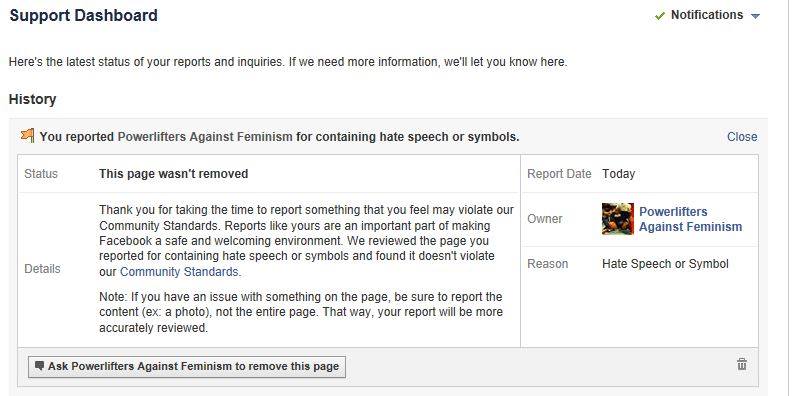
Powerlifters Against Feminism has a Facebook page up right now with hate speech on it that promotes and glorifes violence against women, yet Facebook refuses to take down the page, claiming there is no hate speech.
Here’s a post from the page’s host:
Shoutout to my boy elliot rodger. He did the best thing us men could do. And paid the ultimate price. Let his death be a memorial day in which we hate against the subhuman species called women.
RIP in piece brother
Yet, after a fan of Reel Girl alerted me to the page and complained to Facebook about it, she messaged me:
By the way, they refused to remove it stating there is no hate speech. I just got a notification.
Let me ask you this, Facebook: How is there no hate speech in the line “Let his death be a memorial day in which we hate against the subhuman species called women.” (Italics mine)
It is the acceptance of misogynistic communities like this one that helps to create and foster mass murderers like Rodger and violence against women in general. Just like the police who investigated Elliot, Facebook has a history of not taking hate speech against women seriously. We all contribute to it this culture of violence if we take no action stop the hate. I just reported this page to Facebook. Please do so as well. Do not accept that this page does not promote hate speech. You can go to this link to report it. Here’s the form I got. Check “hate speech or personal attack.”
All reports are strictly confidential. What best describes this?
Update: I received this message from facebook:
Support Dashboard
Here’s the latest status of your reports and inquiries. If we need more information, we’ll let you know here.
Thank you for taking the time to report something that you feel may violate our Community Standards. Reports like yours are an important part of making Facebook a safe and welcoming environment. We reviewed the page you reported for containing hate speech or symbols and found it doesn’t violate our Community Standards.
Note: If you have an issue with something on the page, be sure to report the content (ex: a photo), not the entire page. That way, your report will be more accurately reviewed.
Update: Many Reel Girl fans reported this hate speech to Facebook and received the same message:
We reviewed the page you reported for containing hate speech or symbols and found it doesn’t violate our Community Standards.
Some people started reporting the specific speech/ post, not the page. The first responses from Facebook were reported as follows:
I reported both the horrible hateful page and the (criminal) violence promoting post. Got two answers from fb, telling “the page does not violate our community standards”…
Another Reel Girl fan writes:
I reported the page and the individual post and got the same reply. Ridiculous.
And then, finally, one hour ago, a fan writes:
Just got notification that they revised their decision on the post I reported and removed it!
And another one received the same revised response:
Me too! I’m glad they wised up and reconsidered.
And a third did as well:
Yep! Just got notification it was removed. Woohoo! No luck on taking down the whole page, though
I posted all of those because I never got the revised Facebook response, but maybe that’s because I reported the page, not that one post? Still, what is Facebook’s excuse for telling people that first reported the exact post that it did not contain hate speech and then needing to “revise” their decision? It’s insanity. I suppose I’m grateful that Facebook took a tiny step towards coming to its senses and realize “hate against the subhuman species called women” qualifies as hate speech.
Suffice it to say that the killer was a misogynist, and that lots of women have reacted to his rampage by reflecting on how women are denied full personhood.
The ideology behind these attacks – and there is ideology – is simple. Women owe men. Women, as a class, as a sex, owe men sex, love, attention, “adoration”
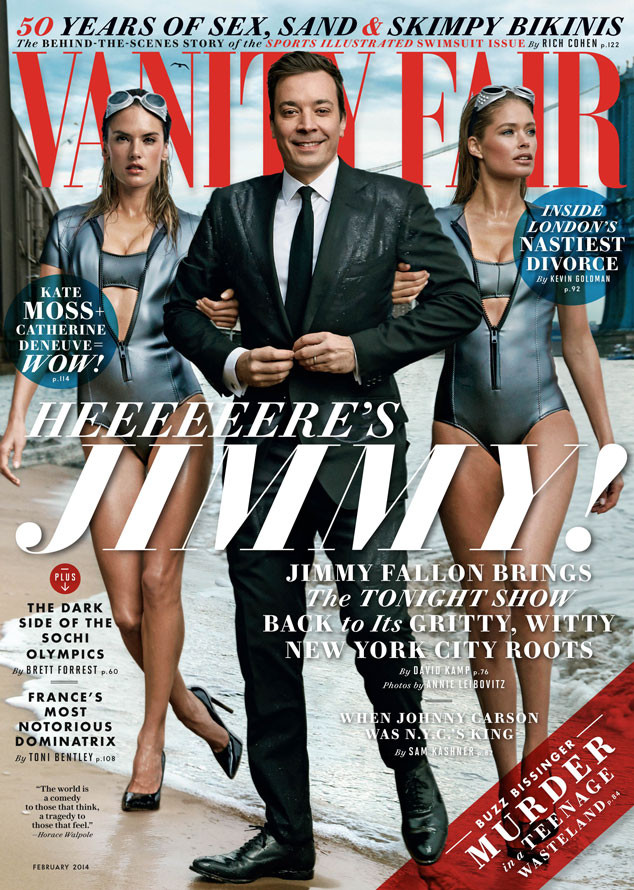
I’m reposting a blog I wrote after seeing Jimmy Fallon’s Vanity Fair cover. Look at these images. When will women in America be recognized as human beings equal to men?
Vanity Fair’s sexist Jimmy Fallon profile erases his wife, highlights Victoria Secret models
Posted on
I’m a huge Jimmy Fallon fan. This is why I bought the new Vanity Fair where he’s on the cover even though it annoyed me that Fallon is shown in a suit while he’s flanked by two nameless women in bathing suits.
There are more pics of Fallon and naked women inside the magazine. Reading the caption, I learned that the women are Victoria’s Secret models.
There is a third picture of Fallon and the women at what looks like New York’s Natural History museum. Once again, the women are in skimpy bikinis and we get a full view of ass. Fallon is once again pictured in a suit.
Showing important, powerful men fully clothed while women appear as naked accessories underscores the idea that men valued for what they do and think while women are valued for how they appear. Vanity Fair repetitively resorts to this sexism. There’s a famous photo featuring naked Scarlett Johanssen, Keira Knightly, and Tom Ford. When Rachel McAdams refused to undress, she was asked to leave.
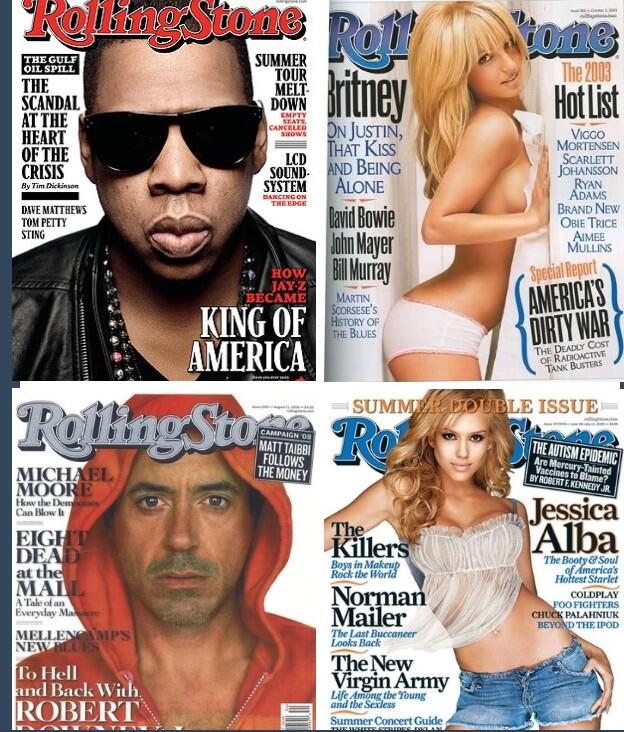
Of course, Vanity Fair is hardly alone in promoting this sexist imagery. Here are five GQ covers that came out simultaneously: four men are shown in suits, one woman is shown naked.
What about Rolling Stone?
There’s Justin Timberlake’s “Tunnel Vision” video where he is clothed and the women are naked.
Many claimed Timberlake was copying Robin Thicke’s “Blurred Lines” video where he is clothed and the women are naked, a pairing repeated in the infamous Miley Cyrus performance (where Miley was blamed for being a slut.)
“Alternative” musicians resort to the same cliche. Did you see Nick Cave’s latest album cover?
The truth is, we’ve been dealing with the clothed man-naked woman pairing for a long time. Here’s a famous painting by Edouard Manet in the Musee D’Orsay in Paris that would make a perfect Vanity Fair cover.
But here’s what really pissed me off about the Jimmy Fallon article. As I wrote, I’m a fan of the comedian, but part of the reason I bought the magazine is because I wanted to know more about his wife, Nancy Juvonen. She’s a film producer and a business partner of Drew Barrymore. Both Barrymore and Juvonen are interested in making movies where cool women get to have adventures. I wanted to hear the whole story about how Juvonen and Fallon met and fell in love, just the kind of thing you’d expect to find in a Vanity Fair profile right? They recently had a daughter, Winnie, so I assumed Fallon would be asked about being a new father. I’m an avid reader of Us Weekly and People and I often see pictures of their family. Fallon is always cuddling his baby, playing with her, smiling at her, and I was curious about his thoughts on raising a girl in the world. Another thing I wanted to hear about: Fallon is 39 while Juvonen is 46, a rare gap in Hollywood where a woman’s age is measured closer to dog years than man years. Do you see my point here? Fallon married a successful career woman who is 7 years older than him, and this, besides his talent, is part of the reason I admire the guy. But here’s the weird thing: Nancy Juvonen is missing from Fallon’s profile.
Juvonen isn’t mentioned at all until 5 pages into the piece. After writing that Fallon always watched “SNL” alone, the text reads:
His one concession to adulthood is that he now watches the program with his wife, the film producer Nancy Juvonen, and if she is awake his baby daughter, Winnie, born last July.
Can you imagine Vanity Fair doing a profile on a famous woman and not mentioning her big time producer husband or her new baby until page 5? The piece goes on for two more pages and there are just two more brief references to Juvonen. Here’s all the magazine has to say on how they met and why they married.
Though the Fever Pitch experience had a saving grace–it was through the film that he met Juvonen, one of its producers who he would marry in 2007– he considers his LA years kind of a lost period.
Here’s the final reference to Juvonen, about persuading Fallon to become the “Tonight Show” host.
It was Fallon’s wife who persuaded him to go with Michael’s instinct. “Nancy was like, ‘You’ve got to try it. You’ll be one of three human beings who have done it– Letterman, Conan, and you. You have to do it. If it doesn’t work, it doesn’t work,’” Fallon said.
That’s it. WTF? All Fallon’s wife gets in a profile is a few sentences in passing coupled with a cover and three photos where he’s shown with naked women? That’s not the Jimmy Fallon I love or wanted to read about.
Why do you think that police thought so little of the killer’s videos ranting misogyny? In 2014 in America the hatred of women is accepted as a normal part of our culture. What if, instead, misogyny were considered a sign of something sick in a person and in a society? How would our world be radically different?
Suffice it to say that the killer was a misogynist, and that lots of women have reacted to his rampage by reflecting on how women are denied full personhood.
If you haven’t yet, please read these posts about the Santa Barbara massacre:
There are many disturbing passages in Kelsey Osgood’s memoir about her struggle with anorexia, How to Disappear Completely, but one of the most chilling is the description of her active pursuit of the disease:
I would get so thin that I would be the physical embodiment of sadness, and there would not be a flicker of doubt in the universe that I was exactly that: thin and sad. I would be consumed and ravaged by thiness, by the pursuit of it…I didn’t need something to have; I needed something to be…It never occurred to me to lose weight in any healthy way, to strive for a body that ‘looked good.’ I wanted to be repulsively thin, and I knew how people got that way, by being anorexic.
With this passage, Osgood debunks the myth that anorexia is dieting gone too far. In reality, anorexia is its own entity, an identity, a discipline, a religion.
Osgood grew up in suburban Connecticut, and she longed to be unique and special. In her local library, she devoured books by women or about women’s lives including Girl, Interrupted, I Never Promised You A Rose Garden, Prozac Nation, Sybill, and Wasted. Osgood writes:
It wasn’t a particularly well-stocked establishment, but there were still many books about young people, mostly girls, who felt crazy or who were crazy. I didn’t think I was crazy, but kind of wished I were. Crazy people were privy to a universal truth, I thought, destined for artistic greatness, their words indelibly scalded into the collective unconscious.
Combining those two goals, for artistic greatness and identity, anorexia seems like the perfect solution:
Becoming a professional patient, a ‘hopeless case’ seemed akin to selling one’s possessions and dropping out to live on a commune or defecting to Canyon Ranch for a long term detox. And besides, one of the most ‘hopeless cases’ I read about actually ended up confounding the doctors’ prognoses, recovering, and then writing books, so what were a few years lost to psychosis if you ended up a famous author on the other end? If I were actually crazy, I would be allowed to exit, at least for a while, the real world, a place I found at once deeply overwhelming and utterly lacking. I wouldn’t have to do the things I always considered pointless, like take math tests or sit up straight or tell white lies. I wouldn’t have to be what I thought I was: short, stumpy, decidedly unglamorous, not outstanding in any particular way. Normal. Or maybe nothing at all.
With these descriptions of anorexia, Osgood has written a hugely important and unique book. I’ve read so many eating disorder memoirs myself, and as Osgood points out, again and again, those stories romanticize the sickness.
The lowest weight one reached remain a point of pride, not shame…Nine times out of ten, writing about anorexia beguiles the at-risk population for all the wrong reasons and the person writing about his or her own struggle fuels the fire by producing a long, hubristic poem, a elegy, an ode to a presence gone and dismissed. An homage. The writers know they’re up on the invisible podium to speak out about their journey to the brink of death (oh, yeah, and back) and they know too, that the ones listening closest are the young ones eager to enlist in the starving armies.
Eating disorder memoirs just like the internet’s “proana” and “wannarexic” communities, act as a how-to, showing girls how to be best anorexic they can be. Recovery communities are full of people who trade tips on how to be a better anorexic, comparing weights, a competitive training ground. Osgood’s book is different because she never acts as if sickness is cool or desirable or inspiring or beautiful. Here’s a typical description of a patient:
She would lift the phone off the receiver and dial with the ends of her long, yellow fingernails…her skin was covered with stretch marks, jaundiced and flaky. The room stank of dead cells…
Osgood attempts to do what no other eating disorder memoir I’ve ever read has done: she de-glamorizes anorexia and exposes it as the ugly, stuck, boring, waste-pool that it is. How to Disappear completely also illuminates the paradox of the narrative females too many females in our culture are stuck in: only as victims can they be heroes, only when practically invisible can they exist.
So intrigued by this original and insightful book, I went to Osgood with some questions. Here’s our interview.
I started my blog Reel Girl because I have three daughters, and I was appalled by the lack of strong female protagonists and female heroes in kid culture. What do you think about the lack of female heroes, how the thin, “pretty” girls are the ones who get to star in the limited roles offered, to exist at all, really? Part of what “inspired” you wanted to become anorexic was the stories you read when you were a girl, the eating disorder memoirs and crazy girl memoirs. If young women’s stories involved other narratives besides the thin/ crazy/ pretty victim, do you think that would make a difference as far as girls’ attraction to anorexia?
Yes, I definitely think it would make a difference. Or at least, I think it would be a good start! I read an article recently that pointed out that even in books for very young girls––under ten, that is––the heroines are more often than not “scrappy” or “very small.” I think that might have started from a good place, but one that assumed a more male logic––big is better, so the underdog, who should win in the fable, should be small––on a female population. Eventually, it kind of curdled into what we have now, which is that no heroines are anything other than slim. As for me, what attracted me to the narratives of mental instability as a teenager was this idea that in order to be creative, one had to be melancholic or tortured. In some ways, I think I thought if you were psychically tortured, you wouldn’t have to work; that was a creative output on its own, and if you wanted to write a book post-facto then it would just pour out of you as if divinely inspired (insanity as a state of religious transcendence was also something I very much believed it.) Now, having been tortured and subsequently written a book, I can safely confirm that this is NOT what happens! It’s just as difficult a slog as ever.
While you go out of your way to describe not to glamorize anorexia, to show the ugliness of the disease, you’re still writing a book about it. You went to visit all of your former hospitals and you write about Googling people you were hospitalized with. Is it possible to write a book about how boring anorexia is and not be fascinated by the disease? Are you still fascinated and compelled by it?
I think no, it isn’t possible to do it without being, on some level, fascinated by it. I was hoping to reverse the narrative and to ask some questions about the disease that had never been asked before. But ultimately, yes, I am still interested in it, though I think “fascinated” might be a little strong. A writer often works on a book for years before it gets published, so by the time they’re invited on radio shows and panels, they’re often a little bored of the topic by virtue of having wallowed in it for so long! That was my experience, anyway. I am interested now not so much in anorexia as a disease but in the ways we define mental illness as a culture––because I believe it’s very much still culturally defined, particularly with regard to behavioral problems like anorexia and addictions, though the establishment would love us to believe they have more of an idea than they do that it’s biologically locatable.
When I had an eating disorder (I was bulimic, not anorexic) I was often told– in the recovery community, no less– that I would never get better. The best I could do was “manage” my disease. Today, I am 100% cured. My eating disorder is gone. Did you have the experience of people telling you the same thing? Do you consider yourself cured? Was writing the book part of putting the sickness to rest? The recovery community is so sick, so how do people get better? Is it possible?
Yes, this absolutely happened to me! I don’t know if I remember anyone saying that I would never recover point blank, though I’m sure it happened over my ten years in treatment. The eating disorders recovery community has completely absorbed the 12-step belief that once you are sick, you are always sick. I cannot fathom why anyone would find this empowering––comforting, maybe, because you don’t have to use your agency or blame yourself or give up your safety blanket completely, but empowering? No, no, no. It drives me insane (pun so not intended) these days to see personal essays about anorexia or bulimia in which the writer states that, “Eating disorders are like alcoholism––they never fully go away.” And there are many of them. I become literally enraged. I used to blame the writer, but then I realized, he or she was probably told this by some group therapist at a treatment center and thought, “Well, she must know what she’s talking about, because she’s a counselor and I’m one of the ‘crazy’ ones.’” But the truth is that how we define sick and well and normal and aberrant and psychiatrically compromised and stable is still mostly cultural, which is not to say that it’s “made up,” but rather that we have a choice as to how we want to shape our narratives, and what we want to tell struggling young people that they are capable of. Do we want them emerging into the world believing they can only have part of life? That, to me, is crazy.
I consider myself fully recovered, definitely, and I am not afraid to say that when asked. There is perhaps one cell in my whole body that pines for the days of starvation, but that cell is considered a total weirdo by all her cell friends. In all seriousness, though, there was a time when I would have considered being “recovered” unfathomable or, more importantly, shameful––that is, I believed it meant the crumbling of the will, not the assertion of it. Now, I see all the passivity and misguidedness and wastefulness endemic to anorexia and it baffles me that I ever considered devoting my life to it.
Perhaps writing the book helped me to bring my personal struggle to a close, although I would have to point out that one needs to be at least mostly well to write a book (it’s almost a test of endurance, psychologically and physically!) Does that mean I think everyone needs to write about his or her journey to recover? Absolutely not. My book is paradoxical in that the narrative I created was about resisting narratives––a friend once compared it to David Foster Wallace’s attempt, in The Pale King, to write about boredom without being boring (and yes I took that as an enormous compliment)––which some might see as impossible. I mean, even if the narrative is oppositional, it’s still, at its core, a narrative. So I still was seduced by the prospect of telling my own story, but in the end, recognized and continue to recognize that the story will never be fully knowable. If that makes sense, which I’m sure it doesn’t.
One thing that I said about getting better in the book I think is really key, and that is moving away from the eating disorder as a topic on which one dwells. I mean this as much in regard to recovery––and the psychoanalytic instinct to wonder where the “origin” of one’s problems are––as I do with regard to the dwelling necessary to being actively ill. What I mean by this is: at some point, get out of therapy, and try to conceive of yourself as something other than a patient. (This is easier as you get older––when the same people you were once doing bong rips with are now becoming clinical psychologists, you start to realize that the adult-child dynamic you once thought present in therapy was not quite as clear as you once thought!) If your therapist is good, he or she will be leading you in that direction already. I said the opening statement in the book with regard to my little friend who is now a grown-up; I immediately noticed, when we met up years after being hospitalized together, how curious of a spirit she was, and how much I could tell she wanted to experience. She learned, as I did, that if you are actively anorexic, you simply cannot have a wide variety of experiences. I found that for me personally, becoming a spokesperson for “awareness” felt in many ways similarly constricting in that I was still forcing myself to identify as an anorexic (recovering, recovered, whatever.) It’s still succumbing to the desire to label ourselves, which I’d like to push back against, personally. So that didn’t really work for me. But it works for some people, I guess?
You write that anorexia is unique in that people seek it out, they want to be sick, whereas alcoholics, for example, wish they could drink like normal people. But sickness, especially mental illness in the artistic community seems comparably romanticized. One of my favorite books about this phenomenon is “Against Depression” by Peter Kramer. He wrote this book, because while touring for his best-seller “Listening to Prozac,” people often asked him: What if Van gogh took Prozac? What about Kierkegaard?” Kramer believes that artists created not because of mental illness but in spite of it. He writes that while qualities of the disease of depression– alienation, hyper-sensitivity– are romanticized, other common and frequent symptoms such as disorganization, poor memory, irritability, difficulty changing intention into action, paranoia, anxiety, lack of resilience, vulnerability to harm, paralysis, hostility, impatience etc are often downplayed or ignored. Kramer believes that alienation– the ability to step back and look at the culture or political bodies while separate from them– can be a useful skill. But getting stuck in alienation is a sickness. Depression is a ‘stuck switch,’ an impairment in the stress/ response system. When I blogged about his book, I wrote “Basically he’s saying artists don’t need a little bit of depression to create art any more than women need a little bit of anorexia to be fit.” Long intro, but here are my questions: Did you write your book, in part, to show the other symptoms of anorexia, the ones not glamorized?
I did, particularly the existential torment I found so hard to live with. Now, I often speak at schools, and I’ve had to rethink yet again what is effectively dissuasive. I remembered as a teenager not caring a whit about things like bone density and heart damage and lanugo––almost like a rock and roll, I’m-so-dark-death-doesn’t-scare-me kind of thing––so I never lead with medical consequences. Instead, I tend to start with social stuff; I tell them about how, right after I graduated college, I became painfully aware of the fact that my friends were growing and maturing and I was not. I couldn’t go to a restaurant, let alone have a romantic relationship! So I started to really conceive of what my life would look like: attenuated, though my death would be long and slow; painfully boring and isolated; and basically not very meaningful. By that I mean, I wouldn’t be able to do anything significant in the world, because I would likely be too tired. Childless, also, that was very depressing. When I say this to kids, I can tell they hear me; they want to be in lock-step with their friends, and I’m basically telling them that will never happen if they choose this path. (Granted, it probably won’t happen for a whole other host of reasons, but that’s for them to find out!)
Given this comparison, do you still think anorexia is unique in being a disease that people seek out?
Yes I do. That is, I think it is unique in that the population attracted to it is perhaps the most conscious of its aspirations. But I do think that generally, while it’s unlikely someone may endeavor to become depressed or to nurture the behaviors of a depressive, there is a certain pride in being diagnosed––with basically anything—these days, which is very bizarre. Not so long ago, people fought tirelessly against being put in a box. Now, I feel like people are THRILLED to be in the box. So often people report to me with palpable glee that their therapist told them they probably have x, or y, or z. Recently a friend of mine bragged that her therapist told her she was a little psychotic. (She isn’t.) And I was like, “Why is she so happy about this?”
There is so little tolerance for non-pathological “bad feelings” that I think people either create the pathologies or fall into the psychiatric establishment’s hands and allow their behavior to be labeled pathologized. Being diagnosed (again, with basically anything) kills two birds with one stone, too: it allows you to feel special/different, but also to fit in, because psychiatric problems are the contemporary norm. This all sounds very conspiracy theory-esque, and I don’t mean to suggest that there is not such a thing as organic mental illness, or that all psychiatrists are out to medicate us into a Brave New World-style stupor, but I do think we compulsively ferret out the wrong in people even when it’s not there, or when exposing it and obsessing over it is potentially more harmful than helpful.
What do you think about the cynical/ skeptical world view: If I’m miserable, I’m smart and unique but happy people are stupid? The idea that joy is superficial rather than a profound choice? How do your views on this relate to anorexia and eating disorders?
I think this is a very real belief many people have, and I myself had it for years, and that any expectation of feeling ONE way all the time is reductive and stupid and possibly harmful. Something counterintuitive happened to me on my journey to wherever it is that I am now: I realized that for me to be “happy” meant to be intellectually engaged, and I happen to be more interested in things that many people might consider dark or depressing. So in some way, I still think a lot about objectively “sad” topics, but the end result is with me feeling more fulfilled than I would be if I were to convince myself that it had to be sunshine and rainbows all the time.
Are you writing another book? What are you working on now?
I tell myself every day I need to start on book two! And I want to, I really do, but I keep procrastinating by writing essays and shorter pieces. I was going to write another memoir, about the time I spent as a writer’s assistant to a true crime author who was dying of Lou Gehrig’s Disease, but I’m sort of second-guessing it. Requests taken!
Last week, four black feminists participated in a panel discussion hosted by the New School titled: “Are You Still a Slave? Liberating the Black Female Body.” The talk– an in depth discussion about the influence of imagery and narrative on our culture and its role in creating our actual reality– went on for almost two hours. Yet, out of all this, the media reduced trenchant analysis into a sound byte, pitting one black woman against another: “Feminist scholar bell hooks calls Beyonce a terrorist.”
I encourage you to watch the whole talk. I know you probably won’t, because, as I wrote, it’s two hours long. I didn’t intend to sit through it all myself, but I was so excited and fascinated by what these women were saying, I couldn’t stop listening to them.
These 4 women are creating new narratives and images, beyond woman as victim, sex object, slave. The discussion about Beyonce, specifically her Time cover where she’s shown in her underwear (which totally bummed me out as well when I saw it– why, why, why, the issue is about the most influential people and she’s practically naked, do you know how few women make it to the cover of Time?) is a few minutes of a larger, important talk about women, power, and the nature of reality.
Here’s how bell hooks began the discussion:
Part of why I’m so excited and proud to be here today is that I’m up here with black women who are all about redefining and creating a different kind of image, liberating the black female body
Not a fan of “12 Years a Slave,” hooks says:
If I never see another naked, enslaved, raped black woman on the screen as long as I live, I’ll be happy.
YES! I could not agree more. I am so sick of watching women get raped. After the talk, someone in the audience challenged hooks, saying she felt conflicted about hooks’ reaction to “12 Years:’
we still need to have those conversations about rape and violence on stage…how can we have those conversations, the role of slavery and colonization on women’s bodies? Can we make space for both?
Here’s how hooks responded:
Because we have been so saturated, I mean, I think one of the big lies that’s going around is, “Oh, we never talked about slavery, oh, we don’t have images of slavery.” We had “Roots” and more “Roots,” and there’ve been all these different books and productions, so that I think of that as a kind of myth building thing when people say, “Oh, we don’t have images.” Notice I didn’t say I don’t want to see anything about slavery. I don’t want to see those same tropes over and over again.
hooks speaks about some narratives that involve slavery she’d like to see, for example, when John Wollman and the Quakers met and decided they could not support slavery and believe in the god they believed in, that in fact, they owed back wages to slaves.
that would be an interesting film for me… more interesting to me as an image, as an idea than the repetitive image of victimhood, and I think that they’re all kinds of images and stories out there that could bring us into a different level of understanding.
hooks was making exactly the same point about Beyonce. She was referring to the repetition of sexualized images of women and how the inundation is an assault on our brains, especially for kids:
I see a part of Beyonce that is, in fact, anti-feminist, that is assaulting, that is a terrorist, in especially terms of the impact on young girls. I actually feel like the major assault of feminism in our society is has come from visual media… The tirades against feminism occur so much in the image making business…What I’m concerned about constantly in my critical imagination is why is it we don’t have liberatory images that are away from, not an inversion of, what society has told us, but our own sense of: what am I looking like when I am free?
The tirades against feminism occur so much in the image making business
hooks wants new images. She says:
I would never want my child to see “12 Years a Slave” because it’s the imprint of the black, female body as victimized.
Again, totally agree. Obviously, “12 Years” isn’t a movie for kids, but I see endless books and movies, supposedly feminist ones where girls are mocked for being girls, then they rise above it and prove everyone wrong. Fuck that. I hope in children’s media I never have to read about or watch another girl dressing up as a boy, fighting or cooking “as good as a boy can,” from Mulan to Tamora Pierce to Elena’s Serenade to endless Minority Feisty. The reason this trope is awful for girls– and boys– is because before your child can understand the narrative, she needs to understand sexism. Instead of having Colette in “Ratatouille” give a whole speech about male dominated kitchens, why not make a movie with a female top chef and her best friend is a female talking-cooking rat? Audiences will buy that a rodent can run a three star restaurant but not a female? Like hooks says, we are saturated with this same old, same old. If we weren’t, it would be a different story (ha.) The slavery narrative in all its forms has its place, but we need a break. It’s too dominant. There are many other stories to tell.
By the way, hooks walks her talk. She wrote Happy to be Nappy for kids in 2001, and in this discussion, she says she includes it in her most important, favorite works.
Another speaker on the panel, Shola Lynch, is a filmmaker whose most recent production is a documentary about Angela Davis.
In referring to her film as “a political crime drama with a love story at the center,” she reframes Davis’ narrative. Next, Lynch is making a movie about Harriet Tubman, who she calls an “action heroine.” Can you believe there hasn’t been a movie about Harriet Tubman? Lynch says that even though Tubman’s story is true, people don’t “believe” it. The same phenomenon happened with the Davis movie. About selling that film, Lynch says:
So then I have conversations where somebody’s like, “Oh, it’s a great film as a documentary, but the only reason I would support it is I have to know who the main male characters are because it’ll be flipped to be a narrative, women’s stories don’t sell”… Her story is true, but not possible. People don’t believe it. But it’s all true.”
Talking about why she would rather make movies about heroes than victims, Lynch refers to “symbolic annihilation:”
Symbolic annihilation is two things: not seeing yourself, but it’s also seeing yourself only denigrated, victimized etc, and what that does to you. We can talk about all the things that denigrate us, but I’d rather shift the camera, shift my gaze, and look for the images and the people and the places that feed me. I really do think, you talk about children, the more we create our culture, our cultural images– the books you write, the films I make, the alternatives, that these are artifacts that live, and they speak to people whether we’re there or not, bodies of work, and that is critical. I want to give one example. My daughter, she’s 4. She’s never known me not working on the Angela Davis film which took 8 years. She was so excited when I could show her the trailer. ..The trailer is like 2 minutes long and she watched that trailer over and over and over again…She would point out all the characters, she loved going ‘That’s Angela’s mom.” So she created Angela’s family and a sense of community just by watching this thing over and over again. But that’s not what I wanted to share. So she’s a little girl, she wants to be a princess, I’m trying to convince her she wants to be a warrior princess, that’s blonde and poofy and glam. She woke up one morning and her hair was all out, just like, you know, big, out, out, out. Usually it’s like, “Oh mom, my hair is too puffy.” This morning, after watching the trailer over and over again, she said, “I have Angela Davis hair.” So I thought I was making this political crime drama with a love story at the center etcetera, etcetera, etcetra, but I was also making another image for young people to see and to perhaps relate to. And I was blown away, because I can tell her she’s beautiful all day long. I’m her mom, doesn’t count. The more we create the alternative universe which then becomes the universe.
Another panelist, writer Marci Blackman, echoes Lynch’s point:
My characters are the people who I grew up seeing every day who I don’t see, not just in literature, I don’t see them on TV…They weren’t there in the worlds that I was inhabiting when I would sit and go to the library and read, so I decided I wanted to write them, and I wanted to write people like me who I wasn’t seeing in the books either. I wanted to create these characters and put them out there, and I think what you say about self-representation and putting it out there to count as a counteract against these other images.
The journey to freedom has also been so much about the journey of imagination, the capacity to imagine yourself differently, counter-hegemonically, and that’s why the imagination is so important because Shola imagined Angela Davis in a different way from the images we had of her. That imagination of oneself, I would like us to end on that note and people can speak about creativity, because it is striking to me and I didn’t think about this when we were putting the panel together that for each of us, creativity and the uses of imagination have been what led us into the freedom we have. It has been what enhances my life every day. To be able to think and create and leap and jump beyond where I feel like we have been told, theoretically, intellectually that we should go.
Imagination inspires reality inspires imagination in an endless loop. It’s magic. That’s the point bell hooks was making about Beyonce. If you still don’t get it, here’s one last quote from hooks and then watch the video for yourself.
We can gather strength from the diversity of people’s stories, the diversity of people’s imagination.
If George Eliot hadn’t pretended to be male, she may never have been published at all. If J.K. Rowling hadn’t taken her publisher’s advice to obscure her gender, she may not have created the Harry Potter franchise and become a billionaire and then a millionaire because she gave so much money away. If rape survivors choose to publicly tell their stories, with their real names and photos they risk a lifelong victimization by a sexist culture.
I wish this culture didn’t make it so preferable for women to keep their stories and gender secret and hidden.
I’m grateful to every woman who publicly tells her story.
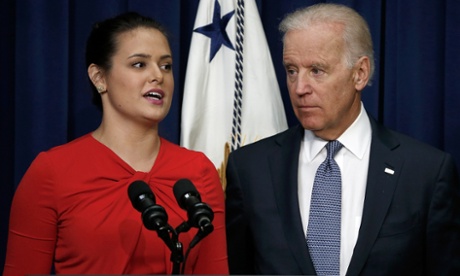
Thank you to Madeleine Smith, a graduate of Harvard University who was raped while attending college and spoke at the release of the first report of the White House Task Force to Protect Students from Sexual Assault. You’re a hero and you’re changing the world for women, something you can’t do without a face and a name. Other women will hear you and see you and they will choose to tell their secret stories too. Seeing you puts the shame where it belongs, back on the perpetrators.
Thank you to another hero, Ashley Sapp of the Survivor Stories Blog Interview Project. In honor of Mother’s Day, the project features an interview per day with a survivor of any form of violence against women (VAW) including domestic violence, rape, sexual assault, female genital mutilation, forced/child marriage, and sex trafficking.
When women stay silent and invisible, all women and girls are affected. We all learn that our stories– whatever they may be– are not important and don’t matter. When women tell the truth publicly, they give us all permission and inspiration to do the same.
Please watch and share this video about putting an end to sexual assault on college campuses in the USA. (Also featuring Vice President Biden, Daniel Craig Benicio del Toro, Dulé Hill, Seth Meyers, and Steve Carell.)
The federal government on Thursday released the names of 55 colleges and universities that are under investigation for their handling of sexual violence or harassment complaints. Many of the schools responded by saying they take the allegations seriously and are evaluating their sexual-assault policies and procedures.
Thank you, President Obama, for taking action to protect the human rights of girls and women.
The Internet spreads all kinds of social ills, from cyberbullying to mainstreaming hardcore pornography, but for me, the good far outweighs the bad, because I’ve “met” people like the excellent and amazing author of Redefining Girly, Melissa Wardy. Melissa’s blog and online community are a truly invaluable resource that support protecting childhood and raising healthy kids. Now, lucky you– she’s written a book.
From author Melissa Wardy: Hi Margot and hello to all of your Reel Girl readers. I’m so thrilled to be making a stop on the Redefining Girly Blog Tour at one of the blogs that I personally really love. I hope all of you enjoy reading Margot’s thoughts on my new book Redefining Girly: How Parents Can Fight the Stereotyping and Sexualizing of Girlhood, Birth to Tween and at the end of the post find out how you can win one of two Redefine Girly t-shirt gift packs.
Melissa started her children’s clothing company, Pigtail Pals and Ballcap Buddies, not long after her daughter was born, because she couldn’t find a single onesie that showed a girl with an airplane. Really not cool, especially when she named her child after Amelia Earhart. On her site, Melissa writes:
Pigtail Pals was born in May 2009 with the mission to Redefine Girly! I believe girls need to see messages in early childhood that show females being smart, daring, and adventurous. As the saying goes, “You can’t be what you can’t see.”
What I love about Melissa is that she walks her talk. A mom can tell her daughters all day long that pretty isn’t the most important thing about them, but if she’s obsessed with her appearance and dieting, what is she showing her kids about her values? The sad truth of parenting is that actions matter more than words, and kids learn from what they experience, not from what they hear you talk at them. That, in my opinion, is the hardest thing about being a mom: trying not to be a hypocrite. Notice I write trying, which brings me to why I value Melissa’s book and believe it’s essential reading for every parent. She helps me to not be a hypocrite and– this is super important– to be kind as well. I know how to be reactive, to tell the truth and be angry about it (as Gloria Steinem famously said, “The truth will set you free, but first it will piss you off.)” I’m not always sure how to effectively handle a sweet teacher who tells my daughter every morning how pretty she is, a “princess party” birthday invitation sent by a best friend, or a proposed “playdate” to the mall.
In 2014, the world our children live in is horribly sexist, a place where teachers, doctors, and family, often the people your children love and respect, indoctrinate them to expect and accept all kinds of gender stereotypes. But thanks to Melissa, you don’t have to cave in or isolate. You actually have choices in how you respond and act. Knowing this is liberating and calming. Melissa helps families transition from victims of gender stereotyping to creative heroes who are redefining a nd restoring childhood for our kids. For example, Melissa teaches you how to redefine girly in your own home, again by showing kids a new way with, for example, a hands on dad in the family who does laundry, by encouraging her son to play with dolls, by being a mom who uses tools and fixes things (along with cooking and cleaning), by eating desert with her kids and enjoying it. She gives advice on what to do if a friend or family member gives you hand me down clothes or toys that don’t fit with your ideal:
We’ll say “Thank you so much for thinking of us” and then politely decline or donate away items that carry messages that don’t fit with our family morals.
Simple, right? Yet, so many of us get tongue tied. Melissa’s book is full of useable, practical advice. With her signature combination of compassion and unflinching directness, Melissa gives tips for how to get friends and family on board. First, she reminds you: what you are doing is important. You are not insane. If you care about redefining girly, have no doubt that people will tell you the sexism that you see hurting children is trivial or doesn’t exist at all. Melissa writes:
Remember that you are not alone or crazy for seeing problems with the emotionally toxic ways our culture treats girls. The Resources section at the end of this book is full of alternatives, information, and the names of experts who can help. Our daughters deserve a girlhood free of harm and limitations.
Melissa lists specific tips on how to deal with criticism of your views:
Have a prepared team response you and your parenting partner will use that lets family know this is an issue you take seriously and that you want to have your wishes respected. My husband and I use “We want Amelia to be healthy and happy and we feel this is the best path to achieve that.” (We use the same message for our son.)
Have fun alternatives ready to suggest to family and friends who bring media into your home that you feel are unhealthy. This way you are not just saying no to their media, you are saying yes to healthier choices.
Have a secret signal for your kids to use so they can communicate to you that they need to ask you a question or talk to you about something later (like a baseball coach signal– helpful when a gift is given or a comment is made that your kids know goes against what you teach in your home.)
Melissa also has great one-liners that come in handy including: colors are for everyone, pretty’s got nothing to do with it, toys are made for kids not genders, there are many ways to be a boy/ girl.
Excellent sections in the book include: Encouraging kids at play– the Diverse Toy Box, Around the Kitchen Table– Fat Talk and Body Image, Using Your Voice and Consumer Power To Fight the Companies Making Major Missteps, and my favorite– Becoming the Media You Want to See.
I can’t recommend this book more. Not only will it help you redefine girly, but it shows you how to have fun and be happy while you’re changing the world. I’ve been trying to blog about this book since it came out in January and I tore through it, but it was too damn hard because I wanted to quote the entire thing. Today, I set myself a time limit and my time is up. (I only got through my notes on the first couple chapters.) So I’ll end with THANK YOU MELISSA. I think you’re about 10 years younger than me, but you’re my role model. I can’t wait to see what you do next.
From author Melissa Wardy: Thank you Margot for those wonderful words about my book. It is an honor to receive accolades from such a well-versed writer in this area but also from a woman and mom whom I highly respect. I would love to hear from your audience now and have them share either something they have learned from Redefining Girly if they have already read it, or have them describe an issue/concern they have currently with their daughter that they are hoping to learn more about when they do read the book. I’ll pick two winners to receive a Redefining Girly t-shirt gift pack (two tees + shipping). Winners will be chosen Friday May 30 at 8pm PST so make sure to get a comment in before then! Okay Reel Girl readers, what are your thoughts on Redefining Girly?”