Finally.

U.S. news media, please give us more of this and less of Beyonce in her underwear.

Yesterday, the New York Times’ announcement it was replacing Managing Editor Jill Abramson with Dean Baquet, after her brief three year tenure with no transition time and no good-bye, in what Rebecca Traister calls “a singularly humiliating firing” was one more act of sexism by the so-called liberal institution.

The Women’s Media Center had just released a study The Status of Women in the U.S. Media 2014 showing that of the most widely circulated U.S. newspapers, the Times has the biggest byline gender gap: 69% of writers are men. An earlier study by WMC shows that at the Times men are cited as expert sources for news stories 3.4 times more than women are cited.
Why was Abramson fired? Ken Auletta writes in the New Yorker:
Several weeks ago, I’m told, Abramson discovered that her pay and her pension benefits as both executive editor and, before that, as managing editor were considerably less than the pay and pension benefits of Bill Keller, the male editor whom she replaced in both jobs. “She confronted the top brass,” one close associate said, and this may have fed into the management’s narrative that she was “pushy,” a characterization that, for many, has an inescapably gendered aspect.
Business Week reports on the story:
Irrespective of the specific circumstances in this case, such words as “abrasive,” “pushy,” and “brusque” tend to irk professional women, who have come to recognize them from countless studies demonstrating that female leaders are almost always seen more negatively than male ones—a phenomenon also known as the competent-but-disliked dilemma.
The more critical issue, though, is that the gap in pay between women and men is quite real and stubbornly persists at 77¢ on the dollar in spite of the many advances women have made. Even after factoring in differences in occupation, education, and years of experience, according to Harvard’s Claudia Goldin, a significant gulf in female vs. male pay still exists. Still, no one seems able to do much about it.
In April, Republican senators voted down the latest bill meant to address this disparity: The Paycheck Fairness Act would have made it illegal for employers to retaliate against employees who discussed their compensation and would have allowed for more government monitoring of what workers are paid.
Sexism at the New York Times has infuriated me for so long. In 2012, I wrote to The New York Times after reading the Magazine’s cover article by chief film critic A.O. Scott titled “Year of the Heroine Worship. The piece claimed that 2012 was “a pretty good year for female heroism” in the movies citing “Brave” among a handful of others. It came out a couple days after I posted Reel Girl’s Gallery of Girl’s Gone Missing From Children’s Movies in 2012. Here’s is my letter the NYT published in a later issue of its Magazine:
What about movies for children? I have three young daughters. Aside from the pink ghetto, kids’ media — whether PBS or Disney — put male characters front and center. Female characters are sidelined or not there at all — just look at the posters for children’s movies (with the exception of ‘‘Brave’’). There is no reason for the imaginary world to be sexist.Margot Magowan, San Francisco, posted on nytimes.com
It’s upsetting and damaging that the New York Times is so sexist because it’s a force in determining which stories are “important.”
Here’s a quote I use often from Half the Sky by reporters Nicolas Krsitof (who works at the Times now) and Sheryl Wudunn (who used to work at the Times.)
When a prominent dissident was arrested in China, we would write a front-page article; when 100,000 girls were kidnapped and trafficked into brothels, we didn’t even consider it news
In honor of Jill Abramson, here’s a list of Reel Girl’s blogs on sexism at the New York Times:
New York Times hasn’t approved my comment
Dear New York Times, her name is Jyoti
New York Times refusal to print name of Indian rape victim’s name is America’s rape culture
My letter in today’s New York Times Magazine
Dylan Farrow’s op-ed on Woody Allen’s sex abuse was sent to many papers, all who rejected it. I am assuming the Times was one of those papers. It was columnist Nicolas Kristof who posted Farrow’s letter on his blog. Yet, the Times did publish Woody Allen’s rebuttal as op-ed.
Woody Allen’s op-ed shows disregard for child abuse
Thank you Daisy Coleman for telling us shame belongs to rapist, not survivor
Last week, four black feminists participated in a panel discussion hosted by the New School titled: “Are You Still a Slave? Liberating the Black Female Body.” The talk– an in depth discussion about the influence of imagery and narrative on our culture and its role in creating our actual reality– went on for almost two hours. Yet, out of all this, the media reduced trenchant analysis into a sound byte, pitting one black woman against another: “Feminist scholar bell hooks calls Beyonce a terrorist.”

I encourage you to watch the whole talk. I know you probably won’t, because, as I wrote, it’s two hours long. I didn’t intend to sit through it all myself, but I was so excited and fascinated by what these women were saying, I couldn’t stop listening to them.
These 4 women are creating new narratives and images, beyond woman as victim, sex object, slave. The discussion about Beyonce, specifically her Time cover where she’s shown in her underwear (which totally bummed me out as well when I saw it– why, why, why, the issue is about the most influential people and she’s practically naked, do you know how few women make it to the cover of Time?) is a few minutes of a larger, important talk about women, power, and the nature of reality.

Here’s how bell hooks began the discussion:
Part of why I’m so excited and proud to be here today is that I’m up here with black women who are all about redefining and creating a different kind of image, liberating the black female body
Not a fan of “12 Years a Slave,” hooks says:
If I never see another naked, enslaved, raped black woman on the screen as long as I live, I’ll be happy.
YES! I could not agree more. I am so sick of watching women get raped. After the talk, someone in the audience challenged hooks, saying she felt conflicted about hooks’ reaction to “12 Years:’
we still need to have those conversations about rape and violence on stage…how can we have those conversations, the role of slavery and colonization on women’s bodies? Can we make space for both?
Here’s how hooks responded:
Because we have been so saturated, I mean, I think one of the big lies that’s going around is, “Oh, we never talked about slavery, oh, we don’t have images of slavery.” We had “Roots” and more “Roots,” and there’ve been all these different books and productions, so that I think of that as a kind of myth building thing when people say, “Oh, we don’t have images.” Notice I didn’t say I don’t want to see anything about slavery. I don’t want to see those same tropes over and over again.
hooks speaks about some narratives that involve slavery she’d like to see, for example, when John Wollman and the Quakers met and decided they could not support slavery and believe in the god they believed in, that in fact, they owed back wages to slaves.
that would be an interesting film for me… more interesting to me as an image, as an idea than the repetitive image of victimhood, and I think that they’re all kinds of images and stories out there that could bring us into a different level of understanding.
hooks was making exactly the same point about Beyonce. She was referring to the repetition of sexualized images of women and how the inundation is an assault on our brains, especially for kids:
I see a part of Beyonce that is, in fact, anti-feminist, that is assaulting, that is a terrorist, in especially terms of the impact on young girls. I actually feel like the major assault of feminism in our society is has come from visual media… The tirades against feminism occur so much in the image making business…What I’m concerned about constantly in my critical imagination is why is it we don’t have liberatory images that are away from, not an inversion of, what society has told us, but our own sense of: what am I looking like when I am free?
That, right there, is what my whole blog Reel Girl is about. What does gender equality look like? Do we have any idea? Where do we see it, even in the fantasy world? If we can’t imagine it, we can’t create it. There is no good reason for the fantasy world– especially the fantasy world created for children— to be sexist, to put males front and center again and again, while females are literally marginalized and sexualized, stuck on the sidelines if they get to exist at all. To repeat, hooks says:
The tirades against feminism occur so much in the image making business
hooks wants new images. She says:
I would never want my child to see “12 Years a Slave” because it’s the imprint of the black, female body as victimized.
Again, totally agree. Obviously, “12 Years” isn’t a movie for kids, but I see endless books and movies, supposedly feminist ones where girls are mocked for being girls, then they rise above it and prove everyone wrong. Fuck that. I hope in children’s media I never have to read about or watch another girl dressing up as a boy, fighting or cooking “as good as a boy can,” from Mulan to Tamora Pierce to Elena’s Serenade to endless Minority Feisty. The reason this trope is awful for girls– and boys– is because before your child can understand the narrative, she needs to understand sexism. Instead of having Colette in “Ratatouille” give a whole speech about male dominated kitchens, why not make a movie with a female top chef and her best friend is a female talking-cooking rat? Audiences will buy that a rodent can run a three star restaurant but not a female? Like hooks says, we are saturated with this same old, same old. If we weren’t, it would be a different story (ha.) The slavery narrative in all its forms has its place, but we need a break. It’s too dominant. There are many other stories to tell.
By the way, hooks walks her talk. She wrote Happy to be Nappy for kids in 2001, and in this discussion, she says she includes it in her most important, favorite works.

Another speaker on the panel, Shola Lynch, is a filmmaker whose most recent production is a documentary about Angela Davis.

In referring to her film as “a political crime drama with a love story at the center,” she reframes Davis’ narrative. Next, Lynch is making a movie about Harriet Tubman, who she calls an “action heroine.” Can you believe there hasn’t been a movie about Harriet Tubman? Lynch says that even though Tubman’s story is true, people don’t “believe” it. The same phenomenon happened with the Davis movie. About selling that film, Lynch says:
So then I have conversations where somebody’s like, “Oh, it’s a great film as a documentary, but the only reason I would support it is I have to know who the main male characters are because it’ll be flipped to be a narrative, women’s stories don’t sell”… Her story is true, but not possible. People don’t believe it. But it’s all true.”

Talking about why she would rather make movies about heroes than victims, Lynch refers to “symbolic annihilation:”
Symbolic annihilation is two things: not seeing yourself, but it’s also seeing yourself only denigrated, victimized etc, and what that does to you. We can talk about all the things that denigrate us, but I’d rather shift the camera, shift my gaze, and look for the images and the people and the places that feed me. I really do think, you talk about children, the more we create our culture, our cultural images– the books you write, the films I make, the alternatives, that these are artifacts that live, and they speak to people whether we’re there or not, bodies of work, and that is critical. I want to give one example. My daughter, she’s 4. She’s never known me not working on the Angela Davis film which took 8 years. She was so excited when I could show her the trailer. ..The trailer is like 2 minutes long and she watched that trailer over and over and over again…She would point out all the characters, she loved going ‘That’s Angela’s mom.” So she created Angela’s family and a sense of community just by watching this thing over and over again. But that’s not what I wanted to share. So she’s a little girl, she wants to be a princess, I’m trying to convince her she wants to be a warrior princess, that’s blonde and poofy and glam. She woke up one morning and her hair was all out, just like, you know, big, out, out, out. Usually it’s like, “Oh mom, my hair is too puffy.” This morning, after watching the trailer over and over again, she said, “I have Angela Davis hair.” So I thought I was making this political crime drama with a love story at the center etcetera, etcetera, etcetra, but I was also making another image for young people to see and to perhaps relate to. And I was blown away, because I can tell her she’s beautiful all day long. I’m her mom, doesn’t count. The more we create the alternative universe which then becomes the universe.
Another panelist, writer Marci Blackman, echoes Lynch’s point:
My characters are the people who I grew up seeing every day who I don’t see, not just in literature, I don’t see them on TV…They weren’t there in the worlds that I was inhabiting when I would sit and go to the library and read, so I decided I wanted to write them, and I wanted to write people like me who I wasn’t seeing in the books either. I wanted to create these characters and put them out there, and I think what you say about self-representation and putting it out there to count as a counteract against these other images.
(This happens to be the second blog I’ve written about this talk. The earlier blog was all about Marci Blackman, who spoke about how she was stopped and searched by TSA agents because they couldn’t tell if she was male or female. No media outlets that I know of covered that discrimination story either.)
hooks ends the talk with this statement:
The journey to freedom has also been so much about the journey of imagination, the capacity to imagine yourself differently, counter-hegemonically, and that’s why the imagination is so important because Shola imagined Angela Davis in a different way from the images we had of her. That imagination of oneself, I would like us to end on that note and people can speak about creativity, because it is striking to me and I didn’t think about this when we were putting the panel together that for each of us, creativity and the uses of imagination have been what led us into the freedom we have. It has been what enhances my life every day. To be able to think and create and leap and jump beyond where I feel like we have been told, theoretically, intellectually that we should go.
Imagination inspires reality inspires imagination in an endless loop. It’s magic. That’s the point bell hooks was making about Beyonce. If you still don’t get it, here’s one last quote from hooks and then watch the video for yourself.
We can gather strength from the diversity of people’s stories, the diversity of people’s imagination.

Update: I just saw “Belle.” It’s such a great film that has to do with everything I blogged about here. Please go see it! Read my review here: “Belle” most extraordinary movie of the year, take your kids!
Politicians, world leaders, people who care about the evolution of the human race, please read today’s New York Times column by Nicola Kristof.
Please make a donation to Camfed.org. Just $40 from you buys a uniform so a girl can go to school.
Elevate the issue of sexual violence on the global agenda by telling your congressperson to pass the International Violence Against Women Act.
After reading some crazy shit about Monica Lewinsky and Hillary Clinton this week, then seeing this Tweet from Erica Jong:
BLAMING WOMEN IS ALWAYS IN FASHION! Never forget it.
I am reminded that times like these call for Jimmy Buffet:
Some people claim that there’s a woman to blame,
But I know, it’s my own damn fault.
Yes, and some people claim that there’s a woman to blame
And I know it’s my own damn fault.
Every time I hear “Margaritaville” on the radio (which is often, I live in San Francisco) I get a feeling of calm and relief. Men can take responsibility for their actions. More importantly, people can. Let’s stop being victims. Stop pointing– or shaking– your finger at someone else and clean up your side of the street. It’s good for America.
Tonight, I took 4 kids to see ‘Legends of Oz: Dorothy’s Return,’ the first children’s movie of the year (yes, it’s May) to feature a female protagonist. For that reason alone, I recommend ‘Dorothy’ for your kids. There will be a total of 18 children’s movies starring males in 2014, while just 6 will star females. Your kids will get a handful of chances to see a female be front and center. Note that in the poster below, Dorothy is insulated by 8 male characters, making her a Minority Feisty. The china doll on the right is another Minority Feisty. The third MF in the movie is Glinda, who spends most of the movie as a puppet.
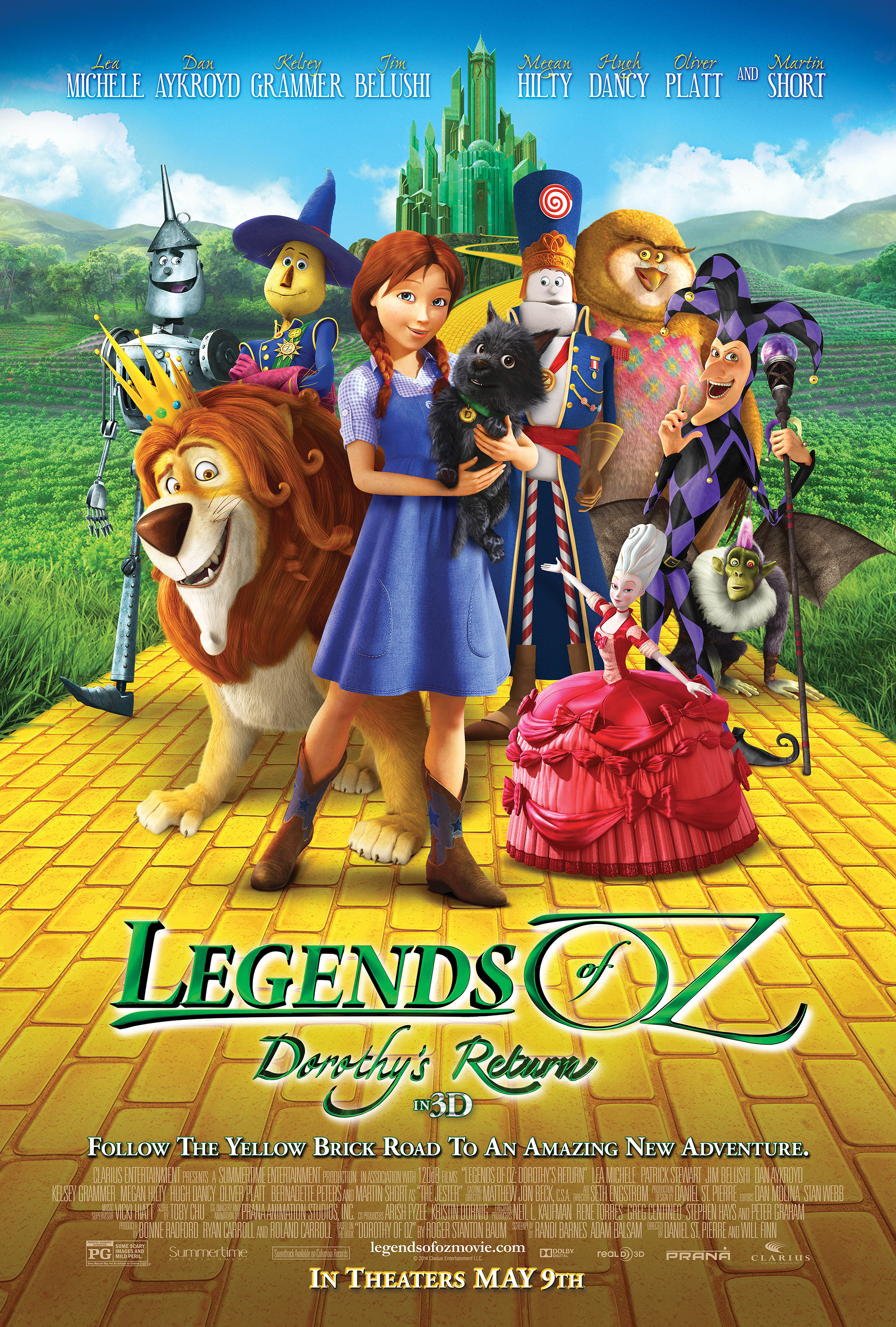
Crowd scenes were male dominated, whether they were soldiers, flying monkeys, judges, police, or trees, females mostly went missing. But, Dorothy is the star of this film. She is heroic, she’s “the one” to save Oz, and she saves her hometown too. All this is a rarity in children’s movies, so I hate to write this, but there’s something almost unbearably bland about Dorothy. I wish she had more personality, was funny or silly, something. I never, not for one minute, lost myself in this movie.
Every time I see a mediocre Oz movie (recall last year’s James Franco vehicle) I pray Hollywood will make a movie about Ozma, the rightful ruler of the land over the rainbow. I’ve adored Ozma since I was a kid, she’s such a great character. Hollywood, are you listening?

Beggars can’t be choosers. Also, I’m 45, and the kids with me, ages 5 – 10 seemed into ‘Dorothy,’ so Reel Girl rates ‘Legends of Oz: Dorothy’s Return’ ***HH***
Feminist scholar bell hooks is all over the media for calling Beyonce a terrorist. But that’s not the shocking part of the New School hosted debate. Writer Marci Blackman was on the panel, and she spoke about being stopped by TSA agents while returning from Florida last week because they couldn’t tell if she was male or female. Gender ambiguity is clearly offensive and dangerous to America, right? The TSA’s discrimination and abuse of power ought to be making headlines today. Here’s Blackman’s story as told to bell hooks (transcribed by me because I couldn’t find it anywhere else.)
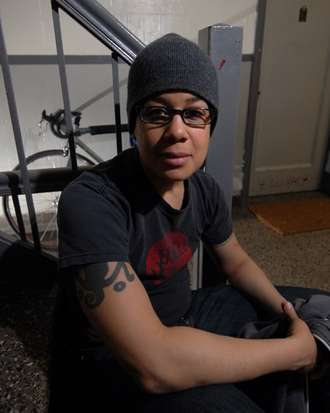
After I come out of the body scan, they ask me for my boarding pass again, which they’re not supposed to do. And I give the man my boarding pass, and he waves over a female TSA agent who comes over and pulls me aside for a pat down search, and I asked why. And they wouldn’t say anything to me, and I said, “Look, I need to know why.” And so the first response was: “Well, we always search everybody three times.” And I said, “Well that’s clearly not true, because the ten people before me just walked right on through and got their bags. So why me? What is it about me that made you stop? Did something go off in the scan?” And finally she said, “It’s because we can’t tell if you’re male or female…ma’am.” So now, not only am I not in this box that I can’t find and that I wouldn’t want to get in anyway, but now, I’m a criminal, because I’m not walking or sitting or fitting or squeezing myself into this box that’s defined for me by somebody else.
Watch the video here, Blackman’s story is 23 minutes in.
While I was reading Her Next Chapter, the new book out on mother-daughter book clubs, I got chills. Multiple times. I felt so excited because I kept getting ideas about how to talk to my daughters about issues that are important to them. Before this book, when bringing something up like bullying, it was not uncommon for me to feel uncool, out of touch, or intrusive. I am still all of those things, but now I see a bridge I can cross, or at least walk half way over to meet my kid: a mother-daughter book club.

Talking to kids can be hard when you have strong opinions or beliefs. Your children are likely to either co-opt your opinion or react against it, instead of finding the strength, courage, and sense of self to figure out what they think. That’s why parents are advised to “mirror” little kids as the best way to help them gain a stable sense of self. But what about when they’re older? How do you show children what you think, while still hearing what they have to say? Listen to them without drowning them out? Kids are not small adults, and it doesn’t work to simply say to them: “This is what I think. Now, tell me what you think?” But a mother-daughter book club can help provide the structure and safety for rewarding mother-daughter interactions around the major challenges of growing up.
In Her Next Chapter, author Lori Day shows moms how to use books to talk to their daughters. She organizes Her Next Chapter around Middle Grade or Young Adult media that deal with different important issues in a girl’s life. Categories include: Stereotypes and Sexism, Sexualization of Girlhood, body image, bullying, abuse, sexuality, power/ leadership, and girls around the globe. For each of these sections, Day recommends books, movies, and other media like TED talks or YouTube videos. She also provides excellent discussion questions.
So if you want to talk to your daughter about bullying, instead prying answers and information out of her, try picking up Stargirl. Day describes this protagonist as “unlike most girls we know in real life because she does not care what anyone thinks of her– not of how she dresses, dances, or sings.” Everyone loves her, but then the popular girls get jealous and shun her. So she tries to be more normal. That doesn’t work either. Day doesn’t spoil the ending, but writes that it’s stunning. I read the description to my ten year old daughter, and she’s totally into it. We’re both going to read the book and then talk about it. Day includes 8 discussion questions about Stargirl such as- this is all one question: “How important is it to Stargirl to be liked? What about Leo? How important is it to you to be liked?” Another question: “One of the beautiful things about Stargirl is how much she cares about bad things happening to other people, yet she seems unaware or unaffected when bad things happen to her. Do you know any girls like this? If so, how are they treated by other kids?”
My daughter is especially interested in watching the movies Day recommends in the bullying section– “Odd Girl Out” and “A League of Their Own.”
There are many great sections in Her Next Chapter by Day’s daughter, Charlotte Kugler. Kugler gives her own recommendations, for example in the Bullying section, she suggests the Uglies series by Scott Westerfield. She writes about the challenges and rewards of her book club with her mom, and how it influenced her.
Her Next Chapter takes you through the steps of how to start a real book club with multiple moms and daughters. Day shows you how to keep your club healthy and functioning at the highest level. Reading about this institution and the work it takes, I am aware I can’t fit it in my life right now. Mostly, with three daughters that are young, there’s too much going on along with finishing my own book right now. But even without committing to a whole club, I see how to use the information in Her Next Chapter for the benefit of my whole family, and that’s one of the many reasons I wanted to blog about it. I hope to do the full book club someday. It sounds like heaven, or at least, the mother-daughter incarnation of it.
Camp Reel Stories believes that when women are better represented behind the scenes in the media, they will be better reflected on the screen. Camp Reel Stories is a non-profit summer program designed to empower 13-18 year old women with the skills to create their own media, to view current media critically and thoughtfully, and to aspire to leadership in their field.
Here’s a repost of my interview with Camp Reel Stories founder, Esther Pearl.
Posted on February 14, 2014
Last year, Esther Pearl and Zoe Boxer founded Camp Reel Stories, a media camp in the Bay Area for girls ages 13 – 18. Excited by the concept and curious about how the camp helps girls turn big dreams into practical action, I interviewed Pearl. Her responses are below. I cannot wait until my kids are old enough to experience this magical place.
What inspired you to found Camp Reel Stories?
I have worked in film and media production for 15 years, and though I really loved my work I was often disappointed in the lack of female characters on the projects I worked on and how few female colleagues I had. When I became a parent to a little girl I dug deeper into this inequity and what I found was astonishing.
From 2006 to 2009, not one female character was depicted in G-rated family films in the field of medical science, law, politics, or as a business leader. In these films, 80.5% of all working characters are male and 19.5% are female, which is a contrast to real world statistics, where women comprise 50% of the workforce[1]. Even more staggering is the fact that this ratio, as seen in family films, is the same as it was in 1946. These statistics are enormously detrimental to young women’s impressions of themselves and their perceived value in the world. While this is disheartening, this also means there is a vast untapped market for both talent and products that represent the diversity of our society.
I look at this as a great opportunity to create change in not only the lack of equity in the industry, but a creative opportunity to create new filmmakers and producers that are excited about creating characters and storylines that interest them.
My partner and I created Camp Reel Stories (CRS) as a fun way to connect young women with professional mentors, give them story telling and production skills to tell stories that reflect their unique point of view, while incorporating media literacy and leadership workshops. CRS believes that when women and girls are better reflected behind the scenes they will be better reflected on the screen.
What do you teach the girls during the sessions? What do you think they get out of their time at the camp?
Our campers get a lot! They learn filmmaking and production from leaders in the field, they take media literacy and leadership workshops. The girls work in small teams and have an adult producer that guides them the process and in just one week they write, shoot and edit a short film. Last year we had six films completed and this year we will have even more! They also have the collaboration and creative skill building process mirrored for them as they see they professional mentors work together to create not only great short films, but a fun camp experience.
How many campers attend?
In 2013 we held our inaugural camp and we had 32 campers. This year we will have 2 summer camps and can take up to 90 girls, and those spaces are filling fast. You can apply at http://campreelstories.com/apply
What do the alumni go on to do?
Thus far we have 50% of of campers signed up again this year. We have elected 2 student board members from our first cohort to the CRS board to help grow our organization. Two of CRS films were accepted into a local film festival and were screened for a huge audience just this past Friday night and other festivals have asked me to submit their work. 100% of attendees surveyed from the CRS pilot camp said through CRS they learned how gender equity in the media affects the way women are perceived in the media, 85% now view the media more critically and 92% felt more comfortable in their leadership ability, felt their skills as filmmakers improved and plan to continue making films. 20% of our campers have made changes or created an educational plan for a career in the media.
Also many of our campers have used what they learned in camp to speak to their classes and schools about gender inequity in the media, sharing knowledge about the Bechdel test and to organize screenings of films with strong female characters.
What are some examples of media that you think promotes positive images or girls and women?
This is a tough one, because as an adult and a parent of young children I have a different lens than our campers about what a positive image is. The media has made it harder and harder to decipher between a celebrity and a role model. This is something I talk about a lot with my own kids and with our campers. There is a difference between a Kardashian and an actress, it’s important to acknowledge that.
Personally I have seen a lot of films that have really interesting characters and relationships that wouldn’t always be appropriate for a younger audience and I like complicated characters. Recently I saw and loved, Enough Said, Short Term 12, The Bling Ring, Philomena and Frances Ha.
With my daughter and son I find it so hard to find interesting characters in films that we all can enjoy. We all really like the Miyazaki films and we are introducing films from awhile ago since the pickings are slim currently. Some of those are Bend it like Beckham, Black Stallion, Mary Poppins. And everyone loved Brave and Despicable Me.
The campers also seem to be able to access to Netflix, Hulu and other online resources to search out media that they can relate to. I was surprised that so many teenagers were familiar with some 80 and 90s classics, such as Breakfast Club, Harold and Maude, Amelie since they can’t find a lot of current media they can relate to.
What do you do during the rest of the year? Do you plan to expand? What are your goals for the camp?
The rest of the year is spent planning the future of Camp Reel Stories. This year we will triple in size, we will offer 2 summer camps and an afterschool program in the fall. 40% of our campers are on financial aid so I am always fundraising to make sure that anyone that wants to attend can. The films from last year have been entered in several film festivals and now are being selected and screened. I also try to collaborate with as many like minded organizations as possible.
We hope to offer camps in other locations the just the Bay Area in 2015 and we are researching those opportunities now.
What is a typical day at camp like?
Each day is a little different, but we incorporate icebreaking and leadership activities into every morning. The girls are on an accelerated schedule, so they have to get to know one another AND learn filmmaking quickly so that they can get to creating their films. Everyday they learn about some part of the creative process and immediately get hands on experience in that area. On Monday morning 30-40 girls who don’t know one another walk into a room, but the end of the day the have formed a small team and have an idea of what they want to make. That process is impressive and we are amazed at how quickly the girls can set aside their differences to get on to the creative process.
Tuesday they learn storyboarding, audio and video and work with their team to finalize their story. They also take a media literacy workshop so that they can see the direct correlation to the lack of representation both behind and in front of the camera. Wednesday they shoot, Thursday they learn to edit, and they edit a rough cut of their project and then at the end of the day show it to their fellow campers and get creative feedback. Friday they fix, by either reshooting or reediting, anything that they want and on Saturday they screen it at a Camp Reel Stories film festival which 250 people attend.
It is amazing to see these young women come out of their shell in the course of the week and I can’t wait to see what this year brings. We are restructuring a bit since we got requests for both more time to shoot and more media literacy.
It sounds like a lot of work, but we also have a lot of fun. In the end we are so proud of the work that the campers have done and the community created, not only with the campers, but with our volunteers, professional mentors and families. It’s quite exciting to see everyone fired up to create media that is more interesting and reflects the diverse fabric of our lives.
Visit Camp Reel Stories here.
Donate here.
After reading excerpts of Monica Lewinsky’s piece in Vanity Fair, I felt relieved. She survived. After all these years, she seems okay.

First of all, it’s not an interview. Lewinsky isn’t leaving this version up to someone else.
I’ve decided, finally, to stick my head above the parapet so that I can take back my narrative and give a purpose to my past.
In the piece, she lays out her take of the damage done to her:
Sure, my boss took advantage of me, but I will always remain firm on this point: it was a consensual relationship. Any ‘abuse’ came in the aftermath, when I was made a scapegoat in order to protect his powerful position. . . . The Clinton administration, the special prosecutor’s minions, the political operatives on both sides of the aisle, and the media were able to brand me. And that brand stuck, in part because it was imbued with power.
On the rumor that Hillary Clinton called her a “narcissistic loony toon,” Lewinsky responds:
If that’s the worst thing she said, I should be so lucky…Hillary Clinton wanted it on record that she was lashing out at her husband’s mistress. She may have faulted her husband for being inappropriate, but I find her impulse to blame the Woman — not only me, but herself — troubling.”
Thanks, Beyoncé, but if we’re verbing, I think you meant ‘Bill Clinton’d all on my gown,’ not ‘Monica Lewinsky’d.
Now interested in helping victims of cyberbullying, Lewinsky writes:
Thanks to the Drudge Report, I was also possibly the first person whose global humiliation was driven by the Internet.