Does ‘Maleficent’ depict matriarchy vs patriarchy or world where gender isn’t destiny?

This is my fifth post on the fabulous ‘Maleficent’ movie which I saw with my three daughters and my husband last Friday. I’m obviously a little obsessed.

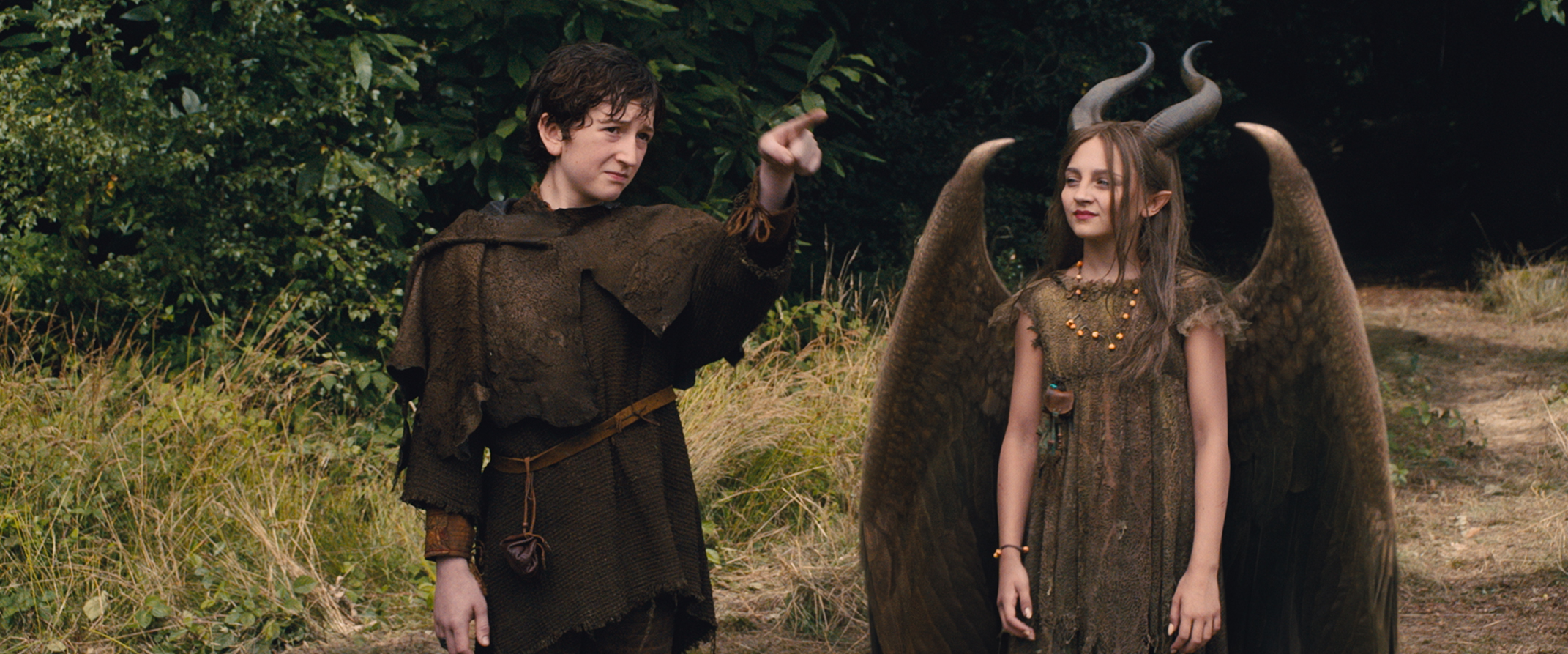
Maleficent-2014-image-maleficent-2014-36106527-738-1082

If you’ve been following my blogs, I keep arguing, contrary to what almost everyone else seems to believe, that when Stefan cuts off Maleficent’s wings, it’s not necessarily a rape metaphor. I’d like to set one thing straight given the comments I’ve received. Yes, everyone is allowed their own interpretation. My blogs, about how this scene is not rape, I am quite aware come from my own bias that I want to lay out for you here:

(1) I am 45 years old and exhausted with seeing women raped on screen. I just wrote about my fatigue regarding bell hooks’s forum: Are You Still a Slave ? Liberating the Black Female Body with a blog title borrowed from a hooks quote: “If I never see another naked, enslaved, black woman on screen, I’ll be happy.”

(2) I have 3 daughters ages 5, 7, and 10, and I am desperate for them to experience fantasy worlds where gender equality exists. This wish of mine probably goes back to my first point, that I am 45 and sick of seeing the “feminist” trope where the female struggles against the patriarchy. It’s not just that I’ve seen it one million times before, but that in order for my children to see a girl struggling to be taken seriously or be strong or powerful even though she’s a girl, first my kids have to understand sexism. In order to “get” the story, first they have to understand that the world believes girls are less than boys. I would prefer, certainly for little kids, that they be exposed to fantasy worlds where girls and boys are depicted as equal, where girls are not made fun of, put down, or limited because of their gender. I understand how important the narrative of the girl proving she’s “just as good as a boy”  is historically, I’m not asking for it to be obliterated, I’m just asking for more stories where there is gender equality. If we can’t imagine gender equality, we cant create it. At this point, The Hunger Games may be the only fantasy world I’ve read where gender is not an issue.

(3) There are several reasons I believed “Maleficent” depicts a fantasy world where gender isn’t destiny rather than matriarchy vs patriarchy. Everyone is allowed their own interpretation, author’s intention is dead, but it can still be a factor in understanding the movie. I believed that it was both the screenwriter’s and Angelina Jolie’s intention that the conflict in the movie was not male vs female but human vs Fairy. Here are the reasons why:

A. The narrator introduces the movie as one about two worlds, one human and one magical.

B. When Stefan is first introduced, Maleficent is curious about him because he is a human, not because he is a boy.

C. With most of the scenes between them being childhood ones, I experienced the relationship between Stefan and Maleficent as special because it was a friendship between two warring species.

D. This quote from the writer, Linda Woolverton:

I had to figure out what possibly could have happened to her to make her want to hurt an innocent baby. Something that would equal that act. In the animated movie, she had no wings. She just threw her robes open like wings. I thought, ‘Is that it? Did someone take her wings?

Maleficent’s wings defined her as a Fairy. These wings were cut. This violence had nothing to do with her genitals/ rape. Why must we assume that when violence is done to a woman, it must involve her genitals? When Delilah put Samson to sleep in her lap and his hair was cut, was that a rape metaphor? As someone on Reel Girl’s Facebook page commented, the Maleficent scene could be compared to cutting off the hand of a concert pianist or, I might add, cutting off the wings off a Fairy!

E. This quote from Angelina Jolie made me think she wanted “Maleficent” to depict a world where gender isn’t destiny instead of matriarchy vs patriarchy.

“Our movie has all this strength and all this feminism, but, what I think is so nice is that, sometimes, in order to do that you have to make the man an idiot. Instead, we have this very elegant, wonderfully handsome, prince who, in the end, is great. He doesn’t need to be less than to make us more than. We don’t have to simplify or cheapen the men, or to detract from one to make the other better. I think that’s a mistake that’s often made in movies.


But, here’s my new news. It’s been one week since I saw “Maleficent,” and now I realize, to my dismay, though I still love this movie, I agree with so many others: “Maleficent” is not a world where gender isn’t destiny but depicts the conflict of matriarchy versus patriarchy. So why my change of heart? Is it that I now agree the wing cutting is clearly a rape metaphor? That the relationship between Stefan and Maleficent is primarily romantic?

No. What’s made me change my perception is I’ve been dwelling on my one earlier disappointment with the movie. The human crowd scenes are populated by all male characters. Please, tell me I missed something, but from my recollection, the king’s army is comprised of all male soldiers. When the king sends his followers to kill Maleficent, wishing for an heir, the circle around him is all male. And when Stefan returns with Maleficent’s wings, the king says something to the effect of, “Take my daughter.” If the king had been surrounded by half women when he sends his minions off to kill, if the army had been half women fighters, if we’d seen Maleficent use her power to strike down women soldiers as well as male ones, this fantasy world would’ve been one where gender doesn’t matter. But we did not see this. Therefore, the movie is clearly about patriarchy vs matriarchy, thus, the rape scene makes perfect sense.

Still, Angelina Jolie may have intended for her movie to depict a world where gender isn’t destiny rather than matriarchy vs patriarchy. But, if this is the case, she should’ve made sure the crowd scenes showed men and women equally. The scene could be primarily males just because of Jolie’s– and the producer’s, writer’s, director’s obviously–  unconscious bias. But this is why author’s intention doesn’t matter, because viewers see things in the story that are there whether the creator “chose” to put them there or not.

The Geena Davis Institute does extensive research on gender bias in children’s films, coming up with two– just two– main ways to make kids’ films show gender equality:


Step 1: Go through the projects you’re already working on and change a bunch of the characters’ first names to women’s names. With one stroke you’ve created some colorful unstereotypical female characters that might turn out to be even more interesting now that they’ve had a gender switch. What if the plumber or pilot or construction foreman is a woman? What if the taxi driver or the scheming politician is a woman? What if both police officers that arrive on the scene are women — and it’s not a big deal?

Step 2: When describing a crowd scene, write in the script, “A crowd gathers, which is half female.” That may seem weird, but I promise you, somehow or other on the set that day the crowd will turn out to be 17 percent female otherwise. Maybe first ADs think women don’t gather, I don’t know.


It’s sort of like how someone said, I forget who it was, that we won’t have gender equality when female geniuses make it through the glass ceiling, when exceptional women break barriers, but when the mediocre, average ones make it into the power structure, just like all the average white men are up there. It’s all about the crowd scenes.

Alternative title for this post: What happens when an over-educated woman has three daughters and gets stuck watching way too many Disney movies? She blogs.

Update:  I’m getting comments on Reel Girl’s Facebook page asking if I still recommend Maleficent for kids. Yes, absolutely take your children to see this movie, rape metaphor or no. They will not get the metaphor. It’s only disappointing to me because, as I wrote, I would like children to experience fantasy worlds where gender equality exists, and I’ve come to believe that “Maleficent” isn’t one of those worlds. Still, the movie has a great female protagonist (rare in kids’s films) and shows other strong, complex female characters as well. All three of my kids and my husband enjoyed the movie. Read the last post listed below for my full review.

Reel Girl’s posts on “Maleficent:”

What if ‘Maleficent’s’ Stefan had been Stefanie?

‘Maleficent’ beats MacFarlane at the box office (and she didn’t even show her boobs)

‘Maleficent’ is not ‘a woman scorned’ so stop calling her that

Magnificent ‘Maleficent’ is for all the girls who always wanted to fly
 

What if ‘Maleficent’s’ Stefan had been Stefanie?

I’m seeing so many posts comparing the cutting of Maleficent’s wings to rape or genital mutilation, along with commentary that the movie is anti-men, that I’m wondering: How might the movie change if Stefan had been Stefanie?

MALEFICENT_PRODUCTION_NOTES_Hi-Res_4-30-14_Page_05_Image_0001

When violence in a narrative happens to a woman, must we think of her genitals? In the story of Samson and Delilah, she “puts him to sleep in her lap” and then cuts off the source of his strength– his hair. Is that a rape metaphor?

For me, Maleficent’s character is primarily a Fairy, a magical creature who happens to be female. Stefan is primarily a human who happens to be male.

Either way– if the violence is or is not a rape metaphor– clearly, the movie is about Maleficent’s recovery, so that’s the important thing. It’s just irritating to me because I’m so sick of watching women get raped on screen. To watch a movie and not have that experience, but then to see so many others have it, is frustrating.

So bear with me: consider the plot switch, from Stefan to Stefanie. For me, the structure of the narrative wouldn’t change much at all. I realize Maleficent falls in love with Stefan and receives her first kiss from him, but that aside, assuming she’s not gay, here’s how the plot would go– pretty much the same: The first thing Maleficent asks Stefan is if he’s a human or not. Maleficent’s attraction to Stefan had to do with his human-ness, not his man-ness.Humans live in a separate world than the magical world. That’s how the narrator introduces the whole story, and the difference between Maleficent and Stefan primarily as Fairy/ Human rather than woman/ man. Their relationship is primarily a dramatic friendship forged between two species who are supposed to fear and hate each other.

I’ve written about this before, but after his human-ness, Stefan is defined by his ambition: he steals in the first scene, and he says he wants to love in the castle. Easily, an ambitious human “Stefanie” could’ve played this part. “Stefanie” is then tasked by the king to kill “the winged creature.”  Yet, when it comes to the moment of killing, she can’t quite do it, so she takes Maleficent’s power– her wings– from her. The betrayal is still deep, committed by a childhood friend, destroying a bond formed two species, Humans and Fairies, who were supposed to hate and fear each other. We’d also get another starring female part and no more tangential talk all over the internet about “man-hating.” Obviously, the movie is not about “man-hating” anyway. Aurora ends up with a loving, cute, brave guy, as well as remaining a friend to Maleficent. In Angelina Jolie’s own words:

We wanted to tell a story about the strength of women and the things they feel between one another,” Jolie said. “Our movie has all this strength and all this feminism, but, what I think is so nice is that, sometimes, in order to do that you have to make the man an idiot. Instead, we have this very elegant, wonderfully handsome, prince who, in the end, is great. He doesn’t need to be less than to make us more than. We don’t have to simplify or cheapen the men, or to detract from one to make the other better. I think that’s a mistake that’s often made in movies.

So, if Stefan had been Stefanie, this whole “man-hating” interpretation would be nicely cleared up. Do you think Hollywood would make a movie with three female leads? Two female villains? Wouldn’t that be great? Tell me what you think.

‘Maleficent’ beats MacFarlane at the box office (and she didn’t even show her boobs)

This weekend, ‘Maleficent’ surpassed industry expectations becoming the top money-maker at the box office taking in 70 million, making it the biggest opening of Angelina Jolie’s career.

Maleficent-2014-image-maleficent-2014-36106527-738-1082

Meanwhile, Seth MacFarlane’s “A Million Ways to Die in the West” disappoints, bringing in just 17 million.

(Pause here for victory dance celebrating girls and women everywhere.)

“Maleficent” is the latest female driven film, after “Frozen” and “Catching Fire,” to make tons of money and debunk the ridiculously sexist myth that only movies with male protagonists are super profitable. This powerful lie influences the movies that get made for children as well. For example, in 2014, 18 kids’ movies star males while only 6 star females.

It’s especially great to see MacFarlane stumble because the guy is such a sexist pig. He’s the Oscar host who sung the horrible, offensive, and not funny “We Saw Your Boobs” song. MacFarlane called out great actresses like Meryl Streep, Nicole Kidman, and Helen Hunt, telling them that he “saw their boobs,” acting like this on screen nudity was a show just for him– and all males– and had nothing to do with the narratives or the parts these women played. He sung that he saw Jodie Foster’s boobs when she played a rape survivor in “The Accused.” The guy makes me sick. That night, he sung that he saw Angelina Jolie’s boobs as well. Now, who’s the boob? It looks like it’s time for MacFarlane to start thinking about what he can show to get people to buy tickets for his boring, loser movies.

‘Maleficent’ is not ‘a woman scorned’ so stop calling her that

There is so much talk in the feminist internet about ‘Maeficent’ being portrayed as ‘a woman scorned’ that I feel I must right the misconception here. As far as I can tell, the false rumor was fueled by this review in the LA Times:

Alas, though Maleficent’s magical forest is equipped with stomping tree beasts and squat, mud-slinging gnomes, she has no Top 40 station to teach her that her lifelong boyfriend should have put a ring on it. So she does what any wounded woman would do: Curse his baby daughter to an inescapable coma.


Like Oz the Great and Powerful, Maleficent considers itself a revisionist fairy tale that spins a demonized witch into a feminist icon. Hardly. Both movies hinge on a man, as though the sheer power of being rejected by one dude is enough to make any girl nuts. Maleficent and the Wicked Witch of the West can terrify armies, but they cede their emotional strength to a mortal twerp.

I really don’t get how the reviewer could twist and reduce this movie to come up with such a simplistic and ridiculous analysis. Maleficent is pissed because her wings were cut off. A perfect metaphor that should be obvious to anyone who watches this movie. If you need more proof, here’s a lovely quote from the writer, Linda Woolverton, about what was going through her head as she re-imagined this fairytale:

“I had to figure out what possibly could have happened to her to make her want to hurt an innocent baby. Something that would equal that act. In the animated movie, she had no wings. She just threw her robes open like wings. I thought, ‘Is that it? Did someone take her wings?’

Maleficent curses the baby because she’s lost her wings, she’s lost her power. Clearly, Maleficent enjoyed those wings. They were taken from her. Wouldn’t that make you angry?

Also, the guy who cut off Maleficent’s wings, she befriended when she was a kid. Stefan was always been greedy and lustful for power. When Maleficent first meets him, he’s just stolen something. One of the first things Stefan tells Maleficent is that he wants to live in the castle. But Stefan is not all bad. He’s charming, the two of them have fun together, he tosses his iron ring when he sees that the metal hurts her. And once again, they are children. Haven’t you stuck around with a friend because you’ve been friends for so long? Stefan’s character is contrasted with Maleificent’s in that her heart grows cold as well, but she changes, she acts while Stefan sits around and mopes.

Jezebel also has complaints about the movie. Regarding Maleficent:

And the whole place is governed by this whimsical child-mayor named Maleficent (seriously, HOW DID YOU GET ELECTED YOU ARE EIGHT)


Because she is the most powerful Fairy! That is how she is introduced by the (female) narrator at the beginning of the movie.

Jezebels’ next complaint is obviously kind of tongue in cheek, but again, it implies the interaction between Maleficent and Stefan in anti-feminist:

When she wakes up in the morning, her huge beautiful majestic wings have been sawed off and stolen.

Let me repeat. In Maleficent, a PG-rated Disney movie, a man ROOFIES A FAIRY AND VIOLENTLY TAKES HER “WINGS” WHILE SHE’S UNCONSCIOUS.

Wait, maybe it’s not tongue and cheek:

I was surprised. I think of myself as having a pretty consistently perceptive and sensitive Good Feminist™ barometer, and—the groaningly cheap and clumsy rape allegory aside (as far as you can set such a thing aside)—I’d enjoyed Maleficent mostly without pause.

Seriously? Protagonists have been drugged in narratives from time immemorial. I didn’t get any kind of predatory sex vibe from this scene. Is the reviewer saying females cannot be drugged in a narrative because that must be understood as date rape? That was the last thing from my mind watching this part of the movie, and this is my mind that we’re talking about. Once again, please refer back to the writer’s quote.

Jezebel has more problems with the feminist cred of the movie:

The more my friend and I talked about it, the more problems came to the surface. Did the final battle have to be so brutal and soooooooo long?

Yes, it did. We had to see Maleficent revel in her power. And it wasn’t even that long. Violence is a part of narratives because art is metaphorical and depicts emotional realities. Here’s what Peggy Orenstein wrote about it in Cinderella Ate My Daughter:

“Violent play is not by definition bad or harmful for kids. Any child shrink worth her sand table will tell you it can help them learn about impulse control, work out the difference between fantasy and reality, and cope with fear….Children of both sexes crave larger than life heroes. They need fantasy. They also, it seems, need a certain amount of violent play…something that allows them to triumph in their own way over this thing we call death, to work out their day-to-day frustrations; to feel large, powerful, and safe.”


Next problem:

Did the meet-cute have to be so shallow?

I don’t know what that means.

Did Maleficent have to be punished so profoundly for succumbing to her completely justified rage?

Huh? She’s triumphant in the end and redeemed. I loved that about the movie.

Did the supporting female characters have to be so useless?

Yes, they were contrasting to Maleficent who protected and watched out for Aurora (and that’s why they were not the “mayors” of the moors even though they were older, Maleficent was always the smartest and most powerful and born to rule.)

Read my review of “Maleficent’ here.

Magnificent ‘Maleficent’ is for all the girls who always wanted to fly

WOW I loved loved LOVED Maleficent. From the opening to the ending, I was mesmerized and so was my husband (“she kicked ass!”) as well as my three daughters. I cannot recommend this movie more to you and your entire family.

The movie begins with the young Maleficent.

MALEFICENT_PRODUCTION_NOTES_Hi-Res_4-30-14_Page_05_Image_0001

My kids always love seeing the part of the movie that features a younger version of the female protagonist, the one who is closer their age. I remember that being one of my favorite things to watch when I was a kid too. The movie starts with the young Maleficent soaring across the screen, and it is so magical to see her fly and fly and fly. These scenes are especially wonderful because we’ve all been subjected to movies from “ET” to “How to Train Your Dragon” where its the males who fly, while the girls, if they’re lucky, get to cling on to some dude’s back while stuck in the passenger seats.

Maleficent is so powerful and magical. She is not a Minority Feisty. Not only is Aurora AKA Sleeping Beauty also a starring part, and wonderfully played by Elle Fanning, but there are the three Fairies (formerly known as Flora, Fauna, they have different names in this movie) with big supporting roles

When Maleficent is stripped of her power, her wings are clipped. Can you imagine a more perfect metaphor for women and cinema? Her wings are incredibly done too, huge and magnificent and beautiful. She relishes flying and she relishes her power. You see that in Angelina Jolie’s face throughout the film. I was worried that Jolie would be too made up, the way Johnny Depp sometimes is, so that you couldn’t experience her great acting. But that was not the case.She doesn’t get lost in the special effects. They are done perfectly to enhance her character.

20140317_maleficent_onlinespotwingreveal

Maleficent and Aurora have a complicated, evolving relationship like nothing I’ve ever seen before in a Disney movie where, so often, women are pitted against each other, especially older and younger ones. Not only is that not the case here, but the whole dichotomy of hero/ villain is also turned on its head. One of my favorite parts of the movie is when Aurora is crowned a queen, not a princess.

I’ve always been more interested in Disney’s female villains than its one dimensional princess/ heroines. And of these villains, Maleficent was always my favorite. You can’t beat that horned, caped silouette. (Here’s a picture of my 10 year old daughter in my Disney female villain nightshirt, which is several years older than she is.)

Bo6Y5btIIAAEv1Z

Thank you to Angelina Jolie for getting this movie made so my children– and all children– can witness a powerful, magical female in all of her spectacular glory.

Reel Girl rates ‘Maleficent’ ***HHH***

Read more Reel Girl posts on this movie:


‘Maleficent’ is not ‘a woman scorned’ so stop calling her that

‘Maleficent’ beats MacFarlane at the box office (and she didn’t even show her boobs)

What if ‘Maleficent’s’ Stefan had been Stefanie?


“Belle” inspired by the painting

Always interested in the role of art in shaping reality and narratives, I wondered if the painting of Dido and her cousin, Elizabeth, inspired the movie. Apparently, it did.

6Z5KdprMYdUx

From SFGate:

The screenwriter has said that “Belle” was initially inspired by her seeing the painting of Dido and Elizabeth at Scone Palace in Scotland. The painting, worth seeking out online, gets more beautiful the more you look at it. In the ease of their postures and the warm and confident expressions of their faces, one can see that those young women knew something – their own worth and each other’s.


Screenwriter Misan Sagay

headshot

Director of “Belle” Amma Asante

Amma-Asante-4


From the New York Times:

While she was an undergraduate at the University of St. Andrews in Scotland in the 1990s, Misan Sagay visited the nearby Scone Palace, where a rare double portrait caught her eye. Painted in the Gainsborough style of aristocratic figures in an Arcadian landscape, the canvas showed two young women swathed in lustrous satin, gleaming pearls circling their swan necks. The vivacious one on the left is biracial; her unhurried companion is white.

Ms. Sagay, who is Anglo-Nigerian, studied the wall label. It read: “Portrait of Lady Elizabeth Murray, circa 1778.”

Naturally, Ms. Sagay was curious. What of the woman on the left, whose forearm Elizabeth clasps so fondly?

In 2009 Amma Asante, a British-born filmmaker of Ghanaian parentage, received a screenplay written by Ms. Sagay. Attached was a postcard reproduction of the painting. Even before reading the script, Ms. Asante recalled, “I was inspired by the image.” She said that in European paintings of the late 18th century, blacks were often depicted as lower-class figures to affirm the higher status of the white subject. “I knew how unique it was,” she said, “that the black woman was not looking with adoration at the white woman, and that the white woman was tenderly touching her companion.”

How many different stories and movies and television shows and apps do you think we’d have in 2014 if we weren’t surrounded by thousands of years of paintings by white men of naked women?

‘Belle’ most extraordinary film of the year, take your kids!

I just saw “Belle.” It is so good. I have no time to blog right now, but I’ve got to tell you how extraordinary this film is.

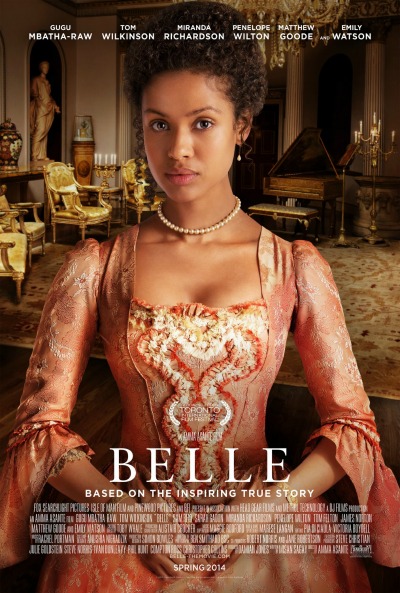
belle-movie-poster

I’m going to list the reasons, and hopefully, I’ll have time to come back later and tell you more. It’s remarkable I saw this movie today because I just blogged about the talk where feminist scholar bell hooks said she was sick of seeing black women being raped on screen, how she was willing to see more films about slavery, but it had to be a different take than black woman as victim. At the same talk, flimmaker Shola Lynch said she wanted images that fed her. Watching “Belle” is like satisfying a craving I’ve had for my whole life. The narrative turns many stereotypes on their heads, and that is beautiful to see.

#1 Black female protagonist

Dido Belle is the star of this movie. I’m going to call her Dido from now on because that’s how she’s referred to in the film. I’m guessing “Belle” made a better title. How many films have we all seen where the black girl is the BFF of the white girl? In this movie, the blonde, blue-eyed cousin has the supporting role. Dido is the hero of this movie, she is the one with alll the screen time, who makes choices, takes risks, and goes through a transition.

#2 Female cousins are not cardboard opposites or rivals

Belle2-1024x681

One cousin is black, the other white but both girls are both smart, compassionate, and beautiful, there is not an “attractive” one and a “smart” one. They are complex. And, get this, are you sitting down? They are friends. They love each other. There is complexity and also conflict but not in a cookie cutter way.

#3 Class, race, and gender are all addressed brilliantly

This is the first film I’ve seen that addresses intersectionality like this. There are so many great lines and plot points that show the complexity of these issues. I’ll list a few. Dido is the daughter of a an English aristocrat and a slave. When Dido’s mother dies, her father comes to take her to his estate. A captain of the English navy, he leaves Dido with his uncle, the most powerful judge in England. Dido’s father can’t return because he is following the king’s orders, and he dies. This all happens in the first 10 minutes of the movie. The captain leaves Dido his money, 2000 pounds a year. So Dido is a rich woman, an heiress.

Dido’s white cousin gets no money from her family because her father is a “scoundrel” who, after her mother died, married another woman. All his money is going to his new family. The cousin must marry wealth, she has no income of her own and British law forbids inheriting from her grandfather because– do you watch Downton Abbey– she’s female.

So great lines ensue when the cousin says to Dido, this is not an exact quote “I envy you, you are free. I must marry money, and I’m forbidden from making any on my own. I am my future husband’s property.”

That line is there to remind the audience that women were slaves. Women’s bodies belonged to men. Women were not allowed  to have their own income. I’ve had so many debates with people, and I have since high school, where I’m told “Women were never slaves.” Huh? Not only are women descended from slaves fairly recently in human history– think about laws about property, income, the vote which in the USA we’ve only had for 94 years– but in much of the world in 2014 women are still slaves.

There are more great plot points. The cousins get in an argument and the white one calls the black one illegitimate. Dido says, “My father loved me. You are the one who was abandoned by your father and that is why you are in the financial state you are in.” It’s clear the cousin agrees, she’s the “illegitimate” one.

#4 Role of art in passing down narrative

6Z5KdprMYdUx

There are many points in the movie where paintings are shown. When Dido first goes to the estate, as a little girl, she looks at a painting of her grandafther with a black boy servant/ slave.

At another point, Dido sees a painting of a slave bowing down worshipfully to a white man and remarks how paintings are like reality.

The movie makes clear how we are all affected and influenced by the “media” of the day, at that time, black people shown in repetitive images as inferior to whites.

In contrast, Dido and her cousin are painted together as equals. In the movie, they are the same size, right next to each other. In this painting, the real one, the white girl is more prominent, but it was radical at the time. I am glad in the actual movie both figures are the same prominence. The painting is commissioned by the uncle and at the end of the movie, whe nthey show the real painting. I cried. I didn’t know it existed.

Art creates reality and reality creates art. I love how “Belle” makes this truth a central theme of the movie.

I’ve got to research this movie, but I’m curious what role that painting had in inspiring the fillmmaker and keeping Dido’s story alive.

#5 Role of capitalism is race/ gender/ class

The movie addresses how the slave trade was crucial to the British economy. That is the reason so many people supported slavery. This brings to light how entrenched industries are today in our culture– the billion dollar beauty business for one– and how people benefit financially on all kinds of levels by maintaining inequality.

#6 Great roles for FIVE women in this movie!

There are many strong female characters. All the acting is great– Miranda Richardson, Emily Watson are in the movie. (Tom Wilkinson is amazing, as always, playing the uncle.)

#7 Romance

“Belle” is loved and adored by a man for her brilliance and strength. There is no sex and one  kiss but you feel the heat between the characters, rare indeed. In fact, this movie is so sqeaky clean, I wonder if the director and producers etc wanted parents to feel comfortable bringing their children to it. It’s not a “children’s movie” but I think it’s a great one for kids to see. I’m going to take my 10 year old daughter. As I just wrote, there is no sex/ nudity, and I would take my 8 year old to see it as well, except that you need to understand sex/ reproduction to get the whole white blood/ black blood legal issue. I have not had “the talk” with my 8 year old yet, so I’m not going to bring her.

Also, in order to understand the movie, your child will need to understand the concept of insurance. The central debate of the narrative is that a slave trade boat threw its “cargo” overboard because there was a lack of water and they were going to die anyway. The insurance company argues it doesn’t have to pay because the “cargo” could have been saved, that diseased slaves were thrown overboard because the insurance was worth more than the humans.

With those caveats (if they know about sex and if they can understand the basic concept of insurance) I’m recommending “Belle” for kids 8 years old and up.

Reel Girl rates “Belle” ***HHH***

Update: “Belle” was inspired by the painting. From SFGate:

The screenwriter has said that “Belle” was initially inspired by her seeing the painting of Dido and Elizabeth at Scone Palace in Scotland. The painting, worth seeking out online, gets more beautiful the more you look at it. In the ease of their postures and the warm and confident expressions of their faces, one can see that those young women knew something – their own worth and each other’s.


Screenwriter Misan Sagay

headshot

Director Amma Asante

Amma-Asante-4

From the New York Times:

While she was an undergraduate at the University of St. Andrews in Scotland in the 1990s, Misan Sagay visited the nearby Scone Palace, where a rare double portrait caught her eye. Painted in the Gainsborough style of aristocratic figures in an Arcadian landscape, the canvas showed two young women swathed in lustrous satin, gleaming pearls circling their swan necks. The vivacious one on the left is biracial; her unhurried companion is white.

Ms. Sagay, who is Anglo-Nigerian, studied the wall label. It read: “Portrait of Lady Elizabeth Murray, circa 1778.”

Naturally, Ms. Sagay was curious. What of the woman on the left, whose forearm Elizabeth clasps so fondly?

In 2009 Amma Asante, a British-born filmmaker of Ghanaian parentage, received a screenplay written by Ms. Sagay. Attached was a postcard reproduction of the painting. Even before reading the script, Ms. Asante recalled, “I was inspired by the image.” She said that in European paintings of the late 18th century, blacks were often depicted as lower-class figures to affirm the higher status of the white subject. “I knew how unique it was,” she said, “that the black woman was not looking with adoration at the white woman, and that the white woman was tenderly touching her companion.”

Did you see that line? “I was inspired by the image.”

How many different stories and movies and television shows and apps do you think we’d have in 2014 if we weren’t surrounded by thousands of years of paintings by white men of naked women?

‘If I never see another naked, enslaved, raped black woman on screen, I’ll be happy’

Last week, four black feminists participated in a panel discussion hosted by the New School titled: “Are You Still a Slave? Liberating the Black Female Body.” The talk– an in depth discussion about the influence of imagery and narrative on our culture and its role in creating our actual reality– went on for almost two hours. Yet, out of all this, the media reduced trenchant analysis into a sound byte, pitting one black woman against another: “Feminist scholar bell hooks calls Beyonce a terrorist.”

Bellhooks

I encourage you to watch the whole talk. I know you probably won’t, because, as I wrote, it’s two hours long. I didn’t intend to sit through it all myself, but I was so excited and fascinated by what these women were saying, I couldn’t stop listening to them.

These 4 women are creating new narratives and images, beyond woman as victim, sex object, slave. The discussion about Beyonce, specifically her Time cover where she’s shown in her underwear (which totally bummed me out as well when I saw it– why, why, why, the issue is about the most influential people and she’s practically naked, do you know how few women make it to the cover of Time?) is a few minutes of a larger, important talk about women, power, and the nature of reality.

beyonce-time_custom-99c02d6cff8f357a60b18a5c47a2c4a546a936c4-s6-c30

Here’s how bell hooks began the discussion:

Part of why I’m so excited and proud to be here today is that I’m up here with black women who are all about redefining and creating a different kind of image, liberating the black female body

Not a fan of “12 Years a Slave,” hooks says:

If I never see another naked, enslaved, raped black woman on the screen as long as I live,  I’ll be happy.


YES! I could not agree more. I am so sick of watching women get raped. After the talk, someone in the audience challenged hooks, saying she felt conflicted about hooks’ reaction to “12 Years:’

we still need to have those conversations about rape and violence on stage…how can we have those conversations, the role of slavery and colonization on women’s bodies? Can we make space for both?


Here’s how hooks responded:

Because we have been so saturated, I mean, I think one of the big lies that’s going around is, “Oh, we never talked about slavery, oh, we don’t have images of slavery.” We had “Roots” and more “Roots,” and there’ve been all these different books and productions, so that I think of that as a kind of myth building thing when people say, “Oh, we don’t have images.” Notice I didn’t say I don’t want to see anything about slavery. I don’t want to see those same tropes over and over again.


hooks speaks about some narratives that involve slavery she’d like to see, for example, when John Wollman and the Quakers met and decided they could not support slavery and believe in the god they believed in, that in fact, they owed back wages to slaves.

that would be an interesting film for me… more interesting to me as an image, as an idea than the repetitive image of victimhood, and I think that they’re all kinds of images and stories out there that could bring us into a different level of understanding.


hooks was making exactly the same point about Beyonce. She was referring to the repetition of sexualized images of women and how the inundation is an assault on our brains, especially for kids:

I see a part of Beyonce that is, in fact, anti-feminist, that is assaulting, that is a terrorist, in especially terms of the impact on young girls. I actually feel like the major assault of feminism in our society is has come from visual media… The tirades against feminism occur so much in the image making business…What I’m concerned about constantly in my critical imagination is why is it we don’t have liberatory images that are away from, not an inversion of, what society has told us, but our own sense of: what am I looking like when I am free?


That, right there, is what my whole blog Reel Girl is about. What does gender equality look like? Do we have any idea? Where do we see it, even in the fantasy world? If we can’t imagine it, we can’t create it. There is no good reason for the fantasy world– especially the fantasy world created for children— to be sexist, to put males front and center again and again, while females are literally marginalized and sexualized, stuck on the sidelines if they get to exist at all. To repeat, hooks says:

The tirades against feminism occur so much in the image making business

hooks wants new images. She says:

I would never want my child to see “12 Years a Slave” because it’s the imprint of the black, female body as victimized.


Again, totally agree. Obviously, “12 Years” isn’t a movie for kids, but I see endless books and movies, supposedly feminist ones where girls are mocked for being girls, then they rise above it and prove everyone wrong. Fuck that. I hope in children’s media I never have to read about or watch another girl dressing up as a boy, fighting or cooking “as good as a boy can,” from Mulan to Tamora Pierce to Elena’s Serenade to endless Minority Feisty. The reason this trope is awful for girls– and boys– is because before your child can understand the narrative, she needs to understand sexism. Instead of having Colette in “Ratatouille” give a whole speech about male dominated kitchens, why not make a movie with a female top chef and her best friend is a female talking-cooking rat? Audiences will buy that a rodent can run a three star restaurant but not a female? Like hooks says, we are saturated with this same old, same old. If we weren’t, it would be a different story (ha.) The slavery narrative in all its forms has its place, but we need a break. It’s too dominant. There are many other stories to tell.

By the way, hooks walks her talk. She wrote Happy to be Nappy for kids in 2001, and in this discussion, she says she includes it in her most important, favorite works.

51haJKsXjDL._SX258_BO1,204,203,200_

Another speaker on the panel, Shola Lynch, is a filmmaker whose most recent production is a documentary about Angela Davis.

SholaLynch-bySandiSissel

In referring to her film as “a political crime drama with a love story at the center,” she reframes Davis’ narrative. Next, Lynch is making a movie about Harriet Tubman, who she calls an “action heroine.” Can you believe there hasn’t been a movie about Harriet Tubman? Lynch says that even though Tubman’s story is true, people don’t “believe” it. The same phenomenon happened with the Davis movie. About selling that film, Lynch says:

So then I have conversations where somebody’s like, “Oh, it’s a great film as a documentary, but the only reason I would support it is I have to know who the main male characters are because it’ll be flipped to be a narrative, women’s stories don’t sell”… Her story is true, but not possible. People don’t believe it. But it’s all true.”


free-angela-and-all-political-prisoners

Talking about why she would rather make movies about heroes than victims, Lynch refers to “symbolic annihilation:”

Symbolic annihilation is two things: not seeing yourself, but it’s also seeing yourself only denigrated, victimized etc, and what that does to you. We can talk about all the things that denigrate us, but I’d rather shift the camera, shift my gaze, and look for the images and the people and the places that feed me. I really do think, you talk about children, the more we create our culture, our cultural images– the books you write, the films I make, the alternatives, that these are artifacts that live, and they speak to people whether we’re there or not, bodies of work, and that is critical. I want to give one example. My daughter, she’s 4. She’s never known me not working on the Angela Davis film which took 8 years. She was so excited when I could show her the trailer. ..The trailer is like 2 minutes long and she watched that trailer over and over and over again…She would point out all the characters, she loved going ‘That’s Angela’s mom.” So she created Angela’s family and a sense of community just by watching this thing over and over again. But that’s not what I wanted to share. So she’s a little girl, she wants to be a princess, I’m trying to convince her she wants to be a warrior princess, that’s blonde and poofy and glam. She woke up one morning and her hair was all out, just like, you know, big, out, out, out. Usually it’s like, “Oh mom, my hair is too puffy.” This morning, after watching the trailer over and over again, she said, “I have Angela Davis hair.”  So I thought I was making this political crime drama with a love story at the center etcetera, etcetera, etcetra, but I was also making another image for young people to see and to perhaps relate to. And I was blown away, because I can tell her she’s beautiful all day long. I’m her mom, doesn’t count. The more we create the alternative universe which then becomes the universe.

Another panelist, writer Marci Blackman, echoes Lynch’s point:

My characters are the people who I grew up seeing every day who I don’t see, not just in literature, I don’t see them on TV…They weren’t there in the worlds that I was inhabiting when I would sit and go to the library and read, so I decided I wanted to write them, and I wanted to write people like me who I wasn’t seeing in the books either. I wanted to create these characters and put them out there, and I think what you say about self-representation and putting it out there to count as a counteract against these other images.


(This happens to be the second blog I’ve written about this talk. The earlier blog was all about Marci Blackman, who spoke about how she was stopped and searched by TSA agents because they couldn’t tell if she was male or female. No media outlets that I know of covered that discrimination story either.)

hooks ends the talk with this statement:

The journey to freedom has also been so much about the journey of imagination, the capacity to imagine yourself differently, counter-hegemonically, and that’s why the imagination is so important because Shola imagined Angela Davis in a different way from the images we had of her. That imagination of oneself, I would like us to end on that note and people can speak about creativity, because it is striking to me and I didn’t think about this when we were putting the panel together that for each of us, creativity and the uses of imagination have been what led us into the freedom we have. It has been what enhances my life every day. To be able to think and create and leap and jump beyond where I feel like we have been told, theoretically, intellectually that we should go.

Imagination inspires reality inspires imagination in an endless loop. It’s magic. That’s the point bell hooks was making about Beyonce. If you still don’t get it, here’s one last quote from hooks and then watch the video for yourself.

We can gather strength from the diversity of people’s stories, the diversity of people’s imagination.


Update: I just saw “Belle.” It’s such a great film that has to do with everything I blogged about here. Please go see it! Read my review here: “Belle” most extraordinary movie of the year, take your kids!


‘Dorothy’s Return’ first children’s movie of 2014 with female protagonist

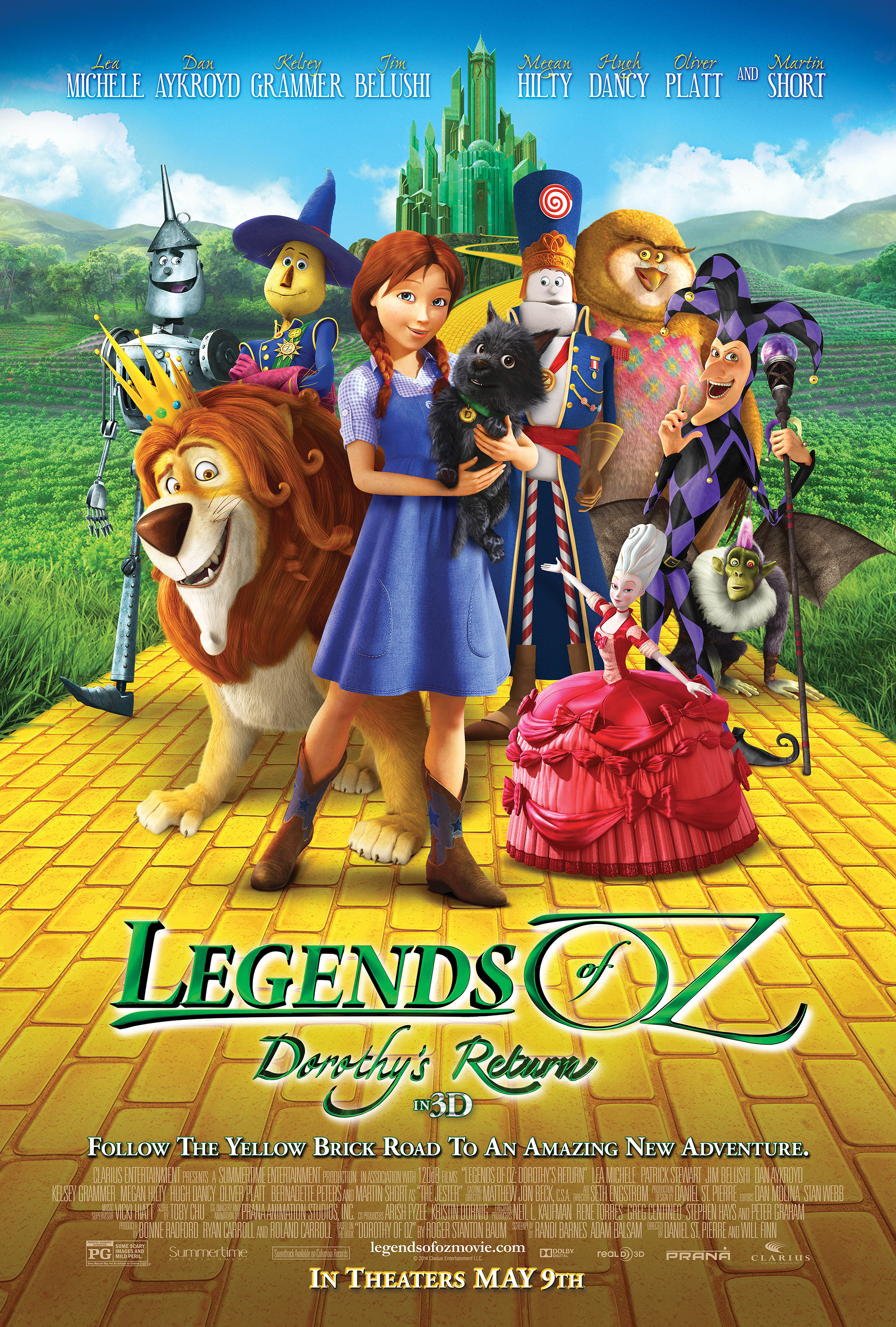
Tonight, I took 4 kids to see ‘Legends of Oz: Dorothy’s Return,’ the first children’s movie of the year (yes, it’s May) to feature a female protagonist. For that reason alone, I recommend ‘Dorothy’ for your kids. There will be a total of 18 children’s movies starring males in 2014, while just 6 will star females. Your kids will get a handful of chances to see a female be front and center. Note that in the poster below, Dorothy is insulated by 8 male characters, making her a Minority Feisty. The china doll on the right is another Minority Feisty. The third MF in the movie is Glinda, who spends most of the movie as a puppet.

LOZ_FinalOneSheet

Crowd scenes were male dominated, whether they were soldiers, flying monkeys, judges, police, or trees, females mostly went missing. But, Dorothy is the star of this film. She is heroic, she’s “the one” to save Oz, and she saves her hometown too. All this is a rarity in children’s movies, so I hate to write this, but there’s something almost unbearably bland about Dorothy. I wish she had more personality, was funny or silly, something. I never, not for one minute, lost myself in this movie.

Every time I see a mediocre Oz movie (recall last year’s James Franco vehicle) I pray Hollywood will make a movie about Ozma, the rightful ruler of the land over the rainbow. I’ve adored Ozma since I was a kid, she’s such a great character. Hollywood, are you listening?

14373_1

Beggars can’t be choosers. Also, I’m 45, and the kids with me, ages 5 – 10 seemed into ‘Dorothy,’ so Reel Girl rates ‘Legends of Oz: Dorothy’s Return’ ***HH***

Why is female protagonist of ‘Home’ missing from promotional short?

I’ve seen the animated short “Almost Home” twice, before “Rio 2” and “Peabody and Mr. Sherman.” Both times, it pissed me off that there were no female characters with speaking parts in this mini-movie.

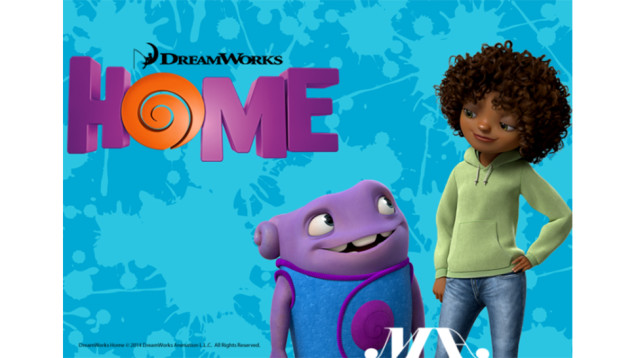
While I meant to blog about the silent females, I hadn’t gotten around to it yet. So, imagine my surprise today when on “Jezebel” I read that “Home” will be Deamworks first animated movie to star a black character, Tip. She also happens to be female.

wm6txwjvkonbsiohtock

So here’s my question, Dreamworks: Why is Tip missing from the promotional short? Please, don’t give me the reason it “makes sense” that she’s gone because in the sequence shown, she wouldn’t be in the story yet. Writers and producers make up the story, they can put anything they want out there, so why did they choose an all male narrative showcasing Steve Martin?

It’s kind of like how the two female stars of “Frozen” were missing from the movie’s first preview which featured the Olaf, the snowman, and Sven the reindeer.

Also, in the posters for “Frozen,” Olaf, once again, gets the front and center position, while the female stars are buried in snow.

Frozen-movie-poster

Recently, Valentina Perez wrote “Judging a Movie by its Trailer” for Harvard Political Review, about sexism in marketing for children’s movies:

While later trailers did show Anna, even the title distanced itself from any fairy tale or princess story audiences might already be familiar with. Disney did this intentionally to appeal to boys, basing their decision on past Disney research reporting that boys do not want to watch movies with the word “princess” in the title…

Disney’s marketing strategy for Frozen reflects a longstanding belief of movie studios that boys will not watch movies with female leads. This has contributed to the scarcity of movies with speaking, leading, or complex female characters. According to a study by the University of Southern California’s Annenberg School for Communication and Journalism, just 28.4 percent of speaking characters in the 100 highest-grossing American films of 2012 were female, a five-year low…

This change in Disney film content reflects the wider Hollywood belief that women and girls are a niche market, meaning that the longstanding, male-focused business model for movies persists as the standard.


Women and girls are not a “niche market.” We are 50% of the population. Not only that, as “Frozen” and “Catching Fire” show movies with female protagonists make money. Hollywood, please stop hiding the girls. You’re teaching sexism to our kids, to expect and accept a world where girls go missing. It’s not kids that won’t see movies starring girls, but sexist parents who don’t read their kids narratives or show their kids movies where girls star. Right now, the group Let Toys Be Toys For Girls and Boys is running a campaign to convince publishers not to create or market books “for boys” or “for girls.” Stories are for everyone. Why don’t we market them that way?