Planetarium***GGG***

Lucy and I finally braved the crowds, motivated by a week of being trapped inside by storms, to visit the planetarium at the Academy of Sciences in Golden Gate Park. Lucy is obsessed with Saturn and has been begging me to take her for months.

We saw a show called Journey to the Stars. Settling back in my seat, listening to the narration, there was something distracting about the voice. And then I realized– it was a female voice.  I am so used to watching these epic nature films accompanied  by a booming, authouritarian, voice of God type (what we call in talk radio, where I used to work– a three ball voice. Gene Burns, if you know who he is, has one. Casey Kasem too, James Earl Jones, of course.)

“Journey to the Stars” is narrated by Whoopi Goldberg. It’s wonderful. My only complaint is the planetarium is not a planetarium, its not a dome, it’s a half dome, more like an Imax theatre, in fact, just like an Imax. What’s up with that?***GGG***

Ladybug Girl

At first glance, Ladybug Girl doesn’t appear to be the most original of heroines. She’s pictured on the book’s cover in the same frilly-stiff red tutu that two of my daughters wore last halloween, cloned by half the girls in San Francisco; the other half dressed up as butterflies or fairies, only differenciated by tutu/ wing coloring. (Though now, I hope my third daughter shows the same obsession because the costumes cost me $60 each.)

But there is something special about this Ladybug girl. First, full disclosure, my standard bias: as I mentioned in my Princess Hyacinth review–  as a brown-eyed, brown haired kid, reading obsessed and deluged with golden haired blue eyed beauties, I give extra originality points for the, still rare, kids’ heroines with alternative coloring.

But there’s something truly wonderful about this story, and something that I never thought of before. This book shows that a girl’s obsession with ladybugs (and by proxy, butterlies) though packaged in the mainstream world as a gender stereotyped attraction to patterns and colors–is, at its heart, a love for bugs, for the outdoors and the creatures of the earth.

Ladybug Girl wanders around her backyard (another great thing about this book is it shows how our overscheduled kids handle free time; one of my favorite scenes shows Ladybug Girl, before making her decision to go outdoors, in her room overflowing with toys, frowning, arms crossed, saying, “There’s nothing to do.”) When Ladybug Girl is playing outside with her dog, she gets muddy and wet, splashing in shark-infested puddles, spying on other creatures including her big brother, buiding stone forts, and rescuing bugs.

Reading Ladybug Girl reminded me of my daughters, and the many ways they have shown me their fascination with bugs and insects (and tiny frogs–ugh) and how it’s not an interest I’ve ever encouraged or reinforced with toys, games or my own excitement– except by buying them silly frilly costumes.

I’ve often discovered Lucy and Alice quietly spying on long-legged spiders they find in the bath or mesmerized by fuzzy, slow-moving bumble bees flying low in our backyard. And their favorite thing to do, every time we leave the neighborhood park, is to visit the “ant tree,” where a trail of ants march up and down the trunk. The girls each let an ant crawl onto their finger, and then they literally love that ant to death. Then they cry and ask me to bring it back to life.

I’ve never once bought the girls the ant homes marketed to little boys, or insect puzzles, or rented A Bug’s Life, or asked them if they wanted to go dig for potato bugs when we had nothing to do–even after Lucy brought one home from school in a tiny cardboard box complete with a bed and play area.

Reading this story about a bored girl freely playing outside and getting dirty made me think of how many times I’ve warned my daughters not to get messy, as if it were the most horrible thing in world. I’m thinking, of course, that I’ll have to wash their clothing or they’ll track mud through the house. But Ladybug Girl taught me to mellow out and not get so worked up. (I’m not even a neat freak– far from it, and it was still hard for me to let it go) We have a backyard, always in flux, always muddy; there’s a hill they call a mountain they love to climb and dig around in. Now I just let them, stopped worrying so much about them fallling (into what?  more mud) Now they climb and explore far more bravely, both at home and in parks. They ask me to take them on hikes.

I also hope that letting then get messy when they play outside, and really acting like it’s no big deal takes back some emphasis from the frequent visual reaction they get: “What a beautiful dress you are wearing!”  They love to get special attention for anything, of course, but hopefully exploring and getting dirty can be more fun than even that.

A final cool thing about the book– and I think this is the author’s winking about the generic costume featured on the cover: the illustrations on both the front and back inside covers show Ladybug Girl is in a variety of costumes including a pirate, ballerina, witch, movie star, artist, astronaut, unicorn, pilot etc; the point being, of course, girls can be anything. I’d love to get a blow this up and frame it.  ***GG***

(P.S. The extra ladybugs in the photo are pistcachio half-shells Lucy painted for a math counting school project)

Charlie and Lola

Charlie and Lola

Lola is smart, mischevious, and my kids totally relate to her big issues of refusing to go to bed, go to school, or eat a tomato. The series theme (and book titles) often feature Lola’s passionate complaints about the her life, similar to the Junie B. Jones series, but somehow, instead of coming off as a horrible, intolerable brat as Junie B. does, Lola is appealing. The reason is because readers experience Lola through the eyes of her older brother, Charlie, who loves and admires his troubling sibling.

Each book begins: “I have this little sister, Lola. She is small and very funny.” Though this brother-sister dynamic is sterotypical of kids books– elder brother guides his younger sister, his name always comes first (see my Magic Tree House post) Charlie is an especially kind and perceptive caretaker. He’s such a great older brother that, for the longest time, I assumed he was a girl. I didn’t even wonder. Which is remarkable for me because I’m supposed to be so hyper-sensitive to this stuff.

Charlie looks just like Lola– same shaggy hair, tiny nose (looks like three tiny fingers pointed downwards) and dark, almond eyes. It was my husband who broke the news. After a brief debate and looking carefully at the pictures, I had to concede– Charlie is, in fact, a boy. His jaw is slightly broader than Lola’s, he’s always in pants (Lola’s shown in a dress), he has a best friend named Marv; they play soccer together and walk Marv’s dog. Charlie does nothing in these books explicitly girlie.

Though my husband was right, I have to assume the author, Lauren Child, intended some gender ambiguity with the name choice and giving the two kids such a similar look. Charlie is always pictured in a shirt that reads “Charlie,” I think so kids can tell them apart. If any of you had similar questions about Charlie, let me know.

The collage type illustrations are beautiful and compelling. (Lauren Child also ilustrated a book we have of Pippi Longstocking and wrote and illustarted a version of The Princess and the Pea.) The text in all Child’s books is always visually interesting, in different sizes, bold face and italics, words swirling into loop de loops.

I liked this series so much that I kept buying new books but became disappointed. I think  Child must have sold the series. Later books are more like slogans (recycle!) than stories, include pages of stickers, and large seals on the cover urging readers to watch Charlie and Lola on TV. ***GG***

Fancy Nancy

I have a mixed reaction to Fancy Nancy. What bothers me is obvious– she’s fancy. On the covers, Nancy is always wearing a tiara, high heels or ballet slippers with lacey socks, several beaded necklaces, and multi-colored bows in her hair. The book jackets actually sparkle, showing Nancy surrounded by butterflies or poodles, and the titles, always in pink, purple, or rainbow lettering include: Fancy Nancy and the Posh Puppy, Fancy Nancy, Bonjour Butterfly etc. The covers make this series look like books in drag; they are so crazy girlie in their appearance that if a boy were to venture to pick one up, I could imagine a parent snatching it away in fear, the way I’ve seen them do when their sons reach out to push toy strollers or snap barettes in their hair.

That said, Jane O’Connor, the author, seems to be depicting the princess marketing machine with some irony. In every book, Nancy tries desperately to transform her family into a fancier one. Her mom, dad, and little sister want to appease her, but never pull off the look or lifestyle Nancy is going for: the limo remains the family car, the three star retaurant is actually a diner, Nancy’s fancy shoes make her trip and fall while everyone is watching her.

And here’s the thing about Nancy– I have to agree with some of her choices to enhance her world and make it fancier: words do often sound better in French, a ham sandwich becomes a treat when it comes with a frilly toothpick; sprinkles turn a cup of ice cream into edible art, and “gold” is more poetic than “yellow” (reminding me when I first moved to California, I complained everything looked so brown, and a native corrected me: “We call it golden.”) Nancy’s quest for fanciness illustrates the special skills children have to see beauty and find excitement in the everyday things that grown ups too often experience as  mundane.   ***GG/S*** Read and engage

Frida


Frida is a kid’s book about Frida Kahlo. Need I say more? ***GGG***

The illustrations are luminous and beautiful. I bought this book at the SF MOMA after taking Lucy to see the Frida Kahlo show. Lucy was engaged enough to actually look at the art (she’s a super active kid) though she said it was too bloody. There was one painting she loved of a little girl Frida wearing a death mask. I think that is my favorite Frida painting now too.

In the book, the violent, graphic accident of Frida’s youth is told vaguely enough so kids can relate to it and not be terrified.

Pirate Girl

***GGG***

I love the book Pirate Girl, starring Molly, another brave, red-haired heroine (an also possibly Irish?) She is in a rowboat, off to see her grandmother, and gets captured by a boatload of pirates who make her clean and peel potatoes all day (sound familiar?)

At first, I was not happy  that all the evil pirates were male, but it turns out Molly’s mother is the scariest pirate of all. She has her own boatload of female pirates who all help rescue her daughter. This book deals with three generations of positive, strong, brave female relationships. There are so few females in any pirate stories or pirate toys– and can you even imagine a book called “Pirate Boy”? It would just sound redundant.

Junie B. Jones

I don’t like Junie B. She is such a brat! I know Ramona can be bratty, and I like her, and also that kids love to hear about other kids getting in trouble. There’s a lot of opportunity for that in this series because Junie B is always breaking rules. My kids like Junie B., but she is just so annoying. Even her name– Junie B. Don’t like it.

Also, Junie B. is unattractive– unattractive in the way that your normally adorable kid is when she makes an annoying face at you. Junie B. doesn’t look like a princess, and that’s good, but she’s so often pictured pinching her nose, grimacing, or pouting, especially on the book’s covers. And I think taking her to this level ultimately reinforces the princess look because it makes it seem as if those are your choices: sterotypical girl with flowing hair or a frowning girl sticking her tongue out.

The book covers don’t only feature Junie B at her physical worst, the titles themselves are hard to take: Junie B. and the Stupid, Smelly Bus; Junie B. Jones and Her Big Fat Mouth. Junie B. is always calling something fat or stupid and saying she hates stuff– all words my kids are not allowed to use.

I’m going to give this series a ***GG*** because it is all about a girl, and my kids like it, and like to read it themselves. I don’t!

Magic Tree House

Love it. This is my favorite new series (new meaning since I was a kid and not including my childhood favorites: Narnia, Laura Ingalls, Ramona etc)

Annie and Jack are a brother and sister who travel through time by way of a magic tree house, always on a mission from Morgan La Fay (who I remember from Camelot though nothing about her historical identity in what I’ve read so far.)

When reading these books, kids get to learn all about history in a fun, compelling way. The author is careful to research facts from the time she is writing about (ancient China, Paris in the twenties etc). She always gets the clothing exactly right too. Both characters are brave and share the central starring roles pretty equally though Jack’s name almost always seems to come before Annie’s. This second billing status may seem like a detail, but if you see how it evolves into Hollywood movies and vastly differing payscales, it’s important to note.

Magic Tree House is great for kids learning how to read; the pacing is perfect. It’s challenging for my six year old but not too frustrating for her. My three year old can follow the plotlines and stays interested, unlike something like The Hobbit which bores the younger one and enthralls the older one. ***GG*** rating

Brave Margaret

***GGG***

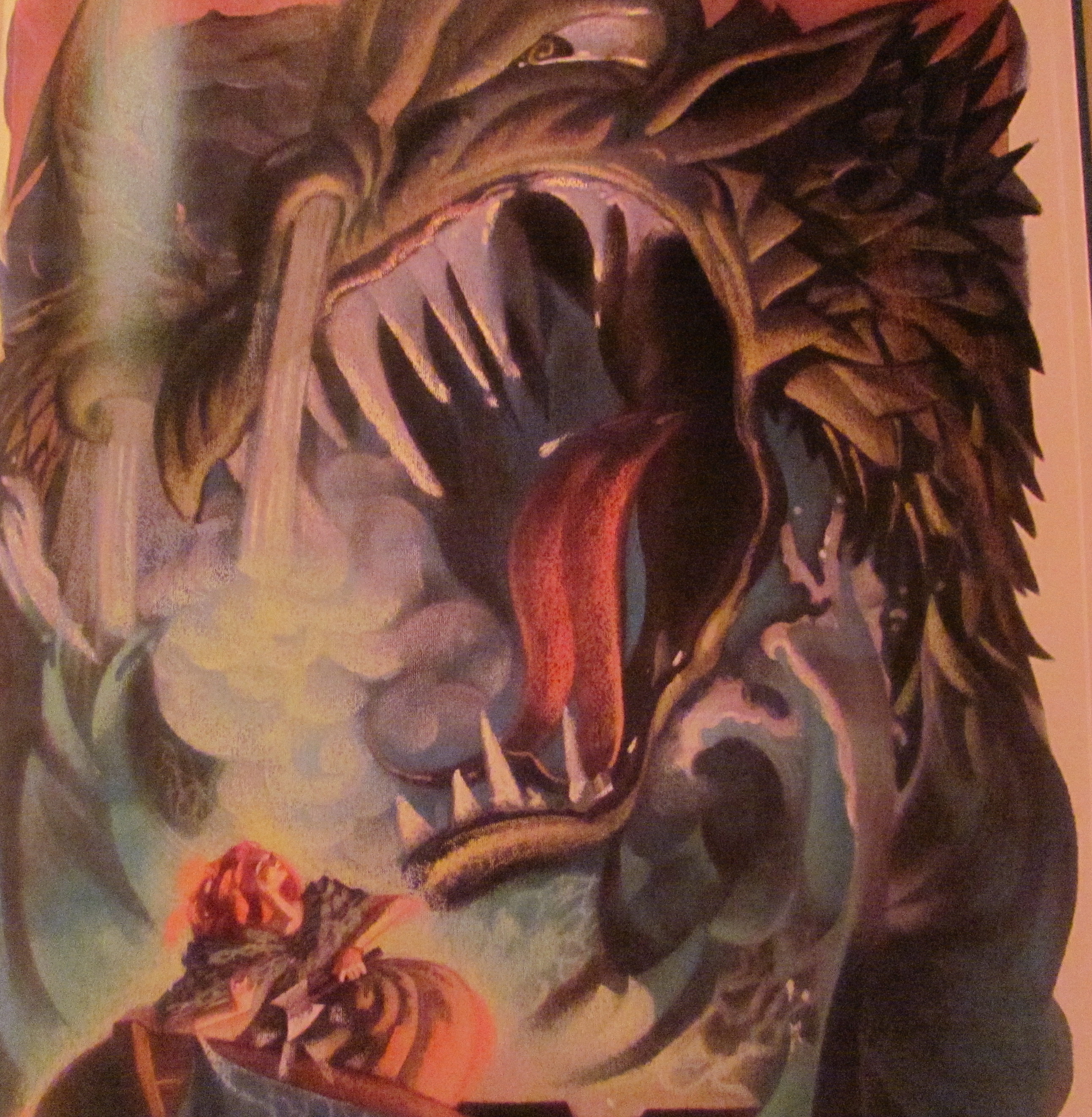
Brave Margaret is one of the best kids books I’ve come across. It’s a Celtic fairy tale, a true adventure story– exciting and beautifully illustrated. Margaret faces stormy seas, a terrifying serpent, and a self-serving sorceress. The story is completely centered on Margaret’s journey, though it does end in a happily ever after scene with a prince. Still, Simon is a hottie (I have a soft spot for Irish men) who obviously loves and admires Margaret for her bravery and her brains which makes the story romantic enough so the ending fits. Also– I love Margaret’s look. Yes, she has long flowing hair but it’s all kinds of shades of fiery red. One of my pet peeves with children’s books is that even when there is a girl in constant action, the pictures are of the moments she happens to be stationary: smiling, hugging, sitting, whispering, or brushing her hair (this is true even if the girl characters happen to be ponies, cats, fairies, bugs etc). Not so with Brave Margaret– most illustrations are action shots: Margaret galloping on her black horse, brandishing a sword; rowing a boat on her own in the stormy sea; swinging an ax by a serpent’s mouth. My friend who recommended this book bought it at a garage sale for $1. It’s copyright is 1999. I hope it’s still available, I want to get my own copy. Please give suggestions for girl power kids books you love. They don’t have to be new.

Heidi Montag–another self-annointed Cinderella

The big news in this week’s People Magazine is that Heidi Montag’s plastic surgery has successfully transformed her into the object she always aspired to be. She is now an “it.”

Heidi describes herself: “It’s a new face and a new energy. It’s a new person.”

Yet another People Magazine cover girl exuberantly refers to becoming a real life Cinderella.

(If you recall, the last reference was made by rock star virgin Kevin Jonas’ new wife who was given real glass slippers by her husband as a wedding gift. If you get one thing out of this blog, here it is: Cinderella is not a good movie for your kids **SSS*** Do not let them watch it unless they are 17 or over.)

Heidi goes on to tell People, “I feel like almost all of the things I don’t want to be…got chiseled away.”

When Heidi waxes effusively on the magic of plastic surgery, she refers to a universal fantasy: everyone has flaws they wish they could remove. Unfortunately, these are emotional or historical, not physical– duh.

Heidi seems to recognize she is addicted to the process of plastic surgery, the promise of perfection rather than the end product which only leaves her scheduling her next appointment. She says: “I’m just starting. As you get older, there are so many different treatments. Let’s just say nobody ages perfectly, so I plan to keep using surgery to make me as perfect as I can be. Because, for me, the surgery is always so rewarding.”

Like so many victims of plastic surgery, Heidi frames her surgeries as her own independent choice. She claims she was not under her Spencer’s influence—her controlling and Playboy bunny obsessed husband—who tells her she’s beautiful and to stop. Heidi responds: “I’m my own person. It’s my body.”

Her family, too, was “unsupportive” but she doesn’t care about that either. She’s “a married woman and at this time in my life, I can make my own decisions.”

Heidi was willing to listen to God, but he was OK with it. She prayed, promising if it was wrong, she wouldn’t go through with the surgeries, but she never got that feeling from him. “My body is just a shell; God doesn’t care. It’s what’s inside that God cares about.” (Though I still don’t get why Heidi cares so much about the shell when God doesn’t)

Throughout the long article, Heidi does fess up to some powerful influences on her decisions other than God. When she arrived in Hollywood, people made fun of her. Bloggers circled her “Jay Leno chin” and “Dumbo ears.” Heidi says she didn’t like being the “frumpy sidekick,” to the show’s star, Lauren Conrad. “Everyone from that show was rich. I was wearing Lauren’s leftovers.” But now, post-surgery, she feels like “a sexy, confident woman. That to me is a Cinderella story.” She explains, “looks matter. This is a superficial industry. “ Her dream, she says, is to be a pop star.

Who’s going to fault a girl for pursuing her dreams– so single-mindedly, obsessively, ambitiously, devoting mental energy, time, and upwards of $30,000 that she saved over three years? Clearly, Heidi is driven, a woman with a mission. She even risked death, saying that during surgery her breathing slowed, she lost oxygen, and “felt like I was gone.” Heidi had upwards of 20 meetings with her plastic surgeon just so they could get it right, carefully studying photos together and planning her look. For example, she wished for Angelina Jolie’s high eyebrows.

I wish Heidi Montag had been trained early on, rather than aspire to becoming a real life cartoon princess, to focus her incredible ambition, desire for success and power, and skill at competition into something other than her physical appearance. Too many young women are still taught their looks are the gateway to everything they could possibly want. And in this messed up world, just like Heidi says, the way a woman appears is, too often, indicative of how powerful and successful she can become.

Heidi’s plastic surgeon, Dr. Frank Ryan, says “She’s just doing what every celebrity does. They just don’t talk about it.”

It is, after all, Heidi, not all those other silent celebrities who scored People’s cover. Obviously, she led a carefully planned, manipulated, and successful PR campaign. She told no one about the surgery, except for magazine, which features photos of the whole process. She must have promised People an exclusive if they put her on the cover, because everyone knows, America loves a makeover.

Not one of Heidi’s “after” photos shows her smiling. Maybe that’s not because she’s unhappy, but that she just isn’t able too yet; she says her face feels fragile. There is a before/ after photo at the end of the article where you see the former Heidi smiling– yes, thin-lipped, low eye-browed, Dumbo-eared I suppose, if you know where to look, but her spirit and her brain and sense of humor are there too; there’s a real person in that photo; the girl next to her with dead eyes, puffy lips, platinum playboy bunny hair, has eyebrows raised in a look of disdain– just what she always wanted to be.